The Post-ReConstruction, Civil Rights, Black Power, and “unnamed” Black struggle movements grew out of each other and have steadily gained momentum through 2020. Some were not a formal movement, however, these movements marked a turning point in the meaning of Black struggle in the United States and also in how Black people saw themselves, generation to generation. All of the many Black movements are hailed as significant struggles of Blacks to achieve full equality. They were complex events that took place at a time when society and culture were being transformed throughout the United States, and their legacy reflects that complexity. But what of the interplay and relationship of all Black legacy political movements that occurred since Emancipation? They were all building blocks, learning opportunities, and a continuum of victories for our people. What we do know is that the descendants of American chattel slavery have waged the most successful and effective protests in American, indeed, world history. Our greatest achievements include teaching America the real meaning of justice, freedom, and resistance.
We need to know and understand the networks that compose the many Black struggles and movement that brought us to our current political struggles. It is how we measure our worth and etch out our future
This course of study will review the history of the many Black struggle movements and events that brought us to the election of Barack Obama resistance that brings us to the white supremacy insurrection and riots on January 6, 2021. What we see happening in America, the growth of white supremacy and confederacy politics become clear through the understanding of our journey toward freedom. This lecture series will provide knowledge of where we have been, Black achievement in how Black people have transformed America.
Series Schedule Thursdays, 8-10 pm EST
February 4, 2021
Session 1: Overview of significant Black political movements and events.
Black Politics and the Reconstruction Era
Black Politics of the Jim Crow Era
Black Politics creating the Civil Rights Era
Black Political development during the Black Power Era
Reading Recommendations
Timeline References
February 11, 2021
Session 2: Review of Syllabus Examine why certain sources are most helpful to us to understand the continuum and projection of history forming new generations of struggle. How history informs strategic directions of each of the major movements.
February 18, 2021
Session 3: Black political diversities and ideologies. Examining class, economics, religion, spirituality, art, gender, sexuality, and how they have factored in Black movement history.
February 25, 2021
Session 4: Practical Strategies for 21st Century Black and Peoples’ movements.
About Dr. James L. Taylor
Professor James Lance Taylor is the Chair of the Department of Politics at the University of San Francisco and is from Glen Cove, Long Island. He is the author of the book “Black Nationalism in the United States: From Malcolm X to Barack Obama”, which earned 2012 “Outstanding Academic Title” – Choice: Current Reviews for Academic Libraries. (Ranked top 2 percent of 25,000 books submitted and top 8 percent of 7,300 actually accepted for review by the American Library Association). Rated “Best of the Best.” The hardback version sold out in the U.S. and the paperback version was published in 2014.
He is a former President of the National Conference of Black Political Scientists (NCOBPS), an important organization of African American, African, and Afro Caribbean political scientists in the United States, 2009-2011. Taylor also served as Coordinator of the African American Studies Program for 2015-2017 at the University of San Francisco. He served as the Chair for the “Committee on the Status of Blacks” in Political Science for the American Political Science Association (APSA), 2016-2017.
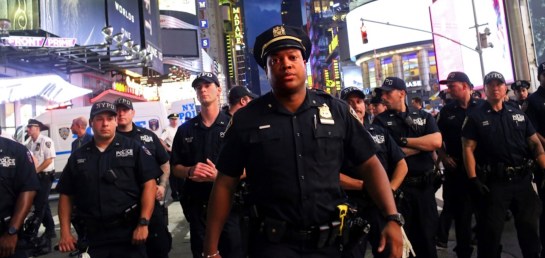
The purpose of policing––to jail and kill Black folks––remains the same regardless of the officers’ race.
“Allowing Black people into inherently racist systems does not make those systems better, safer, or more equitable.”
Policing in America is facing a PR crisis. Following the May 25th murder of George Floyd by Minneapolis police officer Derek Chauvin, the term “defund the police” has become a rallying cry for thousands across the country. Six months later, however, America has not defunded its police force––and in fact, has in some cases taken steps to give police departments even more money. Instead, police forces across America have taken an insidious approach: painting their departments in blackface.
After the January 6th Trump riot at the Capitol building, Yoganda Pittman, a Black woman, was named the new Chief of Capitol Police. Her appointment followed the resignation of former Chief Steven Sund and the arrest and firing of several white police officers who were found to be in attendance at the MAGA riot. Pittman’s appointment appeased many liberals who falsely believe that allowing Black folks to infiltrate or run law enforcement agencies will lead to higher levels of safety for Black Americans. The termination of several officers who took part in the riot has convinced many that we are one step closer to “reforming” the police by weeding out the racist, bad apples within the department.
“Pittman’s appointment appeased many liberals.”
This is a nice narrative, but a false one; in order to understand why, we must look at the history of policing in this country. Modern policing in America was originally created as a replacement for America’s slave patrol system wherein squadrons made up of white volunteers were empowered to use vigilante tactics to enforce laws related to slavery. These “enforcers” were in charge of locating and returning enslaved people who had escaped, crushing uprisings led by enslaved people, and punishing enslaved workers who were found or believed to have violated plantation rules. After slavery was legally abolished in 1865, America created its modern police force to do the exact thing under a different name: maintain the white supremacist hierarchy that is necessary under racial capitalism. The purpose of policing––to jail and kill Black folks––remains the same regardless of the officers’ race.
Liberal media has also contributed to the recent valorization of Black cops. In the days after the January 6th riot, many news outlets aggressively pushed a story about Eugene Goodman, a Black capitol police officer who led several rioters away from the Congress people’s hiding places while being chased by a white supremacist mob. Several news outlets published testimonials of Black police officers disclosing instances of racism within the department. A January 14th article in ProPublicanotes that over 250 Black cops have sued the department for racism since 2001: some Black cops have alleged that white officers used racial slurs or hung nooses in Black officer’s lockers, and one Black cop even claimed he heard a white officer say, “Obama monkey, go back to Africa.”
“Modern policing in America was originally created as a replacement for America’s slave patrol system.”
These white officers’ racism is unsurprising, and I am not denying any of these claims. But focusing on these singular, isolated moments of racism wherein white cops are painted as cruel and Black cops are the sympathetic victims grossly oversimplifies the narrative of structural racism that modern American policing was built upon. After hearing these slurs that they were allegedly so disgusted by, these Black cops still intentionally chose to put on their badge, don their guns, and work alongside these white police officers who insulted and demeaned them, laboring under a violent system with the sole purpose of harming and terrorizing Black and low-income communities. Similarly, while Goodman’s actions most likely saved many lives during the riot, we cannot allow one moment of decency to erase centuries of racist violence.
The great Zora Neale Hurston once said: “All my skinfolk ain’t kinfolk.” Her words ring ever true today, and these Black police officers are an excellent example of why. It’s tempting to believe that putting Black folks on the force will solve racial violence, but this is a liberal myth we must break free of. Allowing Black people into inherently racist systems does not make those systems better, safer, or more equitable: a quick look at many Black folks in power today, such as Barack Obama, Kamala Harris, Lori Lightfoot, and Keisha Lance Bottoms immediately prove this to be the case. Everyone supporting racial capitalism must be scrutinized and held accountable, regardless of their identity. We cannot on the one hand say that ‘all cops are bastards’ and then suddenly feel sympathy when those cops are not white. If we want to defund and abolish the police, we must resist the narrative that Black cops have anything to offer us.
Mary Retta is a writer, virgo, cartoon enthusiast — a queer Black writer for sites like Teen Vogue, The Nation, Bitch Media, and Vice.
ProPublica is a nonprofit newsroom that investigates abuses of power. Sign up to receive our biggest stories as soon as they’re published.
During the past two years, U.S. counterterrorism officials held meetings with their European counterparts to discuss an emerging threat: right-wing terror groups becoming increasingly global in their reach.
American neo-Nazis were traveling to train and fight with militias in the Ukraine. There were suspected links between U.S. extremists and the Russian Imperial Movement, a white supremacist group that was training foreigners in its St. Petersburg compounds. A gunman accused of killing 23 people at an El Paso Walmart in 2019 had denounced a “Hispanic invasion” and praised a white supremacist who killed 51 people at mosques in Christchurch, New Zealand, and who had been inspired by violent American and Italian racists.
But the efforts to improve transatlantic cooperation against the threat ran into a recurring obstacle. During talks and communications, senior Trump administration officials steadfastly refused to use the term “right-wing terrorism,” causing disputes and confusion with the Europeans, who routinely use the phrase, current and former European and U.S. officials told ProPublica. Instead, the FBI and Department of Homeland Security referred to “racially or ethnically motivated violent extremism,” while the State Department chose “racially or ethnically motivated terrorism.”
“We did have problems with the Europeans,” one national security official said. “They call it right-wing terrorism and they were angry that we didn’t. There was a real aversion to using that term on the U.S. side. The aversion came from political appointees in the Trump administration. We very quickly realized that if people talked about right-wing terrorism, it was a nonstarter with them.”
The U.S. response to the globalization of the far-right threat has been slow, scattered and politicized, U.S. and European counterterrorism veterans and experts say. Whistleblowers and other critics have accused DHS leaders of downplaying the threat of white supremacy and slashing a unit dedicated to fighting domestic extremism. DHS has denied those accusations.
In 2019, a top FBI official told Congress the agency devoted only about 20% of its counterterrorism resources to the domestic threat. Nonetheless, some FBI field offices focus primarily on domestic terrorism.
Former counterterrorism officials said the president’s politics made their job harder. The disagreement over what to call the extremists was part of a larger concern about whether the administration was committed to fighting the threat.
“The rhetoric at the White House, anybody watching the rhetoric of the president, this was discouraging people in government from speaking out,” said Jason Blazakis, who ran a State Department counterterrorism unit from 2008 to 2018. “The president and his minions were focused on other threats.”
Other former officials disagreed. Federal agencies avoided the term “right-wing terrorism” because they didn’t want to give extremists legitimacy by placing them on the political spectrum, or to fuel the United States’ intense polarization, said Christopher K. Harnisch, the former deputy coordinator for countering violent extremism in the State Department’s counterterrorism bureau. Some causes espoused by white supremacists, such as using violence to protect the environment, are not regarded as traditionally right-wing ideology, said Harnisch, who stepped down this week.
“The most important point is that the Europeans and the U.S. were talking about the same people,” he said. “It hasn’t hindered our cooperation at all.”
As for the wider criticism of the Trump administration, Harnisch said: “In our work at the State Department, we never faced one scintilla of opposition from the White House about taking on white supremacy. I can tell you that the White House was entirely supportive.”
The State Department focused mostly on foreign extremist movements, but it examined some of their links to U.S. groups as well.
There was clearly progress on some fronts. The State Department took a historic step in April by designating the Russian Imperial Movement and three of its leaders as terrorists, saying that the group’s trainees included Swedish extremists who carried out bombing attacks on refugees. It was the first such U.S. designation of a far-right terrorist group.
With Trump now out of office, Europeans and Americans expect improved cooperation against right-wing terrorists. Like the Islamist threat, it is becoming clear that the far-right threat is international. In December, a French computer programmer committed suicide after giving hundreds of thousands of dollars to U.S. extremist causes. The recipients included a neo-Nazi news website. Federal agencies are investigating, but it is not yet clear whether anything about the transaction was illegal, officials said.
“It’s like a transatlantic thing now,” said a European counterterror chief, describing American conspiracy theories that surface in the chatter he tracks. “Europe is taking ideology from U.S. groups and vice versa.”
The Crackdown
International alliances make extremist groups more dangerous, but also create vulnerabilities that law enforcement could exploit.
Laws in Europe and Canada allow authorities to outlaw domestic extremist groups and conduct aggressive surveillance of suspected members. America’s civil liberties laws, which trace to the Constitution’s guarantee of free speech spelled out in the First Amendment, are far less expansive. The FBI and other agencies have considerably more authority to investigate U.S. individuals and groups if they develop ties with foreign terror organizations. So far, those legal tools have gone largely unused in relation to right-wing extremism, experts say.
To catch up to the fast-spreading threat at home and abroad, Blazakis said, the U.S. should designate more foreign organizations as terrorist entities, especially ones that allied nations have already outlawed.
A recent case reflects the kind of strategy Blazakis and others have in mind. During the riots in May after the death of George Floyd in Minneapolis, FBI agents got a tip that two members of the anti-government movement known as the Boogaloo Bois had armed themselves, according to court papers. The suspects were talking about killing police officers and attacking a National Guard armory to steal heavy weapons, the court papers allege. The FBI deployed an undercover informant who posed as a member of Hamas, the Palestinian terrorist group, and offered to help the suspects obtain explosives and training. After the suspects started talking about a plot to attack a courthouse, agents arrested them, according to the court papers. In September, prosecutors filed charges of conspiring and attempting to provide material support to a foreign terrorist organization, which can bring a sentence of up to 20 years in prison. One of the defendants pleaded guilty last month. The other still faces charges.
If the U.S. intelligence community starts using its vast resources to gather information on right-wing movements in other countries, it will find more linkages to groups in the United States, Blazakis and other experts predicted. Rather than resorting to a sting, authorities could charge American extremists for engaging in propaganda activity, financing, training or participating in other actions with foreign counterparts.
A crackdown would bring risks, however. After the assault on the Capitol, calls for bringing tougher laws and tactics to bear against suspected domestic extremists revived fears about civil liberties similar to those raised by Muslim and human rights organizations during the Bush administration’s “war on terror.” An excessive response could give the impression that authorities are criminalizing political views, which could worsen radicalization among right-wing groups and individuals for whom suspicion of government is a core tenet.
“You will hit a brick wall of privacy and civil liberties concerns very quickly,” said Seamus Hughes, a former counterterrorism official who is now deputy director of the Program on Extremism at George Washington University. He said the federal response should avoid feeding into “the already existing grievance of government overreach. The goal should be marginalization.”
In recent years, civil liberties groups have warned against responding to the rise in domestic extremism with harsh new laws.
“Some lawmakers are rushing to give law enforcement agencies harmful additional powers and creating new crimes,” wrote Hina Shamsi, the director of the ACLU’s national security project, in a statement by the organization about congressional hearings on the issue in 2019. “That approach ignores the way power, racism, and national security laws work in America. It will harm the communities of color that white supremacist violence targets — and undermine the constitutional rights that protect all of us.”
The Pivot Problem
There is also an understandable structural problem. Since the Sept. 11 attacks in 2001, intelligence and law enforcement agencies have dedicated themselves to the relentless pursuit of al-Qaida, the Islamic State, Iran and other Islamist foes.
Now the counterterrorism apparatus has to shift its aim to a new menace, one that is more opaque and diffuse than Islamist networks, experts said.
It will be like turning around an aircraft carrier, said Blazakis, the former State Department counterterrorism official, who is now a professor at the Middlebury Institute of International Studies.
“The U.S. government is super slow to pivot to new threats,” Blazakis said. “There is a reluctance to shift resources to new targets. And there was a politicization of intelligence during the Trump administration. There was a fear to speak out.”
Despite periodic resistance and generalized disorder in the Trump administration, some agencies advanced on their own, officials said. European counterterror officials say the FBI has become increasingly active in sharing and requesting intelligence about right-wing extremists overseas.
A European counterterror chief described recent conversations with U.S. agents about Americans attending neo-Nazi rallies and concerts in Europe and traveling to join the Azov Battalion, an ultranationalist Ukrainian militia fighting Russian-backed separatists. About 17,000 fighters from 50 countries, including at least 35 Americans, have traveled to the Ukrainian conflict zone, where they join units on both sides, according to one study. The fighting in the Donbass region offers them training, combat experience, international contacts and a sense of themselves as warriors, a theater reminiscent of Syria or Afghanistan for jihadis.
“The far right was not a priority for a long time,” the European counterterror chief said. “Now they are saying it’s a real threat for all our societies. Now they are seeing we have to handle it like Islamic terrorism. Now that we are sharing and we have a bigger picture, we see it’s really international, not domestic.”
Galvanized
The assault on Congress signaled the start of a new era, experts said. The convergence of a mix of extremist groups and activists solidified the idea that the far-right threat has overtaken the Islamist threat in the United States, and that the government has to change policies and shift resources accordingly. Experts predict that the Biden administration will make global right-wing extremism a top counterterrorism priority.
“This is on the rise and has gotten from nowhere on the radar to very intense in a couple of years,” a U.S. national security official said. “It is hard to see how it doesn’t continue. It will be a lot easier for U.S. officials to get concerned where there is a strong U.S. angle.”
A previous spike in domestic terrorism took place in the 1990s, an era of violent clashes between U.S. law enforcement agencies and extremists. In 1992, an FBI sniper gunned down the wife of a white supremacist during an armed standoff in Ruby Ridge, Idaho. The next year, four federal agents died in a raid on heavily armed members of a cult in Waco, Texas; the ensuing standoff at the compound ended in a fire that killed 76 people.Both sieges played a role in the radicalization of the anti-government terrorists who blew up the Oklahoma City federal building in 1995, killing 168 people, including children in a day care center for federal employees. Oklahoma City remains the deadliest terrorist act on U.S. soil aside from the Sept. 11 attacks.
The rise of al-Qaida in 2001 transformed the counterterrorism landscape, spawning new laws and government agencies and a worldwide campaign by intelligence agencies, law enforcement and the military. Despite subsequent plots and occasionally successful attacks involving one or two militants, stronger U.S. defenses and limited radicalization among American Muslims prevented Islamist networks from hitting the United States with the kind of well-trained, remotely directed teams that carried out mass casualty strikes in London in 2005, Mumbai in 2008 and Paris in 2015.
During the past decade, domestic terrorism surged in the United States. Some of the activity was on the political left, such as the gunman who opened fire at a baseball field in Virginia in 2017. The attack critically wounded Rep. Steve Scalise, a Republican legislator from Louisiana who was the House Majority whip, as well as a Capitol Police officer guarding him and four others.
But many indicators show that far-right extremism is deadlier. Right-wing attacks and plots accounted for the majority of all terrorist incidents in the country between 1994 and 2020, according to a study by the Center for Strategic and International Studies. The Anti-Defamation League reported in 2018 that right-wing terrorists were responsible for more than three times as many deaths as Islamists during the previous decade.
“There have been more arrests and deaths in the United States caused by domestic terrorists than international terrorists in recent years,” said Michael McGarrity, then the counterterrorism chief of the FBI, in congressional testimony in 2019. “Individuals affiliated with racially-motivated violent extremism are responsible for the most lethal and violent activity.”
During the same testimony, McGarrity said the FBI dedicated only about 20% of its counterterrorism resources to the domestic threat. The imbalance, experts say, was partly a lingering result of the global offensive by the Islamic State, whose power peaked in the middle of the decade. Another reason: Laws and rules instituted in the 1970s after FBI spying scandals make it much harder to monitor, investigate and prosecute Americans suspected of domestic extremism.
The Trump Administration and the Europeans
Critics say the Trump administration was reluctant to take on right-wing extremism. The former president set the tone with his public statements about the violent Unite the Right rally in Charlottesville, Virginia, in 2017, they say, and with his call last year telling the far-right Proud Boys group to “stand back and stand by.”
Still, various agencies increased their focus on the issue because of a drumbeat of attacks at home — notably the murders of 11 people at a synagogue in Pittsburgh in 2018 — and overseas. The Christchurch massacre of worshippers at mosques in New Zealand in March 2019 caught the attention of American officials. It was a portrait of the globalization of right-wing terrorism.
Brenton Tarrant, the 29-year-old Australian who livestreamed his attack, had traveled extensively in Europe, visiting sites he saw as part of a struggle between Christianity and Islam. In his manifesto, he cited the writings of a French ideologue and of Dylann Roof, an American who killed nine people at a predominantly Black church in South Carolina in 2015. While driving to the mosques, Tarrant played an ode to Serbian nationalist fighters of the Balkan wars on his car radio. And he carried an assault rifle on which he had scrawled the name of an Italian gunman who had shot African immigrants in a rampage the year before.
Christchurch was “part of a wave of violent incidents worldwide, the perpetrators of which were part of similar transnational online communities and took inspiration from one another,” said a report last year by Europol, an agency that coordinates law enforcement across Europe. The report described English as “the lingua franca of a transnational right-wing extremist community.”
With its long tradition of political terrorism on both extremes, Europe has also suffered a spike in right-wing violence. Much of it is a backlash to immigration in general and Muslim communities in particular. Responding to assassinations of politicians and other attacks, Germany and the United Kingdom have outlawed several organizations.
Closer to home, Canada has banned two neo-Nazi groups, Blood and Honour and Combat 18, making it possible to charge people for even possessing their paraphernalia or attending their events. Concerts and sales of video games, T-shirts and other items have become a prime source of international financing for right-wing movements, the European counterterror chief said.
During the past two years, officials at the FBI, DHS, State Department and other agencies tried to capitalize on the deeper expertise of European governments and improve transatlantic cooperation against right-wing extremism. Legal and cultural differences complicated the process, American and European officials said. A lack of order and cohesion in the U.S. national security community was another factor, they said.
“There was so little organization to the U.S. counterterrorism community that everybody decided for themselves what they would do,” a U.S. national security official said. “It was not the type of centrally controlled effort that would happen in other administrations.”
As a result, the U.S. government has sometimes been slow to respond to European requests for legal assistance and information-sharing about far-right extremism, said Eric Rosand, who served as a State Department counterterrorism official during the Obama administration.
“U.S.-European cooperation on addressing white supremacist and other far-right terrorism has been ad hoc and hobbled by a disjointed and inconsistent U.S. government approach,” Rosand said.
The semantic differences about what to call the threat didn’t help, according to Rosand and other critics. They say the Trump administration was averse to using the phrase “right-wing terrorism” because some groups on that part of the ideological spectrum supported the president.
“It highlights the disconnect,” Rosand said. “They were saying they didn’t want to suggest the terrorism is linked to politics. They didn’t want to politicize it. But if you don’t call it what it is because of concerns of how it might play with certain political consistencies, that politicizes it.”
Harnisch, the former deputy coordinator at the State Department counterterrorism bureau, rejected the criticism. He said cooperation with Europeans on the issue was “relatively nascent,” but that there had been concrete achievements.
“I think we laid a strong foundation, and I think the Biden administration will build on it,” Harnisch said. “From my perspective, we made significant progress on this threat within the Trump administration.”
Get the latest news from ProPublica every afternoon.
One Capitol Police officer was caught taking a selfie with a member of the white supremacist mob that overtook the US Capitol last week. A second officer has been suspended for wearing a “Make America Great Again” hat and directing insurrectionists around the building rather than handcuffing them. The storming of the Capitol has revived concerns about the ties between police and white supremacists, in part because officers arrested far more Black Lives Matter protesters this summer than they did Trump supporters who broke into the legislative building with weapons, at least one Confederate flag, and bundles of zip ties.
It wasn’t just on-duty cops who raised eyebrows: Off-duty law enforcement officers were allegedly part of the mob itself, with some flashing their badges and identification cards as they rushed through the doors, according to an on-duty DC Metro Police officer who saw them. “If these people can storm the Capitol building with no regard to punishment, you have to wonder how much they abuse their powers when they put on their uniforms,” the officer wrote later on Facebook, according to Politico.
Police departments around the country are now investigating officers who are suspected of attending the rally in DC, or were caught posting racist messages on social media. Days after the attack, New York Rep. Jamaal Bowman introduced a bill that would require a commission to examine whether Capitol Police officers have white supremacist ties.
For some experts, these investigations are far too little, too late: Police departments and federal agencies have long understood that certain cops are connected to racist groups, and have largely looked the other way. “We’ve known for decades that there are racial disparities in every step of the criminal justice process, from who gets stopped to who gets arrested to who police use force against to how they get charged,” says Michael German, a former FBI agent who now studies white supremacist infiltration of police departments as a fellow at the liberal Brennan Center for Justice, a think tank. “It’s treated as implicit bias or structural bias without an acknowledgment that there’s a lot of explicit bias driving these disparities.”
As an FBI agent in the 1990s, German went undercover with white supremacist and militia groups to thwart their bomb plots. At the time, the Justice Department warned him to be careful about sharing details of his investigations with cops, because some of them had ties to white supremacist groups themselves. Even so, in the decades since then, he says the FBI has not prioritized investigating those police officers and getting them off the streets, allowing them to continue their jobs. I caught up with German this week to ask how law enforcement agencies have fallen short in identifying and firing racist officers, and what they should be doing now, in the wake of the Capitol siege, to root them out.
Do we know roughly how many cops have ties to white supremacists?
Unfortunately we don’t have a sense of the scope of the problem because no entity has made it their mission to identify the scope. But the FBI regularly warns its agents who are investigating white supremacists and far-right militants that the subjects of those investigations will often have active links to law enforcement, and that they need to alter their methodology to protect the integrity of their investigations. Those were warnings I received in the 1990s when I worked these cases, and they appear in published leaked FBI materials, including the 2015 counterterrorism policy guide.
When you say FBI agents alter their methodologies, do you mean they’re not supposed to collaborate as much with police while investigating white supremacists?
Exactly. The counterterrorism policy guide recommends that the FBI put the subjects of these investigations on a watch list with what’s called the silent-hit function; if a police officer pulls over the subject of your investigation, a silent-hit function would not tell the officer that he’s interacting with someone who’s the subject of a terrorism investigation.
If the FBI knows this is a problem of such significance that it has to alter its methodologies of investigating cases, I would argue it also has to have a strategy to protect the public from these white supremacists and far-right militants who carry a badge. The fact that they don’t even document who these police officers are shows an inexcusable lack of attention to their mission to enforce the civil rights laws of this country as well as the counterterrorism laws.
In 2006, the FBI warned that for decades, white supremacist groups had been attempting to “recruit” police officers. Can you talk about the history of this?
It’s important to understand that the United States was founded as a white supremacist nation, so our laws enforced white supremacy, so those who were sworn to enforce the law were enforcing white supremacy. After slavery ended, you had Jim Crow. After the civil rights era, you still had sundown towns, where the police enforced unwritten rules about who could stay in town past dark. To imagine there was somehow a miraculous event that cured the police of that problem is foolish.
The most egregious are examples where police officers were actually members of white supremacist groups and would go to public events representing themselves as police officers. And their membership was known to law enforcement for years and unaddressed, and it was only when the public learned about it that the police department took action.
We do so little examination of police violence in this country, but we know it disproportionately targets people who are Black or brown. How much of that is driven from actual white supremacist ideology rather than isolated incidents that happen on the job is something the Justice Department has a responsibility to investigate.
What kind of recruitment techniques do white supremacist groups use with police?
Having spent time as an FBI undercover agent, I think the term [“recruit”] doesn’t accurately describe what’s happening. It’s not so much that this group will put a pamphlet together and make a recruiting pitch and approach officers. In many cases, these are people who grew up affiliating with white supremacists. One guy went to work as a prison guard, one guy went to work in factories, and the other guy went to work as a police officer. And they are just carrying on attitudes and associating with the same people they associated with when they weren’t a police officer.
Are there any police departments that have tried themselves to root out racist cops, and any that did a good job?
The departments tend to be reactive to public outrage. Part of the problem is that most law enforcement agencies don’t have written policies specifically addressing the issue. So when the public identifies somebody who’s operating in league with a white supremacist group or far-right militant group, they end up disciplining them under broad prohibitions against engaging in public conduct detrimental to the public interest, or similarly worded policies.
Sometimes this doesn’t stand up to the due process scrutiny that’s designed to protect innocent officers from being treating unfairly. So they end up getting their jobs back after they’re fired.
What I argue is that even where the conduct is not sufficient to terminate that officer, the police department still has an obligation to mitigate the threat they pose to the community. There are plenty of jobs in police departments that don’t regularly interact with the public. Or perhaps some extra level of supervision of that officer would be warranted.
Right. Or just the lack of policy, or disparate treatment, where other officers known to engage in racist behavior weren’t fired in the past, so it’s unfair to fire this officer. Often, if the police department knew about your involvement with this white supremacist group for five years but is now trying to fire you, you can argue: “I’m not being fired because of the conduct, because the department knew about the conduct; I’m being fired because the public demanded it, and that’s not appropriate.” That’s the problem with the way we have just turned a blind eye to this problem for so many decades.
Is there anything else that government can do to address this problem?
What we need is to empower prosecutors and defense attorneys. When these [white supremacist] officers are identified by the agency or by the public, that information should be provided to prosecutors and they [the officer] should be put on no-call lists or Brady lists. Today these no-call lists are lists of officers who are known to have previously engaged in some kind of dishonest conduct that a defense attorney could use to impeach their testimony. My argument is that racist behavior is one of those categories that should be available to the defense attorney. [This can] force those agents off the street.
In an ideal world, what do you think the Justice Department or FBI’s role would be in rooting out white supremacist police officers?
What I would recommend is for the Justice Department to implement a national strategy to identify these officers, document the scope of the threat, and design programs to mitigate it. It’s a matter of priorities. If the FBI heard through the grapevine that a police officer was affiliating himself with Al Qaeda or ISIS, we can be confident the FBI would react quickly. They should act just as quickly when the police officer is associated with white supremacist and far-right militant groups.
Some people have expressed the idea that we need to create a list of designated domestic terrorist groups, but that’s a silly approach because these groups change their names regularly. In other words, writing a list of groups that are banned is not going to help. Because officers can look at the list and say, “Okay, I won’t join this group, but I’ll join this other group. Or I’ll be part of a group that previously called itself the KKK but now calls itself something else.” But it’s the same people engaged in the same racist conduct. It takes an understanding of how these groups actually organize before you can write a policy.
The officers and agents within these federal, state, and local law enforcement departments know who the racists are among them. What we need to do is make sure officers who see racist misconduct or far-right militancy within law enforcement are protected when they report it. We need to strengthen whistleblower protection laws.
You wrote in a recent report about a man in Anniston, Alabama, who applied to be a police officer, and listed on his application that he was part of the League of the South, a white supremacist secessionist group. He was hired anyway. Are cops’ racist ties often that obvious?
Yes, often it is that obvious. So it’s not that they can’t be seen, it’s that nobody is looking for them.
Update (January 15): The Capitol Police officer who wore a MAGA hat claims he put on the cap as part of a plan to save some of his colleagues who were in danger, according to a new Wall Street Journalreport.
After the Civil War, the United States searched for ways to redefine itself. But by the 1880’s, the hopes of Reconstruction had dimmed. Across the United States there was instead a push to formalize and legalize discrimination against African-Americans. The effort to marginalize the first generation of free black Americans infiltrated nearly every aspect of daily life, including the cost of insurance.
Initially, African-Americans could purchase life insurance policies on equal footing with whites. That all changed in 1881. In March of that year Prudential, one of the country’s largest insurers, announced that policies held by black adults would be worth one-third less than the same plans held by whites. Their weekly premiums would remain the same. Benefits for black children didn’t change, but weekly premiums for their policies would rise by five cents.
Prudential defended the decision by pointing out that the black mortality rate was higher than the white mortality rate. Therefore, they explained, claims paid out for black policyholders were a disproportionate amount of all payouts. Most of the major life insurance companies followed suit, making it nearly impossible for African-Americans to gain coverage. Across the industry, companies blocked agents from soliciting African-American customers and denied commission for any policies issued to blacks.
The public largely accepted the statistical explanation for unequal coverage. The insurer’s job was to calculate risk. Race was merely another variable like occupation or geographic location. As one trade publication put it in 1891: “Life insurance companies are not negro-maniacs, they are business institutions…there is no sentiment and there are no politics in it.”
Companies considered race-based risk the same for all African-Americans, whether they were strong or sickly, educated or uneducated, from the country or the city. The “science” behind the risk formula is credited to Prudential statistician Frederick L. Hoffman, whose efforts to prove the genetic inferiority of the black race were used to justify the company’s discriminatory policies.
You may unsubscribe at any time by clicking on the provided link on any marketing message.
Hoffman had plenty of bad science to work with. Most of the available data on African-American health statistics came from Civil War-era studies of black and white soldiers. Hospital administrator J.F. Miller and other researchers consistently claimed to have proof of the inherent weakness of the black race, reporting that the internal organs, including the lungs and brain, weighed less in blacks than in whites, making them more susceptible to diseases like pneumonia, tuberculosis, and syphilis. Since most white physicians held the common belief that enslaved blacks had been relatively healthy, this proved that the constitution of the black race was incompatible with freedom:
These laws affect him in the air he breathes, the food he eats, the clothes he wears and every circumstance surrounding his habitation. In the wholesale violation of these laws after the war…was laid the foundation of the degeneration of the physical and mental constitution of the negro.
Black Americans were more likely to live in poverty and often lacked access to medical care, among many other hardships. Still, little credence was given to the theory that environmental factors were the reason for the higher black mortality rate. Hoffman’s work received widespread coverage in respected journals, including that of the American Statistical Association, a professional society where Hoffman later served as president.
Hoffman predicted that African-Americans would eventually die off like the Native Americans before them. He surmised that they wouldn’t be able to survive in “civilized” society, outside the bonds of slavery. The theory didn’t gain any traction, but Hoffman’s broader work on the racialist science behind black mortality rates did have lasting effects. Discriminatory policies based on race were standard in the insurance industry well into the twentieth century. In a 1940 survey, over forty percent of companies did not accept black policyholders.
It’s tempting to think of the storming of the US Capitol on Wednesday as toxic masculinity run amok: a mob of mostly white men, carrying guns and wearing animal skins, trying to overthrow democracy on behalf of a president who once bragged about his ability to grab women “by the pussy.”
It’s even more tempting to embrace this narrative when, in a bizarre statement, that president’s campaign press secretary describes him as “the most masculine person, I think, to ever hold the White House.”
But focusing too much on masculinity obscures a crucial truth: Many women were either present at the riot or cheering on the insurrectionists from back home. There was Ashli Babbitt, the 35-year-old Air Force veteran and apparent devotee of QAnon ideology who was killed during the riot. There was the woman photographed with “zip-tie guy” Eric Munchel, now believed to be his mother. There was Martha Chansley, the mother of the widely photographed “QAnon shaman” who wore a horned hat and carried a spear to Congress. She wasn’t present at the riot but later defended her son in an interview, calling him “a great patriot, a veteran, a person who loves this country.”
And, of course, there were the women lawmakers who boosted conspiracy theories and false claims about the election being stolen, including Georgia Rep. Marjorie Taylor Greene, a QAnon adherent who railed against Democrats and Black Lives Matter protesters in a speech on the House floor this week while wearing a mask reading “censored.” Colorado Rep. Lauren Boebert, meanwhile, described January 6 as “1776” before the riot began, live-tweeted from the House during the attack (including a mention that House Speaker Nancy Pelosi had been removed from the chambers), and this week, refused to allow police to search her bag after it set off metal detectors outside Congress. During her campaign, Boebert promised to bring her gun with her to the House.
Many women were either present at the riot or cheering on the insurrectionists from back home. Joseph Prezioso/AFP via Getty ImagesIf we ignore the importance of women in the Capitol riot, we can’t understand white supremacy in America. Alex Edelman/AFP via Getty Images
White women have been part of white supremacy in America since the very beginning, experts point out, dating back to their role in slavery. “They were at the table when the system was designed,” Stephanie Jones-Rogers, a history professor at UC Berkeley and author of the book They Were Her Property: White Women as Slave Owners in the American South, told Vox. “They were co-architects of the system.”
That remained true after the Civil War, through the birth and evolution of the Ku Klux Klan, and during the civil rights movement when white women were some of the most vocal opponents of school integration. And it remains true today, when women hold a key role in spreading QAnon ideology and sustaining white nationalist groups and movements. “Like other parts of our economy and society, these movements would collapse without their labor,” Seyward Darby, author of Sisters in Hate: American Women on the Front Lines of White Nationalism, told Vox.
And if we ignore the importance of women in the Capitol riot and the groups that backed and enabled it, we can’t understand white supremacy in America — let alone dismantle it. Trying to fight racism in America without looking at white women, Jones-Rogers said, is like “addressing only the right side of the body when the left side is still sick.”
White women have been part of white supremacy from the beginning
White women’s investment in white supremacy is older than the United States itself and goes back to their role in the economy of slavery. Though white women have been seen by some historians as passive bystanders to the brutalities of slavery, they were in fact active participants, as Jones-Rogers explains in They Were Her Property. Before the Civil War, white women had little economic or political power, with one big exception: They could buy and sell enslaved people. And they did so, using enslaved people as a way of building up wealth that would not simply be transferred to a husband in marriage.
Slavery gave white women “freedom, autonomy, and agency that they could not exercise in their lives without it, so they deeply invested in it,” Jones-Rogers said.
And after the Civil War, white women didn’t simply give up on white supremacy. Instead, as Jones-Rogers puts it, they doubled down.
For many, that meant becoming active participants in the KKK, which at one point had 1.5 million female members. Some women took leadership roles, like Elizabeth Tyler, who helped revive the Klan in the late 1910s and became its “most important propagandist,” according to Darby.
Women became especially important in the Klan once they gained the right to vote. After that, white men began to see their wives, daughters, sisters, and other women in their lives “as potential allies in the effort to politicize white supremacy,” Jones-Rogers said. “They began to see them as a voting bloc.”
Women members of the Ku Klux Klan from Lancaster County, Pennsylvania, arrive in Washington, DC, for a KKK parade, circa 1920. Bettmann Archive via Getty ImagesA group of Ku Klux Klan women next to a parade float in Miami, circa 1940. Frederic Lewis/Archive Photos/Getty Images
And it wasn’t just because of organizations like the Klan that white women invested in institutional racism. They also played a core role in lynching by making false allegations of sexual harassment or assault, which wereused as a pretext to murder Black men. And they were key players in the fight against the integration of schools, with white women using their role as mothers to legitimize their victimization of Black children, Jones-Rogers said.
Indeed, throughout the 20th century, though white women could no longer profit from slavery, they were still deriving real benefits from white supremacy — namely, a sense of social and political power in a world still dominated by white men. “Through lynching, your words have the power of life and death over an African-descended man,” Jones-Rogers explained. “Your vote can secure a place in the state, in the government, for white supremacy.”
In essence, through white supremacy, white women came to “understand themselves as individuals who wield a certain kind of power that men have to respect,” Jones-Rogers said.
Understanding white women’s role is key to fighting racism today
And that dynamic has continued into the 21st century. The landscape of white supremacy has changed, with the Klan no longer a major player (though it still exists). Today, white nationalism is less about specific groups and more about “an ideology that people subscribe to from the comfort of their own desks,” Darby said.
Because of that, it’s hard to measure exactly how many women are involved in white nationalism. It’s easier to measure attitudes. Overall, about 20 percent of white Americans of all genders “feel a sense of discontent” over the status of white people in society, Darby writes in Sisters in Hate, drawing on the work of political scientist Ashley Jardina. And white women are actually more likely than white men to hold “exclusionary views about what it means to be American, preferring boundaries around the nation’s identity that maintain it in their image.”
And while they may not always be in front at rallies or riots, women remain important “recruiters and propagandists” for white nationalism, Darby said. Erica Alduino, for example, had a key role in organizing the infamous “Unite the Right” rally in Charlottesville, Virginia, in 2017. She was the one directing traffic on messaging apps and answering mundane but important questions like whether there would be shuttle buses to the rally. She didn’t speak at the event, “but that’s not the point,” Darby said. “Whether women are seen or not seen, they are such important actors in this space.”
Women have also been central to organizing pro-Trump events that spread the false claim that the election was stolen. The group Women for America First organized a “Stop the Steal” rally of thousands in November and also received a permit for a rally at the Capitol on January 6, according to the Washington Post.
Meanwhile, women have taken an even more visible role with the rise of QAnon. An ideology that began with conspiracy theories about Trump battling a “cabal” of liberals involved in child sex trafficking, QAnon has grown to include a wider array of theories and misinformation. Last year, QAnon adherents began amplifying the hashtag #SaveTheChildren, which became a vehicle for false claims about the prevalence of child sex trafficking as well as a gateway for more extreme QAnon ideas. And many of the people posting with #SaveTheChildren — including celebrities and prominent influencers — were women.
Rep. Marjorie Taylor Greene (R-GA) campaigns for Sens. Kelly Loeffler and David Perdue alongside President Trump on January 4. Brynn Anderson/AP
In general, QAnon has been a way to co-opt messages long targeted at women — messages about the importance of natural living or even healthy food, for example — and turn them into an indoctrination in white nationalism and xenophobia. QAnon plays into “this idea that you can cleanse yourself and your life and your family’s life of pollutants,” Darby said. Messages about avoiding genetically modified foods, for example, can slide into messages about keeping non-white children out of schools.
In the last few months, QAnon has played a key role in boosting conspiracy theories about Covid-19 restrictions and masking, and backing attempts to overturn the election. And some of the most visible proponents of QAnon have been women. Greene, for example, has been called the first QAnon member of Congress and has tweeted support for the idea of the “deep state,” a core QAnon tenet.
Meanwhile, Ashli Babbitt, the woman who was killed by police at the Capitol riot, had been posting QAnon-related content on social media for nearly a year prior to the insurrection, according to the Guardian. The day before the riot, she tweeted a defiant message full of QAnon slogans: “Nothing will stop us….they can try and try and try but the storm is here and it is descending upon DC in less than 24 hours….dark to light!”
Trump supporters arrive for the “Stop the Steal” rally on January 6. Spencer Platt/Getty ImagesWomen have been central to organizing pro-Trump events that spread the false claim that the election was stolen. Spencer Platt/Getty Images
Despite the participation of Babbitt and others, there’s been a tendency to view the riot as largely male-dominated — and, indeed, to erase the presence of women in white supremacy throughout history. “There has been a tendency, from the colonial period to the present, to frame and to position white women as perpetual victims, in spite of the evidence to the contrary,” Jones-Rogers said.
But ignoring the fact that women have long been perpetrators of white supremacy — up to and including violence — will hamper any effort to truly fight it. “When we discount these women and the often violent and brutal roles that these women play,” Jones-Rogers said, “we neglect and we negate the impact that their activities have on their victims.”
If, by contrast, we as a society can reckon with the way that white women have been not just beneficiaries but designers of the system of white supremacy, she said, we will be better able “to dismantle the system and to address the ways in which the system has really pervaded all of our lives.”
Martin Luther King Jr: New documentary on FBI surveillanceMartin Luther King Jr: New documentary on FBI surveillance
CloseShortly after Dr. Martin Luther King Jr led the march on Washington in 1963, FBI agents were ordered to start following the famed civil rights leader.The extent of the surveillance shocked documentary maker Sam Pollard so much he decided to start digging. He managed to uncover FBI documents, sourced secret White House phone calls, and found long-forgotten footage of King at the peak of his career. With interviews from King’s contemporaries Clarence Jones and Andrew Young and former FBI agents, MLK/FBI paints a picture which, as Pollard tells the BBC’s Alex Stanger, mirrors today’s reality.
“No One Took Us Seriously”: Black Cops Warned About Racist Capitol Police Officers for Years
Allegations of racism against the Capitol Police are nothing new: Over 250 Black cops have sued the department since 2001. Some of those former officers now say it’s no surprise white nationalists were able to storm the building.
U.S. Capitol Police officers scuffle with insurrectionists after they breached security fencing on Jan. 6. (Graeme Sloan/Bloomberg via Getty Images)
ProPublica is a nonprofit newsroom that investigates abuses of power. Sign up to receive our biggest stories as soon as they’re published.
When Kim Dine took over as the new chief of the U.S. Capitol Police in 2012, he knew he had a serious problem.
Since 2001, hundreds of Black officers had sued the department for racial discrimination. They alleged that white officers called Black colleagues slurs like the N-word and that one officer found a hangman’s noose on his locker. White officers were called “huk lovers” or “FOGs” — short for “friends of gangsters” — if they were friendly with their Black colleagues. Black officers faced “unprovoked traffic stops” from fellow Capitol Police officers. One Black officer claimed he heard a colleague say, “Obama monkey, go back to Africa.”
In case after case, agency lawyers denied wrongdoing. But in an interview, Dine said it was clear he had to address the department’s charged racial climate. He said he promoted a Black officer to assistant chief, a first for the agency, and tried to increase diversity by changing the force’s hiring practices. He also said he hired a Black woman to lead a diversity office and created a new disciplinary body within the department, promoting a Black woman to lead it.
“There is a problem with racism in this country, in pretty much every establishment that exists,” said Dine, who left the agency in 2016. “You can always do more in retrospect.”
Whether the Capitol Police managed to root out racist officers will be one of many issues raised as Congress investigates the agency’s failure to prevent a mob of Trump supporters from attacking the Capitol while lawmakers inside voted to formalize the electoral victory of President-elect Joe Biden.
Already, officials have suspended several police officers for possible complicity with insurrectionists, one of whom was pictured waving a Confederate battle flag as he occupied the building. One cop was captured on tape seeming to take selfies with protesters, while another allegedly wore a red “Make America Great Again” hat as he directed protesters around the Capitol building. While many officers were filmed fighting off rioters, at least 12 others are under investigation for possibly assisting them.
Two current Black Capitol Police officers told BuzzFeed News that they were angered by leadership failures that they said put them at risk as racist members of the mob stormed the building. The Capitol Police force is only 29% Black in a city that’s 46% Black. By contrast, as of 2018, 52% of Washington Metropolitan police officers were Black. The Capitol Police are comparable to the Metropolitan force in spending, employing more than 2,300 people and boasting an annual budget of about a half-billion dollars.
The Capitol Police did not immediately respond to questions for this story.
Sharon Blackmon-Malloy, a former Capitol Police officer who was the lead plaintiff in the 2001 discrimination lawsuit filed against the department, said she was not surprised that pro-Trump rioters burst into the Capitol last week.
In her 25 years with the Capitol Police, Blackmon-Malloy spent decades trying to raise the alarm about what she saw as endemic racism within the force, even organizing demonstrations where Black officers would return to the Capitol off-duty, protesting outside the building they usually protect.
The 2001 case, which started with more than 250 plaintiffs, remains pending. As recently as 2016, a Black female officer filed a racial discrimination complaint against the department.
“Nothing ever really was resolved. Congress turned a blind eye to racism on the Hill,” Blackmon-Malloy, who retired as a lieutenant in 2007, told ProPublica. She is now vice president of the U.S. Capitol Black Police Association, which held 16 demonstrations protesting alleged discrimination between 2013 and 2018. “We got Jan. 6 because no one took us seriously.”
Retired Lt. Frank Adams sued the department in 2001 and again in 2012 for racial discrimination. A Black, 20-year veteran of the force, Adams supervised mostly white officers in the patrol division. He told ProPublica he endured or witnessed racism and sexism constantly. He said that before he joined the division, there was a policy he referred to as “meet and greet,” where officers were directed to stop any Black person on the Hill. He also said that in another unit, he once found a cartoon on his desk of a Black man ascending to heaven only to be greeted by a Ku Klux Klan wizard. When he complained to his superior officers, he said he was denied promotions and training opportunities, and suffered other forms of retaliation.
In an interview, he drew a direct line between racism in the Capitol Police and the events that unfolded last week. He blamed Congress for not listening to Black members of the force years ago.
“They only become involved in oversight when it’s in the news cycle,” said Adams, who retired in 2011. “They ignored the racism happening in the department. They ignored the hate.”
The department’s record in other areas of policing have drawn criticism as well.
In 2015, a man landed a gyrocopter on the Capitol lawn — top officials didn’t know the airborne activist was coming until minutes before he touched down. In 2013, when a lone gunman opened fire at the nearby Navy Yard, killing 12 people, the Capitol Police were criticized for standing on the sidelines. The force’s leadership board later determined its actions were justified.
Last month, days after a bloody clash on Dec. 12 between militant Trump supporters and counterprotesters, Melissa Byrne and Chibundu Nnake were entering the Capitol when they saw a strangely dressed man just outside the building, carrying a spear.
He was a figure they would come to recognize — Jacob Chansley, the QAnon follower in a Viking outfit who was photographed last week shouting from the dais of the Senate chamber.
They alerted the Capitol Police at the time, as the spear seemed to violate the complex’s weapons ban, but officers dismissed their concern, they said.
One officer told them that Chansley had been stopped earlier in the day, but that police “higher ups” had decided not to do anything about him.
We don’t “perceive it as a weapon,” Nnake recalled the officer saying of the spear.
Chansley told the Globe and Mail’s Adrian Morrow that Capitol Police had allowed him in the building on Jan. 6, which would normally include passing through a metal detector, although he was later charged with entering a restricted building without lawful authority, violent entry and disorderly conduct on Capitol grounds. As of Tuesday, he had not yet entered a plea.
QAnon follower Jacob Chansley screams “Freedom” inside the Senate chamber after the Capitol was breached by a mob on Jan. 6. (Win McNamee/Getty Images)
For Byrne and Nnake, their interactions with the “QAnon Shaman” on Dec. 14 highlighted what they perceive as double standards in how the Capitol Police interact with the public.
Like many people who regularly encounter the force, Nnake and Byrne said they were accustomed to Capitol officers enforcing rules aggressively — later that day, Nnake was told that he would be tackled if he tried to advance beyond a certain point. “As a Black man, when I worked on the Hill, if I forgot a badge, I couldn’t get access anywhere,” he told ProPublica.
Congress, which controls the agency and its budget, has a mixed record of oversight. For the most part, Congress has been deferential toward the force, paying attention to its workings only after serious security failures, and even then, failing to meaningfully hold its leaders accountable.
Rep. Eleanor Holmes Norton, a Democrat from D.C. who is a nonvoting member of Congress, told ProPublica she believes a national commission should be formed to investigate what occurred at the Capitol on Jan. 6, similar to what followed 9/11.
“Congress deserves some of the blame,” she told ProPublica. “We have complete control over the Capitol Police. … Long-term concerns with security have been raised, and they’ve not been dealt with in the past.”
The force has also suffered a spate of recent, internal scandals that may prove pertinent as Congress conducts its investigation.
Capitol Police officers accidently left several guns in bathrooms throughout the building in 2015 and 2019; in one instance, the loaded firearm was discovered by a small child.
The agency has been criticized for a lack of transparency for years. Capitol Police communications and documents are not subject to the Freedom of Information Act and, unlike many local law enforcement agencies, it has no external watchdog specifically assigned to investigate and respond to community complaints. The force has not formally addressed the public since the riot last week.
“All law enforcement is opaque,” said Jonathan M. Smith, executive director of the Washington Lawyers’ Committee for Civil Rights and Urban Affairs. “At least most local police departments are subject to some kind of civilian oversight, but federal police agencies are left to operate in the shadows.”
The agency’s past troubles have rarely resulted in reform, critics said.
After the April 2015 gyrocopter incident, Congress held a hearing to examine how 61-year-old postal worker and activist Doug Hughes managed to land his aircraft after he livestreamed his flight. Dozens of reporters and news cameras assembled in front of the Capitol to watch the stunt, which was designed to draw attention to the influence of money in politics. Capitol Police did not learn of the incoming flight until a reporter reached out to them for comment, minutes before Hughes landed.
Dine defended the force’s response to the incident, pointing out that Hughes was promptly arrested and no one was hurt.
Former Rep. Jason Chaffetz, a Republican from Utah, then the chairman of the Committee on Oversight and Government Reform, harshly criticized the department and other federal agencies for what he perceived as an intelligence failure.
“The Capitol Police is terrible and pathetic when it comes to threat assessment,” Chaffetz told ProPublica in an interview. “They have a couple people dedicated to it, but they’re overwhelmed. Which drives me nuts. … It’s not been a priority for leadership, on both sides of the aisle.” He said he is not aware of any serious changes to the force’s intelligence gathering following the debacle.
Norton, who also pressed Dine at the hearing, told ProPublica the intelligence lapses surrounding the gyrocopter landing should be considered a “forerunner” to last week’s riot.
“For weeks, these people had been talking about coming to the Capitol to do as much harm as they can,” Norton said. “Everyone knew it. Except the Capitol Police.” Reports show the force had no contingency plan to deal with an escalation of violence and mayhem at last week’s rally, even though the FBI and the New York Police Department had warned them it could happen.
Law enforcement experts said that the agency is in a difficult position. While it has sole responsibility for protecting the Capitol, it must work with other nearby federal law enforcement agencies, Washington’s Metropolitan Police and the National Guard in case of emergencies.
In an interview, Nick Zotos, a former D.C. National Guard commander who now works for the Department of Homeland Security, said that the roughly two dozen agencies responsible for public safety in Washington can cause territorial disputes, finger-pointing and poor communication.
“This is not a D.C. thing, necessarily, although it’s probably the worst in D.C.,” Zotos said. “Police departments just don’t play with each other nicely.”
Blackmon-Malloy told ProPublica that divisions within the Capitol Police could be just as dangerous, not only for Congress but for Black officers themselves. “Now you got to go to work on the 20th,” she told ProPublica, alluding to the inauguration. “And stand next to someone who you don’t even know if they have your back.”
The decision not to charge the officer who shot him stems in part from weak legislation.
Jacob Blake Sr., father of Jacob Blake, holds a candle at a rally Monday in Kenosha.Morry Gash/AP
Let our journalists help you make sense of the noise: Subscribe to the Mother Jones Daily newsletter and get a recap of news that matters.
Jacob Blake, paralyzed and still suffering from injuries, got a phone call on Tuesday afternoon from Kenosha District Attorney Michael Graveley with some news: There would be no charges filed against the police officer who shot Blake seven times in August, sparking massive protests in the city.
“Based on the facts and the law, I have decided not to issue criminal charges against Officer Sheskey, Officer Meronek, or Officer Arenas. This decision was by no means easy,” Graveley wrote in a report published later that day. In a press conference, he described the shooting as a “tragedy.”
The video of the shooting has been viewed by millions of people, and is difficult to watch: Blake, who is Black, walks toward the driver’s side of a parked car in a residential Kenosha neighborhood, with his children in the back seat. A white officer, Rusten Sheskey, follows behind him with a gun drawn. As Blake approaches the door, Sheskey grabs him by the shirt and then fires his weapon.
It can be hard to imagine how Sheskey’s actions wouldn’t warrant criminal charges, even considering the blatant racism of our criminal justice system. But District Attorney Graveley, in a roughly two-hour press conference, argued that pressing charges would be unethical because, given the state’s law about when officers can use force, there was no way he could win at court
Even after atrocious policing, even after a man is paralyzed, use-of-force laws around the country often make it very, very difficult to punish cops. In Wisconsin and most states, police can legally fire their weapons against someone if they have “reasonable” fear the person will otherwise gravely harm them or someone in the vicinity. And here’s the kicker: The law usually says police officers get to define what’s reasonable.
At the press conference, Graveley explained why police could successfully argue that Sheskey’s decision to shoot was reasonable under the circumstances, using evidence not visible in the viral video most of the country watched.
According to Graveley, the police had reason to be nervous off the bat: Three officers were called to the scene by Laquisha Booker, the mother of Blake’s children, who told a 911 dispatcher that Blake had grabbed the keys to her rental car and was trying to take their kids away from her, according to a recording of the call played at the press conference. The officers knew that Blake had a felony warrant for alleged domestic abuse and sexual assault. When they arrived at the scene and tried to arrest him, a physical confrontation ensued—Blake says the officers punched him and dragged him to the ground, and the officers say he resisted their orders. At one point during the struggle, Blake was on top of Sheskey on the ground, according to a second video. Officers tried to stun him with a taser, but he tore the prongs out.
Blake admitted to investigators later that he was holding a knife in his hand after he stood up and began walking to the car. Sheskey says he followed Blake and then grabbed his tank top because he feared Blake would take the car with the children inside. (Booker had yelled that the children were hers.) According to a statement Sheskey gave later, he worried that if Blake drove away, it could result in a high-speed chase that could harm the kids, or they might be taken hostage. An independent police expert, former Madison Police Chief Noble Ray, concluded it was reasonable for Sheskey to grab Blake, according to the district attorney.
In the video footage, it looks like Sheskey then shot Blake seven times in the back. But according to the district attorney, two police officers and citizen witnesses told investigators that before the shooting began, Blake started turning toward Sheskey and made a motion with his knife hand; this allegation couldn’t be confirmed in the video because the camera view was obstructed by the car door and another officer. A medical examiner later concluded that Blake was shot four times in the back but also three times on his left side, adding some corroboration to the allegation that he turned.
Ray, the independent police expert, concluded it was reasonable for Sheskey to fear that Blake was trying to stab him at that time. Blake denies this allegation and says he was simply trying to put the knife back into the car. “They didn’t have to shoot me like that,” he said in a statement later, published in the district attorney’s report. “I was just trying to leave and he had options to shoot my tires and even punch me, tase me again, hit me with the night stick.”
If you asked many people on the street, they’d probably say it’s unreasonable for a cop to follow behind a man who is walking away, grab him by the shirt, and proceed to fire multiple shots into him at close range while his children watch from the back seat. But our laws are set up so that it doesn’t really matter what most people think: It matters what a police officer decides is a reasonable fear. And in a racist society where Black people are too often viewed as threats, police will almost always be able to come up with some justification for why they were afraid and believed they had to shoot.
Prosecuting cases like this will require states to change their use-of-force laws, so that officers don’t have so much power to define what’s reasonable. Until that happens, law enforcement will regularly get away with shooting people, including those sleeping in a car or at home on a couch, when it might have been possible to deescalate the situation instead. Officers continue to get away with violence because it’s not very hard to come up with a reason why they thought someone would harm them, especially when the law doesn’t require them to prove that they were correct or that the person was actually a threat. “Without any new rules from the legislature, we’re going to have this problem again and again,” says Farhang Heydari executive director of the Policing Project at the NYU School of Law. “We saw it in Breonna Taylor’s case, Eric Garner’s case, with Tamir Rice. It will happen over and over again until legislators step up and enact clear rules around force.”
It’s possible to change these use-of-force laws, which often differ from state to state and even city to city. California recently amended its statute so that an officer can only legally shoot if it’s “necessary,” rather than “reasonable,” to protect against an imminent threat of death or serious injury. But even there, it’s hard to predict whether the statute will bring justice after future police shootings, because California lawmakers didn’t define what “necessary” means in the law, again potentially leaving some room for discretion among police officers.
More than half of states considered legislation last year dealing at least in some way with police use of force, and at least several focused on deadly force. But many of the bills didn’t go as far as some criminal justice reform activists would hope. Delaware’s attorney general has pushed to reform her state’s law, but her proposed changes wouldn’t even go as far as California’s did: Delaware’s statute currently allows deadly force if an officer believes he or she is in danger. The attorney general wants to reform the law merely to specify that it must be a “reasonable” belief—which brings us back to the problem in Wisconsin and many other states.
The Policing Project’s Heydari recommends that new laws require officers to take deescalative steps, and to only use force as a last resort, limiting the types of response depending on the situation. Fair and Just Prosecution, an advocacy group that works with district attorneys, recommends a ban on deadly force against suspects who are fleeing.
Under the Biden administration, the federal government could step in to encourage these changes. The Justice Department, which may soon be led by US Circuit Judge Merrick Garland, Joe Biden’s nominee for attorney general, could set a national guidance on when it’s acceptable for officers to use lethal force. The agency or Congress could also require states to follow this guidance in order to receive federal funding for training or other programs. Biden’s pick to head the Justice Department’s Civil Rights Division, Kristen Clarke of the National Lawyers’ Committee for Civil Rights Under Law, formerly prosecuted police brutality at the department. She supports efforts to scale back law enforcement and invest more in social services, and has encouraged the federal government to stop funding agencies with a long history of violence and racism.
In terms of Blake’s case, federal prosecutors at the Justice Department and a US attorney’s office are now conducting a civil rights investigation and could later decide to bring federal charges. The Justice Department could also launch an investigation into the Kenosha Police Department and push for a consent decree that would require reforms.
“Now our battle must go in front of the Congress, it must go in front of the Senate,” Blake’s father, Jacob Blake Sr., told reporters Tuesday after the district attorney’s decision not to file charges locally. One of Blake’s attorneys, Benjamin Crump, said they would press forward with a civil rights lawsuit. “It is now our duty to broaden the fight for justice on behalf of Jacob and the countless other Black men and women who are victims of racial injustice and police brutality in this country,” he said in a statement.
“We’re going to talk with the Speaker of the House, Speaker of the Senate,” Blake Sr. added. “We’re going to change some laws. Some laws have to be reckoned.”
How COVID-19 Hollowed Out a Generation of Young Black Men
They were pillars of their communities and families, and they are not replaceable. To understand why COVID-19 killed so many young Black men, you need to know the legend of John Henry.
The Rev. Dr. Kejuane Artez Bates was a big man with big responsibilities. The arrival of the novel coronavirus in Vidalia, Louisiana, was another burden on a body already breaking under the load. Bates was in his 10th year with the Vidalia Police Department, assigned as a resource officer to the upper elementary school. But with classrooms indefinitely closed, he was back on patrol duty and, like most people in those early days of the pandemic, unprotected by a mask. On Friday, March 20, he was coughing and his nose was bleeding. The next day, he couldn’t get out of bed.
Bates was only 36, too young to be at risk for COVID-19, or so the conventional wisdom went. He attributed his malaise to allergies and pushed forward with his second full-time job, as head pastor of Forest Aid Baptist Church, working on his Sunday sermon between naps. Online church was a new concept to his parishioners, and during the next morning’s service, he had to keep reminding them to mute their phones. As he preached about Daniel in the lion’s den — we will be tested, but if we continue to have faith, we will come through — he grimaced from the effort. That night he was burning up with fever. Five days later he was on a ventilator; five days after that, he died.
While COVID-19 has killed 1 out of every 800 African Americans, a toll that overwhelms the imagination, even more stunning is the deadly efficiency with which it has targeted young Black men like Bates. One study using data through July found that Black people ages 35 to 44 were dying at nine times the rate of white people the same age, though the gap slightly narrowed later in the year. And in an analysis for ProPublica this summer using the only reliable data at the time accounting for age, race and gender, from Michigan and Georgia, Harvard researcher Tamara Rushovich found that the disparity was greatest in Black men. It was a phenomenon Enrique Neblett Jr. noticed when he kept seeing online memorials for men his age. “I’ll be 45 this year,” said the University of Michigan professor, who studies racism and health. “I wasn’t seeing 60- and 70-year-old men. We absolutely need to be asking what is going on here?”
To help illuminate this gap in knowledge and gain a deeper understanding of why America has lost so many young Black men to COVID-19, ProPublica spent months gathering their stories, starting with hundreds of news articles, obituaries and medical examiners’ reports, then interviewing the relatives and friends of nearly two dozen men, along with researchers who specialize in Black men’s health. Our efforts led us to a little-known body of research that takes its name from one of the most enduring symbols of Black American resilience.
In interviews about the young men who died from the virus, a portrait emerged of a modern John Henry: hard-working, ambitious, optimistic and persistent, trying to lift others along with themselves. They were the very people communities would have turned to first to help recover from the pandemic: entrepreneurs who were also employers; confidants like coaches, pastors and barbers; family men forced into a sandwich generation younger than their white counterparts, because their parents got sick earlier and they had to care for them while raising kids of their own.
They were ordinary men. Time and again, it was their fight that was remarkable.
Kejuane Bates and his daughter, Madison. (Courtesy of Chelsea Bates)
Bates, the only child of a single mother who supported him as a teacher’s aide, made it to Alcorn State University on football and choir scholarships. When his mother got sick with breast cancer, he had to drop out; after she died, he was almost destitute. Over the years, he built himself into multiple men at once, each a pillar to many others: the pastor whose flock depended on his counsel; the mentor known to school kids as Uncle Officer Bates; the assistant football coach and band director; the adoring father to 5-year-old Madison — his “heartbeat,” he called her. Recently he and his wife, Chelsea, a second grade teacher, had launched One Love Travel, organizing excursion packages and cruises as part of their long-term plan to build generational wealth.
He carried the stress of his efforts in his blood vessels, in his kidneys, in the extra pounds that accumulated with each passing year; he had diabetes and hypertension and at 6-foot-6, he was more than 100 pounds overweight. His official cause of death, on April 1, was COVID-19-related pneumonia and acute respiratory distress syndrome.
But Chelsea knows that the virus, no matter how powerful, didn’t kill her husband on its own. It was the years of working nonstop, taking care of other people more than himself, that wore his body down. And when the virus attacked, he couldn’t fight back.
In the summer of 1978, the social epidemiologist Sherman James, then a 34-year-old researcher at the University of North Carolina at Chapel Hill, met the man who would shape his life’s work. At 70, John Martin was a retired farmer who suffered from debilitating osteoarthritis and hypertension. He had peptic ulcers so severe that doctors had to remove 40% of his stomach. Recounting his story in his backyard rocking chair, his cane resting on his lap, the old man had no doubt why his health was so bad: “I worked too hard.”
Born in 1907, Martin grew up in a family of sharecroppers who were only paid half of what their labor in the tobacco fields earned. Throughout the South at the time, most Black farmers lived at the economic mercy of landowners who were employers, landlords and vendors all at once. Martin watched as the system ruthlessly exploited his father; after one particularly harsh winter spent hungry, Martin vowed he would be different. Borrowing $3,725 in 1941, he purchased 75 acres. He had 40 years to settle the mortgage but accomplished the near-impossible: He paid it off in five. “That’s the reason my legs [are] all out of whack today,” he told James.
James listened, spellbound, until Martin’s wife called out, “John Henry, it’s time for lunch.” At that moment, something clicked. Holy cow, James remembers thinking. “It was just like the ancestors were speaking to me.” The power of Martin’s story wasn’t simply that it echoed the legend of John Henry; it also echoed the life experiences of most of the working-class African American men James knew.
Five years out of graduate school, James was among a small group of researchers focusing on one of the most enduring public health problems in the United States: why health outcomes for Black men are so poor. Black men live shorter lives than all other Americans — 71.5 years versus 76.1 years for white men — and have for generations. Black men’s life expectancy didn’t reach 65, the eligibility age for Medicare, until 1995, 30 years after the federal health program for the elderly became law; white men were living into their mid-60s by 1950. The shorter lifespans reflect a broader disparity: Black people have much higher rates of hypertension, obesity, diabetes and strokes than white people do, and they develop those chronic conditions up to 10 years earlier. The gap persisted this year when the Brookings Institution examined COVID-19 deaths by race; in each age category, Black people were dying at roughly the same rate as white people more than a decade older.
For generations, public health experts mostly ignored the disparities. When they did pay attention, they invariably blamed the victims — their “unhealthy” behaviors and diets, their genes, the under-resourced neighborhoods they “chose” to live in and the low-paying jobs they “chose” to work. Their chronic illnesses were seen as failures of personal responsibility. Their shorter life expectancy was written off to addiction and the myth of “black-on-black” violence. Many of those arguments were legacies of the slave and Jim Crow eras, when the white medical and science establishment promoted the idea of innate Black inferiority and criminality to rationalize systems built on servitude and segregation.
Pondering the lessons of John Henry Martin, James began to see what many of his colleagues had been missing. It wasn’t just living in poverty that wore down Black men’s bodies, he hypothesized, but the struggle to break out of poverty. It wasn’t just inequality that made them sick, but the effort to be equal in a system that was fundamentally unjust. “It’s this striving to make something of themselves … to live their lives with dignity and purpose and to be successful against extraordinary circumstances,” James said. “They’re trying to make a way out of no way. It’s the Black American story.”
Sherman James Explains the Theory of John Henryism
Joe Singer, Nadia Sussman, Derrick Dent (special to ProPublica)
America has changed profoundly since Martin’s day. Yet the machinery of racial inequality continues to be omnipresent. It’s in the hospitals where Black newborns have significantly lower mortality if they’re cared for by Black doctors rather than white ones. In the redlined neighborhoods where poverty and pollution are concentrated — but not affordable housing or grocery stores or reliable internet. It’s in the crumbling, exploitative economies that force parents to risk their lives working long hours for low pay without sick leave. In mass incarceration and voter suppression. In the innumerable hurdles, one piled upon another, that make Black Americans’ climb up the socioeconomic ladder more daunting than ever, their successes more fragile and their setbacks more consequential.
“Everyone thinks about racism as something that is personally mediated, like someone insulting me,” said Linda Sprague Martinez, a professor at Boston University’s School of Social Work who conducts community health research with adolescents and young adults. “But the way in which it’s really pervasive is how it disrupts life chances and opportunity. … These are systems that are designed for you to fail, essentially, and for you to be erased and to be maintained in a certain position in our society.”
Challenging such a relentless machine, through “high-effort coping,” James concluded, requires three categories of personal traits that are major themes of the John Henry legend: tenacity, mental and physical vigor and a commitment to hard work. To measure them, he developed the John Henryism scale, with scores determined by how strongly people identify with 12 statements, including: “Once I make up my mind to do something, I stay with it until the job is completely done,” and, “It’s not always easy, but I usually find a way to do what really needs to be done.”
To score high in John Henryism, you don’t have to be Black or male or economically disadvantaged. But over the years, James and other researchers have found that Black people, especially those who are poor and working-class, do score high and tend to suffer greater cardiovascular risks, perhaps because the innumerable hurdles in their paths require greater effort to overcome. “The stress,” James said, “is going to be far more overwhelming than it has a human right to be.”
Elliott Robbins, special to ProPublica
Stress is a physiological reaction, hard-wired in the body, that helps protect it against external threats. At the first sign of danger, the brain sounds an alarm, setting off a torrent of neurological and hormonal signals that whoosh into the blood, stimulating the body to fight or give flight. The heart beats faster and breathing quickens; blood vessels dilate, so more oxygen reaches the brain and muscles. The immune system’s inflammatory response is activated to promote quick healing. When the threat passes, hormone levels return to normal, blood glucose ebbs and heart rate and blood pressure go back to baseline. At least, that’s how the human body is designed to work.
But overexposure to cortisol and other stress hormones can cause the gears to malfunction. “Your body’s over-producing, always working hard to bring itself back down to the normal level,” said Roland J. Thorpe Jr., a professor at the Johns Hopkins Bloomberg School of Public Health and founding director of the Program for Research on Men’s Health at the Hopkins Center for Health Disparities Solutions. The constant strain “resets the normal,” he said. As blood pressure remains high and inflammation becomes chronic, the inner linings of blood vessels start to thicken and stiffen, which forces the heart to work harder, which dysregulates other organs until they, too, begin to fail. “Your body starts to wear down,” Thorpe said — a phenomenon known as weathering.
The cumulative effects of stress begin in the womb, when cortisol released into a pregnant woman’s bloodstream crosses the placenta; it is one of the reasons a disproportionate number of Black babies are born too early and too small. Then, exposure to adverse childhood experiences — anything from abuse and neglect to poverty and hunger — continues the toxic stream; too much exposure to cortisol at a critical stage in development can rewire the neurological system’s fight-or-flight response, essentially causing the brain’s stress switch to break. The more stress a youngster endures, the more likely he or she is to have academic, behavioral and health problems from depression to obesity.
Weathering isn’t specific to race, but it is believed to take a particular toll on Black people because of the unique, unrelenting stress caused by racism that wears away the body and the spirit, “just like you have siding on the house, and the rain or the sun beats on it, and eventually it starts to fade,” said Dr. Jerome Adams, the U.S. surgeon general under the Trump administration. Shawnita Sealy-Jefferson, a social epidemiologist at Ohio State University, says the human body isn’t designed to withstand such biological and emotional assaults: “It’s the same thing as if you revved the engine of your car all day, every day. Sooner or later, the car is going to break down.”
The effects of stress can be seen at the cellular level. Researchers have found that in Black people, telomeres — repeated sequences of DNA that protect the ends of chromosomes by forming a cap, much like the plastic tip on a shoelace — become shortened at a faster rate, a sign of premature aging. In a 2018 study examining changes in seven biomarkers in cardiac patients over a 30-year period, researchers found that Black patients weathered at an average of about six years faster than whites. And it was the extraordinarily high rates of hypertension in the Black community that prompted scientists to look at the impact of stress in the first place. By age 55, about 76% of Black men and women develop high blood pressure, versus 54% of white men and 40% of white women, which increases the risk of heart attacks and strokes.
Sustained stress has strong links to obesity, which Black children and adults have at much higher rates than whites. Some of this is physiological: The interplay between cortisol and glucose is complex and insidious, triggering metabolic changes that can lead to diabetes and other chronic diseases. Some of it is psychological and behavioral: Stress is strongly associated with depression and other mental health disorders. “The way that people deal with stress is by strategies that make us feel better,” such as comfort eating, said Thomas LaVeist, dean of Tulane University School of Public Health and Tropical Medicine. Stress and anxiety cause sleeplessness, which itself is correlated with weight gain. The result is often a cascade of health problems — hypertension, cardiovascular disease, metabolic syndrome — that strike early and feed off of each other.
Because Black Americans experience many forms of stress, often at once, researchers have more questions than answers about the specific role John Henryism plays in these outcomes. The study of Black men’s health remains an under-examined frontier, with little in the way of funding or will because “Black men are not viewed as sympathetic,” said LaVeist, and because so few go into the health research professions. He and Thorpe, the Johns Hopkins professor, co-founded the Black Men’s Health Project, the first large-scale national study focused solely on Black men’s needs, with a goal sample size of 5,000. They hope to learn how stressors like segregation and adverse early life experiences impact health outcomes.
If this segregated body of emerging knowledge were to grow and infiltrate the mainstream medical and research communities, James can only imagine how beneficial that would be. Health professionals could build deeper relationships with their patients by better understanding the sources of stress that wreak havoc on their cardiovascular systems. They could test for high blood pressure, diabetes and cholesterol levels more frequently and at younger ages. “Until we can have a society that is more just racially,” James said, “we do need to find these intermediate steps.”
As ProPublica examined the lives lost to COVID-19, themes emerged in the pressure points faced by many young Black men. The wearing down typically begins when they are boys and must become little John Henrys to navigate white spaces or push through the adverse experiences endemic to Black communities. It continues when they grow into men, as most need to navigate the public’s projections of danger with unwavering vigilance. The more they succeed, the more responsibility they feel to lift their families and communities with them, and with that, comes more stress.
As James listened to the stories ProPublica was gathering, he instantly recognized the cycle of striving and succumbing that he has been writing about for 40 years. “They could have done so much more had the struggle not been so intense,” James said. “They were cut down too soon.”
Elliott Robbins, special to ProPublica
Thomas Fields Jr. was barely a year old when his father first went to prison. The loss altered the trajectory of his life in ways that many children wouldn’t have been able to overcome. His mother, just 17 when he was born, moved with him from the suburbs of Washington, D.C., to Detroit, where her own mother had recently relocated. The city was in freefall: manufacturing jobs were disappearing; crime was surging; middle-class and white flight was stripping away the city’s tax base, eroding vital services and causing schools to fail. Just waiting at the wrong bus stop could get you robbed or shot.
“When you’re a young male living in Detroit, if you live past 18, it’s like you’re 50 years old,” Fields, then 31, said on a Facebook Live chat last year. “I swear that’s how it feels.”
Mitigating childhood adversity requires deep wells of resilience; researchers say one of the best ways to build those reserves is having a nurturing caregiver. In this, young Thomas was exceptionally lucky. His mother worked two jobs and still managed to watch him like a hawk; she told him constantly that she loved him. His grandmothers looked after him after school and during summer breaks. His father, Thomas Sr., did his best to be involved from behind bars, urging him to not make the same mistakes. “I wanted this Thomas Fields to break the mold,” he said.
Thomas Fields Jr. (Courtesy of Fields’ family)
To do that, Thomas became a little John Henry. He got decent grades, stayed out of trouble and taught himself to cook — healthy food, not the junk so many of his peers ate. After high school, he attended Grambling State University in Louisiana for a couple of years, then joined the U.S. Navy, where he went from being a talented amateur chef to a trained professional. He also became a father. When there were setbacks, he was already planning his next move. It’s a strategy that Black adolescents absorb like the air they breathe and the water they drink, Sprague Martinez said. “The mentality is: ‘Even if this system is not designed to work for me … I’m going to win this game. I haven’t gotten the prize yet? I must not be working hard enough.’”
High-effort coping can confer mental health benefits even for children raised in the direst of circumstances. Dosha DJay Joi endured the kind of trauma that dooms many children — beatings, neglect, sexual abuse. Born in Chicago, he spent much of his adolescence in group homes in the Wisconsin system. For years he was afraid to talk about the abuse and scared to tell his birth mother he was queer. He learned to channel himself into education and advocacy, helping other LGBTQ and foster kids; he especially wanted to make sure children remained connected with their siblings. He was inspired to study social work because of what he’d been through, said his mother, Kecha Kitchens. “Then a family member got sick, and he didn’t like how the nurses were treating the other patients in the nursing home, so he wanted to become a nurse.”
Dosha Joi. (Courtesy of Kecha Kitchens)
By the age of 28, Joi had a bachelor’s degree in human services, he had trained as a substance abuse counselor and he was working toward his nursing degree. He served as a court-appointed special advocate for kids aging out of foster care and lobbied lawmakers in the Wisconsin capitol and Washington D.C., forming a special bond with Rep. Gwen Moore, who represents Milwaukee in Congress. But the years of hardship took an enormous physical toll; Joi suffered from hypertension, heart and lung problems and at his heaviest, he weighed more than 500 pounds. When COVID-19 arrived in the Midwest, he was particularly vulnerable. He died on May 14.
For young John Henrys, the psychological benefits of high-effort coping seem to be complicated by what’s happening inside the body. “Typically when you study resilience in any group, and [subjects are] doing well by our typical metrics” — going to college, getting a good job, not taking drugs — “we say, ‘Woo-hoo,’” University of Georgia researcher Gene Brody said. “Logically, we thought this would transfer to have health benefits.” But for Black young adults trying to climb the economic ladder, they found just the opposite. “When you look under the skin, doing blood draws and using other kinds of measures, they look like their health is starting to suffer.”
In more than 25 years spent tracking the health of Black families in rural Georgia, Brody and his colleagues found that adolescents identified by their teachers as being success-oriented already had higher “allostatic loads” — science jargon for wear-and-tear on the body — at age 19 than their peers. By age 25, those from more disadvantaged backgrounds who scored high on the John Henryism scale were more likely to have metabolic syndrome, a cluster of conditions that are precursors to diabetes and heart disease, than people from less disadvantaged backgrounds. Brody and his colleagues have dubbed this phenomenon“skin-deep resilience.” The same effects are not found for young white strivers.
In his late 20s, Fields was diagnosed with such a severe case of diabetes that his military career came to a screeching halt. When he returned to Detroit last year, he was a little brawnier, with more tattoos. “Diabetes was something that he was going to beat, because he wasn’t going to lose to anything,” said the Rev. Torion Bridges, one of his best friends for 20 years. He became a personal chef and motivational speaker, started a podcast and wrote a cookbook. He helped out his mom, who had multiple sclerosis. And he took a job as a “school culture facilitator,” working with kids who had discipline problems, at Paul Robeson Malcolm X Academy, the pioneering Afrocentric public school he had attended. He was especially good with troubled boys who didn’t have a father at home, said principal Jeffrey Robinson, his onetime homeroom teacher, later his boss. “He could identify with the feeling of the loss.”
In March, Fields and his mother caught the coronavirus at the same time.
She recovered. He did not.
Elliott Robbins, special to ProPublica
To navigate life as a Black man is to be constantly vigilant. The ubiquity of racism means that everyday interactions, while driving or shopping or birdwatching, can have potentially dangerous outcomes. So John Henrys live in a heightened state of awareness, continually adjusting. It might mean placing family photos near the front door to quickly prove your son belongs should police ever respond. It often means being able to “strategically assimilate” — to assume a public identity aimed at neutralizing stereotypes of blackness and defusing irrational white fears. This, W.E.B. DuBois explained more than a century ago, is “double-consciousness, this sense of always looking at one’s self through the eyes of others, of measuring one’s soul by the tape of a world that looks on in amused contempt and pity.”
New York Times columnist Brent Staples would whistle Vivaldi in graduate school to signal that he was too cultured to be threatening. Darrell Hudson, who researches health disparities at Washington University in St. Louis, scans the closet each day before teaching class to select what he calls his “Non- Threatening Black Guy Uniform.”
“What’s not appreciated fully, I think, is how much energy it takes,” said Derek M. Griffith, professor and director of the Center for Research on Men’s Health at Vanderbilt University. “All of these different things that you have to do to modulate your body and so forth, all that additional attention that you have to pay to that, is a burden that most people don’t have to bear. It is a cause of weathering that we don’t fully appreciate.”
A 2014 study found that vigilance was positively associated with the prevalence of hypertension for Blacks but not whites. The more vigilant Black people were, the more the disparity grew. And researchers have found that Black people who are on guard against anticipated discrimination have higher blood pressures while they sleep. “When you experience racism or discrimination and it could cost your life, it’s good to be vigilant; but a prolonged and heightened state of vigilance is not good,” the University of Michigan’s Neblett said. “It can kill you in the end.”
Leslie Lamar Parker, at a maternity photo shoot before the birth of his son Chance. (Courtesy of Whitney Parker)
Leslie Lamar Parker grew up in the Minneapolis suburbs, in a state that was 84% white. Like many John Henrys in this story, he was large — tall and wide — in a way that made him stand out to cruel classmates and clueless teachers. Bigness can be perilous for Black boys, who are often seen as older, stronger and less innocent than their white counterparts, stereotypes that underlie higher rates of school discipline and police violence. Parker learned to play the class clown and questioned authority. “School couldn’t hold his attention, not because he wasn’t smart. He wouldn’t go,” his mother, Tyuon Brazell, said. Because he wasn’t on track to graduate, she did what other parents might not and suggested he drop out his junior year. That’s when he started to thrive, earning his GED, graduating from college and becoming an IT specialist in his old school district, where he mentored students of color, ordering them lunch from DoorDash and supervising the tech club. “That was really important to him,” said his wife, Whitney, “making sure they didn’t fail any other brown kids like they failed him.”
One key to his coping was overcorrecting for how he might be perceived. Strangers would approach him to say how lovely it was to see him with his son and daughter, a microaggression masquerading as a compliment. He was so sensitive to stereotypes about absent Black fathers, his wife said, he was “a present parent on steroids.” To walk through the world as a Black man is to be simultaneously hypervisible and invisible, under surveillance yet never really seen. So he turned his wardrobe into a “conversation starter,” an expression of his irreverent personality but also armor against snap judgments about his imposingness. He carried a Spongebob SquarePants backpack to work and often wore a pro-wrestling or superhero T-shirt during off hours.
Parker was constantly scanning the horizon for threats against his family and his kids at school, wondering whether there was something more that he could do for them. He projected a cool demeanor, his argumentative wit camouflaging worries that his mother knew kept his head in overdrive. “I kept telling him: ‘Son, you need to rest. You don’t have to do everything in a day.’” He was diagnosed with high blood pressure at just 27 and worried it, and the extra pounds, would keep him from seeing his two children grow up. He died in May from COVID-19 at the age of 31.
The effort it takes for Black people to navigate mostly white spaces — to get an education, earn a living, take out a loan, raise a child — can be caustic. Their credentials are questioned; expertise doubted. On college campuses, Black students are often asked if they’re on a sports scholarship or if they’re really students. Research shows that a person doesn’t need to be the target of a racist incident for his body to be affected. Watching videos of police killing Black people or even just anticipating a racist experience can trigger the fight-or-flight response. Incidents build up in memories and transform into chronic stressors; ruminating on them can activate the body’s biological stress reaction. This happens over and over again, often many times a day, until the cortisol pump essentially breaks.
Joshua Bush. (Courtesy of LaKita Bush)
Joshua Bush, who died in April of COVID-19, slammed up against racial stereotypes in his work as a nurse in South Carolina. There were funny looks from people who didn’t expect to see a Black man when he arrived at job interviews and white patients who refused to let him touch them. He told them, “That is your choice, but you’re missing out on great help,” his mother, Linda, recalled. He and his wife, LaKita, saw the health care industry as their route to upward mobility. She worked in hospital administration; at 30, he was studying to become a registered nurse, working as an LPN.
Bush also suffered from a rare enzyme abnormality that caused severe muscle cramps from overexertion, and because of it, trips to the emergency room weren’t uncommon. He’d come to accept that the first image doctors and nurses saw — someone Black and overweight — influenced their bedside manner. They treated him like he had no medical knowledge and lectured him about diabetes, though it had nothing to do with why he was seeking care. His experience informed the way he cared for his own patients, part of his “fight against the system,” his wife said. At the same time, she could see her husband’s stress “all over his body.”
Elliott Robbins, special to ProPublica
Lifting as we climb, onward and upward we go. Words that started as a call-to-action at the rise of the Jim Crow South have become an enduring part of the African American experience — and can serve as a unique form of stress. The proverb was born of Black suffragist Mary Eliza Church Terrell’s belief that it was incumbent upon the growing Black middle and upper class to use their position to fight racial discrimination and help others rise through education, work and community activism. It is why Thomas Fields was told as a boy that he was “duty-bound” to give back to the community once he got an education. Why Dosha Joi advocated for young people in the system “because someone helped bring out the sunshine in me.”
“You’re socialized to say it’s not just about you. It’s really about what you’re going to do for your broader community and for your family,” Washington University’s Hudson explained. “People take it very seriously, trying to light a path for those behind them — even when they’re not necessarily in the most stable situation themselves. … But they’re lifting as they climb. That’s taxing. That’s a visceral stress.”
In the Brookhaven, Mississippi, of Eugene Thompson’s youth, Black business owners understood that Brookway Boulevard — at least the stretch that ran through downtown — was for white businesses. The election of Barack Obama was a turning point; Thompson figured if a Black man could become president of the United States, surely he could rent a modest space on “the Boulevard.” Publicly, his goal was to grow his client base by cutting white people’s hair, too. His family knew his aspirations were grander. “He wanted to do something in Brookhaven to help Black people to get off their knees,” his mother, Odell Edwards, said. “We are on our knees.”
It’s not easy earning a living in Mississippi, where the single most common job is working as a cashier and the $7.25 minimum wage hasn’t budged in a decade. Cutting hair came naturally for Thompson, who started on himself at 12. He attended a local beauty academy before he could afford to go to barber school and over the years took the same methodical approach to growing his business — buying secondhand equipment, doing the construction himself, all without bank loans, mentoring or government support.
Eugene Thompson. (Courtesy of Odell Edwards)
But Thompson’s real ambition was to start his own school. “He always tried to encourage the boys in the community, or people who had been in prison and couldn’t find a job — ’I can teach you how to cut hair and you can have your own business,’” his younger sister, Dedra Edwards, said. After three years spent earning his teaching credential, Thompson opened his TaperNation Barber Academy for students last fall. Then he realized graduates needed places to work, so he launched his next project: renovating a second shop nearby where other barbers and hair stylists could rent chairs.
“It was running him ragged,” Odell said.
At 46, Thompson was severely overweight and suffered from lifelong respiratory problems as well as anxiety and sleeplessness. High blood pressure and diabetes ran in his family, but Thompson’s true health status was unclear — like more than 15% of Black people in Mississippi, he wasn’t insured and avoided going to the doctor except in an emergency. When he started feeling symptoms of COVID-19 in late March, he shrugged them off at first; he’d been having heart palpitations and panic attacks, which his family attributed to stress from work.
After he died in early April, leaving behind six children, TaperNation had to shut down. “You have to have a barber’s instructor license to keep it going, and no one else in the family has one,” his sister said. “We had to sell almost everything.”
Recent disasters — Hurricane Katrina, the Great Recession — have shown that Black communities aren’t just more vulnerable than white populations to economic and social dislocations; they recover more slowly. The impacts of the pandemic are likely to be magnified because so many deaths have occurred among Black people under age 60, the peak earning years when people raise families, start businesses, amass social capital and create lasting legacies. In addition to the lives it took, COVID-19 has robbed wealth that John Henrys were only beginning to accrue and toppled what they had begun to build for themselves and those around them.
In many cases, they were the structural beams, holding everything up. “These are people who help pay bills for people who aren’t their biological family members,” said Sealy-Jefferson, the Ohio State social epidemiologist. “They bring food when somebody dies. They watch kids when a single mother has to work.” Some of the biggest losses are intangible, she said: “social support, emotional support, resource sharing, encouragement, storytelling, role modeling— all of these things that are vital for African Americans in particular, given our history in this country.”
Fields couldn’t comfort students reeling from a crisis that has killed more than 1,600 of their loved ones and neighbors. “It’s a tremendous loss,” said Robinson, his principal. Bates’ wife, Chelsea, was too bereaved to go back to work when school resumed, which meant living off of her husband’s death benefits and savings; she focused on trying to help Madison process a grief she’s too young to understand. “Sometimes she lays on the floor and kicks and screams that she wants her daddy, that she misses daddy and why did he have to leave?” she said. “I tell her, I’m sorry, I wish that mama could do something to bring him back. I really do.”
Elliott Robbins, special to ProPublica
Weekday mornings have been quiet without Kendall Pierre Sr. puttering around the house before sunrise so he could open his barbershop by 5 a.m. That’s when workers from nearby chemical plants would stop in for a cut or shave after their graveyard shifts. Sundays are different without his sermons at Mt. Zion Baptist Church, in the little town of Ama, Louisiana, followed by a family breakfast his son always looked forward to. “My grandmother would come. Some of my aunties and cousins. He would put Aunt Jemima batter in the waffle iron and say: ‘See? This is better than Waffle House!’”
Since his dad died in May of COVID-19, Kendall Pierre Jr., a 20-year-old student at Louisiana State University, has felt an overwhelming absence and, at the same time, his father’s equally consuming presence. “I can still hear him,” he said.
Clockwise from left, Kendall Pierre Sr., sons Kaden and Kendall Jr., wife Sabrina and daughter Tayler. (Courtesy of Sabrina Pierre)
Don’t drive with your hoodie on.
Work twice as hard.
Real men don’t wear slippers in public; put on some shoes.
The only child of a single mother, 45-year-old Pierre Sr. took his role as father figure seriously. To nieces and nephews, he was Uncle Dad. To his sons’ basketball teams, he was Coach Kendall with the pep talks.
If a task has begun, never leave it until it’s done.
Be the labor great or small, do it well or not at all.
When players couldn’t afford uniforms or travel for tournaments, he would pay. “Their parents would send them with all they could, which was sometimes only $5,” Pierre Jr. said. They could count on him for food, deodorant, even a haircut. “He would bring his clippers to make sure all the players looked nice.”
When the killing of George Floyd roiled the country, Pierre Jr. had no doubt about how his father would have reacted. He would have talked to officials at the sheriff’s office, school board administrators, government leaders. He would have organized community meetings at the church.
We’re living in troubled times.
His son thought about that when his friend texted him about organizing a Black Lives Matter protest. “Since my dad passed, I’ve had this newfound courage, and this urge to act on things … to just do things outside of my comfort zone,” he said.
On a Saturday morning in June, 400 people joined in the 2.6-mile march from Westbank Bridge Park to St. Charles Parish Courthouse. A local reporter covered it and interviewed Pierre Jr. for a story. “If we don’t speak about systemic racism and police brutality, no change will ever happen,” he said. “I feel like it’s something that I have to do and be a part of something bigger than just me.”
He knows his father would have been proud. His mother was. But she worries, too. Her husband didn’t make enough time for doctor’s appointments to monitor his Type 2 diabetes, nor did he get much sleep. “I would tell him, ‘Kendall, you need to rest,’” recalled Sabrina, his wife of 24 years and a registered nurse. “He would say he could rest when he’s dead and gone.”
She knows how much goes into taking care of yourself as a Black man and thinks about that every time her sons walk out the door; her daughter, too. “Lord, I pray for them. … I tell them: ‘Put the seat belt on, drive the speed limit. Make sure you don’t get any tickets.’ I don’t want them to get stopped by a cop.” Her husband’s stature in the community conferred a kind of protection. “Because of my husband and who he was, people would be looking out for my sons. We don’t have that anymore.”
Zipporah Osei and Mollie Simon contributed reporting.
Art Direction by Lisa Larson-Walker.
About the Art
Elliott Jamal Robbins, 32, is an artist who works in a variety of media, including drawing, printmaking, sculpture and video/animation. He has exhibited artworks in group and solo exhibitions in New York, Chicago, Miami, Berlin and the Netherlands. This is how he described his thinking behind the art in this story:
For me, the story of John Henry presents problems. Namely, its focus on the physical attributes of the man and celebrating the labor that killed him. In the original tale, John Henry is almost Christlike in his willingness, if not gleeful, in sacrificing his own body. In my own work, I’m always more drawn to the mundane scene. Rather than consider the figure of John Henry as a type or didactic prop to expound the ills of systemic racism, I decided to focus a narrative as though from the point of view of the subject, and we witness his day-to-day experiences as he does.
Beginning on the bus, we are reminded of this as the site where African Americans fought for the basic human right to sit where they chose. From one mode of transportation to another, the horseback rider recalls the notion of the American west, which most often represents a connection to the land, and freedom. In contrasting the horse from the rider, we see that while one figure experiences a kind of liberation, another body is at work which propels this motion. This relationship between horse and rider is a corollary for the relationship between John Henry and the train, a mechanical achievement that would bring with it the promises of cross country travel, commerce and economic prosperity.
The story of John Henry is a means of making visible the unseen labor, exploitation and oppression of nation building. In this way I want to consider the real impact of systemic racism on those experiencing it daily, as well as decentralize the notion of racial violence from images of murdered black men and women. Instead, I want to consider how violence is enacted everyday, and its key actors are those who participate in systems which are propped up by the degradation of others.
Clarification, Dec. 24, 2020: This story was updated to clarify a figure on Black infant mortality.