America’s willful ignorance about Black lives – The Boston Globe

EDITORIAL

America’s willful ignorance about Black lives

This could be a watershed moment for the threats that Black Americans face, but only if political leaders and citizens refuse to accept anything less than real reform.
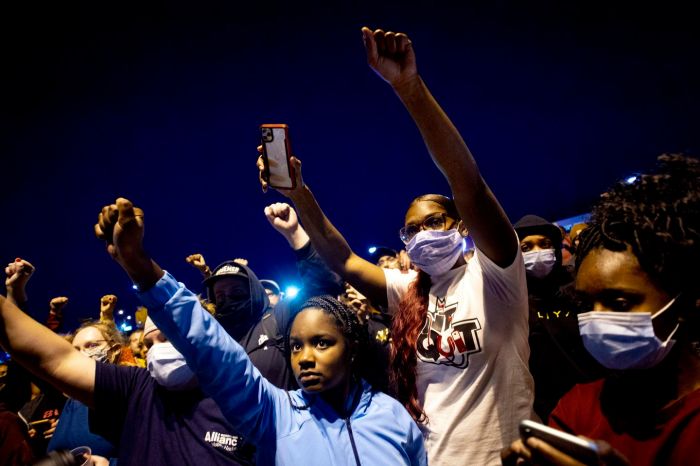
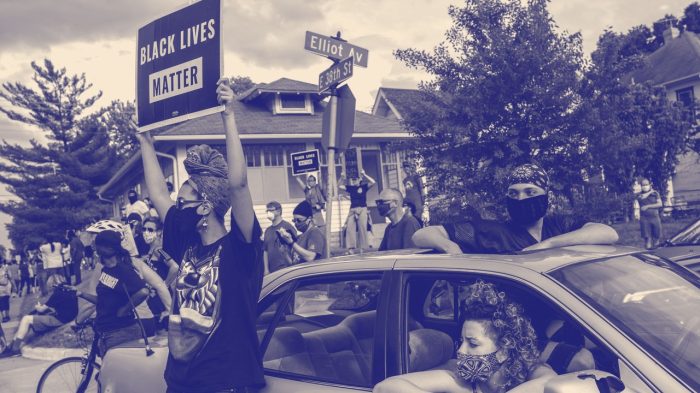
People march at a peaceful protest seeking justice for George Floyd in Flint Township, Michigan.
People march at a peaceful protest seeking justice for George Floyd in Flint Township, Michigan.JAKE MAY | MLIVE.COM/ASSOCIATED PRESS

“The reason that Black people are in the streets,” the acclaimed American writer James Baldwin said in 1968, “has to do with the lives they are forced to lead in this country. And they are forced to lead these lives by the indifference and the apathy and a certain kind of ignorance, a very willful ignorance, on the part of their co-citizens.” A half century later, Baldwin’s wrenching words reverberate in an America where thousands of protesters across dozens of cities have taken to the streets over the past three days despite a deadly pandemic. The country they are objecting to is one where a police officer kneels on the neck of a Black man until he dies, knowing it is all being caught on camera; the country where, after a Black jogger in a white neighborhood is shot to death in broad daylight, the killers go weeks without facing charges; the country where police officers can shoot a young Black woman eight times in her own apartment after entering unannounced with a warrant for someone who did not live there.

In this America, the president tweets out dog whistles to white supremacists and threatens protesters with violence. Never mind that the same president encouraged protests just a few weeks ago that culminated in the storming of the Michigan Capitol by armed white vigilantes.
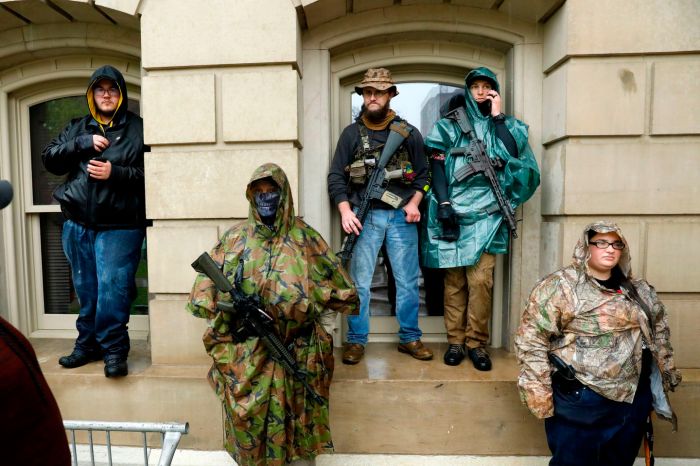
Armed demonstrators in Lansing, Michigan, protest the coronavirus pandemic stay-at-home orders on May 14.
Armed demonstrators in Lansing, Michigan, protest the coronavirus pandemic stay-at-home orders on May 14.JEFF KOWALSKY/AFP VIA GETTY IMAGES

“Everybody knows, no matter what they do not know, that they wouldn’t like to be a Black man in this country,” Baldwin said in 1968. The ills he spoke of remain; some have even worsened. Stark income and wealth gaps persist along racial lines, failing schools and paltry social services put a giant foot on the scale against Black youth, biased judges and juries disproportionately imprison Black men, and the severe health disparities suffered by Black Americans now include a higher death rate from COVID-19. But the most poignant picture of racial injustice in America is repainted in blood whenever a police officer, armed and sanctioned by the state and wearing the uniform of the law, kills a Black citizen with impunity. With the video of the death of George Floyd under the knee of white Minneapolis police Officer Derek Chauvin, Black Americans once again relive a brutal nightmare that dates back to the country’s founding. Their lives are deemed dispensable, even and sometimes especially by those whose job it is to enforce the law.

And on Tuesday, the day after the incident, it took civil unrest in the streets to spur his arrest and murder charges on Friday. The three officers who helped him during the arrest, who either held George Floyd down or stood by as he said he could not breathe and cried out for his mother, have not faced charges. The camera footage shows a group of officers who acted as if they knew they would not be punished.

It is a form of Baldwin’s “willful ignorance” that the country’s politicians, policy makers, prosecutors, and police departments have not done more to prevent and punish acts of violence against Black people on the part of police and it is a form of willful ignorance that more citizens are not outraged. Piecemeal reforms to diversify police forces, train officers to de-escalate conflict, and require body cameras have fallen abysmally short in protecting Black people from errant law enforcement officers. Derek Chauvin had nearly 20 complaints and two letters of reprimand filed against him and had opened fire on two people before he knelt on the neck of George Floyd. Across the country, there is still too little accountability for police, including here in Boston, where the city has stopped releasing stop-and-frisk data.

It is striking that chiefs of police around the nation quickly condemned the incident that led to George Floyd’s death in Minneapolis. But over the past few days, what has followed such political statements are violent confrontations between police and protesters and between police and journalists in many cities. Law enforcement officers have driven vehicles through crowds, tear-gassed protesters, and opened fire with rubber bullets on journalists. For the people on the streets who are exploiting the unrest and endangering others, arrests are justified. But numerous accounts point to acts of disproportionate police violence in response to peaceful protests.

That more and more Americans are refusing to accept the violence against Black Americans presents political leaders and law enforcement agencies around the nation with an imperative to act. State and federal lawmakers must use this moment to enact bolder policy reforms than those to date to reduce sentencing disparities, raise juvenile justice ages to keep young people out of the prison system, reform civil service laws that make it hard to hold cops accountable for wrongdoing, and strengthen civilian police-oversight boards. Police departments across the nation should press for the authority to remove officers who have any history of racial violence or aggression toward citizens; police chiefs should show that they have zero tolerance for such acts. They must send a loud and clear message that the era of sanctioned police violence against Black citizens is over.

With so many Americans moved by the death of Floyd and the callousness of Chauvin, this could be the country’s watershed moment for finally addressing police violence and racial injustice. But even after the fires stop burning, Americans of all races must be unwilling to accept the loss of Black lives.

Editorials represent the views of the Boston Globe Editorial Board. Follow us on Twitter at @GlobeOpinion.

Source: America’s willful ignorance about Black lives – The Boston Globe

The Multiple, Unfolding Crises for African-Americans in Minneapolis | The New Yorker

A Minneapolis police officer knelt on the neck of an African-American man named George Floyd for several minutes on Monday, as Floyd begged the officer to stop, said, “I can’t breathe,” and eventually lost consciousness. Floyd, who was forty-six, was pronounced dead at a hospital that evening. After video footage of Floyd’s asphyxiation, which was taken by bystanders, circulated online, the mayor of Minneapolis, Jacob Frey, announced on Tuesday that the four officers who had been at the scene had been fired. “This is the right call,” Frey said on Twitter. “Being Black in America should not be a death sentence.” The police had responded to a call that Floyd had used a forged check at a nearby deli and, in their first statement about the incident, noted only that he appeared to be “suffering medical distress.”

On Tuesday, the F.B.I. joined Minnesota’s criminal investigation of the incident, as Floyd’s family called for the four officers to be charged with murder. That afternoon, thousands of people gathered for protests in the streets of Minneapolis, which were followed that evening by clashes between riot police and protesters outside a precinct station. Protesters chanted “I can’t breathe,” which became a Black Lives Matter slogan after the death of Eric Garner, in New York, in 2014. The Minneapolis area has been the site of several contested police shootings and Black Lives Matter protests—most notably, after Philando Castile was pulled over and fatally shot by police in a suburb of Saint Paul, in 2016. The officer who killed Castile was fired from the police department but acquitted of manslaughter.

On Wednesday, I spoke by phone with Leslie Redmond, who, at twenty-eight, is an attorney and the president of the Minneapolis chapter of the N.A.A.C.P. During our conversation, which has been edited for length and clarity, we talked about racial inequities in Minneapolis, how activists are thinking about protests in the midst of a pandemic, and what steps she wants authorities to take regarding Floyd’s death.

What have the past couple days been like in the Minneapolis area?

It has been crazy. People on the ground are very upset and sad and disheartened, and rightfully so. I think about our young people, and how hard they are taking this. If people put it into perspective, for young people, they have grown up their entire lives watching black bodies murdered on social media, in real time, with no grief counsellors, with no therapy, with no one to help them make sense of it. And, to be honest, I don’t even know if we could make sense of it if we wanted to, because we are all just outraged and trying to figure it out.

What I have also seen, though, is black leaders coming together, and I am super thankful for Medaria Arradondo, who is the first African-American police chief we have ever had in Minneapolis. The way that he stepped up and brought us together during this time is just so honorable, and I know we wouldn’t be having the progress we are having if he wasn’t the police chief. And I think about five years ago—in the fall before Philando Castile, there was Jamar Clark, who was killed by police officers in Minneapolis. We had a completely different police chief, a woman named Janeé Harteau, and it was horrible. It was a completely different response. You didn’t see any action or accountability. [The Minneapolis Police Department conducted an internal investigation of Clark’s shooting and determined that the officers had not violated its use-of-force policy.] So for Chief Arradondo to do the right thing and fire all four of those officers, and for the mayor to support him, was a major step in the right direction. It doesn’t take away from the pain and hurt people are feeling on the ground, but it moves us in the right direction of getting some justice for Mr. Floyd.

What is your level of trust in the mayor on these issues?

I am thankful for Mayor Frey. I think he has been showing good leadership. But it is not just about what happens in this specific situation and this moment. It is about what follows it. Minnesota has some of the worst racial disparities in the nation. I tell people that even before covid-19 we were in a state of emergency, and then that put us into a state of emergency times two. And now imagine having to deal with a black man being murdered by the government, by police officers, during this global pandemic. And so the burden has just been added to African-American communities, but the resources and the support have not been added. There has been no big lump sum that was poured into the community for us to pour into ourselves. And so that’s what I mean about it not just being about this moment—it’s about the moment that will follow, and the resources and communication that will follow this moment.

There were some demonstrations last night, but how do you think about organizing and marching and protests when there is a pandemic going on?

Protests are essential, and they have always been a part of the strategy. They are a tactic. But we are protesting to build power, and that is what people have to understand. A lot of people don’t really understand what goes on before and after. Black leadership was in communication with Chief Arradondo and in physical meetings with Chief Arradondo since 10 a.m. that morning. The protests didn’t start until 5 p.m. And so there was a lot of work being done before and after.

At the protests, for people who were on the ground originally, there was a really good effort and intent to push people back. And not only did most of the people in the crowd have masks on, but there were community organizations passing out masks, as they were already doing because of covid-19. People asked why I didn’t have one on. Because of the tear gas, a lot of us had to remove our masks, but it wasn’t people blatantly trying to not social-distance and protect themselves.

Protesting feels generally like a much harder thing to do, with so many additional complications now.

It’s very complicated, and the reality of the situation is that we shouldn’t be in it. That is the biggest issue here. Had even one of these officers stepped up to say, “Hey, this man is in handcuffs already. He is down on the ground. He doesn’t need officers on his neck and back for over three minutes, with bystanders pleading, and telling you he is bleeding and that he can’t breathe.”

And, you know, Isaac, one of my biggest things is that this is not just a civil-rights issue—this is a human-rights issue, and the fact is that black people’s humanity is being denied constantly. And I worry about the humanity of individuals, and not just the police, because we know a lot of black people are dying at the hands of non-police officers. But specifically police officers—how can they turn off their humanity and kill black people in cold blood for what a lot of the time seems like nothing? It reminds you of much of the history of lynching in America. And now we are just being lynched without the ropes.

Source: The Multiple, Unfolding Crises for African-Americans in Minneapolis | The New Yorker

Research Shows Entire Black Communities Suffer Trauma After Police Shootings – Yes! Magazine

Police killings of unarmed African Americans have created a mental health crisis of enormous proportions.

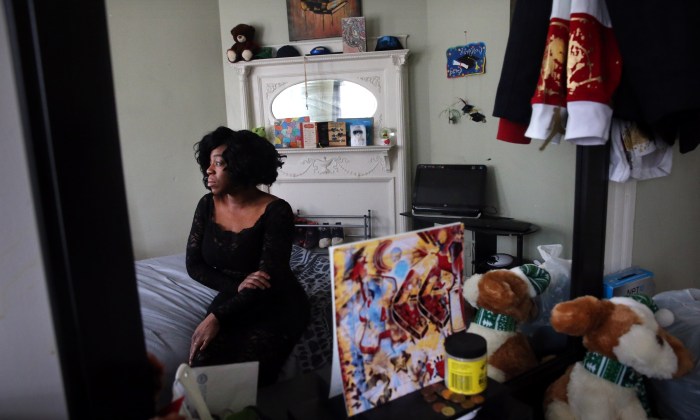
Following several nationally publicized police killings of unarmed Black Americans in the United States, Eva L., a fitness instructor who identifies as Black, started to experience what she describes as “immense paranoia.” She would often call in sick, because she feared risking an encounter with police upon leaving her house. She also started to second-guess her and her husband’s decision to have children. “Seeing Black bodies murdered and physical/emotional violence online and on the news” was a trauma she could no longer bear, Eva says. “I was terrified of bringing a child into the world we live in and experience as Black people. I thought not having kids was a truer sign of love than risk them being harmed by this world.”

Click here for more in this series.

A recent study sponsored by the University of Pennsylvania—released just before the anniversaries of the deaths of Eric Garner (2014), Michael Brown (2014), John Crawford (2014), and Philando Castile (2016)—found that there could be millions like Eva, for whom these killings have been a mental health trigger. Research included data from the Mapping Police Violence Project database for police killings between 2013 and 2016 and information from the Behavioral Risk Factor Surveillance System of over 103,000 Black Americans. The results indicate that police killings of unarmed Black Americans are having a population-level impact on the mental health of Black Americans.

According to researchers, the incidents may contribute to 1.7 additional poor mental health days per person every year, or 55 million more poor mental health days every year among Black Americans across the United States. That means the mental health burden for African Americans caused by police killings of unarmed Black victims is nearly as great as the mental health burden associated with diabetes. African Americans have some of the highest rates of the disease, which contributes annually to 75 million days of poor mental health among them.

African Americans make up 13 percent of the U.S. population but they accounted for 26 percent of people fatally shot by police in 2015 and 2016. While the death of a loved one can be tragic for the family and community of any police-shooting victim regardless of race, the study reveals that there is a deeper trauma for African Americans, related to the victim or not. Eva started seeing a therapist who diagnosed her as having generalized anxiety and post-traumatic stress disorder. It’s been two years now, and she admits that her progress toward healing has been slow, yet steady. Jacob Bor, co-author of the study and assistant professor at the Boston University School of Public Health, says the responses in his social circle to police killings of unarmed Black victims is what interested him in conducting this study. Bor noticed that White people were able to comprehend “the injustice on an intellectual level but did not experience the same level of trauma.”

The study findings confirmed Bor’s personal observations. The research team did not observe spillover mental health effects in White respondents from police killings. It should also be noted that among respondents of either race, there were no spillover effects for police killings of unarmed White people or killings of armed Black people. The research is essential in considering our own personal experiences, says Bor, adding that the findings speak to the overall “value of different people’s lives.” This society “has a long history of state-sanctioned violence” toward racially marginalized groups, he says. The mental health sector is only now researching the impact of police brutality, a concern that has affected African Americans for decades. “Clinicians can go through medical school without [gaining] any experience in treating the effects of racism,” Bor says. Studies like his, he adds, can help to create long overdue critical mainstream discussions about the effects of racism on mental health, such as, “How do we in public health, society, and among the clinical and mental health services support people when these incidents occur?” and “Can a profession dominated by White providers effectively treat the emotional struggles of ‘living while Black’ in this country?” According to Bor, these discussions are needed to implement change. “Among many White Americans, there is an empathy gap … and a failure to believe when people of color say ‘this hurts me,’” he says.

“Mental health is the ultimate intersectional concern.”

Adding to the deficiency of culturally competent therapists, poverty and other formidable socio-economic challenges—also stemming from structural racism—remain steadfast barriers to African Americans accessing mental health care, according to the American Psychological Association. New York City’s first lady, Chirlane McCray, has also become a passionate advocate for what she describes as a movement for “culturally competent mental health care.” “When you talk about people of color, who are obviously facing discrimination and legacy of racism and poverty in huge numbers, you are talking about something that is really tough to overcome,” McCray says. Inadequate care undermines benefits from policies and resources designed to mitigate the burdens of systemic oppression. “Mental illness along with substance abuse disorders are hardship multipliers,” she says. Struggling unsupported with “mental illness can make everything that much harder.” For example, holding on to affordable housing, staying enrolled in college, and even surviving encounters with law enforcement can be extremely more difficult for those suffering from mental illness or trauma, McCray says. In fact, the most recent annual numbers from the Washington Post’s database of fatal police-shooting victims indicate that “nearly 1 in 4 of those shot was described as experiencing some form of mental distress at the time of the encounter with police.” “Mental health is the ultimate intersectional concern,” McCray says. “It is reflected in all of our policies … education, housing, school, relationships.” In 2015, she and her spouse, Mayor Bill de Blasio, launched Thrive NYC, a $850 million mental health program that incorporates 54 initiatives. Among the program’s several core objectives is the aim to address the stigma around mental illness and increase access to treatment across the city. McCray believes that ThriveNYC’s community focused approach is one of several necessary steps toward reaching historically underserved groups. “Culturally competent care to me is all about trust,” McCray says. “It improves early identification, accessibility, and outcomes.” Also, she says, “People have to be seen.” From her advocacy experience she has observed that “people have to feel that they can turn to someone that they trust.” Connecting people with the appropriate resources, however, means surmounting many challenges. “There is great deal of work to be done to eliminate the stigma,” McCray says. There is also the matter of affordability and infrastructure. “We’ve never had a well-coordinated mental health system in our country—ever. People who have the money find ways to manage.” She says she wants to fight for everyone to get the resources they need to cope. Eva recognizes that her path to healing has taken a significant amount of work and support beyond the means of many African Americans. “Access to therapy is a privilege,” she says. “I know that most people can’t afford weekly sessions at $150-plus.” Yet, she adds, “[going through therapy] is the only reason why I’m OK planning for kids at 32.”


TASHA WILLIAMS writes about economics and technology.
CONNECT:  Twitter

Source: Research Shows Entire Black Communities Suffer Trauma After Police Shootings – Yes! Magazine

California City Was Accused of Police Brutality Weeks Before Cop Beat Black Teen

A

federal lawsuit alleging that the California city of Rancho Cordova “fostered a culture of violence” among local police was filed just weeks before videos showing a white Rancho Cordova police officer pummeling a Black teenager sparked national outrage on Monday. Local law enforcement officials are investigating the latest incident, which reportedly began when the officer stopped a 14-year-old boy for buying a cigar. The encounter escalated, and now-infamous videos circulating widely online show the officer pinning the boy to the ground and punching him several times.

For many, the videos are just the latest example of how people of color, particularly Black and Native people, must turn to social media to seek accountability for acts of racist police violence. Moreover, a lawsuit filed by two brothers arrested in March claims Rancho Cordova has “fostered a culture of violence” that allows its police officers to use excessive force against the public. Together the two cases raise important questions about race and police accountability in the diverse, working-class suburb of Sacramento — and around the country.

Last month, twin brothers Thomas and Carlos Williams filed separate lawsuits in a California federal court alleging that they were wrongfully arrested and violently beaten by three Rancho Cordova police officers on March 23. The two brothers were doing yard work outside Carlos Williams’s new home in Rancho Cordova when a white neighbor mistook them for burglars and called 911, according to the lawsuit filed on behalf of Thomas Williams. Without warning, the officers busted into the yard yelling expletives with their guns drawn.

The Williams brothers, who are Black, tried to tell the officers that they were residents, but the officers “did not care,” the lawsuit claims. Thomas Williams, an education professor who founded a school for children with disabilities, told local reporters that he was “kneed in the head and elbowed on the side of my face.” The officers later accused the brothers of resisting their orders, but the brothers say their hands were in the air. One officer held Thomas Williams in a chokehold for over a minute until he became unconscious, according to the complaint.

“I said, ‘Man he’s not going to make it.’ I saw the veins and the officer just squeezing him tight,” Carlos Williams told CBS Sacramento.

While Thomas Williams was collapsed on the ground in handcuffs, the officers searched the two brothers and found Carlos Williams’s driver’s license, which made it “plainly obvious to the arresting officers that Carlos was not burglarizing his own home,” the lawsuit claims. Still, the officers searched the home and property before arresting the two brothers and holding them in custody for 20 hours. Neither has been charged with a crime, and the lawsuit alleges the officers have since made numerous false statements to justify the excessive use of force.

Now, five weeks later, a controversy over police violence unfolding in Rancho Cordova has ignited social media across the country. On Monday, 14-year-old Elijah Tufono was stopped and aggressively detained by a Rancho Cordova police deputy identified as Officer Brian Fowell in local reports. On the evening news, Tufono said he had just bought a cigar off a stranger when a cop pulled up and asked him what was in his hand. Tufono said he handed the cigar over to the officer right away, but the officer continued to ask him questions. Frightened, Tufono tried to talk his way out of it and the situation escalated into a scuffle as Fowell tried to put him in handcuffs.

In the video, Fowell is seen wrestling Tufono on the ground and throwing punches into the boy’s abdomen. Tufono was arrested and cited before being released to his family. Videos of the arrest posted by friends and family quickly went viral, drawing condemnation from thousands of viewers as well as former Democratic presidential candidates Julian Castro and Kamala Harris.

While law enforcement officials in Rancho Cordova say they are investigating the use of force against Tufono, it remains unclear if the use of force against the Williams brothers is also being investigated. The Rancho Cordova Sheriff’s Department, which contracts with the city’s police department, did not respond to an email from Truthout. Unlike the arrest of Tufono, it appears that no clear video footage has emerged of the Williams brothers’ arrest, and the plaintiffs are not certain of the officers’ identities. A dashboard camera in one of the police cars was turned off shortly before the incident, and at least one officer repeatedly turned on and off a microphone attached to his body, according to the lawsuit.

Source: California City Was Accused of Police Brutality Weeks Before Cop Beat Black Teen

Freedom Rider: Botham Jean, Joshua Brown and Antonio Williams | Black Agenda Report

“Black lives don’t matter in New York, Dallas or anywhere else.”

“The psychological damage done to black people reverberates. So much so that a family would not stand in righteous and uncompromised indignation against the person who killed their loved one. Black elected officials are silent cowards and neither speak nor act on behalf of their people. The rest of us must be watchful and prevent ourselves from falling under the spell of insanity and treachery. Let us begin by remembering Botham Jean, Joshua Brown and Antonio Williams. No one will if we do not. Black lives don’t matter in New York, Dallas or anywhere else.”

.._..  .._..  .._..  .._..  .._..  .._..  .._..  .._..

Margaret Kimberley’s Freedom Rider column appears weekly in BAR, and is widely reprinted elsewhere. She maintains a frequently updated blog as well at http://freedomrider.blogspot.com . Ms. Kimberley lives in New York City, and can be reached via e-Mail at Margaret.Kimberley(at)BlackAgendaReport.com.

Source: Freedom Rider: Botham Jean, Joshua Brown and Antonio Williams | Black Agenda Report

Brandt Jean’s hug of Amber Guyger spurs praise, derision, b[Black, white | LEONARD PITTS JR. II Miami Herald

Forgiveness isn’t the problem. One-way forgiveness is. Who forgives black people?

Opinion BY LEONARD PITTS JR. OCTOBER 08, 2019

Brandt Jean hugs Amber Guyger, the former Dallas police officer who shot and killed his brother, at her sentencing hearing. APHere’s the thing about forgiveness.It’s not just something you extend to someone else. It’s also a gift you give yourself, permission to lay down the heavy burden of grudges and rage. And if you’re a Christian, it’s an obligation — albeit a hard one — of faith.One can believe all that, yet still be deeply conflicted by last week’s act of forgiveness in a Dallas courtroom: Brandt Jean, who is black, embraced and absolved Amber Guyger, the white former police officer who had just been sentenced to 10 years for killing his brother, Botham. Guyger had entered Botham’s apartment mistakenly believing it was hers.While some people considered these acts of grace, others, many of them African American, were furious.

Actress Yvette Nicole Brown retweeted a meme that said: “If somebody ever kills me, don’t you dare hug them. … Throw a chair, in my honor.” To which Brown added: “… and then dig me up and throw ME!” Others were angered that Guyger got “only” 10 years.The view from this pew is that none of us has the right to tell Brandt Jean how to grieve his brother or process the hell he’s living through.

As to Guyger’s sentence: It actually seems fair for a crime that was ultimately a tragic mistake, albeit one exacerbated by poor judgment.What makes it seem unfair is that we’ve too often seen black defendants receive far harsher sentences for far lesser crimes. Like Marissa Alexander who, in 2012, fired a warning shot as her reputedly abusive husband advanced on her. She got 20 years for shooting a ceiling.But if these issues are relatively clear cut, the larger one — forgiveness — is anything but. Especially since it sometimes seems that black people — not coincidentally the most religiously faithful group in America, according to a 2014 Pew survey — are forgiving to a fault.A white supremacist massacres nine people in their church. Family members forgive him. A white cop shoots a fleeing black man in the back. The victim’s mother forgives him.

In 1963, white terrorists killed Sarah Collins Rudolph’s sister Addie Mae Collins and three other girls in a bombing at 16th Street Baptist Church in Birmingham. Rudolph forgave them. And so it goes.Forgiveness, you understand, is not the problem. But one-way forgiveness is. Because who forgives black people? Forget forgiveness for wrongdoing. How about forgiveness for simply existing and trying to live unmolested lives? This is what Botham Jean was doing — eating ice cream in his own home — when he was killed by a white woman who blundered upon that prosaic scene and perceived a threat.In dying that way, Jean indicted cherished American myths about equality and unalienable rights. America — much of white America, at least — hates when you do that. One is reminded of what Hilde Walter, a Jewish journalist, was quoted as saying in 1968: “It seems the Germans will never forgive us Auschwitz.” Similarly, it sometimes seems much of white America will never forgive us slavery. Or Jim Crow.

Source: Brandt Jean’s hug of Amber Guyger spurs praise, derision, black, white | Miami Herald   

LEONARD PITTS JR. II Miami Herald  II @LeonardPittsJr1

Author, The Last Thing You Surrender

Wasted Funds, Destroyed Property: How Sheriffs Undermined Their Successors After Losing Reelection — ProPublica

“Shortly after Phil Sims became the sheriff of Marshall County, Alabama, at 12 a.m. on Jan. 14, he found a cardboard box in a storage closet containing five government-issued smartphones, each with multiple holes drilled clear through them.It was the first time Sims had been allowed to enter the sheriff’s office, a red-brick building overlooking Lake Guntersville, a foggy bass-fishing mecca, since he defeated longtime Sheriff J. Scott Walls in the June primary election.It didn’t take long for Sims to learn that the destroyed iPhones and Androids had belonged to his predecessor and his top brass. Sims also discovered that the hard drives had been removed from the computers in his and his chief deputy’s offices, and reams of records were nowhere to be found.”

Source: Wasted Funds, Destroyed Property: How Sheriffs Undermined Their Successors After Losing Reelection — ProPublica

Ava DuVernay’s new Netflix series sheds light on the horrors of wrongful incarceration

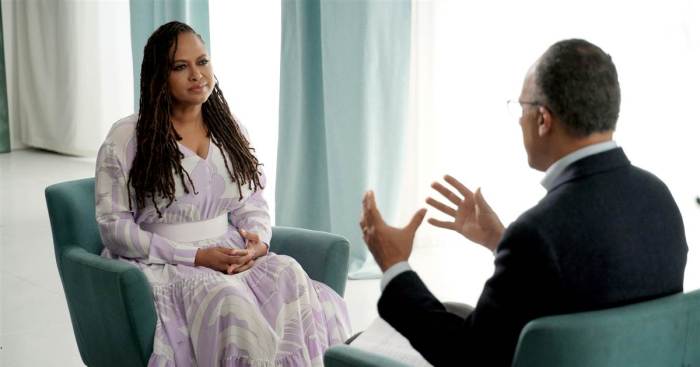
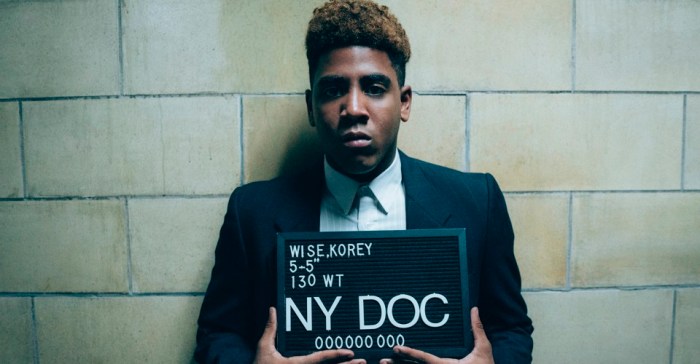
“The time that we lost, we can’t get that back,” Kevin Richardson told NBC’s Lester Holt in an interview along with the group. “We lost our youth, our youthful years.”Their stories are profiled in the upcoming Netflix series “When They See Us,” a four-episode drama which was directed and co-written by Ava DuVernay. The limited series chronicles the journeys of the five men over the course of 25 years through their trials to their release from prison.“I always go back to whose story am I telling and is this choice helping to tell their story, in the most dynamic way, the most truthful way, for them,”

DuVernay told Holt.DuVernay, known for directing social justice films like “Selma” and big budget movies like “A Wrinkle in Time,” felt it was critical to tell the story of how false confessions landed the five teenagers in prison for crimes they did not commit.

Source: Ava DuVernay’s new Netflix series sheds light on the horrors of wrongful incarceration

‘When They See Us’ Shows a Case’s Impact on U.S. Policy – The Atlantic

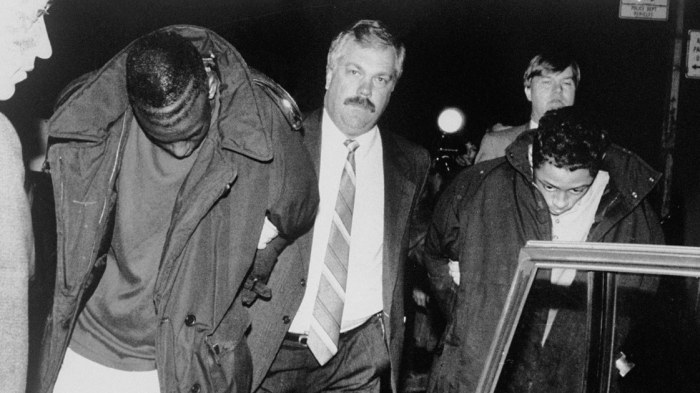
When They See Us is primarily focused on the racist logic of the policing, court, and prison systems that cost the five defendants their childhood. The series also profoundly illuminates some inherent problems in American criminal justice from a range of perspectives. Viewers get an intimate glimpse of mothers, fathers, and siblings fighting for the freedom of their loved ones; law-enforcement authorities classifying these same boys as “animals”; and protesters on both sides holding signs, declaring “it’s not open season on women” or the real rapist in court today is the New York police and the D.A.

Ultimately, the hysteria surrounding the Central Park Jogger case gave rise to new language about black-youth crime, and to new laws that caused more children to stand trial as adults than at any other time in American history.

When They See Us gets the audience closer to understanding why juvenile and adult prison populations exploded through the 1990s, and how the United States became home to the largest incarceration system in the world.

Source: ‘When They See Us’ Shows a Case’s Impact on U.S. Policy – The Atlantic

Read: Ava DuVernay does true crime differently in ‘When They See Us’

The Central Park Five, Criminal Justice, and Donald Trump | The New Yorker

In two trials, in 1990, Santana, Wise, Richardson, McCray, and Salaam were convicted of the attack, even though there was no physical evidence tying them to it, only their supposed confessions, which contradicted one another. They were sentenced to terms of between five and fifteen years. The accused came to be known as the Central Park Five, but that, too, was a linguistic dodge. Better to identify them by their number and the scene of their alleged crime than by the brutality visited upon them by an arbitrary justice system and the public opinion that abetted it. In 2002, Matias Reyes, a convicted rapist, confessed to the crime, and, based on DNA evidence, the charges against the five were vacated. In 2014, the city paid them forty-one million dollars, to settle a federal civil-rights lawsuit.

Source: The Central Park Five, Criminal Justice, and Donald Trump | The New Yorker