We are standing at a juncture of history where we cannot deny the failure of the American democractic state to incorporate and care for the labor and social worth of oppressed American classes. Dr. Evelyn Patterson’s “Incarcerating Death: Mortality in U.S. State Correctional Facilities, 1985-1998,” argues that Black men are safer in prison than in American society. Their access to healthcare and distance from violence is one of the primary reasons they live. We are then tasked to ask ourselves, in this world, where living in this society, our society, how we can accept this reality and yet deny the opportunity for those we find in it to escape it.
Despite our resistance to accepting the devolution of America towards decadent ideas of racism, classism, and primitivism, there is a very real political reality that has changed the political tides of this country. The rise of conservativism and reactionary politics against Obama has in many ways solidified a rise of “lost causes,” where states like Texas in its 2012 party platform maintained a staunch opposition to “critical thinking” saying “oppose the teaching of Higher Order Thinking Skills (HOTS) (values clarification), critical thinking skills and similar programs that are simply a relabeling of Outcome-Based Education (OBE) (mastery learning) which focus on behavior modification and have the purpose of challenging the student’s fixed beliefs and undermining parental authority.” Similarly states like Arizona, and Tennessee have sought to constrain rather than expand the pedagogy of students amidst the Browning and Blackening of America choosing an ideological protectionism over and against a democratic propagation of heroes and sheroes of America. And let’s not pretend this view is isolated to the reactionary politics of state boards of education.
Six years ago Eduardo Bonilla Silva, Carla Goar, and David Embrick wrote an article entitled “When white Flock together: The Social Psychology of white Habitus,” in Critical Sociology arguing that most “whites live a white habitus that creates and conditions their views, cognitions, and even sense of beauty,” thereby creating a “sense of racial solidarity” that “adds to whites’ perceptions that their white lifestyle is the correct and “normal” way of doing things. As a result of this conditioning, whites’ racialized attitudes and prejudice toward blacks are continuously recycled and legitimated.” This racial solidarity however is not without consequence as it is both built on the “whites tremendous levels of racial segregations and isolation while growing up in neighborhoods and schools” as well as an isolation that continues “in colleges and workplaces.” This habitus creates a lack of reflexitvity to questions of racial and economic disparity that rationalizes such realities as normal.
This impulse is seen even more recently in Michael I. Norton and Samuel R. Sommers “whites see Racism as a Zero Sum Game that They are Now Losing,” from the Journal on Perspectives on Psychological Science in 2011, which argues that contrary to previous studies that look at white attitudes on racial progress and white abilities to explain away racial disparities, that now “not only do Whites think more progress has been made toward equality than do Blacks, but Whites also now believe that this progress is linked to a new inequality—at their expense” (217).
What then do we say of education? Should everyone go to college? To this question I would like to restate the proposition: Can anyone who is economically and racially deprived of their ability to compete economically and politically with racism, and poverty afford not to go to college? The answer is obviously no. What does college education offer many Americans over and above the primary education of high school?
Craig Saddler’s “The Impact of Brown on African American Students: A Critical Race Theory Perspective,” has argued that Black and brown children are not only being miseducated by public education, but de-educated. Following the analysis of my 2009 article “Saved by the Bell: Derrick Bell’s racial realism as pedagogy,” it is important to recognize that public education was never meant to develop the capacities of Black, Brown, Indigenous, the poor, and to a lesser extent women. Education was as William V. Spanos argues in The End of Education: towards Post-Humanism, ”a mechanism of oppression and complacency in in state policies.”
Dr. Tommy J. Curry
Professor Philosophy and Black Studies
Texas A & M Univeristy
Black people are angry. Anyone who is going to be our ally in the fight against racism needs to understand that. Not every black person walks around angry, or is aware of their anger. Fury looks and sounds and hangs differently on people of African heritage with differences of class, ethnicity, generation, geography, gender, sexuality, and trauma history. But for many of us, we’re angry, and we have good reason after hundreds of years of slavery, racism, colonization, jim crow, neo-colonialism, exploitation, and degradation. This is not an abstract, academic, intellectual racism; this is about hundreds of years of our ancestors bringing racist violence home. In the US, slave masters beat us with whips and we beat our children with belts. Slave masters raped and incested African women, and sexual abuse became epidemic in black families. Slave masters worked us to death and now we work ourselves to death, and we are furious. For hundreds of years, we have had to swallow the rage or risk getting killed by white people. And we swallowed it, and killed each other and ourselves. Men take the rage out on each other, on women and children, women take the rage out on each other and on children, and children take the rage out on each other, particularly those younger. Shit rolls down hill. We have a hard time loving ourselves and a hard time building loving, lasting relationships with each other.
In order to heal from racism, black people need hardcore healing spaces with a big, safe, container to do rage work, to get it out of our bodies. It’s not about sitting and talking about it in a nice middle class therapist’s office, or going for a jog, it’s about finding a safe place to scream our voices raw, kick and flail, and let that beast out. One black woman who does this work is Ruth King, author of Healing Rage – Women Making Inner Peace Possible.
Men need spaces to work on rage, as well. My partner is an African heritage man who doeshealing work with black men. When I asked him to talk to me about black men’s rage, he said that black men are filled with sorrow. But they are culturally prohibited from expressing sorrow, because such displays of vulnerability make them targets of violence and homophobia. So the society has shown them that rage is their best option for pushing back against racism—the only option other than acquiescence. So many of them take the only option that is offered. He said that men need to work with other men to face these feelings. Men have the breakthroughs when other men let them know it’s okay to be vulnerable and they can actually show and get in touch with the sorrow. Women can be allies to this process, but the key is for men to be emotionally vulnerable with each other, not for women to be vulnerable.
Black rage is a response to racism. White guilt is a response that many white people have to racism, and the two have a dynamic interaction. White guilt doesn’t reflect a principled stance against racism, and a commitment to end it and undo its effects. White guilt is more of a childlike uh-oh, we’re in trouble, where the white person goes around feeling bad and expecting/projecting some sort of anger or punishment from people of African heritage. This can lead to fawning and accommodating behaviors in communities and relationships. Again, this is not about a principled stance against racism, this is about an anxious wish to avoid conflict with an individual person of African heritage. At other times, part of the racist gaze is to project anger onto black people regardless of their emotional reality at any given moment.
If you plan to be an ally to people of African heritage, you need to be able to handle black rage. Big, heaping truckloads of it. And by handle, I mean be able to keep thinking clearly and act decisively in the presence of rage.
This is precisely what did not happen last week at the Brecht Forum in Brooklyn at a panel titled “What Do We Mean When We Say Privilege, Ally & Comrade? Exploring the Difficulty of Difference & Movement Building.” I first read the account of one black woman panelist, Dr. Brittney Cooper, who challenged a black male panelist, Kazembe Balagun about his sexism. He yelled at her, menaced her, and threw a glass of water on her. An entire room full of people sat silent in the face of this gendered violence.
Left to sit there, splashes of water, mingling with the tears that I was embarrassed to let run, because you know sisters don’t cry in public, imploring him to “back up,” to “stop yelling,” to stop using his body to intimidate me, while he continued to approach my chair menacingly, wondering what he was going to do next, anticipating my next move, anticipating his, being transported back to past sites of my own trauma, traumas that have been especially fresh and difficult this Domestic Violence Awareness Month…
I waited for anyone to stand up, to sense that I felt afraid, to stop him, to let him know his actions were unacceptable…
I learned a lesson: everybody wants to have an ally, but no one wants to stand up for anybody.
Eventually three men held him back, restrained him, but not with ease. He left. I breathed. I let those tears that had been threatening fall.
One black man further berated Professor Cooper, and the biggest gesture of solidarity was when the third panelist, a white woman, silently inched her chair closer to Cooper.
By way of compassion, I suspect that the entire crowd was completely triggered and regressed to some childhood state in the face of black male rage unleashed. White allies need to work on whatever childhood baggage they bring to the table. Perhaps it is the terrified memories of their own parents’ rage. Or maybe they are still stifled by the frequent middle/upper class prohibitions against strong feelings that meant their own childhood rage got shut down. While I have compassion for anyone who is triggered, I hope that everyone in that room who can see clearly in hindsight that they should have said/done something decisive to intervene. I hope they can tell that because they were far too scared to act in integrity with their values, they need to go seek some kind of emotional help.
But beyond the emotional shortcomings of the community, I want to challenge some of the underlying thinking that often allows this kind of thing to go unchecked. White people feel guilty, and will refuse to take principled stands against expressions of black rage. It’s one thing for black people to take responsibility for our rage and find an appropriate therapeutic or healing context (could be counseling, could be ritual, could be somatics, could be any number of things). This is a situation where the person or group of people have agreed to be witness and container to the rage you are prepared to express in an attempt to heal yourself, that is rage with consent. It is, however, a completely different proposition for black people to go around leaking and firing their rage at anyone in range, anyone who challenges them, anyone who is vulnerable, or anyone who unwittingly pushes the wrong button. As Audre Lorde said, “use without the consent of the used is abuse.”
Starting with the Black Power Movement, some black men have had a narrative that black liberation is about their freedom to express rage. So-called allies have co-signed this, from former Black Panther Eldridge Cleaver writing about going around raping white women as a revolutionary act (he “practiced” on black women first, to get it right) to the Brecht forum allowing a black man with a history of verbal and physical raging to be on a challenging panel about allyship. Our allies need to take a principled stand that rage is understandable, but rage needs to be healed and patterns of venting rage without consent need to be interrupted. There is no noble political principle being served by allowing people to abuse others. This doesn’t mean that all displays of anger need to be shut down. It’s important to allow emotional space outside of white, middle class cultural norms (sometimes people get angry, and that can be a good thing) but it’s different for people to have a pattern of raging as part of how they work in community. Our allies need to be able to tell the difference, offer resources, set limits, and hold lines against abusive behavior.
There is a particular historical dynamic that can happen sometimes with black men’s rage and white women’s guilt. In this particular dynamic, black men express rage about racism and white women feel guilty, and offer themselves (sexual access, emotional caretaking, free labor) to black men in some sort of private reparations campaign. Clearly there is no larger agenda being served about ending racism, but it’s easy for women’s training as caretakers and fear of violence to get ignited in these situations. In reality, I have seen this dynamic happen in relationships between black and white women, and even occasionally between black women and white men, as long as the white person has strong childhood socialization to respond to rage by feeling responsible and offering caretaking.
So while the pattern is primarily one of black men, it is not exclusive to black men. I have seen this same pattern run with powerful black women in white dominated organizations, as well. Confused white leaders have been liberal with abusive patterns, convinced that it was somehow good for white people to be targeted with this rage. Those same white leaders were somehow unconvinced that there was a problem with the raging, when the black women targeted black people, as well.
I have also seen black rage, particularly African American rage (from the people whose ancestors were enslaved in the US South) target other people of color or of African heritage, whom they deemed as somehow not black enough, not really of color, somehow closer to white people, deserving of being targeted with rage, disdain, dismissal, or disregard. This rage has undermined or destroyed many coalitions with other people of color, not to mention destroying untold numbers of black organizations.
It is not allyship if white people think we can’t possibly control ourselves; white racism holds that this is the best we are capable of. There’s a particular way that this liberalism and confusion works with regard to black women and men, that white people/organizations generally can’t manage to be allies to both black women and men. Starting in the 70s, feminist organizations notoriously would ally with black women’s mistreatment at the hands of black men in a way that was a little too gleeful about black men’s monstrosity. Or, like the Brecht forum, would tolerate black men’s rage in ways that left black women targeted and alone.
I have also been part of community organizations that are predominantly white and have trouble hanging on to black men. Instead of addressing systemic racism in the organization, they use a strategy of placating and lowering their standards to keep black men involved. No matter how unaccountable African heritage men in the community or organization may be (missing meetings, not communicating, thoughtlessly inconveniencing leaders), it seemed the bar could always be lowered, the expectations could always be revised, so no one expressed displeasure at this lack of accountability. The black men meet a wall of complacent white compassion. Leaving the black women in the community to be the bad cops, the ones who actually have some expectations.
In my personal life, I remember when my partner and I went to couples’ counseling. We had a white, middle class, gentile therapist. He and I are both physically big people and were quite emotionally angry. I used to joke that we were 500 lbs of angry blackness on that poor white woman’s couch. The therapist was completely frozen in the face of our black rage. The two of us would sit in the sessions and fight, and she had very little to say. We didn’t progress much until we started seeing a Jewish therapist, the child of Holocaust survivors. She wasn’t even remotely scared of us. She could think and act decisively in the face of black rage. I celebrate her work with us, not only because it saved our marriage, but also because it helped us through our common trauma so that we could both become people capable of being loving to each other.
Coming out of these and other experiences, I have high standards for white allies. In both of these spaces, I have met white people who can stand up to black rage, to black hopelessness, and to black sorrow. If we aim to end racism, white allies need to start getting themselves in better shape. Do the emotional work; never leave a sister unsupported in the face of such violence. Interventions don’t have to be perfect, but they do need to happen. Speak the truth. Even if your voice shakes.
Aya de Leon is director of the Poetry for the People program, teaching creative writing at UC Berkeley. In the early 1980s, she was a teen leader in the anti-nuclear movement in Northern California. In the late 80s, she was a college feminist activist. In the early 90s, she was a young adult leader community organizing for racial justice in Roxbury, MA. Since then she has been a cultural worker, receiving critical acclaim from her politically charged performance work in the Village Voice, Washington Post, American Theatre Magazine, the SF Chronicle, SF Bay Guardian, and East Bay Express. Her work has been featured on Def Poetry, in Essence Magazine, and she blogs for Bitch Magazine. In 2004, she put in her bid for the White House in her solo show “Aya de Leon is Running for President.” She has participated in and supported many different movements with her own blend of arts, activism, community organizing, facilitation of healing from trauma, youth work, and leadership development. She is currently working on a sexy feminist heist novel about redistribution of wealth. She blogs at ayadeleon.wordpress.com and is on twitter @AyadeLeon. More work by Aya de Leon on anti-racist allies: We Need to Raise the Bar on Being an Ally , and On Being Friends With White People
During each month, the broadcast will feature a recommended book to the audience. The last Saturday of the month will provide a live segment to be focused on getting impressions and thoughts from listener readers. We will attempt to feature a relevant guest for each book.
OCG Book November, 2013
“Faces At the Bottom of the Well”, Professor Derrick Bell
The noted civil rights activist uses allegory and historical example to present a radical vision of the persistence of racism in America. These essays shed light on some of the most perplexing and vexing issues of our day: affirmative action, the disparity between civil rights law and reality, the “racist outbursts” of some black leaders, the temptation toward violent retaliation, and much more.
Derrick Albert Bell, Jr. was born on November 6, 1930 in Pittsburgh, the eldest of four children. At an early age, Derrick’s parents, Ada Elizabeth Childress Bell, a homemaker, and Derrick A. Bell, Sr., a millworker and department store porter, instilled in him a serious work ethic and the drive to confront authority.
Derrick was the first person in his family to go to college. He attended Duquesne University, where he earned an undergraduate degree and served in the school ROTC. He then served as a lieutenant in the United States Air Force, where he was stationed in Korea and Louisiana.
In 1969, Derrick joined the faculty of Harvard Law School; in 1971, he became the first black tenured professor on the faculty of the law school. In 1973, Derrick published the casebook that would help define the focus of his scholarship for the next 38 years: Race, Racism and American Law. The publication of Race, Racism and American Law, now in its sixth edition, heralded an emerging era in American legal studies, the academic study of race and the law.
In 1980, Derrick became the Dean of the University of Oregon School of Law, becoming one of the first African Americans to serve as dean. That same year, he published a seminal work Brown v. Board of Education and the Interest Convergence Dilemma, 93 Harv. L. Rev. 518 (1980), in which he argued that white Americans would only support racial and social justice to the extent that it benefits them. His argument that the Supreme Court’s decision in Brown was driven, not by concerns over genuine equality and progress for black Americans, but rather by concerns over the nation’s emerging role as an anti-Communist military superpower, sent tremors through the legal academy.
In 1986, Derrick resigned his position as Dean of Oregon Law in protest of the faculty’s refusal to hire an Asian American female professor. He returned that same year to Harvard.
Soon after Derrick’s return to Harvard Law School, he staged a five-day sit-in in his office to protest the law school’s failure to grant tenure to two female professors of color. With student support, Derrick launched a protest movement at Harvard Law School that received national attention.
Derrick saw the parallels between his work as a civil rights lawyer and a leader for the students’ demand for increased diversity on the law school faculty. In 1990, after years of activism around the hiring and promotion of female professors of color, Derrick took an unpaid leave of absence in protest from Harvard Law School. He would never return. After refusing to end his two-year protest leave, Harvard University dismissed Derrick from his position as Weld Professor of Law.
During this tumultuous time, Derrick met Janet Dewart. As the communications director of the National Urban League, Janet called Derrick for permission to publish one of his fictional stories. This conversation was the spark of a new relationship, and they were married in June 1992.
During his long academic career, Derrick wrote prolifically, integrating legal scholarship with parables, allegories, and personal reflections that illuminated some of America’s most profound inequalities, particularly around the pervasive racism permeating and characterizing much of American law and society. Derrick is often credited as a founder of Critical Race Theory, a school of thought and scholarship that critically engages questions of race and racism in the law, investigating how even those legal institutions purporting to remedy racism can more profoundly entrench it.
After a valiant battle with cancer, Derrick Bell died on October 5, 2011. In Derrick was an incredibly spiritual man with a deep appreciation for gospel music. As such, it is only fitting that a biblical verse sums up the extraordinary life of Derrick Bell: “Well done, my good and faithful servant.” Matthew 25:23
The term Genocide derives from the Latin (genos=race, tribe; cide=killing) and means literally the killing or murder of an entire tribe or people. The Oxford English Dictionary defines genocide as “the deliberate and systematic extermination of an ethnic or national group” and cites the first usage of the term as R. Lemkin, Axis Rule in Occupied Europe, (1944) p.79. “By ‘genocide’ we mean the destruction of a nation or an ethnic group.” The U.N. General Assembly adopted this term and defended it in 1946 as “….a denial of the right of existence of entire human groups.” Most people tend to associate genocide with wholesale slaughter of a specific people. However, “the 1994 U.N. Convention on the Punishment and Prevention of the Crime of Genocide, describes genocide beyond outright murder of people as the destruction and extermination of culture.” Article II of the convention lists five categories of activity as genocidal when directed against a specific “national, ethnic, racial, or religious group.”
These categories are:
Killing members of the group;
Causing serious bodily or mental harm to members of group;
Deliberately infliction on the group conditions of life calculated to bring about its physical destruction in whole or in part;
Imposing measures intended to prevent births within the group;
Forcibly transferring children of the group to another group.
Genocide or the deliberate extermination of one ethnic group by another is not new, for example in 1937 the Pequot Indians were exterminated by the Colonists when they burned their villages in Mystic, Connecticut, and then shot all the other people — including women and children — who tried to escape. The United States Government has refused to ratify the U.N. convention on genocide. There are many facets of genocide which have been implemented upon indigenous peoples of North America. The list of American genocidal policies includes: Mass-execution, Biological warfare, Forced Removal from homelands, Incarceration, Indoctrination of non-indigenous values, forced surgical sterilization of native women, Prevention of religious practices, just to name a few.
By mass-execution prior to the arrival of Columbus the land defined as the 48 contiguous states of America numbered in excess of 12 million. Four centuries later, it had been reduced by 95% (237 thousand). How? When Columbus returned in 1493 he brought a force of 17 ships. He began to implement slavery and mass-extermination of the Taino population of the Caribbean. Within three years five million were dead. Fifty years later the Spanish census recorded only 200 living! Las Casas, the primary historian of the Columbian era, writes of numerous accounts of the horrendous acts that the Spanish colonists inflicted upon the indigenous people, which included hanging them en masse, roasting them on spits, hacking their children into pieces to be used as dog food, and the list continues.
This did not end with Columbus’ departure, the European colonies and the newly declared United States continued similar conquests. Massacres occurred across the land such as the Wounded Knee Massacre. Not only was the method of massacre used, other methods for “Indian Removal” and “clearing” included military slaughter of tribal villages, bounties on native scalps, and biological warfare. British agents intentionally gave Tribes blankets that were intentionally contaminated with smallpox. Over 100 thousand died among the Mingo, Delaware, Shawnee and other Ohio River nations. The U.S. army followed suit and used the same method on the Plains tribal populations with similar success.
In sorrow, we ARE REMINDED today to remember what was lost and taken, to reject propaganda, miseducation and lies. To pray for the salvage of what is left.
The OUR COMMON GROUND family is asking that as a people of genocide, we are mindful of the history and politics surrounding Columbus Day as our nation continues, insists on celebrating the genocide of the original peoples of this continent. Family is the framework of resistance and reconstitution in our communities.
Enjoy the family today. Make it “THE GREAT TRUTHTELLING”.
CLAIMING OUR OWN HOPE AND CHANGE
Live Talk Radio About the Black Truth of the Event, the Issue, the Idea
TALK THAT MATTERS . . . on OUR COMMON GROUND
Our Common Ground with Janice Graham
URBAN PROGRESSIVE TALK RADIO
ALTERNATIVE ~ ACTIVIST ~ EMPOWERMENT TALK RADIO
“Transforming Truth to POWER one Broadcast at a time”
A celebrated classic, They Came Before Columbus, deals with a number of contacts — both planned and accidental, between Africans and Americans in different historical periods. Evidence for a physical/cultural presence of Africans in Early America is methodically examined.
Dr. Van Sertima reveals to us a compelling, dramatic and superbly detailed documentation of the presence and legacy of black Africans in ancient America.
With his considerable scholarship, Van Sertima examines the facts of navigation and shipbuilding, the sources of latitudinal and longitudinal coordinates, the scores of cultural analogies found nowhere else except in America and Africa, African languages and the transportation of plants, cloth and animals from Africa to the Americas. And from the diaries, letters and journals of the explorers themselves; from Carbon-14 dated sculptures found in the Americas; from the Arabic documents, charts, maps from the recorded tales of the griots to the Kings of Mali; from dated skeletons found as recently as 1975, the author builds his pyramid of evidence.
In addition to a scholar’s fastidiousness, Van Sertima has the skill of a novelist, and with it recreates some of the most powerful scenes history has to offer: the launching of the great ships of Mali in 1310 (200 master boats and 200 supply boats); the sea expedition of the Mandingo king himself in 1311, and many others, equally as vivid.
It is the marriage of these twin crafts–the artist’s and the scholar’s–in the book that makes it possible for us to see clearly the unmistakable face and handprint of black Africans in Pre-Columbian America, and their overwhelming impact on the civilization they found here. (79 illus.)
— Random House, Inc., New York
Commentary – The New York Times and Dr. Clarence Weiant
Many claims have been made over the years by notable black and white scholars –Woodson, Rogers, Lawrence, Jackson, Bailey, Gordon, Irwin, Jeffreys, Cauvet, Wiener. They have all been dismissed. Some of these claims failed to convince anyone but the converted because they needed to be backed up by corroboration from many disciplines. To claim, for example, that Columbus saw “blacks” in Haiti is one thing. To prove that those “blacks” were Africans was another, since there are dark-skinned American Indians in tropical zones of America. Botany (cotton), linguistics (the origin of the word, guanin), metallurgy (the metal alloys in the spears the blacks gave the Americans in trade), navigation (African boats tested on the Atlantic), oceanography (the currents that provided an easy circular route for the pre-Columbian West African trade), archaeology (new skeletal finds in the Caribbean of Africans dated 1250 A.D.) – all these disciplines provided the corroboration that was needed to establish that single claim on a scientific basis. This, Van Sertima felt, would be his original contribution to the subject at the end of a century of speculation – the definitive proof.
The disciplines Van Sertima explored in order to provide this proof are highlighted in a letter published in The New York Times. In this letter, one of the oldest and most important archaeologists in America, Dr. Clarence Weiant, who was on the site in Mexico in 1938 when the first African stone head was discovered, defended Van Sertima against attempts by the British archaeological establishment to discredit They Came Before Columbus.
“Van Sertima’s work,” Dr. Weiant wrote in The New York Times (May 1, 1977) “is a summary of six or seven years of meticulous research based upon archaeology, Egyptology, African history, oceanography, geology, astronomy, botany, rare Arabic and Chinese manuscripts, the letters and journals of early American explorers and the observations of physical anthropologists…As one who has been immersed in Mexican archaeology for some 40 years and who participated in the excavation of the first of the giant heads, I must confess, I am thoroughly convinced of the soundness of Van Sertima’s conclusions.” (84 illus.)
Professor Ivan van Sertima, They Came before Columbus
A review by Femi Akomolafe, 19 January 1995
History, as taught in the Western and Western-dominated world, gives the impression that the first Africans to reach the Americas were brought as slaves, in shackles on slaves-ships. So total is the Euro-Americans onslaught on black people that all military, missionary, scholarship, academic forces are mobilized to paint the picture of the African as an eternal slave of the white man.
In order to justify their crimes of slavery and colonialism, Europeans have constructed a web of lies and prevarications and passed them as historical truth. How else do we explain the Western historians deliberate distortion of the truth to paint the picture of a Caucasian master and an African slave—even in the Americas, where evidence abounded that black people were respected, even venerated, by the old Americans (Occidental Indians)?
So complete was the Europeans falsification of history that several people, both black and white, will be shocked to know that there were historical, archaeological, even botanical evidence of Africans contact with the New World in Pre-Colombian times. As usual, Western scholarship popularized the myth that the history of the Indians started with their ‘discovery,’ by the pirate, ego-tripster and genius of mass-murder, Christopher Columbus.
Happily, one by one, these edifices of distortions, constructed by white-supremacists posing as scholars, historians, anthroplogists, even scientists, are being knocked down.
In his They Came Before Columbus, Professor Ivan Van Sertima of Rutgers University assembled an impressive array of evidence to challenge one of the most persistent of these historical distortions. His argument are so compelling that very many high-calibre scholars, who have maintained the prejudiced line of history, are bound to fall flat from their pedestal. The style of the book is very engaging, almost novel-like—this makes a very good reading.
The first evidence of a black presence in the America was given to Columbus by the Indians themselves: they gave concrete proof to the Spanish that they were trading with black people. “The Indians of this Espanola said there had come to Espanola a black people who have the tops of their spears made of a metal which they called gua-nin, of which he [Columbus] had sent samples to the Sovereigns to have them assayed, when it was found that of 32 parts, 18 were of gold, 6 of silver and 8 of copper. The origin of the word guanin may be tracked down in the Mande languages of West Africa, through Mandigo, Kabunga, Toronka, Kankanka, Banbara, Mande and Vei. In Vei, we have the form of the word ka-ni which, transliterated into native phonetics, would give us gua-nin.” p.11. This was just one of the numerous instances, cited by Professor [van] Sertima, where the names, cultures and rituals of the Mandigos confluenced with those of the ancient Americans.
Thus we have the Bambara werewolf cult whose head is known as amantigi (heads of faith) appeared in Mexican rituals as amanteca. The ceremonies accompanying these rituals are too identical to have been independently evolved among peoples who have had no previous encounter. Talking devil is called Hore in Mandigo, and Haure in Carib. In the American language of Nahuatl a waistcloth is called maxtli, in Malinke it’s masiti. The female loincloth is nagua in Mexico, it is nagba in Mande.
Why would the Indians claimed to have traded with black people if they haven’t? Why would their faith and language have so much infusion of West African influence if these people haven’t had any contact? These might not be sufficient, in themselves, to justify the claims that Africans have been visiting the Americas in pre-Colombian times. But there are witnesses. In 1513 Vasco Nunez de Balboa, another Spanish usurper came upon a group of African war captives in an Indian settlement. He was told that the blacks lived nearby and were constantly waging wars. A priest, Fray Gregoria Garcia wrote an account of another encounter in a book that was silenced by the inquisition: “Here we found slaves of the lord – Negroes- who were the first our people saw in the Indies.” p.22. (It should be noted that in pre-European slavery, slaves are what we called ‘Prisoners of wars’ today. Thus, the Yorubas have the same name, ERU, for both slaves and POWs.)
Aside from these confirmed sightings, there are also an abundance archeological evidence of an Africa presence in pre-Colombian times. These were in the form of realistic portraitures of Negro-Africans in clay, gold, and stone unearthed in pre-Colombian strata in Central and South America.- pp.23-24. Moved by these overwhelming evidence, the Society of American Archeology at a conference in 1968, Professor [van] Sertima reported, concluded: “Surely there cannot now be any question but that there were visitors to the New World from the Old in historic or even prehistoric time before 1492.”
Then there is the oral history of the two peoples. The Griots—traditional historians and masters of orature—‘Oral Literature’ in Mali, have stories about their King, Abubakari the second, grandson of Sundiata, the founder of the Mali Empire (larger than the Holy Roman Empire), who set out on a great expedition of large boats in 1311. None of the boats returned to Mali, but curiously around this time evidence of contact between West Africans and Mexicans appear in strata in America in an overwhelming combination of artifacts and cultural parallels. A black-haired, black-bearded figure in white robes, one of the representations of Quetzalcoatl, modeled on a dark-skinned outsider, appears in paintings in the valley of Mexico… while the Aztecs begin to worship a Negroid figure mistaken for their god Tezcatlipoca because he had the right ceremonial color. Negroid skeletons are found in this time stratum in the Caribbean… ‘A notable tale is recorded in the Peruvian traditions … of how black men coming from the east had been able to penetrate the Andes Mountains.’ p.26
The voyage of Abubakari, Professor [van] Sertima pointed out, may not be as daunting as it seems for anyone who understand the Ocean currents. These currents, which traverse the World’s oceans, serves as natural marine conveyor belts. “Once you enter them you are transported (even against your will, even with no navigational skill) from one bank of the ocean to the other.” pp.22-23. Several successful attempts have been made to demonstrate that it was possible to cross the Atlantic from the Equator to South America, even in small boat.
To the scholars, blinded by racial prejudice, who maintained that the blacks were brought into the Americas as slaves by Phoenicians, Professor [van] Sertima posed the question: “Why would a people as sophisticated as the Indians built temples, shrines and statues to honor slaves, and none to the supposed masters? Indeed why would a people considered so lowly be venerated at all?” The people who were host to these Negro-African figures are known as the Olmecs … In all, eleven colossal Negroid heads appear in the Olmec heartland. pp.30-31. The artifacts have been carbon-dated and it is beyond question that they predates the Columbus era.
Banana, yam, beans and gourd are Old World plants that predates Columbus in the Americas. How did they get there? While the last [gourd] could have been transported by the ocean currents, the first three cannot survive such prolonged exposure. “The African word for banana runs right through these American languages.” p199.
Pipe smoking was another African pastime that found its way into the Americas. “The Malinke words meaning to smoke are dyamba and dyemba. These can account for South American smoke words such as the Guipinavi, dema; Traiana, iema; Maypures, jema; Guahiba, sema; Caberi, scema; Baniva, djeema; and so on. The Mandigo word duli (to smoke) which also occurs in the same form in Toma and Bambara, and in its variant forms nduli and luli in Mende, can be found among the American languages Carb, Arawak, Chavantes, Baniva, Acroamirin, and Goajira.” p. 217. On page 252 through 253, there were several citations of ethnic American names duplicated only among the Berbers, and nowhere else in the world.
Professor [van] Sertima cited several authorities to buttress his forceful arguments that there were African presence in the Americas before Columbus came. He showed evidence to support his views that these blacks were not slaves but traders and priests who were honored and venerated by the Indians—who built statues in their honors. In the closing of the book, he declaimed the notion of ‘discovery.’ In his own words: “It would be an irony, indeed, to find that Americans ‘discovered’ Europe many centuries before Europeans ‘discovered‘ America. But the whole notion of any race (European, African or American) discovering a full-blown civilization is absurd. They presume some innate superiority in the ‘discoverer’ and something inferior and barbaric in the people ‘discovered.’… What I have sought to prove is not that Africans ‘discovered’ America, but that they made contact on at least half a dozen occasions, two of which were culturally significant for Americans.”
THEY CAME BEFORE COLUMBUS is a must read for anyone seeking knowledge about Africa of old, before slavery and colonialism reduced the black man to the object of ridicule and humiliation. It is also imperative for those Europeans who will like to know the true relation of Europe to World civilization, untainted by the lies and vain-glories of their popular history books, to read it.
-Activist, Leader in the African-American Civil Rights Movement-
“Many of the ugly pages of American history have been obscured and forgotten. A society is always eager to cover misdeeds with a cloak of forgetfulness, but no society can fully repress an ugly past when the ravages persist into the present. America owes a debt of justice which it has only begun to pay. If it loses the will to finish or slackens in its determination, history will recall its crimes and the country that would be great will lack the most indispensable element of greatness — justice.”
“Where Do We Go from Here : Chaos or Community?” (1967), p. 109
“If a city has a 30 percent Negro population, then it is logical to assume that Negroes should have at least 30 percent of the jobs in any particular company, and jobs in all categories rather than only in menial areas.”
Interview in Playboy magazine, (1968)
Benjamin Nnamdi Azikiwe
-First President of Nigeria-
“There is plenty of room at the top because very few people care to travel beyond the average route. And so most of us seem satisfied to remain within the confines of mediocrity.”
“My Odyssey: An Autobiography,” (1970)
Harriet Tubman
-Abolitionist-
“I had reasoned this out in my mind, there was one of two things I had a right to, liberty or death; if I could not have one, I would have the other.
I freed thousands of slaves. I could have freed thousands more, if they had known they were slaves.”
”Africana: The Encyclopedia of the African and African American Experience” (2003) by Henry Louis Gates and Kwame Anthony Appiah, p. 299
Marcus Garvey
-Global Leader in the Black Nationalism and Pan-Africanism Movements-
“We are living in a world that is scientifically arranged in which everything done by those who control it is done through system; proper arrangement, proper organization, are among some of the organized methods used to control the world. The weaker peoples before were the Chinese, the East Indians and the Negroes. The Chinese have organized national resistance; the East Indians have also organized national resistance. Therefore, only the Negro who is exposed to the most ruthless exploitation, and is left to be exploited in the future. What will become of the Negro in another five hundred years if he does not organize now to develop and to protect himself? The answer is that he will be exterminated for the purpose of making room for the other races that will be strong enough to hold their own against the opposition of all and sundry.”
“It is unfortunate that we should find ourselves at this time the only disorganized group. Others have had the advantage of organization for centuries, so what seems to them unnecessary, from a racial point of view, becomes necessary to us, who have had to labor all along under the disadvantage of being scattered without a racial aim or purpose.”
“The traitor of other races is generally confined to the mediocre or irresponsible individual, but, unfortunately, the traitors among the Negro race are generally to be found among the men with the highest place in education and society, the fellows who call themselves leaders.”
“Message to the people: The Course of African Philosophy,” (1986)
Dr. Cheikh Anta Diop
Senegalese-born Cheikh Anta Diop (1923 – 1986) received his doctorate degree from the University of Paris and was a brilliant historian, anthropologist, physicist and politician and one of the most prominent and proficient black scholars in the history of African civilization.
Contrary to the long-standing European myth of a Caucasian Egypt, Diop’s studies into origins of the human race and precolonial African culture established that ancient Egypt was founded, populated, and ruled by black Africans; the Egyptian language and culture still exists in modern African languages (including his own Wolof language) ; and that black Egypt was responsible for the rise of civilization throughout Africa and the Mediterranean, including Greece and Rome.
Diop also pioneered techniques of scientific research – such as carbon dating as a means of dating artifacts and remains, and the melanin dosage test which he used to verify the melanin content of Egyptian mummies. Forensic investigators later adopted this technique to determine the “racial identity” of badly burned accident victims. Cheikh Anta Diop University in Dakar, Senegal, is named after him.
Source: cheikhantadiop.com
Dr. John Henrik Clarke
Dr. John Henrik Clarke (1915 – 1998) was a Pan-Africanist writer, historian, professor, and a pioneer in the establishment of Africana studies in professional institutions in academia starting in the late 1960s. He was professor of African world history and in 1969, he became the founding chairman of the Department of Black and Puerto Rican Studies at Hunter College of the City University of New York. He also was the Carter G. Woodson Distinguished Visiting Professor of African History at Cornell University’s Africana Studies and Research Center.
He challenged the mostly white academic historians and attributed their reluctance to acknowledge the historical contributions of black people as part of the systematic and racist suppression and distortion of African history.
Clarke asserted: ”Nothing in Africa had any European influence before 332 B.C. If you have 10,000 years behind you before you even saw a European, then who gave you the idea that he moved from the ice-age, came all the way into Africa and built a great civilization and disappeared,when he had not built a shoe for himself or a house with a window?”
Dr. Marimba Ani is an anthropologist and African Studies scholar best known for her book “Yurugu,” a comprehensive critique of European thought and culture. She completed her Bachelor of Arts degree at the University of Chicago, and holds masters and doctorate degrees in anthropology from the Graduate Faculty of the New School University.
In her ground-breaking work, “Yurugu: An Afrikan-Centered Critique of European Cultural Thought and Behavior,” Ani uses an African perspective through the myths of the Dogon people and the language of Swahili to examine the impact of European cultural influence on black people and the world. She developed a framework that methodically debunked the belief that Western civilization was the best, most constructive society ever built and instead she pointed out its inherent destructive tendencies.
Source: http://en.wikipedia.org/wiki/Marimba_Ani
Dr. Amos Wilson
Dr. Amos N. Wilson(1941 – 1995) was a social caseworker, psychological counselor, supervising probation officer and training administrator in the New York City Department of Juvenile Justice. He was also an assistant professor of psychology at the City University of New York.
In his book “Black-on-Black Violence: The Psychodynamic of Black Self-Annihilation in Service of White Domination,” Wilson, discredited the pervasive myth that blacks are inherently criminal.
Not only did he chronicle the vast history of violence that was pervasive in American culture, but he also demonstrated how black-on-black violence and black male criminality in the United States was a politically and economically engineered process designed to maintain the subservience and relative powerlessness of black people and black communities worldwide.
However, Wilson contended that bringing an end to black-on-black violence and criminality is the sole responsibility of all black people. In his book he lays out practical and theoretical ways of eradicating it.
Source: Awis.scripterz.org
Ivan van Sertima
Dr. Ivan Gladstone Van Sertima(1935 – 2009) was a Guyanese-born associate professor of Africana Studies at Rutgers University in New Jersey. He was best known for his work “They Came before Columbus,” which provided a pyramid of evidence to support the idea that ancient Africans were master shipbuilders who sailed from Africa to the Americas thousands of years before Spanish explorer Christopher Columbus, and that the Africans traded with the indigenous people, leaving lasting influences on their cultures. In one example, Van Sertima presents evidence that Emperor Abubakari of Mali used these “almadias” or longboats to make a trip to the Americas during the 1300s.
Van Sertima methodically demonstrates that these blacks were not slaves, but traders and priests who were honored and venerated by the Native Americans who built statues – Olmec heads- in their honor. In the closing of the book, he declaimed the notion of “discovery” by Columbus.
In 1987, Van Sertima testified before a United States congressional committee to oppose recognition of the 500th anniversary of Christopher Columbus’ “discovery” of the Americas. He said, “You cannot really conceive of how insulting it is to Native Americans … to be told they were discovered.”
Dr. Frances Cress Welsing is an African-American psychiatrist practicing in Washington, D.C. She is noted for authoring the “Cress Theory of Color Confrontation” and “The Isis Papers: The Keys to the Colors,” which explore and define the global system of white supremacy.
In “The Isis Papers,” Welsing contradicts the notion that white supremacy was rooted in an idea of genetic superiority. Instead, she presents a psychogenetic theory suggesting whites fear genetic annihilation because their genes are recessive to the majority of the world’s population, which consists of people of color – the most threatening being black. Therefore they established white supremacy to prevent people of color from diluting their genes and subsequently rendering them extinct.
Dr. Yosef Alfredo Antonio Ben-Jochannan, also known as Dr. Ben, is an Ethiopian-Puerto Rican writer, historian and Egyptologist. Ben-Jochannan earned a Bachelor of Science degree in civil engineering at the University of Puerto Rico in 1938, and earned his master’s degree in architectural engineering from the University of Havana, Cuba in 1938. He received his doctoral degrees in cultural anthropology and Moorish history from the University of Havana and the University of Barcelona, Spain, respectively.
Ben-Jochannan is the author of 49 books, primarily on ancient Nile Valley civilizations and their impact on Western cultures. One of Dr. Ben’s most thought-provoking works, “African Origins of the Major ‘Western Religions’” (1970), highlights how the roots of Judaism, Christianity and Islam originated in black Africa. He also argues that the original Jews were from Ethiopia and were black Africans, while the European Jews later adopted the Jewish faith and its customs.
Dr. Anthony Martin (1942 – 2013) was a Trinidadian-born professor of Africana Studies at Wellesley College, Massachusetts. He was a lecturer and prolific author of scholarly articles about black history and was considered the world’s foremost authority on Jamaican black nationalist leader Marcus Garvey. Martin authored, compiled or edited 14 books, his earliest work being “Race First: The Ideological and Organizational Struggles of Marcus Garvey and the Universal Negro Improvement Association” (1976).
In his works on Garvey, Martin used his scholarship to counteract attempts by the mainstream to mischaracterize and deny Garvey’s true legacy as one of the greatest black leaders of all time.
When Martin detailed the role European Jews played in the transatlantic slave trade in his book, “The Secret Relationship Between Blacks and Jews,” the professor found himself the subject of a character assassination campaign, which is ongoing even after his death in January of this year.
Dr. Chancellor Williams (1893 – 1992) was an African-American sociologist, historian and writer. His best known work is “The Destruction of Black Civilization: Great Issues of a Race from 4500 B.C. to 2000 A.D.”, for which he was awarded honors by the Black Academy of Arts and Letters.
In “Destruction of Black Civilization,” Williams chronicles how high civilization began in black Africa, contrary to what mainstream historians have espoused to the world. He meticulously lays out the history of Africa in great detail and demonstrates that the continent’s current underdevelopment came after thousands of years of consistent onslaught by Eurasians, and not because Africans made no significant contributions to the world.
Dr. George Granville Monah James (unknown – 1954) was a well-regarded historian and author from Georgetown, Guyana. He’s best known for his 1954 book “Stolen Legacy,” in which he presented evidence that Greek philosophy originated in ancient Egypt. He gained his doctorate degree at Columbia University in New York, became a professor of logic and Greek at Livingstone College in Salisbury, N. C., for two years, and then taught at the University of Arkansas, Pine Bluff.
In “Stolen Legacy,” James painstakingly documents the African origins of Graco-Roman philosophical thought. He asserted that “Greek philosophy” was not created by the Greeks at all, instead it was borrowed without acknowledgement from the ancient Egyptians.
James even challenged the foundations of Judaism and Judeo-Christianity and argued that the statue of the Egyptian goddess Isis with her child Horus in her arms is the origin of the Virgin Mary and child.
He mysteriously died, shortly after publishing Stolen Legacy.
For the past several years, I have spent virtually all my working hours writing about or speaking about the immorality, cruelty, racism and insanity of our nation’s latest caste system: mass incarceration. On this Facebook page I have written and posted about little else. But as I pause today to reflect on the meaning and significance of the 50th anniversary of the March on Washington, I realize that my focus has been too narrow.
Five years after the March, Dr. King was speaking out against the Vietnam War, condemning America’s militarism and imperialism – famously stating that our nation was the “greatest purveyor of violence in the world.” He saw the connections between the wars we wage abroad and the utter indifference we have for poor people and people of color at home. He saw the necessity of openly critiquing an economic system that will fund war and will reward greed, hand over fist, but will not pay workers a living wage. Five years after the March on Washington, Dr. King was ignoring all those who told him to just stay in his lane, just stick to talking about civil rights.
Yet here I am decades later, staying in my lane. I have not been speaking publicly about the relationship between drones abroad and the War on Drugs at home. I have not been talking about the connections between the corrupt capitalism that bails out Wall Street bankers, moves jobs overseas and forecloses on homes with zeal, all while private prisons yield high returns and expand operations into a new market: caging immigrants. I have not been connecting the dots between the NSA spying on millions of Americans, the labeling of mosques as “terrorist organizations” and the spy programs of the 1960s and ‘70s – specifically the FBI and COINTELPRO programs that placed civil rights advocates under constant surveillance, infiltrated civil rights organizations and assassinated racial justice leaders.
I have been staying in my lane. But no more. In my view, the most important lesson we can learn from Dr. King is not what he said at the March on Washington, but what he said and did after. In the years that followed, he did not play politics to see what crumbs a fundamentally corrupt system might toss to the beggars of justice. Instead he connected the dots and committed himself to building a movement that would shake the foundations of our economic and social order, so that the dream he preached in 1963 might one day be a reality for all. He said that nothing less than “a radical restructuring of society” could possibly ensure justice and dignity for all. He was right.
I am still committed to building a movement to end mass incarceration, but I will not do it with blinders on. If all we do is end mass incarceration, this movement will not have gone nearly far enough. A new system of racial and social control will be born again, all because we did not do what King demanded we do: connect the dots between poverty, racism, militarism and materialism. I’m getting out of my lane. I hope you’re already out of yours.
This statement was posted by Michelle Alexander to her Facebook page on Aug. 28, 2013.
Dr. Tommy J. Curry Coming to OCG September 14, 2013
There is a growing economy for discussions about white privilege in this country that are employing Black and brown intellectuals and whites who profess anti-racism, to be the missionaries that save white souls. white privilege, or the idea that white individuals are born with unearned benefits and advantages, over others has been making its way through out the public media as well as the classroom. On the face of it, this seems like a radical conversation. Black, brown and some white people calling out white liberals and conservatives for their racism, and starting “real” conversations about race that air on MsNBC,CNN and even the Huffington Post. But conversations about white privilege are not really conversations about race, and certainly not about racism—its a business—WHERE BLACKS MARKET THEMSELVES AS RACIAL THERAPISTS.
See the first discussions of white privilege like W.E.B. DuBois’s Black Reconstruction (1935) or George Lipsitz’s The Possessive Investment in whiteness, or even Cheryl Harris’s “whiteness as property,” came from the radical Black intellectual tradition (race-crits, Black nationalists, Pan-Africanists) that did not believe that whites would simply donate their power and act against their global racial interests to be good people IN THE EYES OF BLACKS, people they owned and still imprison. DuBois, and Lipsitz understood there is an antipathy and power in being against Blacks. Like George Jackson said, regarding the ILLUSION many Black academics have in romanticizing their ability to solve racism, “the white race, the economic elites of America, are not going to let themselves be educated out of existence. But today, you sound radical, progressive and insightful by MARKETING YOURSELF as therapist for whites, and know nothing about the actual conditions, structures, and ills that concretely effect the lives of Blacks. You can even talk about white privilege and not even know the names of the Black thinkers, the literature, the context, or the history the term comes from, and get acclaim for only citing white celebrities like Peggy McIntosh or Tim Wise.
It’s not genius to say in an oppressive society there are benefits being in the superior class instead of the inferior class. That’s true in any hierarchy, being on the top is better than being on the bottom, but the speaker of white privilege gets to pretend that America is not oppressive, they love America, they just want whites to surrender their privilege so we can be equal. See the revolutionary doesn’t have white friends: the government killed MLK, Assata is called a terrorist, Derrick Bell is erased from a field he started, because they spoke about the actual racial and economic tyranny of corporations, governments, the military and the white public, but the for profit revolutionary wants to be commodified by whites…that Black friend that feels like they cured the racist white, while that same white person gets to point to these very relationships as proof they are healed and show to other whites they are the “white ally.”
Conversations about white privilege are simply moral appeals to the conscience of whites who have shown themselves to be committed to racism and social inequity IN THE IDLE HOPE THAT THEY change their mind. The implication of talking about privilege suffers from a childlike naiveity, it suggests that simply exposing racism and the privilege of whiteness to the white mind motivates whites to no longer act in their own self interest. See like the liberal utopia born out of integration, there is an unjustifiable assumption that telling whites about their social position means they are willing to surrender their power to appease a pop culture account of oppression. Think about the dishonesty of this approach. Black people, oppressed people, know there is a fundamental difference between being oppressed/Black and not oppressed, a citizen, white. We call for “national conversations on race,” where these public intellectuals get credit for starting conversations that amount to little more than allowing white America the opportunity to deny the actual realities Black America suffer from. And regardless of the outcome they come out LOOKING LIKE PROPHETS. This issue is white supremacy, and anti-Black death…trying discussing that…and see if your oppressor recognizes you then.
I remember at a recent APA I sat next to a feminist of color trying to get her white male student who couldn’t get a job in the white figures he studied and wrote a book on, and never studied race, racism, or Black philosophy, a job. This professor felt comfortable telling him if you start talking about white privilege, where she claimed the field was going, he could land a race job easily. Think about this. So all the Black, Brown, and Indigenous scholars who study the raw histories of oppression and resistance lose out because they don’t want to give white liberals and conservatives a guilt trip. This is a powerful example of how as an academic discussion white privilege distracts the oppressed, and empowers the oppressor class to be employed in discussing systems they have no real interest in dismantling.
We are a collective of black men dedicated to challenging the ideas of black masculinity and manhood through the written word. Through our work, we explore the ugliest parts of ourselves and our community, in the hope that we can illuminate the beauty that we know exists as well. We challenge each other daily to create and be more than what this racist, patriarchal society has raised us to be. But simply wanting it will not do. It requires tons of hard work, and much of that work includes listening to our sisters, black women, who tend to bear the brunt of our messiness. Unfortunately, in this regard, we have been woefully absent.
When the hashtag #Blackpowerisforblackmen, created by Ebony.comeditor Jamilah Lemeiux, took over Twitter, it was a clear sign that we haven’t been doing enough. Thousands of our sisters (and brothers) tweeted for hours about the imbalance in our community. We, black men, tend to pride ourselves on our anti-white racial supremacy activism but often fail to reach out and consider the pain and trauma faced by the women in our lives. Our culture actively denigrates the very existence of black women. We take their love, support, nourishment, and spiritual presence for granted. As a whole, black men have not reciprocated our love and support in a way that affirms the humanity and dignity of black womanhood in the face of white supremacy, patriarchy, heterosexism, homophobia, transphobia, misogyny, sexual violence, and physical and verbal abuse.
#Blackpowerisforblackmen became the call, and as black men dedicated to fighting alongside our sisters, we have taken up the responsibility of answering. As individuals, we recognize where we have fallen short, and as a community we make a promise to participate in deep self-reflection and correction.
This ain’t just an apology; it’s a commitment.
___________________________________
Dear @BougieBlackGurl, You tweeted the following: “I am supposed to give a cookie to the BM who are involved in their children’s lives while Single BW carry the blame #blackpowerisforblackmen”
When my daughters were babies—they are now 10 and 14—I used to relish the attention that I received when I was with them in public. The expectations held out for Black fathers have often been so low, that Black men who even show a small amount of attention to their children are lauded; I can’t say that I didn’t enjoy being thought of as special.Yet being at daycare, or volunteering at school, I was also able to witness the women—often single mothers—who don’t parent for the prestige of it, but because it’s what they are supposed to do. Save Mother’s Day and the Hip-Hop Awards Show shout-out (often uttered after rhetorically bashing a “baby-mama”), there is very little attention to those women who put in the work, because if they don’t, nobody else will. And of course if they don’t, these women are blamed for failing, not only their children or their family, but the “Race” itself.And this is one of the ways that male privilege functions—that which is ordinary and mundane is deemed as exceptional when done by men. When these everyday activities are done by women, they are demeaned and devalued—and all we have to do is look at what we pay folks who work in so called “women’s professions” or the fact that we so devalue parenting that we think that those women who are raising children on their own, and perhaps on Federal or State assistance, should be required to work outside of the home, because apparently parenting is not really work.
Dear Monifa Bandele (@monifabandele), You tweeted the following: “#blackpowerisforblackmen when trying to discuss gender privilege is black male bashing.”
Tomi Ungerer: black Power / White Power Poster
I had one of those moments like the old folks do in church where all I could do was sway and say to myself “well ain’t that the truth.” It’s most disheartening because a quick glance at our past or present shows us just how dedicated black women have been to addressing the black men in this country. But when sisters speak up and ask us to consider the ways in which we have contributed to their oppression, we consider it an affront to our fragile sense of community and an attack on our manhood.
Undoubtedly, there were the brothers reacting with the predictable “not me!” responses. But those individual “not me’s!” aren’t enough to drown out the massive indifference to black women’s suffering at the hands of black men. We defend to the hilt the culture we’ve created around a toxic vision of masculinity, but can’t muster up a tenth of that energy to get into the streets and demand our sisters stop being raped, and then we pretend we don’t know what privilege is.
I heard one brother flat out say sexism isn’t the problem in our community. If ever there was a moment we could use a drop squad, that was it. We can pretend away the sexism and misogyny we inflict upon black women. We mirror the worst of the defense of racism when we do and enact untold damage to the bodies and psyches of the women who have loved us most. We can stand back and pretend, as black men, we’re the only ones under attack, as we’ve done, or we can acknowledge our culpability in oppressing black women and dedicate ourselves to striving for better. The choice should be clear.
Dear @YoloAkili, “#BlackPowerisForBlackMen Becuz I can’t think of ONE national march that black men organized becuz a black woman was raped or killed.”
I must have reread your tweet a hundred times today. I understood fully, maybe for the first time, that black men who profess a love for black women can’t have it both ways. The truth is too true and the stakes are too high. We can’t, as I did, call Kendrick’s verse one of the dopest lyrical performances of the year when the song is bubbling with spectacular disses of black women and black femininity, then wonder why we never organized around the killing or rape of a black woman.
Photograph by: Darnell Moore (NYC March for Trayvon Martin 2013)
We can’t watch and participate in the national obliteration and shaming of Rachel Jeantel and wonder why we never organized around the killing or rape of a black woman. We can’t lie, cheat on, or manipulate black women while convincing black women it’s so hard for us then wonder why we never organized around the killing or rape of a black woman. We can’t literally and figuratively kill and rape black woman for fun, for free, for checks, for claps from our niggas, and wonder why we never organize around the killing or rape of black woman.
No art, no person, no relationship, no sexual fantasy that kills and rapes black women is going to stop black women from being killed, hurt, and raped. If our consumption and creation doesn’t affirm, accept, and explore the complicated lives of black women, we can’t be bout that life. No exceptions. Never. Shameful that after all this life, and education, and art creation, your tweet made me know that we really ain’t been bout shit. We really been encouraging black women’s death while leaning on black women for survival. Sorry ain’t enough.
Dear @PrestonMitchum, ”@PrestonMitchum: #blackpowerisforblackmen because as sad as it already was, what if Trayvon were a woman?”
What if Trayvon were a woman? After reading your tweet, I contemplated that question for hours. I thought about everything I read about Trayvon Martin. I thought about all the conversations I had about Trayvon Martin. I tried to remember similar conversations about female-identified individuals. They really didn’t exist. And when they did, they were framed in the context of blaming the victim for something “she” should have done to prevent the horrendous actions perpetrated against her. If Trayvon were a woman, the story would have been told though the lens of a male because our society always allows men to speak for women, believing this act gives women a voice. We have yet to truly move past ideas of coverture and do the work to train our sons, husbands, brothers, and male friends to view women not as property but as equal partners.
The silencing of women is so deafening that even in life and death we want to dictate the terms of how a women can give life or how we would tell her story in death. I don’t profess to understand the myriad ways my male-privilege continually operates to suppress and oppress women but I can celebrate all women and I can do the work to love women as Rainer Maria Rilke teaches. — “Love is the commitment to be the witness to someone else’s joy in life, not to be that joy.”
Dear @Blade_Varzity, ”#blackpowerisforblackmen Can someone explain exactly how BM are stopping BW from addressing ANY of these issues they’re tweeting about?”
Blade, I have come to realize that sometimes we as people,who exist on the scale of oppression (I am a Black man of immigrant parentage from a ghetto in Brooklyn who spent 1/3 of his life in prison), are so easily blinded by our own marginalized place on that scale that we are unable to see how we contribute to the oppression of others. I say this not as an indictment on you in any way, but as an expression of understanding and realization of the shrewd nature of the hierarchy of oppression and our subconscious infatuation with our own oppression.
As Black men in a patriarchal, white supremacist world it’s so easy not to realize our own male privilege because in comparison to white male (and female) privilege, we think our whatever-privilege is minuscule. But, however minuscule, it DOES exist, particularly in the eyes of Black women, and especially when we, black men, don’t acknowledge our role in their oppression as Black Women.
Like I said Blade, this is not an accusation just an observation. Peace, bruh.
Dear Yolo Akili Robinson (@YoloAkili), You tweeted the following: “#BlackPowerisForBlackMen becuz even in the Black LGBT community MALE voices (cis/trans) r still privileged over all women&genderqueer folks.”
Damn, bro! Your words hit me hard—in the best way possible.
I am a gay black man who has been skilled at calling out white racism and heterosexism as weapons that have stifled my own senses of freedom. I even try to do the type of self-work necessary to understand my complicity in sexism and the part I play in maintaining the patriarchy, but I know that I can do and be better.
I can do better at not only calling out sexism, misogyny, transphobia, rape culture, and so much else, but I can be a better brother to my cis and trans sisters (regardless of their sexual identities) by not taking up too much space (when I know that some spaces are often made available to me precisely because I am a black gay cis man). That is the work, my work, for sure.
We black gay men have models of the “better,” however. My brother Kai M. Green (@Kai_MG) reminded me that some of our black gay male elders (who, too, benefited from the unearned privilege of maleness) worked hard to think and practice feminism. Kai tweeted: “#blackpowerisforblackmen bcuz we 4get Joseph Beam and Marlon Riggs were Blk feminists 2. Feminism isn’t just for cis women–>we ALL need it!” Yes, feminism is for all of us. I am in community with women I can learn with/from, remain accountable to, and engage transformative personal and social justice work alongside. I want my sisters and critically conscious brothers, as my brother Kiese once wrote, “to knock my hustle” when need be. I will do the same for you and others. That is the only way I can grow. The only way that we can be better. The only way that I/we might truly show up as allies in the struggle to end patriarchy, the power-driven reign of “the man” (and not just the one imagined as white, but also the one who stares us black men back in the face when we look in the mirror).
Dear Raequel Solomon (@systris2h), ”cause tyler perry and steve harvey are deemed worthy of telling US how we should be living? #blackpowerisforblackmen”
Your tweet is complicated and my feelings towards both Tyler Perry and Steve Harvey are as complicated. I’m assuming the “US” that you are referring to is black women; but even if that isn’t the case, the black community at large is still deeply affected by these two men and the public platforms they occupy. I don’t know who is deeming Perry and Harvey as “worthy” and again, I’m assuming because of the hashtag that accompanied your tweet you may have meant black men are. But I’m completely convinced what is responsible for this “christening” of Harvey and Perry’s black sagaciousness is not a population, but an institution and a doctrine.
Black living is messy and difficult and is more trial and error than anything else. Anything or body that says otherwise is standing on the side of black powerlessness as opposed to black power. What is also crucial in my conceptualizing this tweet is the context that black media has carved into this moment of post-racial hopscotch and difference’s reduction. The sheer number of black faces and spaces in American media is slim to none and the ability to choose with a convicted agency is placed in jeopardy as a result. But a choice is nonetheless being made.
It would be misguided and misinformed to approach this tweet without sensitivity to gender’s role in producing it. Yes, Steve Harvey and Tyler Perry are black men and, yes, black men have participated in the patriarchal tradition of speaking for and over black women, but issues of hegemony and capitalist seduction aside, the consumers of products made by these two men make a choice to support their products and never should we, as black people, attack the people choosing or producing the product, but instead the product itself. Bottom line is this – the interrogation of the function and usefulness of the tangible products that make up a black social reality is a fundamental method to form and maintain black power in this profit-driven, privately influenced market we know as America.
You tweeted, “#blackpowerisforBlackmen because Frederick Douglass, Booker T. Washington and Denmark Vesey would never end up in a sex tape spoof.” You also tweeted, “Uncle Rush and Co. didn’t just pick a nameless black woman. They picked our ‘Black Moses.’ The gun wielding guide to freedom.”
You made me revisit Audre Lorde’s call for women to make use of the erotic as a source of power, a source of power that because of patriarchy, misogyny, and white supremacy has been deemed solely pornographic. There is power in the erotic—it is a site of reproduction, a site of intimacy (intimate relationships with lovers, intimate relationships with kin, intimate relationships with violence, loss and death), and a site of struggle. The erotic terrain is a site of embodied knowledge. That Black men like Uncle Rush and Co. feel it is funny to make a sex tape starring Harriet Tubman is violent and sick. They went back and sexually violated a historical figure and then disappeared the evidence (the video), but the deed was done and those ghosts will continue to haunt us like so many other “nameless Black women,”–-we must speak up. The struggle that Black women have had and continue to endure in order to gain access to their erotic power is real.
Although Audre Lorde’s call was to women, it is clear that men, Black men especially, need to interrogate the erotic as well (Thank you Alexis Pauline Gumbs for this lesson). The erotic for Black men has been distorted by a violent type of pornography perpetuated by Black men as well as others—it is the notion that Black manhood is only fully realized when men through domination take control of their houses, their women, and their stuff. The erotic as a source of knowledge cannot be fully reached until we, Black men, let go of our ideas about reclamation of some ideal manhood that was taken from us. We must let go of manhood as ownership. We spend so much time trying to reclaim some sense of humanity through manhood that we don’t see how we become the oppressors in our quests to reclaim.
If we could only realize that everything we need, we have. But then that is scary, because what is it that Black men have that we don’t want to face? Lorde stated that the erotic “lies in a deeply female and spiritual plane.” Hortense Spillers says, “It is the heritage of the mother that the African-American male must regain as an aspect of his own personhood–the power of the ‘yes’ to the ‘female’ within.”
For Black men to really be able to interrogate the erotic, we must face the real truth of our vulnerability, too. Because though we will not see a sex tape spoof of Booker T. Washington, we know that historically and in the present day, Black men’s bodies also archive dis-(re)membering sexual traumas. We too were made to bend over and open up, taking in whatever the master decided to feed us that night. But if we cannot face that in ourselves and in our bodies because we only see it as emasculation, then we lose our erotic power. We lose the power to unite with Black women. We lose the power to ultimately unite with our full selves. We lose the power to analyze the ways in which we become oppressors because we are no longer able to see Black male privilege–we only see white racism and white men. We reach for that white power not realizing we have access to something much greater, much more generative, right here in our own bodies as Black men.
Black men need to do as Hortense Spillers says and interrogate that being that we are encouraged to despise, the being that we fear will destroy our manhood, that Black woman that lies deep in us—this strength is also this vulnerability.
We are not enemies, Black men and women. Black men need to recognize that critique is love. Love asks us to grow. We need to grow.
I want you to trust me.
I understand that the love of a Black woman is a privilege often times devalued, but I value you and your love. I value the love of Harriet Tubman. I value the love of my mother—Black love, tough love, deep love, mama love, granny and auntie love, lover love, sweet potato pie love, I’m tired from working all day love, get the holy ghost and pass out love, get school clothes for baby while you still wear that same ol’ raggedy dress and make it look good love, stay up all night and watch over me when I’m sick love, I’m tired of yo’ triflin’ ass I’m leavin’ love, I’m hurt love, I’m exhausted but I’m still gonna make you dinner love, You locked up so I’mma hold it down for you love, gansta love, Black professional don’t have time to cook but let’s share a glass of wine love, I will carry your stash love, I will go down on your behalf love, I will testify in court love, young love, hot love, you getting on my nerves love, love love, Black women’s love is God love.
I will do my part to reflect that love. I will hold you when I am strong and when I am weak. I stand with you. And I vow to you that no quest for freedom of mine will begin with the devaluation of your body, spirit or intellect. I vow to listen to you. I vow to stay open to being checked, but I will not wait on you to check me. I will work to check myself too, because I understand that feminism isn’t just about your liberation, it’s about OUR liberation. If my manhood becomes a placeholder for my humanity, we are doomed. But I want to live, love.
Several members of the Brothers Writing to Live Collective
Brothers Writing to Live is a group of black cis and trans-men who hail from spaces across the United States. We come from myriad neighborhoods, diverse familial backgrounds, and different life worlds. We are different, indeed. And, yet, in so many ways we are the same. We are black male identified writers whose notions of blackness, manhood, and writing are as assorted as our multifaceted lives. Whether we have come from the red clay roads of Mississippi or the cement paved streets of New York City, through our writings we have mapped out similarities regarding the ways that racism, gender restrictions, capitalism, heteropatriarchy, ableism, economic disenfranchisement, heteronormativity, criminal (in)justice systems, and so much else has shaped the men that we have become and yet to be. This campaign has united the following black male writers:
Kiese Laymon, Writer & Professor at Vassar College
Mychal Denzel Smith, Writer, Mental Health Advocate, & Cultural Critic
Kai M. Green, Writer, Filmmaker, & Ph.D Candidate at USC
Marlon Peterson., Writer & Youth & Community Advocate
Mark Anthony Neal, Writer, Cultural Critic, & Professor at Duke University
Hashim Pipkin, Writer, Cultural Critic, Ph.D. Candidate at Vanderbilt University
Wade Davis, II, Writer, LGBTQ Advocate, & Former NFL Player

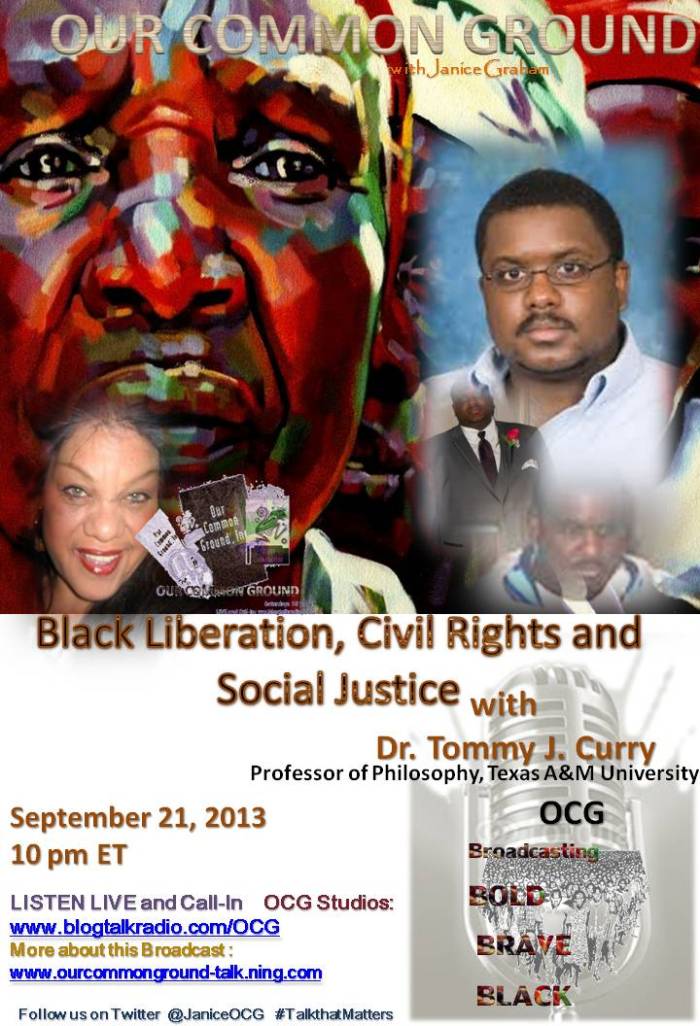 By Tommy J. Curry
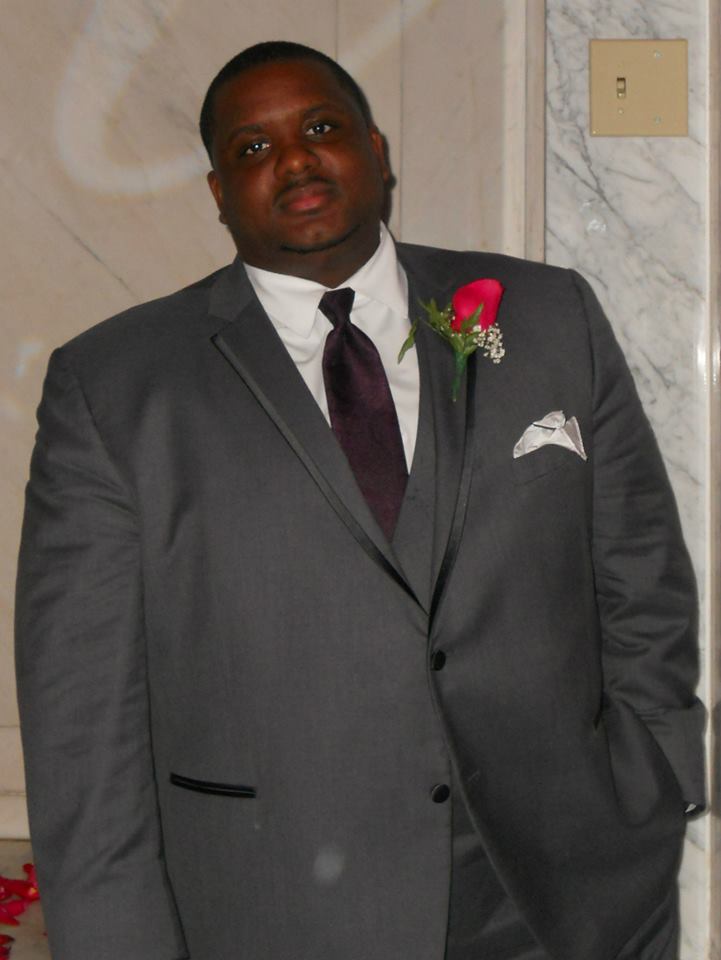 Dr. Tommy J. Curry
Professor Philosophy and Black Studies
Texas A & M Univeristy
Dr. Tommy J. Curry
Professor Philosophy and Black Studies
Texas A & M Univeristy


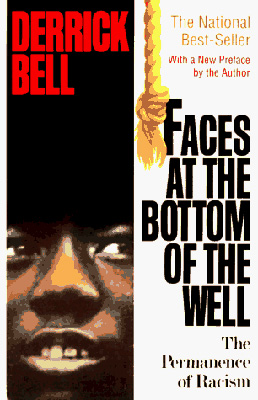



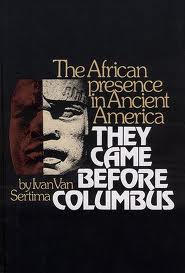

 Many claims have been made over the years by notable black and white scholars –Woodson, Rogers, Lawrence, Jackson, Bailey, Gordon, Irwin, Jeffreys, Cauvet, Wiener. They have all been dismissed. Some of these claims failed to convince anyone but the converted because they needed to be backed up by corroboration from many disciplines. To claim, for example, that Columbus saw “blacks” in Haiti is one thing. To prove that those “blacks” were Africans was another, since there are dark-skinned American Indians in tropical zones of America. Botany (cotton), linguistics (the origin of the word, guanin), metallurgy (the metal alloys in the spears the blacks gave the Americans in trade), navigation (African boats tested on the Atlantic), oceanography (the currents that provided an easy circular route for the pre-Columbian West African trade), archaeology (new skeletal finds in the Caribbean of Africans dated 1250 A.D.) – all these disciplines provided the corroboration that was needed to establish that single claim on a scientific basis. This, Van Sertima felt, would be his original contribution to the subject at the end of a century of speculation – the definitive proof.
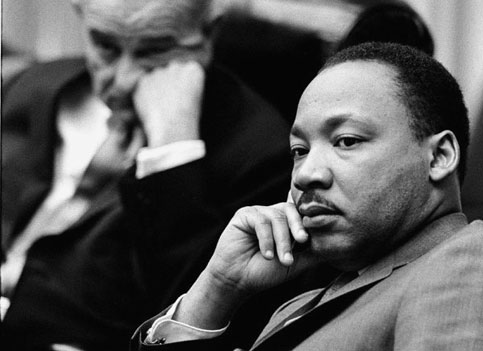
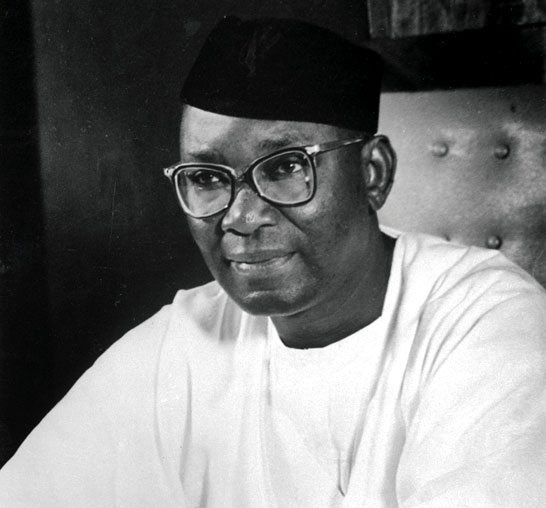


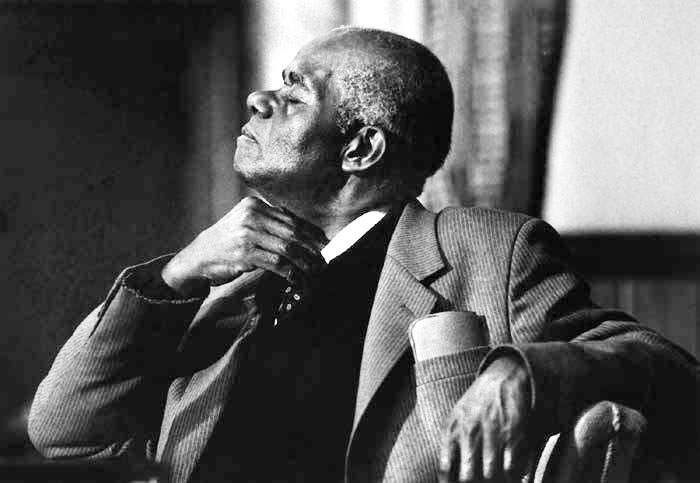
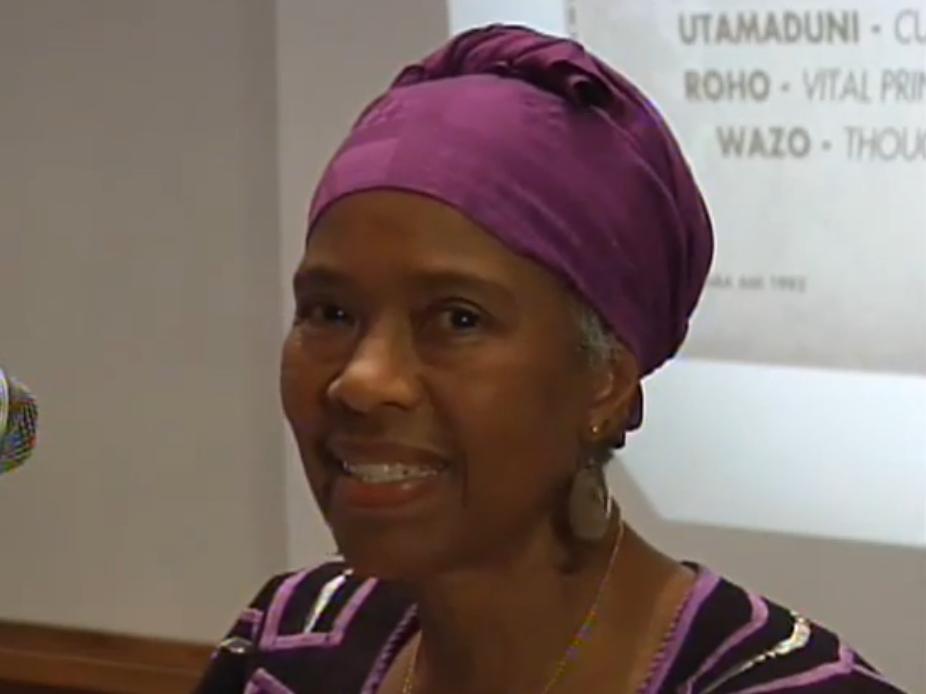
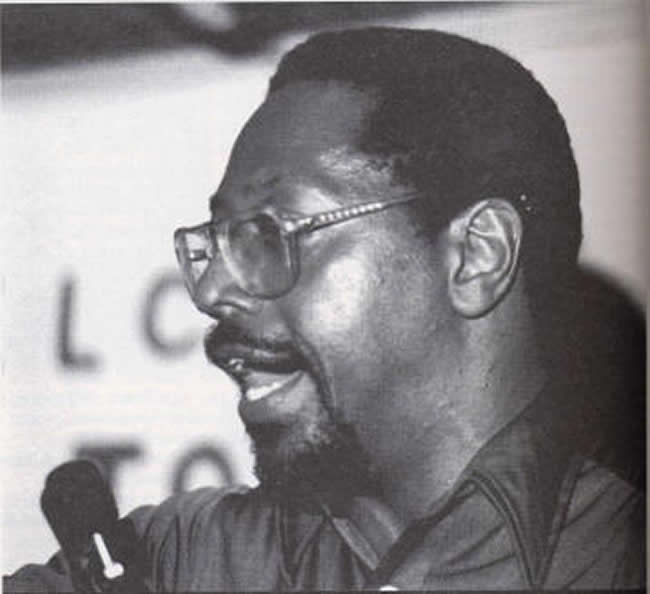
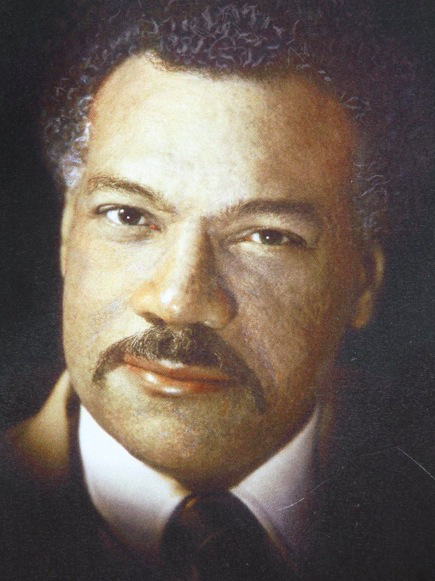
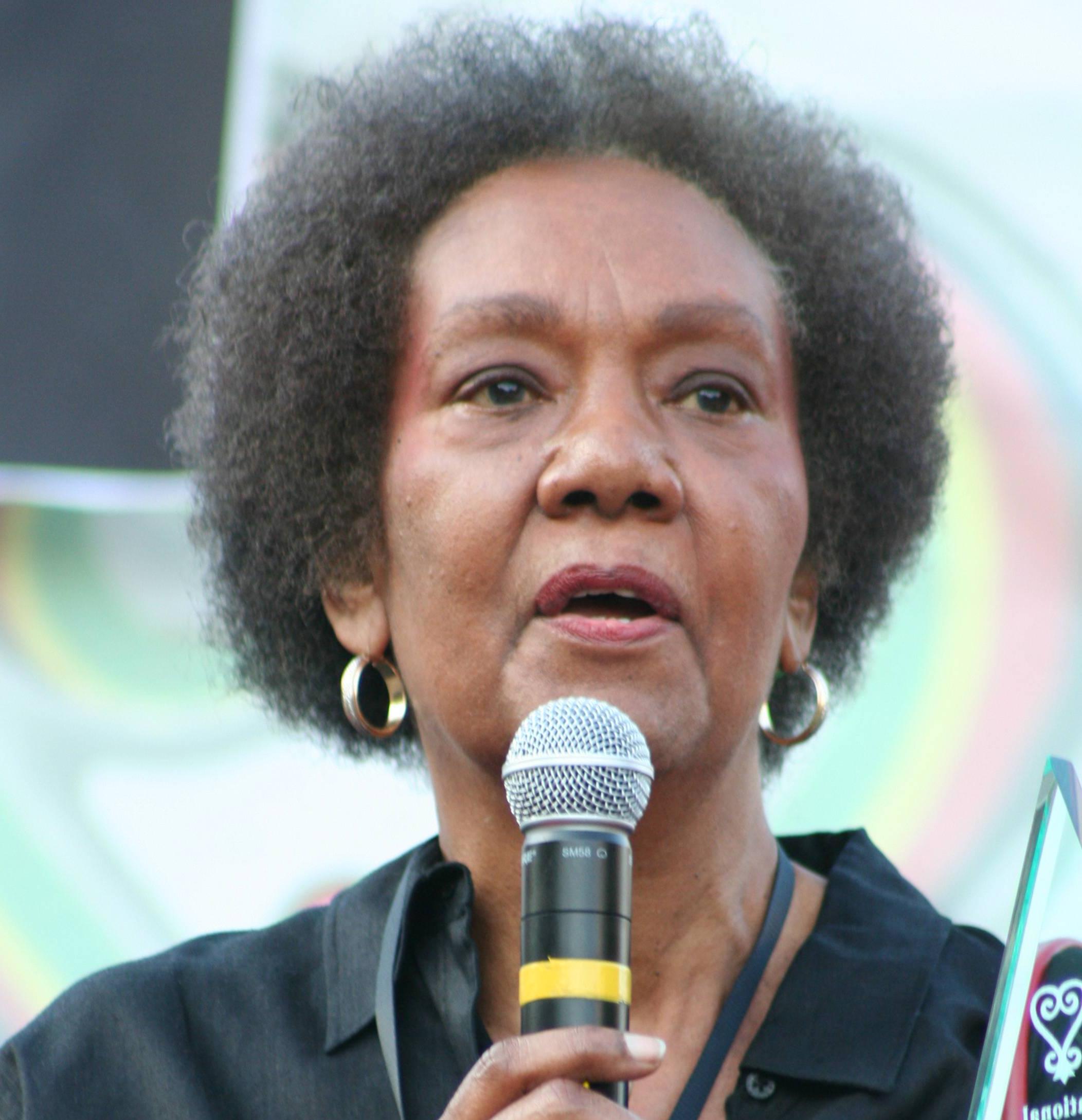
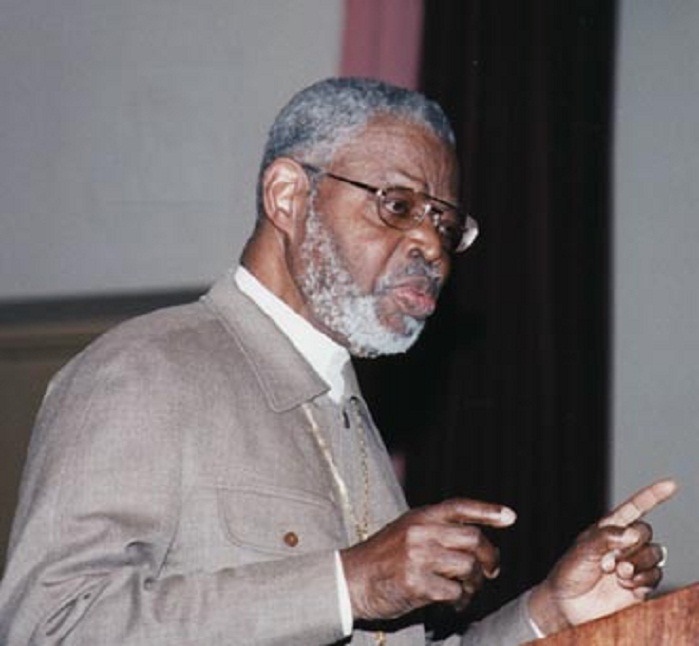
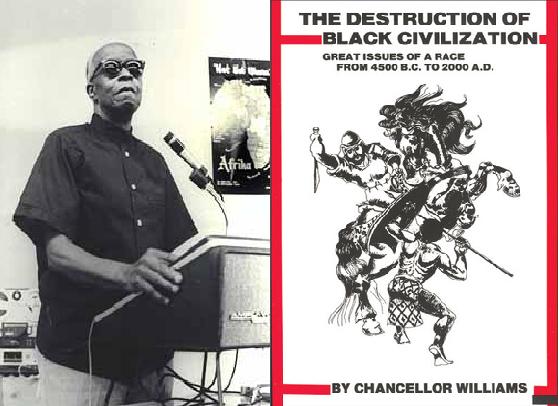
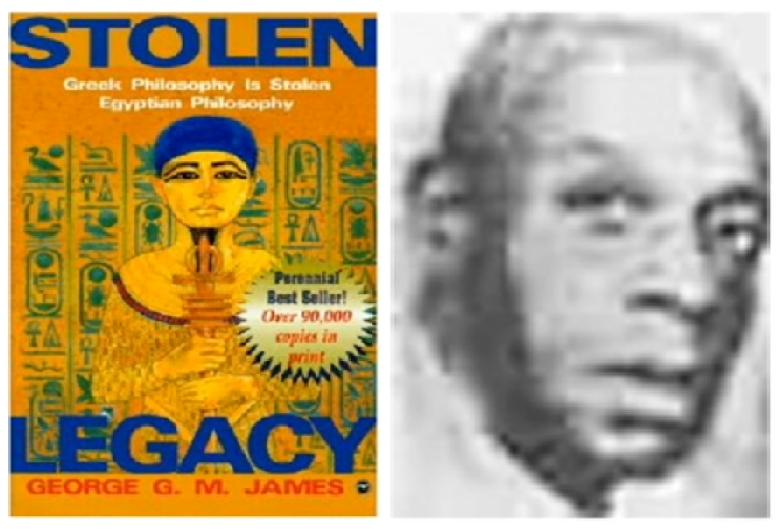


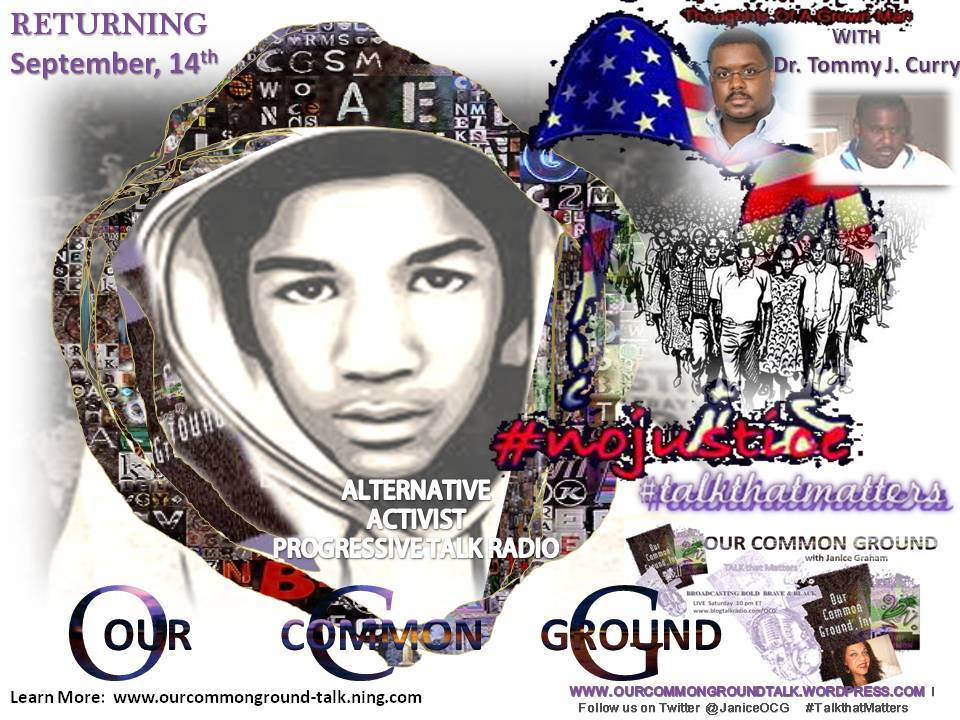


 When the hashtag #Blackpowerisforblackmen, created by
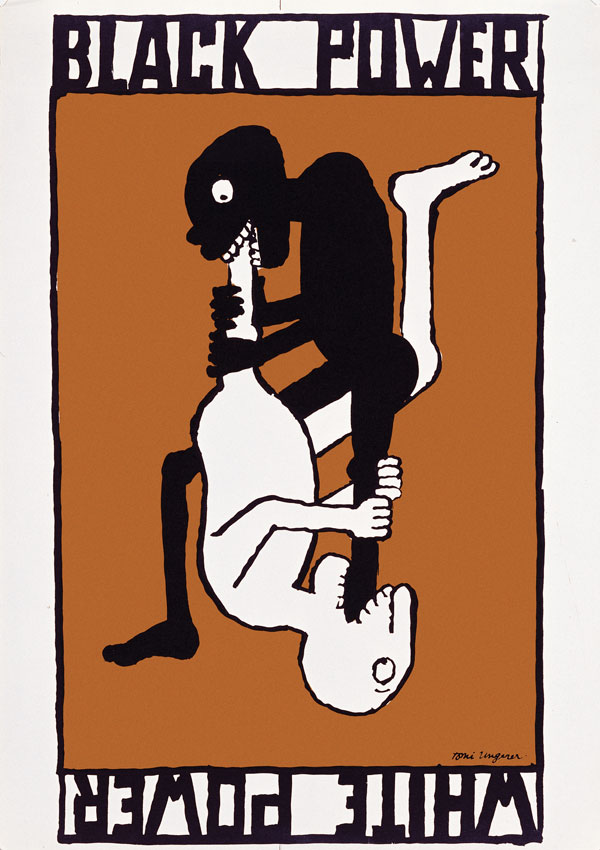
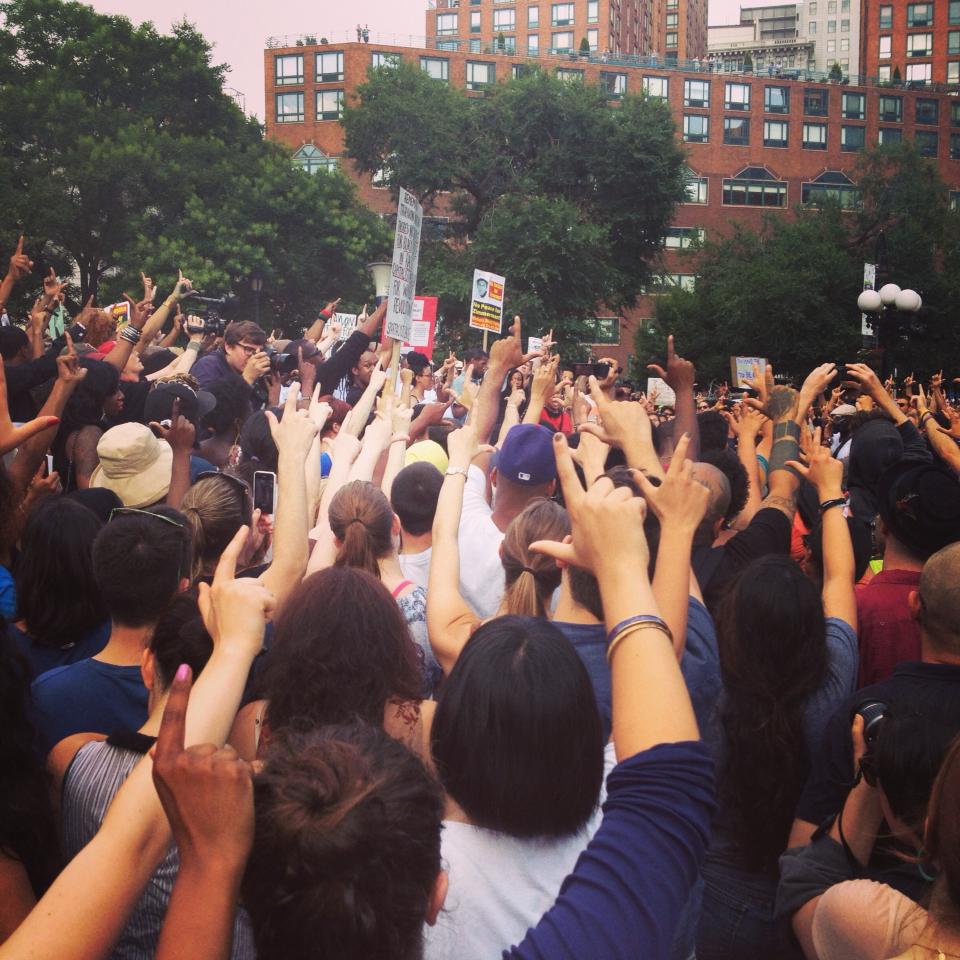



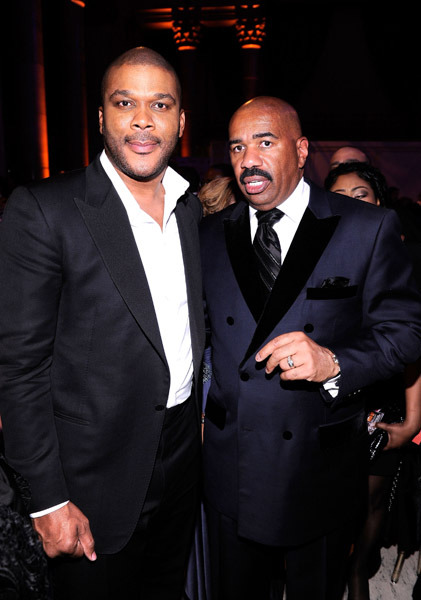


 OCG
OCG 