The Million Woman March was a protest march organized on October 25, 1997, on the Benjamin Franklin Park Way in Philadelphia, Pennsylvania. The march was founded and formulated by Phile Chionesu, a grassroots activist, human rights advocate, Black Nationalist/Freedom Fighter, and owner of an African crafts shop.
The below statement was issued as the basis for the national call to all Black women to come together in Philadelphia, PA
The Million Woman March is being implemented by Black Women who interact on grassroots and global levels. Black Women who understand the necessity of rebuilding our foundation and destiny as a people, and that we must in many respects begin at the origin (the root) upward.
Women of African Descent who reside, struggle and interact in grassroots communities have analysed and assessed unlimited issues and problems. Many of which have resulted in the deterioration of African-American and African people overall. The Million Woman March is capable and ready to create and implement strategic methods of resolving such matters.
The Million Woman March provides us the opportunity to prioritize the human and environmental issues. It will collectively enable us to develop an assertive and aggressive movement to insure the participation and impact of people of African Descent.
It is our belief that it will require collective and comprehensive efforts to develop for determination the process and systems that will be utilized to regain the proper direction of our family structure. By acknowledging and applying the strength and resources that exist within the United States and throughout the world, we will rebuild to strengthen our foundation. It will take the procurement of mechanisms that will bring about the appropriate solutions.
However, there has been various forms of disconnection.
As a result, we no longer bond as a family unit, we no longer teach and prepare our children in the way we wish for them to go. How do girls learn to become women? Who is responsible for teaching morals and values of womanhood? Have we not been the moral sustainers of life? As teachers of life have we failed or are we just existing?
The Million Woman March will revive life as we once exemplified it:
< Great Grandmother taught Grandmother
< Grandmother taught Mother
< Mother taught Me
< I will teach YOU
We will no longer tolerate disrespect, lack of communication, negative interaction, anti-social and dysfunctional behavior and the denial that problems such s these affect our ability to progressively and productively move forwarD. Our focus is centered around the reasons why and what it will require to eliminate this DESTRUCTION.
This week on OUR COMMON GROUND, we review and examine the truth about the policies and intent of the “War on Drugs”. We need to talk about the money making behind the politics; how the drug war can be considered slow Nazi policy on the poor and the racial profiling used. We look at these destructive and failed policy and manipulation in its historical context and destructive outcomes. We will present audio clips for our discussion which will assist us in understanding just how much the “War on Drugs” was really never about drugs.
For sheer government absurdity, the War on Drugs is hard to beat. After three decades of increasingly punitive policies, illicit drugs are more easily available, drug potencies are greater, drug killings are more common, and drug barons are richer than ever. The War on Drugs costs Washington more than the Commerce, Interior, and State departments combined – and it’s the one budget item whose growth is never questioned. A strangled court system, exploding prisons, and wasted lives push the cost beyond measure. What began as a flourish of campaign rhetoric in 1968 has grown into a monster. And while nobody claims that the War on Drugs is a success, nobody suggests an alternative. Because to do so, as Surgeon General Joycelyn Elders learned, is political suicide.
As a community we need to understand how Drug War fever has been escalated; who has benefited along the way; and how the mounting price in dollars, lives, and liberties has been willfully ignored. Where are the policy maker offices where each new stage was planned and executed? What happened in the streets where policies have produced bloody warfare. This is a tale of the nation run amok – in a way the American people are not yet ready to confront. Are you?
You are invited to bring your thoughts about the pressing issues facing our community. Come listen and learn. SHARE please.
OUR COMMON GROUND where friends come to confer with allies.
As a historian, I know slavery has left a deep scar on America. The reasons are many. I have found wisdom in the words of Cornelius Holmes, a former slave, interviewed in 1939, a man who saw brutality and separation of families. Holmes shared the dreams and melodies before freedom and then witnessed the reality of freedom.
One reason for my current retrospection is the fine essay by Ta-Nehisi Coates in the June issue of the Atlantic arguing that reparations are deserved and long overdue. He has gathered an amazing array of facts about racism, economics, violence and the role of the U.S. government, implicit and explicit. With pinpoint clarity, Coates has focused a scholarly light that shines into all the dark corners of this shameful chapter in our history.
ALL IN with Chris Hayes 05/23/14 The case for reparations
Chris Hayes talks with The Atlantic’s Ta-Nehisi Coates about the history of economic plunder and exploitation that are key features of white supremacy in America.
Dr. William Darity, a professor at Duke University and Stanford University has studied reparations in black America for over twenty years is interviewed for this piece. Dr. Darity is an OUR COMMON GROUND Voice.
His new book along with co-author Kristen Mullen, From Here to Equality is coming out this Fall and directly addresses how Coates’ prose can become a Congressional reality.
Reniqua Allen of Demos talked with him, as an advocate for reparations to discuss Ta-Nehisi Coates’, “The Case for Reparations“, an article published on May 21, 2014 in The Atlantic
An Expert Responds to Ta-Nehisi Coates on Reparations
No matter how any conversations we have about America’s past, there’s always some sort of obligatory outrage whenever America’s dark history is synthesized, criticized and laid out before mainstream audiences without any filters. For some of us, the stories of America’s past are nothing new, but for others that history 101 failed (or maybe black history 101?), articles like Ta-Nehisi’s must-read cover story The Case for Reparations is a total eye opener. Coates eloquent essay into America’s past makes the important connection of how the wealth, privilege and white supremacy of the past connect directly to wealth and privilege today. Coates doesn’t directly call for a monetary sum or specific governmental policy to enact reparations, but rather wants to start a national conversation on the topic and it seems, at the very least recognition of the ills that America has wrought far far beyond slavery.
Reparations—by which I mean the full acceptance of our collective biography and its consequences—is the price we must pay to see ourselves squarely. The recovering alcoholic may well have to live with his illness for the rest of his life. But at least he is not living a drunken lie. Reparations beckons us to reject the intoxication of hubris and see America as it is—the work of fallible humans.
Won’t reparations divide us? Not any more than we are already divided. The wealth gap merely puts a number on something we feel but cannot say—that American prosperity was ill-gotten and selective in its distribution. What is needed is an airing of family secrets, a settling with old ghosts. What is needed is a healing of the American psyche and the banishment of white guilt.
What I’m talking about is more than recompense for past injustices—more than a handout, a payoff, hush money, or a reluctant bribe. What I’m talking about is a national reckoning that would lead to spiritual renewal. Reparations would mean the end of scarfing hot dogs on the Fourth of July while denying the facts of our heritage. Reparations would mean the end of yelling “patriotism” while waving a Confederate flag. Reparations would mean a revolution of the American consciousness, a reconciling of our self-image as the great democratizer with the facts of our history.
Coates piece, as he hoped, is sparking a debate about whether African Americans are entitled to reparations and how we can turn his idea into a reality. William Darity, a professor at Duke University has studied reparations in black America for over twenty years (If you’re looking for a primer on the subject check his previous work here). His new book along with co-author Kristen Mullen, From Here to Equality, coming out this fall directly addresses how Coates’ prose can become a Congressional reality. I spoke with the professor, who is an advocate for reparations a day after Coates’ article was published.
What was your initial reaction to Coates’ essay?
I think it’s terrific that Ta-Nehisi was able to use his platform as a prominent journalist to bring the conversation back to this issue because we have ignored it or silenced it for so many years. The last time there was any significant attention drawn to this issue was the beginning of the 2000s, prior to 9-1-1 when there was this set of advertisements that were circulating in colleges attacking reparations. I think this is the first time we got a significant wave of attention that’s being drawn back to reparations. That’s crucial. The other thing I like about the article is its emphasis on the injustices that are associated with the period after slavery, from what I like to call “the deconstruction of Reconstruction” to the Jim Crow period to ongoing discrimination.
Why has the idea of reparations been so anathema to the American public?
That’s a great question particularly since people are not particularly opposed to reparations for injustices that have been perpetrated against other folks aside from black Americans. We ultimately did have a reparations program for the Japanese Americans that were incarcerated during World War II. We could argue over whether or not the amounts of the compensation were adequate, but there was at least a piece of legislation that was passed and signed by the President at the time.
It is interesting that the question of compensation for African Americans tends to draw so much more heat than the compensation for other groups. We can even think about this on an international scale and other instances of injustices. The only answer that I can come up with is that it’s deeply routed in the American psyche about black inferiority and that in some sense blacks must be responsible for their own problems.
There have been a lot of positive responses to this piece. Does that mean we’re ready to have this conversation that Coates wants?
We’re just recovering from the effects of deluding ourselves into thinking this society has become post-racial as the consequence of a black president. In some respects I think that that has contributed to maintaining a veil over the issues surrounding racial injustice and racial depravation. Now we finally have the political security to talk about these issues, despite the fact that we have a black president, and so maybe partly there’s relatively propitious timing for the article. We’re coming to the end of the Obama presidency. Now is the time to look beyond the Obama era and try to address what needs to be done.
What are the next steps?
I would hope that as Ta-Nehisi proposes in his article that Conyers or a Conyers type of bill for the formation of a congressional commission to explore the history of racial injustice in the United States [would be created]. I would think that would be the critical next step. The prelude to Japanese reparations was the formation of a commission that studied the history of the unjust incarceration that took place in World War II.
Who is the one to make this a legitimate conversation? Who is the onus on? Is it the civil rights community? Journalists? Congress? Public intellectuals?
I’m not sure I can answer that. There’s part of me that says all of the above. I’m not sure that any particular group has a monopoly or any obligation to make this a legitimate topic of conversation. But, I think that it is important that people don’t dismiss this as fantasy or as something absurd.
Kirsten Mullen and I are doing a book From Here to Equality it’s about reparations case for black Americans. One of the things we hope to do in the book is to describe in a reasonably detailed way, ways in which you might execute a reparations program and this includes making some judgment about what the magnitude of payments should be, or the magnitude of the total bill, it need not all take the form of payments per say.
Without giving away all the solutions in your new book, can you tell me what you think the path is to reparations?
I’ve said in my own work that I thought that the legislative path is the correct one. The judicial path hasn’t been particularly fruitful thus far. Even if the judicial path results in a system that supports reparations, a court system has no way of implementing it, so you have to go the legislative route ultimately. The positive thing about the legislative route is it would require a sufficient change in public sentiment, so that there would be adequate support for reparations and people who make the charge that reparations would injure race relations would be wrong, because you wouldn’t have reparations unless there was a sufficient amount of support for it from the white community.
Is there any evidence that there is support for this?
The absence of support may be lack of information and lack of understanding of how race plays out in our society. Having a congressional commission, that may open up a clear conversation about these issues that might have a very positive effect on peoples attitudes in the rightness of doing this. I think to the extent that Ta-Nehisi Coates’ article reawakens, let me call it “wise conversations,” then that’s the greatest accomplishment that this article could affect.
Do you think that support for reparations will be different in the black community than the American public at large?
Yes on average, but I’m also aware that there’s a significant portion of the black community that rejects reparations, including the President. It’s about 70 percent of African Americans that are in favor, about 30 percent are opposed.
There seemed to be some tension in academic circles that Coates’ article didn’t address or uncover anything new. Why?
As academics we place a tremendous premium on who was first to say something and we expect others to indicate who said something earlier. So, I think there may be some frustration on the part of some folks who have done a lot of work on the subject that there’s no mention of their ideas or work in Coates’ article. To be frank, there’s no mention of my work, but I’m so pleased he’s rejuvenated this conversation that I don’t want to invest a lot of time in sour grapes.
Final thoughts?
The article is heavily invested in the experience of Mr. Ross and the North Lawndale community of Chicago. I think that it’s vital to provide a story that people can join with rather than a series of statistics, but I think Mr. Ross’ experience is so deeply rooted in the experiences of thousands of black Americans that you would need to multiply his story many times over to get a full sense of the scope of the injustices.
Thanks to Demos for seeking expert review of this most controversial piece and critical issue.
Special thanks to Dr. Darity for his persistence and scholastic excellence on the issue.
You might be interested in these additional articles regarding Reparations
William A. (“Sandy”) Darity Jr. is Arts & Sciences Professor of Public Policy Studies and Economics, Chair of African and African American Studies and director of the Research Network on Racial and Ethnic Inequality at Duke University. He earned the Ph.D. in economics from the Massachusetts Institute of Technology in 1978. He chairs the prestigious National Association of Economist.
He is the Samuel DuBois Cook Professor of Public Policy, African and African American Studies, and Economics at Stanford University, and served as chair of the Department of African and African American Studies and is the founding director of the Research Network on Racial and Ethnic Inequality at Duke. He served as co-director of the Institute of African American Research, director of the Moore Undergraduate Research Apprenticeship Program, director of the Undergraduate Honors Program in economics, and director of Graduate Studies at the University of North Carolina.
Darity’s research focuses on inequality by race, class and ethnicity, stratification economics, schooling and the racial achievement gap, North-South theories of trade and development, skin shade and labor market outcomes, the economics of reparations, the Atlantic slave trade and the Industrial Revolution, the history of economics, and the social psychological effects of exposure to unemployment.
Previously he served as director of the Institute of African American Research, director of the Moore Undergraduate Research Apprenticeship Program, director of the Undergraduate Honors Program in economics, and director of Graduate Studies at the University of North Carolina at Chapel Hill.
Darity’s research focuses on stratification economics, inequality by race, class and ethnicity, schooling and the racial achievement gap, North-South theories of trade and development, skin shade and labor market outcomes, the economics of reparations, the Atlantic slave trade and the Industrial Revolution, doctrinal history and the social psychological effects of unemployment exposure.
IIn the newest issue of The Atlantic, Ta-Nehisi Coates makes the case for slavery reparations. “The idea of reparations is frightening not simply because we might lack the ability to pay,” Coates writes. “The idea of reparations threatens something much deeper—America’s heritage, history, and standing in the world.” The piece is provocative, but short on details: It doesn’t put a number to what black Americans are owed, and it doesn’t provide a specific prescription for how to make reparations. Rather, Coates simply recommends that Congress passRepresentative John Conyers’s bill for a “Congressional study of slavery.”
But now that Coates has re-ignited this debate, it’s worth considering the practical implications. How much money, for instance, is due to black America? How should that money be distributed? Who should be eligible for it? Perhaps those are questions that a Congressional study could answer. What academic evidence we have provides an incomplete but sobering assessment of the costs of centuries of slavery, Jim Crow, and state-sanctioned discrimination.
How much should reparations be?
As Coates explains in his piece, reparations must compensate African Americans for more than just the centuries of slavery in the United States. After slavery was abolished, whites frequently lynched black Americans and seized their property. A 2001 Associated Press investigation, which Coates cites, found 406 cases where black landowners had their farms seized in the early-to-mid 20th century—more than 24,000 acres of land were stolen. Housing discrimination, which has been one of the largest obstacles to African Americans’ building wealth, still exists today.
Larry Neal, an economist at the University of Illinois, calculated the difference between the wages that slaves would have received from 1620 to 1840, minus estimated maintenance costs spent by slave owners, and reached a total of $1.4 trillion in 1983 dollars. At an annual rate of interest of 5 percent, that’s more than $6.5 trillion in 2014—just in lost wages. In a separate estimate in 1983, James Marketti calculated it at $2.1 trillion, equal to $10 trillion today. In 1989, economists Bernadette Chachere and Gerald Udinsky estimated that labor market discrimination between 1929 and 1969 cost black Americans $1.6 trillion.
These estimates don’t include the physical harms of slavery, lost educational and wealth-building opportunities, or the cost of the discrimination that persists today. But it’s clear the magnitude of reparations would be in the trillions of dollars. For perspective, the federal government last year spent $3.5 trillion and GDP was $16.6 trillion.
What form should reparations take?
In a 2005 article, economists William A. Darity Jr. and Dania Frank proposed five different ways to make reparations. The first approach is lump-sum payments. This is the most direct form of reparations, but it does not correct for the decades of lost human capital. The second is to aggregate the reparation funds and allow African Americans to apply for grants for different asset-building projects. These projects could promote homeownership or education, for instance. Under this thinking, reparations should be more than one-time payments, but should build the human and wealth capital that black Americans struggled to gain over the past few centuries.
A third approach would be to give vouchers for a certain monetary value to black Americans. This mirrors the goal of the second approach, but with a focus on building financial assets. “Thus reparations could function as an avenue to undertake a racial redistribution of wealth akin to the mechanism used in Malaysia to build corporate ownership among the native Malays,” Darity and Frank write. “In that case, shares of stock were purchased by the state and placed in a trust for subsequent allocation to the native Malays.”
Fourth, the government could give African Americans in-kind reparations—free medical insurance or guaranteed college education, for instance. Finally, the fifth approach “would be to use reparations to build entirely new institutions to promote collective well-being in the black community.” Darity and Frank don’t elaborate on the potential structure for those institutions. Congress could also combine any or all of these approaches.
Two hundred fifty years of slavery. Ninety years of Jim Crow. Sixty years of separate but equal. Thirty-five years of racist housing policy. Until we reckon with our compounding moral debts, America will never be whole.
And if thy brother, a Hebrew man, or a Hebrew woman, be sold unto thee, and serve thee six years; then in the seventh year thou shalt let him go free from thee. And when thou sendest him out free from thee, thou shalt not let him go away empty: thou shalt furnish him liberally out of thy flock, and out of thy floor, and out of thy winepress: of that wherewith the LORD thy God hath blessed thee thou shalt give unto him. And thou shalt remember that thou wast a bondman in the land of Egypt, and the LORD thy God redeemed thee: therefore I command thee this thing today.— Deuteronomy 15: 12–15
Besides the crime which consists in violating the law, and varying from the right rule of reason, whereby a man so far becomes degenerate, and declares himself to quit the principles of human nature, and to be a noxious creature, there iscommonly injury done to some person or other, and some other man receives damage by his transgression: in which case he who hath received any damage, has, besides the right of punishment common to him with other men, a particular right to seek reparation.
— John Locke, “Second Treatise”
By our unpaid labor and suffering, we have earned the right to the soil, many times over and over, and now we are determined to have it.
— Anonymous, 1861
I. “So That’s Just One Of My Losses”
Clyde Ross was born in 1923, the seventh of 13 children, near Clarksdale, Mississippi, the home of the blues. Ross’s parents owned and farmed a 40-acre tract of land, flush with cows, hogs, and mules. Ross’s mother would drive to Clarksdale to do her shopping in a horse and buggy, in which she invested all the pride one might place in a Cadillac. The family owned another horse, with a red coat, which they gave to Clyde. The Ross family wanted for little, save that which all black families in the Deep South then desperately desired—the protection of the law.
Clyde Ross, photographed in November 2013 in his home in the North Lawndale neighborhood of Chicago, where he has lived for more than 50 years. When he first tried to get a legitimate mortgage, he was denied; mortgages were effectively not available to black people. (Carlos Javier Ortiz)
In the 1920s, Jim Crow Mississippi was, in all facets of society, a kleptocracy. The majority of the people in the state were perpetually robbed of the vote—a hijacking engineered through the trickery of the poll tax and the muscle of the lynch mob. Between 1882 and 1968, more black people were lynched in Mississippi than in any other state. “You and I know what’s the best way to keep the nigger from voting,” blustered Theodore Bilbo, a Mississippi senator and a proud Klansman. “You do it the night before the election.”
The state’s regime partnered robbery of the franchise with robbery of the purse. Many of Mississippi’s black farmers lived in debt peonage, under the sway of cotton kings who were at once their landlords, their employers, and their primary merchants. Tools and necessities were advanced against the return on the crop, which was determined by the employer. When farmers were deemed to be in debt—and they often were—the negative balance was then carried over to the next season. A man or woman who protested this arrangement did so at the risk of grave injury or death. Refusing to work meant arrest under vagrancy laws and forced labor under the state’s penal system.
Well into the 20th century, black people spoke of their flight from Mississippi in much the same manner as their runagate ancestors had. In her 2010 book, The Warmth of Other Suns, Isabel Wilkerson tells the story of Eddie Earvin, a spinach picker who fled Mississippi in 1963, after being made to work at gunpoint. “You didn’t talk about it or tell nobody,” Earvin said. “You had to sneak away.”
When Clyde Ross was still a child, Mississippi authorities claimed his father owed $3,000 in back taxes. The elder Ross could not read. He did not have a lawyer. He did not know anyone at the local courthouse. He could not expect the police to be impartial. Effectively, the Ross family had no way to contest the claim and no protection under the law. The authorities seized the land. They seized the buggy. They took the cows, hogs, and mules. And so for the upkeep of separate but equal, the entire Ross family was reduced to sharecropping.
This was hardly unusual. In 2001, the Associated Press published a three-part investigation into the theft of black-owned land stretching back to the antebellum period. The series documented some 406 victims and 24,000 acres of land valued at tens of millions of dollars. The land was taken through means ranging from legal chicanery to terrorism. “Some of the land taken from black families has become a country club in Virginia,” the AP reported, as well as “oil fields in Mississippi” and “a baseball spring training facility in Florida.”
Clyde Ross was a smart child. His teacher thought he should attend a more challenging school. There was very little support for educating black people in Mississippi. But Julius Rosenwald, a part owner of Sears, Roebuck, had begun an ambitious effort to build schools for black children throughout the South. Ross’s teacher believed he should attend the local Rosenwald school. It was too far for Ross to walk and get back in time to work in the fields. Local white children had a school bus. Clyde Ross did not, and thus lost the chance to better his education.
Then, when Ross was 10 years old, a group of white men demanded his only childhood possession—the horse with the red coat. “You can’t have this horse. We want it,” one of the white men said. They gave Ross’s father $17.
“I did everything for that horse,” Ross told me. “Everything. And they took him. Put him on the racetrack. I never did know what happened to him after that, but I know they didn’t bring him back. So that’s just one of my losses.”
Sharecropper boys in 1936 (Carly Mydans/Library of Congress)
The losses mounted. As sharecroppers, the Ross family saw their wages treated as the landlord’s slush fund. Landowners were supposed to split the profits from the cotton fields with sharecroppers. But bales would often disappear during the count, or the split might be altered on a whim. If cotton was selling for 50 cents a pound, the Ross family might get 15 cents, or only five. One year Ross’s mother promised to buy him a $7 suit for a summer program at their church. She ordered the suit by mail. But that year Ross’s family was paid only five cents a pound for cotton. The mailman arrived with the suit. The Rosses could not pay. The suit was sent back. Clyde Ross did not go to the church program.
It was in these early years that Ross began to understand himself as an American—he did not live under the blind decree of justice, but under the heel of a regime that elevated armed robbery to a governing principle. He thought about fighting. “Just be quiet,” his father told him. “Because they’ll come and kill us all.”
Clyde Ross grew. He was drafted into the Army. The draft officials offered him an exemption if he stayed home and worked. He preferred to take his chances with war. He was stationed in California. He found that he could go into stores without being bothered. He could walk the streets without being harassed. He could go into a restaurant and receive service.
Ross was shipped off to Guam. He fought in World War II to save the world from tyranny. But when he returned to Clarksdale, he found that tyranny had followed him home. This was 1947, eight years before Mississippi lynched Emmett Till and tossed his broken body into the Tallahatchie River. The Great Migration, a mass exodus of 6 million African Americans that spanned most of the 20th century, was now in its second wave. The black pilgrims did not journey north simply seeking better wages and work, or bright lights and big adventures. They were fleeing the acquisitive warlords of the South. They were seeking the protection of the law.
Clyde Ross was among them. He came to Chicago in 1947 and took a job as a taster at Campbell’s Soup. He made a stable wage. He married. He had children. His paycheck was his own. No Klansmen stripped him of the vote. When he walked down the street, he did not have to move because a white man was walking past. He did not have to take off his hat or avert his gaze. His journey from peonage to full citizenship seemed near-complete. Only one item was missing—a home, that final badge of entry into the sacred order of the American middle class of the Eisenhower years.
In 1961, Ross and his wife bought a house in North Lawndale, a bustling community on Chicago’s West Side. North Lawndale had long been a predominantly Jewish neighborhood, but a handful of middle-class African Americans had lived there starting in the ’40s. The community was anchored by the sprawling Sears, Roebuck headquarters. North Lawndale’s Jewish People’s Institute actively encouraged blacks to move into the neighborhood, seeking to make it a “pilot community for interracial living.” In the battle for integration then being fought around the country, North Lawndale seemed to offer promising terrain. But out in the tall grass, highwaymen, nefarious as any Clarksdale kleptocrat, were lying in wait.
Three months after Clyde Ross moved into his house, the boiler blew out. This would normally be a homeowner’s responsibility, but in fact, Ross was not really a homeowner. His payments were made to the seller, not the bank. And Ross had not signed a normal mortgage. He’d bought “on contract”: a predatory agreement that combined all the responsibilities of homeownership with all the disadvantages of renting—while offering the benefits of neither. Ross had bought his house for $27,500. The seller, not the previous homeowner but a new kind of middleman, had bought it for only $12,000 six months before selling it to Ross. In a contract sale, the seller kept the deed until the contract was paid in full—and, unlike with a normal mortgage, Ross would acquire no equity in the meantime. If he missed a single payment, he would immediately forfeit his $1,000 down payment, all his monthly payments, and the property itself.
The men who peddled contracts in North Lawndale would sell homes at inflated prices and then evict families who could not pay—taking their down payment and their monthly installments as profit. Then they’d bring in another black family, rinse, and repeat. “He loads them up with payments they can’t meet,” an office secretary told The Chicago Daily Newsof her boss, the speculator Lou Fushanis, in 1963. “Then he takes the property away from them. He’s sold some of the buildings three or four times.”
Ross had tried to get a legitimate mortgage in another neighborhood, but was told by a loan officer that there was no financing available. The truth was that there was no financing for people like Clyde Ross. From the 1930s through the 1960s, black people across the country were largely cut out of the legitimate home-mortgage market through means both legal and extralegal. Chicago whites employed every measure, from “restrictive covenants” to bombings, to keep their neighborhoods segregated.
Their efforts were buttressed by the federal government. In 1934, Congress created the Federal Housing Administration. The FHA insured private mortgages, causing a drop in interest rates and a decline in the size of the down payment required to buy a house. But an insured mortgage was not a possibility for Clyde Ross. The FHA had adopted a system of maps that rated neighborhoods according to their perceived stability. On the maps, green areas, rated “A,” indicated “in demand” neighborhoods that, as one appraiser put it, lacked “a single foreigner or Negro.” These neighborhoods were considered excellent prospects for insurance. Neighborhoods where black people lived were rated “D” and were usually considered ineligible for FHA backing. They were colored in red. Neither the percentage of black people living there nor their social class mattered. Black people were viewed as a contagion. Redlining went beyond FHA-backed loans and spread to the entire mortgage industry, which was already rife with racism, excluding black people from most legitimate means of obtaining a mortgage.
Explore Redlining in Chicago
A 1939 Home Owners’ Loan Corporation “Residential Security Map” of Chicago shows discrimination against low-income and minority neighborhoods. The residents of the areas marked in red (representing “hazardous” real-estate markets) were denied FHA-backed mortgages. (Map development by Frankie Dintino)
“A government offering such bounty to builders and lenders could have required compliance with a nondiscrimination policy,” Charles Abrams, the urban-studies expert who helped create the New York City Housing Authority, wrote in 1955. “Instead, the FHA adopted a racial policy that could well have been culled from the Nuremberg laws.”
The devastating effects are cogently outlined by Melvin L. Oliver and Thomas M. Shapiro in their 1995 book, Black Wealth/White Wealth:
Locked out of the greatest mass-based opportunity for wealth accumulation in American history, African Americans who desired and were able to afford home ownership found themselves consigned to central-city communities where their investments were affected by the “self-fulfilling prophecies” of the FHA appraisers: cut off from sources of new investment[,] their homes and communities deteriorated and lost value in comparison to those homes and communities that FHA appraisers deemed desirable.
In Chicago and across the country, whites looking to achieve the American dream could rely on a legitimate credit system backed by the government. Blacks were herded into the sights of unscrupulous lenders who took them for money and for sport. “It was like people who like to go out and shoot lions in Africa. It was the same thrill,” a housing attorney told the historian Beryl Satter in her 2009 book, Family Properties. “The thrill of the chase and the kill.”
The kill was profitable. At the time of his death, Lou Fushanis owned more than 600 properties, many of them in North Lawndale, and his estate was estimated to be worth $3 million. He’d made much of this money by exploiting the frustrated hopes of black migrants like Clyde Ross. During this period, according to one estimate, 85 percent of all black home buyers who bought in Chicago bought on contract. “If anybody who is well established in this business in Chicago doesn’t earn $100,000 a year,” a contract seller told The Saturday Evening Post in 1962, “he is loafing.”
Contract sellers became rich. North Lawndale became a ghetto.
Clyde Ross still lives there. He still owns his home. He is 91, and the emblems of survival are all around him—awards for service in his community, pictures of his children in cap and gown. But when I asked him about his home in North Lawndale, I heard only anarchy.
“We were ashamed. We did not want anyone to know that we were that ignorant,” Ross told me. He was sitting at his dining-room table. His glasses were as thick as his Clarksdale drawl. “I’d come out of Mississippi where there was one mess, and come up here and got in another mess. So how dumb am I? I didn’t want anyone to know how dumb I was.
“When I found myself caught up in it, I said, ‘How? I just left this mess. I just left no laws. And no regard. And then I come here and get cheated wide open.’ I would probably want to do some harm to some people, you know, if I had been violent like some of us. I thought, ‘Man, I got caught up in this stuff. I can’t even take care of my kids.’ I didn’t have enough for my kids. You could fall through the cracks easy fighting these white people. And no law.”
But fight Clyde Ross did. In 1968 he joined the newly formed Contract Buyers League—a collection of black homeowners on Chicago’s South and West Sides, all of whom had been locked into the same system of predation. There was Howell Collins, whose contract called for him to pay $25,500 for a house that a speculator had bought for $14,500. There was Ruth Wells, who’d managed to pay out half her contract, expecting a mortgage, only to suddenly see an insurance bill materialize out of thin air—a requirement the seller had added without Wells’s knowledge. Contract sellers used every tool at their disposal to pilfer from their clients. They scared white residents into selling low. They lied about properties’ compliance with building codes, then left the buyer responsible when city inspectors arrived. They presented themselves as real-estate brokers, when in fact they were the owners. They guided their clients to lawyers who were in on the scheme.
The Contract Buyers League fought back. Members—who would eventually number more than 500—went out to the posh suburbs where the speculators lived and embarrassed them by knocking on their neighbors’ doors and informing them of the details of the contract-lending trade. They refused to pay their installments, instead holding monthly payments in an escrow account. Then they brought a suit against the contract sellers, accusing them of buying properties and reselling in such a manner “to reap from members of the Negro race large and unjust profits.”
WATCH VIDEOThe story of Clyde Ross and the Contract Buyers League
In return for the “deprivations of their rights and privileges under the Thirteenth and Fourteenth Amendments,” the league demanded “prayers for relief”—payback of all moneys paid on contracts and all moneys paid for structural improvement of properties, at 6 percent interest minus a “fair, non-discriminatory” rental price for time of occupation. Moreover, the league asked the court to adjudge that the defendants had “acted willfully and maliciously and that malice is the gist of this action.”
Ross and the Contract Buyers League were no longer appealing to the government simply for equality. They were no longer fleeing in hopes of a better deal elsewhere. They were charging society with a crime against their community. They wanted the crime publicly ruled as such. They wanted the crime’s executors declared to be offensive to society. And they wanted restitution for the great injury brought upon them by said offenders. In 1968, Clyde Ross and the Contract Buyers League were no longer simply seeking the protection of the law. They were seeking reparations.
II. “A Difference of Kind, Not Degree”
According to the most-recent statistics, North Lawndale is now on the wrong end of virtually every socioeconomic indicator. In 1930 its population was 112,000. Today it is 36,000. The halcyon talk of “interracial living” is dead. The neighborhood is 92 percent black. Its homicide rate is 45 per 100,000—triple the rate of the city as a whole. The infant-mortality rate is 14 per 1,000—more than twice the national average. Forty-three percent of the people in North Lawndale live below the poverty line—double Chicago’s overall rate. Forty-five percent of all households are on food stamps—nearly three times the rate of the city at large. Sears, Roebuck left the neighborhood in 1987, taking 1,800 jobs with it. Kids in North Lawndale need not be confused about their prospects: Cook County’s Juvenile Temporary Detention Center sits directly adjacent to the neighborhood.
North Lawndale is an extreme portrait of the trends that ail black Chicago. Such is the magnitude of these ailments that it can be said that blacks and whites do not inhabit the same city. The average per capita income of Chicago’s white neighborhoods is almost three times that of its black neighborhoods. When the Harvard sociologist Robert J. Sampson examined incarceration rates in Chicago in his 2012 book, Great American City, he found that a black neighborhood with one of the highest incarceration rates (West Garfield Park) had a rate more than 40 times as high as the white neighborhood with the highest rate (Clearing). “This is a staggering differential, even for community-level comparisons,” Sampson writes. “A difference of kind, not degree.”
Interactive Census Map
Explore race, unemployment, and vacancy rates over seven decades in Chicago. (Map design and development by Frankie Dintino)
In other words, Chicago’s impoverished black neighborhoods—characterized by high unemployment and households headed by single parents—are not simply poor; they are “ecologically distinct.” This “is not simply the same thing as low economic status,” writes Sampson. “In this pattern Chicago is not alone.”
The lives of black Americans are better than they were half a century ago. The humiliation of Whites Only signs are gone. Rates of black poverty have decreased. Black teen-pregnancy rates are at record lows—and the gap between black and white teen-pregnancy rates has shrunk significantly. But such progress rests on a shaky foundation, and fault lines are everywhere. The income gap between black and white households is roughly the same today as it was in 1970. Patrick Sharkey, a sociologist at New York University, studied children born from 1955 through 1970 and found that 4 percent of whites and 62 percent of blacks across America had been raised in poor neighborhoods. A generation later, the same study showed, virtually nothing had changed. And whereas whites born into affluent neighborhoods tended to remain in affluent neighborhoods, blacks tended to fall out of them.
This is not surprising. Black families, regardless of income, are significantly less wealthy than white families. The Pew Research Center estimates that white households are worth roughly 20 times as much as black households, and that whereas only 15 percent of whites have zero or negative wealth, more than a third of blacks do. Effectively, the black family in America is working without a safety net. When financial calamity strikes—a medical emergency, divorce, job loss—the fall is precipitous.
And just as black families of all incomes remain handicapped by a lack of wealth, so too do they remain handicapped by their restricted choice of neighborhood. Black people with upper-middle-class incomes do not generally live in upper-middle-class neighborhoods. Sharkey’s research shows that black families making $100,000 typically live in the kinds of neighborhoods inhabited by white families making $30,000. “Blacks and whites inhabit such different neighborhoods,” Sharkey writes, “that it is not possible to compare the economic outcomes of black and white children.”
The implications are chilling. As a rule, poor black people do not work their way out of the ghetto—and those who do often face the horror of watching their children and grandchildren tumble back.
Even seeming evidence of progress withers under harsh light. In 2012, the Manhattan Institute cheerily noted that segregation had declined since the 1960s. And yet African Americans still remained—by far—the most segregated ethnic group in the country.
With segregation, with the isolation of the injured and the robbed, comes the concentration of disadvantage. An unsegregated America might see poverty, and all its effects, spread across the country with no particular bias toward skin color. Instead, the concentration of poverty has been paired with a concentration of melanin. The resulting conflagration has been devastating.
One thread of thinking in the African American community holds that these depressing numbers partially stem from cultural pathologies that can be altered through individual grit and exceptionally good behavior. (In 2011, Philadelphia Mayor Michael Nutter, responding to violence among young black males, put the blame on the family: “Too many men making too many babies they don’t want to take care of, and then we end up dealing with your children.” Nutter turned to those presumably fatherless babies: “Pull your pants up and buy a belt, because no one wants to see your underwear or the crack of your butt.”) The thread is as old as black politics itself. It is also wrong. The kind of trenchant racism to which black people have persistently been subjected can never be defeated by making its victims more respectable. The essence of American racism is disrespect. And in the wake of the grim numbers, we see the grim inheritance.
The Contract Buyers League’s suit brought by Clyde Ross and his allies took direct aim at this inheritance. The suit was rooted in Chicago’s long history of segregation, which had created two housing markets—one legitimate and backed by the government, the other lawless and patrolled by predators. The suit dragged on until 1976, when the league lost a jury trial. Securing the equal protection of the law proved hard; securing reparations proved impossible. If there were any doubts about the mood of the jury, the foreman removed them by saying, when asked about the verdict, that he hoped it would help end “the mess Earl Warren made with Brown v. Board of Education and all that nonsense.”
The Supreme Court seems to share that sentiment. The past two decades have witnessed a rollback of the progressive legislation of the 1960s. Liberals have found themselves on the defensive. In 2008, when Barack Obama was a candidate for president, he was asked whether his daughters—Malia and Sasha—should benefit from affirmative action. He answered in the negative.
The exchange rested upon an erroneous comparison of the average American white family and the exceptional first family. In the contest of upward mobility, Barack and Michelle Obama have won. But they’ve won by being twice as good—and enduring twice as much. Malia and Sasha Obama enjoy privileges beyond the average white child’s dreams. But that comparison is incomplete. The more telling question is how they compare with Jenna and Barbara Bush—the products of many generations of privilege, not just one. Whatever the Obama children achieve, it will be evidence of their family’s singular perseverance, not of broad equality.
III. “We Inherit Our Ample Patrimony”
In 1783, the freedwoman Belinda Royall petitioned the commonwealth of Massachusetts for reparations. Belinda had been born in modern-day Ghana. She was kidnapped as a child and sold into slavery. She endured the Middle Passage and 50 years of enslavement at the hands of Isaac Royall and his son. But the junior Royall, a British loyalist, fled the country during the Revolution. Belinda, now free after half a century of labor, beseeched the nascent Massachusetts legislature:
The face of your Petitioner, is now marked with the furrows of time, and her frame bending under the oppression of years, while she, by the Laws of the Land, is denied the employment of one morsel of that immense wealth, apart whereof hath been accumilated by her own industry, and the whole augmented by her servitude.
WHEREFORE, casting herself at your feet if your honours, as to a body of men, formed for the extirpation of vassalage, for the reward of Virtue, and the just return of honest industry—she prays, that such allowance may be made her out of the Estate of Colonel Royall, as will prevent her, and her more infirm daughter, from misery in the greatest extreme, and scatter comfort over the short and downward path of their lives.
Belinda Royall was granted a pension of 15 pounds and 12 shillings, to be paid out of the estate of Isaac Royall—one of the earliest successful attempts to petition for reparations. At the time, black people in America had endured more than 150 years of enslavement, and the idea that they might be owed something in return was, if not the national consensus, at least not outrageous.
Click the image above to view the full document.
“A heavy account lies against us as a civil society for oppressions committed against people who did not injure us,” wrote the Quaker John Woolman in 1769, “and that if the particular case of many individuals were fairly stated, it would appear that there was considerable due to them.”
As the historian Roy E. Finkenbine has documented, at the dawn of this country, black reparations were actively considered and often effected. Quakers in New York, New England, and Baltimore went so far as to make “membership contingent upon compensating one’s former slaves.” In 1782, the Quaker Robert Pleasants emancipated his 78 slaves, granted them 350 acres, and later built a school on their property and provided for their education. “The doing of this justice to the injured Africans,” wrote Pleasants, “would be an acceptable offering to him who ‘Rules in the kingdom of men.’ ”
Click the image above to view the full document.
Edward Coles, a protégé of Thomas Jefferson who became a slaveholder through inheritance, took many of his slaves north and granted them a plot of land in Illinois. John Randolph, a cousin of Jefferson’s, willed that all his slaves be emancipated upon his death, and that all those older than 40 be given 10 acres of land. “I give and bequeath to all my slaves their freedom,” Randolph wrote, “heartily regretting that I have been the owner of one.”
In his book Forever Free, Eric Foner recounts the story of a disgruntled planter reprimanding a freedman loafing on the job:
Planter: “You lazy nigger, I am losing a whole day’s labor by you.”
Freedman: “Massa, how many days’ labor have I lost by you?”
In the 20th century, the cause of reparations was taken up by a diverse cast that included the Confederate veteran Walter R. Vaughan, who believed that reparations would be a stimulus for the South; the black activist Callie House; black-nationalist leaders like “Queen Mother” Audley Moore; and the civil-rights activist James Forman. The movement coalesced in 1987 under an umbrella organization called the National Coalition of Blacks for Reparations in America (N’COBRA). The NAACP endorsed reparations in 1993. Charles J. Ogletree Jr., a professor at Harvard Law School, has pursued reparations claims in court.
But while the people advocating reparations have changed over time, the response from the country has remained virtually the same. “They have been taught to labor,” the Chicago Tribune editorialized in 1891. “They have been taught Christian civilization, and to speak the noble English language instead of some African gibberish. The account is square with the ex‑slaves.”
Not exactly. Having been enslaved for 250 years, black people were not left to their own devices. They were terrorized. In the Deep South, a second slavery ruled. In the North, legislatures, mayors, civic associations, banks, and citizens all colluded to pin black people into ghettos, where they were overcrowded, overcharged, and undereducated. Businesses discriminated against them, awarding them the worst jobs and the worst wages. Police brutalized them in the streets. And the notion that black lives, black bodies, and black wealth were rightful targets remained deeply rooted in the broader society. Now we have half-stepped away from our long centuries of despoilment, promising, “Never again.” But still we are haunted. It is as though we have run up a credit-card bill and, having pledged to charge no more, remain befuddled that the balance does not disappear. The effects of that balance, interest accruing daily, are all around us.
Broach the topic of reparations today and a barrage of questions inevitably follows: Who will be paid? How much will they be paid? Who will pay? But if the practicalities, not the justice, of reparations are the true sticking point, there has for some time been the beginnings of a solution. For the past 25 years, Congressman John Conyers Jr., who represents the Detroit area, has marked every session of Congress by introducing a bill calling for a congressional study of slavery and its lingering effects as well as recommendations for “appropriate remedies.”
A country curious about how reparations might actually work has an easy solution in Conyers’s bill, now called HR 40, the Commission to Study Reparation Proposals for African Americans Act. We would support this bill, submit the question to study, and then assess the possible solutions. But we are not interested.
“It’s because it’s black folks making the claim,” Nkechi Taifa, who helped found N’COBRA, says. “People who talk about reparations are considered left lunatics. But all we are talking about is studying [reparations]. As John Conyers has said, we study everything. We study the water, the air. We can’t even study the issue? This bill does not authorize one red cent to anyone.”
That HR 40 has never—under either Democrats or Republicans—made it to the House floor suggests our concerns are rooted not in the impracticality of reparations but in something more existential. If we conclude that the conditions in North Lawndale and black America are not inexplicable but are instead precisely what you’d expect of a community that for centuries has lived in America’s crosshairs, then what are we to make of the world’s oldest democracy?
One cannot escape the question by hand-waving at the past, disavowing the acts of one’s ancestors, nor by citing a recent date of ancestral immigration. The last slaveholder has been dead for a very long time. The last soldier to endure Valley Forge has been dead much longer. To proudly claim the veteran and disown the slaveholder is patriotism à la carte. A nation outlives its generations. We were not there when Washington crossed the Delaware, but Emanuel Gottlieb Leutze’s rendering has meaning to us. We were not there when Woodrow Wilson took us into World War I, but we are still paying out the pensions. If Thomas Jefferson’s genius matters, then so does his taking of Sally Hemings’s body. If George Washington crossing the Delaware matters, so must his ruthless pursuit of the runagate Oney Judge.
In 1909, President William Howard Taft told the country that “intelligent” white southerners were ready to see blacks as “useful members of the community.” A week later Joseph Gordon, a black man, was lynched outside Greenwood, Mississippi. The high point of the lynching era has passed. But the memories of those robbed of their lives still live on in the lingering effects. Indeed, in America there is a strange and powerful belief that if you stab a black person 10 times, the bleeding stops and the healing begins the moment the assailant drops the knife. We believe white dominance to be a fact of the inert past, a delinquent debt that can be made to disappear if only we don’t look.
There has always been another way. “It is in vain to alledge, that our ancestors brought them hither, and not we,” Yale President Timothy Dwight said in 1810.
We inherit our ample patrimony with all its incumbrances; and are bound to pay the debts of our ancestors. This debt, particularly, we are bound to discharge: and, when the righteous Judge of the Universe comes to reckon with his servants, he will rigidly exact the payment at our hands. To give them liberty, and stop here, is to entail upon them a curse.
IV. “The Ills That Slavery Frees Us From”
America begins in black plunder and white democracy, two features that are not contradictory but complementary. “The men who came together to found the independent United States, dedicated to freedom and equality, either held slaves or were willing to join hands with those who did,” the historian Edmund S. Morgan wrote. “None of them felt entirely comfortable about the fact, but neither did they feel responsible for it. Most of them had inherited both their slaves and their attachment to freedom from an earlier generation, and they knew the two were not unconnected.”
Slaves in South Carolina prepare cotton for the gin in 1862. (Timothy H. O’Sullivan/Library of Congress)
When enslaved Africans, plundered of their bodies, plundered of their families, and plundered of their labor, were brought to the colony of Virginia in 1619, they did not initially endure the naked racism that would engulf their progeny. Some of them were freed. Some of them intermarried. Still others escaped with the white indentured servants who had suffered as they had. Some even rebelled together, allying under Nathaniel Bacon to torch Jamestown in 1676.
One hundred years later, the idea of slaves and poor whites joining forces would shock the senses, but in the early days of the English colonies, the two groups had much in common. English visitors to Virginia found that its masters “abuse their servantes with intollerable oppression and hard usage.” White servants were flogged, tricked into serving beyond their contracts, and traded in much the same manner as slaves.
This “hard usage” originated in a simple fact of the New World—land was boundless but cheap labor was limited. As life spans increased in the colony, the Virginia planters found in the enslaved Africans an even more efficient source of cheap labor. Whereas indentured servants were still legal subjects of the English crown and thus entitled to certain protections, African slaves entered the colonies as aliens. Exempted from the protections of the crown, they became early America’s indispensable working class—fit for maximum exploitation, capable of only minimal resistance.
For the next 250 years, American law worked to reduce black people to a class of untouchables and raise all white men to the level of citizens. In 1650, Virginia mandated that “all persons except Negroes” were to carry arms. In 1664, Maryland mandated that any Englishwoman who married a slave must live as a slave of her husband’s master. In 1705, the Virginia assembly passed a law allowing for the dismemberment of unruly slaves—but forbidding masters from whipping “a Christian white servant naked, without an order from a justice of the peace.” In that same law, the colony mandated that “all horses, cattle, and hogs, now belonging, or that hereafter shall belong to any slave” be seized and sold off by the local church, the profits used to support “the poor of the said parish.” At that time, there would have still been people alive who could remember blacks and whites joining to burn down Jamestown only 29 years before. But at the beginning of the 18th century, two primary classes were enshrined in America.
“The two great divisions of society are not the rich and poor, but white and black,” John C. Calhoun, South Carolina’s senior senator, declared on the Senate floor in 1848. “And all the former, the poor as well as the rich, belong to the upper class, and are respected and treated as equals.”
In 1860, the majority of people living in South Carolina and Mississippi, almost half of those living in Georgia, and about one-third of all Southerners were on the wrong side of Calhoun’s line. The state with the largest number of enslaved Americans was Virginia, where in certain counties some 70 percent of all people labored in chains. Nearly one-fourth of all white Southerners owned slaves, and upon their backs the economic basis of America—and much of the Atlantic world—was erected. In the seven cotton states, one-third of all white income was derived from slavery. By 1840, cotton produced by slave labor constituted 59 percent of the country’s exports. The web of this slave society extended north to the looms of New England, and across the Atlantic to Great Britain, where it powered a great economic transformation and altered the trajectory of world history. “Whoever says Industrial Revolution,” wrote the historian Eric J. Hobsbawm, “says cotton.”
In this artistic rendering by Henry Louis Stephens, a well-known illustrator of the era, a family is in the process of being separated at a slave auction. (Library of Congress)
The wealth accorded America by slavery was not just in what the slaves pulled from the land but in the slaves themselves. “In 1860, slaves as an asset were worth more than all of America’s manufacturing, all of the railroads, all of the productive capacity of the United States put together,” the Yale historian David W. Blight has noted. “Slaves were the single largest, by far, financial asset of property in the entire American economy.” The sale of these slaves—“in whose bodies that money congealed,” writes Walter Johnson, a Harvard historian—generated even more ancillary wealth. Loans were taken out for purchase, to be repaid with interest. Insurance policies were drafted against the untimely death of a slave and the loss of potential profits. Slave sales were taxed and notarized. The vending of the black body and the sundering of the black family became an economy unto themselves, estimated to have brought in tens of millions of dollars to antebellum America. In 1860 there were more millionaires per capita in the Mississippi Valley than anywhere else in the country.
Beneath the cold numbers lay lives divided. “I had a constant dread that Mrs. Moore, her mistress, would be in want of money and sell my dear wife,” a freedman wrote, reflecting on his time in slavery. “We constantly dreaded a final separation. Our affection for each was very strong, and this made us always apprehensive of a cruel parting.”
Forced partings were common in the antebellum South. A slave in some parts of the region stood a 30 percent chance of being sold in his or her lifetime. Twenty-five percent of interstate trades destroyed a first marriage and half of them destroyed a nuclear family.
When the wife and children of Henry Brown, a slave in Richmond, Virginia, were to be sold away, Brown searched for a white master who might buy his wife and children to keep the family together. He failed:
The next day, I stationed myself by the side of the road, along which the slaves, amounting to three hundred and fifty, were to pass. The purchaser of my wife was a Methodist minister, who was about starting for North Carolina. Pretty soon five waggon-loads of little children passed, and looking at the foremost one, what should I see but a little child, pointing its tiny hand towards me, exclaiming, “There’s my father; I knew he would come and bid me good-bye.” It was my eldest child! Soon the gang approached in which my wife was chained. I looked, and beheld her familiar face; but O, reader, that glance of agony! may God spare me ever again enduring the excruciating horror of that moment! She passed, and came near to where I stood. I seized hold of her hand, intending to bid her farewell; but words failed me; the gift of utterance had fled, and I remained speechless. I followed her for some distance, with her hand grasped in mine, as if to save her from her fate, but I could not speak, and I was obliged to turn away in silence.
In a time when telecommunications were primitive and blacks lacked freedom of movement, the parting of black families was a kind of murder. Here we find the roots of American wealth and democracy—in the for-profit destruction of the most important asset available to any people, the family. The destruction was not incidental to America’s rise; it facilitated that rise. By erecting a slave society, America created the economic foundation for its great experiment in democracy. The labor strife that seeded Bacon’s rebellion was suppressed. America’s indispensable working class existed as property beyond the realm of politics, leaving white Americans free to trumpet their love of freedom and democratic values. Assessing antebellum democracy in Virginia, a visitor from England observed that the state’s natives “can profess an unbounded love of liberty and of democracy in consequence of the mass of the people, who in other countries might become mobs, being there nearly altogether composed of their own Negro slaves.”
V. The Quiet Plunder
The consequences of 250 years of enslavement, of war upon black families and black people, were profound. Like homeownership today, slave ownership was aspirational, attracting not just those who owned slaves but those who wished to. Much as homeowners today might discuss the addition of a patio or the painting of a living room, slaveholders traded tips on the best methods for breeding workers, exacting labor, and doling out punishment. Just as a homeowner today might subscribe to a magazine like This Old House, slaveholders had journals such as De Bow’s Review, which recommended the best practices for wringing profits from slaves. By the dawn of the Civil War, the enslavement of black America was thought to be so foundational to the country that those who sought to end it were branded heretics worthy of death. Imagine what would happen if a president today came out in favor of taking all American homes from their owners: the reaction might well be violent.
Click the image above to view the full document.
“This country was formed for thewhite, not for the black man,” John Wilkes Booth wrote, before killing Abraham Lincoln. “And looking upon African slavery from the same standpoint held by those noble framers of our Constitution, I for one have ever considered it one of the greatest blessings (both for themselves and us) that God ever bestowed upon a favored nation.”
In the aftermath of the Civil War, Radical Republicans attempted to reconstruct the country upon something resembling universal equality—but they were beaten back by a campaign of “Redemption,” led by White Liners, Red Shirts, and Klansmen bent on upholding a society “formed for the white, not for the black man.” A wave of terrorism roiled the South. In his massive historyReconstruction, Eric Foner recounts incidents of black people being attacked for not removing their hats; for refusing to hand over a whiskey flask; for disobeying church procedures; for “using insolent language”; for disputing labor contracts; for refusing to be “tied like a slave.” Sometimes the attacks were intended simply to “thin out the niggers a little.”
Terrorism carried the day. Federal troops withdrew from the South in 1877. The dream of Reconstruction died. For the next century, political violence was visited upon blacks wantonly, with special treatment meted out toward black people of ambition. Black schools and churches were burned to the ground. Black voters and the political candidates who attempted to rally them were intimidated, and some were murdered. At the end of World War I, black veterans returning to their homes were assaulted for daring to wear the American uniform. The demobilization of soldiers after the war, which put white and black veterans into competition for scarce jobs, produced the Red Summer of 1919: a succession of racist pogroms against dozens of cities ranging from Longview, Texas, to Chicago to Washington, D.C. Organized white violence against blacks continued into the 1920s—in 1921 a white mob leveled Tulsa’s “Black Wall Street,” and in 1923 another one razed the black town of Rosewood, Florida—and virtually no one was punished.
A postcard dated August 3, 1920, depicts the aftermath of a lynching in Center, Texas, near the Louisiana border. According to the text on the other side, the victim was a 16-year-old boy.
The work of mobs was a rabid and violent rendition of prejudices that extended even into the upper reaches of American government. The New Deal is today remembered as a model for what progressive government should do—cast a broad social safety net that protects the poor and the afflicted while building the middle class. When progressives wish to express their disappointment with Barack Obama, they point to the accomplishments of Franklin Roosevelt. But these progressives rarely note that Roosevelt’s New Deal, much like the democracy that produced it, rested on the foundation of Jim Crow.
“The Jim Crow South,” writes Ira Katznelson, a history and political-science professor at Columbia, “was the one collaborator America’s democracy could not do without.” The marks of that collaboration are all over the New Deal. The omnibus programs passed under the Social Security Act in 1935 were crafted in such a way as to protect the southern way of life. Old-age insurance (Social Security proper) and unemployment insurance excluded farmworkers and domestics—jobs heavily occupied by blacks. When President Roosevelt signed Social Security into law in 1935, 65 percent of African Americans nationally and between 70 and 80 percent in the South were ineligible. The NAACP protested, calling the new American safety net “a sieve with holes just big enough for the majority of Negroes to fall through.”
The oft-celebrated G.I. Bill similarly failed black Americans, by mirroring the broader country’s insistence on a racist housing policy. Though ostensibly color-blind, Title III of the bill, which aimed to give veterans access to low-interest home loans, left black veterans to tangle with white officials at their local Veterans Administration as well as with the same banks that had, for years, refused to grant mortgages to blacks. The historian Kathleen J. Frydl observes in her 2009 book, The GI Bill, that so many blacks were disqualified from receiving Title III benefits “that it is more accurate simply to say that blacks could not use this particular title.”
In Cold War America, homeownership was seen as a means of instilling patriotism, and as a civilizing and anti-radical force. “No man who owns his own house and lot can be a Communist,” claimed William Levitt, who pioneered the modern suburb with the development of the various Levittowns, his famous planned communities. “He has too much to do.”
But the Levittowns were, with Levitt’s willing acquiescence, segregated throughout their early years. Daisy and Bill Myers, the first black family to move into Levittown, Pennsylvania, were greeted with protests and a burning cross. A neighbor who opposed the family said that Bill Myers was “probably a nice guy, but every time I look at him I see $2,000 drop off the value of my house.”
The neighbor had good reason to be afraid. Bill and Daisy Myers were from the other side of John C. Calhoun’s dual society. If they moved next door, housing policy almost guaranteed that their neighbors’ property values would decline.
In August 1957, state police pull teenagers out of a car during a demonstration against Bill and Daisy Myers, the first African Americans to move into Levittown, Pennsyvlania. (AP Photo/Bill Ingraham)
Whereas shortly before the New Deal, a typical mortgage required a large down payment and full repayment within about 10 years, the creation of the Home Owners’ Loan Corporation in 1933 and then the Federal Housing Administration the following year allowed banks to offer loans requiring no more than 10 percent down, amortized over 20 to 30 years. “Without federal intervention in the housing market, massive suburbanization would have been impossible,” writes Thomas J. Sugrue, a historian at the University of Pennsylvania. “In 1930, only 30 percent of Americans owned their own homes; by 1960, more than 60 percent were home owners. Home ownership became an emblem of American citizenship.”
That emblem was not to be awarded to blacks. The American real-estate industry believed segregation to be a moral principle. As late as 1950, the National Association of Real Estate Boards’ code of ethics warned that “a Realtor should never be instrumental in introducing into a neighborhood … any race or nationality, or any individuals whose presence will clearly be detrimental to property values.” A 1943 brochure specified that such potential undesirables might include madams, bootleggers, gangsters—and “a colored man of means who was giving his children a college education and thought they were entitled to live among whites.”
The federal government concurred. It was the Home Owners’ Loan Corporation, not a private trade association, that pioneered the practice of redlining, selectively granting loans and insisting that any property it insured be covered by a restrictive covenant—a clause in the deed forbidding the sale of the property to anyone other than whites. Millions of dollars flowed from tax coffers into segregated white neighborhoods.
“For perhaps the first time, the federal government embraced the discriminatory attitudes of the marketplace,” the historian Kenneth T. Jackson wrote in his 1985 book, Crabgrass Frontier, a history of suburbanization. “Previously, prejudices were personalized and individualized; FHA exhorted segregation and enshrined it as public policy. Whole areas of cities were declared ineligible for loan guarantees.” Redlining was not officially outlawed until 1968, by the Fair Housing Act. By then the damage was done—and reports of redlining by banks have continued.
Ta-Nehisi Coates is a national correspondent at The Atlantic, where he writes about culture, politics, and social issues. He is the author of the memoir The Beautiful Struggle.
Reparations: A global struggle after a global crime φ
By Ashahed M. Muhammad -Assistant Editor- The Final CallFreedom cannot be compromised Nation of Islam minister tells a Chicago gathering focused on justice for the descendants of survivors, victims of trans-Atlantic slave trade
Photos: Haroon Rajaee and Tim 6X
CHICAGO (FinalCall.com) – The Honorable Minister Louis Farrakhan told a group of political leaders, researchers and activists that true commitment and a firm unwavering demand for real justice is required, if the call for reparations is ever to be taken seriously by the governments of the earth.“Nothing is more important than the liberation of our people,” Minister Farrakhan told those gathered at the Emil Jones Convocation Center on the campus of Chicago State University April 19. “If you really want freedom, you cannot compromise with slave makers, slave masters and the collaborators,” he said.
Although he had not been feeling his best, the Minister wanted to be with the “thinkers, warriors and soldiers” in the fight for the reparations and the liberation of oppressed people all over the world.
“We have a responsibility to our ancestors,” said Minister Farrakhan during remarks lasting about 30 minutes. “What kind of generation will we be to have ancestors that have gone through what our ancestors have gone through and we’re sitting here today talking about the revitalization of a movement that should never have had to be revitalized?” he asked.
Minister Farrakhan spoke on the subject of “Revitalizing the Reparations Movement” on the campus of Chicago State University April 19.
The meticulous research and documentation of scholars lays the base for movements to build upon and propels movements forward, noted Min. Farrakhan. “You cannot proceed for justice on assumptions. You can proceed for justice on actual facts.”“When they speak—we act! It is not about applause, it is about acting now because the talk has been done and we talk too damn much and we do too little towards our own liberation!” said the Minister.
Revitalization suggests some have lost the spirit of reparatory justice, but, this it is not a quick and easy journey, it is a lifelong struggle until justice is achieved, he noted. Part of the problem is the weak approach of those sometimes sent to speak for the oppressed but who really desire favor with an enemy who only makes promises to deceive and never honors agreements, Min. Farrakhan added.
“When you talk to power, you can’t go to power just with a cry for justice; you’ve got to have power backing your cry! You should never think that the enemy is going to give you the justice that you seek. We’ve been crying at his feet for too damn long! We’ve got to have the power to force justice!”
Cowards will always need revitalization and slaves always want to be accepted by their former slave masters, he added. White governments know the truth about what they did during the slave trade and continue to reject the call for reparations from their former slaves, he said.
“What is our response? To go back and beg some more? That’s what got you in the shape you are in! You’re litigating your damn self into poverty and want! It’s not litigation it is revolution that is needed!” the Minister thundered.
Only men and women who aren’t afraid to die for reparatory justice and who are not seeking the friendship of their former slave masters will remain steadfast, he said.
Calling European governments “criminals,” the Minister said he realizes strong talk scares those who aren’t courageous and fully committed. But, he continued, the time has arrived for direct talk about the Black condition and what is required to change it.
“The situation is radical and it needs a radical solution,” said the Minister. “I’m not leaving the Earth as a squirming punk! I speak for the dead who have no voice today! I speak for the living who are voiceless! I speak for the unborn generations who need a voice! That’s the kind of men and women that will make reparatory justice real.”
New life for the reparations movement?
Observers and activists agreed that the reparations movement in the United States has continuously hovered between lifeless and moribund for the last decade. Many key movement leaders, such as Hannibal Afrik, Imari Obadele and recently Chokwe Lumumba, have died. There have been real questions as to whether the reparations movement is even viable, or, simply an anachronism that has aged along with its leaders.
But in early March, the heads of the Caribbean Community and Common Market (CARICOM) met in St. Vincent and the Grenadines and heavily discussed reparations for a global crime against humanity—the African slave trade.
The governments of Britain, France and the Netherlands are primarily being targeted to pay compensation to Blacks throughout the African Diaspora hurt and destroyed by what is commonly called the trans-Atlantic slave trade.
Dr. Ralph Gonsalves, prime minister of Saint Vincent and the Grenadines, has been at the forefront of the CARICOM effort. He was scheduled to be the day’s keynote speaker but was unable to make it. In his stead was Rhonda King, Saint Vincent and the Grenadines ambassador to the United Nations, and Professor Hilary Beckles, who serves as chair of the CARICOM Reparations Commission. Mr. Beckles, pro vice chancellor of the Cave Hill Campus of the University of the West Indies, wrote the book “Britain’s Black Debt: Reparations for Caribbean Slavery and Native Genocide.”The trading of enslaved Africans lies at the foundation of the wealth inequality that exists not only in the United States but worldwide. The Western world was built through the work done, and profits generated by Blacks scattered across the globe and deposited wherever free labor was required by Europeans.
Calling reparatory justice “the greatest political movement of the 21st century,” Prof. Beckles explained reparations from responsible governments is more than just economics and finances—though both are important. It is a matter of pride, dignity, and self-respect for the victims of the slave trade to seek reparatory justice for the harm done, he said.
He went over a 10-point plan covering all aspects of what is needed for reparatory justice—ranging from formal apology, to curbing an “explosion of chronic diseases,” such as hypertension and diabetes, which grips Blacks in the Caribbean and the U.S., to debt cancellation.There has been some tacit and direct admission of wrongdoing by European nations in recent years: The British agreed to issue a “statement of regret” and award $21.5 million to surviving Kenyans detained and tortured during the Mau Mau rebellion decades ago. In 2007 to mark the 200th anniversary of the British prohibition of slavery, then-British Prime Minister Tony Blair “expressed regret” for suffering caused by Britain’s role in the slave trade. The Haitian revolution of January 1, 1804 effectively ended slavery in that territory, but the equivalent of economic sanctions was used against Haiti as a penalty for her successful efforts at throwing off the chains of slavery and colonialism. Following the January 2010 earthquake, then French President Nicolas Sarkozy reportedly acknowledged the “wounds of colonization,” and quickly approved a financial aid package said to include millions in budgetary support for the Haitian government.
Activists say a mere “statement of regret” will not be sufficient for the horrific trafficking and enslavement of Black human beings around the world.
“It is a global struggle for a global crime,” said Prof. Beckles. “They must be held accountable for it. Our plan is to call for that justice.”
If they do not respond to the request for justice, these Western European nations will be taken to the International Court at the Hague, said activists.
“Slavery is over, but we are now in the jet stream of the consequences,” said Prof. Beckles.
During brief comments, Rev. Dr. Jeremiah A. Wright, pastor emeritus of Trinity United Church of Christ, said although it is a term widely used in activist and academic circles, he feels it is inaccurate to refer to a trans-Atlantic slave trade because “the Atlantic Ocean never enslaved anyone.” The slave trade was a European endeavor, he said.
Dr. Conrad Worrill, a stalwart in the reparations movement, said no matter what happens, Africans in America and abroad must continue to fight for reparations.
“There is no statute of limitations on crimes against humanity,” said Dr. Worrill, of the Center for Inner City Studies, who helped organize the Chicago State forum alongside Dr. Ron Daniels of the Institute for the Black World 21st Century. Dr. Worrill was also among those who traveled to Durban, South Africa for the World Conference Against Racism in 2001. He witnessed Israel and the United States walk out of the conference when the question of reparations was brought up. While returning to the U.S. to discuss what took place in South Africa, the World Trade Center attack Sept. 11, refocused attention and changed the global landscape activists found. While many continued to fight to keep reparations in public view, the movement struggled to attract the masses of the people, especially young people. Despite the challenges, said Dr. Worrill, those who truly want justice cannot be weak in their call for justice.“A strong people will never give up fighting for justice and repair from those who damaged you,” he said.
Rep. John Conyers, Jr., who first introduced HR-40, the Reparation’s Study Bill, in 1989, vowed to continue to pursue the legislation no matter how long it takes. He first introduced the bill in the 101st Congress of the United States. It is now the 113th Congress.
“This is one of the most important pieces of legislations I have ever produced,” Rep. Conyers told the audience.
A global struggle, a global crime
Don Rojas, communications director for the Institute of the Black World, said President Obama has recently talked about income and wealth disparity. That discussion represents an “intellectual paradigm shift,” said Mr. Rojas, who also served as press secretary for the late Grenada Prime Minister Maurice Bishop. The revolutionary was removed from power and executed in a mercenary coup orchestrated by political rivals and Western nations before a U.S. invasion of the small country in 1983.
The reparations movement is “the great moral imperative of our time” and those who line up against it, or perhaps think it is a misguided waste of effort, are “ignorant of the moral power of an idea whose time has come,” argued Mr. Rojas.
Dr. Iva E. Carruthers, general secretary of the Samuel DeWitt Proctor Conference, Inc., an ecumenical group that represents a cross section of progressive Black faith leaders across the country, called the April 19 gathering a “sacred assembly.” The Proctor Conference also helped organize the Chicago State program.
“When you call a sacred assembly, you have to take the risk of hearing from the prophets, and when prophets speak, it may not be comfortable,” said Dr. Carruthers. “I think we were in the hands of master prophets in the form of Minister Louis Farrakhan and Reverend Dr. Jeremiah Wright and I think we’re in the hands of a master teacher in the form of Dr. Beckles. And if we listen to our prophets and our teachers—if we would just be still enough to feel the power of God and the righteous authority upon which we stand to speak truth, to stand on truth and to organize ourselves at any cost with those who share the vision—then this day will be fulfilled.”
Dr. Kelly Harris, director of Chicago State University’s African-American Studies Dept., enjoyed the perspectives offered by Min. Farrakhan and Prof. Beckles.
“Minister Farrakhan really gave us the charge tonight and Professor Beckles was excellent,” said Dr. Harris. “I think Minister Farrakhan did what he always does, he made sure that we stood up and had steel in our back and that’s what we need.”
Dr. Ron Daniels called the mission of the gathering a success as the goal was to “give a spark and deliver a jolt” to the U.S.-based reparations movement. Since there’s power in the fact that Caribbean nations unanimously agreed to the 10-point program, there is now added power, he said.
(Top left) Min. Farrakhan and Rep. John Conyers, Jr. (D-MI). In all photos clockwise, Min. Farrakhan greets students from Chicago State University as the college’s president Wayne Watson looks on.
According to Dr. Daniels, the Institute of the Black World is creating a reparations resource center on its website and will continue to help educate the public on reparations. Asked about the next generation of leaders for the movement, Dr. Daniels said that remains to be seen, but agreed “there’s a need for new blood.”“We have to see who emerges,” said Dr. Daniels. “Like anything else you have a wave, the people who are involved in it, they tire, they thin, they pass on. The question is will there be someone to pass the torch on to? So I think we need to be focusing on increasingly going at young people; teaching them, giving them history, giving them the background so they can pick up the torch and become the new wave because we need some new troops, but we also need to change the mentality. We need to be able to use some economic sanctions and other modalities to let people know we’re not playing.”
“We have to go to the universities and get them. It is there where—especially young Black men—see the contradictions, they see the differences. If there’s not massive change … even with the education they’re seeing, that’s not a ticket to a lifestyle that they’ve been promised,” said Kamm Howard of the National Coalition of Blacks For Reparations in America, or N’COBRA.
“I think once we build the connections on the university campuses with our young brothers and sisters who can also speak the language of the streets—because a lot of them are coming from the streets and that’s their ticket out—then we can begin to build a movement among the youth. We’re seeing the young people are interested … they’re asking what they can do because they’re looking for some guidance.”
Minister Farrakhan “put it in plain English” that this is a revolutionary struggle that must be fought if the current generation cares about the sacrifices of their ancestors, Mr. Howard continued. “We have to be able to stand before our ancestors and say ‘I fought for this life that you made sure that I have.’ But are we deserving of this life? And if we say we are deserving of it then we must fight to ensure that our future generations have a better life than we had.”
ABOUT the GULLAH/GEECHEE NATION The Gullah/Geechee Nation exist from Jacksonville, NC to Jacksonville, FL. It encompasses all of the Sea Islands and thirty to thirty-five miles inland to the St. John’s River. On these islands, people from numerous African ethnic groups linked with indigenous Americans and created the unique Gullah language and traditions from which later came “Geechee.” The Gullah/Geechee people have been considered “a nation within a nation” from the time of chattel enslavement in the United States until they officially became an internationally recognized nation on July 2, 2000. At the time of their declaration as a nation, they confirmed the election of their first “head pun de boddee”-head of state and official spokesperson and queen mother. They elected Queen Quet, Chieftess and Head-of-State for the Gullah/Geechee Gullah Nation.
ABOUT QUEEN QUET MARQUETTA L. GOODWINE
Queen Quet Marquetta L. Goodwine is a published author, computer scientist, lecturer, mathematician, historian, columnist, preservationist, environmental justice advocate, environmentalist, film consultant, and “The Art-ivist.” She is the founder of the premiere advocacy organization for the continuation of Gullah/Geechee culture, the Gullah/Geechee Sea Island Coalition. Queen Quet has not only provided “histo-musical presentations” throughout the world, but was also the first Gullah/Geechee person to speak on behalf of her people before the United Nations in Genevé, Switzerland.
Queen Quet was one of the first of seven inductees to the Gullah/Geechee Nation Hall of Fame. She received the “Anointed Spirit Award” for her leadership and for being a visionary. In 2008, she was recorded at UNESCO Headquarters in Paris, France at a United Nations Conference in order to have the human rights story of the Gullah/Geechee people archived for the United Nations. In 2009, she was invited by the Office of the High Commissioner of the United Nations to come and present before the newly founded “Minority Forum” as a representative of the Gullah/Geechee Nation and the International Human Rights Association for American Minorities (IHRAAM) which is an NGO in consultative status with the United Nations. Queen Quet is a directorate member for IHRAAM and for the International Commission on Human Rights. She represented these bodies and the Gullah/Geechee Nation at the “United Nations Forum on Minority Rights.”
Due to Queen Quet advancing the idea of keeping the Gullah/Geechee culture alive, the Gullah/Geechee Sea Island Coalition under the leadership of Queen Quet, worked with Congressman James Clyburn to insure that the United States Congress would work to assist the Gullah/Geechees. Queen Quet then acted as the community leader to work with the United States National Park Service to conduct several meetings throughout the Gullah/Geechee Nation for the “Special Resource Study of Lowcountry Gullah Culture.” Due to the fact that Gullah/Geechees worked to become recognized as one people, Queen Quet wanted to insure that the future congressional act would reflect this in its name and form. As a result in 2006 the “Gullah/Geechee Cultural Heritage Act” was passed by the United States Congress and signed into law by the president.
Queen Quet is vetted with the United States White House as an Expert Commissioner in the Department of the Interior. She is also the Chair of the Gullah/Geechee Cultural Heritage Corridor General Management Plan which is being completed by a commission created by the act for there to be a “Gullah/Geechee National Heritage Corridor.” Queen Quet is also a member of the “National Park Relevancy Committee” and proudly continues to work to protect the environment and to insure that diverse groups of people engage in the outdoors and the policies governing them. Queen Quet has engaged in several White House conferences on this issue.
The Mission of the Gullah Geechee Nation
To preserve, protect, and promote our history, culture, language, and homeland and to institute and demand official recognition of the governance (minority) rights necessary to accomplish our mission to take care of our community through collective efforts which will provide a healthy environment, care for the well beings of each person, and economic empowerment.
When the Civil War ended, African-Americans in Atlanta began entering the realm of politics, establishing businesses and gaining notoriety as a social class. Increasing tensions between Black wage-workers and the white elite began to grow and ill-feelings were further exacerbated when Blacks gained more civil rights, including the right to vote.
The tensions exploded during the gubernatorial election of 1906 in which M. Hoke Smith and Clark Howell competed for the Democratic nomination. Both candidates were looking for ways to disenfranchise African-American voters because they each felt that the Black vote could throw the election to the other candidate.
Hoke Smith was a former publisher of the Atlanta Journal and Clark Howell was the editor of the Atlanta Constitution. Both candidates used their influence to incite white voters and help spread the fear that whites may not be able to maintain the current social order.
The Atlanta Georgian and the Atlanta News began publishing stories about white women being molested and raped by Black men. These allegations were reported multiple times and were largely false.
On Sept. 22, 1906, Atlanta newspapers reported four alleged assaults on local white women. Soon, some 10,000 white men and boys began gathering, beating, and stabbing Blacks. It is estimated that there were between 25 and 40 African-American deaths; it was confirmed that there were only two white deaths.
During the oil boom of the 1910s, the area of northeast Oklahoma around Tulsa flourished, including the Greenwood neighborhood, which came to be known as “the Black Wall Street.” The area was home to several lawyers, realtors, doctors, and prominent black Businessmen, many of them multimillionaires.
Greenwood boasted a variety of thriving businesses such as grocery stores, clothing stores, barbershops, banks, hotels, cafes, movie theaters, two newspapers, and many contemporary homes. Greenwood residents enjoyed many luxuries that their white neighbors did not, including indoor plumbing and a remarkable school system. The dollar circulated 36 to 100 times, sometimes taking a year for currency to leave the community.
The neighborhood was destroyed during a riot that broke out after a group men from Greenwood attempted to protect a young Black man from a lynch mob. On the night of May 31, 1921, a mob called for the lynching of Dick Rowland, a Black man who shined shoes, after reports spread that on the previous day he had assaulted Sarah Page, a white woman, in the elevator she operated in a downtown building.
In the early morning hours of June 1, 1921, Black Tulsa was looted, firebombed from the air and burned down by white rioters. The governor declared martial law, and National Guard troops arrived in Tulsa. Guardsmen assisted firemen in putting out fires, removed abducted African-Americans from the hands of white vigilantes, and imprisoned all Black Tulsans, not already confined, into a prison camp at the Convention Hall and the Fairgrounds, some for as long as eight days.
In the wake of the violence, 35 city blocks lay in charred ruins, over 800 people were treated for injuries and estimated 300 deaths occurred.
Chicago Race Riots (1919)
The “Red Summer” of 1919 marked the culmination of steadily growing tensions surrounding the great migration of African-Americans from the rural South to the cities of the North during World War I. Chicago was one of the northern cities that experienced violent race riots during that period.
Drawn by the city’s meatpacking houses, railway companies and steel mills, the African-American population in Chicago skyrocketed from 44,000 in 1910 to 235,000 in 1930. When the war ended in late 1918, thousands of white servicemen returned home from fighting in Europe to find that their jobs in factories, warehouses and mills had been filled by newly arrived Southern Blacks or immigrants.
On July 27, 1919, an African-American teenager drowned in Lake Michigan after he challenged the unofficial segregation of Chicago’s beaches and was stoned by a group of white youths.
His death, and the police refusal to arrest the men who caused it, sparked a week of race rioting between Black and white Chicagoans, with Black neighborhoods receiving the worst of the damage.
When the riots ended on Aug. 3, 15 whites and 23 Blacks had been killed and more than 500 people injured. An additional 1,000 Black families had lost their homes when they were torched by rioters.
President Woodrow Wilson castigated the “white race” as “the aggressor” in the Chicago uprising.
Rosewood Massacre (1923)
Rosewood was a quiet, self-sufficient whistle-stop on the Seaboard Air Line Railway in Florida. By 1900 the population in Rosewood had become predominantly African-American. Some people farmed or worked in local businesses, including a sawmill in nearby Sumner, a predominantly white town.
In 1920, Rosewood Blacks had three churches, a school, a large Masonic Hall, turpentine mill, a sugarcane mill, a baseball team and a general store (a second one was white owned). The village had about two dozen plank two-story homes, some other small houses, as well as several small unoccupied plank structures.
Spurred by unsupported accusations that a white woman in Sumner had been beaten and possibly raped by a Black drifter, white men from a number of nearby towns lynched a Rosewood resident. When the Black citizens defended themselves against further attack, several hundred whites combed the countryside hunting Black people and burning almost every structure in Rosewood.
Survivors hid for several days in nearby swamps and were evacuated by train and car to larger towns. Although state and local authorities were aware of the violence, they made no arrests for the activities in Rosewood. At least six Blacks and two whites were killed, and the town was abandoned by Black residents during the attacks. None ever returned.
Washington, D.C. Race Riots (1919)
Postwar Washington, D.C., roughly 75 percent white, was a racial tinderbox. Housing was in short supply and jobs so scarce that ex-doughboys in uniform panhandled along Pennsylvania Avenue.
However, Washington’s Black community was then the largest and most prosperous in the country, with a small but impressive upper class of teachers, ministers, lawyers and businessmen concentrated in the LeDroit Park neighborhood near Howard University.
By the time the “Red Summer” was underway, unemployed whites bitterly envied the relatively few blacks who were fortunate enough to procure low-level government jobs. Many whites also resented the influx of African-Americans into previously segregated neighborhoods around Capitol Hill, Foggy Bottom and the old downtown.
In July 1919, white men, many in military uniforms, responded to the rumored arrest of a Black man for rape with four days of mob violence. They rioted, randomly beat Black people on the street and pulled others off streetcars in attacks. When police refused to intervene, the Black population fought back.
Troops tried to restore order as the city closed saloons and theaters to discourage assemblies. When the violence ended, 15 people had died: 10 whites, including two police officers; and five African-Americans. Fifty people were seriously wounded and another 100 less severely wounded. It was one of the few times when white fatalities outnumbered those of Blacks.
Knoxville, Tennessee Race Riots (1919)
In August 1919, a race riot in Knoxville, Tenn., broke out after a white mob mobilized in response to a Black man accused of murdering a white woman. The 5,000-strong mob stormed the county jail searching for the prisoner. They freed 16 white prisoners, including suspected murderers.
After looting the jail and sheriff’s house, the mob moved on and attacked the African-American business district. Many of the city’s Black residents, aware of the race riots that had occurred across the country that summer, had armed themselves, and barricaded the intersection of Vine and Central to defend their businesses.
Two platoons of the Tennessee National Guard’s 4th Infantry led by Adjutant General Edward Sweeney arrived, but they were unable to halt the chaos. The mob broke into stores and stole firearms and other weapons on their way to the Black business district. Upon their arrival the streets erupted in gunfire as Black snipers exchanged fire with both the rioters and the soldiers. The Tennessee National Guard at one point fired two machine guns indiscriminately into the neighborhood, eventually dispersing the rioters.
Shooting continued sporadically for several hours. Outgunned, the Black defenders gradually fled, allowing the guardsmen to gain control of the area. Newspapers placed the death toll at just two, though eyewitness accounts suggest the dead were so many that the bodies were dumped into the Tennessee River, while others were buried in mass graves outside the city.
New York City Draft Riot (1863)
The Draft Riot of 1863 was a four-day eruption of violence in New York City during the Civil War stemming from deep worker discontent with the inequities of the first federally mandated conscription laws.
In addition, the white working class feared that emancipation of enslaved Blacks would cause an influx of African-American workers from the South. In many instances, employers used Black workers as strike-breakers during this period. Thus, the white rioters eventually turned their wrath on the homes and businesses of innocent African-Americans and anything else symbolic of their growing political, economic and social power.
On July 13, 1863, organized opposition broke out across the city. The protests soon morphed into a violent uprising against the city’s wealthy elite and its African-American residents.
The four-day draft riot was finally quelled by police cooperating with the 7th New York Regiment. Estimates vary greatly on the number of people killed, though most historians believe around 115 people lost their lives, including nearly a dozen Black men who were lynched after they were brutally beaten. Hundreds of buildings were destroyed causing millions of dollars in damage. Up to 50 of the damaged buildings had been burned to the ground by rioters, including the Colored Orphan Asylum, which housed more than 230 Black children.
The East St. Louis Massacre (1917)
During spring 1917 Blacks were arriving in St. Louis at the rate of 2,000 per week, with many of them finding work at the Aluminum Ore Company and the American Steel Company in East St. Louis.
Some whites feared loss of job and wage security because of the new competition, and further resented newcomers arriving from a rural, very different culture. Tensions between the groups ran high and escalated when rumors were spread about Black men and white women socializing at labor meetings.
In May, 3,000 white men gathered in downtown East St. Louis. The roving mob began burning buildings and attacking Black people. The Illinois governor called in the National Guard to prevent further rioting and conditions eased somewhat for a few weeks.
Then on July 1, white men driving a car through a Black neighborhood began shooting into houses, stores, and a church. A group of Black men organized themselves to defend against the attackers. As they gathered, they mistook an approaching car for the same one that had earlier driven through the neighborhood and they shot and killed both men in the car, who were, in fact, police detectives sent to calm the situation.
The shooting of the detectives incensed a growing crowd of white spectators who came the next day to examine the car. The crowd grew and turned into a mob that spent the day and the following night on a spree of violence targeting Black neighborhoods of East St. Louis. Again, guardsmen were called in but various accounts suggest they joined in attacking Black people rather than stopping the violence.
After the riot, varying estimates of the death toll circulated. The police chief estimated that 100 Blacks had been killed. The renowned journalist Ida B. Wells reported in The Chicago Defender that 40-150 black people were killed in the rioting. The NAACP estimated deaths at 100-200. Six thousand African-Americans were left homeless after their neighborhood was burned.


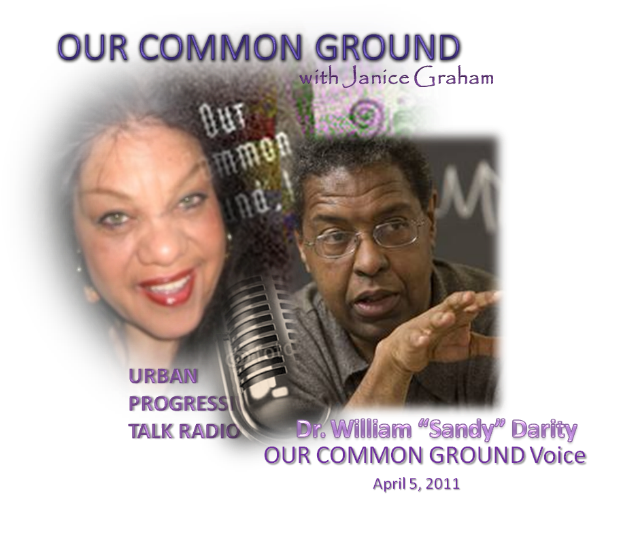
 the Research Network on Racial and Ethnic Inequality at Duke University. He earned the Ph.D. in economics from the Massachusetts Institute of Technology in 1978. He chairs the prestigious National Association of Economist.
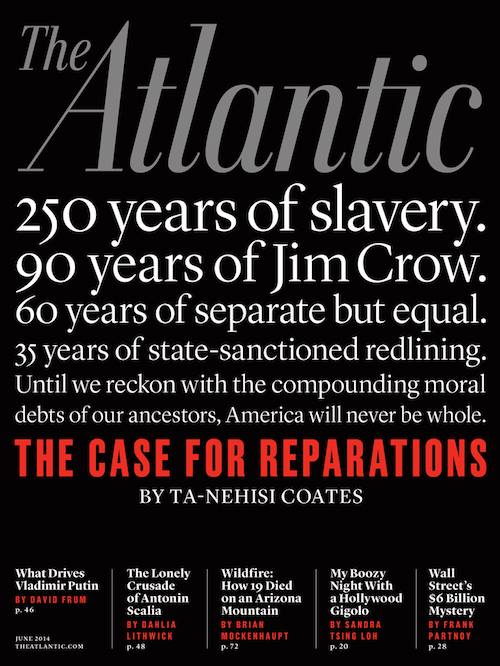


 The Gullah/Geechee Nation exist from Jacksonville, NC to Jacksonville, FL. It encompasses all of the Sea Islands and thirty to thirty-five miles inland to the St. John’s River. On these islands, people from numerous African ethnic groups linked with indigenous Americans and created the unique Gullah language and traditions from which later came “Geechee.” The Gullah/Geechee people have been considered “a nation within a nation” from the time of chattel enslavement in the United States until they officially became an internationally recognized nation on July 2, 2000. At the time of their declaration as a nation, they confirmed the election of their first “head pun de boddee”-head of state and official spokesperson and queen mother. They elected Queen Quet, Chieftess and Head-of-State for the Gullah/Geechee Gullah Nation.