Establish a Public Credit Registry | Demos


“Credit reports and scores directly impact Americans’ economic security and opportunity. Credit history can affect the way Americans are treated by lenders, landlords, utility companies, hospitals and employers. Having a poor credit history or a “thin file” with insufficient credit information to generate a credit score can mean a consumer will end up paying more for loans and insurance (or have trouble even getting them in the first place). Misuses of credit history are prevalent and harmful: Job seekers can be denied work based on their credit history, and the Trump administration has even proposed using credit history to determine whether immigrants should be eligible for permanent residency. Most harmfully, our credit system is built on—and continues to reinforce and expand—deep racial inequities.  Generations of discrimination in employment, lending, education and housing have produced significant racial disparities in credit history. Past discrimination is baked into current determinations of creditworthiness: Credit scores and other lending algorithms disproportionately represent black and Latino loan applicants as “riskier” customers. As a result, decisions drawing on credit data reproduce and spread existing racial inequality, making it harder to achieve true economic equity.”

Source: Establish a Public Credit Registry | Demos

The conditioning that fuels the mental health epidemic for Black men, and how to stop it – The Black Youth Project

“Gender, through the lens of white supremacy, prescribes how we should be, instead of accepting us how we are. It tells boys they’re not supposed to cry (or even feel emotion), and it tells girls they’re supposed to be good at cooking and play with Barbies. Those are small examples of a much larger issue, and these gendered lessons exist at every turn, are all-consuming and ripple across our lives.There are people in bodies deemed masculine who have been told they are a boy time and time again, even though that’s not how they feel inside. They are told their feelings are unnatural and irrelevant. Boys are told over and over again that they must follow certain rules, their lives must be a certain way, their dreams must be a certain thing.Gender also tells us that we are not whole and are only one part of a whole; the whole being a man and a woman. This is incredibly anti-queer and an unhealthy way to view yourself and a relationship.

Viewing yourself as less than a whole being who possesses the capacity to be masculine and feminine, and perform a variety of roles or possess skills that are deemed feminine, is illogical.It is terrifying to think that so many of us internalize these messages on a deep, subconscious level, a message that exposes men to constant emotional isolation and violence if they exist outside of these preset parameters. It is alarming that many men move through life seeing themselves as incomplete because they will never be with a woman or because they have yet to marry their “soulmate.” It’s alarming that people will not teach their boys how to cook, robbing them of that  that necessary survival skill. It is alarming how many people feel uncomfortable seeing men cry.”

Source: The conditioning that fuels the mental health epidemic for Black men, and how to stop it – The Black Youth Project

A loophole lets SC hospitals take millions from residents’ tax refunds for unpaid bills | Business | postandcourier.com

South Carolina hospitals are using a loophole in state law to scoop millions of dollars a year from the pockets of the poorest of patients. It mostly takes place outside the courts and the public eye.

A law originally written to help state and local governments collect debts is being used to seize tax refunds from people with past-due medical bills. The S.C. Department of Revenue does the legwork, and the cash flows straight into the coffers of some of the region’s largest health care companies.

The payoff is huge.

Source: A loophole lets SC hospitals take millions from residents’ tax refunds for unpaid bills | Business | postandcourier.com

The Mueller Report Should Shock Our Conscience | National Review

I’m old enough to remember the closing days of the 1996 campaign, when the Clinton administration was already beset by an avalanche of scandals. Bob Dole looked into the cameras and asked a pointed question — “Where is the outrage?” The same question applies today, but to a different audience. The lies are simply too much to bear. No Republican should tolerate such dishonesty.”

Source: The Mueller Report Should Shock Our Conscience | National Review

How Race Made the Opioid Crisis | Boston Review


DONNA MURCH

Source: How Race Made the Opioid Crisis | Boston Review

Ten Solutions to Bridge the Racial Wealth Divide – Inequality.org

The deep and persistent racial wealth divide will not close without bold, structural reform.  It has been created and held in place by public policies that have evolved with time including slavery, Jim Crow, red lining, mass incarceration, among many others. The racial wealth divide is greater today than it was nearly four decades ago and trends point to its continued widening.

Source: Ten Solutions to Bridge the Racial Wealth Divide – Inequality.org

Trump’s Man on the Inside at the IRS | DCReport.org


Charles Rettig is Running the Tax Agency for One Reason Only—To Keep His Boss’s Returns Locked Up

“Unless they are too brazen or clumsy, very rich tax cheats with very good lawyers get to deal with their tax offenses behind closed doors.  As a criminal tax defense lawyer once told me, “I get paid to save people from indictments for their tax crimes by settling cases before their names go into the public record.”


Source: Trump’s Man on the Inside at the IRS | DCReport.org

Civil War massacre launched reparations debate – The Washington Post

Civil War massacre launched reparations debate

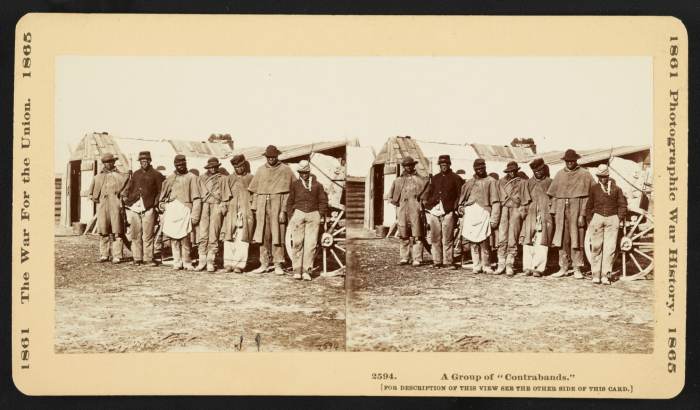
A group of “contrabands,” between 1861-1865. A stereograph showing a group of seven African American men, former slaves, dressed in old Union uniforms standing in front of a wagon and shack. (Library of Congress Prints and Photographs Division)By Gillian Brockell September 11, 2014On a rainy night in early 1865, Secretary of War Edwin Stanton arrived in Savannah, Ga. — which the Union had captured weeks earlier — with a question: What should become of newly free black people? It was a question that many in power had been asking for some time. What was different this time was to whom the question was posed: the newly free black people themselves.It was a visit born of a massacre about a month before, and it launched a debate that continues to this day.The issue of where these people should go had dogged Maj. Gen. William T. Sherman, too, as he marched through Georgia in the fall of 1864. Sherman had expected to pick up able-bodied black men to assist his troops (but not to join them; Sherman would not allow that). An unintended consequence of his scorched-earth policy was that all manner of freed slaves — including women, children and the elderly — abandoned the plantations and fell in behind him.More than 10,000 black refugees followed Sherman’s March to the Sea. That many mouths to feed would have proved challenging for a well-stocked force, but for an army that survived by foraging, it was nearly impossible. James Connolly, a 21-year-old major in the Illinois Volunteer Infantry (and future congressman), wrote that the refugee camps were so numerous that they often ringed the camps of the corps. The “contrabands,” as they were called, regularly wandered into Union camps to beg for food. And as Sherman’s force approached the sandy and less fertile Georgia coast, it became even more difficult to accommodate them.There was one corps, however, the refugees seemed to avoid: the 14th Corps, led by a brigadier general with a most unlikely name: Jefferson Davis. Davis — derisively called “General Reb” not only for having the same name as the Confederate president but also for his hatred of black people — had become notorious two years earlier when he shot dead a superior officer, Maj. Gen. William “Bull” Nelson, during an argument at a hotel. He escaped punishment only because the military couldn’t afford to lose an experienced field commander.Davis blamed the 600 or so black refugees following his unit for slowing down his 14,000 men in the closing weeks of the march. But from other accounts, it seems that the problem was the relentless winter rain. “At one time an officer counted 24 wagons sunk to their beds in mud,” writes Jim Miles in “To the Sea: A History and Tour Guide of Sherman’s March.” “He witnessed several mules sink out of sight.”Speed was vital. Davis knew that Lt. Gen. Joseph Wheeler’s Confederate cavalry was hot on their heels.For several days in early December, Davis drove the 14th Corps nearly nonstop, resting for two or three hours a night. One soldier reported falling asleep in the middle of “a fearfully hard march” and found himself in lock step upon jerking awake. Little more than coffee sustained them.On the night of Dec. 8, the corps arrived at the western bank of Ebenezer Creek. The bridge had been destroyed, in anticipation of their arrival, and the frigid waters had swollen to 10 feet deep and 165 feet wide. Scouts from Wheeler’s cavalry harassed Union troops in the rear.A pontoon bridge was in place by midnight, and Davis ordered the corps to cross the creek in silence and under the cover of darkness. According to Miles, a single Confederate cannon could have destroyed the bridge and stopped the entire corps, then only 18 miles from Savannah.But in this tenuous artery, Davis saw an opportunity.“On the pretence that there was likely to be fighting in front, the negroes were told not to go upon the pontoon-bridge until all the troops and wagons were over: a guard was detailed to enforce the order,” recalled Col. Charles Kerr of the 16th Illinois Cavalry in a speech 20 years after the incident. “As soon as we were over the creek, orders were given to the engineers to take up the pontoons and not let a negro cross. . . . I sat upon my horse then and witnessed a scene the like of which I pray my eyes may never see again.”Just before sunrise, the refugees cried out as their escape route was pulled away from them. Moments later, Wheeler’s scouts rode up from behind and opened fire. Hundreds of refugees rushed forward into the icy current. Several Union soldiers on the eastern bank tried to help, pushing logs out to the few refugees still swimming.Some of the refugees were crushed under the weight of the stampede. Most slipped under the water and drowned. Those who remained onshore were either shot or captured and re-enslaved.And when Wheeler’s men began shooting across the creek, the Union soldiers helping the black people were ordered to rej

Source: Civil War massacre launched reparations debate – The Washington Post

Ilhan Omar, AOC, Rashida Tlaib, and the silencing of women of color in Congress – Vox

A man threatened to “put a bullet” in Rep. Ilhan Omar. It’s another example of how society wants to silence women of color.

Source: Ilhan Omar, AOC, Rashida Tlaib, and the silencing of women of color in Congress – Vox

You’ve been arrested by a dishonest cop. Can you win in a system set up to protect officers?

You’ve been arrested by a dishonest cop. Can you win in a system set up to protect officers?

Two years ago, Officer “Smith” was caught lying on an arrest report. He was suspended but kept his job. His misconduct remained secret due to California’s strict laws that protect officer personnel records.
Objective: Help prove your innocence by showing that the cop has a history of lying.
This is an imaginary scenario based on a Times analysis of L.A. court records and interviews with attorneys.Read more about this 

SOURCE: LA Times

Credits: Twine, Sugarcube, Fontawesome, L.A. Superior Court records