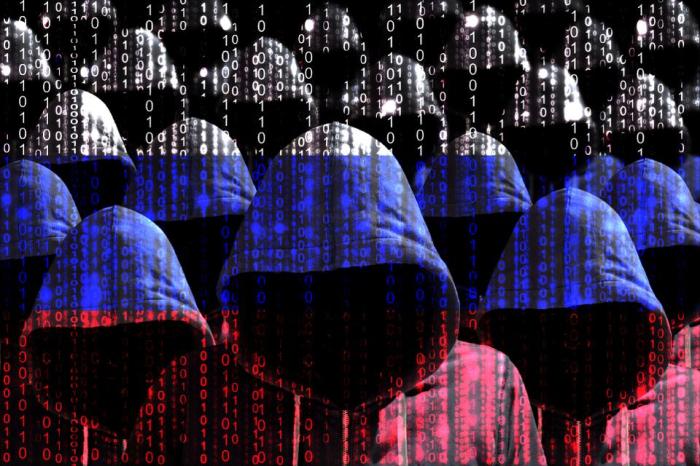
Russian Secret Weapon Against U.S. 2020 Election Revealed In New Cyberwarfare Report

The new research was conducted by Check Point in conjunction with Intezer—a specialist in Genetic Malware Analysis. It was led by Itay Cohen and Omri Ben Bassat, and has taken a deep dive to get “a broader perspective” of Russia’s threat ecosystem. “The fog behind these complicated operations made us realize that while we know a lot about single actors,” the team explains, “we are short of seeing a whole ecosystem.”

And the answer, Check Point concluded, was to analyse all the known data on threat actors, attacks and malware to mine for patterns and draw out all the connections. “This research is the first and the most comprehensive of its kind—thousands of samples were gathered, classified and analyzed in order to map connections between different cyber espionage organizations of a superpower country.”

The team expected to find deep seated linkages, connections between groups working into different Russia agencies—FSO, SVR, FSB, GRU. After all, one can reasonably expect all of the various threat groups sponsored by the Russian state to be on the same side, peddling broadly the same agenda.But that isn’t what they found. And the results from the research actually carry far more terrifying implications for Russia’s capacity to attack the U.S. and its allies on a wide range of fronts than the team expected. It transpires that Russia’s secret weapon is an organisational structure which has taken years to build and makes detection and interception as difficult as possible.“

The results of the research was surprising,” Cohen explains as we talk through the research. “We expected to see some knowledge, some libraries of code shared between the different organizations inside the Russian ecosystem. But we did not. We found clusters of groups sharing code with each other, but no evidence of code sharing between different clusters.”

And while such findings could be politics and inter-agency competition, the Check Point team have concluded that it’s more likely to have an operational security motive. “Sharing code is risky—if a security researcher finds one malware family, if it has code shared with different organizations, the security vendor can take down another organisation.”

Source: Russian Secret Weapon Against U.S. 2020 Election Revealed In New Cyberwarfare Report

IRS: Sorry, but It’s Just Easier and Cheaper to Audit the Poor — ProPublica

IRS: Sorry, but It’s Just Easier and Cheaper to Audit the Poor

Congress asked the IRS to report on why it audits the poor more than the affluent. Its response is that it doesn’t have enough money and people to audit the wealthy properly. So it’s not going to.by Paul Kiel Oct. 2, 2:47 p.m. EDTIRS Commissioner Charles Rettig at the Capitol on May 15, 2019, in Washington. Rettig says increasing audit rates of the wealthy depends on whether the IRS budget grows. (Anna Moneymaker/Getty Images)TRUMP ADMINISTRATIONThe 45th President and His AdministrationGUTTING THE IRSWho Wins When a Crucial Agency Is DefundedProPublica is a nonprofit newsroom that investigates abuses of power. Sign up for ProPublica’s Big Story newsletter to receive stories like this one in your inbox as soon as they are published.The IRS audits the working poor at about the same rate as the wealthiest 1%. Now, in response to questions from a U.S. senator, the IRS has acknowledged that’s true but professes it can’t change anything unless it is given more money.ProPublica reported the disproportionate audit focus on lower-income families in April.

Lawmakers confronted IRS Commissioner Charles Rettig about the emphasis, citing our stories, and Sen. Ron Wyden, D-Ore., asked Rettig for a plan to fix the imbalance. Rettig readily agreed.Last month, Rettig replied with a report, but it said the IRS has no plan and won’t have one until Congress agrees to restore the funding it slashed from the agency over the past nine years — something lawmakers have shown little inclination to do.On the one hand, the IRS said, auditing poor taxpayers is a lot easier: The agency uses relatively low-level employees to audit returns for low-income taxpayers who claim the earned income tax credit. The audits — of which there were about 380,000 last year, accounting for 39% of the total the IRS conducted — are done by mail and don’t take too much staff time, either. They are “the most efficient use of available IRS examination resources,” Rettig’s report says.

Source: IRS: Sorry, but It’s Just Easier and Cheaper to Audit the Poor — ProPublica

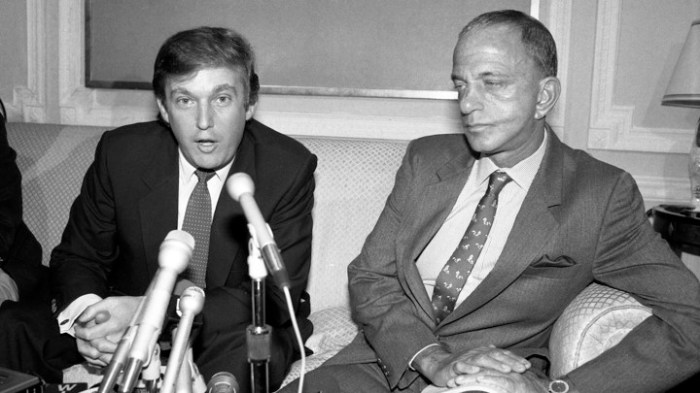
Roy Cohn and the Mafia Style in American Politics – The Atlantic

Roy Cohn connects the McCarthy era to the age of Trump across more than half a century.

In the new documentary Where’s My Roy Cohn? nothing is more mesmerizing and disturbing than Cohn’s eyes: flat and hooded; rare flickers of charm, but void of emotion by default; darkly staring down his prey in TV footage from the ’50s; washed-out blue and shifting away when asked whether he is gay and dying of AIDS in the ’80s. Cohn once included among his flaws “a total failure to sympathize with the emotional element in life.” The eyes turn his face—especially after the skin has been pulled taut by cosmetic surgery—into a living death mask. And throughout the film, these lifeless eyes keep appearing in other guises, other faces: the puffy, drowning drunk’s eyes of Joe McCarthy; the close-set reptilian stare of Roger Stone; the tight, appraising eyes of Donald Trump.

Source: Roy Cohn and the Mafia Style in American Politics – The Atlantic

A Black Mother’s Love and Fear for Her Children in a White World – The New York Times

This is a mother who has made it by most standards, yet she cannot guarantee the safety of her offspring because of the color of their skin. She stands guard at a crossroads where past is present, the political is personal and the abstract or purely hypothetical is all too real. Like any parent, she wants her children, two boys, to be able to create a decent and happy life for themselves. Yet the “terrifying specter” of the white imagination means they are often not seen as individuals but instead are judged for being black — “subject to the larger white world’s constant evaluation as to whether or not you are worthy.” (She compiles a running list of criticisms and put-downs to which her kids are subjected: “Too mobile, too slow, too fast, inattentive. Why are you still in the bathroom? It takes you too long to pee. It takes you too long to remember this algorithm, this table. You hold the pencil too tight, you do not hold it tightly enough.”)

We hear echoes of Hansberry’s fictional family in “A Raisin in the Sun” debating the merits of moving to a white community versus allowing those would-be white neighbors to buy them off in exchange for staying put. Perry chose the former for her sons, along with its consequences. “You live in some worlds that are more white than black,” she tells them. “And so, you learn, early on, that the aversion to blackness can turn perfectly lovely people grotesque.”

Source:  BREATHE
A Letter to My Sons  By Imani Perry  NYT Book Review