David Goodman Photo: The Andrew Goodman Foundation
Fifty years ago, on June 21, 1964, my older brother, Andrew Goodman, was murdered near Philadelphia, Miss. He and his colleagues Michael Schwerner and James Chaney were ambushed by more than a dozen members of the Ku Klux Klan, including the county’s deputy sheriff. They were taken to an unmarked dirt road and shot, one by one.
Their bodies weren’t discovered for 44 days, a mystery and a tragedy that continues to elicit raw emotions even a half-century later.It happened on the first day of Freedom Summer, an effort by the black leadership to flood Mississippi with northern college students who would help register African-American voters.At the time, barely 7 percent of Mississippi’s black residents were registered to vote. In eight of the 13 mostly black counties in the state, not a single African American had ever voted.
A century after the Civil War, they remained disenfranchised — citizens without a voice. It was more than segregation; it was subjugation. Something had to be done.The 1964 Mississippi Freedom Summer Project was a bold initiative. Given the widespread hatred of “outside agitators,” it was an act of remarkable bravery by all who participated.As the late Maya Angelou wrote in the foreword to My Mantelpiece, the recently published posthumous memoir of my mother, Carolyn Goodman, “Those three young men represent 300,000 young men and women who dared, who had the courage to go to the lion’s den and try to scrub the lion’s teeth.
“When 20-year-old Andy asked my parents for permission to volunteer in Mississippi, their urge to protect their son was trumped by the understanding that he was a spiritual reflection of themselves and their willingness to take action. His death devastated my family, but the brazenness of the act also shocked the nation.
Sadly, it was largely because two of the three victims were white.In fact, as officials searched through the forests and swamps of Mississippi, they discovered many black lynching victims who simply had been ignored because their tragic fate had become commonplace. So the case, which inspired the movie Mississippi Burning, lit a fire for the cause. It is no coincidence that the Voting Rights Act of 1965 was passed the following year.Yet here we go again. Last year, the Supreme Court struck down a key provision of that landmark piece of legislation, and immediately a number of states moved to implement laws that would essentially reduce voter turnout among minority groups. Dubious claims of voter fraud are being used to once again disenfranchise a portion of the population.In 1964, black would-be voters were turned away by intimidation and poll tests. Now, voter ID requirements and limited voting hours will disproportionately turn away, or inconvenience, low-income and minority voters. It is a more sophisticated and insidious form of voter suppression.Something has to be done.
After Andy’s death, my mother devoted the rest of her life to ensuring that he did not die in vain. She formed The Andrew Goodman Foundation, celebrated youth activists, and worked tirelessly for voting rights and human rights she was even arrested during a protest at age 83.As the estimable Rep. John Lewis put it, “She got in trouble. … It was necessary trouble. And she inspired many of us to continue to get in trouble.”But 50 years after Freedom Summer, we once again need to cause some trouble. The tragedy of the “Mississippi Burning” murders became a travesty of justice when only a handful of the perpetrators were convicted on federal charges, none spending more than a half-dozen years in prison because the state wouldn’t pursue a murder prosecution.It wasn’t until 41 years later that the ringleader of the group was convicted of three counts of manslaughter. My 89-year-old mother testified at the trial, a trial that happened because a few determined folks, inside and outside of Mississippi, wouldn’t let it go.
So we cannot let this new movement — these cynical and sinister attempts to disenfranchise Americans — go. If it takes an act of “outside agitation,” so be it. If it requires courage, we can summon it. If it means replacing cynicism with optimism and apathy with action, we can accomplish it. After all, there is a tiny hamlet right next to Philadelphia, Miss.
It is a town called Hope.David Goodman is The Andrew Goodman Foundation president.
Octavia Butler was born on this day in 1947 (to February 24, 2006), She was an celebrated American Science Fiction author, who excelled in a genre with few African-American women. She won both the Hugo and Nebula awards. In 1995, she became the first science fiction writer to receive the MacArthur Foundation Genius Grant.
Octavia Estelle Butler was born and raised in Pasadena, California. Her father Laurice, died when she was a baby, and Butler was raised by her grandmother and her mother (Octavia M. Butler), who worked as a maid in order to support the family. She grew up in a struggling, racially mixed neighborhood. According to the Norton Anthology of African American Literature, Butler was “an introspective, only child in a strict Baptist household” and “was drawn early to science fiction magazines such as “Amazing”, “Fantasy”, “Science Fiction”, and “Galaxy” and soon began reading all the science fiction classics.
Nicknamed “Junie,” Octavia Butler was paralytically shy and a daydreamer, and was later diagnosed as being dyslexic. She began writing at the age of ten “to escape loneliness and boredom”; and when she was twelve, she began her lifelong interest in science fiction.
After earning her associate’s degree from Pasadena City College in 1968, she enrolled at California State University in Los Angeles. She eventually left CalState and took writing classes through a UCLA extension. She would later credit two writing workshops for giving her “the most valuable help I received with my writing”. She participated in The Open Door Workshop of the Screenwriters’ Guild of America, West, a program designed to mentor Latino and African American writers. Through Open Door, she met the noted science fiction writer Harlan Ellison in 1969. She also had high praise for her time in The Clarion Science Fiction Writers Workshop, where she first met Samuel R. Delany. She remained, throughout her career, a self-identified science fiction fan, an insider who rose from within the ranks of the field.
For some writers, science fiction serves as means to delve into fantasy. But for Butler, it largely served as a vehicle to address issues facing humanity. It was this passionate interest in the human experience that imbued her work with a certain depth and complexity. In the mid-1980s, Butler began to receive critical recognition for her work.
Butler won the Nebula Award for Best Novel, “Parable of the Talents” in 1999, the Hugo and Locus Awards for Best Novelette, “Bloodchild” in 1985 and the Hugo Award for Best Short Story for “Speech Sounds” in 1984. In 1995, Butler received a “genius” grant from the MacArthur Foundation, which allowed her to buy a house for her mother and herself. She has been inducted into the Science Fiction Hall of Fame.
In 1976, Butler published her first novel, “Patternmaster.” This book was the first in a series of works about a group of people with telepathic powers called Patternists. Other Patternist titles include “Mind of My Mind” in 1977 and “Clay’s Ark” in 1984.
In the late 1980s, Butler published her Xenogenesis trilogy—“Dawn” in 1987, “Adulthood Rites” in 1988 and “Imago” in 1989. This series of books explores issues of genetics and race. To insure their mutual survival, humans reproduce with aliens known as the Oankali. Butler received much praise for this trilogy. She went on to write the Parable series, which includes the novels “Parable of the Sower” in 1993, and “Parable of the Talents” in 1999.
In 1999, Butler abandoned her native California to move north to Seattle, Washington. She was a perfectionist with her work and spent several years grappling with writer’s block. Her efforts were hampered by her ill health and the medications she took. After starting and discarding numerous projects, Butler wrote her last novel “Fledgling” in 2005.
In an interview by Randall Kenan, Octavia E. Butler discusses how her life experiences as a child shaped most of her thinking. As a writer, Butler was able to use her writing as a vehicle to critique history under the lenses of feminism. In the interview, she discusses the research that had to be done in order to write her bestselling novel, “Kindred.” Most of it is based on visiting libraries as well as historic landmarks with respect to what she is investigating. Butler admits that she writes science fiction because she does not want her work to be label or used as a marketing tool. She wants the readers to be genuinely interested in her work and the story she provides, but at the same time she fears that people will not read her work because of the “science fiction” label that they have.
The nearly reclusive Octavia Butler died unexpectedly in February of 2006 at her home in Seattle after falling and sustaining a head injury. With her death, the literary world lost one of its great storytellers. She is remembered, as Gregory Hampton wrote in Callaloo, as writer of “stories that blurred the lines of distinction between reality and fantasy.” And through her work, “she revealed universal truths.”
Much has been written recently about Octavia E. Butler’s sexual orientation Many obituaries recognized her as “both a Black and Lesbian science-fiction writer” All references seem to link to an unsourced Wikipedia post. She has been described by some close friends as bisexual, as asexual, and as heterosexual. She apparently never discussed any lesbianism publicly. There is even a discussion with Octavia Butler and fellow Black sci-fi author Samuel Delaney on the MIT website where he briefly talks about being a gay man. It would seem natural that Octavia Butler might have used the opportunity to acknowledge that she was a lesbian, but she did not mention it in that discussion. Dr. Ron Buckmire, a math professor at Occidental College, very near where Miss Butler lived until her move to Seattle, writes in his blog his reflections on her passing. He says that he knew her casually and does remark that she was a lesbian. Whatever her orientation, she was a gifted and inspiring writer whose work impacted and inspired the lives of many.
The Octavia E. Butler Memorial Scholarship was established in Butler’s memory in 2006 by the Carl Brandon Society. Its goal is to provide an annual scholarship to enable writers of color to attend one of the Clarion writing workshops where Butler got her start. The first scholarships were awarded in 2007.
In April 2014, it was announced that two new stories by Octavia E Butler had been discovered among her papers at the Huntington Library in San Marino, California, and that the stories are set for release this summer.
We remember Octavia E. Butler on this day in celebration of the 67th anniversary of her birth, and in appreciation for her brilliant writing, her unique and pioneering spirit, and for her many contributions to our community.
* If you enjoy these biographical tributes to same-gender loving/Trans men and women of African descent, please “like” the Ubuntu Biography Project page! And then go back and select “Get Notifications”. (https://www.facebook.com/UbuntuBiographyProject) Thank you
“Michael Schwerner, Andrew Goodman, and James Chaney had only just begun working on the Freedom Summer campaign to register black Mississippians to vote when they suddenly disappeared.
Schwerner and Goodman were two Jewish men from New York—they had been there less than a week—and Chaney was a local black activist. They had just finished investigating the bombing of a nearby church when they were taken into custody under false pretenses, and never again seen by their fellow volunteers.
The disappearance of these three men sparked national outrage, and the FBI converged on Mississippi to investigate. They discovered that on June 21, 1964, immediately upon being released from custody, the young activists had been brutally beaten and murdered by a Ku Klux Klan lynch mob.” — NAACP
21 June 2014 marks the 50th anniversary of the day of this continuation of the brutal and racist declaration of war against Afrikan civil and human rights.
Florida State Attorney Angela Corey will seek to triple Marissa Alexander’s original prison sentence from twenty to sixty years, effectively a life sentence for the 33-year-old woman, when her case is retried this July, The Florida Times-Union reports.
Alexander was convicted on three charges of aggravated assault in 2012 for firing warning shots in the direction of Rico Gray, her estranged husband, and his two children. No one was hurt. Alexander’s attorneys argued that she had the right to self-defense after Gray physically assaulted and threatned to kill her the day of the shooting. In a deposition, Gray confessed to a history of abusing women, including Alexander.
In September of 2013 a District Appeals court threw out the conviction on grounds that Circuit Judge James Daniel erroneously placed the burden on Alexander to prove she acted in self-defense, when she only had to meet a “reasonable doubt concerning self-defense.”
Judge Daniel originally slapped Alexander with three twenty-year prison sentences, but ordered that they be served concurrently. If Alexander is convicted a second time in July, State Attorney Angela Corey will seek consecutive sentences, adding up to sixty years in prison.
Florida’s 10-20-Life law imposes a mandatory minimum of twenty years in prison for anyone who fires a gun while committing a felony. Angela Corey’s prosecution team says it is following a court ruling that multiple convictions for related charges under 10-20-Life should carry consecutive sentences.
The advocacy group Free Marissa Now released a statement calling Corey’s move a “stunning abuse of power.” Members of the group say Corey is pressing for a longer sentence to thwart attention from accusations of prosecutorial misconduct, as well as recent failures in high-profile trials. Corey failed to secure murder convictions for George Zimmerman and Michael Dunn, two men who fatally shot black teenagers.
“Remember that when Marissa Alexander fired her warning shot to save her own life, she caused no injuries. Now she’s facing the very real possibility of spending the rest of her life in prison for that act of self-defense,” said advocate Sumayya Fire in the statement. “That should send a chill down the back of every person in this country who believes that women who are attacked have the right to defend themselves.”
Soul Emergence is a red-lettered, rhythmic, and relevant movement of righteous people living revolutionary lives in a humble attempt to make humanity human again.
"Sacred Wounds" dialogue as we discuss the complexities found in issues of race, racism, culture, and multiculturalism as experienced in the contexts of life and faith. Along with our guests we will unpack what it means to be a person of color [in just a few of the manifestations of this], a person of faith, and to be persons who carry the scars of a world that still contains many wounds for people of color, just living their lives.
Soul Emergence is a red-lettered, rhythmic, and relevant movement of righteous people living revolutionary lives in a humble attempt to make humanity human again.
Will we simply speak on behalf of the disinherited or are we willing to incarnate the Gospel in ways that unleash the shackles the vast majority of the world finds themselves in?
Peter E. Matthews, Host, Soul Emergence Radio on TruthWorks Network
" Why is it that Christianity seems impotent to deal radically, and therefore effectively, with the issues of discrimination and injustice on the basis of race, religion, and national origin? Is this impotency due to a betrayal of the genius of the religion, or is it due to a basic weakness in the religion itself? (Jesus and the Disinherited, Preface)"
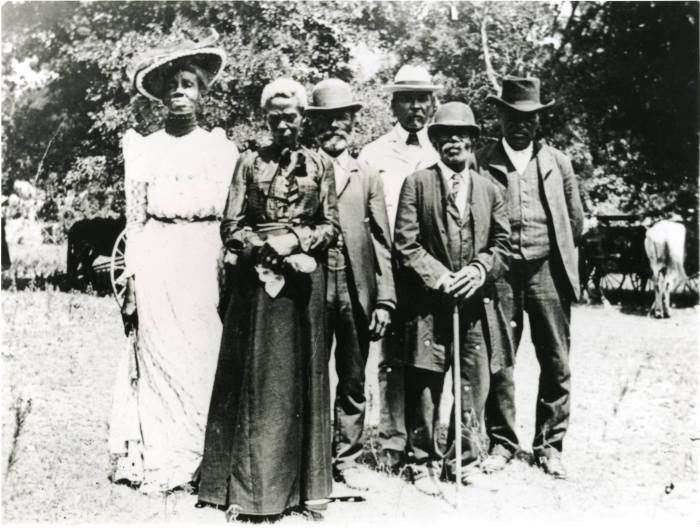
Juneteenth | Black Independence Day | June 19, 1865
A Day of Celebration of Freedom
Juneteenth | Black Independence Day | June 19, 1865
Juneteenth is the oldest known celebration commemorating the ending of slavery in the United States. Dating back to 1865, it was on June 19th that the Union soldiers, led by Major General Gordon Granger, landed at Galveston, Texas with news that the war had ended and that the enslaved were now free. Note that this was two and a half years after President Lincoln’s Emancipation Proclamation – which had become official January 1, 1863. The Emancipation Proclamation had little impact on the Texans due to the minimal number of Union troops to enforce the new Executive Order. However, with the surrender of General Lee in April of 1865, and the arrival of General Granger’s regiment, the forces were finally strong enough to influence and overcome the resistance.
Later attempts to explain this two and a half year delay in the receipt of this important news have yielded several versions that have been handed down through the years. Often told is the story of a messenger who was murdered on his way to Texas with the news of freedom. Another, is that the news was deliberately withheld by the enslavers to maintain the labor force on the plantations. And still another, is that federal troops actually waited for the slave owners to reap the benefits of one last cotton harvest before going to Texas to enforce the Emancipation Proclamation. All of which, or neither of these version could be true. Certainly, for some, President Lincoln’s authority over the rebellious states was in question For whatever the reasons, conditions in Texas remained status quo well beyond what was statutory.
News, analysis and commentary from the black left.
Bruce A. Dixon is managing editor at Black Agenda Report, and a state committee member of the Georgia Green Party. He can be reached via this site’s contact page, or emailed directly at bruce.dixon(at)blackagendareport.com.
"Brands neither say what they mean, nor mean what they say. Brands are stories, brands are narratives contrived to get specific emotional reactions, to pull real or imagined memories, sights, smells or feelings from a target audience. To do this brands operate outside of and independent from fact and/or logic. Reparations is not a movement, it’s a brand."
The death of Dr. Maya Angelou provided us the opportunity to once again delight in her memoirs, which chronicle the eclectic, bohemian first half of her life. Yet, we know from her writings that such praise was often withheld as she pursued her dreams of being a dancer and poet while raising a young child as a single mother. How many times must she have been urged to settle down and give up her artistic and cultural pursuits, which time and time again left her broke and broken? While we now refer to Angelou as a renaissance woman, until she published I Know Why The Caged Bird Sings in her 40s, her life resembled what is referred to in ghetto parlance as a hot mess.
This messiness is what we all fear. It is why rather than pursue our dreams, we settle into the lives expected of us. Cubicles and cul-de-sacs become the things of our imagination. Only happiness and satisfaction studies suggest they are not enough. A GALLUP Poll last year found that only 30 percent of U.S. workers are passionate about their work. The majority (52 percent) are unhappy with their jobs and put little energy into their work while another 18 percent actually hate their jobs and actively work to undermine coworkers. We sacrifice our dreams only to find ourselves restless, bored and frustrated in midlife having realized what Angelou told us all along; “making a living is not the same thing as making a life.” Worse still, we recognize the irony in discovering after layoffs, financial setbacks and divorce that the “mess” is unavoidable.
These unmet expectations and realization that youthful aspirations have been abandoned are suspected as the cause of feelings of discouragement and depression among those in midlife. The British think tank NatCen Social Research found that studies show that people between 35 and 55 suffer a dip in well-being. A separate study that analyzed data from “nationally representative” surveys in Australia, Britain and Germany found that the bell curve in well-being dips to its lowest point around the ages of 40 to 42.
Even those who choose to pursue unconventional dreams don’t escape these feelings, especially if such pursuits have come at the expense of nearly everything else. I abandoned life as a lawyer in favor of one as a writer, activist and entrepreneur. Now having entered midlife without any of our culture’s success markers — husband, children, two-car garage — I have had to answer, both to myself and to others, the question of whether the path I’ve chosen was a wise one. Reflecting on Angelou’s has helped me find the answers.
1. Be uniquely you.
Angelou described herself in I Know Why the Caged Bird Sings as “a too-big Negro girl, with nappy black hair, broad feet and a space between her teeth that would hold a number-two pencil.” She knew such a girl would’ve perished trying to conform to mainstream conventions. “If you’re always trying to be normal, you will never know how amazing you can be.” Instead of fretting over not being a swan, Angelou reinvented herself as a rare bird. As many biographers have noted, she won’t be remembered for her poems or plays, but for her memoirs and for being Maya Angelou. The key to discerning one’s authenticity is quite simple: “Listen to yourself and in that quietude you might hear the voice of God.”
2. When it comes to failure, be courageous.
Angelou was a marvelous failure. Her most noteworthy stage performance, playing the seamstress in the two-woman play Mary Todd Lincoln, earned her a Tony nomination but closed on opening night. The rolling stone never stuck to one thing for long. She moved from coast to coast, continent to continent, sometimes making poor childcare decisions, one of which resulted in her son’s brief abduction. She didn’t have a stable home or steady job until she was in her 50s, an age at which many are preparing for retirement. She divorced several times but would would never confirm the exact number, “for fear of sounding frivolous.” Aware of all her failings, Angelou was brave enough to look at herself. “We have to confront ourselves. Do we like what we see in the mirror? And, according to our light, according to our understanding, according to our courage, we will have to say yea or nay — and rise!”
3. Know who your friends are.
One would be hard-pressed to identify a significant black figure Angelou didn’t know. She danced with Amiri Baraka. Billie Holiday visited her home and explained the meaning of Strange Fruit to her young son. While a calypso dancer she worked with Alvin Ailey. James Baldwin gave her the introductions that would lead to the publication of her first memoir. These were people she deeply cared for, but in anEssence interview, she had this to say of friendship.
There’s a marked difference between acquaintances and friends. Most people really don’t become friends. They become deep and serious acquaintances. But in a friendship you get to know the spirit of another person, and your values coincide. Friends may disagree, but not about serious matters. A friend will stand for you when you are no longer able… Years ago one of the slick White women’s magazines asked if they could photograph me with my closest friends for an issue they were doing on friends. The editor wanted me to bring Oprah. I have 30 years on Oprah. She calls me her friend, her mother, all that. I am very close to her in a motherly way. So I told [the magazine], ‘I have three dear friends — Dolly McPherson, Jessica ‘Decca’ Mitford and M.J. Hewitt — they are sisters to me.’
4. Believe you can do anything.
For Angelou, inexperience was never a reason not to take on an interesting job. Angelou’s only criterion was seemingly that a new occupation share little to no similarities with her previous one. At sixteen, she became San Francisco’s first African-American streetcar conductor and later passed herself off as an experienced Creole chef. She held jobs dancing in a nightclub, stripping paint from old cars, and singing Calypso. She knew nothing about being a journalist when she accepted a position as an editor for The Arab Observer,” an English-language magazine. She said of the experience,
I stayed at the Arab Observer for over a year and gradually my ignorance receded. I learned from Abdul Hassan how to write an opinionated article with such subtlety that the reader would think the opinion his own…I received a raise from Dr. Nagati, the respect of my fellow workers and a few compliments from strangers…
She made her television debut as Kunte Kinte’s grandmother in the acclaimed television adaptation of Alex Haley’s Roots. And in the one-time high school dropout who never attended college became the Reynolds professor of American studies at Wake Forest University in North Carolina.
5. Forgive others and yourself.
In addition to enduring the injustices that came along with being poor, black and female in the South, Angelou was also raped as a child and beaten as a young woman. In a May 9th interview at her home she told Armstrong Williams, “I’ve learned that forgiving is one of the greatest gifts that I can give myself…And as soon as I do I feel lighter, brighter and better.”
In Gather Together in My Name, Angelou shares one of her lowest periods when she served as a pimp for two lesbian prostitutes and sometimes worked as a prostitute herself. In one interview, she said of the experience.
If you happen to fall into that sort of experience, what you have to do is forgive yourself. If you’re in the very gutter, see where you are and admit it. As soon as you admit it, you can be like the prodigal son, the prodigal daughter. Get up and go home — wherever home is. Get up and go to a safe place, someplace where your spirit is not kicked and brutalized and your body not misused and abused. Get up. But you can’t get up unless you see where you are and admit it.
6. Persevere.
In A Song Flung Up to Heaven, Angelou tells of her midlife crisis which was accompanied by great sorrow. Returning to the States after the end of a romance in Africa, Angelou became a Civil Rights activist only to be witness to the Movement’s greatest tragedies. She was working with Malcolm X to establish his foundation when he was assassinated New York City. Three years later she was working as the northern coordinator for Dr. Martin Luther King Jr. when he was gunned down in Memphis on Angelou’s 40th birthday. For a time, Angelou withdrew from society unable to deal with the tragedy, but eventually she harnessed her grief and regrets to write her seminal work, I Know Why The Caged Bird Sings. From then on, she would rise at dawn and set out for the motel room where she would write. Her only companions were a Bible, a dictionary, a thesaurus, a stack of legal pads, and a bottle of sherry. Having written her way out of the worst time in her life, she credited it with her survival. “All my work is meant to say, ‘You may encounter many defeats, but you must not be defeated…Nothing will work unless you do.”
7. Change.
Angelou was a master of reinvention. She didn’t settle on a name until after her first marriage, claiming her childhood nickname and a twist on her first husband’s last name. For Angelou, change was essential. Perhaps more so when one decides nothing can be done at all. “If you don’t like something, change it. If you can’t change it, change your attitude.”












 OCG
OCG 