2013 Black History Note l From Footnote to Fame in Civil Rights History

From Footnote to Fame in Civil Rights History

By BROOKS BARNES

Published: November 25, 2009

On that supercharged day in 1955, when Rosa Parks refused to give up her bus seat to a white passenger in Montgomery, Ala., she rode her way into history books, credited with helping to ignite the civil rights movement.

Nicole Bengiveno/The New York Times (left), The Montgomery Advertiser, via Melanie Kroupa Books/Farrar, Straus & Giroux

Claudette Colvin in a portrait taken in November (left) and as a child around 1953.

Nicole Bengiveno/The New York Times

Claudette Colvin’s historic stand preceded that of Rosa Parks.

Michael Appleton for The New York Times

Phillip Hoose, with Claudette Colvin, accepting a National Book Award last week for “Claudette Colvin: Twice Toward Justice.”

The Montgomery Advertiser, via Melanie Kroupa Books/Farrar, Straus & Giroux


But there was another woman, named Claudette Colvin, who refused to be treated like a substandard citizen on one of those Montgomery buses — and she did it nine months before Mrs. Parks. The Rev. Dr. Martin Luther King Jr. made his political debut fighting her arrest. Moreover, she was the star witness in the legal case that eventually forced bus desegregation.

Yet instead of being celebrated, Ms. Colvin has lived unheralded in the Bronx for decades, initially cast off by black leaders who feared she was not the right face for their battle, according to a new book that has plucked her from obscurity.

Last week Phillip Hoose won the National Book Award for Young People’s Literature for “Claudette Colvin: Twice Toward Justice,” published by Farrar, Straus & Giroux. The honor sent the little-selling title shooting up 500 spots on Amazon.com’s sales list and immediately thrust Ms. Colvin, 70, back into the cultural conversation.

“Young people think Rosa Parks just sat down on a bus and ended segregation, but that wasn’t the case at all,” Ms. Colvin said in an animated interview at a diner near her apartment in the Parkchester section of the Bronx. “Maybe by telling my story — something I was afraid to do for a long time — kids will have a better understanding about what the civil rights movement was about.”

Ms. Colvin made her stand on March 2, 1955, and Mrs. Parks made hers on Dec. 1 that same year. Somehow, as Mrs. Parks became one of Time Magazine’s 100 most important people of the 20th century, and streets and schools were named after her, Ms. Colvin managed to let go of any bitterness. After Ms. Colvin was arrested, Mrs. Parks, a seasoned N.A.A.C.P. official, sometimes let her spend the night at her apartment. Ms. Colvin remembers her as a reserved but kindly woman who fixed her snacks of peanut butter on Ritz crackers.

“My mother told me to be quiet about what I did,” Ms. Colvin recalled. “She told me: ‘Let Rosa be the one. White people aren’t going to bother Rosa — her skin is lighter than yours and they like her.’ ”

Ms. Colvin said she came to terms with her “raw feelings” a long time ago. “I know in my heart that she was the right person,” she said of Mrs. Parks.

Ms. Colvin was riding the bus home from school when the driver demanded that she give up her seat for a middle-age white woman, even though three other seats in the row were empty, one beside Ms. Colvin and two across the aisle.

“If she sat down in the same row as me, it meant I was as good as her,” Ms. Colvin said.

Two police officers, one of them kicking her, dragged her backward off the bus and handcuffed her, according to the book. On the way to the police station, they took turns trying to guess her bra size.

At the time, the arrest was big news. Black leaders, among them Dr. King, jumped at the opportunity to use her case to fight segregation laws in court. “Negro Girl Found Guilty of Segregation Violation” was the headline in The Alabama Journal. The article said that Ms. Colvin, “a bespectacled, studious looking high school student,” accepted the ruling “with the same cool aloofness she had maintained” during the hearing.

As chronicled by Mr. Hoose, more than 100 letters of support arrived for Ms. Colvin — sent in care of Mrs. Rosa Parks, secretary of the Montgomery branch of the N.A.A.C.P.

But Ms. Colvin was ultimately passed over.

“They worried they couldn’t win with her,” Mr. Hoose said in an interview from his home in Portland, Me. “Words like ‘mouthy,’ ‘emotional’ and ‘feisty’ were used to describe her.”

Mrs. Parks, on the other hand, was considered “stolid, calm, unflappable,” he said. The final straw: Ms. Colvin became pregnant by a married man.

A second Montgomery teenager, Mary Louise Smith, was also arrested for refusing to give up her bus seat — after Ms. Colvin’s arrest but before Ms. Parks’s — and she was also deemed an unsuitable symbol for the movement partly because of rumors that her father had an alcohol problem.

Although Ms. Colvin quickly left Montgomery, she returned during the peak of the bus boycott that Mrs. Parks had subsequently sparked, and testified in federal court in Browder v. Gayle, the landmark case that effectively ended bus segregation.

“It’s an important reminder that crucial change is often ignited by very plain, unremarkable people who then disappear,” said David J. Garrow, a Pulitzer Prize-winning biographer of Dr. King.

Even Mrs. Parks was forgotten for the better part of 20 years, only re-emerging as a world-famous figure in the early 1970s after magazine articles and attention in several children’s books.

Ms. Colvin, who relies on a cane to steady herself, retired in 2004 after 35 years as a nurse’s aide at a Manhattan nursing home. She contributed to her own obscurity: after settling in New York, she never talked about how her arrest helped prompt the famous bus boycott.

“She continued to heed her mother’s advice, and worried that drawing attention to herself would result in the loss of her job. “I wasn’t going to take that chance,” she said.

So she settled into living an average life. She never married. The son she had in Montgomery died at age 37; a second son is an accountant in Atlanta. She watches television — “Who Wants to Be a Millionaire” is a favorite — and is a regular at the diner.

Ms. Colvin said she reads two newspapers every day to keep up on current events, chatting about recent Nobel Prize winners. She likes Chris Rock and Alicia KeysAretha Franklincould stand to lose a few pounds, but she wore a good hat to President Obama’sinauguration. Don’t get Ms. Colvin started on Sarah Palin.

She has fond memories of Dr. King. “He was just an average-looking fellow — it’s not like he was Kobe Bryant or anything,” she said, fluttering her eyelashes. “But when he opened his mouth he was like Charlton Heston playing Moses.”

Mr. Hoose said he stumbled across Ms. Colvin’s story while researching a previous book, “We Were There, Too! Young People in U.S. History.” Several sources told him to investigate what had almost become an urban myth: that a teenager had beaten Mrs. Parks to the punch in Montgomery.

He eventually tracked down Ms. Colvin, who has an unlisted telephone number. She refused to talk to Mr. Hoose for almost four years.

Mr. Hoose won over his reluctant subject over a long lunch at the diner. It was clear, he said, that she yearned to have her story told despite protests to the contrary. “It was easy to find the rebel girl inside of her,” he said.

One of her first questions: “Can you get it into schools?”

This article has been revised to reflect the following correction:

Correction: December 4, 2009
An article on Nov. 26 about Claudette Colvin, who protested segregation on theMontgomery, Ala., buses nine months before Rosa Parks did and is the subject of a book for young people that won a National Book Award last month, referred imprecisely to Mrs. Parks’s protest. While the boycott that followed her arrest for refusing to give up her seat to a white passenger was planned by civil rights leaders who were waiting for the right case, her protest itself on Dec. 1, 1955, was not “carefully planned.”

More Articles in Books »A version of this article appeared in print on November 26, 2009, on page A1 of the New York edition.

Visit our Honoring Our Past Pages

BLACK HISTORY MONTH 2013: “At the Crossroads of Freedom and Equality: The Emancipation Proclamation and the March on Washington”

black history

BLACK HISTORY MONTH 2013 Theme

“At the Crossroads of Freedom and Equality: The Emancipation Proclamation and the March on Washington”

When Carter G. Woodson established Negro History week in 1926, he realized the importance of providing a theme to focus the attention of the public. The intention has never been to dictate or limit the exploration of the Black experience, but to bring to the public’s attention important developments that merit emphasis.

For those interested in the study of identity and ideology, anexploration of ASALH’s Black History themes is itself instructive. Over the years, the themes reflect changes in how people of African descent in the United States have viewed themselves, the influence of social movements on racial ideologies, and the aspirations of the black community.

The changes notwithstanding, the list reveals an overarching continuity in ASALH–our dedication to exploring historical issues of importance to people of African descent and race relations in America.

Woodson_Carter_G

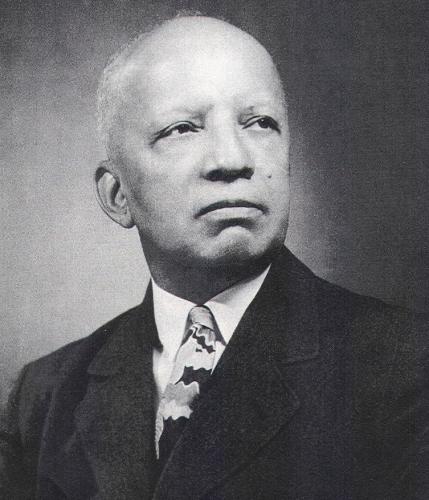
Dr. Carter G. Woodson,  Researcher Honored as the “Father of Black History Week”

The story of Black History Month begins in Chicago during the
late summer of 1915.
 An alumnus of the University of Chicago with
many friends in the city, Carter G. Woodson traveled from
Washington, D.C. to participate in a national celebration of the fiftieth
anniversary of emancipation sponsored by the state of Illinois.
Thousands of African Americans traveled from across the country to
see exhibits highlighting the progress their people had made since the
destruction of slavery.  Awarded a doctorate in Harvard three years
earlier, Woodson joined the other exhibitors with a black history display.
Despite being held at the Coliseum, the site of the 1912 Republican
convention, an overflow crowd of six to twelve thousand waited
outside for their turn to view the exhibits. Inspired by the three-week
celebration, Woodson decided to form an organization to promote the
scientific study of black life and history before leaving town.  On
September 9th, Woodson met at the Wabash YMCA with A. L. Jackson
and three others and formed the Association for the Study of Negro
Life and History (ASNLH).
He hoped that others would popularize the findings that he and other black intellectuals would publish in The Journal of Negro History, which he established in 1916.  As early as 1920, Woodson urged black civic organizations to promote the achievements that researchers were uncovering.  A graduate member of Omega Psi Phi, he urged his fraternity brothers to take up the work. In 1924, they responded with the creation of Negro History and Literature Week, which they renamed Negro Achievement Week.  Their outreach was significant, but Woodson desired greater impact.  As he told an audience of Hampton Institute students, “We are going back to that beautiful history and it is going to inspire us to greater achievements.”  In 1925, he decided that the Association had to shoulder the responsibility.  Going forward it would both create and popularize knowledge about the black past. He sent out a press release announcing Negro History Week in February, 1926.Woodson chose February for reasons of tradition and reform.  It is commonly said that Woodson selected February to encompass the birthdays of two great Americans who played a prominent role in shaping black history, namely Abraham Lincoln and Frederick Douglass, whose birthdays are the 12th and the 14th, respectively.  More importantly, he chose them for reasons of tradition.  Since Lincoln’s assassination in 1865, the black community, along with other Republicans, had been celebrating the fallen President’s birthday.  And since the late 1890s, black communities across the country had been celebrating Douglass’.  Well aware of the pre-existing celebrations, Woodson built Negro History Week around traditional days of commemorating the black past.  He was asking the public to extend their study of black history, not to create a new tradition.  In doing so, he increased his chances for success.Yet Woodson was up to something more than building on tradition. Without saying so, he aimed to reform it from the study of two great men to a great race.  Though he admired both men, Woodson had never been fond of the celebrations held in their honor. He railed against the “ignorant spellbinders” who addressed large, convivial gatherings and displayed their lack of knowledge about the men and their contributions to history.  More importantly, Woodson believed that history was made by the people, not simply or primarily by great men.  He envisioned the study and celebration of the Negro as a race, not simply as the producers of a great man. And Lincoln, however great, had not freed the slaves—the Union Army, including hundreds of thousands of black soldiers and sailors, had done that. Rather than focusing on two men, the black community, he believed, should focus on the countless black men and women who had contributed to the advance of human civilization.From the beginning, Woodson was overwhelmed by the response to his call.  Negro History Week appeared across the country in schools and before the public.  The 1920s was the decade of the New Negro, a name given to the Post-War I generation because of its rising racial pride and consciousness.  Urbanization and industrialization had brought over a million African Americans from the rural South into big cities of the nation.  The expanding black middle class became participants in and consumers of black literature and culture.  Black history clubs sprang up, teachers demanded materials to instruct their pupils, and progressive whites stepped and endorsed the efforts.

Woodson and the Association scrambled to meet the demand.  They set a theme for the annual celebration, and provided study materials—pictures, lessons for teachers, plays for historical performances, and posters of important dates and people.  Provisioned with a steady flow of knowledge, high schools in progressive communities formed Negro History Clubs.  To serve the desire of history buffs to participate in the re-education of black folks and the nation, ASNLH formed branches that stretched from coast to coast.  In 1937, at the urging of Mary McLeod Bethune, Woodson established the Negro History Bulletin, which focused on the annual theme. As black populations grew, mayors issued Negro History Week proclamations, and in cities like Syracuse progressive whites joined Negro History Week with National Brotherhood Week.  Continued Here

Learn More

dubois

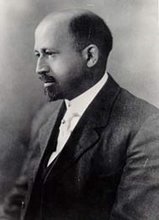
Dr. W.E. B. Dubois

The year 2013 marks two important anniversaries in the history of African Americans and the United States. On January 1, 1863, the Emancipation Proclamation set the United States on the path of ending slavery. A wartime measure issued by President Abraham Lincoln, the proclamation freed relatively few slaves, but it fueled the fire of the enslaved to strike for their freedom. In many respects, Lincoln’s declaration simply acknowledged the epidemic of black self-emancipation –spread by black freedom crusaders like Harriet Tubman – that already had commenced beyond his control. Those in bondage increasingly streamed into the camps of the Union Army, reclaiming and asserting self-determination. The result, abolitionist Fredrick Douglass predicted, was that the war for the Union became a war against slavery. The actions of both Lincoln and the slaves made clear that the Civil War was in deed, as well as in theory, a struggle between the forces of slavery and emancipation. The full-scale dismantlement of the “peculiar institution” of human bondage had begun. In 1963, a century later, America once again stood at the crossroads. Nine years earlier, the U.S. Supreme Court had outlawed racial segregation in public schools, but the nation had not yet committed itself to equality of citizenship. Segregation and innumerable other forms of discrimination made second‐class citizenship the extra‐constitutional status of non‐whites.Another American president caught in the gale of racial change, John F. Kennedy, temporized over the legal and moral issue of his time. Like Lincoln before him, national concerns, and the growing momentum of black mass mobilization efforts, overrode his personal ambivalence toward demands for black civil rights. On August 28, 1963, hundreds of thousands of Americans, blacks and whites, Jews and gentiles, Protestants and Catholics, marched to the memorial of Abraham Lincoln, the author of the Emancipation Proclamation, in the continuing pursuit of equality of citizenship and self-determination. It was on this occasion that Martin Luther King, Jr. delivered his celebrated “I Have a Dream” speech. Just as the Emancipation Proclamation had recognized the coming end of slavery, the March on Washington for Jobs and Freedom announced that the days of legal segregation in the United States were numbered. Marking the sesquicentennial of the Emancipation Proclamation and the 50th anniversary of the March on Washington, the Association for the Study of African American Life and History invites papers, panels, and roundtables on these and related topics of black emancipation, freedom, justice and equality, and the movements that have sought to achieve these goals. Submissions may focus on the historical periods tied to the 2013 theme, their precursors and successors, and other past and contemporary moments across the
breadth of African American history.

This copy may be republished electronically with the following acknowledgement and link by the Association for the Study of African American Life and History at http://www.asalh.org.


Visit our Honoring Our Past Pages

Santa Clausifying Martin Luther King, Jr. l David Sirota

Santa Clausifying Martin Luther King, Jr.

 Feb 1, 2013

King statue
Kelly Branan

By David Sirota

Every year, right around the time between Martin Luther King Day and the beginning of Black History Month, the effort to distort Dr. King’s life and legacy seems to intensify. Some years, we see conservatives preposterously assert that if Dr. King were alive today, he would join today’s neo-confederate Republican Party. Other years, it is deception via omission—we see replays of Dr. King’s 1963 “I Have a Dream” speech, but do not see any of his speeches about war and poverty.

Princeton professor Cornel West accurately labels all this the “Santa Clausification” of Dr. King, and if you have ever heard or read a snippet of King’s 1967 Riverside Church speech, you will understand how apt the label is. You will also understand why this year’s most grotesque attempt to Santa Clausify Dr. King’s life is at once abhorrent and yet somewhat encouraging.

As The Guardian’s Glenn Greenwald first reported, the United States Air Force’s Global Strike Command last week posted an online essay saying that Dr. King would cheer on soldiers “ensuring the most powerful weapons in the U.S. arsenal remain the credible bedrock of our national defense.” Further, claimed the Air Force, “maintaining our commitment to our Global Strike team … is a fitting tribute to Dr. King.”

At the same time, the U.S. Marines commemorated Martin Luther King Day by tweeting out a famous King line—“a man who won’t die for something is not fit to live”—in a not-so-subtle attempt to depict him as a war supporter. That was a follow-up to a 2011 article posted on the Defense Department’s website with the headline: “King Might Understand Today’s Wars, Pentagon Lawyer Says.”

That gets us to the special relevance of the Riverside Church speech—the one that the Santa Clausifying Pentagon so obviously wants suppressed.

In that oratory, America’s most famous preacher of nonviolence deplored “a nation that continues year after year to spend more money on military defense than on programs of social uplift is approaching spiritual death.” He argued that militarism is not the way to protect America and decried “the greatest purveyor of violence in the world today—my own government.” And he insisted that “there is nothing except a tragic death wish to prevent us from reordering our priorities so that the pursuit of peace will take precedence over the pursuit of war.”

Comparing the Pentagon’s historical revisionism with King’s words, Greenwald says: “The U.S. military is actually publicly claiming that the 1964 Nobel Peace Prize winner and steadfast critic of U.S. imperialism would be an admirer of its massive stockpile of nuclear weapons, its global assassination programs and its covert use of violence in multiple countries around the world, including where no wars are declared. Merely to describe this agitprop is to illustrate its repulsiveness.”

He’s absolutely right, but in that repulsiveness there is a promising revelation from a political system in which lies signal desperation.

In this particular case, the Pentagon’s willingness to so boldly lie about Dr. King betrays its desperation to reverse accelerating public opinion trends. Specifically, Pentagon spinmeisters seem to realize that, according to polls, more Americans are raising King-like questions about our government’s profligate defense spending and its attempts to preference militarism over other priorities.

This suggests that for all the propaganda attempting to Santa Clausify Dr. King and make us forget what he was all about, we may, in fact, be starting to honor Dr. King’s legacy.

That’s no excuse for the propaganda, of course—but it is a promising sign that we may actually be closer than ever to realizing Dr. King’s dream.

David Sirota is the best-selling author of the books “Hostile Takeover,” “The Uprising” and “Back to Our Future.” Email him at ds@davidsirota.com, follow him on Twitter @davidsirota or visit his website at http://www.davidsirota.com.

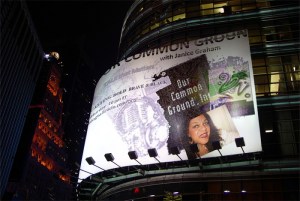
OUR COMMON GROUND Opens 2013 Season with Political-Cultural-Social Commentator Playthell Benjamin

See on Scoop.itOUR COMMON GROUND Informed Truth and Resistance

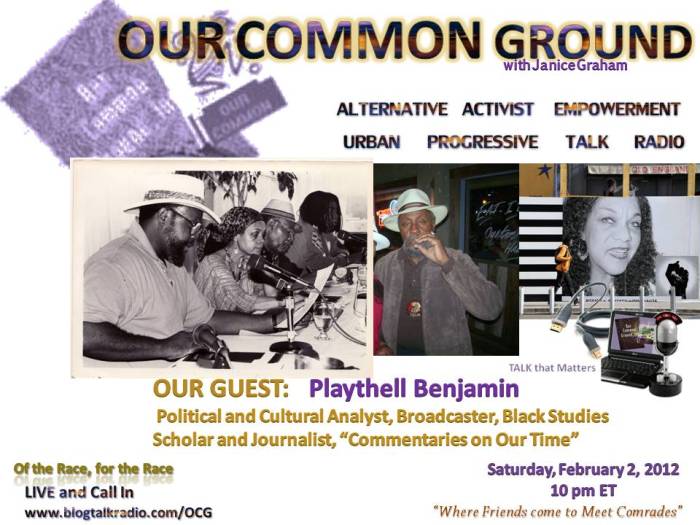
OUR COMMON GROUND with Janice Graham 2013 Season Opening  Playthell Benjamin February 2, 2013 10pm ET LIVE and Call In 2013 Season Opening Listen LIVE GUEST: Playthell Benjamin, Author, Commentator…

OUR COMMON GROUND Omnibus‘s insight:

We hope that you will join us for our opening of the 28th Season of OUR COMMON GROUND.


"Speaking Truth to Power and Ourselves"

See on ourcommongroundtalk.wordpress.com

OUR COMMON GROUND Opens 2013 Season with Political-Cultural-Social Commentator Playthell Benjamin

OUR COMMON GROUND with Janice Graham

2013 Season Opening

season 2013opening2

 Playthell Benjamin

February 2, 2013 10pm ET

LIVE and Call In

2013 Season Opening

Listen LIVE


GUEST: Playthell Benjamin, Author, Commentator, Scholar and Broadcaster

Commentaries on The Times

“Praising Saints, Celebrating Heroes, Unmasking Charlatans, Defending the Defenseless and Chastising Scoundrel

“He characterized Tavis Smiley and Dr. Cornel West as misdirected and Marvin X of Oakland, a recovering left coast crack head and shameless sophist with an alter-ego bearing the curious name of “Plato Negro;” a pompous wag who confuses mindless mumbo jumbo with profound wisdom, alas I have been dragged back into an ethnic kerfuffle of the sort they love to wallow in but I eschew.” He writes about all the great issues of our time, and he is interested in the whole world. From the issues of SandyHook to Syria, the White House and the UN, there is no argument that Playthell Benjamin is a learned scholar and street smart analyst.”


About Playthell Benjamin

Playthell George Benjamin is the producer of “Commentaries On the Times” which he writes and delivers on WBAI radio in New York City. He is a producer with The Midnight Ravers, a long running show exploring the world of art and politics which has won several radio awards for excellence in programming. He is an award winning journalist who has been nominated for the Pulitzer Prize in two different categories: Explanatory Journalism, Village Voice 1988, and Distinguished Commentary, New York Daily News 1995. As part of the production team for The Midnight Ravers, Mr. Benjamin won a 2011 award for excellence in radio programming, given for The Curtis Mayfield Special.

playthell benjaminIn addition to major political current events, he has extensively written about the differences in political approach within the Black community on issues related to the Obama presidency, administration policies and achievement. Playthell has been an OUR COMMON GROUND Voice since the late 1980s and we welcome his voice back to our microphone. Our discussion will focus on issues related to Obama administration achievements, the inter-community discourse on Obama, and class struggle in America. His provocative, well-informed commentary is hard-hitting and sure to invite serious consideration of our positions and direction.

He characterized Tavis Smiley and Dr. Cornel West as misdirected and Marvin X of Oakland, a recovering left coast crack head and shameless sophist with an alter-ego bearing the curious name of “Plato Negro;” a pompous wag who confuses mindless mumbo jumbo with profound wisdom, alas I have been dragged back into an ethnic kerfuffle of the sort they love to wallow in but I eschew.” He writes about all the great issues of our time, and he is interested in the whole world. From the issues of SandyHook to Syria, the White House and the UN, there is no argument that Playthell Benjamin is a learned scholar and street smart analyst.

He writes that he has spent “a half century chronicling the triumphs and studying the problems of the black world. Indeed I was a co-founder of the first free standing, degree granting, Black Studies Department in history – the W.E.B. DuBois Department of Afro-American Studies at the University of Mass, Amherst. I also spent quite a few years as an activist trying to solve those problems, beginning with the explosion of the black student movement in the south during the spring of 1960. Since then my life story would make a spectacular read even by the standards of a romance novel.”

Playthell has won several prizes ranging from The Unity Award presented by the School of communications at Lincoln University in Missouri for distinguished commentary on race relations; the Griot Prize for excellence in covering a story requiring an exploration of African American history and culture: “Who is Listening to Louis Farrakhan?” It was awarded by the New York chapter of the Association of Black Journalist in December 1989. In 1991 Mr. Benjamin won the NYABJ Magazine Awards for Feature Stories, and in 1996 he won the first Annual Tom Forcade Award “for honesty and accuracy in drug reporting” awarded by High Times magazine for his columns on drug use and abuse in the New York Daily News.
From 1991 – 1996 Playthell was a regular contributor to the Guardian Observer of London, where he wrote on politics, culture and sports. He also wrote for the Sunday Times of London, particularly in the prestigious magazine, The Culture, which addresses cultural matters high and low. In the London Guardian he wrote feature stories ranging from the television coverage of the Los Angeles race riot sparked by the Rodney King incident, to the courtroom genius of the great First Amendment Lawyer Martin Garbus, as well as the O.J. Simpson Trial, The Mike Tyson Rape Case, The Inauguration of Bill Clinton, Concerts at Lincoln Center, and the Sista Souljah vs. Bill Clinton incident. Mr. Clinton’s saxophone playing was also subjected to serious critical evaluation in an essay titled “He may be the Leader of the Western World…But will he ever be President of the Saxophone? For The Sunday Times he wrote about the Youth Jazz festivals convened by the peerless jazz vocalist Betty Carter, Michael Douglass’ movie on the desperation of displaced white workers, Gangsta Rap, Jazz, etc.

PhotoFunia-a349

OUR COMMON GROUND with Janice Graham

“Speaking Truth to Power and Ourselves”

BROADCASTING BRAVE BOLD BLACK

Community Forum: http://www.ourcommonground-talk.ning.com/
Twitter: @JaniceOCG #TalkthatMatters
Web: http://www.wordpress.ourcommongroundtalk.com/

VIDEO: Hadiya Pendleton Appeared in Anti-Gang PSA

See on Scoop.itOUR COMMON GROUND Informed Truth and Resistance

A 2008 anti-gang PSA has surfaced featuring Hadiya Pendleton when she was in the 6th grade. It’s a haunting, heartbreaking video.

See on www.blackyouthproject.com

THE END OF SMARTPHONES: A First-Hand Account Of What It’s Like Wearing Google Glass

See on Scoop.itOUR COMMON GROUND News Board •● ☥●• The Third Eye Parenthesis

“After I wore the glasses and they were turned on, a small screen was visible on the top right corner.”

See on www.businessinsider.com