
BLACK HISTORY MONTH 2013 Theme
“At the Crossroads of Freedom and Equality: The Emancipation Proclamation and the March on Washington”
When Carter G. Woodson established Negro History week in 1926, he realized the importance of providing a theme to focus the attention of the public. The intention has never been to dictate or limit the exploration of the Black experience, but to bring to the public’s attention important developments that merit emphasis.
For those interested in the study of identity and ideology, anexploration of ASALH’s Black History themes is itself instructive. Over the years, the themes reflect changes in how people of African descent in the United States have viewed themselves, the influence of social movements on racial ideologies, and the aspirations of the black community.
The changes notwithstanding, the list reveals an overarching continuity in ASALH–our dedication to exploring historical issues of importance to people of African descent and race relations in America.
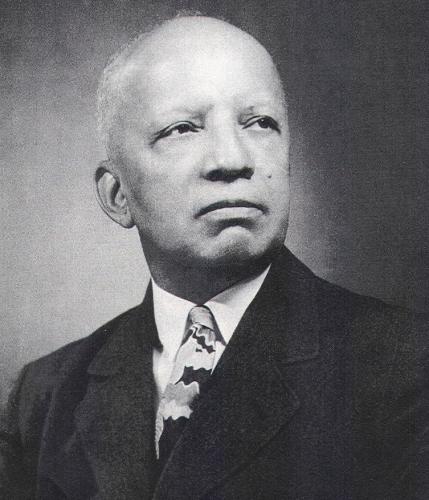
Dr. Carter G. Woodson, Researcher Honored as the “Father of Black History Week”
late summer of 1915. An alumnus of the University of Chicago with
many friends in the city, Carter G. Woodson traveled from
Washington, D.C. to participate in a national celebration of the fiftieth
anniversary of emancipation sponsored by the state of Illinois.
Thousands of African Americans traveled from across the country to
see exhibits highlighting the progress their people had made since the
destruction of slavery. Awarded a doctorate in Harvard three years
earlier, Woodson joined the other exhibitors with a black history display.
convention, an overflow crowd of six to twelve thousand waited
outside for their turn to view the exhibits. Inspired by the three-week
celebration, Woodson decided to form an organization to promote the
scientific study of black life and history before leaving town. On
September 9th, Woodson met at the Wabash YMCA with A. L. Jackson
and three others and formed the Association for the Study of Negro
Life and History (ASNLH).
Woodson and the Association scrambled to meet the demand. They set a theme for the annual celebration, and provided study materials—pictures, lessons for teachers, plays for historical performances, and posters of important dates and people. Provisioned with a steady flow of knowledge, high schools in progressive communities formed Negro History Clubs. To serve the desire of history buffs to participate in the re-education of black folks and the nation, ASNLH formed branches that stretched from coast to coast. In 1937, at the urging of Mary McLeod Bethune, Woodson established the Negro History Bulletin, which focused on the annual theme. As black populations grew, mayors issued Negro History Week proclamations, and in cities like Syracuse progressive whites joined Negro History Week with National Brotherhood Week. Continued Here
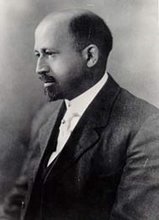
Dr. W.E. B. Dubois
The year 2013 marks two important anniversaries in the history of African Americans and the United States. On January 1, 1863, the Emancipation Proclamation set the United States on the path of ending slavery. A wartime measure issued by President Abraham Lincoln, the proclamation freed relatively few slaves, but it fueled the fire of the enslaved to strike for their freedom. In many respects, Lincoln’s declaration simply acknowledged the epidemic of black self-emancipation –spread by black freedom crusaders like Harriet Tubman – that already had commenced beyond his control. Those in bondage increasingly streamed into the camps of the Union Army, reclaiming and asserting self-determination. The result, abolitionist Fredrick Douglass predicted, was that the war for the Union became a war against slavery. The actions of both Lincoln and the slaves made clear that the Civil War was in deed, as well as in theory, a struggle between the forces of slavery and emancipation. The full-scale dismantlement of the “peculiar institution” of human bondage had begun. In 1963, a century later, America once again stood at the crossroads. Nine years earlier, the U.S. Supreme Court had outlawed racial segregation in public schools, but the nation had not yet committed itself to equality of citizenship. Segregation and innumerable other forms of discrimination made second‐class citizenship the extra‐constitutional status of non‐whites.Another American president caught in the gale of racial change, John F. Kennedy, temporized over the legal and moral issue of his time. Like Lincoln before him, national concerns, and the growing momentum of black mass mobilization efforts, overrode his personal ambivalence toward demands for black civil rights. On August 28, 1963, hundreds of thousands of Americans, blacks and whites, Jews and gentiles, Protestants and Catholics, marched to the memorial of Abraham Lincoln, the author of the Emancipation Proclamation, in the continuing pursuit of equality of citizenship and self-determination. It was on this occasion that Martin Luther King, Jr. delivered his celebrated “I Have a Dream” speech. Just as the Emancipation Proclamation had recognized the coming end of slavery, the March on Washington for Jobs and Freedom announced that the days of legal segregation in the United States were numbered. Marking the sesquicentennial of the Emancipation Proclamation and the 50th anniversary of the March on Washington, the Association for the Study of African American Life and History invites papers, panels, and roundtables on these and related topics of black emancipation, freedom, justice and equality, and the movements that have sought to achieve these goals. Submissions may focus on the historical periods tied to the 2013 theme, their precursors and successors, and other past and contemporary moments across the
breadth of African American history.
This copy may be republished electronically with the following acknowledgement and link by the Association for the Study of African American Life and History at http://www.asalh.org.

 OCG
OCG 