Spiritual blackout in America: Election 2016 – The Boston Globe :: Dr. Cornel West

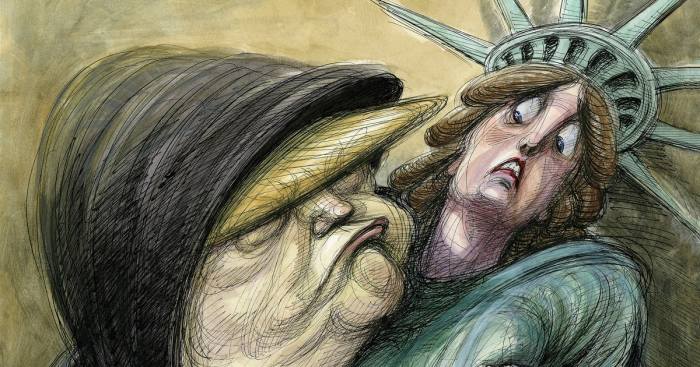
The neofascist catastrophe called Donald Trump and the neoliberal disaster named Hillary Clinton are predictable symbols of our spiritual blackout.

THE MOST FRIGHTENING feature of the civic melancholia in present-day America is the relative collapse of integrity, honesty, and decency — an undeniable spiritual blackout of grand proportions. The sad spectacle of the presidential election is no surprise. Rather, the neofascist catastrophe called Donald Trump and the neoliberal disaster named Hillary Clinton are predictable symbols of our spiritual blackout. Trump dislodged an inert conservative establishment by unleashing an ugly contempt for liberal elites and vulnerable citizens of color — and the mainstream media followed every performance (even his tweets!) for financial gain. Clinton laid bare a dishonest liberal establishment that was unfair to Bernie Sanders and obsessed with winning at any cost — and the mainstream media selectively weighed in for pecuniary ends.
For more: http://bit.ly/2f8BpG3

Source: Spiritual blackout in America: Election 2016 – The Boston Globe

The Fury and Failure of Donald Trump – Rolling Stone :: Matt Taibbi

::ooo

[OUR COMMON GROUND Voice Matt Taibbi deconstructing the Madness]

There wasn’t one capable or inspiring person in the infamous “Clown Car” lineup. All 16 of the non-Trump entrants were dunces, religious zealots, wimps or tyrants, all equally out of touch with voters. Scott Walker was a lipless sadist who in centuries past would have worn a leather jerkin and thrown dogs off the castle walls for recreation. Marco Rubio was the young rake with debts. Jeb Bush was the last offering in a fast-diminishing hereditary line. Ted Cruz was the Zodiac Killer. And so on.The party spent 50 years preaching rich people bromides like “trickle-down economics” and “picking yourself up by your bootstraps” as solutions to the growing alienation and financial privation of the ordinary voter. In place of jobs, exported overseas by the millions by their financial backers, Republicans glibly offered the flag, Jesus and Willie Horton.

In recent years it all went stale. They started to run out of lines to sell the public. Things got so desperate that during the Tea Party phase, some GOP candidates began dabbling in the truth. They told voters that all Washington politicians, including their own leaders, had abandoned them and become whores for special interests. It was a slapstick routine: Throw us bums out!Republican voters ate it up and spent the whole of last primary season howling for blood as Trump shredded one party-approved hack after another. By the time the other 16 candidates finished their mass-suicide-squad routine, a tail-chasing, sewer-mouthed septuagenarian New Yorker was accepting the nomination of the Family Values Party.

Source: The Fury and Failure of Donald Trump – Rolling Stone

The Radical Democracy of the Movement for Black Lives :: Peniel Joseph

The Radical Democracy Of The Movement For Black Lives

“Black Lives Matter has cast a strobe-light on contemporary myths of racial progress, arguing correctly that the criminal justice system represents a gateway to a panoramic system of racial and class and gender and sexuality oppression.”

The Black Lives Matter policy agenda represents one of the most important agenda setting documents collectively produced by black activists in a generation. The proposals, authored by over fifty different civil rights organizations, offers a panoramic narrative, diagnosis, and political alternatives to the intricacies of structural racism, state-sanctioned violence, and the institutional exploitation of black bodies across the nation.

A Vision For Black Lives” builds on, expands, and goes beyond policy agendas promoted by a range of civil rights and Black Power era groups, including the Black Panthers, Nation of Islam, NAACP, SNCC (the Student Non-Violent Coordinating Committee), CORE, Malcolm X’s Organization of Afro-American Unity, and Martin Luther King Jr’s SCLC. In its poignant urging of the United States to “end the war on black people,” the document is reminiscent of the “Gary Agenda,” the historic 1972 document that emanated from the National Black Political Convention in Gary, Indiana.

Gary Mayor Richard Hatcher speaks at the National Black Political Conference in Gary, Ind. (AP/Charles Kelly)

That meeting of over 8,000 black delegates from across black America’s political and ideological spectrum proved to be a watershed event, albeit one that was hamstrung by an inability to translate grassroots insurgency into tangible political power, accountability, and resources.  Gary, like the Black Power Conferences from the late 1960s and the African Liberation Day and Sixth Pan-African Congress of the 1970s, sought to modernize the black convention movements that could be traced back to the Reconstruction era, where black activists organized for political power in slavery’s aftermath.

By the early 20th century efforts like the “Niagara Movement” faltered due to a lack of resources and political infighting. For a time, Marcus Garvey’s Universal Negro Improvement Association cast a shadow large enough to encompass the complexity of black life, uniting economic strivers with revolutionary activists in developing a black agenda broad enough to attract millions of black people across several continents.

Garvey’s decline fractured aspects of black political life, but not dreams for a cohesive vision, plan, and strategy for black liberation, a cause taken up during the Depression and Second World War by a variety of groups including the Southern Negro Youth Congress, National Negro Labor Congress, The Nation of Islam, the Civil Rights Congress, and the Council of African Affairs. The NAACP’s membership reached almost a half-million by 1946, the closest it would ever come to mass membership in scale. Black political leaders pushed an agenda to the left of the New Deal creating space for the global popularity of Paul Robeson, the political resurrection of W.E.B. Du Bois, and the insider status of Mary McLeod Bethune and Ralph Bunche.


Organizers like Ella Baker in New York City and Septima Clarke in South Carolina, worked the lower frequencies of black life, working at the margins of the black quotidian: the ordinary black folk from New York to South Carolina whose dreams remained disarmingly pragmatic ones focused preserving hope and dignity.

The Black Lives Matter Movement is rooted in this wider Black Freedom Struggle, one whose two dominant branches are reflected in the Civil Rights and Black Power era. BLM activists’ successful adoption of non-violence is rooted in the civil rights era even as their unapologetic focus on structural racism, community control, and political self-determination reflects the Black Power era’s radical politics. Surprisingly, so does the movement’s focus on intersectionality. Popularly remembered as deeply masculinist, unapologetically sexist, and homophobic, the Black Power era proved to be more complicated than such simple generalizations indicate. Despite the movement’s many political and ideological blinders, black women, queer activists, and others on the margins of African American life consciously shaped an expansive Black Power politics.


The Third World Women’s Alliance articulated a vision of radical black feminism, socialism, and Black Power militancy that made it a visionary example of cutting edge social justice movements. The Combahee River Collective gave voice to radical black lesbian feminists whose politics went to the far left of the more mainstream National Black Feminist Organization. In many ways both of these organizations reflected the black radical feminist politics revealed in Toni Cade Bambara’s groundbreaking 1970 anthology, The Black Woman, an intellectual and political intervention that ushered in Black Women’s Studies and helped give attention to the works of Audre Lorde, Barbara Smith, Gloria Hull, and many others.

BLM activists have taken some of the best aspects of these two generations of the Black Radical Tradition and linked it with more recent efforts to promote reparations (especially by grassroots a organization like N’COBRA, although reparations go back to the formerly enslaved activist Callie House as the historian Mary Frances Berry teaches us); divestment from domestic and global racial exploitation which Jesse Jackson, especially in 1984, promoted as a hallmark of his presidential campaign; the pursuit of independent black political power that had been advocated in the post Gary era by a series of organizations including the National Black United Front, the National Black Independent Political Party, and the Black Radical Congress; the movement for economic justice that has been promoted by a spectrum of grassroots labor, community, church, and secular activists, including black nationalists in communities such as St. Petersburg, Florida, who famously booed candidate Obama in 2008 by chanting and holding signs, “What About the Black Community Obama?”

Black Lives Matter has cast a strobe-light on contemporary myths of racial progress, arguing correctly that the criminal justice system represents a gateway to a panoramic system of racial and class and gender and sexuality oppression. This intervention, while important, is incomplete without an acknowledgment of the way in which the rise of mass incarceration is connected to systems of racial segregation, voting rights denial, state-sanctioned violence and exploitation of black bodies, all while criminalizing and decimating the very communities that remain largely under assault even in the Age of Obama.

The Age of Ferguson, Baltimore, Milwaukee, Black Lives Matter has shattered conventional civil rights narratives, ones that begin with Rosa Parks, continue with King’s Dream, and sought to end with Barack Obama’s election. This version of history as a bedtime story, complete with heroic individual blacks, stalwart white allies, and the thanks of a grateful nation has only one glaring problem.

It’s a lie.

The Civil Rights era heroic period experienced pervasive anti-black violence that only increased during the Black Power era and its aftermath. What is now universally acknowledged as a moral and political good—complete with a multiracial cast of characters—was demonized in word and deed by the larger society, a denigration that became inscribed in a series of intricate anti-black legal, legislative, and policy challenges that have utterly decimated some of the gains of the era, especially for the black poor.

“A Movement For Black Lives” is essential precisely because it helps to expose what is at the root of our national amnesia regarding slavery and anti-black racism-white supremacy and its relationship to conceptions of citizenship, the rule of law, democracy, and justice. In its passionate repudiation of the political status quo and elevating the lives of the black community’s most vulnerable residents—the poor, young, elderly, trans, LGBT, mentally ill, incarcerated, ex-offenders—the BLM has produced a watershed document that once again illustrates why the black freedom struggle has always been on the cutting edge of movements for radical democracy: we have no choice.


Peniel Joseph is the Barbara Jordan Chair in Ethics and Political Values and director of the Center for the Study of Race and Democracy at the LBJ School of Public Affairs and Professor of History at The University of Texas. He is the award-winning author of several books, including Waiting ‘Til the Midnight Hour: A Narrative History of Black Power in America, Dark Days, Bright Nights: From Black Power to Barack Obama, and Stokely: A Life. Follow him on Twitter @PenielJoseph.

Source: The Radical Democracy of the Movement for Black Lives

White Supremacist America: Trump and the “Return” of Right-Wing Hate Culture

White Supremacist America: Trump and the “Return” of Right-Wing Hate Culture

Many of my friends from college and fellow academics in the last year are focusing their anxieties on the Donald Trump campaign. A common frustration voiced among intellectuals is the disbelief that a candidate as bigoted, pig-headed, and willfully ignorant as “the Donald” could be running neck and neck with a seasoned political veteran like Hillary Clinton. This piece is not about Hillary Clinton, however. Rather, it’s about promoting a much needed discussion of what Trump’s rise really tells us. I don’t believe we have a “Donald Trump” problem in this country. The problem is much worse than that. More ominously, we have an American public problem that cuts to the very core of the quality of our democracy. Demagogues rise to power on the backs of workers, citizens, and your average “Joe” or “Jane.” They do not owe their success to their actions alone.

If Donald Trump is enjoying electoral success, it’s because the public – passively or actively – allowed it to happen. While Pew Research Center surveys do find considerable ignorance among Trump supporters – the most commonly cited reasons for supporting him have nothing to do with policy, but everything to do with personality characteristics – this trend was observed across all the front-runners, including Hillary Clinton, Bernie Sanders, and Ted Cruz supporters. What makes Trump’s case more disturbing than the norm of across-the-board voter ignorance is that such a large contingent of Americans know full-well about his bigotry, and embrace it. The ascendance of Donald Trump tells us much about the quality of American character – particularly about our enduring and toxic legacy of hate, ignorance, bigotry, and white-supremacy.

Hillary Clinton caught a lot of flak for referring to half of Trump Supporters as “the deplorables.” She was being far too generous. Public opinion surveys over the last year or so suggest that the white supremacist contingent of Trump voters is even larger. When I say white supremacist, I’m not referring to the old-style, KKK, white robe donning and lynchings of America’s past. Rather, the contemporary form of white supremacy is more of a “hate-lite” – if such a thing exists – in terms of its supporters embracing horrible, racist stereotypes, while claiming to reject racism. Call this “color-blind” racism, dog whistle racism, coded racism – or whatever you like, but it’s clear that white supremacy never disappeared from America’s political culture.

Consider recent surveys, if you want to ascertain the size of the problem. Polls of Trump supporters and Republicans more generally from 2015 and 2016 find clear and indisputable evidence of racism and prejudice against non-white, non-Christian Americans. I review these findings below.

Xenophobia

Irrational hatred of foreigners is pronounced on the American right. Public Policy Polling (PPP) found that in August 2015, 54 percent of Republicans, and 61 percent of Trump supporters still believed Obama was born in another country – drawing on fringe the birther conspiracy. Sixty-six percent of Trump supporters thought Obama was a Muslim, compared to 54 percent of all Republicans. The findings hadn’t changed much in 2016, when a May PPP poll found 65 percent of Trump supporters said Obama was a Muslim and 59 percent said he was born outside the U.S. The birther-Trump right is obviously impervious to evidence-based logic on anything related to Obama, considering this conspiracy theory was debunked long ago by countless sources.

Christian Supremacy

Much of the right-wing Christian contingent seems set on demonizing non-believers. Most Trumpeters see “Muslim” as synonymous with “bad.” A Reuters-Ipsos June 2016 survey, for example, found that 58 percent of Trump supporters said they held a “somewhat unfavorable” or “very unfavorable” view of Islam. This type of blanket hatred is troublesome when Pew Research Center polling finds that the vast majority of American Muslims reject terrorism, and hold moderate, rather than extreme political values. A Texas Policy Project poll from June 2016 also found that 76 percent of Republicans “somewhat supported” or “strongly supported” a blanket ban of Muslims from entering the U.S. – no doubt based on the erroneous, blanket notion that Muslims represent an imminent threat to national security.

More Xenophobia

Most Republicans and Trump supporters also embrace negative views of unauthorized immigrants. Seventy percent of Republicans agreed in an August 2016 Pew survey that “undocumented immigrants are more likely to commit serious crimes.” This view persists, despite statistics from the Public Policy Institute of California concluding that immigrants actually commit fewer crimes than U.S. citizens. The myth remains popular, despite national data over the last decade and a half showing that, as the number of unauthorized immigrants in the U.S. grew, violent crimes rates were on the decline. On the macro- level, then, there is little merit to the idea that unauthorized immigration is destabilizing society and making us less safe. Still, 70 percent of Republicans agreed in a Fox News July 2015 survey with Donald Trump’s statement that Mexico is “sending people that have lots of problems…they’re bringing drugs. They’re bringing crime. They’re rapists.” The hatred was not reserved for unauthorized immigrants. Two-thirds of Trump supporters agreed in a March 2016 Pew survey that “immigrants [in general] today are a burden on our country because they take our jobs, housing, and health care.”

Anti-Black Stereotyping

Old-fashioned, anti-black racism is alive and well on the American right, despite naive academic claims that the U.S. was “getting beyond race” as early as the 1990s. Reuters polling from June 2016 finds that nearly half of Trump supporters agree that African Americans are more “violent” and “criminal” than whites. Similarly, 40 percent say African Americans are more “lazy” than whites. These findings are prominent on the reactionary right, despite social scientists’ longstanding findings that race is not a significant predictor of Americans’ level of commitment to work, or hours worked, and despite the reality that the vast majority of whites, African Americans, and Hispanics are employed. Anti-black stereotypes are not surprising. They have long been woven into U.S. political and media commentary, as seen in academic studies identifying how African Americans are far more likely to be depicted in the media as criminals and as poor, in far greater numbers than the actual number of African Americans who commit crimes or are in poverty.

After framing Trump supporters as “deplorables,” Hillary Clinton publicly apologized, rejecting “grossly generalistic” characterizations, which are “never a good idea.” Her apology was unfortunate. Generalizations are perfectly acceptable, even valuable, if they are an accurate depiction of reality. And the above data suggests that it is indeed fair to generalize about Trump voters, considering most of them are racist and xenophobic. The polls I’ve reviewed should be sobering and disturbing for Americans who call themselves supporters of equal rights and democracy, and for those who abhor irrational hatred and bigotry. America’s white supremacy culture is wide-spread indeed. Consider the following: if approximately 55 percent of the voting age population turned out in 2012, and 2016 sees similar turnout, and about half of likely voters say they are planning on voting for Trump, his support base includes approximately 28 percent of American adults – give or take a few percent because of the small number of Americans who may vote third-party. Of this 28 percent, the polls above found that approximately two-thirds can be categorized as racist in their attitudes, meaning that nearly 20 percent of American adults – or one in five – fall within the category of Trump supporting white supremacists.

In the title of this piece I spoke of the “return” of the hate culture in America. Realistically, that culture never disappeared, even if many intellectuals thought we had transcended the old racist, sexist, and homophobic battles of the past. The right-wing reactionary movement has always been there, but was waiting for a populistic, demagogic character of the Trump variety to take the reins. On a symbolic level, public discourse on issues like race and immigration speaks to an overarching and enduring culture war in America. We are in the midst of a battle for this country’s very soul, and there is much uncertainty about the path forward. Reactionary forces – organized under Trump – represent an old order, which would like to reinvigorate the racist, bigoted, white supremacist culture of the past. Progressive societal forces, as seen in the rise of social movements like Black Lives Matter, Occupy Wall Street, and others, are pushing for a progressive future in which government plays a crucial role in promoting political equality between social groups, and reduces economic inequality.

I wouldn’t presume to tell anyone who they should vote for in the coming election, although I can say without hesitation that I’m entirely opposed to the continuation of the Trump-inspired, old reactionary order. I don’t know whether or not a Trump defeat would be a fatal blow to racist forces in this country. I can say this much: at some point soon, Americans will have to decide whether they want to live in a country that respects democracy and equal rights for all, or embraces the racist, fascistic politics of a white supremacist culture. The answer to which side prevails will soon be upon us.

Anthony DiMaggio is an Assistant Professor of Political Science at Lehigh University. He holds a PhD in political communication, and is the author of the newly released: Selling War, Selling Hope: Presidential Rhetoric, the News Media, and U.S. Foreign Policy After 9/11 (Paperback: 2015). He can be reached at:anthonydimaggio612@gmail.com

Anthony DiMaggio is an Assistant Professor of Political Science at Lehigh University. He holds a PhD in political communication, and is the author of the newly released: Selling War, Selling Hope: Presidential Rhetoric, the News Media, and U.S. Foreign Policy After 9/11 (Paperback: 2015). He can be reached at: anthonydimaggio612@gmail.com

Source: White Supremacist America: Trump and the “Return” of Right-Wing Hate Culture

America’s New Demons and the Second Coming of the Neocons :: CounterPunch

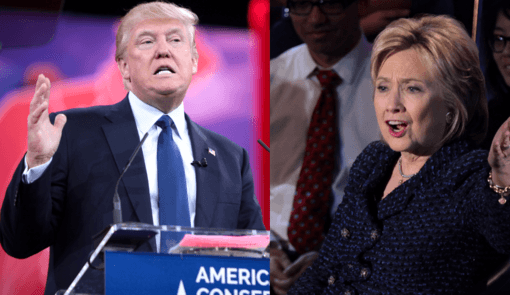
Photograph by Krassotkin (derivative), Gage Skidmore (Donald Trump), Gage Skidmore (Hillary Clinton), distributed under a CC-BY 2.0 license.

The horror of a Clinton v. Trump election is making everybody who pays attention a little crazy. Not paying attention isn’t easy – not with everybody hooked into social (actually anti-social) media and with“ news” and commentary coming from every direction.The hypocrisy is breathtaking.In the midst of it all, the American propaganda system, the one that supposedly doesn’t exist, has gone berserk — targeting RT America (formerly Russia Today).

Anyone who relies on The New York Times or The Washington Post or NPR or, worse, CNN or MSNBC, to find out what’s shaking – or rather what the guardians of the status quo want people to think is shaking (and “fit to print”) — and who also has access to RT America on satellite TV or a handful of cable stations, or who goes to the trouble of watching it over the internet, will know what I mean.RT America is a better source for news and commentary than America’s finest by many orders of magnitude.  It is less biased too.The Russian government funds it, but this doesn’t make its output propaganda – not unless anything funded by governments is propaganda by definition. RT America is more like the BBC or CBC than, say, Radio Free Europe.

Source: America’s New Demons and the Second Coming of the Neocons

The GOP’s Stealth War Against Voters – Rolling Stone

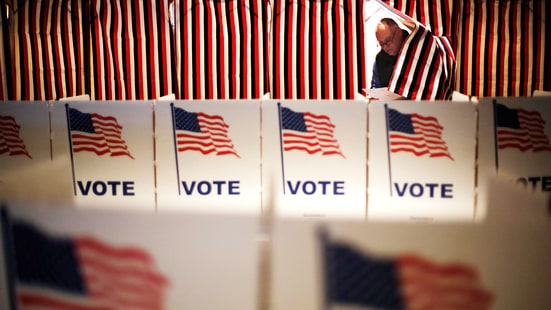
The GOP’s Stealth War Against VotersWill an anti-voter-fraud program designed by one of Trump’s advisers deny tens of thousands their right to vote in November?The Crosscheck program is a response to the imaginary menace of mass voter fraud. Mark Makela/ReutersBy Greg PalastAugust 24, 2016More NewsWhat It’s Like Voting in a State That Takes Voting SeriouslyAri Berman on the Fight for American Voting RightsThe GOP War on VotingAll Stories »When Donald Trump claimed, “the election’s going to be rigged,” he wasn’t entirely wrong. But the threat was not, as Trump warned, from Americans committing the crime of “voting many, many times.” What’s far more likely to undermine democracy in November is the culmination of a decade-long Republican effort to disenfranchise voters under the guise of battling voter fraud. The latest tool: Election officials in more than two dozen states have compiled lists of citizens whom they allege could be registered in more than one state – thus potentially able to cast multiple ballots – and eligible to be purged from the voter rolls.

The data is processed through a system called the Interstate Voter Registration Crosscheck Program, which is being promoted by a powerful Republican operative, and its lists of potential duplicate voters are kept confidential. But Rolling Stone obtained a portion of the list and the names of 1 million targeted voters. According to our analysis, the Crosscheck list disproportionately threatens solid Democratic constituencies: young, black, Hispanic and Asian-American voters – with some of the biggest possible purges underway in Ohio and North Carolina, two crucial swing states with tight Senate races.ADVERTISINGinRead invented by TeadsRELATED 2016: First Presidential Election Since Voting Rights GuttedAmerica will vote for president in a country where it’s easier to buy a gun than vote in many statesLike all weapons of vote suppression, Crosscheck is a response to the imaginary menace of mass voter fraud. In the mid-2000s, after the Florida-recount debacle, the Bush administration launched a five-year investigation into the allegedly rampant crime but found scant evidence of wrongdoing. Still, the GOP has perpetuated the myth in every national election since. Recently, North Carolina Board of Elections chief Kim Strach testified to her legislature that 35,750 voters are “registered in North Carolina and another state and voted in both in the 2012 general election.” Yet despite hiring an ex-FBI agent to lead the hunt, the state has charged exactly zero double voters from the Crosscheck list. Nevertheless, tens of thousands face the loss of their ability to vote – all for the sake of preventing a crime that rarely happens.

So far, Crosscheck has tagged an astonishing 7.2 million suspects, yet we found no more than four perpetrators who have been charged with double voting or deliberate double registration.On its surface, Crosscheck seems quite reasonable. Twenty-eight participating states share their voter lists and, in the name of dispassionate, race-blind Big Data, seek to ensure the rolls are up to date. To make sure the system finds suspect voters, Crosscheck supposedly matches first, middle and last name, plus birth date, and provides the last four digits of a Social Security number for additional verification.In reality, however, there have been signs that the program doesn’t operate as advertised. Some states have dropped out of Crosscheck, citing problems with its methodology, as Oregon’s secretary of state recently explained: “We left [Crosscheck] because the data we received was unreliable.”In our effort to report on the program, we contacted every state for their Crosscheck list. But because voting twice is a felony, state after state told us their lists of suspects were part of a criminal investigation and, as such, confidential. Then we got a break. A clerk in Virginia sent us its Crosscheck list of suspects, which a letter from the state later said was done “in error.”The Virginia list was a revelation. In all, 342,556 names were listed as apparently registered to vote in both Virginia and another state as of January 2014. Thirteen percent of the people on the Crosscheck list, already flagged as inactive voters, were almost immediately removed, meaning a stunning 41,637 names were “canceled” from voter rolls, most of them just before Election Day.We were able to obtain more lists – Georgia and Washington state, the total number of voters adding up to more than 1 million matches – and Crosscheck’s results seemed at best deeply flawed.

We found that one-fourth of the names on the list actually lacked a middle-name match. The system can also mistakenly identify fathers and sons as the same voter, ignoring designations of Jr. and Sr. A whole lot of people named “James Brown” are suspected of voting or registering twice, 357 of them in Georgia alone. But according to Crosscheck, James Willie Brown is supposed to be the same voter as James Arthur Br

Source: The GOP’s Stealth War Against Voters – Rolling Stone

Political Prisoner Rev. Edward Pinkney Fears for His Life | Black Agenda Report

Political Prisoner Rev. Edward Pinkney Fears for His Life

A Black Agenda Radio commentary by executive editor Glen Ford

The Black political class is constantly congratulating itself on ancient voting rights victories in the South, yet Rev. Edward Pinkney is serving his second stretch in prison for fighting against Black disenfranchisement in Benton Harbor, Michigan. Pinkney was convicted twice by all-white juries on the flimsiest evidence, and now believes his life is in danger behind bars.

Political Prisoner Rev. Edward Pinkney Fears for His Life

A Black Agenda Radio commentary by executive editor Glen Ford

“He fears the government is out to do him harm.”

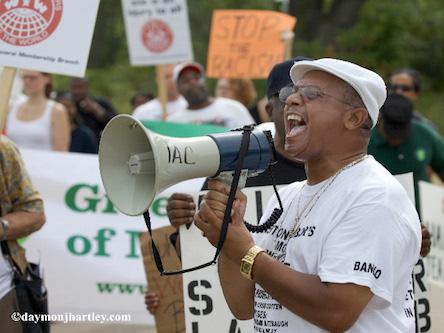
Rev. Edward Pinkney, the imprisoned community activist from the mostly Black town of Benton Harbor, Michigan, believes his life is in danger. Pinkney is serving a sentence of two and a half to ten years following his conviction by an all-white jury on the flimsiest of charges of tampering with an election recall petition. He told Kenneth Rhoades, a supporter on the outside, that he’s not afraid of the inmates, but fears the government is out to do him harm – and that they might get away with it because, in his words, “they cover everything up” at Marquette Branch Prison, located on the thinly populated and very, very white Upper Peninsula of Michigan, almost 500 miles from Benton Harbor.

Pinkney, who is 67 years old, has witnessed numerous assaults on inmates by prison guards, and has spent long stretches in isolation. For six months he was deprived of phone and visitation privileges because the authorities believed he was behind a mass inmate food protest – another bogus charge, since inmates at prisons on the Upper Peninsula have been protesting the food since before Pinkney arrived.

This is the second time that Pinkney has been railroaded to prison for trying to bring change to deeply impoverished Benton Harbor through the vote. Back in 2007, after two trials, an all-white jury from the surrounding county convicted him of tampering with a ballot petition. He was sentenced to house arrest, but was then thrown in prison for a year when he quoted Bible verses to the judge – something of a first in American legal history. Ultimately, the conviction was overturned on appeal.

Crushing Voting Rights Activism with SWAT and Prison

Rev. Pinkney’s lawyers believe his current conviction on similar bogus charges will ultimately also be reversed – but that could take years, and anything can happen to a political activist in the American prison gulag.

Mary Neal, who calls Rev. Pinkney her “online minister,” believes the people of Flint, Michigan, would have responded to the poisoning of their water sooner if Pinkney hadn’t been incarcerated at the time. The Reverend has had more experience than most other activists in dealing with state appointed emergency financial managers like the one that switched the water supply in Flint. Benton Harbor was put under state dictatorship in 2010. Governor Rick Snyder then quickly expanded the emergency financial manager regime to all of the state’s heavily Black cities, effectively disenfranchising more than half of Michigan’s Black citizens. But, Rev. Pinkney and his Black Autonomy Network Community Organization, or BANCO, pressed on, refusing to accept the loss of their local voting rights, either to the State of Michigan, or at the hands of the giant Whirlpool Corporation, which has ruled Benton Harbor like a plantationfor generations. Finally, they sent a SWAT team to arrest Rev. Pinkney at his home in April, 2014, and now he sits in cell in the American equivalent of Siberia, a 67 year old soldier in the African liberation struggle.

For Black Agenda Radio, I’m Glen Ford. On the web, go to BlackAgendaReport.com.

BAR executive editor Glen Ford can be contacted at Glen.Ford@BlackAgendaReport.com.

Source: Political Prisoner Rev. Edward Pinkney Fears for His Life | Black Agenda Report

Voter Repression Is a Serious Problem: It Is Time for a New Freedom Summer | Portside

Voter Repression Is a Serious Problem: It Is Time for a New Freedom Summer

Republicans have created immense obstacles to registration – reduced the number of days for early voting, eliminated same-day registration – all with the clear and unadulterated aim of sinking, if not eliminating the Democratic electorate. What is striking is that, not very far behind their bogus arguments regarding alleged voter fraud, Republicans are close to admitting, or will outright admit, that their aim is to get potential Democratic voters to remain home.
Bill Fletcher
June 5, 2016

I found myself reading about the impact of voter suppression, i.e., the efforts to inhibit voter registration and voter participation that have been orchestrated by Republican-dominated state legislatures since 2009.  Voter suppression actually has a long and ignominious history in the USA, but the 1965 Voting Rights Act cramped such efforts.  The US Supreme Court’s neutering of the Voting Rights Act, Shelby County v Holder , opened up myriad possibilities for Republican shenanigans in the electoral arena.  Republicans have created immense obstacles to registration –  reduced the number of days for early voting,  eliminated same-day registration – all with the clear and unadulterated aim of sinking, if not eliminating the Democratic electorate.  What is striking is that, not very far behind their bogus arguments regarding alleged voter fraud, Republicans are close to admitting, or will outright admit, that their aim is to get potential Democratic voters to remain home.

    Voter registration, instead of being encouraged and made more accessible, has become exceedingly difficult.  In the Commonwealth of Virginia, for instance, registration forms have to be submitted within a certain number of days after they have been filled out, otherwise those who have conducted the registrations are penalized.  Registration forms can only be submitted to the clerk in the county of residence of the registrant rather than being submitted elsewhere and channeled appropriately.  And, in this age of identity theft, registrants are required to provide their full social security number.  In each state where voter suppression efforts are underway there are similar stories.

    Contemporary voter suppression parallels the practices carried out when Reconstruction was overthrown in 1877 and the ‘counterrevolution of property,’ to use W.E.B. Dubois’s term, succeeded.  In many states, possession of property was established as an eligibility requirement to cast a ballot. This counterrevolution resulted in the disenfranchisement of African American voters and, with them, many poor whites.  This was precisely the objective of “property” when faced with a populist rising against the gross inequalities of the Gilded Era and the post-Reconstruction period.

    Today’s voter suppression gained traction in the aftermath of the election of Barack Obama as President.  For the right-wing it was an “OMG” moment that they sought to undermine by any means necessary.  As we are now aware, Senator Mitch McConnell united the Republicans around a strategy of obstruction in Congress, aiming to derail any Obama initiative.  In the field, however, the objective was deeper and more demonic.  The aim was to shrink the electorate.  Some Republican ideologues went so far as to argue that the electorate should be reduced and that there were certain people who should not be able to vote because of ignorance or poverty.  But the mass of Republican legislators crafted a strategy that based itself on the argument that there was voter fraud that had to be blocked through new and challenging initiatives in voter registration and voting.  The arguments were as absurd as they were racist.  There was no evidence of anything approaching significant voter fraud, yet the Republicans played upon racist myths and fears among many whites to create an atmosphere where such measures were taken seriously.

    There have been repeated and significant efforts to block voter suppression efforts.  Litigation has been the main tactic and, in some cases, there have been victories.  But with every victory, the pox still spreads as the Republicans prove, once again, to be relentless in their pursuit of total power in the electoral arena.  The question that progressives face is one of what to do?

II

    Progressives and leftists have often not taken matters of voter registration particularly seriously, at least in the post-1965 Voting Rights Act era.  Voter registration and voting rights more generally were relegated to the liberals and non-partisan do-gooders.  While there were leftists, such as Richard Cloward and Frances Fox Piven, who saw the importance of voting rights and registration, they tended to be more the exception than the rule.  Added to this problem, the Democratic Party establishment regularly downplayed voter registration, ignoring the importance of expanding the electorate.  Only in certain campaigns, e.g., during the Black-led electoral upsurge of the 1980s and the Obama campaign in 2008, was voter registration recognized to be of strategic importance in shifting the balance of forces.

    In election years 2010, 2012 and 2014 various organizations, including but not limited to labor unions, mobilized against selective voter suppression efforts, particularly those conducted on Election Day.  Yet the waves of assaults by the Republicans have not ceased and, with the crippling of the Voting Rights Act, the blood lust of the Republicans has become enhanced.  For these reasons, the approach of progressives towards voter suppression needs to be reconsidered.

    The battle for voting rights in the 20th century was not one mainly handled in the courts; it was handled in the ‘court’ of public opinion, specifically the streets.  The dramatization of such efforts in the commercial media whether in the film Selma or in the recent HBO film All the Way reminds us of how repressive election laws once were in many parts of the USA (including but not limited to the South and the Southwest).  It was the work of activists, most especially those associated with the Southern Christian Leadership Conference and the Student Non-violent Coordinating Committee (SNCC) that made a tremendous difference.  Their work included the development of Citizenship Schools (done in conjunction with the Highlander Folk School), registration efforts and outright protests.  This was exceedingly dangerous work making the courage of the activists that much more exceptional.

    After 1965, there was an assumption in much of the liberal and progressive world that the Voting Rights Act was largely untouchable and that this would be a fortification to restrain the advances of the barbarians of the political Right.  Unfortunately, the barbarians circumvented the fortifications and are now in an all-out assault on democratic rights.  A reliance on court action will be insufficient.

    Which brings us to an approach in the 2016 election year.  Perhaps what is needed is a “Freedom Summer + Fall,” i.e., a major, multi-pronged mobilization that openly challenges voter suppression.  Such an effort would necessitate large numbers of volunteers and the collaboration of organizations.  Yet it is eminently do-able.  Consider:

  1. This effort would need to run from this very moment through Election Day (actually though the certification of the elections).

  2. Voter suppression statutes would need to become the subject of litigation on a very broad scale.  The undemocratic nature of them would need to be demonstrated and court action would be one particular platform.

  3. Voter registration efforts would need to be enhanced with shuttles to get communities to registration sites.  Student volunteers would need to be enlisted as part of a massive registration initiative.

  4. Where local officials obstruct or block registration, there would need to be protests.  Such protests might take the form of well-publicized sit-ins, or they might be massive stand-ins.

  5. Coordinated days of actions would be needed in states raising the issue of voter suppression, particularly documenting the lack of evidence to justify any such efforts.

  6. Absentee voting would need to be encouraged.  This is very important particularly in those states where early voting has been eliminated or cut altogether.

  7. There would need to be a focus on obtaining appropriate documentation.  This might be among the most difficult challenges since there are many people who do not have birth certificates; lost their birth certificates; or for whatever reason are lacking the requisite information.  Create media events that highlight the plight of those who do not have and are unable to obtain the appropriate documentation.

  8. In states that permit gun identification in order register to vote, organized efforts would be needed to secure such identification.

  9. Weekly demonstrations at the Republican National Committee would need to be mounted to raise awareness of this assault on democracy.

  10. Pressure would need to be brought on governors to issue executive orders restoring voting rights to the formerly incarcerated in those states that permanently eliminate them, e.g., the April 2016 executive order by Virginia Governor McAuliffe.

A tremendous danger facing us is that of passively accepting the results of voter suppression efforts.  Longer-term the counterattack on voter suppression will need to be at the level of state legislators.  Progressive candidacies will need to run on the platform of overturning such efforts.  Yet this will only happen when there is the sense of a mass movement.  To the extent to which voter suppression is treated more like a nuisance that is addressed exclusively by litigation, we will lose the battle for democracy and the forces of authoritarianism will have their day in the sun.

Bill Fletcher, Jr. is a talk show host, writer and activist.  He is the author of ‘They’re Bankrupting Us!’ And Twenty Other Myths about Unions. Follow him atwww.billfletcherjr.com.

Source: Voter Repression Is a Serious Problem: It Is Time for a New Freedom Summer | Portside

Why Hillary Doesn’t Fit In With My Feminism | The Progressive Army

Why Hillary Doesn’t Fit In With My Feminism

The continued lack of intersectionality in Feminism and Politics

0
2785
Share on Facebook
Tweet on Twitter

Feminism’s struggle with intersectionality brought me to this place: a place where I’m supposed to rally around a cause and a figurehead that ignores my daily struggles. A cause that views me as an afterthought and a political chess piece, and I’m only used every four years and then stored away. A place where white women are able to beam with pride at seeing themselves represented in Hillary and then have the audacity to chastise me for not being on board. The same people who claim to understand white privilege and decry male privilege suddenly forget all that when they want me to get lock step behind them in “uniting the party”.

Question: When is “the party” going to unite behind me?

Also, I’ve got a newsflash for you, a bit of a surprise, as it were. The surprise is that a lot of disenchanted, disillusioned, still disenfranchised black voters found out over the past 7 years. Having someone who looks like you in the Oval Office does NOTHING for changing the state of your circumstances. Not one thing.

No, I never had any fairy-tale beliefs that having President Obama in office would magically fix all that was wrong with race relations in America; no one person could have done that. But many of you did harbor such fantasies and you became and remain disappointed. You were disappointed because the status quo requires that you play by their rules; their field, their ball, and their referees. So while you cheer, jumping up and down braless, tears streaming down your face, breathing a sigh of relief, while thinking that your grandmother’s and mother’s feminist dreams have been realized, you have already forgotten about me.

You have ignored the fact that Hillary is playing by their rules, on their field, using their balls, and their referees. She had to become them to join them and that isn’t going to change a damned thing for us in the long run.

My feminism says that there are too many intelligent, capable, accomplished women out there for me to be wowed at Clinton’s “breaking the glass ceiling”. That ceiling has been chipped at for centuries, just because you hear some glass breaking doesn’t mean that the hole made will be big enough for all of us to climb through.

You can not tell me that you truly understand that just because we have Barack Obama, Colin Powell, Oprah Winfrey and Serena Williams that racism isn’t over and then turn  around and cheer “We did it, ladies!! We’ve dismantled the glass ceiling!!” just because of whatever Hillary has accomplished. Seriously?

The only things of note any Clinton supporter was ever able to bring to me when I asked “Why should I vote for Hillary?” are DESTROYED in this video. She is no friend of Black America and no champion of children (as she is so fond of bringing up her work with theChildren’s Defense Fund, check out Edelman’s statement in the video.)

https://www.facebook.com/plugins/video.php?href=https%3A%2F%2Fwww.facebook.com%2FTheYoungTurks%2Fvideos%2F10153450801109205%2F&show_text=0&width=560

Do NOT deign to instruct me on how I have to unify the party with my vote when the strongest point your candidate has is, “We can not allow Donald Trump anywhere near the White House!” This lesser of two evils political strategy that we have been operating under for far too long has us circling the drain in a constant downward spiral, as we fall further and further behind other first world countries.

No appeal to my womanhood, no appeal to my blackness will make me not know what I now know.

Source: Why Hillary Doesn’t Fit In With My Feminism | The Progressive Army

Reparations Isn’t a Political Demand | Jacobin

ve gotten a range of reactions to my “open letter” to Ta-Nehisi Coates. Some people find the piece extremely compelling, while others are horrified and accuse me of putting “class over race” or worse, “Marxplaining.”

Perhaps the unkindest criticisms are from people who charge me with not seeing race, or not really appreciating the power of racism in American society. If we must play that game, I can show you around the South Louisiana parish where I grew up, which was still in violation of a 1969 federal school desegregation order when I left the state to attend graduate school in the early nineties.

But let’s move beyond character assassinations. Such dismissive language does little to debunk my argument and basically just rehearses the same anti-Marxist posturing that I’ve become accustomed to in academia, where any insistence on examining the internal class dynamics of black social and political life is labeled “economic reductionist.” Ironically, in most cases, the most vocal opponents of class analysis of black life seem painfully aware of their own class position and yet are unwilling to address its political implications in any reflexive and critical manner.

I don’t expect people to agree with what I have to say, but we should focus on our interpretive and political differences if we have any interest in moving forward in the struggle for justice and equality.

This being said, I appreciated Brian Jones’s willingness to take up my arguments in a serious way, and I agree with aspects of his recent response. As fellow educators, public workers, unionists, and socialists, I am confident that Jones and I have enough common ground to engage in a constructive way. In the spirit of comradely criticism and solidarity, I want to take up two points where he addresses my argument directly.

An Elite Demand?

Jones’s interpretation of my point about reparations being an elite-driven discourse is a misreading, and assumes that my use of the term black elite refers only to the uber-rich like Kenneth Chenault and Oprah Winfrey. Jones writes:

There is a small but growing class of black elites who will never support reparations — or any politics of genuine wealth redistribution — because it is not in their material interest to do so.

That’s why Johnson is wrong to characterize the call for reparations as emanating from the black elite. This group is too well integrated into American capitalism for that to be the case. Walmart, for example, is also a corporate sponsor of the Congressional Black Caucus. The largest employer of black people, in other words, also pays off the black politicians — so don’t expect the CBC to jump into the fight for higher wages and wealth redistribution any time soon.

Jones and I agree on the basic fact that there are different material interests animating black political life, but this passage does not reflect the specific and contradictory ways such interests have been articulated by different black elites, and as a result, fails to provide a helpful class analysis of black political life.

Jones’s claim that elites do not support reparations is simply not reflected in the past few decades of sporadic debate and attempts to operationalize the reparations demand. For example, Michigan congressman John Conyers, a founding member of the CBC, has been one of the foremost sponsors of legislation on reparations, and for much of its history, the CBC has consistently voted in support of more progressive labor rights and redistributive public policy than most of their congressional colleagues.

Randall Robinson, the founder of the foreign policy lobby TransAfrica, and the late Ronald W. Walters, longtime professor at Howard University and campaign manager for Jesse Jackson during his 1984 and 1988 bids for the Democratic presidential nomination,both advanced the reparations demand in their speeches and writings during the nineties. And in the early aughts, Harvard law professor Charles Ogletree championed one of the most practical approaches to the reparations demand: a flurry of lawsuits against Aetna, Fleet Boston, New York Life, and other corporations whose origins rested in profiting from the slave trade.

Organizations like N’COBRA (National Coalition of Blacks for Reparations in America) have sought to build a national campaign around reparations. And the Black Youth Project 100 has embraced the reparations demand as part of its “Agenda to Build Black Futures.” Others have used the language of repair to demand rerouting of public funds from police departments toward reinvestment in urban youth, education, and neighborhood revitalization.

Activists have employed the language of reparative justice in the John Burge torture settlements, which awarded compensation to citizens whose civil rights were violated by the Chicago Police Department, and also in the legal cases that sought restitution for victims of theforced sterilization program in North Carolina.

These cases are not the same as the demand for slavery reparations, but rather, like the settlements paid out to the Japanese internment camp and Holocaust survivors after the Second World War, these cases sought renumeration for a defined legal category of victim. Reparations for slavery, in contrast, is based on a more complex scenario of repair for intergenerational offense, a matter that in all likelihood cannot be rectified through the same legal strategy.

The reparations demand has also flourished elsewhere — within the academy, in black nationalist circles, and now apparently among some socialists. But it is only tangentially connected to the expressed interests and felt needs of actual black publics. Neither Jones nor Coates demonstrate convincingly that there is a reservoir of black popular support for reparations, or alternatively, that building such support among blacks and the larger American public is on the horizon.

Some of my colleagues have tried to convince me otherwise, citing various public opinion polls to illustrate black support for reparations. But opinion polls are a shaky source of evidence due to issues of sampling and, equally important, the difference between public opinion and political interests.

In many national polls, blacks are drastically undersampled; for example, in a recent YouGov poll taken around the time of Coates’s 2014 Atlantic essay, only 119 blacks were sampled, making the results of that survey completely useless for drawing conclusions about the sentiments of the national black population.

But even a larger, random sample of black citizens — which might provide data for a more sound generalization — only captures momentary, abstract preferences, and those preferences do not map neatly onto actual political interests, which are formed and negotiated within complex, changing social relations.

In other words, some black citizens may support reparations as an ideal, but in the everyday fight to protect and advance their lived interests, other issues like policing, rising housing costs, livable wage employment, and quality education may rightly take precedence over reparations, and form the core of their political commitments.

Over the past few decades, I’ve lived in the Deep South, the Midwest, and the Eastern Seaboard, in rural areas, mid-sized cities and America’s largest conurbations. Reparations is rarely if ever a central concern of the scores of working and middle-class people, black or otherwise, I’ve encountered in community meetings, labor union halls, neighborhood events, campaign headquarters, schools, and churches.

Coming to terms with the distance between this abstract moral claim and the actual felt needs of black people is not “class reductionist,” nor a failure to appreciate the historical relationship between race and class. It is simply the only responsible left politics worth pursuing.

A Political Dead Letter

Second, and more importantly, Jones’s reparations argument collapses under the weight of its own logic. He notes that while all workers are exploited, “Black people have been robbed specifically and continuously in this country.”

We can all agree that at various historical junctures, the majority of blacks have been a hyper-exploited and submerged part of the working class. Yet, as Jones notes, not all blacks would support reparations nor should all blacks be recipients of redress if it were ever achieved. Also, he suggests that capitalists should pay out reparations, not all whites.

But after parsing out who deserves redress and who doesn’t, and who should pay up, we end up right back where we started — redressing the inequality that exists between classes, a multiracial investor class on one side, and a multiracial laboring class on the other.

We can’t go back in time and address slavery, dispossession, and debt peonage as they were unfolding. By default we are stuck with addressing oppression in our midst, which is descendant from this longer history but actively determined by contemporary processes — foremost being the production and realization of surplus value in our world.

“As Marx argued,” Jones writes, “all profit is theft — if workers were paid the full value of their labor, there would be no profit. Reparations therefore must be targeted at the class of people who benefit from this theft.”

But if class struggle is the fundamental conflict, why then is there a need for the rhetoric of reparative justice? In asking this question I am not “counterpos[ing] the call for reparations to the fight for social-democratic redistributive policies,” as Jones has claimed.

I am merely pointing out that the reparations demand exists largely in the realm of the political imaginary, and that in the concrete world of struggle, social democracy and socialism have a demonstrated history of improving the lives of black and other working-class people around the world, e.g. the democratic right to organize in the workplace, the Scandinavian social-democratic model, the public works programs of the American New Deal, infrastructural development in Nkrumah’s Ghana, Viennese social housing, Cuba’s health care, education and civil defense systems, Chilean nationalization under Salvador Allende, and so forth.

Conversely, the reparations demand has been restricted to narrowly defined legal cases, sloganeering, or the lecture circuit. Without an actionable set of proposals to organize around and a popular constituency to advance them, the reparations demand is not a real political demand, but a form of moralism that evokes past injury to address contemporary inequality.

Moreover, it isn’t clear from any of these recent pro-reparations arguments how that political project would address racism more effectively than other historically proven approaches, e.g. effective enforcement of anti-discrimination law, targeted recruitment of blacks and other minorities in the workforce and higher education admissions, and enhanced support for institutions like historically black colleges and universities that have long served as a means of black social mobility.

In the end, Jones (and Coates) settle on the claim that at a bare minimum, another round of the reparations debate will at least have some important, and positive, pedagogical and consciousness-raising effects. According to Jones:

The bottom line is, the very concept of reparations for people of African descent is dangerous to the American ruling class. . . . Grappling with the real legacy of white supremacy would explode the lies America tells about itself (from “meritocracy” myths to “culture of poverty” arguments). And, equally important, a serious debate over reparations would raise dangerous questions about where wealth comes from and about who is owed what in this country.

Jones is right to argue that the Left should continue its war of position against racism and underclass mythology and lay bare the historical and contemporary processes of dispossession and exploitation. But how is this debate over historical injustice more dangerous to the ruling class than the actual power of a broad, multiracial alliance with the capacity to contest the demands that capital makes on living labor and the planet in our own times?

I appreciate the moral power of the reparations claim, but time and again, the demand has proven to be a political dead letter, incapable of ever addressing institutional power in any effective way.

I suspect that, at least for some socialists, reparations offers a means of demonstrating antiracist commitment. But it’s important to recognize that the claim is not grounded in the expressed concerns and immediate needs of black people. Nor is the reparations claim the only means of confronting racism or the most effective way to build broad, popular support for a socialist political vision.

The fundamental basis of political alliance, after all, is not shared identity nor even a shared perspective on historic injustice, but rather, common interest.

Life is short, and time is precious. We need to decide which fights we want to prioritize and be honest about which ones we can win. We should strive for a critical view of history and its role in shaping our own conditions. But our political task is to change this world, and the first necessary step is to find common cause — not in past grievances, but in shared predicament.

Cedric Johnson is the author ofRevolutionaries to Race Leaders: Black Power and the Making of African American Politics and editor of The Neoliberal Deluge: Hurricane Katrina, Late Capitalism and the Remaking of New Orleans. He is also a representative for UIC United Faculty Local 6456.

Source: Reparations Isn’t a Political Demand | Jacobin