“No One Took Us Seriously”: Black Cops Warned About Racist Capitol Police Officers for Years

“No One Took Us Seriously”: Black Cops Warned About Racist Capitol Police Officers for Years

Allegations of racism against the Capitol Police are nothing new: Over 250 Black cops have sued the department since 2001. Some of those former officers now say it’s no surprise white nationalists were able to storm the building.

Creative Commons

U.S. Capitol Police officers scuffle with insurrectionists after they breached security fencing on Jan. 6. (Graeme Sloan/Bloomberg via Getty Images)

ProPublica is a nonprofit newsroom that investigates abuses of power. Sign up to receive our biggest stories as soon as they’re published.

When Kim Dine took over as the new chief of the U.S. Capitol Police in 2012, he knew he had a serious problem.

Since 2001, hundreds of Black officers had sued the department for racial discrimination. They alleged that white officers called Black colleagues slurs like the N-word and that one officer found a hangman’s noose on his locker. White officers were called “huk lovers” or “FOGs” — short for “friends of gangsters” — if they were friendly with their Black colleagues. Black officers faced “unprovoked traffic stops” from fellow Capitol Police officers. One Black officer claimed he heard a colleague say, “Obama monkey, go back to Africa.”

In case after case, agency lawyers denied wrongdoing. But in an interview, Dine said it was clear he had to address the department’s charged racial climate. He said he promoted a Black officer to assistant chief, a first for the agency, and tried to increase diversity by changing the force’s hiring practices. He also said he hired a Black woman to lead a diversity office and created a new disciplinary body within the department, promoting a Black woman to lead it.

“There is a problem with racism in this country, in pretty much every establishment that exists,” said Dine, who left the agency in 2016. “You can always do more in retrospect.”

Whether the Capitol Police managed to root out racist officers will be one of many issues raised as Congress investigates the agency’s failure to prevent a mob of Trump supporters from attacking the Capitol while lawmakers inside voted to formalize the electoral victory of President-elect Joe Biden.

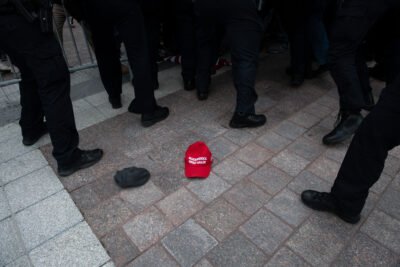
Already, officials have suspended several police officers for possible complicity with insurrectionists, one of whom was pictured waving a Confederate battle flag as he occupied the building. One cop was captured on tape seeming to take selfies with protesters, while another allegedly wore a red “Make America Great Again” hat as he directed protesters around the Capitol building. While many officers were filmed fighting off rioters, at least 12 others are under investigation for possibly assisting them.

Two current Black Capitol Police officers told BuzzFeed News that they were angered by leadership failures that they said put them at risk as racist members of the mob stormed the building. The Capitol Police force is only 29% Black in a city that’s 46% Black. By contrast, as of 2018, 52% of Washington Metropolitan police officers were Black. The Capitol Police are comparable to the Metropolitan force in spending, employing more than 2,300 people and boasting an annual budget of about a half-billion dollars.

The Capitol Police did not immediately respond to questions for this story.

Sharon Blackmon-Malloy, a former Capitol Police officer who was the lead plaintiff in the 2001 discrimination lawsuit filed against the department, said she was not surprised that pro-Trump rioters burst into the Capitol last week.

In her 25 years with the Capitol Police, Blackmon-Malloy spent decades trying to raise the alarm about what she saw as endemic racism within the force, even organizing demonstrations where Black officers would return to the Capitol off-duty, protesting outside the building they usually protect.

The 2001 case, which started with more than 250 plaintiffs, remains pending. As recently as 2016, a Black female officer filed a racial discrimination complaint against the department.

“Nothing ever really was resolved. Congress turned a blind eye to racism on the Hill,” Blackmon-Malloy, who retired as a lieutenant in 2007, told ProPublica. She is now vice president of the U.S. Capitol Black Police Association, which held 16 demonstrations protesting alleged discrimination between 2013 and 2018. “We got Jan. 6 because no one took us seriously.”

Retired Lt. Frank Adams sued the department in 2001 and again in 2012 for racial discrimination. A Black, 20-year veteran of the force, Adams supervised mostly white officers in the patrol division. He told ProPublica he endured or witnessed racism and sexism constantly. He said that before he joined the division, there was a policy he referred to as “meet and greet,” where officers were directed to stop any Black person on the Hill. He also said that in another unit, he once found a cartoon on his desk of a Black man ascending to heaven only to be greeted by a Ku Klux Klan wizard. When he complained to his superior officers, he said he was denied promotions and training opportunities, and suffered other forms of retaliation.

In an interview, he drew a direct line between racism in the Capitol Police and the events that unfolded last week. He blamed Congress for not listening to Black members of the force years ago.

“They only become involved in oversight when it’s in the news cycle,” said Adams, who retired in 2011. “They ignored the racism happening in the department. They ignored the hate.”

The department’s record in other areas of policing have drawn criticism as well.

In 2015, a man landed a gyrocopter on the Capitol lawn — top officials didn’t know the airborne activist was coming until minutes before he touched down. In 2013, when a lone gunman opened fire at the nearby Navy Yard, killing 12 people, the Capitol Police were criticized for standing on the sidelines. The force’s leadership board later determined its actions were justified.

Last month, days after a bloody clash on Dec. 12 between militant Trump supporters and counterprotesters, Melissa Byrne and Chibundu Nnake were entering the Capitol when they saw a strangely dressed man just outside the building, carrying a spear.

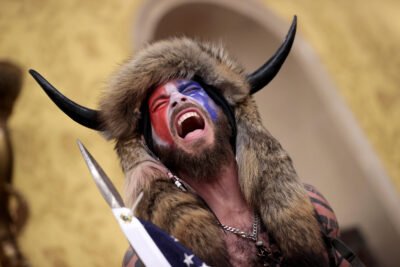
He was a figure they would come to recognize — Jacob Chansley, the QAnon follower in a Viking outfit who was photographed last week shouting from the dais of the Senate chamber.

They alerted the Capitol Police at the time, as the spear seemed to violate the complex’s weapons ban, but officers dismissed their concern, they said.

One officer told them that Chansley had been stopped earlier in the day, but that police “higher ups” had decided not to do anything about him.

We don’t “perceive it as a weapon,” Nnake recalled the officer saying of the spear.

Chansley told the Globe and Mail’s Adrian Morrow that Capitol Police had allowed him in the building on Jan. 6, which would normally include passing through a metal detector, although he was later charged with entering a restricted building without lawful authority, violent entry and disorderly conduct on Capitol grounds. As of Tuesday, he had not yet entered a plea.

QAnon follower Jacob Chansley screams “Freedom” inside the Senate chamber after the Capitol was breached by a mob on Jan. 6. (Win McNamee/Getty Images)

For Byrne and Nnake, their interactions with the “QAnon Shaman” on Dec. 14 highlighted what they perceive as double standards in how the Capitol Police interact with the public.

Like many people who regularly encounter the force, Nnake and Byrne said they were accustomed to Capitol officers enforcing rules aggressively — later that day, Nnake was told that he would be tackled if he tried to advance beyond a certain point. “As a Black man, when I worked on the Hill, if I forgot a badge, I couldn’t get access anywhere,” he told ProPublica.

Congress, which controls the agency and its budget, has a mixed record of oversight. For the most part, Congress has been deferential toward the force, paying attention to its workings only after serious security failures, and even then, failing to meaningfully hold its leaders accountable.

Rep. Eleanor Holmes Norton, a Democrat from D.C. who is a nonvoting member of Congress, told ProPublica she believes a national commission should be formed to investigate what occurred at the Capitol on Jan. 6, similar to what followed 9/11.

“Congress deserves some of the blame,” she told ProPublica. “We have complete control over the Capitol Police. … Long-term concerns with security have been raised, and they’ve not been dealt with in the past.”

The force has also suffered a spate of recent, internal scandals that may prove pertinent as Congress conducts its investigation.

Capitol Police officers accidently left several guns in bathrooms throughout the building in 2015 and 2019; in one instance, the loaded firearm was discovered by a small child.

The agency has been criticized for a lack of transparency for years. Capitol Police communications and documents are not subject to the Freedom of Information Act and, unlike many local law enforcement agencies, it has no external watchdog specifically assigned to investigate and respond to community complaints. The force has not formally addressed the public since the riot last week.

“All law enforcement is opaque,” said Jonathan M. Smith, executive director of the Washington Lawyers’ Committee for Civil Rights and Urban Affairs. “At least most local police departments are subject to some kind of civilian oversight, but federal police agencies are left to operate in the shadows.”

The agency’s past troubles have rarely resulted in reform, critics said.

After the April 2015 gyrocopter incident, Congress held a hearing to examine how 61-year-old postal worker and activist Doug Hughes managed to land his aircraft after he livestreamed his flight. Dozens of reporters and news cameras assembled in front of the Capitol to watch the stunt, which was designed to draw attention to the influence of money in politics. Capitol Police did not learn of the incoming flight until a reporter reached out to them for comment, minutes before Hughes landed.

Dine defended the force’s response to the incident, pointing out that Hughes was promptly arrested and no one was hurt.

Former Rep. Jason Chaffetz, a Republican from Utah, then the chairman of the Committee on Oversight and Government Reform, harshly criticized the department and other federal agencies for what he perceived as an intelligence failure.

“The Capitol Police is terrible and pathetic when it comes to threat assessment,” Chaffetz told ProPublica in an interview. “They have a couple people dedicated to it, but they’re overwhelmed. Which drives me nuts. … It’s not been a priority for leadership, on both sides of the aisle.” He said he is not aware of any serious changes to the force’s intelligence gathering following the debacle.

Norton, who also pressed Dine at the hearing, told ProPublica the intelligence lapses surrounding the gyrocopter landing should be considered a “forerunner” to last week’s riot.

“For weeks, these people had been talking about coming to the Capitol to do as much harm as they can,” Norton said. “Everyone knew it. Except the Capitol Police.” Reports show the force had no contingency plan to deal with an escalation of violence and mayhem at last week’s rally, even though the FBI and the New York Police Department had warned them it could happen.

Law enforcement experts said that the agency is in a difficult position. While it has sole responsibility for protecting the Capitol, it must work with other nearby federal law enforcement agencies, Washington’s Metropolitan Police and the National Guard in case of emergencies.

In an interview, Nick Zotos, a former D.C. National Guard commander who now works for the Department of Homeland Security, said that the roughly two dozen agencies responsible for public safety in Washington can cause territorial disputes, finger-pointing and poor communication.

“This is not a D.C. thing, necessarily, although it’s probably the worst in D.C.,” Zotos said. “Police departments just don’t play with each other nicely.”

Blackmon-Malloy told ProPublica that divisions within the Capitol Police could be just as dangerous, not only for Congress but for Black officers themselves. “Now you got to go to work on the 20th,” she told ProPublica, alluding to the inauguration. “And stand next to someone who you don’t even know if they have your back.”

Dara LindDavid McSwane and Kirsten Berg contributed reporting.

Josh was a Senior Reporting Fellow at ProPublica.

Source: “No One Took Us Seriously”: Black Cops Warned About Racist Capitol Police Officers for Years

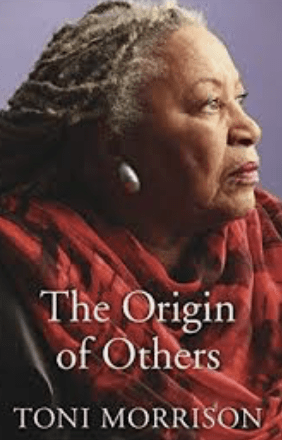
Toni Morrison & American Racism. In the current PBS drama, ‘Line of Separation’ 

Toni Morrison & American Racism

|  Bumpy J | AfroSapiophile |

Jan, 2021 | Medium

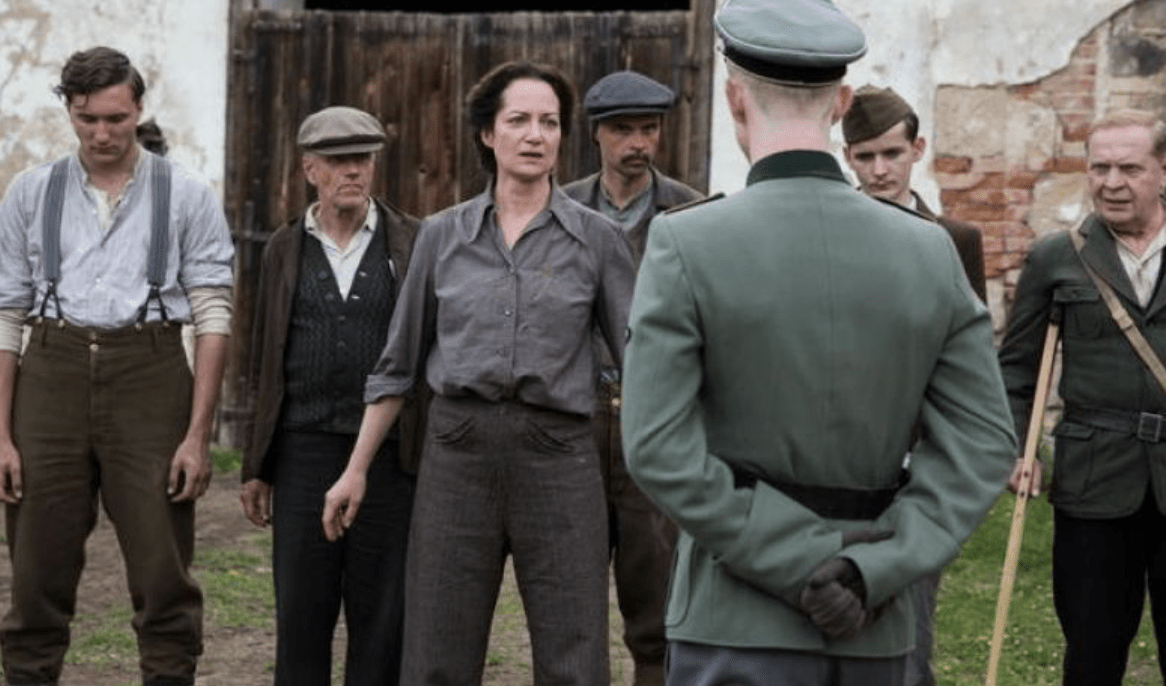
Line of Separation

Image for post

PBS

Image for post

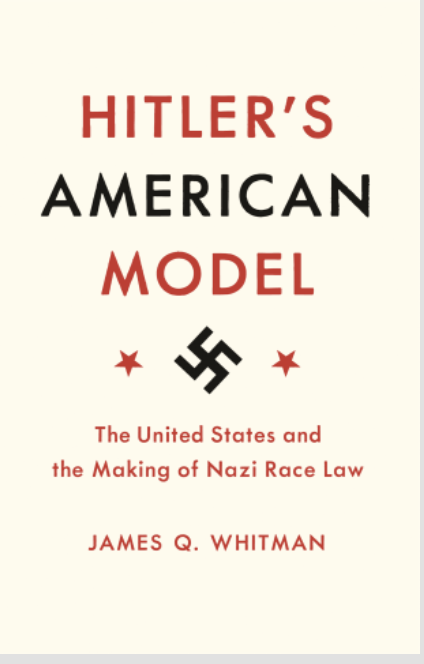
The Confederacy and the Nazis

Image for post

PBS

Image for post

Image for post

Image for post

A Racial Paradox

Central European University

Image for post

AfroSapiophile

Intelligent Black thought

Bumpy J

WRITTEN BY

Bumpy J

Numbers runner. Cigar smoker.
AfroSapiophile

AfroSapiophile

AfroSapiophile’s is a hub for critical thinking and analysis pertaining to civil rights, human rights, politics, systemic racism and sexism.

Source: Toni Morrison & American Racism. In the current PBS drama, ‘Line of… | by Bumpy J | AfroSapiophile | Jan, 2021 | Medium

Building a More Inclusive Federal Judiciary – Center for American Progress

The federal judiciary does not reflect the population that it serves, which has severe consequences for both the institution’s legitimacy and the parties who come before it.

Source: Building a More Inclusive Federal Judiciary – Center for American Progress

#YearInReview: Highlights from 2020 | NAACP Legal Defense and Educational Fund

This year, as LDF entered its 80th year of commitment to racial justice and civil and human rights, we faced one of the most unpredictable and challenging years in our nation’s history. A year that began with LDF challenging the Trump Administration over its Muslim Ban and Law Enforcement Commission ended with suing President Trump and his campaign over attempts to disenfranchise Black voters. In between, LDF was forced to add a new category of policy and litigation work focused on the impact of COVID-19, championed the rights of protesters during a historic summer full of demands for change and accountability, and fought to protect Black voters and their ballots, while also helping recruit over 40,000 poll workers. LDF was able to do so by building off its 80-year legacy — the lessons learned, the victories earned, and the lives changed.

Source: #YearInReview: Highlights from 2020 | NAACP Legal Defense and Educational Fund

Under CARES Act, These Moms Should Be Home. They Remain in COVID-Filled Prisons.

When COVID entered the federal medical prison in Carswell, Texas, it ballooned within weeks — of the 1,288 people tested, 504 were positive. In one housing unit of 300 women, only 26 women tested negative, including 56-year-old Sandra Shoulders.

Shoulders has severe diabetes, respiratory problems, and, since entering prison in 2015, chronic kidney disease, leaving her at only 30 percent kidney function. All of these make her more vulnerable to becoming debilitated, if not dying, from COVID.

Meanwhile, the prison’s practices discourage people from getting tested for COVID. “Even when inmates feel ill now, they are so scared of those conditions to speak up,” Shoulders explained. She described how those who tested positive were treated: “You are held in a room, and expected to wear the same set of clothes for 21+ days, without laundry facilities. Food is dropped by the door and physically kicked into the room by the guards.”

After Congress passed the Coronavirus Aid, Relief and Economic Security (CARES) Act, Attorney General William Barr issued a memo to the Bureau of Prisons (BOP), the agency responsible for federal prisons, expanding the criteria under which to release people to home confinement to stem the spread of COVID. The expanded criteria prioritize people whose age or health makes them vulnerable to COVID, as well as those in low- and medium-security prisons, people whose reentry plans show that they are less likely to contract COVID if not incarcerated, and people with low risk-assessment (or PATTERN) scores.

In August, a prison case manager said that Shoulders qualified for home confinement on September 25. Elated, she began making plans to join her godsister in Chicago. She also planned to reconnect with her three children and her 16 grandchildren, some of whom she only knew through photos and video calls.

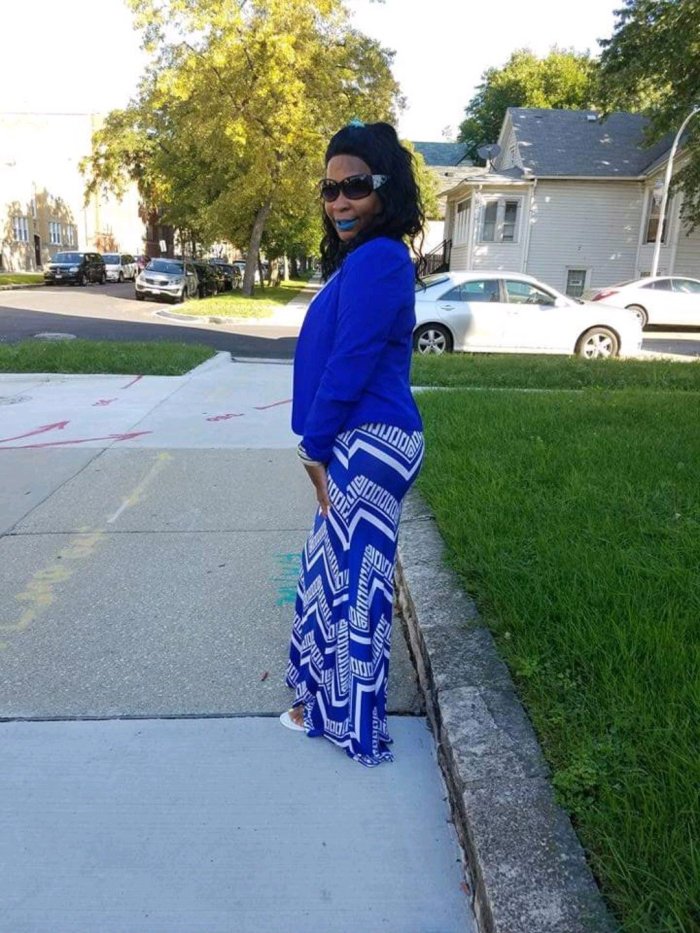
Sandra Shoulders before incarceration.

Three weeks later, prison administrators told Shoulders that the BOP’s Central Office had denied her release. She was not told why. “I had to call my family and give them this heartbreaking news,” Shoulders told Truthout. The news not only left her reeling, but sent Shoulders — who has bipolar disorder, an anxiety disorder and obsessive-compulsive disorder — into what she calls a “serious mental health crisis and meltdown.”

Full article and the series.

Source: Under CARES Act, These Moms Should Be Home. They Remain in COVID-Filled Prisons. 

Why You Really Can’t Fight City Hall, At Least Over the Police – POLITICO

In the early morning hours of January 28, 2000, a Black police officer named Cornel Young Jr. —“Jai” to those who knew him—was off duty, dressed in plain clothes, and waiting on a steak sandwich from an all-night diner in a rough section of Providence, Rhode Island. A fight broke out at the front of the restaurant and quickly spilled outside. Someone brandished a gun. Young jumped into action, shouting “Police!” as he rushed through the diner and drew his weapon. Within seconds, he would be bleeding in the snow outside the restaurant, shot multiple times by two white, uniformed officers from his own department. Within hours, he would be dead.

Those are the basic facts, and the sadness of them transcends politics. If Black lives matter and blue lives matter, as they all most assuredly do, the killing of patrolman Cornel “Jai” Young was doubly tragic.

But the tragedy does not end there. As an attorney who has litigated civil rights cases, I can tell you that the tragedy of Jai Young’s story actually ends in a courtroom, some six years after his death, when the city of Providence slipped through a gaping chasm in federal civil rights law—one that has largely escaped scrutiny in the current national push for racial justice reform. It’s called the Monell Rule, and it’s why cities and police departments are rarely held accountable for the actions of police officers.

To learn more about her case, I recently reached out to Leisa Young, Jai’s mother, who fought the city of Providence in court for the better part of five years. She is an impressive woman: a bright, successful, former single mother who lifted herself out of poverty while raising an exceptional son. The pain of his death has hardened with time, the way scar tissue fills a wound that once might have been fatal. When she speaks of Jai now, Leisa’s voice does not crack, though she tends to change the subject.

The story she tells is awash in irony. Jai had entered the police force to change it, and he died, Leisa believes, because of the very problems he wanted to fix. Growing up, Jai had not been immune to the racial profiling so often experienced by young Black males. But his father—from whom Leisa had long since been divorced—was a police officer, and through him Jai developed an interest in community-based police reforms. By joining the force, Jai hoped to change what he saw as a militaristic approach to policing, especially in low-income neighborhoods like the one where he eventually died.

Leisa tells me that one of the cops who shot her son had been his classmate at the police academy and might have recognized him if he had only paused an instant before shooting: “Out of uniform, in that neighborhood, Jai was just another target.”

When asked about the city’s handling of her son’s case, Leisa responds with exasperation—the type of chronic emotional fatigue known only to those unfortunate souls who have spent years fighting a more powerful and highly motivated enemy. You can’t fight city hall, they say. Most people know the phrase; Leisa Young has lived it.

From the very beginning, the city circled the wagons. Just two days after Jai’s death, the mayor of Providence declared in the local press that race had not been a factor in the shooting. In a televised interview, a high-ranking officer predicted the two shooters would be exonerated by the department’s internal investigation, which was just barely underway. Meanwhile, Leisa says, city officials worked privately to convince her that Jai was somehow at fault in his own death because he had been pointing his firearm sideways, “like a thug.” Recalling the accusation now, Leisa dismisses it with a laugh that is somehow charming and bitter at the same time: “Where would he have learned that? In thug school?”

The 2003 verdict has never been overturned, and in the eyes of the law, the violation of Jai Young’s civil rights is an unassailable fact. That verdict almost certainly would have ended the case if Leisa had been suing a trucking company over a traffic accident, or a chemical company over a cancer-causing pesticide. But hers was a civil rights lawsuit against a city government, and though she still does not understand what it means or why, she would spend the next two years trying to overcome something called the Monell Rule.

I first learned about the Monell Rule in 2013, shortly after I accepted my first civil rights case. I had been practicing business law in Texas for 15 years when a friend asked for my help in a case involving threats and extortion by a small-time city government. It was not my area of the law, so I immersed myself in legal research, and it wasn’t long before I encountered this little-known legal rule that, despite its obscurity, plays a massive role in virtually every federal civil rights lawsuit against a city or county government. One case led to another, and I have been fighting the Monell Rule ever since.

To understand it, one must go back briefly to the end of the Civil War, when Congress passed the Civil Rights Act of 1871. The 13th, 14th and 15th Amendments had just been ratified, promising civil rights to emancipated slaves and other citizens. The 1871 law—also known as the Third Enforcement Act—was designed to provide a mechanism for enforcing these constitutional guarantees and it authorizes individual citizens to bring private lawsuits for civil rights violations committed by police and other persons cloaked in the authority of state or local governments. Today, among lawyers, this law is known simply as “Section 1983,” and it remains one of the most important civil rights statutes in the country.

In 1961, in a case called Monroe v. Pape, the U.S. Supreme Court ruled that city governments were exempt under Section 1983. The Monroe case involved horrific allegations of racial abuse at the hands of 13 Chicago police officers who had allegedly broken into a Black couple’s apartment and forced them to stand naked in front of their children as they beat the father with a flashlight, degraded him with racial slurs and ransacked the apartment. The Supreme Court ruled that the officers could be sued under Section 1983, but the city of Chicago could not.

Unsurprisingly, the Monroe decision was met with heavy criticism, and the Supreme Court eventually reversed itself—sort of. In Monell v. Department of Social Services of the City of New York, the high court ruled that cities are accountable under Section 1983, but only if the civil rights violation was caused by “official policy” of the city government. The court’s reasoning was based on a strained reading of the 1871 law, and has been often criticized ever since, but the rule established in Monell has nonetheless survived and evolved.

Today, “official policy” can be proven in multiple ways, but the gist is always the same: the civil rights violation must have been caused by a deliberate policy choice made at the highest levels of a city government, or by a pattern of institutional neglect so pervasive and consistent that it constitutes “deliberate indifference” by city policymakers. It is a very high bar, and clearing it often depends on facts and concepts that are inherently elusive.

The Monell Rule is unique to civil rights litigation and exists nowhere else in the legal world. If, for example, an Amazon delivery driver were to negligently cause a traffic accident while on the job, Amazon would ordinarily be liable for the victim’s injuries; there would be no need for the victim to prove that Jeff Bezos or Amazon’s board of directors had caused the accident through their corporate policies or their “deliberate indifference” to the rights of potential accident victims. In the civil rights context, however, that is essentially what the Monell Rule requires. In simplest terms, the Monell Rule is a barrier to government accountability. It puts legal distance between city governments and their employees, allowing cities to avoid responsibility for the on-the- job conduct of their own police officers.

As a practical matter, the Monell Rule blocks the only pathway by which civil rights victims can hold police departments accountable. Victims of police violence have three basic avenues to justice: criminal prosecution of the individual officers involved; a civil lawsuit against the same officers; or a civil lawsuit against the municipality that employs them. The first two avenues have their own unique challenges, such as the high burden of proof in criminal cases, or the qualified immunity standard that protects individual police officers from liability in civil suits. But the first two avenues—even where successful—punish only the individual officers. It is only the third avenue that has the potential to impact municipal police departments as a whole, and the Monell Rule blocks that avenue like a barricade.

Source: Why You Really Can’t Fight City Hall, At Least Over the Police – POLITICO

America doesn’t want unity. It wants absolution without restitution ::: Renee Graham :: The Boston Globe

America doesn’t want unity. It wants absolution without restitution

Renee Graham, Boston Globe

Throughout his campaign, and especially during his first speech as president-elect, Joe Biden stressed the need for unity. “Our nation is shaped by the constant battle between our better angels and our darkest impulses,” he said. “It is time for our better angels to prevail.”

Abraham Lincoln first summoned “the better angels of our nature” in his inaugural speech in 1861. A month later, the Civil War began; we’ve been waiting ever since for these rumored apparitions of our nation’s inherent goodness to prevail.

America has never wanted unity. It prefers absolution over restitution.

When this nation’s leaders speak of unity, that often means, “We need to move on,” even though unchecked trauma leaching from one generation to another prohibits any such thing. For many of us, especially Black and brown people, unity is a five-letter word for “Shut up and get over it.” That is how this nation regards calls for repair of systemic disenfranchisement.

Before accord, there must be an accounting — otherwise, it’s like leaving a tick’s head embedded beneath the skin. The problem is less visible, but the host body remains sick and unsound.

In his speech, Biden seemed to speak very specifically about the horrors imposed these past four years. (And they aren’t over.) Of course, what we witnessed during the Trump years was an amplification of the racism and other hatreds that plagued this country long before a failed businessman became a failed president.

“Every day we hear about how society is splitting apart — a polarized Congress, a fragmented media market, a persistent schism among Americans over social issues. But really, how bad are the divisions?” Bob Cohn (now president of The Economist), wrote in The Atlantic. His conclusion: “Pretty bad.”

That was seven years ago. Trump did not create the divisions; he exploited the hell out of them.

About 10 million more people voted for Trump in the 2020 election than in 2016. Again, most of them are white. This I believe: They want to be feared, not understood, and their only definition of unity is aligning against anyone who doesn’t think like them. They’re willing to tear this nation apart with baseless, anti-democracy conspiracies to slake one man’s flimsy ego and their own relevance in an increasingly multiracial, multicultural nation.

Fox News is even chiding Democrats for lobbing “angry rhetoric at those who have worked with and for, and even those who simply support, Trump.” For the president’s propaganda network, achieving unity is a burden to be borne only by those who oppose the president. I don’t hear many Trump supporters reckoning with why they still support the worst president in modern American history.

And that’s par for this country. During a 2017 Harvard conference on universities and slavery, writer Ta-Nehisi Coates said, “I don’t know how you conduct research that says your very existence is rooted in a great crime, and you just say, at best, ‘Sorry,’ and walk away.

For its entire existence, America has mostly walked away. From nearly 250 years of Black people in bondage to the genocidal “Trail of Tears” that forced thousands of Indigenous people from their lands in the 1800s; from the 1921 Tulsa Race Massacre during which white people killed hundreds and destroyed that Oklahoma city’s “Black Wall Street” to every barbarity the current administration concocted to punish those who sought only a better life, this nation continually opts for historical amnesia over atonement.

As the Rev. Bernice King, daughter of Martin Luther King Jr., tweeted, “We can’t skip justice and get to peace.” Nor can we get there without equality.

Scars of this catastrophic presidency will lie alongside festering wounds long untended. There’s no shortcut to unity, a challenge in a nation that would rather be comfortable than truthful. This unfinished democracy will never be whole until all of its practitioners abandon the collective silence that cloaks their complicity. To move toward unity, white supremacy must first be demolished. America has shown no serious inclination to do that, and more than 72 million Trump voters serve as damning proof.

For the sake of this country, I wish Biden every success. I hope he understands that unity is not self-achieving. The most arduous labor must be done by those who have inflicted or benefited from the pain of so many others. Until then, do not ask me to forgive all this nation is too eager to forget.


Renée Graham can be reached at renee.graham@globe.com. Follow her on Twitter @reneeygraham.

Source: America doesn’t want unity. It wants absolution without restitution – The Boston Globe

Births of a Nation, Redux | Boston Review

Births of a Nation, Redux

Births of a Nation, Redux

Surveying Trumpland with Cedric Robinson

ROBIN D. G. KELLEY

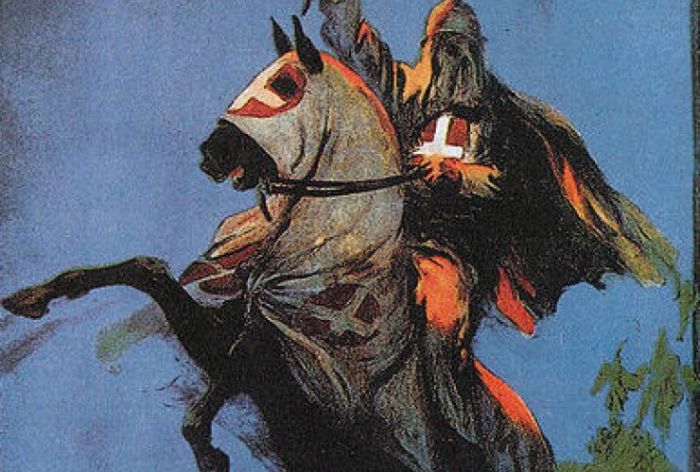
Image: A poster for Birth of a Nation (1915)

November 5, 2020

I wrote the following essay, “Births of a Nation: Surveying Trumpland with Cedric Robinson,” in the wake of Trump’s 2016 victory, but it could have been written today—two days into a still unsettled presidential election; two days of witnessing frenzied, nail-biting, soul-searching Democrats wondering what happened to the blue wave and why 68 million people actually voted for Trump; two days of threats from the White House that they will fight in the courts and in the streets before giving up power. And today Cedric Robinson, pioneering scholar of what he called the “Black Radical Tradition,” would have celebrated his eightieth birthday.

Today Cedric Robinson would have celebrated his eightieth birthday. What Robinson identified as “the rewhitening of America” a century ago is what we’re seeing play out today.

The lessons I took from Cedric in the aftermath of Trump’s election still stand: our problem is not polling, or the failure of Democrats to mobilize the Black and Latinx vote (they came out, often at great risk to their health and safety), or a botched effort to reach working-class whites with a strong, colorblind class-based agenda. What Robinson identified as “the rewhitening of America” a century ago is what we’re seeing play out today.

But before reviving the tired race-versus-class debate, pay attention: Robinson was making an argument about racial regimes as expressions of class power and how racism undergirds class oppression. As I quoted Robinson before: “White patrimony deceived some of the majority of Americans, patriotism and nationalism others, but the more fugitive reality was the theft they themselves endured and the voracious expropriation of others they facilitated. The scrap which was their reward was the installation of Black inferiority into their shared national culture. It was a paltry dividend, but it still serves.” (The emphasis is mine.)

What we’ve seen is the consolidation of a racial regime based—as are all racial regimes—on “fictions” “masquerading as memory and the immutable.” Trump is saving white suburban women from Black rapists and drug dealers who want to take their Section 8 vouchers out to gated communities. He’s protecting our borders from “illegals” who have no claims whatsoever to this white man’s country. He’s shielding the nation from wicked critical race theorists and Howard Zinn with “patriotic education.” He responds to the assault on white supremacist mythologies by defending Confederate monuments. He dispatches federal military forces to crush antiracist protests and declares Kyle Rittenhouse a patriot for killing two unarmed Black Lives Matter protesters. And he dusts off the tried and true strategy of labeling all challengers to the regime “communists and socialists.” (When Biden brags “I beat the socialists!” and “I am the Democratic Party,” he plays right into the regime’s fictions—he is the neoliberal moderate taking back the country from rioters, fascists, and socialists.)

We keep telling ourselves that Trump was elected as a backlash to a Black president, but really he was elected as a backlash to a Black movement. President Obama presided during the killing of Mike Brown, Tamir Rice, Tanisha Anderson, Philando Castile, Alton Sterling, Freddie Gray, Sandra Bland—ad infinitum. It was the mass rebellion against the lawlessness of the state—in Ferguson, in Baltimore, in Chicago, in Dallas, in Baton Rouge, in New York, in Los Angeles, and elsewhere—that prompted Trumpian backlash.

We keep telling ourselves that Trump was elected as a backlash to a Black president, but really he was elected as a backlash to a Black movement. Fear and racism feed off of insecurity.

The massive vote for Trump and his fascist law-and-order rhetoric should also be seen as a backlash to a movement. Some of us believed Black Spring rebellion in the wake of the murders of George Floyd, Breonna Taylor, and Ahmad Arbery signaled a national reckoning around racial justice. But rather than reverse the rewhitening of America, our struggles catalyzed and concretized the racial regime’s explicit embrace of white power. Once again, an unstable ruling class drapes itself in white sheets, puts on its badge and brings out its guns. Fear and racism feed off of insecurity. And in the face of a global pandemic, joblessness, precarity, and an economy on the verge of collapse, this paltry dividend still serves.

If we’d paid attention, we wouldn’t have expected a Biden landslide or a blue wave ripping the Senate from Kentucky’s Mitch McConnell grip. It is not a coincidence that Louisville is on fire over the murder of Breonna Taylor and countless others who died at the hands of police in McConnell’s state. Kentucky has always been a battleground. California is too, and we’re not necessarily winning. Voters just defeated affirmative action, rent control, and the labor rights of gig workers. And despite some important victories, California delivered a lot of votes to Trump. We need to face the fact that our entire country, and the world, is a battleground. Trump and McConnell have succeeded in packing the Supreme Court with reactionaries. Trump’s backers still run the Senate. Gun-toting men and women in red hats stand outside vote-tabulating centers, threatening to do whatever is needed to secure a Trump victory. They yell “stop the count.”

Even with a Biden victory, the failure of the blue wave will be attributed in part to a certain kind of identity politics—Black and Latinx voter turnout less than what was expected—or to the militancy of antiracist protests, or to left-leaning candidates who scared off white moderates by pushing for single-payer healthcare and a Green New Deal. We should not see these as problems for legitimate Democrats. We’ve been witnessing authentic small-d democracy in action. In the streets we’ve seen a movement embrace Black, Brown, and Indigenous people, queer feminism, and a horizontal leadership model that emphasizes deliberative, participatory democracy.

We have an electoral college, battleground states, and voter suppression because the U.S. political order was built on anti-democracy.

This is the democracy Cedric Robinson insisted we embrace. He reminded us that the U.S. political order was built on anti-democracy, a theory of so-called enlightened governance that excludes the popular classes. This is why we have an electoral college, why we have battleground states, and why voter suppression was built into our country’s DNA. As I wrote three years ago, “today’s organized protests in the streets and other places of public assembly portend the rise of a police state in the United States. For the past five years, the insurgencies of the Movement for Black Lives and its dozens of allied organizations have warned the country that unless we end racist state-sanctioned violence and the mass caging of black and brown people, we are headed for a fascist state.”

We’re already here. And there is no guarantee that a Biden-Harris White House will succeed in completely reversing this trend. Nor should we expect presidents and their cabinets to do this work. That would put us back where we started—with tacit acceptance of the principles of anti-democracy.

Cedric’s words from exactly twenty years ago still haunt: “For the moment . . . an unelected government has seized illegal powers. That must be opposed with every democratic weapon in our arsenal.”

Happy Birthday, Dr. Robinson.


March 6, 2017


Cedric Robinson was fond of quoting his friend and colleague Otis Madison: “The purpose of racism is to control the behavior of white people, not Black people. For Blacks, guns and tanks are sufficient.” Robinson used the quote as an epigraph for a chapter in Forgeries of Memory and Meaning (2007), titled, “In the Year 1915: D. W. Griffith and the Rewhitening of America.” When people ask what I think Robinson would have said about the election of Donald Trump, I point to these texts as evidence that he had already given us a framework to make sense of this moment and its antecedents.

Robinson’s work—especially his lesser-known essays on democracy, identity, fascism, film, and racial regimes—has a great deal to teach us about Trumpism’s foundations, about democracy’s endemic crises, about the racial formation of the white working class, and about the significance of resistance in determining the future.

Source: Births of a Nation, Redux | Boston Review

Tearing Down Black America | Boston Review

Tearing Down Black America

Policing is not the only kind of state violence. In the mid-twentieth century, city governments, backed by federal money, demolished hundreds of Black neighborhoods in the name of urban renewal.

BRENT CEBUL

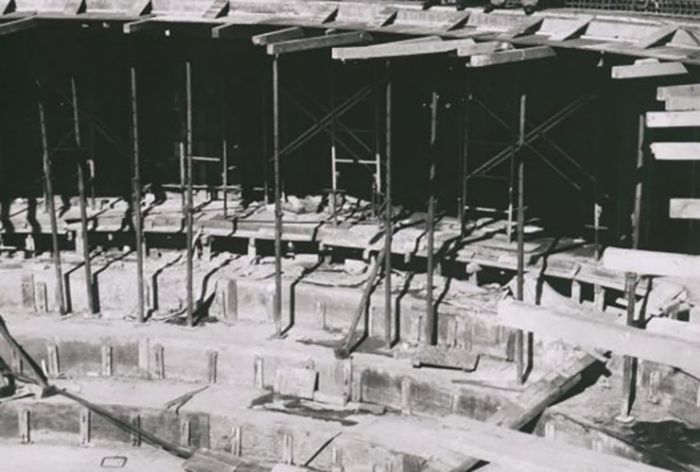
Lincoln Center under construction, after the demoltion of the historically black neighborhood of San Juan Hill. Image: NYPL

When James Baldwin visited San Francisco in 1963 to film a documentary about U.S. racism, he encountered neighborhoods in turmoil: the city was seizing properties through eminent domain, razing them, and turning them over to private developers. Part of a massive, federal urban renewal program, nearly 5,000 families—no fewer than 20,000 residents, the majority of them people of color—were being displaced from rental homes, private property, and businesses in the Western Addition neighborhoods. Baldwin spoke to a Black teenager who had just lost his home and watched as his neighborhood was destroyed. He told Baldwin: “I’ve got no country. I’ve got no flag.” Soon after, Baldwin would say: “I couldn’t say you do. I don’t have any evidence to prove that he does.”

At the very moment when the civil rights movement secured voting rights and the desegregation of public and private spaces, the federal government unleashed a program that enabled local officials to simply clear out entire Black neighborhoods.

That young man was one of millions of Americans, disproportionately of color, who lost homes and communities through the federal urban renewal program. In discussing its human costs—colossal in scope and yet profoundly intimate—Baldwin helped popularize a phrase common in Black neighborhoods: urban renewal meant “Negro removal.” To steal people’s homes, Baldwin understood, was to shred the meaning of their citizenship by destroying their communities. And “the federal government,” he said, “is an accomplice to this fact.”

The 1921 Tulsa massacre and redlining have pierced the popular consciousness in recent years as ways that, through murder and markets, Black communities were destroyed. Curiously, urban renewal has so far remained on the margins of these discussions. Yet that program, in operation between 1949 and 1974, constituted one of the most sweeping and systematic instances of the modern destruction of Black property, neighborhoods, culture, community, businesses, and homes. At its peak in the mid-1960s, urban renewal displaced a minimum of 50,000 families annually—a 1964 House of Representatives report estimated the figure at more like 66,000.

At the very moment when the civil rights movement secured voting rights and the desegregation of public and private spaces, the federal government unleashed a program that enabled local officials to simply clear out entire Black neighborhoods. Federal subsidies went to more than 400 cities, suburbs, and towns, supported more than 1,200 projects, and displaced a minimum of 300,000 families—perhaps some 1.2 million Americans. While Black Americans were just 13 percent of the total population in 1960, they comprised at least 55 percent of those displaced. And, while we tend to remember urban renewal as a big-city program, pursued by titans such as Robert Moses in New York, the vast majority of projects were carried out in cities of 50,000 residents or fewer. These were small cities such as Greenville, North Carolina, where 207 families of color and 11 white families were displaced; Tupelo, Mississippi, where 217 families of color and 31 white families were displaced; and Demopolis, Alabama, where 55 families of color and 7 white families were displaced. Urban Renewal was spread as widely as today’s marches for social justice.

Today, as racially disparate rates of eviction, police violence, and capital flight raise urgent questions about the right to live in safe, thriving communities, a more complete reckoning with urban renewal’s record of destruction is necessary. Fortunately, because urban renewal was federally funded, Washington collected data about how projects unfolded; these records also allow us to reconstruct the many costs of urban renewal. Thanks to a recent comprehensive digital mapping project which I helped spearhead at the University of Richmond’s Digital Scholarship Lab, it’s now possible for the first time to visualize how hundreds of urban renewal projects displaced tens of thousands of Americans. While private–public practices such as redlining help explain the staggering racial wealth gap, the history of urban renewal, though no less materially devastating, involved kinds of theft that are more difficult to quantify—thefts that amount to the destruction of entire lifeworlds. And, the political and economic forces that made urban renewal seem like a good idea at the time continue to shape the precarity of neighborhoods of color today. Like redlining, profit— in this case, returns derived from boosting property taxes— continues to define the state’s interest in destabilizing Black neighborhoods.

section separator

The political and economic forces that made urban renewal seem like a good idea at the time continue to shape the precarity of neighborhoods of color today.

As the United States emerged from World War II, many cities faced a housing crunch. Whites policed the racial boundaries of their neighborhoods, often violently. And so as greater numbers of African Americans migrated north in search of manufacturing jobs and to escape the South’s more formal system of Jim Crow, Black neighborhoods quickly became overcrowded. Residents were often subjected to exorbitant rents in derelict housing owned by slumlords. Families and friends boarded together. Others sublet rooms to meet extortionate rents. Segregated neighborhoods in northern cities became so crowded that many schools operated in two shifts—half of the students went in the morning, the other half in the afternoon. “Blight” was the term policymakers used to describe the worsening conditions structured by these national practices of urban segregation.

Meanwhile, city budgets teetered on the edge of fiscal cliffs, from which they had only just clawed their way back up. The economic exuberance of the 1920s had produced an urban and suburban “land boom,” as the Wall Street Journal put it—the overheated, last gasp of a period “of great and extended prosperity.” Cities fueled this speculation by taking on staggering levels of debt to support the infrastructure that made private property profitable. Net annual additions to municipal debt between 1923 and 1931 averaged over $845 million (or more than $13.5 billion in 2020 dollars), or enough, as one contemporary analyst accurately predicted, “to keep municipal finance in a turmoil for two decades or more.”

When the bottom fell out of the stock market, the consequences quickly ricocheted through urban land markets and city budgets. Property values plummeted, and tax delinquency skyrocketed. In the Great Depression, some 1,200 local or county governments defaulted or went bankrupt.

The New Deal helped stabilize the situation. Later, defense conversion and contracting in World War II injected desperately needed capital into cities. But cities still held considerable debt, and the New Deal’s public works agenda was not without its own considerable costs—while federally subsidized labor constructed many bridges, libraries, schools, and sewage plants, these public assets had also become new line items on municipal budgets. Moreover, as the Depression shuttered factories and the Great Migration brought new residents, officials worried that property tax revenues would never rise to meet these new burdens.

As early as the late 1930s, New Dealers were increasingly concerned that city budgets were fiscal time bombs that threatened to explode the entire progressive project. And they saw that local governments were already using New Deal works programs to remedy the situation. As Mabel Walker, an urban analyst, noted in 1938, in New York City, federally subsidized works projects had begun “siphoning off [the] slum population,” constructing affordable housing “in cheaper areas,” and might even facilitate the delivery of cleared land to “higher income groups” and “business and industry.” The result, she wrote, was “in effect a gigantic subsidy or bonus handed out to property holders in these slum areas” who could never have assembled enough private capital to reset urban land markets themselves. By 1938 Mayor Fiorello LaGuardia estimated the city had torn down or gutted nearly 9,000 buildings. In Philadelphia federal support for clearance subsidized the demolition of 8,328 structures, releasing land with an estimated value of $11.5 million.

Federal leaders struck on the idea of using urban renewal to harness this haphazard redevelopment of cities and turn it into a more coherent, national program of planning, redevelopment, and housing. They also recognized that the federal government’s budget overwhelmingly depended on capital generated in cities in the form of confiscatory, progressive corporate and personal income tax rates. As one of urban renewal’s federal designers put it, short of “a nation-wide overhauling of our traditional arrangements for taxation and public expenditures,” “it seems only fair that the federal government should aid the local governments to the extent necessary to cover their urgently needed outlays.” Federally subsidized slum clearance and redevelopment could put cities back on the path to fiscal independence—and the federal government wouldn’t have to share much of its precious income tax revenue.

Local government officials and their private sector partners were much less interested in creating public housing than they were in commercial redevelopment.

World War II delayed the initiative, but the Housing Act of 1949 set aside significant financing to enable cities to build public housing and to demolish neglected, overcrowded neighborhoods, and antiquated or abandoned industrial properties. As in a number of New Deal programs, the subsidies would be offered in the form of bonded debt, which, after cities delivered a matching share, the federal government would retire. The goal with such a convoluted system of finance was to get capital moving through private financial institutions and to plausibly deemphasize the role of the national government. These were local programs.

This growing mishmash of priorities was a hallmark of midcentury liberalism, which forged cross-cutting relationships with many different interest groups. Some policymakers, for instance, worked closely with real estate interests and business groups and their allies in city halls. Together they hungered for the potential bonanza of private redevelopment and city property tax yields. Others were aligned with progressive public housing advocates or worked closely to cultivate the support of African American community leaders. When he signed the 1949 bill, a signature piece of his Fair Deal agenda, President Harry S. Truman heralded a new front in the war for civil rights: securing a decent home for all Americans. Early on, Black clergy and civil rights activists were among the initiatives’ most hopeful supporters.

Congress soon confronted the reality that few local governments were pursuing the program. Local government officials and their private sector partners were much less interested in creating public housing than they were in commercial redevelopment. But the act’s regulations mandated that housing projects were to be prioritized.

Rather than amend the legislation to offer greater incentives for housing, a revised version of the legislation, the Housing Act of 1954, created the federal Urban Renewal Administration, ceding to the interests of commercial lobbyists and mayors. The act loosened housing mandates and so unleashed a goldmine of federally financed business-oriented clearance and development.

Many of the developments that resulted are among their city’s most iconic. New York City’s Lincoln Square, anchored by Lincoln Center, displaced at least 4,000 families, many of whom were recent arrivals from Puerto Rico. (One imagines some of those residents had been displaced from Puerto Rico, too, where the federal government funded renewal projects in some 30 municipalities, displacing at least 10,000 families.) Pedro Quinones protested displacement by joining a movement called Save Our Homes. As he correctly understood, the program “has come to New York to ‘clean up’ minority groups.” But “we are living there very happily, Puerto Ricans, Negroes, Japanese-Americans and other minorities. . . . We don’t want these communities broken up, but the city wants to have what are called ‘better class people’ there.”

Other projects underwrote the emergence of the “meds and eds” economy that fuel so many cities today. The University of Chicago displaced more than 4,000 families in a series of projects. Clearance and construction of Oklahoma City’s University Medical Center displaced at least 700, disproportionately African American families. And Detroit’s massive Medical Center displaced around 2,000 families, again disproportionately of color. That campus now anchors the city’s fashionable Midtown neighborhood. The University of Pennsylvania spurred projects that displaced more than 700 African American families and a thriving Black business district. That community, called Black Bottom, had been owned or occupied by African Americans since at least the Civil War. Many of its men were Union Army veterans.

“We are living there very happily, Puerto Ricans, Negroes, Japanese-Americans and other minorities. We don’t want these communities broken up, but the city wants ‘better class people’ there.”

Just counting families displaced, however, misses important dimensions of what made this so devastating. While they may not have been thriving in the terms that counted on municipal balance sheets, and while many residents were in dire economic straits, the informal, unplanned mix of public and private, business and culture often amounted to thriving communities. In New York, for instance, more than 600 businesses sat within the Lincoln Square project footprint, businesses that defined the commercial and cultural life of the neighborhood: diners and luncheonettes, candy stores and beauty parlors, a “Chinese goods” store, photography studios, a detective agency, and a funeral parlor.

For displaced businesses, federal law authorized a $2,500 reimbursement for “moving and fixtures” (the ceiling was ultimately abolished, but payments were still at local officials’ discretion). But business owners protested that the figure was a pittance compared to the costs associated with moving, reopening, and lost revenue in the meantime. Small businesses operated on vanishingly slim margins. One pharmacist estimated the cost of relocating and reopening was more like $20,000. Many displaced businesses simply closed down. These dynamics played out in small cities such as Rome, Georgia, too. Callie Martin had owned and operated Let’s Eat Café in the city’s cleared Black neighborhood. After packing up, moving, and reopening, she was barely scraping by. “I was able to give work to two people,” she told the local paper in 1971. “But now I’m just working by myself and not really making ends meet.” Renewal “really caused me to lose a decent living.” Hubert Holland, who lost his barber shop was clearer: “The way I see it, they destroyed the Negro businesses, what little they had.” Two years after clearance, just four of Rome’s 16 displaced Black businesses had reopened. As of 1963, some 39,399 businesses were reported to have been displaced through urban renewal alone (the federal highway program displaced thousands more). Urban renewal would run for another 11 years.

The vast majority of families displaced were renters: a 1968 study found that two thirds of all “relocatees” and three quarters of non-white families displaced were renters. While their landlords—slumlords in many cases—would be compensated for the loss of their property (and some quite handsomely), very often the families that actually lived in these buildings were not. Instead, federal statutes entitled these citizens to “relocation assistance”—vague guidelines that local authorities assist displaced families with finding temporary housing. The legislation “authorized” local governments to offer up to $300 in relocation grants to displaced families. That figure was raised to $500 in 1964, the first year that relocation funds and rental assistance were included elderly individuals. But in many cities, “relocation assistance” simply amounted to flyers with lists of local real estate brokers.

Because of baked-in local discretion, thousands and thousands of those who were displaced never received any financial assistance. Cities made little attempt to keep track of those who were displaced because if they didn’t know where people went, they couldn’t compensate them; as a result, displacement records constitute one of the archival silences of urban renewal. In one Cleveland neighborhood, 717 families’ homes were razed to clear land for industrial redevelopment. Of them, 224 moved to “unknown” locations (they were likely living with friends and family); 57 moved into other forms of “substandard” housing; and 301 still lived, as the city’s Black paper reported, “in the midst of abandoned housing.” Across a number of Cleveland’s renewal programs, officials admitted not knowing what had become of another 1,194 families.

section separator

Thousands of those who were displaced never received financial assistance. Cities made little attempt to keep track of those who were displaced because if they didn’t know where people went, they couldn’t compensate them.

The transfer of wealth, capital, and land from these communities to large business interests and developers only scratches the surface of the damage done by urban renewal. Ties of kinship and community were shattered. The loss of a sense of “rootedness” was devastating. Grady Abrams, who was displaced from the Five Points neighborhood in Augusta, Georgia, recalled the traumatic experience of his lost community. “It is one thing to leave your home, your neighborhood on your own, to be forced out is a different manner.” He testified to the lasting trauma: “It was, to me, the closest thing to death I can think of. In fact, my neighbors and I lost relationships forever. There is nothing of the past now in Five Points that I can show my grandchildren and great grandchildren that was part of my past. Nothing at all.”

All of these issues were known to federal administrators. As one 1965 report found, thanks to urban renewal, “Nonwhites have been forced into already crowded housing facilities, thereby spreading blight, aggravating ghettoes, and generally defeating the social purpose of urban renewal.” Displaced citizens, another report found, “are faced with having to reconstruct their lives. . . . They must terminate relationships and break routines that—especially for the elderly—have been equated with life itself.” These were connections to tradition, community, and history that the built environment makes manifest—the millions of memories and attachments we make to each other through spaces like street corners and schools, bars and barber shops.

As we try to reconstruct these histories, so far we only have comprehensive family displacement data for the years 1950–66. These figures dramatically undercount families of color because in many places Latin and Caribbean communities were counted as white, as in the Lincoln Center project and a number of clearance projects in California. Moreover, the government only counted families for displacement purposes, because they were the primary displacees entitled to the paltry and frequently underdelivered relocation assistance grants. Non-elderly single people and nonconforming households—by which officials meant gay and lesbian families and those in which unmarried women and men cohabitated—were not entitled to relocation assistance. They literally didn’t count.

Rather than solve urban decay, urban renewal often exacerbated the problems. Many projects took years to complete. In the state of New York, it took an average of 8 years to develop a project; in New York City the average was 13 years. Those who stuck around their old neighborhoods often lived among boarded-up and vacated buildings or vacant lots. Not surprisingly, crime, which often hadn’t been much of a problem before, frequently took hold. Once optimistic Black residents—who had hoped to take their relocation checks out to the suburbs or use them to secure new homes in their old neighborhoods—couldn’t wait to get out. As one Black property-owner in Cleveland put it, “I’d move tonight if the city will buy my property. I’m ready to get out.” But in Cleveland, as in other cities, the local urban renewal office often intentionally delayed purchasing properties. In the mid-1960s, the federal Civil Rights Commission found that city officials allowed targeted properties to fall into further disrepair in order to secure a lower purchasing price ahead of demolition.

As historian Arnold Hirsch found in his landmark study of midcentury Chicago, clearing out African Americans was often the entire point: as the Chancellor of the University of Chicago put it, the program would act as “an effective screening tool” and as a way of “cutting down the number of Negroes” in the neighborhood surrounding the elite institution. That said, communities of color, immigrants, and the elderly were not alone in shouldering the costs of urban renewal. Many working-class white communities were devastated as well. While white families had more options for neighborhoods where they could move, and greater access to traditional mortgages, the loss of community and history reverberated across the color line.

“It is one thing to leave your neighborhood on your own, to be forced out is a different manner. It was, to me, the closest thing to death I can think of. There is nothing of the past now that I can show my grandchildren.”

In Boston, the majority of families displaced to build the city’s new West End and brutalist Government Center complex—nearly 70 percent—were white. Though even that figure suggests that nonwhite Bostonians were disproportionately displaced: as of 1960, they were still less than 10 percent of the city’s population. Still, the sheer number of white families displaced in Boston, more than 7,000, is staggering. And, as in Black neighborhoods, class played an important role in leading officials to choose certain communities—those with fewer resources and less political clout suffered greater losses. In Brooklyn, for instance, white, middle-class gentrifiers successfully blocked or modified key aspects of Robert Moses’s redevelopment plans for Brooklyn Heights and neighborhoods farther south. In the process, they also taught city planners about the potential value to be gained through preservation and gentrification. From these clashes emerged new, subtler and more recognizably modern forms of urban renewal: code enforcement, historical zoning, targeted policing.

In total, at least 550 square miles of U.S. cities were razed through urban renewal. The scale of displacement in big cities was staggering. Washington, D.C.’s Southwest projects displaced more than 4,000 families. The Lubbock, Texas, Coronado project forced out nearly 1,300 families and, federal data shows, managed not to touch a single white family. The country’s single largest project in terms of dislocation was Cincinnati’s Kenyon-Barr, which displaced at least 4,953 families—4,824 of which were African American. However, the intimacy of clearance in small city renewal projects was no less devastating. Communities that had lived and worked beside each other were ripped apart. Tiny Danville, Kentucky—population 9,010 in 1960—cleared out its lone Black residential and commercial district, displacing businesses and at least 48 families of color. When violence erupted in smaller cities in Georgia—Augusta in 1970 and Rome in 1971—a younger generation of African Americans in these communities signaled that discriminatory policing and displacement continued to define their second-class citizenship.

Throughout, local and federal officials kept their eyes on the bottom line: property values and property tax revenues. As the commissioner of the federal Urban Renewal Administration testified before Congress, the leading rationale for the program had “always been to sustain and increase the capacity of cities to meet rising needs for essential public facilities and services”; “private enterprise could not do it alone”; and “the impact of urban renewal upon taxable values is particularly important.” Local officials enthusiastically ratified these commitments. In Chicago, Mayor Richard Daley expected the city’s tax harvest on renewed land to rise from $2.3 million to $4.8 million. The massive Southwest, Washington, D.C., renewal project—estimated to displace some 2,500 black families—was expected to produce nearly $5 million in tax revenue annually against less than $600,000 prior to clearance. Even Tiny Calexico, California, population 7,900 in 1960, situated on the California–Mexico border, predicted a nearly fourfold uptick in property tax yields on its renewed land, from $4,400 to $16,400.

Many projects failed, leaving cities under pressure to boost property values through aggressive policing tactics. In the wake of Michael Brown’s killing, the DOJ found that Ferguson’s harsh policing of Black residents was the result of a systemic effort to raise revenue.

Yet, for many cities, these forecasts were dead wrong. Many projects failed to materialize, often removing otherwise “productive” properties from the tax rolls. The result has been even greater pressure on municipal governments to boost property values and tax yields, goals they have often pursued through greater borrowing and aggressive policing tactics. In the wake of Michael Brown’s killing by Ferguson, Missouri, police, the U.S. Department of Justice found that the city’s harsh policing of its Black residents was the result of a systemic effort to raise revenue. The recent allegations that Breonna Taylor’s murder by Louisville police was tied to a special police squad—“Place Based Investigations”—makes the linkage between policing, municipal revenue creation, and redevelopment even clearer. According to attorneys for Taylor’s family, the warrants associated with narcotics investigations were meant to address one of the “primary roadblocks” to a multimillion-dollar redevelopment initiative. As the attorneys put it, “When the layers are peeled back, the origin of Breonna’s home being raided by police starts with a political need to clear out a street for a large real estate development project and finishes with a newly formed, rogue police unit violating all levels of policy, protocol and policing standards.”

The young man James Baldwin spoke with in San Francisco understood that the fullest expressions of identity and citizenship rest on the most intimate foundations—the spaces of home and community through which our lives take on meaning, a neighborhood to which we might return, memories created and that come rushing back. Returning to such spaces enables us to rediscover our roots, collapsing, for a moment, the distance between past and present. Urban renewal robbed generations of these formative spaces—and much more besides.

As today’s movements for social justice grapple with state-sanctioned violence on communities of color, we must also be alert to the fact that policing is but one branch of the local state. While the audacity and scale of urban renewal was exceptional, the structural conditions and fiscal-political logics that created it are still with us. Indeed, today’s austerity and municipal debt only increases urban budgetary pressures, which helps explain why cities led by Black mayors and councils are as likely as any other to pursue aggressive displacement and redevelopment schemes. These powerful dynamics also help explain why city officials resist calls for defunding the police: they guard present property values and are one among a number of tools for producing the property values of the future. Focusing on policing alone, then, misses this broader picture—of urban real estate, the fiscal bases of city governance, and capitalism. Producing flourishing Black communities today means addressing all of these forces at once.

 

Source: Tearing Down Black America | Boston Review