THE OTHER FACE OF GUN VIOLENCE: KEEPING GUNS FROM HIGH-RISK INDIVIDUALS l Jamye Wooten, Kinetics LIVE

Suicide-Gun-Violence

THE OTHER FACE OF GUN VIOLENCE: KEEPING GUNS FROM HIGH-RISK INDIVIDUALS

By Jamye Wooten | NEWS & VIEWS

 “The staggering toll of gun violence—which claims 31,000 U.S. lives each year—is an urgent public health issue that demands an effective evidence-based policy response.”– The Case for Gun Policy Reform in America

There’s a world of difference between truth and facts. Facts can obscure the truth.”– Maya Angelou

There has been a lot of attention given to gun violence, since the day Adam Lanza armed himself with hundreds of bullets and took the lives of 20 children and six adults at Sandy Hook Elementary in Newtown, Connecticut. This tragic story has gotten the attention of corporate media, the nation, and even a President who hails from one of the deadliest cities in the country. “We won’t be able to stop every violent act, but if there is even one thing that we can do to prevent any of these events, we have a deep obligation, all of us, to try,” stated President Obama.

English: New York Mayor, Michael R. Bloomberg.New York Mayor, Michael R. Bloomberg.

New York City Mayor Michael Bloomberg, co-founder of Mayors Against Illegal Guns, also joined the chorus launching  Demand a Plan, a celebrity backed PSA campaign to reform gun laws.

Mayor Bloomberg has been supportive of the controversial, “Stop and Frisk” program of the NYPD that has resulted in over 4 million stops and street interrogations of mostly Black and Latinos in New York City since 2002. According to New York Civil Liberties Union (NYCLU) guns are found in less than 0.2 percent of stops, prompting concerns over racial profiling.

Gun Policy Summit

The staggering toll of gun violence—which claims 31,000 U.S. lives each year—is an urgent public health issue that demands an effective evidence-based policy response.

The staggering toll of gun violence—which claims 31,000 U.S. lives each year—is an urgent public health issue that demands an effective evidence-based policy response.

Last month, I attended a two-day Gun Policy Summit hosted by Mayor Bloomberg and the John Hopkins University School for Public Health. I was interested in hearing what sort of gun policy recommendations would be proposed and their potential impact on the Black community.

According to the research there are over 31,000 incidents of gun violence each year in the United States, but while homicides often make the headlines, there is a less known fact when dealing with issues of gun violence.

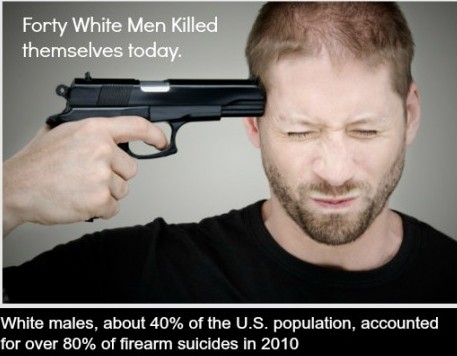
Out of the 31,000 lives lost due to gun violence, every year 19,000 or almost 2 out of every 3 are suicides. White males accounted for over 80% of gun related suicides in 2010. And according to the American Foundation for Suicide Prevention, yearly medical costs associated with suicide, is nearly $100 million and 90% of people who die by suicide have a diagnosable and treatable psychiatric disorder at the time of their death.

Every night we watch Black men on the nightly news who have been involved in gun violence. Gun violence in urban America is a serious issue and Black youth are disproportionately victims of it. When addressing the high rates of homicide in the African-American community, Dr. Linda Frisman told the audience at John Hopkins “that being African-American and Hispanic are really proxies for social and economic disadvantage.” This is something that most Blacks understand. Addressing gun violence in urban America will not be solved with more police and school resource officers as President Obama has recommended or by adding additional security cameras to our schools that stream live to patrol cars and police precincts. If we are serious about reducing gun violence, we must address the social and economic disparities in communities of color. Strong economically secure communities that provide family sustaining wages, affordable housing, culturally relevant and enriching education that equips children with skills to succeed in the 21st century, and love will make schools and neighborhoods safe for our children. Successful faith and community-based programs should be rewarded with additional funds with less money being poured into Police departments that normally respond punitively when dealing with our children.

Another forty white men have killed themselves tonight

I begin to think, what if each night the local nightly news began by stating, “Another forty white men have killed themselves tonight?”

There are studies for every social pathology in the Black community, and policy responses crafted by “experts,” that are often punitive and never seem to be systemic. But for some reason, you can’t find much research on white males and why they are killing themselves at an alarming rate, or why there is a fascination with weapons. What if we began to take the same data and create policy around it? What would it look like? Would it stigmatize white males? Would we have to dispatch mental health professionals to workplaces every time they were laid off? Would we need to send the Bureau of Alcohol, Tobacco, Firearms and Explosives (ATF) to their homes to search and remove their guns? How safe would White women and children feel when their husbands and fathers were laid off? Would white men be considered a High-Risk group for firearm ownership? Or would there be a stop and frisk policy implemented for White men over the age of 50?

In October of 2012, leading experts from the Johns Hopkins Bloomberg School of Public Health produced a report entitled, “The Case for Gun Policy Reform in America.” Many of the policy recommendations from the expert reports concentrated on Firearms Prohibitions for High-Risk Persons. Though suicide is the leading cause of death by firearms, with White males accounting for over 80%, they were not mentioned in the high risk category.

Well, who are the High Risk groups that should be prohibited from owning firearms? Under the section entitled, Why Firearms Prohibitions for High-Risk Persons Should be Broadened the categories include Criminals, Substance Abusers (Illegal Substances) and Youth Under Age 21.

Criminal Prohibitions

We believe the evidence above justifies an extension of firearm prohibitions for persons with a history of criminal behavior to include persons convicted of all misdemeanor crimes of violence, as well as individuals who have committed felony crimes as a juvenile.”

Substance Abusers

The number of drug abusers prohibited from possessing firearms might be increased significantly by revamping these regulations to, for example, expand the period following a drug conviction for which a person is prohibited from possessing firearms.”

Youth Under Age 21

Restrictions on youths’ ability to purchase and possess firearms should be broadened. Although federal law and most state law allows youth 18 to 20 years of age to legally possess a handgun, youth of these ages have some of the highest rates of homicide offending.”

These policy recommendations are about narrowing access to who can legally own a firearm, by identifying the most high-risk persons. The criminal prohibitions and substance abusers recommendations would narrow the number of Black people who have access to guns. Not because Blacks use illegal substances at higher rates than Whites. According to the NAACP, “5 times as many Whites are using drugs as Blacks, yet the Black population, especially men are sent to prison for drug offenses at 10 times the rate of Whites.”  The NAACP Criminal Justice Fact Sheets states that “in 2002, despite that fact that more than 2/3 of crack cocaine users in the U.S. are white or Hispanic, blacks constituted more than 80% of people sentences under federal crack cocaine laws.”

It is also important to remember, as Dr. Matthew Miller pointed out, the vast majority guns that kill are handguns and legally owned.

United Nations Conference on the Arms Trade Treaty

Internationally the United Nations appears to be pursuing the same policies. In March of this year they will convene the United Nations Conference on the Arms Trade Treaty (ATT). The conference is designed to tighten import, export and transfer of conventional arms. The UN states that ATT “will not aim to ban any weapon.” And why would they? White men control the most deadly arsenals of weapons of mass destruction in the world. Instead, the conference wants to make sure weapons don’t fall “into the hands of terrorists, drug traffickers, and criminal cartels.”

Drug traffickers and Criminal cartels? I think you already know who the target groups are. This sounds very familiar to the language in the Hopkins report. Identify high-risk populations, mostly communities of color and limit their access to acquiring weapons while leaving out the highest risk group, White men. No group has manufactured, proliferated or used more weapons of mass destruction than White males, yet they conveniently label communities of color as “terrorists” or “high risk.”

They will beat their swords into plowshares and their spears into pruning hooks. Nation will not take up sword against nation, nor will they train for war anymore. – Isaiah 2:4

I pray for the day when we will beat our swords into plowshares and study war no more. But until then, we must make an honest effort to make sound gun policy. We must make sure that the War-on-Guns does not unfairly target people of color in the same way the War-on-Drugs have devastated our community.

READ MORE on Kinetics LIVE

BLACK HISTORY MONTH 2013: “At the Crossroads of Freedom and Equality: The Emancipation Proclamation and the March on Washington”

black history

BLACK HISTORY MONTH 2013 Theme

“At the Crossroads of Freedom and Equality: The Emancipation Proclamation and the March on Washington”

When Carter G. Woodson established Negro History week in 1926, he realized the importance of providing a theme to focus the attention of the public. The intention has never been to dictate or limit the exploration of the Black experience, but to bring to the public’s attention important developments that merit emphasis.

For those interested in the study of identity and ideology, anexploration of ASALH’s Black History themes is itself instructive. Over the years, the themes reflect changes in how people of African descent in the United States have viewed themselves, the influence of social movements on racial ideologies, and the aspirations of the black community.

The changes notwithstanding, the list reveals an overarching continuity in ASALH–our dedication to exploring historical issues of importance to people of African descent and race relations in America.

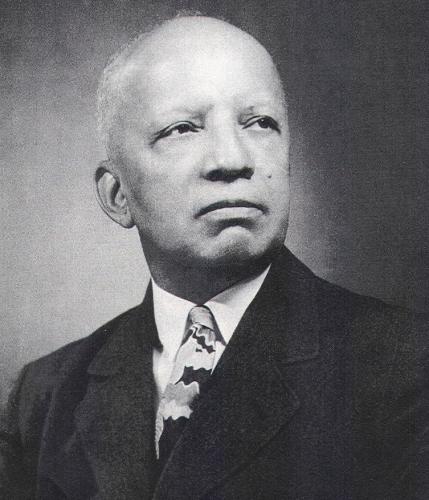
Woodson_Carter_G

Dr. Carter G. Woodson,  Researcher Honored as the “Father of Black History Week”

The story of Black History Month begins in Chicago during the
late summer of 1915.
 An alumnus of the University of Chicago with
many friends in the city, Carter G. Woodson traveled from
Washington, D.C. to participate in a national celebration of the fiftieth
anniversary of emancipation sponsored by the state of Illinois.
Thousands of African Americans traveled from across the country to
see exhibits highlighting the progress their people had made since the
destruction of slavery.  Awarded a doctorate in Harvard three years
earlier, Woodson joined the other exhibitors with a black history display.
Despite being held at the Coliseum, the site of the 1912 Republican
convention, an overflow crowd of six to twelve thousand waited
outside for their turn to view the exhibits. Inspired by the three-week
celebration, Woodson decided to form an organization to promote the
scientific study of black life and history before leaving town.  On
September 9th, Woodson met at the Wabash YMCA with A. L. Jackson
and three others and formed the Association for the Study of Negro
Life and History (ASNLH).
He hoped that others would popularize the findings that he and other black intellectuals would publish in The Journal of Negro History, which he established in 1916.  As early as 1920, Woodson urged black civic organizations to promote the achievements that researchers were uncovering.  A graduate member of Omega Psi Phi, he urged his fraternity brothers to take up the work. In 1924, they responded with the creation of Negro History and Literature Week, which they renamed Negro Achievement Week.  Their outreach was significant, but Woodson desired greater impact.  As he told an audience of Hampton Institute students, “We are going back to that beautiful history and it is going to inspire us to greater achievements.”  In 1925, he decided that the Association had to shoulder the responsibility.  Going forward it would both create and popularize knowledge about the black past. He sent out a press release announcing Negro History Week in February, 1926.Woodson chose February for reasons of tradition and reform.  It is commonly said that Woodson selected February to encompass the birthdays of two great Americans who played a prominent role in shaping black history, namely Abraham Lincoln and Frederick Douglass, whose birthdays are the 12th and the 14th, respectively.  More importantly, he chose them for reasons of tradition.  Since Lincoln’s assassination in 1865, the black community, along with other Republicans, had been celebrating the fallen President’s birthday.  And since the late 1890s, black communities across the country had been celebrating Douglass’.  Well aware of the pre-existing celebrations, Woodson built Negro History Week around traditional days of commemorating the black past.  He was asking the public to extend their study of black history, not to create a new tradition.  In doing so, he increased his chances for success.Yet Woodson was up to something more than building on tradition. Without saying so, he aimed to reform it from the study of two great men to a great race.  Though he admired both men, Woodson had never been fond of the celebrations held in their honor. He railed against the “ignorant spellbinders” who addressed large, convivial gatherings and displayed their lack of knowledge about the men and their contributions to history.  More importantly, Woodson believed that history was made by the people, not simply or primarily by great men.  He envisioned the study and celebration of the Negro as a race, not simply as the producers of a great man. And Lincoln, however great, had not freed the slaves—the Union Army, including hundreds of thousands of black soldiers and sailors, had done that. Rather than focusing on two men, the black community, he believed, should focus on the countless black men and women who had contributed to the advance of human civilization.From the beginning, Woodson was overwhelmed by the response to his call.  Negro History Week appeared across the country in schools and before the public.  The 1920s was the decade of the New Negro, a name given to the Post-War I generation because of its rising racial pride and consciousness.  Urbanization and industrialization had brought over a million African Americans from the rural South into big cities of the nation.  The expanding black middle class became participants in and consumers of black literature and culture.  Black history clubs sprang up, teachers demanded materials to instruct their pupils, and progressive whites stepped and endorsed the efforts.

Woodson and the Association scrambled to meet the demand.  They set a theme for the annual celebration, and provided study materials—pictures, lessons for teachers, plays for historical performances, and posters of important dates and people.  Provisioned with a steady flow of knowledge, high schools in progressive communities formed Negro History Clubs.  To serve the desire of history buffs to participate in the re-education of black folks and the nation, ASNLH formed branches that stretched from coast to coast.  In 1937, at the urging of Mary McLeod Bethune, Woodson established the Negro History Bulletin, which focused on the annual theme. As black populations grew, mayors issued Negro History Week proclamations, and in cities like Syracuse progressive whites joined Negro History Week with National Brotherhood Week.  Continued Here

Learn More

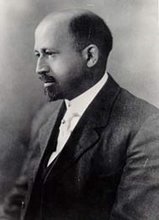
dubois

Dr. W.E. B. Dubois

The year 2013 marks two important anniversaries in the history of African Americans and the United States. On January 1, 1863, the Emancipation Proclamation set the United States on the path of ending slavery. A wartime measure issued by President Abraham Lincoln, the proclamation freed relatively few slaves, but it fueled the fire of the enslaved to strike for their freedom. In many respects, Lincoln’s declaration simply acknowledged the epidemic of black self-emancipation –spread by black freedom crusaders like Harriet Tubman – that already had commenced beyond his control. Those in bondage increasingly streamed into the camps of the Union Army, reclaiming and asserting self-determination. The result, abolitionist Fredrick Douglass predicted, was that the war for the Union became a war against slavery. The actions of both Lincoln and the slaves made clear that the Civil War was in deed, as well as in theory, a struggle between the forces of slavery and emancipation. The full-scale dismantlement of the “peculiar institution” of human bondage had begun. In 1963, a century later, America once again stood at the crossroads. Nine years earlier, the U.S. Supreme Court had outlawed racial segregation in public schools, but the nation had not yet committed itself to equality of citizenship. Segregation and innumerable other forms of discrimination made second‐class citizenship the extra‐constitutional status of non‐whites.Another American president caught in the gale of racial change, John F. Kennedy, temporized over the legal and moral issue of his time. Like Lincoln before him, national concerns, and the growing momentum of black mass mobilization efforts, overrode his personal ambivalence toward demands for black civil rights. On August 28, 1963, hundreds of thousands of Americans, blacks and whites, Jews and gentiles, Protestants and Catholics, marched to the memorial of Abraham Lincoln, the author of the Emancipation Proclamation, in the continuing pursuit of equality of citizenship and self-determination. It was on this occasion that Martin Luther King, Jr. delivered his celebrated “I Have a Dream” speech. Just as the Emancipation Proclamation had recognized the coming end of slavery, the March on Washington for Jobs and Freedom announced that the days of legal segregation in the United States were numbered. Marking the sesquicentennial of the Emancipation Proclamation and the 50th anniversary of the March on Washington, the Association for the Study of African American Life and History invites papers, panels, and roundtables on these and related topics of black emancipation, freedom, justice and equality, and the movements that have sought to achieve these goals. Submissions may focus on the historical periods tied to the 2013 theme, their precursors and successors, and other past and contemporary moments across the
breadth of African American history.

This copy may be republished electronically with the following acknowledgement and link by the Association for the Study of African American Life and History at http://www.asalh.org.


Visit our Honoring Our Past Pages

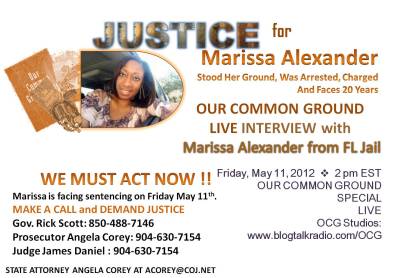
FREE Marissa Alexander Petition Drive l Sign the Petition

 FREE Marissa Alexander Petition Drive

Change.org Petition ALERT

marissa1

Community groups remain concerned about the case of Marissa Alexander, a woman who was given quite a few years in prison for a situation in which it appeared that she had no other options.  Alexander received 20 years in prison after firing warning shots at a man who she believes had come to harm her. No one was hurt, but Alexander was still sent away for a very long time.

The incident took place in 2010 and Marissa says she was simply standing her ground in the state of Florida, where standing your ground appears to be legal.   But the judge said he had no choice but to give the woman 20 years in prison, even though she is the mother of three children.  The length of the sentence was due to the fact that she’d fired a gun while committing a felony.

Various groups have been fighting for Marissa’s release and say that her case is part of the reason that mandatory minimums should be abolished.  They argue that since no one was hurt and she was only trying to protect herself from an abusive husband, her actions were entirely justified.

The petition, which is at Change.org,  says that Alexander’s sentence was excessive and exceedingly harsh.

It was also suggested by the judge in this case that Ms. Alexander “could have found some other way to flee the home,” yet the law states that “those who feel threatened, have no duty to retreat,” further lending to the ambiguity of this judgment against Ms. Alexander.

Something has to be done regarding all women who defend themselves against their abusers. Too often they receive little understanding and sympathy from the systems supposedly set up to protect them.  Women who are victims of domestic violence need a voice, and it is our intent to be that voice for Marissa and any other potential victim of domestic violence or any other form of injustice.  

PLEASE SIGN THIS PETITION

We interviewed Marissa Alexander on OUR COMMON GROUND in an exclusive from her jail in Florida, less than an hour after she was sentenced.

 Listen to our interview with Marissa.

5-12 aCTION aLERT


Boston Police Awards 3 Officers involved in High-Profile Brutality cases infused with race l The Blackstonian

Boston Police Awards 3 Officers involved in High-Profile Brutality cases infused with race

By   /   January 9, 2013  /

  © 2013 Blackstonian. // Black Boston 411 24/7

Boston Police Awards

BLACKSTONIAN EXCLUSIVE:
Boston Police Awards 3 Officers involved in High-Profile Brutality cases infused with race

The Boston Police department in its latest routine round of awarding officers for “outstanding performance” of their duties during the past year has named among its many recipients 3 officers in particular who were involved in some of the departments most highly publicized and controversial cases, all of which include elements of race and police brutality and use of excessive and/or deadly force.

These officers are: Brian R. Dunford, Michael T. McManus, Christopher R. Carr

These awards send a message of disregard and disrespect to the Black Community. Remember the outrage after the tragedy of DJ Henry when Officer Aaron Hess was awarded Officer of the Year by the Pleasantville Police Dept??? Here in Boston, these 3 separate cases are all hot buttons and the BPD is well aware of the message that these awards send to a community in constant struggle with its Police Department. Shame on the BPD, you dont have to be a detective to know this is not a good look.

Editor’s Note: We contacted BPD top brass and the official position of the BPD is that they stand by each of these officers and have their own reasoning and logic by which these officers are all worthy and deserving of these awards. The BPD noted that in the cases in question that these officers were all exonerated after an investigation by both internal affairs and Suffolk County DA Dan Conley. The BPD also stated that in the case of at least one of the officers they were disciplined for filing a false report and that no further punishment was needed and since then there have been no further incidents. The position of the Blackstonian which we expressed to the BPD is that the fact that these Officers were exonerated is only indicative of the problem, bearing in mind that 99% of officers are exonerated which is part of our contention that internal affairs and the Suffolk County DA are incapable of conducting fair investigations.

Note: 2 of the officers named below, Dunford and Carr were also part of a 2004 lawsuit against the City of Boston because they felt they were discriminated against because of their “Caucasian race”.
see it here: http://www.clearinghouse.net/chDocs/public/EE-MA-0020-0002.pdf

Now, on to the awards…

Officer Brian R. Dunford is awarded “The Department Medal of Honor” among other officers for their response to a call on October 16, 2011.
Officer Brian Dunford also happens to be the same officer who was involved with the vicious 3/23/08 beating of Boston Firefighter Wayne Abron. At the time Abron was villianized, but later (9/21/09) he was acquitted of all charges against him and is currently engaged in a lawsuit against the City of Boston and the BPD.
This is what Wayne Abron looked like after his encounter with Department Medal of Honor recipient Dunford.
Wayne Abron

see the results of a basic google search for BPD Officer Brian Dunford – click here

Dunford Award

click image for larger version

**************************************************************************************************

Officer Michael T. McManus is awarded The Mayor’s Medal of Excellence among other officers for general performance of duty and achieving a cumulative count of over 250 arrests in B-2. In addition to this actual award McManus was also in a separate ceremony appointed to one of the most coveted and high profile assignments within the BPD. McManus was appointed by Commissioner Ed Davis to the BPD Fugitive Squad which we are told includes the much wanted perks of: unlimited overtime, make your own hours and a personal take home vehicle.

Office Michael T. McManus also happen to be the same Officer involved in 2 separate incidents which were some of the city’s most controversial cases. McManus only joined the force in 2007 and has made quite an impression.

A. The death of David Woodman – on June 18, 2008 David Woodman was being arrested in the Fenway after a Boston Celtics Championship. He died 11 days later and his family was subsequently paid a 3 million dollar out of court settlement by the City of Boston.
Woodman Family
http://www.masslive.com/news/index.ssf/2010/11/investigation_of_boston_police.html

B. The beating of 17 yr old boy at RCC – On October 22, 2010 a 17 yr old teenage black boy was apprehended by members of the BPD and DYS. The event was captured on video and went viral on youtube and became highly publicized. McManus was one of the officers in the video involved in the beating of this young man. A year later Suffolk County DA Dan Conley declared no wrong doing.

McManus Award

click image for larger version

**************************************************************************************************

Officer Christopher R. Carr along with another officer, is awarded The Schroeder Brothers Memorial Medal; The Department Medal of Honor. It should be noted that the Schroeder Brothers Memorial Medal is the highest medal given by the BPD from the Boston Police Relief Association Memorial Award.

Also please note that this award is different from the others because in this case, which to the Blackstonian is the most despicable award, is for the specific incident in question. Unlike the other awardees who were awarded for other instances and not the particular one which was notorious and in question, this specific honor the very highest medal given by the BPD is specifically for the very incident that our community is so traumatized from.

Officer Christopher Carr is the same officer involved in the Sept. 7, 2011 police chase from Roxbury to Rockland, MA which ended in the death of Mark McMullen. For those who have been following the Blackstonian you know that we have organized around this very issue. We have sat with the family and this case is VERY MUCH in question.

Mark McMullen

The Blackstonian seriously questions how an officer can be awarded for a high speed chase 30 min out of the city, when BPD policy forbids chases out of city limits, except in the case where a suspect is fleeing a serious, violent felony and people are in imminent danger. this was not even remotely close to such a case.

Please read the narrative supplied by the BPD describing the incident for which this award is given.

Officer Carr Award

click image for larger version


**************************************************************************************************


About the Blackstonian

A word used to symbolize the spirit and culture of Black Bostonians. We created the Blackstonian newspaper as a community service to the Black, Latino, Cape Verdean and other Peoples of Color in Boston and the surrounding area.

Who We Are

We represent Black Boston, centrally Roxbury, Dorchester, Mattapan but really all through the other burroughs and suburbs to wherever Black people are found in our extended midst. Our definition of Black is very inclusive, in Boston we have a lot of Brothers and Sisters from all over the Globe…Puerto Rico, Dominican Republic, Haiti, Jamaica, Cape Verde, Africa, Trinidad, wherever…. in our eyes you are all Black People and we are family here in Boston aka The Bean.

Blackstonian Team

Jamarhl Crawford
Publisher

Boston Black Church Built in 1807 Faces Foreclosure – Black Historical Icon or Black Bank Solvency ?

 Boston Black Church Built in 1807 Faces Foreclosure   – Black Historical Icon or Black Bank Solvency ?

Charles St. Church (African Methodist Episcopal Church), built in 1807. (Courtesy Photo/Boston Public Library)

Judge extends church’s date to file reorganization

By Beth Healy

|  GLOBE STAFF  JANUARY 04, 2013

OneUnited Bank was opposed to allowing Charles Street AME Church time to amend its reorganization plan.

BARRY CHIN/GLOBE STAFF/FILE

OneUnited Bank was opposed to allowing Charles Street AME Church time to amend its reorganization plan.

The judge in the Charles Street African Methodist Episcopal Church bankruptcy case Friday gave the congregation until Jan. 18 to file an amended reorganization plan, over the protests of bank lawyers who called the church’s proposals unrealistic and based on erroneous figures.

It was the latest skirmish in what has turned into a long court battle between the church and OneUnited Bank. Charles Street AME filed for federal bankruptcy protection last March, after it fell behind on payments for nearly $5 million in OneUnited loans and the bank threatened to auction off the the historic Roxbury church.

“There is no plan here that’s possibly feasible,’’ said Gayle Ehrlich, a lawyer for OneUnited, in a withering indictment of the church’s financial records in US Bankruptcy Court in Boston. “This case is way off track and can never get on track.”

Ehrlich criticized the church’s proposal to repay its debts to OneUnited over 30 years as unheard of with a business loan — only home mortgages and farm equipment purchases are afforded such long pay-back periods, she said.

Ehrlich also restated the bank’s position that the First Episcopal District of Philadelphia, which includes Charles Street AME, should live up to its commitment as a guarantor on the debt.

While complaining that the church hasn’t produced some of the documents the bank is seeking, OneUnited’s lawyers also alleged they had found errors in the financial reports the church had already submitted. Ehrlich said the bank calculated the church operated at a $226,000 loss in 2011, even though Charles Street AME reported a surplus. The church was able to pay its bills, Ehrlich claimed, by dipping into restricted cash funds.

But Ross Martin, the lawyer representing Charles Street AME, said the math was not that simple, and the bank was potentially miscalculating some expenses and revenues.

The disagreements will have to be settled at a later hearing, Judge Frank J. Bailey said. If a reorganization plan is not agreed upon by the end of February, the judge said, the bank would be free to submit its own plan.

Relations between Charles Street, a historic black church, and OneUnited Bank, one of the nation’s largest African-American-owned banks, broke down in 2009.

The church had been building the Roxbury Renaissance Center, with funding from the bank, envisioning it as venue for meetings and weddings, small business start-ups, and a music program. But the recession hit before construction was complete, and after several extensions, OneUnited, facing financial troubles of its own, called the loan.

“We certainly have been held captive in this case,’’ Ehr­lich said in reference to the bankruptcy proceedings, which are now in their second calendar year.

Bailey, too, indicated impatience with the pace of the case, saying, “It’s diverting the debtor from its mission, diverting the bank from its mission.” But he said the case, while relatively small, has had its complexities.

What started as a pledge between the two parties to work together for the community has devolved into a hostile legal battle.

On Friday, Ehrlich accused the church of not only making mistakes but ”bad faith” in its financial representations, and alleged fraud on the part of the greater district church.

She also implied that Martin has served pro bono only because his firm, Ropes & Gray, does a lot of business with the Boston investment firm Bain Capital, some of whose partners have intervened to try to help Charles Street AME.

Bailey chastised Ehrlich, saying, “Your comments do violence to the notion of pro bono, and I would ask you not to repeat those words.”

Beth Healy can be reached at bhealy@globe.com.

Related Stories . . .

Money, politics fought over in church’s bankruptcy case

By Beth Healy

|  GLOBE STAFF  SEPTEMBER 05, 2012

The Rev. Gregory Groover denies starting any protests.

DAVID L. RYAN/GLOBE STAFF

The Rev. Gregory Groover denies starting any protests.


It was a remarkable moment in the midst of a nasty fight. On the first day of Charles Street African Methodist Episcopal Church’s bankruptcy proceeding in August, a church leader, Dennis Lloyd, greeted Teri Williams, the president of OneUnited Bank, with a polite kiss on the cheek.

Such good will has not been on display since, over many hours of testimony and cross-examination in US Bankruptcy Court in Boston. Charles Street is trying to reorganize nearly $5 million in loans it owes the bank, after OneUnited threatened to auction off the historic church in February and sparked a public battle between the two prominent black institutions.

Testimony will resume Sept. 19, after­ the judge scheduled extra time to handle the contentious matter.

Last month, on the third day of hearings, a lawyer for the bank hammered the Rev. Gregory Groover with questions implying he had lied when he said the church “never missed a payment” on its loans and accused Groover of organizing community protests to “bring pressure to bear” on OneUnited so it would not foreclose on the historic black church.

In response, Groover acknowledged the church had made dozens of late payments, but he said it always eventually caught up.

Groover also repeatedly insisted that he did not organize the protests against the bank, nor personally call for the help that came from local and national politicians.

“We welcomed anyone, including elected officials, supporting our efforts to block our church from being auctioned,’’ Groover said during a long cross-examination by the bank’s lawyer, Lawrence Edelman, according to a recording of the proceeding.

At one point, Edelman sought to prove that Groover had organized the neighborhood rallies by showing a newspaper photograph in which he appeared alongside the Rev. Eugene Rivers, an activist minister in Boston who was, in fact, one of the organizers of the events.

For all the back-and-forth, the case may boil down, in part, to whether First District AME Church — the Philadelphia-based umbrella organization to which Charles Street AME belongs — can escape the guarantee it offered when OneUnited extended Charles Street a loan to build a community center. The bank’s president has testified that OneUnited would not have made the loan without the guarantee.

OneUnited gave the church several extensions on the construction loan for the Roxbury Renaissance Center but ultimately called in the loan. Another $1.1 million loan came due in November; the church missed its October payment but sent a check in December, which the bank cashed and then returned.

Earlier in the proceedings, a lawyer for First District AME Church grilled Williams on her understanding of the district church’s financial statements. He alleged that she had misread them, despite her MBA from Harvard Business School, and overstated the amount of cash available in the event a guarantee was needed.

Williams and the bank’s lawyers maintained that her reading of the documents was accurate, reflecting $19 million in cash on the books of the organization.

Charles Dale, the lawyer for the district church, said those funds were held across the districts’s 330 member churches and in other entities. The actual cash held by the district itself was $237,000, he said, citing documents filed with the court.

Williams responded that if inaccurate information was provided to the bank, that could take the fight beyond a loan dispute to “potential fraud.”

Representatives for the bank have indicated they felt they prevailed on the day of Groover’s cross-examination. It was a view upheld in a recent report in The Baystate Banner, a weekly newspaper for the African­-American community owned by one of OneUnited Bank’s directors, Melvin Miller. Meanwhile, representatives of the church, begun on Beacon Hill and now in Roxbury, say Charles Street AME came out on top in that session.

Edelman, the bank’s lawyer, suggested in court that Charles Street can’t afford to finish its community center and repay its loans. Its fund-raising forecasts are too sunny, he said. By his analysis, the center would run an annual deficit of about $100,000. The church’s lawyer, Ross Martin, countered that those figures do not include additional­ fund-raising by Charles Street.

Beth Healy can be reached at bhealy@globe.com.

Originally published August 22, 2012

Money Squabble in Boston Snares Black Church, Bank

 by Zenitha Prince

Special to the AFRO

Charles St. Church (African Methodist Episcopal Church), built in 1807. (Courtesy Photo/Boston Public Library)
 
AFRO Black History Archives

An ongoing legal dispute between OneUnited Bank and the venerable Charles Street African Methodist Episcopal Church in Boston is taking a heavy toll on the city’s Black community, leaders and residents say.

The financial drama features millions of dollars, a leading Black church, a major black financial institution and Bain Capital, the venture capital firm that Mitt Romney, former Republican governor and the party’s presumptive nominee, helped create and later sold.

Last week, lawyers for the two Black institutions gave oral arguments in a Massachusetts bankruptcy court as the bank tried to stop the church’s Chapter 11 filing. The case was the latest in a prolonged battle over more than $4 million in loans.

“It’s disappointing that the two institutions have not been able to come to a resolution,” said Boston City Councilor Tito Jackson, in whose district, District 7, both the bank and the church are located.

“Both institutions are very valuable to our community—Charles Street AME is one of the oldest and most beloved faith institutions in the city, and OneUnited is one of the only Black-owned banks.”

As one of many Black leaders who tried to help broker an agreement between the parties, Jackson said he was discouraged by the way the matter was being played out in the public eye. “My attempts and work was to try to bring both parties together to find some resolution because this public rhetoric and story is damaging to both institutions and to the fabric of our community.”

The beginning of this story seemed to be a happy one. In October 2006, according to information provided by the bank, Charles Street AME was granted two loans: a $1.5 million church loan that was to be repaid in full in five years; and a $3.6 million construction loan that matured in 18 months and for which the AME Church’s First Episcopal District was a co-signer. The construction loan was earmarked for the building of the church’s Roxbury Renaissance Center, a facility many said would be a vital resource in the community.

A senior bank official told the AFRO that at first the relationship was amicable: while the church was late on a majority of its payments (the church’s attorney said that while late, payments were always made with the requisite late fees), the bank tried to be flexible, offering the church five three-month extensions and even introducing church officials to potential donors.

But that relationship soured, the bank official and court documents allege, when the church took on Bain Capital to help with its debt restructuring. On Aug. 6, 2010, during a conference call, Bain Vice President Ryan Cotton supposedly said his firm was prepared to purchase the church’s outstanding loan for $1 million, and the bank could accept the offer or “endure a raft of bad publicity.” The bank refused the offer, construction halted on the Center, and the matter went to court.

Earlier this year, after the bank announced its intent to foreclose on the church’s property and the church filed for bankruptcy to stave off that foreclosure, Bain Capital popped up again. Bank attorneys allege that the Rev. Gregory Groover Sr., pastor of Charles Street AME, and his attorneys “contrived a scheme” in which Bain’s Cotton and Steve Pagliuca, the firm’s managing director, would route $1.5 million in donations to the First District’s bank account. The First District would then donate that money to complete construction on the center with the condition that it be released from its obligations under the terms of the original loan.

According to a Bain Capital spokesman, Cotton and Pagliuca were above board in their dealings.

“Individuals that work at Bain Capital have provided advice and counsel on a volunteer basis to the Charles Street AME,” the spokesman said in an e-mail. “They became involved because they believe strongly that the church is a vital community resource and want to see the church continue its important work. All interactions in this matter were completely professional.”

According to Charles Street’s attorney, D. Ross Martin, of Ropes & Gray LLP, it is OneUnited that failed to exert due diligence before extending the loan and later, derailed the possibility of a peaceful solution.

“It is indisputable that the bank sued first,” Martin told the AFRO. “And it is indisputable that after they filed the foreclosure sale and before the church filed for bankruptcy the bank refused to meet with the church. That speaks volumes.”

He added, “I can’t quite figure out why they’re doing it this way. I do this for a living and usually people negotiate things, but they’re not negotiating…. It’s a very odd situation.”

Community reactions to the feud have been mixed. During a rally at Charles Street AME, attended by about 500 persons, many were angry and frustrated at OneUnited’s attempted foreclosure and lawsuit, said Jackson, the lawmaker.

“OneUnited Bank is a business. [And] the perception [about the nature of businesses] became a precursor to reality. So this didn’t look good, feel good…,” he said.

William Murrell, an information services consultant who has been following the twists and turns of the public quarrel, agreed, but said some are also seeing the bank’s point of view, especially since more details of the case were revealed in court.
“At first it seemed that the bank was being heavy-handed and the prevailing thought was that OneUnited should cut the church a break. But, as the story has played out, it appears that that was untrue,” Murrell, creator of AboutBlackBoston.com, said.

Observers will have more information to weigh in the comings weeks: In addition to last week’s hearings, Judge Frank Bailey will hear testimony on Sept. 19, 20 and 28.

In its debt restructuring plan, offered as part of the bankruptcy filing, Charles Street has offered to pay back the back the OneUnited loan in full, with interest, over a period of 30 years.

OneUnited has balked at the timeline and has challenged the bankruptcy filing. Citing the AME Church’s canon of doctrine, OneUnited said Charles Street is ineligible for Chapter 11 relief, since its assets are held “in trust” for the First Episcopal District, and the First District is thus responsible for discharging the church’s liabilities—including the balance on the OneUnited loan.

The argument is ludicrous and faulty, Martin, Charles Street’s attorney said.

“Charles Street AME has been an independent entity in Boston since 1839,” Martin said. “The real estate deeds are absolutely clear that Charles Street AME holds this property. Everyone in the (broader) AME (denomination) agrees Charles Street is independent. But somehow a bank is saying that it knows AME doctrine better than the AME?”

The escalating tiff has cast a pall over Boston’s Black community as residents remain torn over their interests in preserving an historic 194-year-old church and supporting the solvency of a Black-owned bank.

“This is a financial matter and this happens in the business world all the time,” Councilor Jackson said. “We’re speaking about a substantial sum of money, and we’re at the point now where this is in litigation and lawyers are involved so this process will have to play itself out.

“But when it’s two institutions that are in our community, and [the situation] gets played out in the way it’s being played out, it’s much more frustrating.”
AFRO.com

Remembering Jayne Cortez, Jazz Poet

Jayne Cortez, Jazz Poet, Dies at 78

David Corio

Jayne Cortez performing in New York in 1994. Her work was known for its power and outrage.

By           Published: January 3, 2013
Jayne Cortez, a poet and performance artist whose work was known for its visceral power, its political outrage and above all its sheer, propulsive musicality, died on Dec. 28 in Manhattan. She was 78.
Her death, at Beth Israel Medical Center, was from heart failure, her son, the jazz drummer Denardo Coleman, said.

One of the central figures of the Black Arts Movement — the cultural branch of the black power movement that flourished in the 1960s and ’70s — Ms. Cortez remained active for decades afterward, publishing a dozen volumes of poetry and releasing almost as many recordings, on which her verse was seamlessly combined with avant-garde music.

She performed on prominent stages around the world, including, in New York, theSchomburg Center for Research in Black Culture, the Museum of Modern Art and Carnegie Hall.

Ms. Cortez’s work was beyond category by virtue of embodying so many categories simultaneously: written verse, African and African-American oral tradition, the discourse of political protest, and jazz and blues. Meant for the ear even more than for the eye, her words combine a hurtling immediacy with an incantatory orality.

Starting in the 1960s, Ms. Cortez began performing her work to musical accompaniment. For the past three decades she toured and recorded with her own band, the Firespitters, whose members include her son, from her first marriage, to the saxophonist and composer Ornette Coleman.

As performed, Ms. Cortez’s poems were not so much set to music as they were a part of the music. They were chanted more than recited, employing carefully calibrated repetitions, shifts in tempo and modulations of vocal tone.

It was as if her verse, which often took on large, painful subjects like racism and misogyny, had become an instrument itself — an instrument, Ms. Cortez felt strongly, to be wielded in the service of social change.

In one of her best-known works, “If the Drum Is a Woman,” for instance, she indicts violence against women. (The title invokes Duke Ellington’s 1956 composition “A Drum Is a Woman”):

why are you pounding your drum into an insane babble

why are you pistol-whipping your drum at dawn

why are you shooting through the head of your drum

and making a drum tragedy of drums

if the drum is a woman

don’t abuse your drum don’t abuse your drum

don’t abuse your drum

Sallie Jayne Richardson, always called Jayne, was born on the Army base at Fort Huachuca, Ariz., on May 10, 1934. (The year of her birth is often misreported as 1936.) Her father was a career soldier who would serve in both world wars; her mother was a secretary.

Reared in Los Angeles, young Jayne Richardson reveled in the jazz and Latin recordings that her parents collected. She studied art, music and drama in high school and later attended Compton Community College. She took the surname Cortez, the maiden name of her maternal grandmother, early in her artistic career.

In the summers of 1963 and 1964, Ms. Cortez worked with the Student Nonviolent Coordinating Committee, registering black voters in Mississippi. It was this work as much as anything, she later said, that caused her to regard art and political action as an indivisible whole.

She gave her first public poetry readings with the Watts Repertory Theater Company, a Los Angeles ensemble she founded in 1964. Ms. Cortez, who had homes in Manhattan and Dakar, Senegal, was also a founder of the Organization of Women Writers of Africa, established in 1991.

Ms. Cortez’s marriage to Mr. Coleman ended in divorce in 1964, after 10 years. Besides her son, she is survived by her second husband, Melvin Edwards, a prominent sculptor whom she married in 1975; a sister, Shawn Smith; three stepdaughters, Ana, Margit and Allma Edwards; and a grandson.

Her volumes of poetry, many illustrated by Mr. Edwards, include “Festivals and Funerals” (1971), “Coagulations” (1984) and “Jazz Fan Looks Back” (2002); her albums include “Everywhere Drums” (1990) and “Taking the Blues Back Home” (1996).

Ms. Cortez, who taught at universities throughout the United States, including Rutgers, was among the artists featured — others include Amiri Baraka, Charles Bukowski, John Cage and Allen Ginsberg — in Ron Mann’s esteemed 1982 documentary film, “Poetry in Motion.”

Despite her work’s eclecticism, Ms. Cortez was comfortable invoking a single genre to describe it, precisely because that genre was itself so encompassing.

“Jazz isn’t just one type of music, it’s an umbrella that covers the history of black people from African drumming to field hollers and the blues,” she told The Weekly Journal, a black newspaper in Britain, in 1997. “In the sense that I also try to reflect the fullness of the black experience, I’m very much a jazz poet.”

A version of this article appeared in print on January 4, 2013, on page A15 of the New York edition with the headline: Jayne Cortez, Jazz Poet, Dies at 78.

 NYT for full version

Happy 95th B’Earthday Scholar Giant Dr. Yosef Ben-Jochannan (Dr. Ben)

Legendary Kemetaphysician Dr. Yosef Ben-Jochannan  (Dr. Ben) turns 95

Yosef Ben-Jochannan a.k.a. Dr. Ben

Yosef Ben-Jochannan a.k.a. Dr. Ben

Posted: Friday, December 28, 2012

By W.A.T.E.R. 17

Special to the AmNews |0 comments

On Monday, New Year’s Eve, renowned African scholar-warrior Dr. Yosef A.A. Ben-Jochannan, a.k.a. Dr. Ben, will be a nickel shy of a century. Some of his colleagues shared their thoughts about the man who devoted his entire life to unearthing many previously unknown facts regarding the Motherland and its original inhabitants.

Physically born on Dec. 31, 1917, in Ethiopia, young Yosef came of age in Puerto Rico (his mother’s origin) and St. Croix, being influenced by Arthur Schomburg and Pedro Albizu-Campos. After migrating to Harlem while still young, he continued his knowledge quest.

“Dr. Ben started out in a sacred mission to reclaim the Nile Valley and he did it almost single-handedly,” said Dr. Leonard Jeffries. He went on to explain the value of his cohort’s research restoring Egypt/Kemet back into Africa after educational institutions misled most to believe it existed in a fictionalized place called the Middle East.

“His work is in the monumental achievement of taking the Nile Valley away from those who not only stole our bodies and land, and enslaved us, but also stole our history and the knowledge of human development,” he said.

Throughout the ’60s and ’70s, Dr. Ben disseminated information from atop soapboxes on the corners of Harlem’s progressive African Square (125th Street and Seventh Avenue). Some youth organizations of that time period were greatly influenced by his discoveries.

“There was a cohesiveness between Dr. Ben and the Five Percenters,” remembered Dumar Wa’de Allah, former Harlem Prep disciple during the late 1960s where Jochannan conducted African history classes. “Because we were teaching that the Blackman is the father of civilization, and he was teaching that all civilizations came from the Blackman in Africa.”

Dr. Ben’s scholarly contribution’s contradicted the public school’s curriculum.

“We learned from his books what Egypt means to Black history,” disclosed Ben’s close comrade, Professor James Small. “He said, in no certain terms, that Egypt is in Africa, and proved it through research.”

The information revealed motivated others to emulate.

“We went to Dr. Ben in 1977 after seeing him on Gil Noble’s ‘Like It Is’. He gave us some books to read and told us to come to his home on Saturdays and study with him, which we did,” reflected Sister Kefa Nephphys, who along with husband Bill Jones, co-founded Harlem’s groundbreaking First World Alliance.

Fellow scholar Brother Sekou spoke about some of the factologist’s immeasurable contributions.

“Dr. Ben was the catalyst who started Black people going on tours to Egypt,” he said. “Anyone who is doing it now has either been there with Dr. Ben, or somebody he taught.”

As a founding member of ASCAC (Afrikan Study of Classical Civilizations), Dr. Ben spearheaded the historic 1987 pilgrimage to Kemet, leading over a thousand Americanized-Africans to experience the ancient artifacts firsthand. Additionally, he continuously conducted yearly educational tours to Kemet for decades.

“Dr. Ben is a true and living god! He had supreme knowledge of our history. It’s one thing for a person to teach you about the knowledge of your ancestry,” Wa’de Allah said. “but it’s even greater that they teach you about it, then allow you to go back and trace the roots of the history.”

Columbia professor Patrick Delices added: “In terms of African origin of civilization, and Egyptology, no one has a greater influence than Dr. Ben.”

Dr. Jefferies closed:

“The beauty of Dr. Ben is that he didn’t function alone, he believed in sharing the knowledge and information with the people. His greatest example was his brotherhood-

relationship with Dr. John Henrik Clarke. So to have these two giants in the heart of our struggle has been an extraordinary aspect of the African great awakening. So, happy birthday Dr. Ben!”

Wish Dr. Ben a happy birthday: 718-239-6444.

© 2013 New York Amsterdam News. All rights reserved. This material may not be published, broadcast, rewritten or redistributed.