George Clinton on Parliament Funkadelic, the mothership, his final tour | EW.com

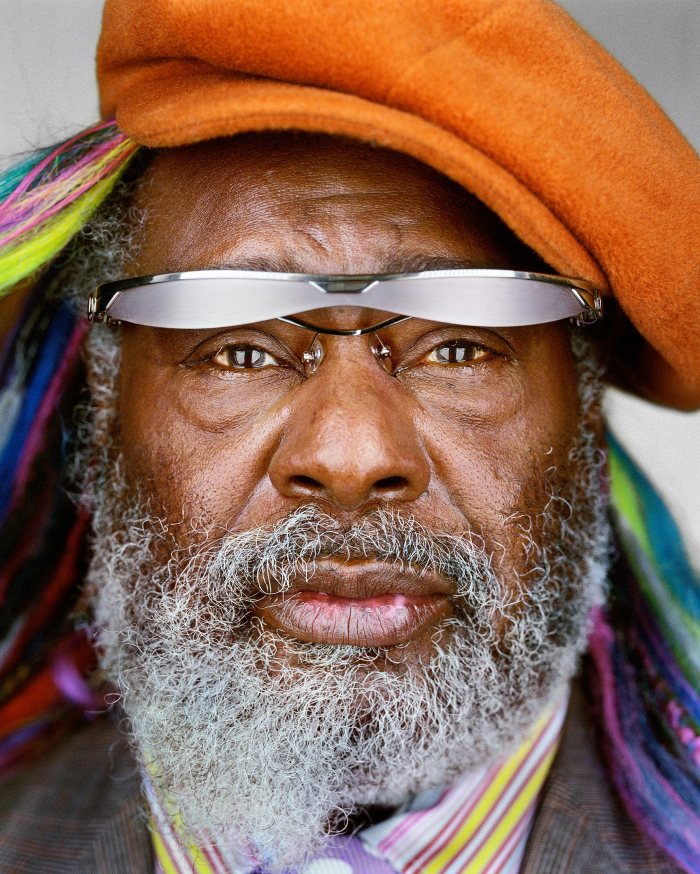
“The Funk has left the building. Well, technically, the Funk has only retired to a room adjacent to the stage where his masseuse awaits. “I need my massage,” George Clinton says. At 77, his pre-concert ritual is a lot different than it used to be: No illicit drugs. No groupie action. Just his wife Carlon Thompson-Clinton, who’s also managed his career for the last 10 years. And from the looks of the green room, the main thing on his rider these days is Fiji water.”

” . . . Clinton’s life has played out like a Blaxploitation flick, from his mythological birth in an outhouse all the way down to his final act of revenge against The Man, as he tries to regain ownership of P-Funk’s hit discography from alleged interloper Bridgeport Music, Inc. While he’s won back the publishing rights for the One Nation Under a Groove LP and others, the saga continues.”

Source: George Clinton on Parliament Funkadelic, the mothership, his final tour | EW.com

America’s Largest Black Boarding School Sends 97 Percent of Students to College – The Atlantic

America’s Largest Black Boarding School Sends 97 Percent of Students to College


The Piney Woods Country Life School is America’s largest historically black boarding school, and one of the few remaining, with a sprawling campus of pine trees and rolling farmland just 20 miles south of Jackson. It opened in 1909 as the vision of an educated African-American man from St. Louis who felt a desire to teach the illiterate children of freed slaves how to farm and read. In the face of hunger, poverty, and lynching threats, Dr. Laurence Jones and his wife fought to keep the school open in the segregated South.

Source: America’s Largest Black Boarding School Sends 97 Percent of Students to College – The Atlantic

Is Hip Hop Destroying Black America?

TIME AND TIME AGAIN, THE REAL DECISION MAKERS GET AWAY WITH MURDER WHILE RAP ARTISTS ARE PROJECTED AS THE EMBODIMENT OF EVERYTHING THAT IS WRONG WITH HIP HOP AND YOUNG BLACK MALES.

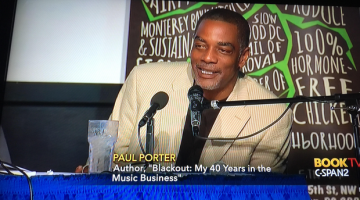
“If this doesn’t sound like the kind of Hip Hop you’re familiar with, blame the music industry and mainstream media for bombarding you with a steady diet of rappers talking about drugs, sex and violence for over two decades. Blame MTV, BET, and other networks for trying to redefine what Hip Hop is in order to sell it and shove it down the throats of unsuspecting consumers. It’s easy to blame simple minded rappers for promoting negative messages and images while multi billion dollar companies and shrewd businessmen who market these artists are free from criticism. It’s easy to blame someone like Chief Keef who becomes the obvious poster boy for mindless rap while Jimmy Iovine, the head of Interscope Records, keeps a low profile and avoids having to address his part in promoting “death through entertainment”.

It’s easy to protest flavor of the month Trinidad James who raps about Molly, the industry’s latest fashionable drug, while Def Jam’ president Joie Manda proclaims his new discovery as “the cutting edge of what’s happening in the culture today.” It’s easy to blame talentless top 40 rappers for dominating the airwaves of so called hip hop radio stations like L.A.’s Power 106 or New York’s Hot 97 while Rick Cummings, president of programming for Emmis Communications, which owns both stations, isn’t held accountable for his part in broadcasting filth to millions of listeners.Time and time again, the real decision makers get away with murder while rap artists are projected as the embodiment of everything that is wrong with Hip Hop and young Black males.”

Source: Is Hip Hop Destroying Black America?


More Than ‘Kind Of Blue’: In 1959, A Few Albums Changed Jazz Forever : NPR

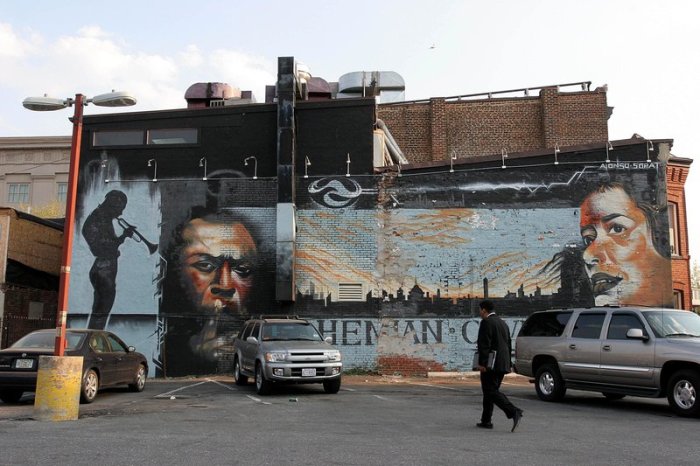
John Coltrane, Dave Brubeck, Ornette Coleman and Charles Mingus all cut timeless classics, which is why many fans hold that 1959 is the greatest year in all of jazz music. There are countless think pieces exploring the idea, a popular new blog devoted to the subject and even a documentary film, 1959: The Year That Changed Jazz.

Source: More Than ‘Kind Of Blue’: In 1959, A Few Albums Changed Jazz Forever : NPR

Suffragettes were some of our first women’s historians. But they erased the vital work of black women. – The Lily

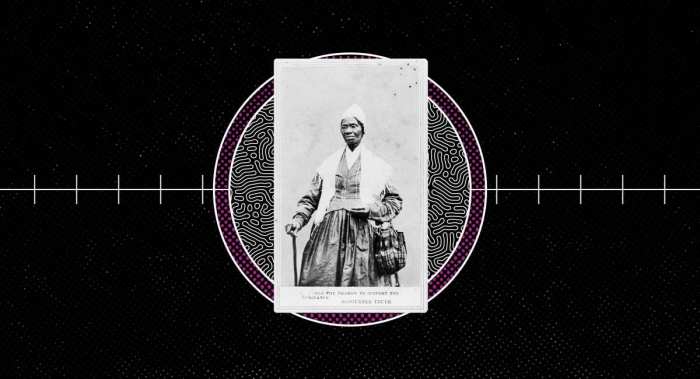
“Consistent with the deep-seated prejudices held by most white suffragists, Catt included no plaques to commemorate the thousands of African American women who actively participated in the struggle. Regional chauvinism was an issue as well: All the domestic suffragists were from the East Coast, with New York State vastly overrepresented. There was no one from California or the West, nor anyone from the South, unless you counted the Grimké sisters who left their native South Carolina to settle in Philadelphia and later New Jersey.

For too long, the history of how women won the right to vote has closely paralleled Catt’s suffrage forest: top-heavy and dominated by a few iconic leaders, all white and native-born. Moving away from that outdated approach reveals a broader, more diverse suffrage history waiting to be told, one that shifts the frame of reference away from the national leadership to highlight the women — and occasionally men — who made women’s suffrage happen through actions large and small, courageous and quirky, in states and communities across the nation. Suffrage activists campaigned in church parlors and the halls of Congress, but also in graveyards on the outskirts of college campuses, on the steps of the Treasury building and even on top of Mount Rainier.”

Source: Suffragettes were some of our first women’s historians. But they erased the vital work of black women. – The Lily

An Introduction to the Black Arts Movement | Poetry Foundation

“Black Arts Movement poet and publisher Haki Madhubuti wrote, “And the mission is how do we become a whole people, and how do we begin to essentially tell our narrative, while at the same time move toward a level of success in this country and in the world? And we can do that. I know we can do that.”

Source: An Introduction to the Black Arts Movement | Poetry Foundation

We Should Stop Saying “People of Color” When We Mean “Black People”

“That being said, we need to stop saying “people of color” in instances we mostly (and sometimes only) mean “Black people.”What I’m saying is a bit meta, but the public use of the term POC seems to have become less about solidarity, and more concerned with lessening the negative connotations and implicit anti-Black reactions (fear, scorn, disdain, apathy) to Blackness. In popular discourse, POC is often a shorthand for “this issue affects Black people most directly and disproportionately, but other non-white people are affected too, so we need to include them for people to listen and so people to understand we aren’t talking about race as only Black vs. white.”Saying POC when we mean “Black people” is this concession that there’s a need to describe a marginalized group as “less” Black for in order for people (specifically, but not only, white people) to have empathy for whatever issue being discussed.”

Source: We Should Stop Saying “People of Color” When We Mean “Black People”  

Go to the profile of Joshua Adams

Du Boisian Double Consciousness and the Appropriation of Black Male Bodies in Jordan Peele’s ‘Get Out’ | The Society of Philosophers in America (SOPHIA)

Du Boisian Double Consciousness and the Appropriation of Black Male Bodies in Jordan Peele’s Get OutCivil American, Volume 4, Article 1 (April 16, 2019).

By Darrius Hills and Seth Vannatta |

The Negro is a sort of seventh son, born with a veil, and gifted with second-sight in this American world,—a world which yields him not true self-consciousness, but only lets him see himself through the revelation of the other world. It is a peculiar sensation, this double consciousness, this sense of always looking at one’s self through the eyes of others, of measuring one’s soul by the tape of a world that looks on in amused contempt and pity. One ever feels his twoness,—an American, a Negro; two souls, two thoughts, two unreconciled strivings; two warring ideals in one dark body, whose dogged strength alone keeps it from being torn asunder. ~ W. E. B. Du Bois [1]

Source: Du Boisian Double Consciousness and the Appropriation of Black Male Bodies in Jordan Peele’s ‘Get Out’ | The Society of Philosophers in America (SOPHIA)

Sexualizing Young Black Girls, Growing Up Too Fast


“For Black girls like me the transition out of childhood into a complex and ill-defined “womanhood” happens swiftly and without warning. According to a Georgetown Law study released earlier this year, Black girls are stripped of their innocence as early as the age of 5. The study, called “Girlhood Interrupted,” found that survey participants perceived that Black girls need less nurturing, protection, support, and comfort, and that Black girls are more independent and know more about adult topics, including sex. This phenomenon was dubbed “adultification” by the study authors, and they wrote that it refers to “the extent to which race and gender, taken together, influence our perception of Black girls as less innocent and more adult-like than their white peers.”And sadly, America’s fraught history with race plays a role in this: The “adultification” of Black children has its roots in slavery, when Black girls and boys were treated like chattel and subjected to cruel treatment, just like their adult counterparts. And in the case of Black girls, it’s further exacerbated by the often early onset of puberty. As the study reported, “on average, African American girls mature physically at a faster rate than [w]hite girls and as a result can be perceived as older.”

Source: Sexualizing Young Black Girls, Growing Up Too Fast

“The Queen of Soul” ::: The New Yorker

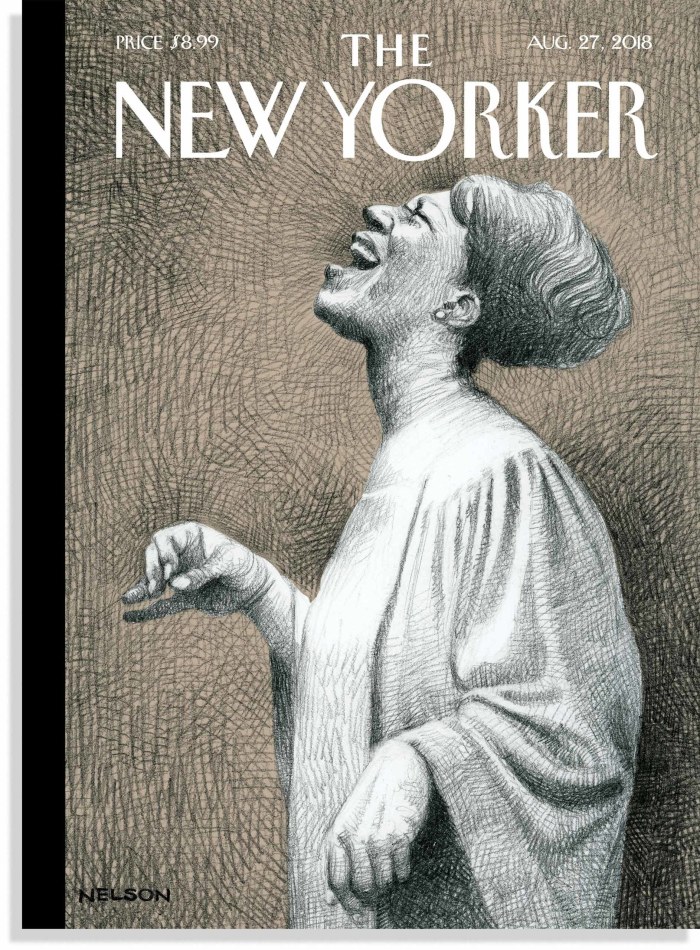
“The Queen of Soul” (After Charles White’s “Folksinger”), by Kadir Nelson
 

cover-STORY-nelson_franklin

Aretha Franklin, a pillar of postwar American music, passed away Thursday morning, at seventy-six. A few hours later, the artist Kadir Nelson sent a sketch to The New Yorker, which drew inspiration from “Folksinger,” a 1957 ink drawing by Charles White. “I wanted to draw her in a choir,” he said. “She was a preacher’s daughter, and so much of what she gave us came from the church, even after she moved beyond gospel.” Nelson, of course, wasn’t the only one who paid tribute, and you can read some of The New Yorker’s writing on Franklin, old and new, below.

David Remnick on Franklin’s legacy:

“Prayer, love, desire, joy, despair, rapture, feminism, Black Power—it is hard to think of a performer who provided a deeper, more profound reflection of her times. What’s more, her gift was incomparable. Smokey Robinson, her friend and neighbor in Detroit, once said, ‘Aretha came out of this world, but she also came out of another, far-off magical world none of us really understood. . . . She came from a distant musical planet where children are born with their gifts fully formed.’ ”

Amanda Petrusich on Franklin’s live performances:

“When Aretha sings ‘Amazing Grace’ in that church, it’s suddenly not a song anymore, or not really—the melody, the lyrics, they’re rendered mostly meaningless. A few bits of organ, some piano. Who cares? Congregants yelling ‘Sing it!’ None of it matters. I’m not being melodramatic—we are listening to the wildest embodiment of a divine signal. She receives it and she broadcasts it. ‘Singing’ can’t possibly be the right word for this sort of channelling.”

Emily Lordi on the Queen and soul:

“This was the promise of soul: that pain granted depth, and that one was never alone but accompanied by a vibrant community that had crossed too many bridges in order to survive. Franklin was the queen not only of soul music but of soul as a concept, because her great subject was the exceeding of limits. Her willingness to extend her own vocal technique, to venture beyond herself, to strain to implausible heights, and revive songs that seemed to be over—all these strategies could look and sound like grace. She knew that we would need it.”


The New Yorker Magazine