Inside the “Most Incarcerated” Zip Code in the Country | The New Republic

Inside the “Most Incarcerated” Zip Code in the Country 53206, a heavily African American neighborhood north of downtown Milwaukee, suffers from all manner of ills—not least of which are the myths of criminality that continue to surround it.

Robinson’s family came to Milwaukee from Chicago in the 1980s because, as Robinson put it, “Chicago was getting out of pocket.” With crime rising and jobs disappearing in the Windy City, she told me, “my mom wanted a better place for us to live.” But Robinson’s mother could never have anticipated the crucibles awaiting her daughter in Wisconsin—the array of social and political deficits associated with the five numbers that came at the end of her listed address: 53206, now notoriously known as the most incarcerated zip code in the country.

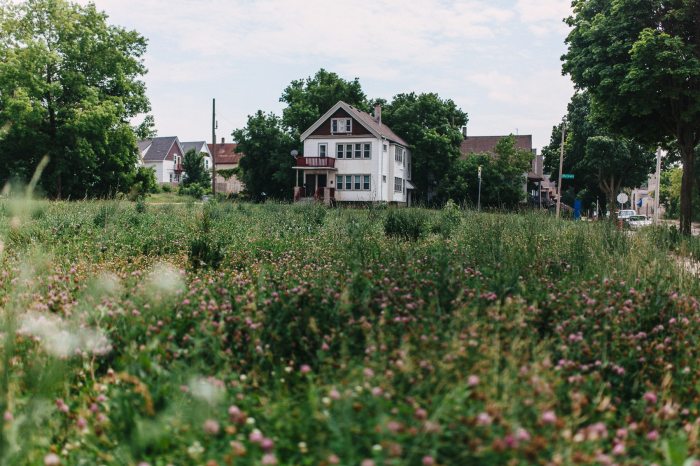
The neighborhood’s rectangular outline sits like a brick just north of the Fiserv Forum, home of the NBA’s Milwaukee Bucks in downtown Milwaukee, where the 2020 Democratic National Convention will be held next summer. In addition to its high incarceration rates, 53206, a heavily African American district, suffers from every manner of social ill, from socioeconomic stagnation to poor health. The Democratic primary field is teeming with proposals to address these ingrained injustices, and the party’s eventual candidate will also have a personal incentive to pay attention to what is happening in 53206: Its residents, among others in Milwaukee, may well prove to be the key to Democrats’ hopes of winning the battleground state of Wisconsin and unseating Donald Trump in the presidential election.

As long as those residents can gain access to the ballot, that is.African Americans represent nearly 40 percent of Milwaukee’s population, but their political clout has been diminished by laws that suppress the black vote. There is also the problem of African Americans choosing not to vote: Black turnout in Wisconsin dropped nearly 19 percent between the 2012 to the 2016 elections—a clear sign that, despite their historic need to mobilize black voters, Democrats haven’t been meeting the challenge especially well of late.

Source: Inside the “Most Incarcerated” Zip Code in the Country | The New Republic

Africatown USA Trailer on Vimeo


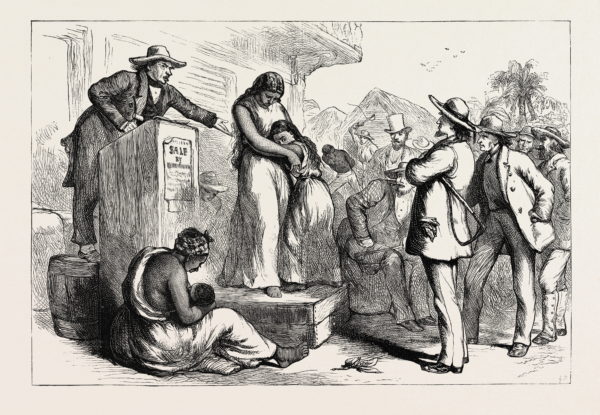
A Slave Auction

“This amazing story tells the events of these men, women and children, who were kidnapped from their native land in West Africa, enslaved in Ouidah, a coastal town in the Kingdom of Dahomey, the current day coastal country of Benin, and brought to America on what is believed to be the last slave ship, the Clotilda. Through their resilience, they not only survived the horrific Middle Passage, but the American Civil War, the reconstruction of Alabama, and the Jim Crow period, but they also fought to preserve their African memories, culture, and community over the generations. “For out of the bowels of slave ships they rose, and their descendants are, in the powerful words of Langston Hughes: Still Here.”After the Emancipation Proclamation, the newly freed Africans tried, but failed to return to their beloved homeland Africa. The story describes the group reuniting from various plantations, alongside American-born, formerly enslaved men, women and children. The Africans bought land and founded their own settlement, which came to be known as Africatown.The Founders appointed tribal leaders and governed Africatown according to customary African laws, spoke their own regional language, kept their own customs, used African irrigation and gardening techniques, and built their own social structures. The people of Africatown formed their own self-sufficient world.Marine archaeologists and researchers from Search, Inc. have confirmed the location of the schooner Clotilda-the last known ship to bring enslaved Africans from Benin, West Africa into the Mobile Bay. The search team discovered the schooner in a remote area of Alabama’s Mobile River.”


How Brain Drain Contributes to Regional Inequality – CityLab

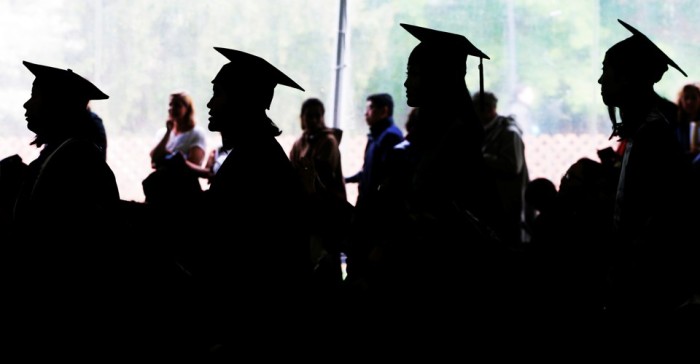
Across the United States, there are fewer states gaining brainpower than draining it, according to a new report from the U.S. Congress Joint Economic Committee.

“Perhaps the biggest problem afflicting America is its widening geographic divide between the winners and losers of the knowledge economy. A raft of studies has documented the growing divergence between places based on their ability to attract, retain, and cluster highly educated and skilled workers and to develop high-tech startup companies.Talented and skilled Americans are the most likely to move by far. While the overall rate of mobility among Americans has declined over the past decade or so, still, between one-quarter and one-third of U.S. adults have moved within the previous five years, a higher rate of mobility than just about any other country on the globe. But behind this lies a tale of two migrations: the skilled and educated “mobile” on the one hand and the less educated “stuck” on the other.”

Source: How Brain Drain Contributes to Regional Inequality – CityLab

Establish a Public Credit Registry | Demos


“Credit reports and scores directly impact Americans’ economic security and opportunity. Credit history can affect the way Americans are treated by lenders, landlords, utility companies, hospitals and employers. Having a poor credit history or a “thin file” with insufficient credit information to generate a credit score can mean a consumer will end up paying more for loans and insurance (or have trouble even getting them in the first place). Misuses of credit history are prevalent and harmful: Job seekers can be denied work based on their credit history, and the Trump administration has even proposed using credit history to determine whether immigrants should be eligible for permanent residency. Most harmfully, our credit system is built on—and continues to reinforce and expand—deep racial inequities.  Generations of discrimination in employment, lending, education and housing have produced significant racial disparities in credit history. Past discrimination is baked into current determinations of creditworthiness: Credit scores and other lending algorithms disproportionately represent black and Latino loan applicants as “riskier” customers. As a result, decisions drawing on credit data reproduce and spread existing racial inequality, making it harder to achieve true economic equity.”

Source: Establish a Public Credit Registry | Demos

There were nearly a million black farmers in 1920. Why have they disappeared? | Environment | The Guardian

Today there are just 45,000 African American farmers. One man is fighting to save them.

Source: There were nearly a million black farmers in 1920. Why have they disappeared? | Environment | The Guardian

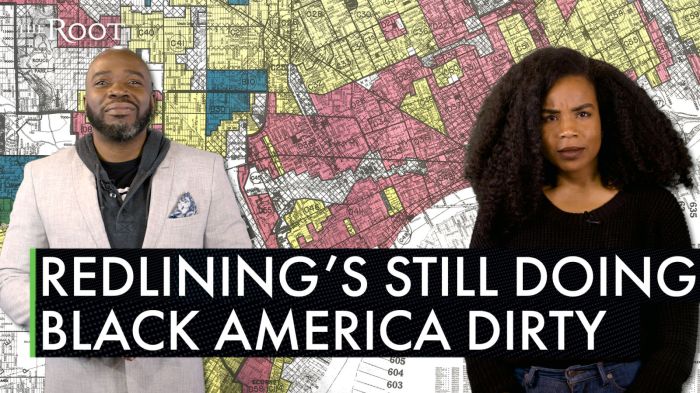
How Redlining Continues to Hold Back Black Americans

To understand racism in America, one must first disabuse themselves of the idea that race is a social construct—an idea that has been created and accepted by the people in a society.

Source: How Redlining Continues to Hold Back Black Americans

Ilhan Omar, AOC, Rashida Tlaib, and the silencing of women of color in Congress – Vox

A man threatened to “put a bullet” in Rep. Ilhan Omar. It’s another example of how society wants to silence women of color.

Source: Ilhan Omar, AOC, Rashida Tlaib, and the silencing of women of color in Congress – Vox

The Myth of Irish Slavery: A History of One of the Alt-Right’s Oldest Memes :::

inverseIn July 15, comedian Josh Androsky tweeted a video of a Proud Boy, a member of the alt-right men’s group started by Vice co-founder Gavin McInnes, claiming that the Irish were enslaved.

“Irish people were slaves just like the fucking black people,” said the young man in a MAGA hat.

The statement, while probably jarring to most, is derived from a common alt-right myth and is yet another instance of fringe conservatives molding history into white supremacist propaganda. What makes this myth particular interesting is its own peculiar history: It was one of the first right-wing memes to be spread on the early internet.

One of the Oldest Memes on the Internet

Liam Hogan is a historian and researcher who has spent the past five years studying and debunking the Irish slavery myth. According to him, one of the seminal figures propagating the theory is Michael A. Hoffman II, who first spread his ideas on internet newsgroups in the 1990s. Hoffman’s perhaps most well known for his 1993 book They Were White and They Were Slaves: The Untold History of the Enslavement of Whites in Early America, a self-published title that was harshly criticized by academics, and like many alt-right mythologies, is still available on Amazon today.

Hoffman's book.
Hoffman’s book is still on Amazon.

That book has gone on to be the cornerstone of the Irish slavery myth, which according to Hogan, was ultimately concocted for nefarious purposes.

“The far-right embrace of the false equivalence inherent in the ‘Irish were slaves, too’ meme is not an attempt to assuage guilt,” Hogan wrote in an email to Inverse. “It is instead a blatant bid to support pre-existing anti-black racism.”

The myth was a common sight on white supremacist websites and message boards in the early 2000s, but Hogan noticed a sharp uptick in searches for “Irish slaves” between 2014 and 2016. It got so bad that 82 Irish researchers and writers (including Hogan) wrote an open letter excoriating the myth and urging publications to stop quoting conspiracy theorists.

Were the Irish Actually Slaves?

Brooks slave ship diagram
A diagram of the slave ship, Brooks. No Irish servant ever arrived to America like this.

The Irish have suffered many injustices in America from nativist resentmentjob discrimination, and religious bigotry. But they were never enslaved.

A small number of Irish arrived in the Americas as indentured servants. While the life of an indentured servant was brutal, it was not at all comparable to the chattel slavery that Africans were subjected to.

For one, indentured servitude was conditional and temporary. Irish servants were released after their contracts were up (typically seven years).

African Americans, however, were literally classified as a slave race. In early American history, children of slaves could be born free if they had a white parent, but these laws were slowly stripped away so that anyone with African heritage would be classified as black and therefore a slave.

Moreover, the conditions in which they worked were completely different. African slaves were subjected to inhuman horrors that would have been unthinkable to commit against an Irish servant. Whippings, brandings, mutilation, and rape were common.

American slavery was shockingly cruel even by historical standards. Though the treatment of slaves varied widely throughout the ancient world, most of them were still entitled to some basic rights and many slaves were even highly educated. The Greek philosopher Epictetus, for example, was born as a slave and trained to be a teacher.

Why Is the Irish Slavery Myth So Persistent?

Twelve Years a Slave, 12 Years a Slave
An illustration of Solomon Northrup, author of the memoir ‘Twelve Years a Slave’. Northrup was born a free man but drugged and enslaved on the basis of his race.

If the myth of Irish slavery is so demonstrably false, then why does it continue to be an alt-right talking point? As Hogan mentioned, it’s used as a cudgel for anti-black racism, but it also upholds the white supremacist narrative of fighting against the world.

“The far-right also promote the ‘white slavery’ or ‘Irish slavery’ meme because victimhood is the propagandic engine room of ethno-nationalism,” Hogan told Inverse in an email. “White nationalism is fundamentally rooted in victimhood, whereby the dominant group in society takes the position of ‘the oppressed’ to justify violence against the ‘other.’”

The glaring dissonance of white supremacist rhetoric is the simultaneous belief that white people are a superior race despite claiming constant victimhood in being outwitted by supposedly inferior forces such as the liberal media and its Jewish globalist puppet masters.

Altering history and referring to the Irish as slaves is an attempt to solve that discrepancy. For white supremacists, if the Irish managed to rise above discrimination through hard work and ingenuity, then it must mean the other races are lazy or unworthy. It also means that white supremacists will ultimately prevail over their foes.

In truth, the Irish escaped systematic inequality through neither work nor drive — that’s an impossible feat for any group of people. The target was removed from their backs because they began to be understood as white, according to scholar Noel Ignatiev. In 1863, Irish rioters targeted hundreds of black workers during the New York City draft riots, furious over the prospect of fighting in a war to free black slaves. By actively working against abolition movements and aligning themselves with the nativists who originally opposed them, Ignatiev says the Irish were eventually inducted into whiteness.

Law professor David Bernstein also pointed out that, as far as the law was concerned, the Irish were always considered white. During segregation, Irish children attended whites-only schools and none of them were subject to Jim Crow laws. African Americans, Native Americans, and Chinese Americans could not testify against white citizens in court, but Irish Americans could.

Unfortunately, facts and contexts aren’t held in high regard within the alt-right. On a grander scale, White Americans as a whole have been resistant to the idea that systematic racism is an enduring feature in American government because of a phenomenon that sociologist Robin DiAngelo has dubbed white fragility. The combination of far-right groups to falsify history and the refusal to acknowledge institutionalized discrimination means that the Irish slavery myth isn’t going away any time soon.

The Irish Slavery Myth Moving Forward

Irish slavery myth, coal miners
One of the more popular Irish slavery memes. Hogan points out that these boys were child miners for Pennsylvania Coal Co. but not slaves. The photograph was taken in 1911 by investigator Lewis Hines.

Ultimately, the propagation of the Irish slavery myth can be linked backed to the perennial white fear of changing demographics. It’s an attempt to counteract the well-documented benefits that White Americans enjoy by claiming there was a time when whites supposedly suffered more than minorities. This notion of white victimhood seems to be a pervasive belief among most White Americans.

55 percent of White Americans believe there is discrimination against white people in America today, according to a poll jointly conducted by the Robert Wood Johnson Foundation and the Harvard T.H. Chan School of Public Health. Their beliefs are unfounded, yet it is the chief reason why the majority of white people across the board — from income level to gender — voted for Trump.

Racist anxiety has even altered the moral purity tests that white evangelicals once demanded from their chosen political candidates. In 2011, only 30 percent of white evangelicals were tolerant of elected officials who behaved unethically in their personal lives, according to a poll from the Public Religion Research Institute. In 2016, the same year Trump got elected, the number of white evangelicals expressing sympathy for immoral politicians doubled to a whopping 72 percent.

Whiteness has been a historical shield that has protected various groups from cultural and political bigotry, one that many White Americans believe will be forfeited if the country becomes less white. But unfortunately, a more diverse country doesn’t necessarily mean a more progressive one.

John Judis, a journalist who claimed that an increasingly diverse America would mean a less racist America, recanted his thesis after Donald Trump’s election. Judis and many other pundits believed that the rising numbers of interracial marriages and mixed-race Americans would lead to a more progressive country.

But in doing so, they vastly underesimated the flexibility of white supremacy. White people continue to be a majority power in the United States because of changing attitudes over who gets to be white and who doesn’t. The one-drop ruleapplied to Americans with African ancestry and the Irish induction into whiteness set these historical precedents hundreds of years ago.

As Judis pointed out, this has already been happening with some Asian Americans and Latino Americans. More than a quarter of both groups are in interracial marriages, the vast majority of which are Asian-White and Latino-White. Although the US census lists the children of these unions as Asian American and Latino American, more than 50 percent of biracial people from both groups identified as white. If this trend continues, then it’s unlikely that the United States will become a minority-majority country in the near future.

The Irish slavery myth is cribbing from an old playbook established by white supremacists years ago. The alt-right is simply the latest to do it by shitposting memesgaming Google results, and leveraging social media.

“These are the trademarks of Disinformation Age racism, the blanket denial of the existence of racism allied with feigned victimhood and the absolute obliteration of history,” Hogan said.

Jonathan D. Lee is a graduate of Columbia Journalism School. A lifelong competitive gamer, he’s written for Major League Gaming, 1337mag, GLHF Magazine, and the New York Videogame Critics Circle. He’s a big believer in Christian existentialism and mustard on hamburgers.

Millions of Black Voters Are Being Purged From Voter Rolls, Often Illegally: Report

Millions of Black Voters Are Being Purged From Voter Rolls, Often Illegally: Report

Residents cast their votes at a polling place on November 4, 2014, near Ferguson, Mo.       Photo: Scott Olson (Getty Images)

As the end of Barack Obama’s presidency grew closer, election officials began preparing for the next election. Instead of strengthening the security of voting machines and making voting more accessible to citizens, states did the exact opposite. But they didn’t just make it harder to vote. For hundreds of thousands of registered, eligible voters across the nation, they made it impossible.

Voter Purges (pdf), a new report by the Brennan Center, highlights the systematic purging of voters from rolls by state and local officials around the country. These are not random, isolated cases. It is a methodical effort that disproportionately affects minority voters. Even worse, no one seems to care.

In 1993, Congress passed the National Voter Registration Act (NVRA) which was an attempt to make registering to vote easier by offering driver license applicants the opportunity to register to vote. The law also prevented states from purging voters unless they met certain requirements.

But the Brennan report highlights how states have skirted the law and purged voters without punishment. And after the Supreme Court dismantled the requirements for voter pre-clearance with the Shelby v. Holder rulingstates with histories of voter discrimination no longer required federal pre-clearance before purging rolls.

Between 2014 and 2016, 16 million registered voters were removed from state rolls, 33 percent more than were moved between 2006 and 2008. For the election of 2012 and 2016, the Brennan Center estimates that two million fewer voters would have been purged if those states had to apply by the provisions of the Voting Rights Act.

Some of the egregious highlights of the report include:

  • In June 2016, the Arkansas secretary of state gave a list of 7,700 names to county clerks to be removed from the rolls because of supposed felony convictions. That list included people who had never been convicted of a felony and formerly convicted persons whose voting rights had been restored.
  • In 2013, Virginia deleted 39,000 names from its voting roster. In some counties, the mistakes on the list were as high as 17 percent.
  • A federal court halted a purge after Hurricane Katrina after justices found that one-third of the purged names came from a majority black parish in of New Orleans.
  • After the Shelby v. Holder decision, Texas purged 363,000 more voters than it did the election cycle before the case. Georgia purged 1.5 million more voters.
  • Alabama, Indiana and Maine have illegally instituted the widely ridiculed Crosscheck system (on which Charles D. Ellison previously reported on for The Root) that purges voters without federally-mandated notification.
  • In 1986, one Louisiana official remarked that a voter purge effort “could really keep the black vote down considerably.”
  • Instead of checking out inequities, Jeff Sessions’ Department of Justice has been urging states to do more purging.

Almost every type of voter purge disproportionately affects black voters and voters of color. Some states purge rolls based solely on names but non-whites are more likely to have the same names. According to the U.S. Census Bureau, 16.3 percent of Hispanic people and 13 percent of black people have one of the 10 most common surnames, compared to 4.5 percent of white people.

Black and Hispanic voters are more likely to move, often in the same jurisdiction, but voter purges based on address eliminate them from voting. Officials also use “voter caging” which intentionally sends mail to verify addresses in a format that cannot be forwarded, leading to the disenfranchisement of hundreds of thousands of eligible voters.

African Americans are also more likely to have felony convictions, and elderly and minority voters are more likely to be incapacitated, all reasons for which someone can be purged from a voter roll.

Almost every study ever done on this issue shows that in-person voter fraud is almost nonexistent. Instead, these purges are intentional efforts to restrict voting rights.

Some of the easily-implementable recommendations to rectify this travesty include:

  1. Public notifications of impending voter purges.
  2. Making purge lists available to the public, including at polling places.
  3. Accepting provisional ballots from purged voters.
  4. Universal voter registration forms and rules.
  5. Stop using failure to vote as a reason to purge voters.

All of these policies seem like they would be universally-accepted fixes for a flaw in our democracy.

But then again, not having a Russian agent for a President seems like a smart thing too. How’s that working out?

ABOUT THE AUTHOR

Michael Harriot

World-renowned wypipologist. Getter and doer of “it.” Never reneged, never will. Last real negus alive.    Posts