Aaron Alexis was someone’s son: Our brothers are crying out and nobody’s listening

Aaron Alexis was someone’s son: Our brothers are crying out and nobody’s listening

Opinion

by Terrie Williams and Dawn M. Porter | September 19, 2013 at 12:02 PM

Bishops Gerald Seabrooks, right, and Willie Billips stand in front of the home of Cathleen Alexis, mother of Washington Navy Yard gunman Aaron Alexis, who made a statement at her home in New York's Brooklyn borough on Wednesday, Sept. 18, 2013. The bishops are part of a Brooklyn Clergy-NYPD Task Force. Cathleen Alexis said that she does not know why her son did what he did and she will never be able to ask him. Aaron Alexis opened fire Monday, killing 12 people, before he was killed in a shootout with police. (AP Photo/Seth Wenig)

Bishops Gerald Seabrooks, right, and Willie Billips stand in front of the home of Cathleen Alexis, mother of Washington Navy Yard gunman Aaron Alexis, who made a statement at her home in New York’s Brooklyn borough on Wednesday, Sept. 18, 2013. The bishops are part of a Brooklyn Clergy-NYPD Task Force. Cathleen Alexis said that she does not know why her son did what he did and she will never be able to ask him. Aaron Alexis opened fire Monday, killing 12 people, before he was killed in a shootout with police. (AP Photo/Seth Wenig)

Renowned educator and author Geoffrey Canada put it this way:

There was a time when we were little that we could tell our mother about the pain, but then our mother, like lots of women raising boys, began to worry that we would be soft, that we wouldn’t grow up to be men, that we had to toughen up.  It was rough out there and she couldn’t protect us.  She knew one of the first things used to taunt boys is to say, ‘oh, you’re a mama’s boy.’ ‘go tell your mother.’ So after a while, we began to say “oh I can’t tell mommy anything,” and we stopped telling.  Once we stopped telling her, it was easier not to tell anybody anything.

With this, the beginning of the pain and suffering, the mask, and the slow death, began.

In an environment where we teach our black son’s to be strong and self-sufficient, we often forget to teach them how to ask for help.  And in an era where stigma continues to shackle African-Americans with mental health issues, we see the tragic aftermath in our homes, our neighborhoods, in our communities and in our world.

In the African-American community, the perception of weakness is an overwhelming fear that has plagued our existence since slavery.  We had to be strong to survive and that message has been passed down from generation to generation.

Don’t get me wrong, this is not necessarily a black thing it’s an “every living animal thing…”  Darwin’s theory of natural selection tells us this.  But in the black community it takes on greater meaning, because we know as African-Americans, we have to be twice as strong, twice as fast and twice as smart to even get noticed, so showing any sign of perceived weakness can result in our demise.  This was the world that Aaron Alexis was likely raised in.  In the beginning of the pain and suffering, the mask and the slow death begins.

Regardless of the issue, there is an unwillingness to ask for or seek help, and there is an unwillingness  for others to get involved.  As with many recent tragic stories, Lee Thompson YoungDon Cornelius, and others, we see the effects of a society that has been paralyzed by mental health issues and the unwillingness to ask for help or get involved.

Aaron Alexis is just another example of how our society [the system] is failing our black men.  We don’t know much about the “Navy Yard Suspect.”  We really don’t know who he was…only what the media wants us to know.  But Aaron Alexis was someone’s son…we know this because his mother has spoken out about her sorrow for this tragedy.  But did he have any friends who may have noticed a change in his behavior?  Was there not a system in place to see the kinks in his armor as his mask began to falter.  “Our brothers are crying out…nobody’s listening…” as Ken Braswell, founder of Fathers, Inc. has passionately declared.

We do know that he had two incidents that involved the police.  In 2004, he was reportedly arrested for “malicious mischief” and in again in 2010 for “discharging a firearm into the ceiling of his apartment.”  Although the first incident is truly unclear, the second seemingly should have raised some serious red flags.  Are we too busy with our own lives to see those around us falling apart or are we too scared to get involved?  Or is it simply, we just don’t know what to do or how to help so we stand by feeling helpless and do nothing.

Aaron Alexis was a man who served his country in the Navy Reserves from 2007 to 2011 and was honorably discharged.   As a service member, we do not know what he endured or what challenges he may have faced or feared.  All we do know is that he reportedly “held it together at work,” but seemed to fall apart in the evenings—as many of us do.

According to news reports, just weeks before the shooting, he called the police.  He expressed paranoid thoughts of people following him and complained of hearing “voices speaking to him through the wall, flooring and ceiling.”  Although there could be a number of reasons for someone experiencing paranoia and auditory hallucinations, there is a definite indication for assessment and intervention.

Unfortunately, with limited resources, on all fronts, police departments, emergency psychiatric facilities and veterans administration systems, people often fall through the cracks.

One agency may make a call and assume the other will get the message and do what is necessary. In a perfect world, Mr. Alexis would have been sent for an evaluation, likely hospitalized and engaged in medication management to address the overt symptoms while trying to sort out the underlying cause for the behavior.  Again, we are dealing with a flawed system and we are continually seeing the fallout from this.

The tragedy is not only in the lives lost on September 16th, but in the reality that with all of the rhetoric and power plays in our government, we still can’t find a solution to this problem.  It makes you wonder if this complacency is due to a lack of understanding or just plain old apathy.

When will we address the way we are raising our young black men?  When will we take time to talk to our friends and neighbors?  When will we stop being scared and get involved?  When will we become the village it takes to raise a child?  Can we stop saying when and start saying now.

Can we stop spending hours on Facebook and Twitter and start talking to with our children, our neighbors and strangers who are “friends” we just haven’t met yet? Can we stop burying ourselves in our work and start talking with our spouses and our coworkers ? Can we start getting to know the people around us?

We challenge you to get involved. Get to know someone…really know someone. Many times we are complacent with the people we know…we may politely ask if they are OK, but we really don’t want to know the answer, and subconsciously give off the vibe that we really don’t want to hear it.  If you really want to do something, stand up and be present.  Don’t let this life pass you by — be present in your life and in the life of someone else who you care about. Show them you care by asking — really asking.  Get involved.  You may need just take a break and disconnect from this new technologically advanced social media thing that is leaving people emotionally disconnected from others and get involved. If you really care, you will take the time and effort to truly to get know someone. People know if you really care or if you are just being polite.

Who knows? If someone would have really taken the time to get to know Aaron Alexis or countless others, who knows what lives might have been spared.

Today is the day that we must make a difference.  We must raise our collective voices—if you see something, say something–do something.  Edmund Burke tells us, “All that is required for the triumph of evil [or pain] is that good men remain silent and do nothing.”  Every single day, most of walk past one another without a nod, a word, or a smile that says “you matter.”  There are way too many who don’t even know how to smile or genuinely return one—because society has made them feel, in every way, they do not matter.

If you don’t know where to start, be inspired by one promising moment a few months ago.  Antoinette Tuff, an Atlanta school staff member, with love, humanity and God in her spirit, calmed and talked to a young man whom she described as a “hurting soul” who was planning to “shoot up” the school.  She took the time and made the difference, and in this instance, countless lives were saved.

“We must do the very thing we think we cannot do.”

Dare to make a difference!


Terrie Williams, an OUR COMMON GROUND Voice, is author of Black Pain: It Just Looks Like We are Not Hurting and Dawn M. Porter is a MD Board Certified Child, Adolescent and Adult Psychiatrist
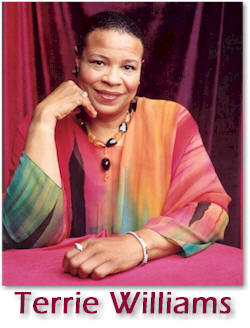
Terrie Williams

Terrie Williams

Hip-Hop, Tolerance and a D.J.’s Bared Soul: He’s Tired of Denial

CRITIC’S NOTEBOOK

Hip-Hop, Tolerance and a D.J.’s Bared Soul: He’s Tired of Denial


Chad Batka for The New York Times

Mister Cee of Hot 97 spoke bluntly about his sexual identity.

<nyt_byline>

By 

Published: September 13, 2013 87 Comments

It was early Thursday morning and Mister Cee, a D.J. on the hip-hop station Hot 97 and a prominent figure in New York hip-hop history, was in tears. The day before, an audio clip was released in which he appeared to solicit a sexual act from a transgender person, the latest in a string of incidents, including arrests, revolving around Mister Cee’s sexual activities. During his Wednesday afternoon show he had announced his resignation, saying he didn’t want to draw negative attention to his employer and colleagues because of his actions.

Johnny Nunez/WireImage

Mister Cee in New York City in 2012.

So there he was on the air the following morning, getting a loving and concerned third degree from Ebro Darden, the program director for Hot 97 (WQHT 97.1 FM), the station where Mister Cee, 47, has worked for two decades. The sober and wrenching conversation lasted about a half-hour, all of it eye-opening.

In its detail and bluntness the talk became not just a discussion about one man’s personal struggles but also an intense and public conversation about hip-hop and sexuality.

“I am tired of trying to do something or be something that I’m not,” Mister Cee said. “I’m tired. I’m tired.”

He initially insisted that he wasn’t gay, but later, revisiting the subject, said, “Even with me saying that, I know I’m still in denial.”

Mister Cee’s acknowledgment that he is grappling with his sexual identity comes amid the gradual easing of hip-hop’s internalized homophobia. Over the last couple of years Frank Ocean, the soul singer and affiliate of the hip-hop crew Odd Future, openly discussed his love for a man; ASAP Rocky and Kanye West have loudly disavowed homophobia (though Rocky visibly struggled at the MTV Video Music Awards last month when put on stage next to the openly gay basketball player Jason Collins), and Jay Z voiced his support for marriage equality.

This reflects a generational shift in attitudes in the culture at large, a slight change in the class positioning of hip-hop’s mainstream, and a broadening of hip-hop’s fan base. Antigay sentiment has long been part of that world — two decades ago there were virtual witch hunts to root out rappers who might be gay — but as hip-hop becomes more central to pop culture, its values are evolving. It’s no longer tenable for hip-hop to be an island.

Mister Cee, born Calvin Lebrun, treated the interview as a confession and an unburdening, speaking with a frankness essentially unheard-of in the genre. He wept several times. He said that his Caribbean heritage made it even more difficult to come to terms with his sexuality. And he fretted about the future.

Implicitly, Mister Cee was addressing how he thought these two parts of himself — his sexual identity and his hip-hop celebrity as a radio and club D.J. — couldn’t coexist.

Some of his concerns were practical: “Am I still going to get bookings? Is the promoter still going to book me if I say, ‘Yeah, occasionally I have fellatio with a transsexual?’ ”

That question underscored not only the genre’s history of intolerance, but also the fundamental conundrum of hip-hop D.J.’s — they are omnipresent but largely anonymous. That’s true especially of Mister Cee, who for a time was a Zelig figure in New York hip-hop: the D.J. for Big Daddy Kane and an affiliate of the influential 1980s outfit the Juice Crew; the man who reworked the Notorious B.I.G.’s demo tape and helped get it in the hands of Sean Combs; a significant mixtape D.J. in the 1990s; and a steady presence at Hot 97, one of the most important rap stations in the country.

He is the station’s institutional memory and its living link to history, its one reliable purveyor of hip-hop classics. And he’s the D.J. who takes it upon himself to memorialize the dead. Listen to his mixes celebrating the life of Heavy D, or Big L, or as he did on Friday afternoon’s show, Tupac Shakur — they are things of erudition and love.

But even with that résumé, Mister Cee feared he could be replaced, that his scandal could become the thing that defined him, and in a flash, undo him.

“God forgives — I hope y’all do too,” he posted on his Instagram account after resigning.

A decade ago the conversation between Mister Cee and Mr. Darden would have been unthinkable. But there was Mr. Darden assuring Mister Cee, “There’s nothing wrong with being who you are,” and at one point encouraging him by exclaiming, “You’re free, Cee!”

Mr. Darden has emerged as a fascinating figure over the last year, a program director who has become something of a moral beacon. He has been a testy combatant in wars of words with personalities from Power 105.1 FM (WWPR), New York’s other hip-hop station; a peacemaker between Nicki Minaj and Peter Rosenberg, the on-air personality who publicly attacked her; and now the blocker clearing a path for Mister Cee’s acceptance.

By embracing Mister Cee unreservedly, by publicly showing in no uncertain terms that he is worthy of love, and by insisting he belonged on the air, Mr. Darden took an implicit stand on behalf of Hot 97, and maybe by extension, of hip-hop. He answered Mister Cee’s bravery with tolerance, a loud rebuke to those who might prefer to keep hip-hop difference-free.

A radio station is, generally speaking, neutral territory — songs are played, personalities are a bit bland. But Mr. Darden’s behavior reframed Hot 97 as an ideological institution, not just a musical one. He gave Mister Cee a safe space in which to be all the parts of himself.

On Thursday afternoon, following the urging of Mr. Darden during the morning interview, Mister Cee had un-resigned. He was back in his noon time slot, playing defiant songs interspersed with grateful ones — Jadakiss’s “The Champ Is Here,” Maino’s “Hi Hater,” AZ’s “I’m Back.” “Let me just live my life/Just leave me alone,” he rapped along with one Cam’ron song. In between songs, he barked out the details of the clubs where he’d be spinning in the coming days.

“The truth will set you free,” he said. “I know it now.”

Near the end of his hour, he switched from hip-hop to classic soul. “If you’re down and out, if you’re struggling, if you think you can’t overcome something, maybe this record may lift you up like it lifted me up last night when I listened to it,” he said before playing Sly and the Family Stone’s “You Can Make It if You Try.”

Following that with that group’s exuberant anthem “Thank You (Falettinme Be Mice Elf Agin),” Mister Cee was sending a clear message: He had been supporting others for so long. Now, finally, he was the subject of his own tribute.

A version of this article appears in print on September 14, 2013, on page A1 of the New York edition with the headline: Hip-Hop, Tolerance and a D.J.’s Bared Soul: He’s Tired of Denial.

EPA Victims Ask: Who Will Protect Us From Our Protectors?

EPA Victims Ask: Who Will Protect Us From Our Protectors?

 09/17/2013 – 17:19

 from OUR COMMON GROUND Voice, Dr. Marsha Coleman


by BAR editor and columnist Dr. Marsha Coleman-Adebayo

The public need protection from the Environmental Protection Agency, a “rogue” department of government that ruthlessly suppresses the truth about its actual activities. “The EPA’s Office of General Counsel, Office of Civil Rights and the Office of the Administrator have all been complicit in crimes against the people and environment they are charged with protecting.”

EPA Victims Ask: Who Will Protect Us From Our Protectors?

by BAR editor and columnist Dr. Marsha Coleman-Adebayo

It is imperative to those with the power for the whistleblower to be destroyed.

The EPA is in the news again. Not for taking credit for a substantive decline in the neurotoxic levels of lead in the brains of young African-American children or imposing major pesticide rules against chemical companies that are poisoning our food and water but for its vicious and malicious retaliation against a courageous EPA employee who blew the whistle on Agency lies and corruption with its purposeful misleading of the public on health risk of dust at the World Trade Center cleanup after 9/11.

The EPA’s dismal record of discrimination and intolerance gives the Agency the odious distinction of having had its retaliatory and intimidating policies cited in the first whistleblower protective legislation of the 21st century when Congress and the Executive in 2002 took the first tentative steps toward reigning in this rogue agency that has come to symbolize institutionalized governmental coercion and systematic fear tactics applied by criminal elements within the upper ranks of government against lower level, conscientious workers.

The EPA is an Agency that has historically neglected economically-disadvantaged communities and allowed poor children to disproportionately suffer from asthma and other chronic upper-respiratory diseases, sometimes leading to death. The bulk of these children are Black, Hispanic and others who have nowhere else to go, but remain in toxic dumping grounds throughout the United States. The present controversy represents just the latest example of an Agency still out of control. Because sunlight is a disinfectant, Democratic and Republican presidents have dared not select an administrator from outside the EPA’s cloaked walls. The last three EPA Administrators have been insiders who have learned the ropes from the very same culprits the No FEAR Act sought to restrain.

She sounded the alarm about the health risks for them and residents near the WTC buildings, resulting in her being thrown into the abyss of EPA retaliation.”

The latest target of their corruption is Dr. Cate Jenkins, a senior chemist who ran into the same “green” stonewall that all EPA employees hit when they make the decision to warn the public about environmental dangers the Agency has a hidden agenda about. Dr. Jenkins raised concerns about the health risks and dangers to the 911 emergency first responders after the terrorist attack on the World Trade Center in New York City.

Former New Jersey Governor and EPA administrator Christine Whitman said the air quality immediately following the 911 explosions was “safe to breathe,” leaving firefighters, police and citizens comforted by her statement but actually exposed to life and quality of life threatening toxins. Dr. Jenkins, a seasoned scientist with an impressive resume, professionally disagreed with the “official” line of the EPA and other political leaders. Concerned for the lives of the responders, she sounded the alarm about the health risks for them and residents near the WTC buildings, resulting in her being thrown into the abyss of EPA retaliation.

According to Public Employees for Environmental Responsibility (PEER), Dr. Jenkins “received a proposed removal more than a year after a federal civil service court ordered her returned to work…EPA re-filed the same charges from 2010 which had been thrown out for violations of her constitutional due process rights.”Further, she had “publicly charged that due to falsified EPA standards, First Responders waded into dust so corrosive that it caused chemical burns deep within their respiratory systems. After raising the issue to the EPA Inspector General, Congress and the FBI, Dr. Jenkins was isolated, harassed and ultimately removed from her position on December 30, 2010 by EPA, based upon an un-witnessed and contested claim that the soft-spoken, petite childhood polio survivor threatened her 6-foot male supervisor.” While the EPA allegations seem laughable, Dr. Jenkin’s EPA career has been destroyed. She follows hundreds of other EPA employees of conscience who have raised “green flags” about EPA corruption continuing unabated.

First Responders waded into dust so corrosive that it caused chemical burns deep within their respiratory systems.”

Susan Morris, an Assistant Director in the Office of Civil Rights, blew the whistle on the violations of civil rights, dishonesty, and misuse of federal resources that were ignored by the Administrators, the EPA Inspector General and the legal office. After a lengthy investigation, the Office of Special Counsel (OSC), the agency responsible for these violations, found that EPA had retaliated against Morris for whistle blowing and said she should be reinstated with full benefits. Instead, in line with their continued abuse and retaliation of employees, administrator Lisa Jackson ignored the OSC, forcing Ms. Morris to file a complaint that will be heard by a jury in Federal District Court.

In discussing Dr. Jenkin’s situation with Ms. Morris, she said, “I am not surprised by anything that EPA does to its employees. I worked at four major Departments and industry for over 30 years and never encountered a more despicable environment in which to work. I understand the woman, another lawyer, that they just put in the Acting position was detailed over 30 times and is now in charge of civil rights. They don’t want civil rights to work in the EPA because it would mean they would have to be timely in processing complaints from employees and poorer communities that are being polluted by industry. It’s a disgrace.” The case of Dr. Jenkins, Morris continued, “just adds to the fear of discrimination and retaliation that permeates the agency with over 1,000 attorneys supporting the corruption.”

On May 4, 2012, the MSPB (the Merit Systems Protection Board), responsible for protecting employees from agency management abuses unanimously rejected EPA’s claims against Dr. Jenkins and ordered the rogue agency to “fully restore” her back to her position and provide back pay with interest, just as OSC did with respect to Susan Morris. It should be noted that the MSPB routinely finds in favor of federal agencies and rarely in favor of federal employees. In this instance, the evidence was clearly so overwhelming that the MSPB was unable to rubber stamp the illegal behavior of the Agency. Ignoring the MSPB decision, the EPA placed Dr. Jenkins on paid administrative leave for over one year (at taxpayers’ expense) and re-filed termination charges against her on August 27, 2013—the same exact charges as those previously dismissed.

They don’t want civil rights to work in the EPA because it would mean they would have to be timely in processing complaints from employees and poorer communities that are being polluted by industry.”

Is this an isolated case? By no means. The Washington Post recently reported that John C. Beale, a subordinate of EPA Administrator Gina McCarthy, (in her previous position as head of the Air and Radiation office) has pleaded guilty to defrauding the EPA of $900,000. However, the same rules do not apply to all offenders. Mr. Beale obviously belonged to what many refer to as the EPA’s “good ole boy club” having basked in the perks of special privilege afforded the high and mighty. Once his crime was discovered he did not face the same level of acrimony suffered by Dr. Cate Jenkins or Susan Morris. In Beale’s case, he was allowed to quietly retire from his position until he was criminally charged. The length to which the Agency will go to provide cover and protection to one of its “own” would shame any government that values fairness andjustice.

For an agency whose stated mission is “to protect human health and the environment,” it is more than a little embarrassing when one of their scientists outs the Agency’s willfully dishonest and misleading statements. Questioning the moral, legal and socially responsible ethics of what would in any reasonable context be seen as criminal misconduct cannot be allowed. It is imperative to those with the power for the whistleblower to be destroyed.

Dr. Jenkins’ is just the latest in the succession of cases that the EPA chooses to ignore direct instructions from its judicial overseers. This flagrant and arrogant disregard for the law comes as no surprise to those familiar with EPA whistleblowers. Despite public outcry and congressional inquiries, the same attorneys in the EPA Office of General Counsel, including David Guerrero and Nancy Dunham, routinely have their names affixed to agency adverse removal actions.

According to the Centers for Disease Control (CDC), as many as 65,000 people have been ill as a result of exposure to the 9/11 dust. This was exactly what Dr. Jenkins was trying to avoid. A Mount Sinai Medical Center study announced the grim statistics that 9/11 first responders are now experiencing a 15% higher cancer rate than their cohorts who were not exposed to the toxic air.

EPA allowed these people to be exposed when it was unnecessary and could have been averted through using proper protective recovery gear. As of August 2013, approximately 1,140 emergency responders and people who lived or worked near ground zero have been certified by the National Institute for Occupational Safety and Health to have a WTC-related cancer and these numbers are expected to rise. The question is how many more will die?

Where is the accountability for those who were in a position to know what Dr. Cate Jenkins knew and made up feel-good announcements that condemned all of these people to suffering and death? The EPA’s Office of General Counsel, Office of Civil Rights and the Office of the Administrator have all been complicit in crimes against the people and environment they are charged with protecting. The corruption at EPA is found at every level. Lisa Jackson, the former EPA Administrator who leveraged her EPA gig into the position of Vice President for Environmental Affairs at Apple (a business that she used to regulate) is under Congressional scrutiny for using the alias, ‘Richard Windsor’ to skirt Congressional oversight and to avoid having to release information to the public mandated under the Freedom of Information Act (FOIA.) A Congressional hearing was held last week to continue the investigation into this matter.

9/11 first responders are now experiencing a 15% higher cancer rate than their cohorts who were not exposed to the toxic air.”

In Coleman-Adebayo v. Carol Browner, in which I prevailed in federal court, a jury of my peers established that EPA as an agency tolerated racism, sexism and a hostile work environment. However, as in the case of Dr. Jenkins, even after I won and the first civil rights and whistleblower protection law of the 21st century, No FEAR, was ratified the agency continued its ham-fisted retaliation until I was fired.

The legal attack team that is prosecuting the cases against Dr. Jenkins and Susan Morris are the same lawyers who have been relentless against me. People who trusted the assurances of the Agency tasked to protect human health and the environment are suffering by the tens of thousands and dying.

Who is going to protect us from the ones who systematically destroy the whistleblowers who are trying to protect us?

It is essential that we continue to fight for the survival of this planet that is placed in peril when we choose corporate collusion over sustainable environmental protection. For more information about corruption at the EPA please see: www.occupyEPA.com.

Dr. Marsha Coleman-Adebayo is the author of No FEAR: A Whistleblowers Triumph over Corruption and Retaliation at the EPA is available through amazon.com. Dr. Coleman-Adebayo worked at the EPA for 18 years and blew the whistle on a US multinational corporation that endangered vanadium mine workers in South Africa. Marsha’s successful lawsuit lead to the introduction and passage of the first civil rights and whistleblower law of the 21st century: the Notification of Federal Employees Anti-discrimination and Retaliation Act of 2002 (No FEAR Act). She is Director of Transparency and Accountability for the Green Shadow Cabinet.

Reference documents:

Read the PEER protest to the new proposed removal

Click to access 9_11_13_Jenkins_Removal_PEER_Protest.pdf

View legal victory that restored Dr. Jenkins

View legal victory that restored Dr. Jenkins after her Monsanto Agent Orange dioxin study disclosures

Read an interview of Dr. Jenkins in the scientific journal Nature

ocg 10-8-11 MColeman 2

Cabinet Passes, for Now, on Pardoning Marissa Alexander, Pending Stand Your Ground Appeal

Cabinet Passes, for Now, on Pardoning Marissa Alexander, Pending Stand Your Ground Appeal

 | AUGUST 7, 2013

Marissa Alexander was sentenced to 20 years in prison for firing what she termed a warning shot at her abusive husband, and not allowed to use the stand your ground defense.

Marissa Alexander was sentenced to 20 years in prison for firing what she termed a warning shot at her abusive husband, and not allowed to use the stand your ground defense.

Members of the Florida Cabinet said Tuesday it’s too soon to consider a pardon for Marissa Alexander, a Jacksonville woman who was sentenced to 20 years in prison after firing a shot into a wall during a domestic dispute.

But an appeals court will decide whether Alexander should have been able to use a “stand your ground” defense to fight the charge.

Alexander, a 32-year-old mother of three, was sentenced last year under Florida’s “10-20-Life” mandatory-minimum law. (She was prosecuted by State Attorney Angela Corey, whom Gov. Rick Scott picked to prosecute the Gorge Zimmerman case. Corey offered Alexander a three-year prison sentence in a plea bargain, which Alexander turned down. The prosecution’s version of events is posted here.)

Alexander argued that the “stand your ground” self-defense law should apply, but a judge ruled against her because she ran to the garage for her gun and returned with it instead of escaping. A jury later found her guilty — in 12 minutes — of aggravated assault with a deadly weapon.

According to filings at the 1st District of Appeal in Tallahassee, Alexander’s attorneys contend that the trial court erred in denying Alexander’s pretrial motion for immunity based on “stand your ground.” They wrote that due to the history of domestic violence in the relationship with her husband, Rico Gray, Alexander had reason to fear bodily harm and had no duty to retreat.

They also argued that the trial court’s instruction to the jury “erroneously shifted the burden of proof, requiring that Alexander prove beyond a reasonable doubt that she was in danger of imminent harm in order to invoke self-defense,” according to the motion filed last November.

Alexander’s case drew enormous attention when she was sentenced in May 2012. It returned to the spotlight last month, when a Sanford jury acquitted George Zimmerman of second-degree murder in the death of Trayvon Martin.

Zimmerman did not use a “stand your ground” defense, but the case has sparked widespread debate about the law. Approved in 2005, the law says a person who is not doing anything illegal and gets attacked “has no duty to retreat and has the right to stand his or her ground and meet force with force, including deadly force if he or she reasonably believes it is necessary to do so to prevent death or great bodily harm to himself or herself.”

Alexander’s case also has become part of a sit-in at the state Capitol, where a group called the Dream Defenders has occupied Gov. Rick Scott’s waiting area, demanding a special legislative session on the “stand your ground” law. Tuesday marked the third week of the sit-in.

Members of the Dream Defenders have followed Alexander’s case, and their political director, Ciara Taylor of Jacksonville, was in court when Alexander was sentenced.

One good thing to come out of the verdict, Taylor said Tuesday, is the need to explore cases like Alexander’s — “cases involving the black-and-white … disparity within using ‘stand your ground.’ ” She also said it’s important “to talk about domestic violence against women in this country.”

On Monday, state Sen. Dwight Bullard, D-Miami, wrote to Scott and the Cabinet, asking them to pardon Alexander when they next sit as the clemency board. Bullard noted that Alexander had reason to fear because her husband had battered her in the past.

Scott and Cabinet members could take up Bullard’s call for a pardon for Alexander on Sept. 25, when the clemency board meets. But on Tuesday, they were noncommittal. A spokeswoman for Attorney General Pam Bondi said that because Bondi’s office is representing the prosecution in Alexander’s criminal appeal, “it would not be appropriate to discuss clemency-related matters until the court has made a determination regarding the disposition of the criminal appeal.”

The appeal is also based on what Alexander’s attorneys argue are two additional errors by the trial court: denying her the right to consult her attorney during the single overnight recess of her two-day trial, and giving the standard jury instruction on the use of force.

“The instruction given effectively negated Alexander’s sole defense — that is, self-defense — by erroneously stating that an injury to the victim was a prerequisite to successfully invoking self-defense,” the motion said.

“She had every right to be afraid and every right to defend herself,” said Rita Smith, executive director of the National Coalition Against Domestic Violence. “It is often the case that when a battered woman fights back and protects herself, the full force of the law comes down on her.”

–Margie Menzel, News Service of Florida


See more

Recovery Work: Black Women and Emotional Health

Wednesday, September 4, 2013

Recovery Work: Black Women and Emotional Health

by Liz A.

I had a recent encounter with her, you know, that sister who is needy as hell. I was hoping she didn’t see me and with a quick right turn down the other hallway, I would be able to dodge her. But just my luck, before I could attempt my matrix type move, she spotted me.
DAMN.

Me: Hey sis…
Her: Hey girl, I’ve been calling you. Did you get my texts? My voice messages?
Me: Yes girl, I got them. I just have been extremely busy and haven’t had the opportunity to respond to them yet.

Yes, I am aware that she has been calling me. And yes, I did receive all of her texts and voice messages. But as an acquaintance, her incessant calling and texting made me uncomfortable. And after much thought I made a conscious decision not to return her calls and to distance myself from her. My decision to distance myself was not out of malice or ill will but as an act of self-care. Especially after unsuccessful attempts to playfully hint to her, using gestures such as “ girl, stop calling me a million times a day” or “sis, you don’t have to call me, I will call you,” that she needed to calm down with the contact. It was also intended to serve as a non-verbal cue, with the hope that, for someone who admittedly had difficulty with preserving friendships, she would take the time to recognize and examine her relationship patterns.

I mean what else could I have done? We weren’t close enough for me to tell her straight out that she didn’t have any friends because she was needy. And that her incessant contact was suffocating and entrapping and that contrary to her belief that it communicated her interest in pursuing a friendship, it actually displayed itself as neurotic and obsessive behavior that made people distance themselves from her. No, I couldn’t tell her this but I did hope someone who cared about her would; that way, it wouldn’t hurt so much.

Because as a woman in recovery, who herself was confronted about being needy, knowing that the person cared about me, helped to absorb some of the impact of that painful truth.

My need arose from the death of my mother when I was fourteen. After being abandoned by our relatives, my brothers and I were left to raise ourselves. During this phase of my journey, I was emotionally neglected, deprived of affection and suffered from issues of abandonment and rejection. In a desperate attempt to seek out love, as an only girl with limited female guidance, I sought out women under the guise of mentorship for nurture, affection and mothering, often forcing my emotional needs onto them. This resulted in several toxic and unhealthy relationships with women.

Overtime, I learned that my need came from a place of deep pain and wounded-ness. And according to my truth telling therapist, “as long as I come from that place of wounded-ness, I would never be in a healthy relationship.” So out of an act of ‘radical self love’ and out of a desire to be as whole as possible, I made a commitment to do the necessary work in order to heal, which involved taking ownership of my emotional health.

Just like that sister must do…

And when she does, she will realize that it’s deeper than her inability to develop friendships and that her neediness is but the language of her wounded-ness.


Reposted from “For Harriet” 

For Harriet is an online community for women of African ancestry. We encourage women, through storytelling and journalism, to engage in candid, revelatory dialogue about the beauty and complexity of Black womanhood.Learn more.

Liz A. is a woman on a journey of becoming. She is a “warrior poet”, an avid journal-ler and an independent writer. Liz identifies as a Womanist with Black Feminist tendencies and is currently a social worker in training. So far, Liz has written for the Feminist Wire and is a columnist for the ForHarriet blog. Liz is currently working on her untitled memoir.

white out – from Gone agape.

Gone Agape.

white out.

http://goneagape.tumblr.com/post/55996194687/white-out

I haven’t had much to say about the trial of Trayvon Martin (yes he was the one on trial) because like many of you— this shit was emotionally destructive. What you may not know is me and Trayvon are from the same neighborhood. Literally. That I went to the elementary school and middle school that fed into Rachel Jeantel’s highschool of the same name. My brother went to Rachel’s high school, as did most of my friends growing up.
Had I not suffered from extreme anxiety that arose anytime I made a mistake, I would have gone to the same high school as Trayvon. The day I was to audition for their vocal program, I didn’t bring background music and after being chastised by the white woman organizing the auditions, I decided not to audition at all and lied to my mom about my rejection. I regret that.

So when I say this shit hits home, I mean it. It hit 197th Terrace in Miami Gardens, Florida. This hit home and it sucks. Because I know very well what comes out of North Dade and what died with Trayvon that night was a whole hell of a lot of potential and no conviction of George Zimmerman will allow us to see what Trayvon could have been.
But as much as this entire fiasco is about racism— it’s also about privilege. Privilege white people refuse to acknowledge and Black people can’t seem to communicate enough. No doubt that the privilege with roots in racism played a role in the trial… but, it’s not enough to say, things would be different if the races were reversed. People never want to deal in the what ifs… and no one seems to want to touch racism with a 10 foot pole. Though the acts are no doubt racist at the root, I rather be effective than right- so I need to acknowledge these things in a way people can digest.

White privilege is being able to live your life as a white man for all intents and purposes and become Hispanic when denying you are racist. That same privilege allows you to not know the difference between race and ethnicity. Privilege involves always getting the benefit of the doubt… because you are trusted.

No matter how ridiculous it might sound that you disobey an order by an emergency professional, and shoot someone to death for nothing really. Privilege is like that. Privilege is about the right to be an individual. That no matter how heinous crimes are that white people are accused of, no one looked at George Zimmerman and thought of Dahmer, or Bundy, or Gacy. No one diagnosed his anger issues, his insecurity, or overzealous nature as something indicative of a propensity to commit violence again. But when you’re Black, you are everyone else. Because, violent and mischievous Black teenagers exist, it was okay for Zimmerman to assume Trayvon was one. And because we don’t ever exist as individuals, then Trayvon becomes at fault for his own murder. Black children can’t make mistakes, white adults can.

Whenever there is an instance of one account versus another, the account of a White person is always more true. It’s the reason that I pull out my whitest voice possible when making any customer service transaction over the phone. When you’re white, you are you— when you’re Black you’re all of us, and all of us, are bad Black thugs. I don’t even like the premise that Trayvon could have gone to college and been a “good nigga.” Don’t show me a picture of another teenager with baggy pants and then with a graduation cap 10 years later… because, Trayvon wasn’t wronged because he could have been a college graduate and traded in his hoodie for a bowtie. Trayvon was wronged because he was here. We are wronged not just because we aren’t afforded individuality, we are wronged because someone believes they can determine the value, or lack thereof, of Black lives.

Privilege is when there is outrage about a white terrorist who makes the cover of Rolling Stone after killing white people in a horrific display of inhumanity. But awkward white boys with backpacks across the world will continue boarding planes, going hiking, being publicly intoxicated, and playing violent video games without so much as a nod in their direction. They will go to school without being tracked, and they will drive cars freely without being stopped. Privilege on privilege is when people are outraged he made the cover and not at the article that promises to tell us how a “popular, promising student was failed by his family, fell into radical Islam, and became a monster.”
No one is troubled by the suggestion that the Boston Marathon bomber was failed by his family and became a monster and Trayvon was supported by his family and born one. Privilege is telling Black people these things are not related in a world where everything is. Privilege is failing to understand the very real physical and psychological damage privilege and racial microaggressions cause. Since I have gotten a new car, I’ve been pulled over three times- more than in almost 10 years of driving. Privilege is when seeing the police is a sign of relief and not one of anxiety.

This discussion about racism will never be valuable if the subject matter and those discussing it are always the oppressed. It will never be valuable if we keep saying people who do racist shit are not racist because they are nice people. The cop who stopped me for “rolling through a stop sign” was a fucking racist. Why? Because he wanted to know where I was going, how long I owned my car, and asked to see my license and registration even though by his own admission, “everyone who comes to that sign always does the same thing.” And maybe he volunteers at his church or takes care of his sick mother and I’m supposed to believe he can’t be racist because he’s a nice person. Well, like people we love are addicts, or thieves or liars— we can love racists.  And while we pity him, it is me who has PTSD from being followed in the dark, humiliated, scared, and even as a civil rights attorney well aware that I was stopped for DWB in a nice car, I had to be non threatening and apologetic for a stop that I know was complete bullshit because I wanted to make it out alive.

And anyone whose privilege won’t allow them to recognize that fact, I suggest they ask Trayvon Martin how the decision to defend or be offended is so often a life or death one. I have no doubt Zimmerman spent his life relishing in microaggressions that were dismissed as non racist, and of people being too sensitive or obsessed with being politically correct. But the reality is, many microaggressions make for one big ass MACROaggression and a whole helluva lot of Trayvons. The running theme is, they are not like us, they are dangerous and they are all the same. So long as I have a Black friend, I can’t possibly have ever caused harm to another Black person. And if engaged in a fist fight with a black person, I must use a gun because the pure brute strength of the Black African makes any object in the universe a weapon. We can be armed with fresh air so it’s best to suffocate us all if given the chance.

And suffocate us they do, bit by bit. While we march for Trayvon and pack theaters to watch Fruitvale, I encourage everyone to call out these microaggressions and deconstruct the myth of Black inhumanity. We are human when we are born, not because we go to college, or because we wear bow ties. We are worthy because we are here.

 http://goneagape.tumblr.com/post/55996194687/white-out

About

gone agape is a blog that is centered around understanding the world with love as a compass. to go agape is to BE love. agape (uh-gop-ay) is the most divine, unconditional, self-sacrificing, active, volitional and thoughtful love.

to go apape is also to be open, and to find freedom in being honest about who you are. we may not always like what we find, but we must love it. and sometimes that means repairing the most broken parts of us. every post is a chance to challenge everything we have been taught, and unlearn when necessary. you don’t always have to agree, but you do have to be open to the process.

Agape Always.

Beneath the Spin: The Reason why Black People Hate Tavis & Cornel – Wattree Chronicles

Beneath the Spin: The Reason why Black People Hate Tavis & Cornel

September 3, 2013
by Eric L. Wattree

Let’s Set the Record Straight – Black People Don’t Hate Tavis Smiley and Cornel West Simply Because They’re Critical of Obama.

*Why is it that most Tavis Smiley and Cornel West supporters always jump to the unwarranted conclusion that the only reason that Black people dislike Smiley and West is because they’re criticizing President Obama?

That’s an extremely presumptuous point of view, and it’s not true. The majority of Black people aren’t hostile toward Tavis and West BECAUSE they criticize Obama, but for the WAY they criticize Obama.

The reason we become angry every time they criticize Obama is because Tavis and West are arrogant, petty, self-serving, condescending, and disrespectful, and those flawed character traits come to the forefront whenever the subject of President Obama comes up. In addition, they’re criticisms never come coupled with constructive solutions, so it’s obvious to the Black community that they’re not actually interested in the issues; they’re merely USING the issues as a pretext to attack the man – and Cornel’s repeated racial slanders clearly validates that perception.

Black people clearly understand that ALL politicians’ feet should be kept to the fire, and that includes Obama’s. I’ve written several articles criticizing President Obama, and I’ve also written articles explaining WHY it’s important to hold his feet to the fire (http://wattree.blogspot.com/2011/01/obama-supporters-vs-cheerleaders.html), but when I criticize Obama I make sure that my criticisms are respectful, issue-specific, constructive, I ALWAYS come armed with solutions – and I send them to him. A case in point is an article I wrote in November 2009 entitled, “Could Obama Fall Victim to a Change We Can’t Believe In,” where I said the following:

“The President needs to recognize that there is nothing he can do that’s going to make him acceptable to the GOP – that is, unless he agrees to appoint a Republican vice president, then resign. By now it should be clear that even while he’s asleep, the GOP is trying to hatch plans to destroy him. So by spending more time thinking about them than he is his base, he’s playing right into their hands.

“I mentioned power as one of the reasons that Cheney’s trying to rush the president into Afghanistan. I wonder if the president has considered the fact that Cheney just might be trying to get him to make the same kind of mistake in Afghanistan that the Bush Administration made in Iraq in order to take the Iraq issue off the table for the 2012 election? If during the 2012 campaign America is bogged down in Afghanistan with the useless death of thousands of U.S. troops, all of a sudden, Bush, Cheney, and the GOP won’t look all that bad. The president should think about that possibility, since the machinations of Dick Cheney make Machiavelli look like a trainee.

“On the other hand, if the president would have the CIA go after Osama Bin Laden (through the use of intelligence, instead of blindly shooting at rocks), then pull out of Afghanistan, and then make an agreement with the government of Pakistan to help them protect their nuclear arsenal, he’ll be looking pretty good in 2012, and he won’t have the deaths of thousands of U.S. troops to have to justify.”

Thus, Black people are way out in front of Tavis and West on MOST issues, so the repeated suggestion by Tavis and West that Black people are blindly working on “Obama’s plantation” is a slap in the face of the Black community. They’re saying the very same thing that White racists are saying – that Black people are just a bunch of stupid zombies – “Dem niggas ain’t got sense like we do, boss.”

That attitude is not lost on the Black community for a minute. They don’t like it at all, and as a direct result, they don’t like them at all. The Black community looks upon them in the very same way as they do any other slanderous bigot.

See more from  Wattree

Eric L. Wattree is also a writer, poet, and musician. Additionally, he is the author of “A Message From the Hood.” Contact him at Ewattree@Gmail.com