
Monthly Archives: September 2013

Perspective: Yeezus Talks | Mechanical Dummy
See on Scoop.it – OUR COMMON GROUND Informed Truth and Resistance
http://mechanicaldummy.com/2013/09/perspective-yeezus-talks/
OUR COMMON GROUND Omnibus‘s insight:
"If he succeeds, West will unlock the gates for visionaries with perspectives that Rav Simmons and Hedi Slimane couldn’t dream of. Just as his music destroyed Gangsta Rap and created the possibility of Drake and Kid Cudi, his goals in fashion have revolutionary potential. Like his most beloved hits (“All Falls Down,” “Jesus Walks,”) and most infamous moments (George Bush, Taylor Swift) ‘Ye’s current insanity is driven by his dedication to truth and progress. If you let him tell it, Yeezus has been adding to humanity for over ten years now. And if the past is any indication, he’s going to lead us all to artistic salvation or die trying."
– Gee King
See on mechanicaldummy.com
Share this:

Charlatan Cruz!
See on Scoop.it – TruthWorks Network News – The Black Voice Collaborative

Charlatan Cruz! Senator Ted Cruz The Wicked Wails of a Clown Although there has been no absence of charlatans, churls and damned fools in the history of the US Congress Ted Cruz, a Republican Sena…
OUR COMMON GROUND Omnibus‘s insight:
Yet he camouflaged his intentions by posing as the voice of the people speaking truth to power, characterizing the criticism coming from the Republican establishment – including venerable right-wing intellectuals in the punditariat such as Charles Krauthammer and George Will – as “the Empire” striking back, another silly reference to pop culture that insults the intelligence of his constituents along with myriad outrageous lies.
See on commentariesonthetimesradio.wordpress.com
Share this:

A White Woman Derails A Post About Racism Since She Thinks “Racism = Insults”
Imagine this. You are “tired” of racism being critically examined for what it actually is because you want racism to mean “name calling when race is mentioned” and not the multifaceted structural, systemic and institutional thing that it is. No matter how many times you repeat your hegemonic lie, it will not change what racism actually is nor what people of colour experience. And while you are “tired” of accurate definitions of racism, we are TIRED of experiencing racism.
June 29, 2013
A White Woman Derails A Post About Racism Since She Thinks “Racism = Insults”
katie-lu-who
I am fascinated by the fact that White women continue to enter my space and make their ahistorical and inaccurate multiple paragraph irritations, solely for the purpose of derailing and centering the conversation on themselves with their personal narratives and on the area where they do not experience oppression: race. Didn’t we just examine this phenomenon a few weeks ago when I summarized the exact same behavior of another White woman in White Women Who Seek To Dominate Black Women’s Spaces and Discourse Are Not There To “Learn” Anything?
The latest one to do so is katielu92 who posted the comment below on my essay Why Whites Call People Of Colour “Racist”, her portions in blockquote:
Okay. I have a lot of things to say about this post, as a white girl. I have experienced my fair share of racism that is directed at me personally. I’m constantly called “little white girl,” “wigger,” and “cracker,” at my place of work. I am the only, yes only, white person working a front end register. I am called this by my co-workers and by customers. I have heard “stupid ass white-girl,” “punk-ass white girl,” and I’ve also been called a, wait for it, “cunt-ass white girl.” I’m tired of being told that white people are the only ones who are racist because, honestly, we aren’t.
You are already wrong here. Simply because you are White and choose to “decide” what racism is does not change what structural, institutional and systemic racism are. Period. The idea that you can decide what it is versus what people of colour actually experience it as is a manifestation of White supremacy. White supremacy includes the notion that all discourses should be hegemonic and only epistemology as determined by Whites is valid. Thus, though a White person knows that they do not experience the multiple manifestations of racism, they can “decide” that racism is just “insults” that “goes both ways” and call it a day. However, they remain wrong.
A man referring to you as “girl” or “cunt” does connect to oppression, via sexism and misogyny, because of your gender. There is oppression that goes beyond name-calling that connects to those words. However, the idea that the oppression that is associated with “Black cunt” is the same as “White cunt” completely ignores the history of racist and sexist oppression that Black women uniquely face which differs from White women. (You can view the tagmisogynoir on my blog for clarification.) Further, beyond this name calling, what has occurred? No one who calls you these names can oppress you based on race. And if you are confused about this, you can read a post where I reveal that even some MEN face oppression in a way you don’t (though you still face sexism/misogyny) because of race: Examining The Claim of White Women’s Oppression By Black Men With “First” Or “More” Rights
I understand that many white people do sit back and watch these injustices occur on a daily basis, but I do not. I’m tired of being clumped into a group that, yes exists, but then it is considered the only racist group that does. I do not claim other racists to be racist because I feel the need to “get back at them,” or I “don’t understand where they come from,” because to put it simply, it isn’t true and to be quite honest, that is a truly ignorant point of view.
The luxury of “individuality” that you want here, not to be included with racist Whites is lost since everything you posted reveals White privilege and racism. The luxury of individuality, identity and humanity is not afforded to people of colour; we’re still expected to “audition” for it and “earn” humanity. You demand the very thing that White supremacy denies people of colour regularly. It does not matter if you are not individually racist towards individual people of colour because you still benefit from White privilege and society still remains White supremacist. Period. Again, racism is NOT JUST ABOUT NAME-CALLING. IT IS NOT ABOUT THAT. Even when it does involve slurs against people of colour, those slurs connect to a legacy of uneven power and dehumanization for which there is not parallel.
Racism is NOT, I repeat, is NOT the “belief that White supremacy is “normal” in society,” racism is an action that can be made by any race against another in a negative way. It is NOT strictly related to white people. I’m so tired of this.
Imagine this. You are “tired” of racism being critically examined for what it actually is because you want racism to mean “name calling when race is mentioned” and not the multifaceted structural, systemic and institutional thing that it is. No matter how many times you repeat your hegemonic lie, it will not change what racism actually is nor what people of colour experience. And while you are “tired” of accurate definitions of racism, we are TIRED of experiencing racism.
I am not racist because I am white. I am not racist because I was born with things others were not. I completely agree that there is white privilege and that shields a lot of people and contorts their point of view, but I’m tired of hearing that is the only way things happen, because it isn’t.
Whites love adding the first sentence in this part. I never said a White person is racist because they are White. Whether or not an individual White person “feels” that they are racist, White supremacy exists and is reaffirmed in subtle and overt ways. Society remains racist because enough Whites are racist and because even when some are not, how racism manifests in ways outside of person-to-person interaction still exists. You are not acknowledging your White privilege despite saying you are, because if you did, you would know that beyond insults that may irritate you, you face no systemic oppression based on race.
Let me just say, there is no such thing as Reverse Racism as RACISM IS UNIVERSAL IT IS NOT JUST FOR ONE RACE OR ANOTHER. ANY RACE CAN HOLD RACISM FOR ANOTHER. There is a difference between fighting for freedom and being racist. A huge difference.
Again, you believe racism is disliking others based on race and interpersonal insults. What you describe is dislike (just not liking a person), bias (preference towards one person over another), prejudice (desired distance and intolerance of a person) or bigotry (rigid and uninformed views of a person based on a particular characteristic). While I did not applaud these either in my original essay, they still are not racism. Racism is not solely about interpersonal relationships and insults. If you are purposely going to ignore how racism manifests in the lives of people of colour because of institutions beyond interpersonal relationships and insults, you are being racist. Period. And your idea that me critiquing racism is “being racist” actually ties into the original post. You are doing the same thing that so many Whites do and it is OLD now.
People tell me my ancestors had slaves and that because of that I should be sorry. But you know what? My ancestors came from Germany in the 1860’s and fought for the North, held no slaves, and barely owned property. Yes, at some point in history they owned slaves, but not black slaves, slovik slaves. Every race, at some point in history, OWN SLAVES so that excuse is invalid. You were not under oppression like that, do not expect me to apologize for the horrors of my ancestors. It was awful, and I never want to see something like that happen ever again, but that doesn’t mean it was my fault, and it doesn’t mean I am racist.
I cannot account for what someone else told you that has nothing to do with my original post, but since White women continue to visit my blog and think that the make-believe people that they feel are oppressing them for race and in ways not mentioned in the original essay of mine, are ones I have to answer for, I will address this. Nowhere in my original post did I suggest Whites must apologize for their ancestors. However, the fact that capitalism itself today would not exist without slavery, and the fact that the oppression of people of colour TODAYbenefits you TODAY is a factor. Again, my original post was about why many Whites call people of colour “racist,” not whether or not every single White person is a racist. You’re projecting your own fears on to my essay.
First of all, you aren’t hurting my feelings, you are being racist, not rude. “Cracker” is a slur from slaves used in a derogatory way toward their slave owner. It was passed down through the ages and now is prevalent in todays society and not many people know that it is a racist, YES A RACIST, term. If you call ANYONE a name based off of their skin color it is RACIST AND IT IS A SLUR. I’m not just talking about white or black, I’m talking about Native American, Indian, Chinese, Korean, Mexican and so on. It applies to EVERYONE. Genocide has also affected whites. The Russian Revolution, World War Two, even during the reign of King Henry the 8th in England. GENOCIDE HAPPENS IN EVERY CULTURE AND EVERY RACE.
Again, nothing I said facilitates the oppression of you as a White woman based on race. You cannot submit any evidence to disprove this because racism is not just about interpersonal insults. Only a really self-centered and willfully ignorant person would think so.
Further, are you seriously juxtaposing a name a slave called a slave master with what slave masters called their slaves? You see this as parity? This is racism, clear as day. You genuinely believe a slave, a dehumanized person treated as chattel and an owned object calling a slave master “cracker” is the same as the owner who treats the slave as an object for profit, power and pleasure calling the slave “nigger?” This by far is the most offensive thing in your comment. I cannot believe you would suggest this and not realize that you are in fact much worse than the type of Whites I critiqued in the original essay. Further, though I agree that war itself is ultimately genocide, you cannot juxtapose war and slavery as the same forms of genocide if it obscures manifestations of power. The same Whites who benefit from war also benefited from slavery. If anything, this commentary needs race/class analysis versus false equivalence to the racism that people of colour experience. It is ahistorical and willfully ignorant to juxtapose “cracker” and “nigger.” It needs to stop NOW. I know it resurfaced because of the Zimmerman trial and is a favorite argument among racist Whites. It is a flawed argument.
I would also like to point out that you are upset about being classified by another race as “lesser” or even “rude” to others, yet you are doing the same exact thing to another race. The only way things are going to change and to have racism stop altogether, is if we all realize WE ALL ARE AT FAULT. One race is not better than the other, one race is not racist and the other is. You cannot, YOU CANNOT, just classify an entire race like that. You just can’t. That in itself is a form a racism. For anything to change we all need to stop pointing fingers. Put down the slurs and the “but you did this to me so I’ll do this to you,” mentality. All of us.
“Lesser” and “rude” are not terms with parity, nor did I suggest that in my original essay. Dehumanization based on race and someone not liking my personality or statements are not parallel. Only someone who is not oppressed by race would think so. My essay did not suggest that Whites are less than human. My essay addressed why the deflection, derailment and attention-seeking nonsense involved in Whites inaccurately calling people of colour “racist” prevails and why. You view legitimate critique of racism as being “put down” only because White supremacy affirms your status should exist without critique. As far as stopping racism “together” again, your teeny tiny idea of what racism is, everyone stopping “insults” to each other does not speak to what racism is systemically. It is not just about goddamn insults and none of those posed to Whites can oppress Whites. A fucking comedian, Louis C.K. said you can’t even hurt his feelings let alone oppress him. Why? Because he recognizes beyond an insult, oppression based on race for Whites is non-existent. This does not obscure, gender, class, sexual orientation, weight, ability, and the like. That’s why intersectional thinking matters. But even as a White person possibly faces oppression for other categories, they still have White privilege. You cannot acknowledge White privilege as you claim to do without recognizing the corresponding form of oppression: racism. As far as “everyone” being at fault, let’s be clear, Whites and sadly even some Blacksbelieve that racism is Black people’s fault and we could end it by being “better” as if racism is about our resumes and behaviors not our race. Save your White supremacist “we are all one, as long as Whites remain dominant” trash for someone else.
I suggest you think about why you felt the need to come to a Black woman’s blog with this garbage. Why you felt that your personal narrative about name-calling matters more than the oppression of people of colour. Why you think your simplistic and inaccurate definition of racism supersedes centuries of research and experiences as documented by people of colour. Why? That would be White privilege and racism amidst a White supremacist society.
(via katie-lu-who)
Share this:

Michelle Alexander: I can no longer just stay in my lane
Michelle Alexander: I can no longer just stay in my lane
September 3, 2013
by Michelle Alexander
For the past several years, I have spent virtually all my working hours writing about or speaking about the immorality, cruelty, racism and insanity of our nation’s latest caste system: mass incarceration. On this Facebook page I have written and posted about little else. But as I pause today to reflect on the meaning and significance of the 50th anniversary of the March on Washington, I realize that my focus has been too narrow.
 Five years after the March, Dr. King was speaking out against the Vietnam War, condemning America’s militarism and imperialism – famously stating that our nation was the “greatest purveyor of violence in the world.” He saw the connections between the wars we wage abroad and the utter indifference we have for poor people and people of color at home. He saw the necessity of openly critiquing an economic system that will fund war and will reward greed, hand over fist, but will not pay workers a living wage. Five years after the March on Washington, Dr. King was ignoring all those who told him to just stay in his lane, just stick to talking about civil rights.
Yet here I am decades later, staying in my lane. I have not been speaking publicly about the relationship between drones abroad and the War on Drugs at home. I have not been talking about the connections between the corrupt capitalism that bails out Wall Street bankers, moves jobs overseas and forecloses on homes with zeal, all while private prisons yield high returns and expand operations into a new market: caging immigrants. I have not been connecting the dots between the NSA spying on millions of Americans, the labeling of mosques as “terrorist organizations” and the spy programs of the 1960s and ‘70s – specifically the FBI and COINTELPRO programs that placed civil rights advocates under constant surveillance, infiltrated civil rights organizations and assassinated racial justice leaders.
I have been staying in my lane. But no more. In my view, the most important lesson we can learn from Dr. King is not what he said at the March on Washington, but what he said and did after. In the years that followed, he did not play politics to see what crumbs a fundamentally corrupt system might toss to the beggars of justice. Instead he connected the dots and committed himself to building a movement that would shake the foundations of our economic and social order, so that the dream he preached in 1963 might one day be a reality for all. He said that nothing less than “a radical restructuring of society” could possibly ensure justice and dignity for all. He was right.
I am still committed to building a movement to end mass incarceration, but I will not do it with blinders on. If all we do is end mass incarceration, this movement will not have gone nearly far enough. A new system of racial and social control will be born again, all because we did not do what King demanded we do: connect the dots between poverty, racism, militarism and materialism. I’m getting out of my lane. I hope you’re already out of yours.
This statement was posted by Michelle Alexander to her Facebook page on Aug. 28, 2013.
Share this:

Everything Is Rigged: The Biggest Price-Fixing Scandal Ever

Illustration by Victor Juhasz
Conspiracy theorists of the world, believers in the hidden hands of the Rothschilds and the Masons and the Illuminati, we skeptics owe you an apology. You were right. The players may be a little different, but your basic premise is correct: The world is a rigged game. We found this out in recent months, when a series of related corruption stories spilled out of the financial sector, suggesting the world’s largest banks may be fixing the prices of, well, just about everything.
You may have heard of the Libor scandal, in which at least three – and perhaps as many as 16 – of the name-brand too-big-to-fail banks have been manipulating global interest rates, in the process messing around with the prices of upward of $500 trillion (that’s trillion, with a “t”) worth of financial instruments. When that sprawling con burst into public view last year, it was easily the biggest financial scandal in history – MIT professor Andrew Lo even said it “dwarfs by orders of magnitude any financial scam in the history of markets.”
That was bad enough, but now Libor may have a twin brother. Word has leaked out that the London-based firm ICAP, the world’s largest broker of interest-rate swaps, is being investigated by American authorities for behavior that sounds eerily reminiscent of the Libor mess. Regulators are looking into whether or not a small group of brokers at ICAP may have worked with up to 15 of the world’s largest banks to manipulate ISDAfix, a benchmark number used around the world to calculate the prices of interest-rate swaps.
Interest-rate swaps are a tool used by big cities, major corporations and sovereign governments to manage their debt, and the scale of their use is almost unimaginably massive. It’s about a $379 trillion market, meaning that any manipulation would affect a pile of assets about 100 times the size of the United States federal budget.
It should surprise no one that among the players implicated in this scheme to fix the prices of interest-rate swaps are the same megabanks – including Barclays, UBS, Bank of America, JPMorgan Chase and the Royal Bank of Scotland – that serve on the Libor panel that sets global interest rates. In fact, in recent years many of these banks have already paid multimillion-dollar settlements for anti-competitive manipulation of one form or another (in addition to Libor, some were caught up in an anti-competitive scheme, detailed in Rolling Stone last year, to rig municipal-debt service auctions). Though the jumble of financial acronyms sounds like gibberish to the layperson, the fact that there may now be price-fixing scandals involving both Libor and ISDAfix suggests a single, giant mushrooming conspiracy of collusion and price-fixing hovering under the ostensibly competitive veneer of Wall Street culture.
The Scam Wall Street Learned From the Mafia
Why? Because Libor already affects the prices of interest-rate swaps, making this a manipulation-on-manipulation situation. If the allegations prove to be right, that will mean that swap customers have been paying for two different layers of price-fixing corruption. If you can imagine paying 20 bucks for a crappy PB&J because some evil cabal of agribusiness companies colluded to fix the prices of both peanuts and peanut butter, you come close to grasping the lunacy of financial markets where both interest rates and interest-rate swaps are being manipulated at the same time, often by the same banks.
“It’s a double conspiracy,” says an amazed Michael Greenberger, a former director of the trading and markets division at the Commodity Futures Trading Commission and now a professor at the University of Maryland. “It’s the height of criminality.”
The bad news didn’t stop with swaps and interest rates. In March, it also came out that two regulators – the CFTC here in the U.S. and the Madrid-based International Organization of Securities Commissions – were spurred by the Libor revelations to investigate the possibility of collusive manipulation of gold and silver prices. “Given the clubby manipulation efforts we saw in Libor benchmarks, I assume other benchmarks – many other benchmarks – are legit areas of inquiry,” CFTC Commissioner Bart Chilton said.
But the biggest shock came out of a federal courtroom at the end of March – though if you follow these matters closely, it may not have been so shocking at all – when a landmark class-action civil lawsuit against the banks for Libor-related offenses was dismissed. In that case, a federal judge accepted the banker-defendants’ incredible argument: If cities and towns and other investors lost money because of Libor manipulation, that was their own fault for ever thinking the banks were competing in the first place.
“A farce,” was one antitrust lawyer’s response to the eyebrow-raising dismissal.
“Incredible,” says Sylvia Sokol, an attorney for Constantine Cannon, a firm that specializes in antitrust cases.
All of these stories collectively pointed to the same thing: These banks, which already possess enormous power just by virtue of their financial holdings – in the United States, the top six banks, many of them the same names you see on the Libor and ISDAfix panels, own assets equivalent to 60 percent of the nation’s GDP – are beginning to realize the awesome possibilities for increased profit and political might that would come with colluding instead of competing. Moreover, it’s increasingly clear that both the criminal justice system and the civil courts may be impotent to stop them, even when they do get caught working together to game the system.
If true, that would leave us living in an era of undisguised, real-world conspiracy, in which the prices of currencies, commodities like gold and silver, even interest rates and the value of money itself, can be and may already have been dictated from above. And those who are doing it can get away with it. Forget the Illuminati – this is the real thing, and it’s no secret. You can stare right at it, anytime you want.
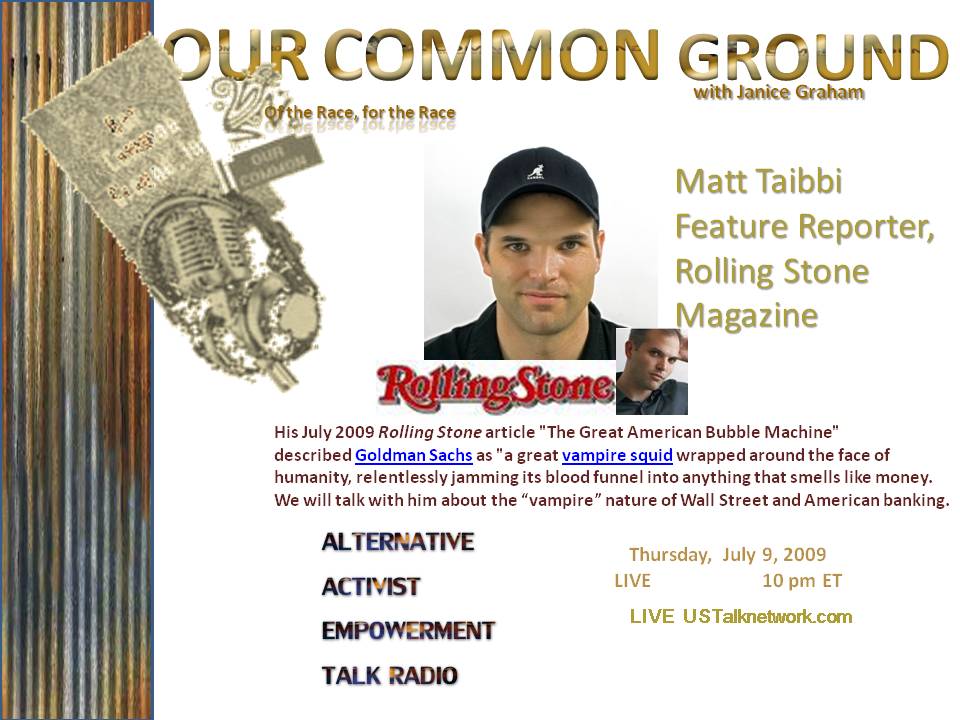
Read more: http://www.rollingstone.com/politics/news/everything-is-rigged-the-biggest-financial-scandal-yet-20130425#ixzz2fiyVD7Ml
Follow us: @rollingstone on Twitter | RollingStone on Facebook
Share this:

WHERE I ENTER : When Being A “Good Ally” Goes Wrong
WHERE I ENTER
When Being A “Good Ally” Goes Wrong
I’ve noticed many people policing the reactions of (primarily) POC to the George Zimmerman verdict under the guise of “don’t offend the allies”. This is problematic on several levels.
I want to start out by saying that I, personally, don’t agree with the idea of an “ally” that we, as a society, have seem to construct. You shouldn’t get special recognition or acknowledgement for meeting the basic minimum requirements of being a decent human being by treating people who are different from you with equality and respect; that should be a given. Another thing I’ve noticed is that people are more concerned with being the best ally than they are with the concerns/oppression of the marginalized group(s) that they’re allying with. When the focus becomes about you and your feelings instead of the people facing discrimination, you’re being a really shitty ally.
I am a straight, cisgender woman. It would be the height of heterosexual and cissexual privilege (not to mention just damn rude) for me to start talking about how homophobia and transphobia hurts my feelings. I am not now, nor have I ever been, directly impacted by homophobia and/or transphobia. I have never been denied access to a job or housing solely due to my sexual orientation or gender expression. I can be denied access to these things based on my race and/or gender, but I also have legal recourse available to me to rectify the situation if that were to occur. LGBTQ people do not have the same recourse. 29 states have no laws protecting LGBTQ and gender non-conforming people fromemployment or housing discrimination. 52% of LGBTQ people live in these states. My job is to support LGBTQ groups/organizations/individuals advocating for equality and to call out homophobic and cissexist behavior when I see it. It is not my place to enter LGBTQ spaces and make the conversation about me and my feelings.
The first rule of being a good ally is that it’s not about you. Your feelings are irrelevant. If you insist on framing the conversation around your feelings and how you’re being excluded, then you were never a real ally in the first place. Marginalized groups are not required to invite non-marginalized people into their safe spaces. If you are invited, it is a privilege and should be treated as such. You should not take center stage, nor should you attempt to speak for members of the group. Once again, these issues don’t directly impact you.
I’m not trying to come across as the perfect ally to other marginalized groups. Do I screw up sometimes? Yes. We ALL do. @FeministGriot had said that being an ally is a process, and I couldn’t agree more. No matter how hard you try and how sincere you are, you’re going to screw up eventually and it’s not the end of the world. Now, this isn’t to minimize or excuse any transgression made in the past or in the future; it’s merely to say that we’re human and no one is perfect. What is important is your reaction and your behavior moving forward. If someone from a marginalized group calls you out on your privilege, one of the worst things you can do is to get defensive. What you need to do is sit back, listen, and reflect on what you did and how that came across. It doesn’t matter what your intent was, what matters is how it was perceived and received. Don’t forget: the road to Hell is paved with good intentions. Sometimes the best thing an ally can do is just sit back so that marginalized people can lead.
For an example of good ally work go to wearenottrayvonmartin.tumblr.com
Share this:

A Black Boy is Dead

Histories of gender and slavery focus overwhelming on women, as if gender and women are coextensive and men have no gender. This observation points to a problem with the conceptualization of sex and gender across academic disciplines. For if there is a structural neglect of manhood in studies of gender, and if womanhood is misunderstood to be synonymous with gender itself, then this approach signifies an extension rather than an analysis of gender ideology, which traditionally inscribes women as being gendered and men as being generic and beyond gender.
Greg Thomas—The Sexual Demon of Colonial Power—2007
Introduction:
Last week, Black America’s heart was broken and their hopes and expectations of fairness, justice, and equality shattered. The murderer of a young Black boy was freed. George Zimmerman gets to live his life an acquitted killer, and Trayvon Martin, his family, and other Black men and boys will forever be impacted by the reality that any confrontation with white men and/or women can mean death. Black men and boys remain invisible to conversations about gendered violence and death. Their existence and suffering is replaced by negation, or replaced with only the problematization of any scholarship that seeks to address their peculiar racial existence as being marginalizing to the their Black female counterpart. In short, any work seeking to speak to, and for Black male oppression is attacked for not being sufficiently feminist, and as such, worthy of dismissal and censor.
Being Black and Male is not a Privilege—It’s a Death Sentence
Within minutes of the verdict, Black feminists from across the web began posting and comparing the life of Trayvon Martin to that of Black women killed or incarcerated within the last year. On facebook, Black feminist postings about Rekia Boyd, Marissa Alexander, and Aiyanna Stanley-Jones, were on statuses and shared prolifically. Reiterating Jamila Aisha Brown’s piece, “If Trayvon Martin had been a woman…” these feminist posters/bloggers saw themselves making a point about the difference in the attention Black men’s and boy’s deaths receive next to these Black women’s lives. However, when one actually reads Ms. Brown’s piece one can only be amazed by how causality and history are vacated for ideology. Brown’s piece is written as a response to a Marc Lamont Hill’s interview where he was asked “How would things be different if Trayvon was a young Black girl? Hill responded “[Zimmerman] would have been convicted, because we have this history of seeing Black male bodies as dangerous and threatening and always worthy of lethal force.” Hill makes an observation many Black men and women across the country actually agree with, namely that Black men and boys are by and large the victims of state sponsored murder and violence and white vigilantism. This is not to deny Black women as victims, but to acknowledge the dangers of being Black and male in the United States. A point recently supported by Melissa Harris Perry’s admission that America is so dangerous for Black men that she wishes her sons away, a burden only alleviated somewhat by “the relief I [she] felt at my [her] 20-week ultrasound when they told me [her] it was a girl.”
Unfortunately, the sentiments that express fear, anger, and hopelessness are lost on Brown and many of her readers. Despite the outrage of the Black community, the powerlessness endured by the parents of young Black men and boys, and the fear of death Black men/boys suffer, Brown seems to conclude these emotions are simply inconsequential to the larger identity politics needing to be advanced. For Ms. Brown, any and all experiences of violence against Black women are examples that they could in fact have been Trayvon Martin. She begins her argument with a brief point that Black women have been lynched, a fact that has not gone unnoticed by historians or even anti-lynchers back in the 19th century given the cataloguing of Black women’s and girl’s names and alleged offenses in both Ida B.Wells-Barnett’s Red Record (1895) and John Edward Bruce’s A Blood Red Record (1901). In Brown’s view, however, these women’s lives have been erased and go to prove that if “Trayvon Martin were a young Black woman, we would not even know her name.”

On the face of it, this seems silly. All violence is not the same, so to suggest that Black women who have been focused on less regarding lynching, or police-state-sponsored violence means that an unarmed teenage girl who was shot by a white man on the claim of self-defense would not been known to Black America is non-sequitar. Ida B. Wells-Barnett was clear that lynching was justified against the manhood of the race and used as a weapon to discourage Black economic independence. Contrary to the popular account of Well’s anti-lynching activism as revelatory, Ida B. Wells-Barnett understood the unique vulnerability of Black men, because at one time she supported the lynching of Black men as justifiable. As she confesses in Crusade for Justice “…I had accepted the idea meant to be conveyed—that although lynching was irregular and contrary to law and order, unreasoning anger over the terrible crime of rape led to the lynching; that perhaps the brute deserved death anyhow and the mob was justified in taking his life.” After the death of her friend Thomas Moss, she began to understand that lynching was a punishment driven by the desire to murder Black men. When the white lynch mob declared to Ida B. Wells-Barnett that her “sex would not save her,” if she returned to Memphis, it reaffirmed the masculine ontology at the bottom of lynching. It was Wells-Barnett’s debasement to the status of Black maleness that threatened her life and erased her sex. Despite the historical evidence that give ample support for the view that anti-Black death (lynching, police state violence, and public executions) are directed primarily at Black men, Black feminists cannot conceptualize a reality in which Black maleness is a gendered vulnerability that warrants being the center of any account of American racism.
Brown claims that the deaths of Rekia Boyd, Deanna Cook, Aiyana Stanley Jones, and Tarika Wilson, despite being protested, taken up by the NAACP in their respective cites, and warranting lawsuits, are ignored because of “Black male privilege,” or the idea that “the victimization of young women is subsumed into a general well of black pain that is largely defined by the struggles of African-American men.” Are they not ignored by the asymmetrical power relationship between impoverished Black communities and the police state, or the general apathy for Black life? By asserting the existence of “a Black male privilege” that somehow remains unaffected by the exponential deaths, imprisonment, unemployment, and poverty of Black men and Black boys—conditions that deserve particular attention, these authors make acknowledging Black male privilege axiomatic, and indisputable. In short, these feminists claim that regardless of the death historically associated with being a Black man, these Black men enjoy the political privilege of being male, and of being recognized even in death over Black women, some of whom are still living and breathing. Rather than being a serious analysis of how Black men concretely have privilege (education, wealth, mortality, health), this contention is about the ideological politics of academic recognition confined to blogs more than an empirical study offering insight into the tragedies that actually impact the Black community. In the death of Trayvon Martin, Black male privilege attempts to demonize a community that has lost Black fathers, sons, and husbands alongside mothers, daughters and wives for not holding a particular brand of feminist politics. These Black feminists pretend that despite the tragedy of losing a 17 year old Black boy, a child, they are ultimately the arbiters of what his life should mean for the Black community, or what his life would mean if the Black community was not blinded by the ignorance of their hetero-patriarchal pathology.
While the Black left, and Black independent news outlets have concerned themselves with the death of Black men and women, as well as Black boys and girls, Black feminists have not made the death of Black women killed by state violence, police brutality, racial profiling, or anti-Blackness their central agenda, unless of course those women were killed or brutalized at the hands of Black men, which makes their suffering fit nicely with their predetermined (Duluth) account of domestic violence. Voxunion presented evidence of Black men and women dying hourly, Redding News Review covered the death of Rekia Boyd, and Aiyana Stanley Jones, as well as the arrest of Marissa Alexander; I constantly commented on these deaths as topics of conversation on my own radio segment, and Black Agenda Report has reported the deaths of Black women and children alongside their Black male counterparts. But given the gender ideology in the university, these Black feminists feel more than comfortable using the death of these women and children to point out why the death of Trayvon Martin should not be valued as much as it is because he is a Black boy.
Black Males are Victims of Racism and Sexism
It’s sickening that these individuals are now claiming they get to decide how Martin’s death should be valued, but say nothing against the specific white supremacists and institutions that devalued Black life in the first place. The central question posed by Piers Morgan in asking what would happen “If Trayvon Martin was a Black girl,” is whether or not a white vigilante could have claimed he feared for his life and used self-defense as a justification for killing her. Many commentators simply think Zimmerman would have been arrested for killing a Black woman, and the opposing feminist commentaries have offered no reason for this not to be the case. So, in an attempt to “one-up” Black male death, these commentaries pose endless hypotheticals that ask the audience to imagine the Black female victim being raped and sexually assaulted rather than simply being murdered in cold blood. Mind you, these hypotheticals are being embraced as fact, something that would necessarily happen to the Black female victim, despite Rachel Jeantel telling the American audience that she actually told Trayvon Martin that Zimmerman could have been a rapist. This sexualized aspect of racist violence is completely ignored when talking about Black men and boys.Eric Glover and Terrence Rankin were murdered to fulfill the necrophilia fetish of three white teens, and as expected not one “feminist” analysis on the particular gendered vulnerability of these Black men. But this fear, the fear a young boy may have of being raped, is ignored, because as Greg Thomas explains, “for feminism, gender means for females only,” and as such, only females can fear, be assaulted by, be victims of, rape.
Why are these Black feminists not attacking the comparison between white men’s, women’s, and children’s lives next to the death of these Black women? Why are the deaths of Black men and boys the only comparable examples? Why are they not attacking their figureheads like Beverly Guy Sheftall for publically announcing the agendas of Black feminism in popular venues like the Root, but excluding Black death? Why are these Black feminists not writing about these women in their journals and blogs as analyses of anti-Black death and suffering rather than the reaction to the death of a Black boy? Why is it when a Black community mourns, the feminist response is to divest the meaning the symbolism a Black male life has taken on—a life embraced by Black men, women, and children alike, a life taken from Black families across the world, and a life that continues to represent the fear of growing up a Black boy who wonders if he shall live to become a man? Does this fear of death not warrant political organization around Black male issues and erasures?
In this case, Black Feminism isn’t any better than the white supremacist who denies the political possibilities held by Black manhood. Black manhood is not a pathology; a sickness to be cured by either death or by feminism. Angela Davis is clear in Women, Race &Class that Black men didn’t have male privilege during slavery, because it endangered the slave system, nor did they have it during the civil rights movement despite Michelle Wallace’s contention given the myth of the Black male rapist. Feminists are using this tragic incident to bring further attention to their political agendas. J.N. Salter’s article, “Am I A Race Traitor? Trayvon Martin, Gender Talk and Invisible Black Women” argues that Black women are expected to put their race before their gender and ignore the issues that black women have within our communities,” but this is not an issue for the black community, this is an issue for the Black feminist community who demands that the deaths of the Black women and girls they have handpicked garner the same attention recently afforded to Trayvon Martin. Haydia Pendleton was killed in January, and her death, the death of a 15 year old Black girl sparked, national attention, so much so that the First Lady Michelle Obama attended her funeral, but this did not create the attention to Black women’s death by Black feminists that Trayvon Martin’s death did. Salter argues that “Black women are expected to put their race before their gender, to choose between their dual identities (“black” or “woman”) at the expense of their full humanity,” but this is untrue since many Black women from Ida B. Wells-Barnett to mothers like Sybrina Fulton have resolved this issue. This is a Black feminist issue that pretends being Black and being a woman should not be criticized, despite the fact that the identity politics lurking behind their idea of womanhood is about their political alliances with, and the benefits they receive from their relationships with white women. Our focus should not be on whether the Black person was/is a woman or a man it should be on protecting our communities from violence. It just so happens that in this case, the case of white vigilantism, Black men and boys deserve much of our attention.
A Conclusion
Of the 300+ Black people killed in 2012 by extra-legal violence, how many names do we know? Every year,hundreds of Blacks are killed by police, most of them men, we don’t know who all of them are, and they don’t all get marches; some names are never uttered. Black children, little boys and girls, are killed and no one cries, mourns, or marches for them. A white vigilante kills an unarmed teen and suddenly the fear and sorrow felt by the death of a young Black boy is transformed into “the only death Black people care about.” Whereas Black feminism has no problem turning the pain and torture of a community—its families—into a metric measuring Black death and rationing this dehumanizing spectacle into the “meaningful” deaths of Black women, and then everyone else; the Black community, the dead Black men, “we,” as their voices should. Ideology (political, moral, or otherwise) is not the barometer of truth.
The indifference to the death of Black men and women from the near silence of this Black feminist academic cadre on issues like state violence, anti-Black death, and murder for their preferred discourses of recognition, be it phrased as: intersectionality, love, or education, is self-inflicted. Stop talking to white women and white people for academic recognition and write about the (Black) deaths of the people you claim should be at the center of consciousness. These posts that continue to react to the importance the Black community has attached to Trayvon Martin’s death, instead of suggesting any analysis of the conditions that gave rise to it, demonstrates the negating drive of Black feminist identity politics against Black men/boys, rather than concrete analysis of Black people’s vulnerability to sexual violence and murder—and how that acknowledgement helps the Black community. These posts show that vitiating Black masculinity is academically profitable, not that the death of a Black boy is tragic.
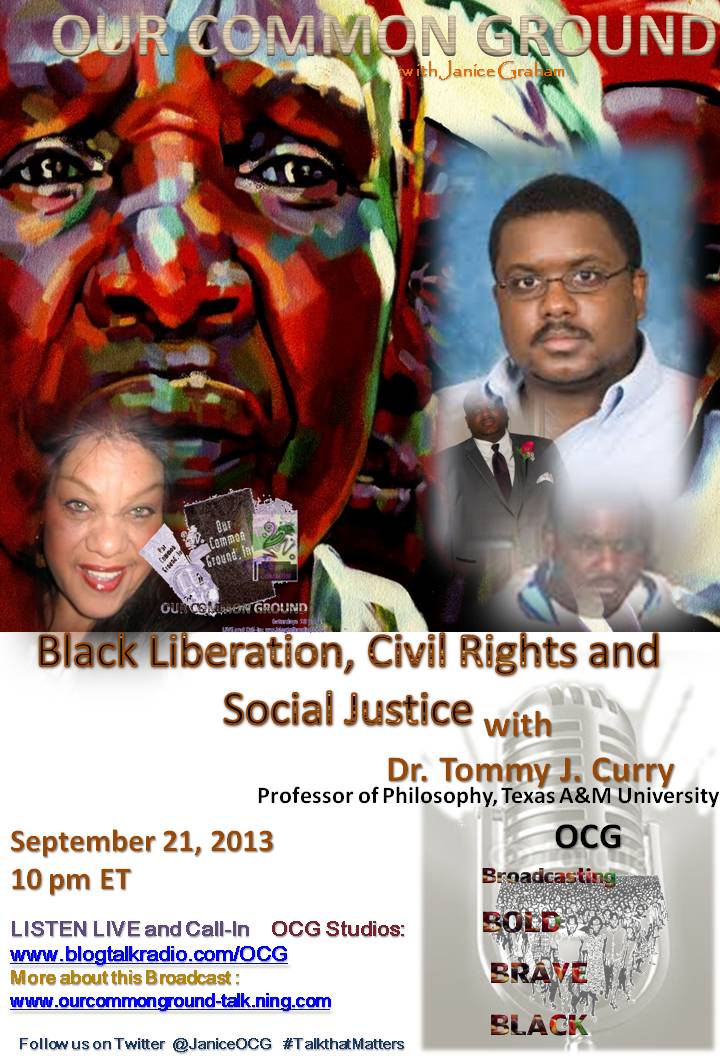
~ This post was written by guest blogger Dr. Tommy J. Curry, Associate Professor of Philosophy,Affiliated Professor of Africana Studies, Texas A&M University and his wife, Mrs. Gwynetta Curry.
Share this:

An Open Letter To Pharrell Williams (Blurred Lines Vol. 3) – Nicholas Payton

AmeriKKKa: Are You Syrious?Why Hiphop Isn’t Cool Anymore → An Open Letter To Pharrell Williams (Blurred Lines Vol. 3)
Posted on September 13, 2013 by nicholaspayton
Well, it’s about time Pharrell Williams has decided to speak on the issue. He was eerily quiet about it all until just recently. And now that’s he’s opened his mouth, I can throw him some of the shade I was generously giving Robin Thicke.
“I’m a huge fan of Marvin Gaye. He is a genius. He is the patriarch.”
— Pharrell Williams
Really, Pharrell? Since when did it become okay to preemptively sue our patriarchal geniuses of Black music after you knowingly stole their songs?
… Oh, never mind. I remember: Hiphop.
“If you read music, all you have to do is read the sheet music. It’s completely different.”
— Pharrell Williams
I read music, do you? And what sheet music are you talking about? From some wack publishing company that did a transcription of Marvin Gaye’s work? Since when do people learn funk tunes from sheet music? Many funk legends can’t even read music. Marvin Gaye couldn’t read or write music, yet he wrote the tune. So what does that say, really?
Pharrell goes on to say:
“[Gaye] is the king of all kings, so let’s be clear about that. And we take our hats off to him, but anybody that plays music and reads music, just simply go to the piano and play the two. One’s minor and one’s major. And not even in the same key.”
Okay, Mr. Williams. You are wrong. Both of the tunes are actually in Major. The difference is that your song is just a major triad “G-B-D over G” and Gaye’s tune is in Dominant Major which means he flatted the 7th degree of the scale (G-C#-E over A), which would explain why y’all’s song sounds like Oktoberfest and Marvin’s song sounds like the Blues. And Marvin’s tune doesn’t go into minor until the bridge. If that monotonous piece of trash you call a song had a bridge, you probably would have stolen it, too. And just because you and Thicke lowered the key a whole step from A to G and removed the Blues doesn’t mean you didn’t steal it. Thicke has already admitted you did.
“Pharrell and I were in the studio and I told him that one of my favorite songs of all time was Marvin Gaye’s ‘Got to Give It Up.’ I was like, ‘Damn, we should make something like that, something with that groove.’ Then he started playing a little something and we literally wrote the song in about a half hour and recorded it.”
— Robin Thicke
So, how you have the hubris to pretend you didn’t steal it is jive.
Let me just explain a couple things to you:
1.) Sheet music may be the legal reference for copyright in the court systems of America, but it has never been the be-all end-all for Black music. A lot of our music has never been written down, it’s an oral and aural tradition passed down generation-to-generation from master to student.
2.) Many of our Kings of Kings could not read music themselves, either because they were blind or just never learned to read. Reading music is certainly helpful, but it isn’t necessary to do so to be a great musician. All that is required is that you have ears. And anyone with ears can hear that you clearly stole this song.
And to those of you who say I know nothing about Hiphop, if “Blurred Lines” is Hiphop, I don’t want to know anything about it. So let me officially go on record now and say that I hate Hiphop. There are certain artists who claim Hiphop that I dig, but Hiphop as a whole is wack. It’s a parasitic culture that preys on real musicians for its livelihood. I may not know anything about Hiphop, but I don’t have to. Without real artists and musicians like me, you’d have nothing to steal. I know enough about it all to know that.
One of the world’s most renowned producers can’t tell the difference between a minor chord and a Dominant 7th, something that you learn the first week in music theory class. It’s like a doctor not knowing the difference between your ears and your eyes. A musical illiterate has the nerve to tell people they would understand he didn’t steal Marvin’s song if they read music. And we wonder why today’s music is shit?
#BAM
— Nicholas Payton aka The Savior of Archaic Pop
Share this:

An Open Letter To Pharrell Williams (Blurred Lines Vol. 3)
Makes me want to Holler !

 OCG
OCG 