The lessons of black history and gun violence l Salim Muwakkil l Chicago Tribune

The lessons of black history and gun violence

Collective impotence on gun violence is connected to refusal to acknowledge America’s history

by Salim Muwakkil

 Annette Freeman, the mother of Dantrell Davis, 7, slain in 1992. (Tribune archive photo / May 29, 2008)
By Salim MuwakkilFebruary 19, 2013

President Barack Obama’s visit to Chicago on Friday brought an increased focus on the chronic problem of violence in the black communities of urban America. There is some serendipity that this sharpened national focus is happening in February, the month set aside to observe black history.

History, after all, is an important component of this violence plague. In fact, I believe one of the reasons we’ve been unable to halt this destructive dynamic is the refusal to acknowledge history’s consequence.

The problem of interpersonal violence is distressingly persistent in the history of black Americans. Indeed, W.E.B DuBois, the Harvard-educated African-American scholar who is often called the 20th century’s most influential black intellectual, carefully chronicled the problem in his 1899 book “The Philadelphia Negro.”

As a journalist, I’ve been a personal witness to some of that history, especially recent history. I covered the 1984 funeral of Benjamin “Benji” Wilson at Rainbow PUSH headquarters and heard the tearful pleas to stop the violence. The city had just passed 700 murders that year.

Even then, I was not new to issues of urban violence, having worked for The Associated Press in violence-plagued Newark, N.J., before arriving in Chicago. However, Chicago was in a class of its own.

That perverse exceptionalism was reinforced by the 1992 death of 7-year-old Dantrell Davis, murdered on his way to school in Cabrini-Green by gang-related gunfire, and the tragic story of Robert “Yummy” Sandifer, the 11-year-old gang member assassinated by fellow members in 1994.

I covered those funerals as well and, aside from biographical specifics, the words spoken were remarkably similar. Unfortunately, those solemn ceremonies often become public rituals that, in their redundancy, only reveal our collective impotence.

We beguile ourselves with a routine choreography that keeps us spinning around the core of the problem. Like now, the focus is on the important, but peripheral, issue of gun control. We can sharpen our focus by exploring the problem’s historical roots.

We are now in the middle of Black History Month, a time dedicated to looking back at a history forged in the extraordinary crucible of human bondage. This period of civic introspection, conceived by Chicago historian G. Carter Woodson, offers a unique opportunity to explore the historical context of black life in the U.S..

Were it taken seriously and socially reinforced, this civic observation would reveal the trajectory from the plantations that transformed African captives into enslaved African-Americans, to the beleaguered communities of Englewood, North Lawndale, et al. Instead, we have transformed the designated month into a rote celebration of historical personages, or a showcase of black history’s greatest hits.

After a professional lifetime of examining the causes, consequences and attempted solutions of urban violence (framed by study of black history), I am increasingly convinced that only a comprehensive, compensatory effort will show any real success.

This is not a novel conclusion. Black activist and civil rights groups long have called for such policies. The nomenclatures have ranged from “urban Marshall Plan” to “comprehensive affirmative action” to “reparations,” but they embodied the same reasoning. Descendants of enslaved Africans are victims of an exceptionally destructive historical injury that requires exceptional economic investment in public repair.

This is the kind of repair referred to by retired cop and 20th Ward Ald. Willie Cochran when he said, “If we are not going to address the traumatic and social and emotional issues, if we are not going to address the economic issues, if we are not going to address the education issues in an honest way, then we are going to continue to have these problems.”

This effort requires an investment of resources that seems increasingly unlikely in our economically troubled nation. Nevertheless, I contend we have no choice if we are to avoid the growing problem of social fragmentation.

Moreover, addressing those issues is a logical response to black America’s embattled history. After all, the hybrid identity of African-Americans itself was a product of race-based, chattel slavery.

With an economy based on enslaved labor, American society had a stake in white supremacy and instituted a rigid racial hierarchy that excluded blacks until the civil rights revolution of the 1950s.

What’s more, the self-loathing instilled by a culture dedicated to black debasement may have been just as damaging as racist exclusion. The popularity of products designed to alter the skin color, hair texture and other endogenous “black” features to better resemble “white” features, for example, reveals a self-abnegation that extends far beyond the cosmetic realm.

Black Americans have been severely crippled by centuries of economic deprivations and a long socialization for subservience. Acting as if this troubled history has nothing to do with current racial disparities and community disintegration is ignoring decades of rigorous scholarship noting the contrary. Moreover, it points to the urgent need for Americans to understand the lessons of black history.

Salim Muwakkil is a Chicago writer and host of the “Salim Muwakkil Show” on WVON-AM.

Profiting From Human Misery l Chris Hedges l TruthDig

Profiting From Human Misery

AP/Mel Evans
A row of beds inside the Elizabeth Detention Center.

By Chris Hedges

Marela, an undocumented immigrant in her 40s, stood outside the Elizabeth Detention Center in Elizabeth, N.J., on a chilly afternoon last week. She was there with a group of protesters who appear at the facility’s gates every year on Ash Wednesday to decry the nation’s immigration policy and conditions inside the center. She was there, she said, because of her friend Evelyn Obey.

Obey, 40, a Guatemalan and the single mother of a 12-year-old and a 6-year-old, was picked up in an immigration raid as she and nine other undocumented workers walked out of an office building they cleaned in Newark, N.J. Her two children instantly lost their only parent. She languished in detention. Another family took in the children, who never saw their mother again. Obey died in jail in 2010 from, according to the sign Villar had hung on her neck, “pulmonary thromboembolism, chronic bronchiolitis and emphysema and remote cardiac Ischemic Damage.’ ”

“She called me two days after she was seized,” Marela told me in Spanish. “She was hysterical. She was crying. She was worried about her children. We could not visit her because we do not have legal documents. We helped her get a lawyer. Then we heard she was sick. Then we heard she died. She was buried in an unmarked grave. We did not go to her burial. We were too scared of being seized and detained.”

The rally—about four dozen people, most from immigrant rights groups and local churches—was a flicker of consciousness in a nation that has yet to fully confront the totalitarian corporate forces arrayed against it. Several protesters in orange jumpsuits like those worn by inmates held signs reading: “I Want My Family Together,” “No Human Being is Illegal,” and “Education not Deportation.”

“The people who run that prison make money off of human misery,” said Diana Mejia, 47, an immigrant from Colombia who now has legal status, gesturing toward the old warehouse that now serves as the detention facility. As she spoke, a Catholic Worker band called the Filthy Rotten System belted out a protest song. A low-flying passenger jet, its red, green and white underbelly lights blinking in the night sky, rumbled overhead. Clergy walking amid the crowd marked the foreheads of participants with ashes to commemorate Ash Wednesday.

“Repentance is more than merely being sorry,” the Rev. Joyce Antila Phipps, the executive director of Casa de Esperanza, a community organization working with immigrants, told the gathering. “It is an act of turning around and then moving forward to make change.”
The majority of those we incarcerate in this country—and we incarcerate a quarter of the world’s prison population—have never committed a violent crime. Eleven million undocumented immigrants face the possibility of imprisonment and deportation. President Barack Obama, outpacing George W. Bush, has deported more than 400,000 people since he took office. Families, once someone is seized, detained and deported, are thrown into crisis. Children come home from school and find they have lost their mothers or fathers. The small incomes that once sustained them are snuffed out. Those who remain behind often become destitute.

But human beings matter little in the corporate state. We myopically serve the rapacious appetites of those dedicated to exploitation and maximizing profit. And our corporate masters view prisons—as they do education, health care and war—as a business. The 320-bed Elizabeth Detention Center, which houses only men, is run by one of the largest operators and owners of for-profit prisons in the country, Corrections Corporation of America. CCA, traded on the New York Stock Exchange, has annual revenues in excess of $1.7 billion. An average of 81,384 inmates are in its facilities on any one day. This is a greater number, the American Civil Liberties Union points out in a 2011 report, “Banking on Bondage: Private Prisons and Mass Incarceration,” than that held by the states of New York and New Jersey combined.

The for-profit prisons and their lobbyists in Washington and state capitals have successfully blocked immigration reform, have prevented a challenge to our draconian drug laws and are pushing through tougher detention policies. Locking up more and more human beings is the bedrock of the industry’s profits. These corporations are the engines behind the explosion of our prison system. They are the reason we have spent $300 billion on new prisons since 1980. They are also the reason serious reform is impossible.

The United States, from 1970 to 2005, increased its prison population by about 700 percent, according to statistics gathered by the ACLU. The federal Bureau of Justice Statistics, the ACLU report notes, says that for-profit companies presently control about 18 percent of federal prisoners and 6.7 percent of all state prisoners. Private prisons account for nearly all of the new prisons built between 2000 and 2005. And nearly half of all immigrants detained by the federal government are shipped to for-profit prisons, according to Detention Watch Network.

U.S. Immigration and Customs Enforcement (ICE), which imprisons about 400,000 undocumented people a year, has an annual budget of more than $5 billion. ICE is planning to expand its operations by establishing several mega-detention centers, most run by private corporations, in states such as New Jersey, Texas, Florida, California and Illinois. Many of these private contractors are, not surprisingly, large campaign donors to “law and order” politicians including New Jersey Gov. Chris Christie.

In CCA’s annual report to the Securities and Exchange Commission for 2011, cited by the ACLU, the prison company bluntly states its opposition to prison reform. “The demand for our facilities and services could be adversely affected by the relaxation of enforcement efforts, leniency in conviction or parole standards and sentencing practices or through the decriminalization of certain activities that are currently proscribed by criminal laws,” it declares. CCA goes on to warn that “any changes with respect to drugs and controlled substances or illegal immigration” could “potentially [reduce] demand for correctional facilities,” as would “mak[ing] more inmates eligible for early release based on good behavior,” the adoption of “sentencing alternatives [that] … could put some offenders on probation” and “reductions in crime rates.”

1 2 NEXT PAGE >>>


Chris Hedges, whose column is published Mondays on Truthdig, spent nearly two decades as a foreign correspondent in Central America, the Middle East, Africa and the Balkans. He has reported from more than 50 countries and has worked for The Christian Science Monitor, National Public Radio, The Dallas Morning News and The New York Times, for which he was a foreign correspondent for 15 years.

Hedges was part of the team of reporters at The New York Times awarded a Pulitzer Prize in 2002 for the paper’s coverage of global terrorism. He also received the Amnesty International Global Award for Human Rights Journalism in 2002. The Los Angeles Press Club honored Hedges’ original columns in Truthdig by naming the author the Online Journalist of the Year in 2009 and again in 2011. The LAPC also granted him the Best Online Column award in 2010 for his Truthdig essay “One Day We’ll All Be Terrorists.”

Hedges is a senior fellow at The Nation Institute in New York City and has taught at Columbia University, New York University and Princeton University. He currently teaches inmates at a correctional facility in New Jersey.

Hedges began his career reporting the war in El Salvador. Following six years in Latin America, he took time off to study Arabic and then went to Jerusalem and later Cairo. He spent seven years in the Middle East, most of them as the bureau chief there for The New York Times. He left the Middle East in 1995 for Sarajevo to cover the war in Bosnia and later reported the war in Kosovo. Afterward, he joined the Times’ investigative team and was based in Paris to cover al-Qaida. He left the Times after being issued a formal reprimand for denouncing the Bush administration’s invasion of Iraq.

He has written twelve books, including “Days of Destruction, Days of Revolt” (2012),  “Death of the Liberal Class” (2010), “Empire of Illusion: The End of Literacy and the Triumph of Spectacle” (2009), “I Don’t Believe in Atheists” (2008) and the best-selling “American Fascists: The Christian Right and the War on America” (2008). His book “War Is a Force That Gives Us Meaning” (2003) was a finalist for the National Book Critics Circle Award for Nonfiction. In 2011, Nation Books published a collection of Hedges’ Truthdig columns called “The World As It Is: Dispatches on the Myth of Human Progress.”

Hedges holds a B.A. in English literature from Colgate University and a Master of Divinity degree from Harvard University. He was awarded an honorary doctorate from Starr King School for the Ministry in Berkeley, Calif. Hedges speaks Arabic, French and Spanish and knows ancient Greek and Latin. In addition to writing a weekly original column for Truthdig, he has written for Harper’s Magazine, The New Statesman, The New York Review of Books, Adbusters, Granta, Foreign Affairs and other publications.

He Simply Doesn’t Care About People Like You: The Real Reason that the President of Emory’s Comments on Slavery and the 3/5th’s Clause Really Hurts (Some of You)

MONDAY, FEBRUARY 18, 2013

He Simply Doesn’t Care About People Like You: The Real Reason that the President of Emory’s Comments on Slavery and the 3/5th’s Clause Really Hurts (Some of You)


We have not had a “real talk” moment in quite some time.James Wagner, the President of Emory University’s suggestion, that the 3/5th’s compromise was noble, necessary, and an example of good governance to be admired is an appropriate moment to share some uncomfortable truths.

Wagner’s comments have attracted a good amount of attention. For many, it is shocking that an accomplished man of letters would so unapologetically “white wash” the history of slavery in the United States.

Yes, those of us who are are students of American history should be offended by a flattening of the historical record, and a very sympathetic view of the nobility of white elites to count black slaves as less than a full person in the service of maintaining an ignoble institution.

I get all of those sentiments.

Here is the painful reality that many of those in the out-group, the less than privileged, the Other, the marginalized, and the like have not yet figured out: James Wagner does not care about you. His comments on slavery were not a personal dig, stab, or barb. Black folks, our legacy, personhood, and the like are quite simply not choices on the decision tree which is used to teach lessons about politics, social life, history, the present, future, or the past by men like him.

You/we/us are footnotes and outliers.

People of color–and likely women, gays and lesbians, the “disabled”, and other folks who are not “normal” by the narrow definitions of hetero normative, able bodied, Whiteness–are also non-factors in the worlds of the truly race and class privileged in American society.

You/we/us spend much energy on these matters; They spend little to none at all.

I know that hurts. Privilege has, well for lack of a better turn of phrase, its own privileges.

It is best to accept such facts if you are to wage battle effectively on their terrain.

I will double down. The real damage done by colorblind and institutional racism in the post civil rights era is that seemingly race neutral decisions about policy and related matters are done with a calculi which ignores how said decisions will impact the life chances of people of color.

Here, the White Supremacists, the caricatures who make convenient bogeymen and women, are easy targets.

Why? Because they actually think about black and brown people a great deal. Moreover, those who are classic bigots are oddly obsessed with non-whites. There is a certain deep intimacy that comes with racism. It is love, fascination, and hate all rolled up into one ball.

The movers and shakers, the shot callers who have the ability to impact policy in ways that hurt the Other, do not usually care one iota about the latter. The privileged are not bad people, per se. The Other is simply not on their radar. For this reason, the elite–the top tier of the in-group–are so dangerous precisely because of an ability to sleep well at night because said agents can tell themselves that they are race neutral and good people, despite how their decision-making hurts those not in their circle.

Trust me, James Wagner is legitimately surprised by the reaction to his comments. In his eyes, he made a self-evident and obvious observation about American history. The apology is necessary for reasons of realpolitik and peace.

In all probability, Wagner has no idea what the fuss is about. Nor, does he really care. Why should he?

If you want to start playing that 3d Star Trek chess on these matters of race, politics, and justice in the Age Obama, it is essential that you start thinking about the agents who do the work of impersonal and institutional racism (as well as other types of social inequalities), not as demons or villains, but as self-interested actors who care little about people not like them.

Again, they are not “bad people.” They simply do not care about about people like you. The privileged classes are possessed of narcissism. The disadvantaged are also possessed of narcissism too, as they think that the world cares one bit about them. Sadly, it does not.

Remember, institutional racism is not personal. It is only business. If you accept that premise, then you can learn how to adapt, achieve, and overcome it. If you take institutional and impersonal racism personally, well then, you will just be beaten down and defeated every time.

I know that hurts. Someone had to say it.

Follow the Blog of OUR COMMON GROUND Voice, Chauncey DeVega “We are Respectable Negroes”
11-10 chaunceydevega


“The Ashes of A Manifesto: The LAPD and the Deaths of Christopher Dorner and His Victims” l February 16, 2013 l 10 pm ET

OUR COMMON GROUND with Janice Graham

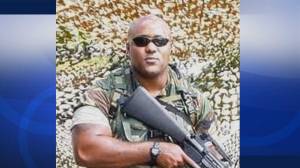
dornergun“The Ashes of A Manifesto: The LAPD and the Deaths of Christopher Dorner and His Victims”

OPEN MIC

February 16, 2013 10pm ET

LIVE and Call In

“His self-definition could not survive separation from the institution that became his personal nemesis. In the end, he was as lonely as Rambo in First Blood, and just as politically lost.

A public death belongs to the public. Dorner’s fans, his African American public, whom he did not serve but who would inevitably embrace his weeklong death-throe defection from the LAPD, imbue him with qualities they wish were reliably available to the struggle: a Nat Turner, a Spook Who Sat by the Door. The Bronx, New York dope dealer, Larry Davis, who in1986 succeeded in shooting six of seven cops who came to his sister’s apartment to arrest or assassinate him, achieved similar fame. Davis eluded capture for 17 days, negotiated a surrender at his public housing hideout as residents chanted “Lar-ry! Lar-ry!” – and beat the charges of attempted murder of cops. (William Kunstler and Lynne Stewart were his lawyers.) His fans forgave Davis’s dope dealing ways, just as Dorner’s fans forgave his previous service to the Los Angeles Occupation Army.

The enduring lesson of Dorner’s saga is that the transformation of the LAPD into a majority-minority police force does not change its nature as an army of occupation whose mission is racist to the core, regardless of its ethnic composition. That fact finally dawned on Christopher Dorner – and it killed him.”
– BLACK AGENDA REPORT

Join us and share your views.

OUR COMMON GROUND with Janice Graham

“Speaking Truth to Power and Ourselves”

BROADCASTING BRAVE BOLD BLACK

Community Forum: http://www.ourcommonground-talk.ning.com/
Twitter: @JaniceOCG #TalkthatMatters
Web: http://www.wordpress.ourcommongroundtalk.com/


I Bear Witness l Beneath the Spin * Eric L. Wattree

Beneath the Spin * Eric L. Wattree

I Bear Witness

.

I sit, I watch,
and I grow ever more obsolete
as I bear witness.
.
I bear witness

to a once vibrant people greedily gulping down society’s hemlock. Even as they claim to be “keeping it real,“ they continue to maim, kill, and despise their own in hot pursuit of the prime directive with the passion of a sheetless klan.
.
I bear witness
to Black fists in the air in false solidarity promoted by self-serving poverty pimps as the world looks on and giggle at crooked fingers pointed elsewhere.
.
I bear witness
to the superficial attempt to ban the “N-word” while the new “un-niggas” stand around watching children killing children and fathers drugging sons, as they celebrate, lionize, and enrich those who denigrate the very womb of their culture with impunity.
.
I bear witness
to a generation of lost knowledge, cut off from its roots by Ronnie’s “Just say no” generation of crack, greed, death, and political corruption; A generation where the new N-word is pronounced “Responsibility” and the keepers of the flame completely ignore the destructive power of bitch, slut, whore, and tramp.
.
I bear witness
to the reckless disregard of the words uneducated, irresponsible, and classless. Should we not ban these words as well, or should we ban banning words altogether as we celebrate their meaning?
.
Yes, I do bear witness.
I bear witness to a new world –
a world where gross ignorance comes disguised as enlightenment, and funky sneakers look down with disdain upon the sweet smell of Florsheim; a world where saggin’ pants and gaudy glitter enable country bumpkins to masquerade as elegant, and the exquisite surrender of eloquence is the very essence of what it means to be hip.
.
Where’s Langston? Where’s Baldwin? Where’s Oscar Brown, Jr?
We need you stormin’ this beach, because . . .
.
I now bear witness
to a world where motherhood stands alone, to be “dope” renders a smile, and posterity is forced to embrace the wind for paternal sustenance; A world where the walking dead strut about rapping the wisdom of idiocy, and we praise the illiteracy of vulgar nursery rhymes as profound; a world where the mother of salvation’s final gasp is compared to the pigmentation of brown paper bags.
.
Malcolm, Martin, where are you?
I once stood with a crowd. Now seemingly alone, I’m forced to bear witness –
horrific witness . . .
to the imminent demise of our people,
.

And my heart bleeds.
.
.

Eric L. Wattree
http://wattree.blogspot.com/
Ewattree@Gmail.com
Citizens Against Reckless Middle-Class Abuse (CARMA)

Religious bigotry: It’s not that I hate everyone who doesn’t look, think, and act like me – it’s just that God does

V-Day l ONE BILLION RISING l World Wide February 14, 2013

vDAYABOUT V-Day

English | Deutsch | Español | Français

To read V-Day founder Eve Ensler’s bio, click here

V-Day is a global activist movement to end violence against women and girls. V-Day is a catalyst that promotes creative events to increase awareness, raise money, and revitalize the spirit of existing anti-violence organizations. V-Day generates broader attention for the fight to stop violence against women and girls, including rape, battery, incest, female genital mutilation (FGM), and sex slavery.

Through V-Day campaigns, local volunteers and college students produce annual benefit performances of The Vagina Monologues, A Memory, A Monologue, A Rant and A Prayer, Any One Of Us: Words From Prison, screenings of V-Day’s documentary Until The Violence Stops, and the PBS documentary What I Want My Words To Do To You, Spotlight Teach-Ins and V-Men workshops, to raise awareness and funds for anti-violence groups within their own communities. In 2012, over 5,800 V-Day benefit events took place produced by volunteer activists in the U.S. and around the world, educating millions of people about the reality of violence against women and girls.

Performance is just the beginning. V-Day stages large-scale benefits and produces innovative gatherings, films and campaigns to educate and change social attitudes towards violence against women including the documentary Until The Violence Stops; community briefings on the missing and murdered women of Juarez, Mexico; the December 2003 V-Day delegation trip to Israel, Palestine, Egypt and Jordan; the Afghan Women’s Summit; the March 2004 delegation to India; the Stop Rape Contest; the Indian Country Project; Love Your Tree; the June 2006 two-week festival of theater, spoken word, performance and community events UNTIL THE VIOLENCE STOPS: NYC ; the 2008, V-Day 10-year anniversary events V TO THE TENTH at the New Orleans Arena and Louisiana Superdome; the Stop Raping Our Greatest Resource: Power To The Women and Girls of the Democratic Republic of Congo Campaign; theV-Girls Campaign, and the V-Men Campaign.

In Africa, the Middle East, and Asia, V-Day commits ongoing support to build movements and anti-violence networks. Working with local organizations, V-Day provided hard-won funding that helped open the first shelters for women in Egypt and Iraq; sponsored annual workshops and three national campaigns in Afghanistan; convened the “Confronting Violence” conference of South Asian women leaders; and donated satellite-phones to Afghan women to keep lines of communication open and action plans moving forward. V-Day was instrumental in the founding of Karama, a program working in Egypt, Sudan, Morocco, Tunisia, Algeria, Jordan, Syria and Lebanon that works to build upon and strengthen efforts to end violence against women by bringing together local women’s organizations and other civil society groups in collaboration, analysis and advocacy at national, regional and international levels.

In conjunction with the 15th anniversary, V-Day launched its most ambitious campaign to date – ONE BILLION RISING. The concept of the campaign is simple. If you take into account the statistic that 1 out of 3 women will experience violence in her lifetime, you are left with the staggering statistic that over 1 billion women on this planet will be impacted by violence. On V-Day’s 15th Anniversary, 2.14.13, we are inviting ONE BILLION women and those who love them to WALK OUT, DANCE, RISE UP, and DEMAND an end to this violence. V-Day wants the world to see our collective strength, our numbers, our solidarity across borders.

VDAY2The V-Day movement is growing at a rapid pace throughout the world, in 167 countries from Europe to Asia, Africa and the Caribbean and all of North America. V-Day, a non-profit corporation, distributes funds to grassroots, national and international organizations and programs that work to stop violence against women and girls. In 2001, V-Day was named one of Worth Magazine‘s “100 Best Charities,” in 2006 one of Marie Claire Magazine‘s Top Ten Charities, and in 2010 was named as one of the Top-Rated organizations on GreatNonprofits. In fourteen years, the V-Day movement has raised over $90 million.

The ‘V’ in V-Day stands for Victory, Valentine and Vagina.

To learn more about how to organize a V-Day event, click here.

The Execution of Christopher Dorner l Counterpunch

FEBRUARY 13, 2013


The State of the Union Amidst the Ashes of Extrajudicial Death

The Execution of Christopher Dorner

by GEORGE CICCARIELLO-MAHER and MIKE KING

If the murder of Oscar Grant on an Oakland transit platform marked the dawn of the Obama era, the cold-blooded murder of former Naval reservist and Los Angeles Police officer Christopher Dorner might just mark the end of whatever optimistic hope people can muster in his administration. Whether an innocent young man just trying to get home, shot in the back after being racially profiled and slurred, or a man driven to his breaking point after being fired from a similar police force that operates according to its own warped morality and overarching objectives, the state of the union is a powder keg whose wick has gotten shorter due to decades of looking the other way.

Just minutes before Barack Obama began his state of the union address, San Bernardino County Sheriffs, knowing full well what they were doing, burned Christopher Dorner to death. From police brutality and racism to political unaccountability, from lack of economic opportunities to the extrajudicial murder of anyone deemed an enemy of the state, Dorner’s life and death offers us a much clearer picture of the state of this union than last night’s speech or media commentary.

In the years between the murder of Oscar Grant and Dorner’s last stand, March of 2009 to be specific, we were among those observing the case of Lovelle Mixon in Oakland, a parolee who decided he was not going to return to prison, opening fire on police at a traffic stop, killing two. Police went in to execute Mixon, not expecting that he would be holding an SKS. Two more cops died as a result. The logic of Dorner’s desperation, and the chain of events that led to his ultimate death, parallels Mixon’s; proud men without hope, cornered, deciding to go out fighting.

Neither man was a self-understood revolutionary and it would be inaccurate (or perhaps too accurate a reflection of the dearth of revolutionary activity in contemporary society) to try and declare otherwise. However, the material conditions that produced Dorner, as with Mixon, are not uncommon. The meaning and the effects of their actions speak volumes about the depth of racialization, criminalization and hopelessness in Obama’s supposed “post-racial” America.

dornergunLAPD Endgame: Street Justice on a Snow-Capped Mountain

The scene could not be more surreal: the remains of a cabin south of Big Bear still smoldering, the President delivered his State of the Union Address. To be fair, they had yet to confirm that the person they were incinerating in a cabin near Big Bear actually was Dorner. Earlier in the day, San Bernardino County Sheriffs received a call reporting a stolen vehicle driven by someone matching a description of Dorner. If the experience of the past five days is any indication, this narrowed it down to Black men, Asian women, and skinny white men.  The $1 million dollar reward offered for information leading to Dorner’s capture or death, also offered a measurable rubric for the value of the lives of police officers, as traditionally rewards in homicide cases are closer to $20,000.    

In the gathering of hurried interviews some interesting truths from the public made it into the TV news. An MSNBC reporter asked a witness: “Where you worried when you learned that Christopher Dorner was so close to your house?” But the witness responded “Actually, I was just afraid of the cops.” Given the unrestrained violence unleashed in recent days by the LAPD, this sentiment is perhaps unsurprising, but demonstrating a degree of hubris matched only by an utter absence of ironic intent, LAPD chief Charlie Beck said, evidently with a straight face, “To be targeted because of what you are… that is absolutely terrifying.” To which many nationwide responded with an audible guffaw: welcome to the club.

An interview with the man who was allegedly carjacked by Dorner said that, while police had told the man not to tell the whole story, he reported that Dorner had simply said “I don’t want to hurt, take your dog and go.” When sheriff’s deputies found thevehicle yesterday, the driver allegedly retreated into a cabin, at one point re-emerging amid the smoke of a diversionary device to exchange more than 100 rounds of fire with deputies. Two police were injured, with one later dying. Police quickly established a large perimeter, closing highways around Seven Oaks, south of Big Bear up to twenty miles away.

Establishing the perimeter also seemed to mean keeping the media at an arm’s length. While press helicopters had been providing live shots of the cabin in which Dorner was allegedly holed-up, the SBSD quickly requested that media withdraw to roadblocks miles away and that news choppers cease to transmit live video for fear of providing strategic information to Dorner himself. The San Bernardino Sheriff’s Department requested that media outlets and individuals cease and desist from even tweeting about the manhunt and shootout.

Even more astonishing than the request was the immediate compliance: press outlets abruptly ceased to tweet about the developing story, and duly retreating to the roadblocks, abandoned their task of reporting the news and waited for it to be fed to them. To paraphrase but one of many incredulous observers, we speak of press blackouts in China, but all the police had to do here was ask nicely and the press complied without batting an eyelash.

With a voluntary media blackout in effect, the Twittersphere, punctuated with a plethora of indignant and sharply worded refusals to comply with the police, became one of the only sources of developing news. What we know about what happened thereafter owes almost entirely to those who scoured the web for scanner feeds from the San Bernardino Sheriff’s Department and intently followed the story these feeds told.

“The Burn Plan”

Shortly after 4pm Pacific Standard Time, the cabin was engulfed in flames, with CNN helicopters broadcasting plumes of black smoke from a distance of five miles. A single gunshot is reported from within the house. A narrative quickly emerged among the mainstream media, which we should recall was conspicuously absent from the scene, that police agencies had only deployed tear gas, and that perhaps Dorner himself had set the fire. Soon, what seems to be a cache of ammunition is exploding sporadically.

But for those of us listening to the San Bernardino Sheriff’s Department radio frequency, there was little question what had occurred. Nearly a half hour prior, officers had referred to “going ahead with the plan with the burner,” with another adding that the plan was to “back the Bear down and deploy the burner through the turret.” (Live audio during the preceding shootout seems to confirm this intention). Soon, the message was straightforward and expected: “Seven burners have deployed and we have a fire.” No surprised tones, no suggestion that the fire be extinguished.

In fact, there was the exact opposite: a female voice on the scanner repeatedly asks if the fire crews should be allowed to approach, and is told that it’s not time yet, that we need to wait until all four corners are engulfed, then that we need to wait until the roof collapses. At one particularly repulsive point, those on the scene realize that the house has a basement, and an authoritative male voice indicates that the fire crew would not be called until the fire had “burned through the basement.” They were going to let him die.

References to the 1993 massacre at Waco, Texas, the murderous 1985 bombing of the MOVE Organization in Philadelphia were immediate, and will serve as opposing frames for Dorner’s death in the days and weeks to come.

A murder? An assassination? A lynching? An execution.

State of the Union: Flammable

This is a day of a million possible metaphors, but central among these should be the image of the burning house. In an effort to distinguish what he called the “house negro” from the “field negro,” Malcolm X had once observed that the two responded differently when the master’s house caught fire: “But that field negro, remember, they were in the majority, and they hated their master. When the house caught on fire, he didn’t try to put it out, that field negro prayed for a wind.” While the metaphor may seem a strange one, given the fiery death of a man some have compared to a runaway slave. But as many Americans choose to gaze, mesmerized, at the glowing embers of the Dorner saga rather than watching the State of the Union, it’s worth wondering: whose house is really on fire? And who is praying for wind?

The eclipsing of the State of the Union, with some networks airing a split screen of the President’s speech alongside images from Southern California, or omitting pre- and post- speech coverage to report on Dorner’s likely death (a speech given in the context of ongoing war and occupation, unending recession and social crisis and a heated debate about, well, gun control) speaks volumes about our society, the conditions which produced Dorner and has helped produced a surge in mass killings generally. Persistent racist policies couched in the language of security, and failed imperial ventures with war tactics re-imported into American policing, are routinely covered over by the trite conflicts of celebrities, whether they be Kardashians or Congressmen.

Dorner was not just a product of a racist police department, he also no doubt adored his ‘fifteen minutes,’ stealing time from the President he nevertheless supported during the biggest planned speech of the year. Although Dorner’s actions were not driven by a radical consciousness, they are ‘as American as cherry pie’ in an apolitical vacuum that (at least on the surface) resembles Oliver Stone’s Natural Born Killers far more than the political contexts of the 1960s.

As Obama was taking to the lectern, police agencies were insisting that they had not set the fire that killed Christopher Dorner, and the compliant media were parroting this clearly implausible message. As members of Congress stood and sat on cue to rapturously applaud the Commander-in-Chief, more than 14,000 people have liked just one of the Facebook pages in support of Dorner, some because they know what racist policing is like, some because ours is a time of resisting injustice by any means, and some simply for the joy of backing an outlaw to the grisly end.

Dorner was not a radical, but his short war was not simply the story of broken man or of individualistic vengeance. The issues of brutality and racism perpetually covered up by a corrupt police department created the insurgent Dorner and resonated with many people who endure the reality of urban policing on a daily basis. The sympathy and the support Dorner received is a clear indicator of the very real and deep structural inequalities that helped forge the path of Dorner’s life and his fiery death. The great radical historian Mike Davis concluded a recent articleon Dorner with a peculiar question: “Does anyone cheer Dorner?” What is peculiar is that, for better or worse, there’s no denying that the answer is “yes.”

There’s no telling what sort of a fire they could start tomorrow.

George Ciccariello-Maher is assistant professor of political science at Drexel University. He is the author of We Created Chávez: A People’s History of the Venezuelan Revolution and can be reached at gjcm(at)drexel.edu.

Mike King is a Ph.D candidate in sociology at UC Santa Cruz, and can be reached at mikeking0101(at)gmail.com. Both study policing and counterinsurgency.

 From CounterPunch

More Dangerous than Django! l Commentaries on the Times l Playthell Benjamin

More Dangerous than Django!

Christian Jordon Doner - black avenger

The Happy Bush Whacker


And he’s All the Way Live

“Good name in man and woman, dear my lord, Is the immediate jewel of their souls:
Who steals my purse steals trash; ’tis something, nothing; ‘Twas mine, ’tis his, and has been slave to thousands; But he that filches from me my good name Robs me of that which not enriches him And makes me poor indeed.”   William Shakespeare

 *************

Political officials in southern California have just announced that they are placing a million dollar bounty on the head of Christopher Dorner the 270 pound angry black man who is an ex-cop, naval officer and military sharp shooter that is terrorizing members of the Los Angeles police department.  Described by his former “brothers in blue” as “a trained assassin,” Dorner is accused of having gunned down the daughter and future son-in law of his former superior in the LAPD, and opened fire on a squad car killing one officer.

Yet in listening to the statements from politicians and police officials, one finds no plausible explanation for this murderous outburst from a man who has dedicated his life to the defense of this nation and its citizens, at home and abroad.  And the press is not doing a much better job at it.   The gaps in reportage was noted by that indefatigable media watchdog and great American writer Ishmael Reed, who did a content analysis of a CNN report on the shooter, but he pointed out that it never mentioned the charges of racism, anti-Semitism and abuse of police powers made by Dorner.

According to Christopher Dorner it was his attempt to expose these practices by blowing the whistle on offending officers, who appear to be white that led to a conspiracy by fellow officers, in cahoots with police brass, to drive him out of the LAPD.   According to Dorner his problems with the LAPD began with the following incident:

In 8/07 I reported an officer (Ofcr. Teresa Evans/now a Sergeant), for kicking a suspect (excessive force) during a Use of Force while I was assigned as a patrol officer at LAPD’s Harbor Division. While cuffing the suspect, (Christopher Gettler), Evans kicked the suspect twice in the chest and once in the face. The kick to the face left a visible injury on the left cheek below the eye. Unfortunately after reporting it to supervisors and investigated by PSB (internal affairs investigator Det. Villanueva/Gallegos), nothing was done. I had broken their supposed “Blue Line”. Unfortunately, It’s not JUST US, it’s JUSTICE!!! “

Mr. Dorner goes on to tell an incredible tale about what followed.

“In fact, 10 months later on 6/25/08, after already successfully completing probation, acquiring a basic Post Certificate, and Intermediate Post Certificate, I was relieved of duty by the LAPD while assigned to patrol at Southwest division. It is clear as day that the department retaliated toward me for reporting Evans for kicking Mr. Christopher Gettler. The department stated that I had lied and made up the report that Evans had kicked the suspect. I later went to a Board of Rights (department hearing for decision of continued employment) from 10/08 to 1/09. During this BOR hearing a video was played for the BOR panel where Christopher Gettler stated that he was indeed kicked by Officer Evans (video sent to multiple news agencies). In addition to Christopher Gettler stating he was kicked, his father Richard Gettler, also stated that his son had stated he was kicked by an officer when he was arrested after being released from custody.”

Then Dorner describes what must have seemed like a surreal experience, and it destroyed his faith in the integrity of the LAPD, as he describes all of the cronyism, chicanery and double dealing in the process that led to his demise:

“This was all presented for the department at the BOR hearing. They still found me guilty and terminated me. What they didn’t mention was that the BOR panel made up of Capt. Phil Tingirides, Capt. Justin Eisenberg, and City Attorney Martella had a signigicant problem from the time the board was assembled. Capt. Phil Tingirides was a personal friend of Teresa Evans from when he was her supervisor at Harbor station. That is a clear conflict of interest and I made my argument for his removal early and was denied. The advocate for the LAPD BOR was Sgt. Anderson. Anderson also had a conflict of interest as she was Evans friend and former partner from Harbor division where they both worked patrol together. I made my argument for her removal when I discovered her relation to Evans and it was denied.”

From all that I have heard from those who worked with him, most of whom don’t want to appear on camera for security reasons, Dorner loved his job as a cop; he was what we used to call in the military “gung ho.” And I have seen no compelling evidence of wrongdoing that would justify the LAPD kicking him to the curb.  Alas until the police department addresses this question in a convincing manner, I shall be forced to rely on Mr. Dorner’s version of the story.

Dorner says he has resorted to violence because the LAPD has besmirched his good name and smeared his reputation with invented lies.  He has demanded only two things: an apology from the LA Chief of Police, and that the press investigates his charges of racism and corruption in the LAPD.  Thus far neither request has been met.  The Police Chief Beck, responded to questions about Dorner’s complaints at his press conference with this arrogant comment: “This is a homicide suspect who has committed atrocious crimes. If you want to give any attribution to his ramblings on the Internet, go ahead, but I do not!”

Hence it is reasonable to conclude that the killings will go on until they catch him. He tells us in an eleven page manifesto that he posted online the importance he places on his good name…which he claims the LAPD callously destroyed to conceal its crimes against citizens of that that city.

“The question is, what would you do to clear your name?   Name; A word or set of words by which a person, animal, place, or thing is referred to. Synonyms: reputation, title, appellation, denomination, repute.  A name is more than just a noun, verb, or adjective. It’s your life, your legacy, your journey, sacrifices, and everything you’ve worked hard for every day of your life as an adolescent, young adult and adult. Don’t let anybody tarnish it when you know you’ve live up to your own set of ethics and personal ethos.” 

After telling a round unvarnished tale of whole sale violation of the rights of citizens, especially non-whites, whom the white officers regularly called “niggers” while inflicting physical abuse, Dorner goes on to observe in his manifesto:

Terminating me for telling the truth of a Caucasian officer kicking a mentally ill man is disgusting. Don’t ever call me a fucking bully. I want all journalists to utilize every source you have that specializes in collections for your reports. With the discovery and evidence available you will see the truth. Unfortunately, I will not be alive to see my name cleared. That’s what this is about, my name. A man is nothing without his name. Below is a list of locations where I resided from childhood to adulthood.”

To describe this man as a common criminal is obviously a misnomer, although one can readily see why it is convenient to do so. That way they don’t have to investigate his charges; they can simply dismiss them.  However if Christopher Dorner were a common criminal he would probably be conducting a clandestine robbing spree and living it up in anonymity; knocking off a cop whenever he wanted and not getting away with it. Instead he chose to commit acts of public violence against the police force…a decision that he clearly believes will end in his destruction…in fact he predicts it in his Manifesto.

This is not the behavior of a criminal; these are the acts of a man who wishes to make a political statement that will be impossible to ignore.  And he has lost all faith in the American justice system, which he had dedicated his life to defending, to grant him justice.  Hence he has declared war on those who enforce the system, and he has his former colleagues wetting their pants when they take a leak, because they are holding their Johnson in one hand and their Roscoe in the other, and both hands are shaking.

If any substantial part of Mr. Dorner’s story is true it is clear that the LAPDs racist behavior has pushed him to the point that revenge.  He insists that he is the victim of a racist plot that no self-respecting Black man could silently endure.

“I have exhausted all available means at obtaining my name back. I have attempted all legal court efforts within appeals at the Superior Courts and California Appellate courts. This is my last resort… The LAPD has suppressed the truth and it has now lead to deadly consequences. The LAPD’s actions have cost me my law enforcement career that began on 2/7/05 and ended on 1/2/09.

They cost me my Naval career which started on 4/02 and ends on 2/13. I had a TS/SCI clearance (Top Secret Sensitive Compartmentalized Information clearance) up until shortly after my termination with LAPD. This is the highest clearance a service member can attain other than a Yankee White TS/SCI which is only granted for those working with and around the President/Vice President of the United States. I lost my position as a Commanding Officer of a Naval Security Forces reserve unit at NAS Fallon because of the LAPD.

I’ve lost a relationship with my mother and sister because of the LAPD. I’ve lost a relationship with close friends because of the LAPD. In essence, I’ve lost everything because the LAPD took my name and new I was INNOCENT!!! Capt Phil Tingirides, Justin Eisenberg, Martella, Randy Quan, and Sgt. Anderson all new I was innocent but decided to terminate me so they could continue Ofcr. Teresa Evans career. I know about the meeting between all of you where Evans attorney, Rico, confessed that she kicked Christopher Gettler (excessive force.” 

Then Dorner announced with the deadly finality of judge and executioner:“Your day has come.”  After detailing what had been unjustly taken from him, Dorner once more reminds us of his real character; emphasizing that he does not fit the racist stereotypes that his white colleagues hold of young black men.

I’m not an aspiring rapper, I’m not a gang member, I’m not a dope dealer, I don’t have multiple babies momma’s. I am an American by choice, I am a son, I am a brother, I am a military service member, I am a man who has lost complete faith in the system, when the system betrayed, slandered, and libeled me. I lived a good life and though not a religious man I always stuck to my own personal code of ethics, ethos and always stuck to my shoreline and true North. I didn’t need the US Navy to instill Honor, Courage, and Commitment in me but I thank them for re-enforcing it. It’s in my DNA. “

His fellow cops may claim not to understand Dorner’s motives, which is what whites always do when they are called out on their institutionalized racist practices – they know that they have created a formidable killing machine, and their lives and those of their family and friends are in danger every minute he remains at large.  For Dorner is clear in his purpose, which he clearly spells out in his declaration of war.

I will conduct DA operations to destroy, exploit and seize designated targets. If unsuccessful or unable to meet objectives in these initial small-scale offensive actions, I will reassess my BDA and re-attack until objectives are met. I have nothing to lose. My personal casualty means nothing. Just alike AAF’s, ACM’s, and AIF’s, you can not prevail against an enemy combatant who has no fear of death. An enemy who embraces death is a lose, lose situation for their enemy combatants.  Hopefully you analyst have done your homework. You are aware that I have always been the top shot, highest score, an expert in rifle qualifications in every unit I’ve been in. I will utilize every bit of small arms training, demolition, ordnance, and survival training I’ve been given.

Do you know why we are unsuccessful in asymmetrical and guerrilla warfare in CENTCOM theatre of operations? I’ll tell you. It’s not the inefficiency of our combatant commanders, planning, readiness or training of troops. Much like the Vietnam war, ACM, AAF, foreign fighters, Jihadist, and JAM have nothing to lose. They embrace death as it is a way of life. I simply don’t fear it. I am the walking exigent circumstance you created.

The Violence of action will be HIGH. I am the reason TAC alert was established. I will bring unconventional and asymmetrical warfare to those in LAPD uniform whether on or off duty. ISR is my strength and your weakness. You will now live the life of the prey. Your RD’s and homes away from work will be my AO and battle space. I will utilize every tool within INT collections that I learned from NMITC in Dam Neck. You have misjudged a sleeping giant. There is no conventional threat assessment for me. JAM, New Ba’ath party, 1920 rev BGE, ACM, AAF, AQAP, AQIM and AQIZ have nothing on me. Do not deploy airships or gunships. SA-7 Manpads will be waiting. As you know I also own Barrett .50′s so your APC are defunct and futile.”

It is no wonder that the officers named in this manifesto are cringing in their hiding places under armed guards.  This guy is their worst nightmare.  He is akin to a killer Robot who has rejected the orders of its programmers then disappeared, and is now stalking them with all of the death dealing capacity the programmers have given it.  Dorner, a 270 pound bruiser, conjures up images of the “bad nigger” that has haunted the consciousness of many whites since Thomas Jefferson observed his slaves working in the fields one day and said: “I shudder when I reflect upon the fact that God is just.”Dorner is the kind of dude described in the old Afro-American folk ditty about Stagolee:”He got a tombstone disposition/ and a graveyard mind / He’s a mean motherfucker /and don’t give a fuck about dying!”

While the end of this story is already written, it’s anybody’s guess what kind of drama we will witness until they finally kill him.  We will follow the case closely here, and all of us should demand that his very specific charges of racism, brutality and corruption in the LAPD be seriously investigated by the national press…I, for one, am not interested in police reports on this matter because I believe they will all be self-serving.  I would welcome an investigation of the US Department of Justice!

Already there are Facebook pages and Web sites going up that present Mr. Dorner as an avenging hero who is giving the LAPD just what they deserve…one booster is even touting him for President!  And there are a lot of young black and Hispanic males in LA who view Dorner as a real life Django, as they are smoking blunts and pouring spirits in his honor.  Given his growing folk hero status Dorner might prove very hard to find because many are willing to give him aid and comfort as he scrambles to escape the widening police dragnet, which ironically was the location of the famous 1950’s  radio and television cop series Dragnet – which tempts on to wonder if life is imitating art.

Ready to Rumble

Christian Gorner

The LAPD done created a Monster!

*************************


Playthell G. Benjamin

Harlem, New York

February 11, 1013

OCG Black History Note: 10 African-American Authors Everyone Should Read

2/18/2012 @ 11:10AM |

10 African-American Authors Everyone Should Read

Frederick Douglass    Frederick Douglass (Photo credit: Wikipedia)

The majestic Maya Angelou, whom I met years ago at San Francisco’sGlide Memorial Church, once remarked, “There is no greater agony than bearing an untold story inside you.” Sadly, this agony was once common to millions of African-Americans, whose stories often went untold or unheard, let alone published and read by the world.

Nevertheless, many inspiring and irreplaceable voices heroically surfaced over the years. They belong in the canon of great American authors not solely because of their race, but because they deftly address the perennial concerns of all humanity.

It’s Black History Month, in case you forgot. Not Taiwanese-American NBA Basketball Player Appreciation Month (read: Linsanity), as it might appear from news reports. In that spirit, below find ten African-American authors whose works should rest prominently on every educated American’s bookshelf (or Amazon Kindle,Barnes and Noble Nook, or Apple iPad). Moreover, please consider these authors for great books discussion groups, not just in February, but also every month of the year.

To punctuate their support of Black History Month, Questia is offering a reference work about each author below completely free for a month. See the link after each description.

The Ten Most-Read African-American Authors:

1. Langston Hughes was an American poet, novelist and playwright. He is best known for his work during the 1920s Harlem Renaissance. With famous poems such as “The Negro Speaks of Rivers,” and Crotty fave, “Let America Be America Again,” Hughes proudly depicted the lives of poor blacks through the invention of what was called “jazz poetry.” Factoid: my Monk Media client, jazz label Motema Records, was formerly located inside Harlem’s Langston Hughes House. Free reference work: [Arnold Rampersad, ed. The Collected Works of Langston Hughes. Donald B. Gibson, Author.]

2. Richard Wright authored what were considered “controversial” novels in his time, including Crotty fave Native Son. In 1945, Wright penned the best-seller Black Boy, a seminal portrayal of one black man’s search for self-actualization in a racist society. It paved the way for other successful black writers. Free Reference Work: [“Shouting Curses”: the politics of “bad” language in Richard Wright’s ‘Black Boy.’ Jennifer H. Poulos, Author.]

3. Toni Morrison is a Nobel Prize and Pulitzer Prize-winning American novelist. She is celebrated for novels with epic themes and richly detailed characters, such as in The Bluest EyeSong of Solomon and Beloved. Though, for better or worse, Ms. Morrison is best known for her memorable, though misunderstood, quote, “Bill Clinton is our first black president.” Free Reference Work:  [Toni Morrison’s World of Fiction. Karen Carmean, Author.]

4. Zora Neale Hurston was an American folklorist, anthropologist, and author of four novels and over fifty short stories, plays and essays. Her novel Their Eyes Were Watching God was written during her fieldwork in Haiti with the Guggenheim Foundation, which provides grants to professionals in the creative arts. Free Reference Work: [Zora Neale Hurston and a History of Southern Life. Lori Robison, Author.]

5. Frederick Douglass was a strong public speaker and, after escaping from slavery, prominent leader in the abolitionist movement. Douglass also authored several compelling autobiographies that detailed his experiences in slavery. He served as a striking counter-example to slaveholders’ claims that blacks did not have the intellectual capacity to function as free and independent citizens. Free Reference Work: [Life and Times of Frederick Douglass: His Early Life as a Slave, His Escape from Bondage, and His Complete History. Frederick Douglass, Author.]

6. Alice Walker is an author and activist, best known for the critically acclaimed novel The Color Purple, for which she was awarded a Pulitzer Prize. It was turned into a successful Steven Spielberg film co-starringOprah Winfrey, and later into an excellent Broadway musical. Walker was involved in the Civil Rights movement and participated in the 1963 March on Washington. Free reference work: [Alice Walker: ‘Color Purple’ Author Confronts Her Critics and Talks about Her Provocative New Book. Charles Whitaker, Author.]

7. W.E.B. Du Bois was the first African-American to earn a doctorate from Harvard. He was a member of the early 20th century African-American intellectual elite and helped increase black political representation. He was a co-founder of the National Association for the Advancement of Colored People (NAACP) and served as editor for its magazine, The Crisis, to which he contributed many essays. Free reference work: [The Souls of W.E.B. Du Bois: New Essays and Reflections. Lawrence A. Burnley, Author.]

8. Ralph Ellison was a literary critic, scholar and writer. He wrote Shadow and Act, a collection of political, social and critical essays. He served as a professor at Rutgers University and Yale University. In addition, he received a National Book Award in 1953 for his book Invisible Man, which was chosen in 1998 by the Modern Library Association as one of the top 100 Best English-language Novels of the 20th CenturyInvisible Man ranked 19th, ahead of Richard Wright’s Native Son at 20th. Free Reference Work: [Heroism and the Black Intellectual- Ralph Ellison, Politics, and Afro-American Intellectual Life. Jeffrey Gaffio Watts, Author.]

9. August Wilson is an American playwright best known for The Pittsburgh Cycle (often referred to as his “Century Cycle”), which consists of ten plays set in different decades highlighting the black experience throughout the 20th century. Free Reference Work: [Raising the Curtain Again. Phil W. Petrie, Author.]

10. James Baldwin was a novelist, poet and essayist. He explored the unspoken intricacies of racial, sexual and class distinctions in Western societies throughout 20th century America. His novel, Go Tell It On the Mountain, ranked 39th on the MLA list. Free Reference Work: [Contemporary African American Novelists: A Bio-Bibliographical Critical Sourcebook. Emmanuel S. Nelson, Editor.]

Let me know what you think in the Comments area below. Moreover, feel free to track me on Twitter, friend me on Facebook, and follow me on Forbes to receive regular dispatches from the front lines of global education. I am also launching email newsletters on Education, Politics, Culture, and Travel. In addition to summaries and article links, Crotty Newsletter subscribers will receive breaking and market-making news before anyone else. My “Crotty on Education” newsletter, in particular, will include links to videos and podcasts by experts in the field, high-level research reports, plus the invaluable Crotty on Education Stock Index. You can subscribe to Crotty Newsletters here: www.jamescrotty.com/newsletter.html