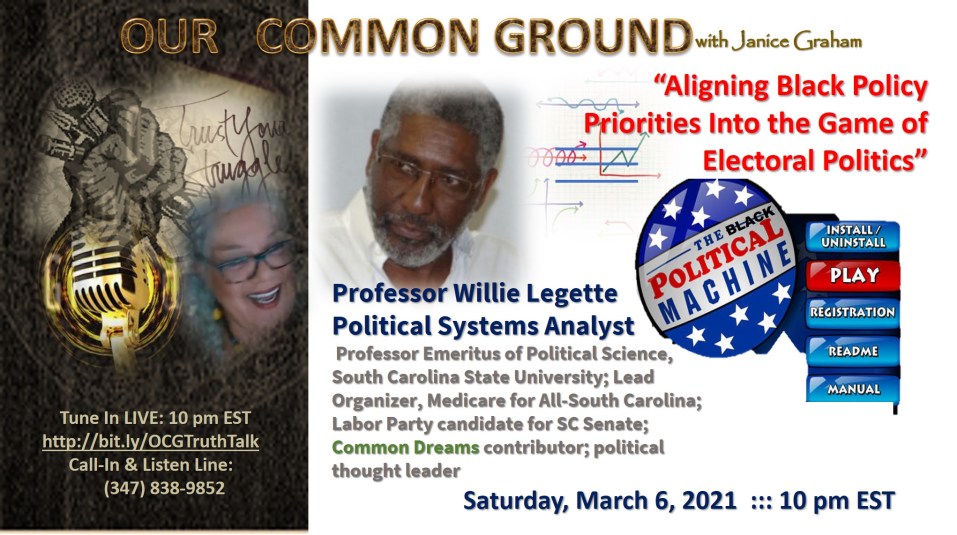
“Aligning Black Policy Priorities Into the Game of Electoral Politics” ::: S.C. Professor Emeritus, Willie Legette :: Sat., March 6, 2021 :: 10 pm ET

Transforming Truth to Power, One Broadcast At a Time

“Aligning Black Policy Priorities Into the Game of Electoral Politics”

Professor Willie Legette

Political Systems Analyst and Organizer


Saturday, March 6, 2021 ∞ 10 pm EST ∞ LIVE

Tune In LIVE Here: http://bit.ly/OCGTruthTalk

Listen & Call In Line: 347-838-9852

Visit us OUR COMMON GROUND on the Web

ABOUT THIS EPISODE 

The coalition Democrats brought together in 2020 was enough to beat Trump—but it’s insufficient for the long-term fights ahead. If 2020 was, as Biden put it, a fight “for the soul of the nation,” the next task for the progressives is even harder: build a multiracial working-class majority big enough to win a transformative agenda that lifts America out of 2020s roiling crises and truly transform people’s lives. That’s how progressives win for the next generation.

We talk with Professor Willie Legette, political analyst, as to how we might resolve the conflicts and problems of voting for who we “like”, votes that are often divorced from policies that address our political, economic, and community needs. Are we voting electoral race politics and needing class-basis policies? Just how does the “Black vote” calculate? Though we think of ourselves as on a winning team, are we winning? Is there credence to what we call “ the Black vote”? What does it mean? A whole new way of thinking is required. That and a “resistance campaign” against voter suppression.

With his co-author, Adolph Reed, Legette writes that “The disjunction between candidate choices and issue concerns reflects how people are accustomed to making their short-term electoral calculations and how they understand the issues that affect their lives. People take different criteria to candidate selection than to their estimations of the issues that most concern them. In part that is the result of decades of bipartisan neoliberal hegemony in which electoral politics has been drained of serious policy differences. For more than forty years neither Republicans nor Democrats have sought to address Americans’ decreasing standard of living and increasing economic insecurity. Both parties have subordinated voters’ concerns to the interests of Wall Street and corporations. Therefore, in states like South Carolina Democratic party politics is fundamentally transactional, where people are habituated to making electoral choices based on considerations like personal relationships or more local concerns that do not center so much on national policy issues. In effect politics—or at least electoral politics—has been redefined as not the appropriate domain for trying to pursue policies that address people’s actual material concerns like health care, education, jobs, and wages, or housing.

Legette asserts that a narrow view of politics was on display regarding the “black vote” in particular in the runup to the 2016 South Carolina primary when Congressmen James Clyburn (D-SC), John Lewis (D-GA), and Cedric Richmond (D-LA) denounced calls for free public higher education as “irresponsible” because “there are no free lunches.” When Clyburn endorsed Biden in 2020, he took a swipe at Medicare for All, another issue with strong black American support, indicating that the choice this year is Biden vs. Medicare for All. (It may be worth noting that Clyburn, between 2008 and 2018, took more than $1 million from the pharmaceutical industry.)”

“. . . is not the election of a president but the transformation of the country into a place that is more egalitarian, just, and humane, a society where poverty is not possible and where real freedom is enjoyed by all… The kind of popular pressure we need to advance some of the best of Sanders’s platform—free higher education, postal banking, public works, a single-payer health care system, stronger financial regulation, and so on—cannot be built in an election cycle.” – Cedric Johnson, Jacobin magazine,” Fear and Pandering in the Palmetto State”

Johnson problematizes that “black politics” as a framework for understanding either black Americans’ electoral behavior or their class and political interests. He points out that “voting for a presidential candidate… is only a proxy for political interests, which are again multifaceted and shifting.” Black politics, in fact, is a historically specific phenomenon, as Johnson argues elsewhere. It is a label attached to the racialized black interest-group politics that consolidated after the great victories of the 1960s. It is thoroughly a class politics that rests on a premise—and one asserted with increasing intensity as class differences among black Americans become clearer in political debate—that all black Americans converge around a racial agenda defined arbitrarily by political elites and others in the stratum of freelance Racial Voices. We talk with Professor Legette about these assertions and more. As well, I continue to ask where is the Black political infrastructure to move us either in or out of the game?

ABOUT Professor Legette

Willie Legette is Professor Emeritus of Political Science, South Carolina State University; Lead Organizer, Medicare for All-South Carolina; Labor Party candidate for SC Senate;

Common Dreams contributor; journalist and activist.

#trustyourstruggle


“I’ll Be Listening for You”

Janice


We HIGHLY RECOMMEND these LIVE broadcasts:

THIS IS REVOLUTION PODCAST

with Jason Myles & Pascal Robert  ∞  Progressive Talk 

https://www.youtube.com/watch?v=2JWmj2atW1I

Saturdays 10 am :: Tuesdays & Thursdays ::: YouTube  ::: 8pm ET

The ALFO Show   

Friday Night PoliFight

 Friday 10 pm EST

TruthWorks Network


OCG Studios:  http://bit.ly/OCGTruthTalk
Listen or Call – In:  (347) 838-9852
Join us on FACEBOOK and Learn More about this episode
OCG on the Web   OCG YouTube OCG Instagram

OCG Alternative to FB with all the Features  Become a Member

Follow us on Twitter: @JaniceOCG #TalkthatMatters  #TrustYourStruggle

OCG Broadcast Page and Archive of Past OCG Episodes: http://bit.ly/OCGTruthTalk


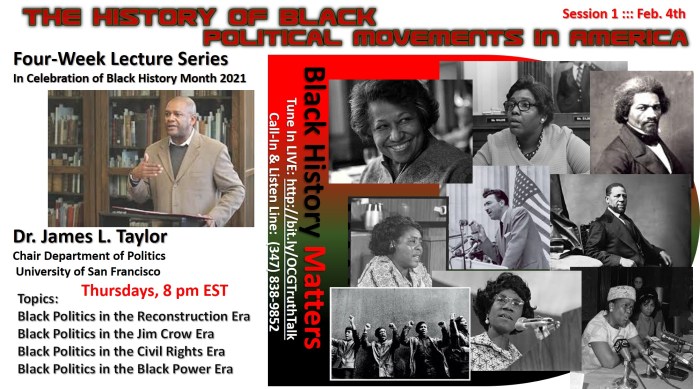
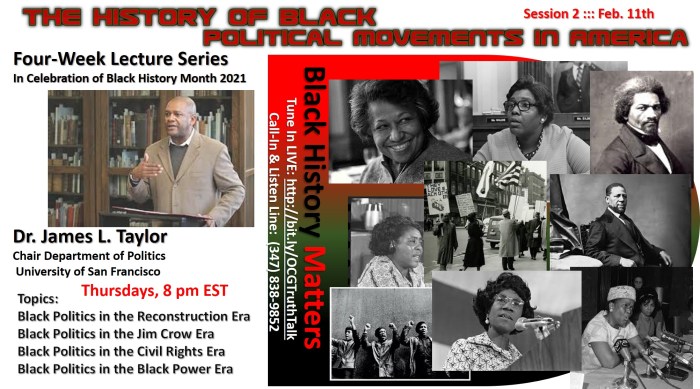
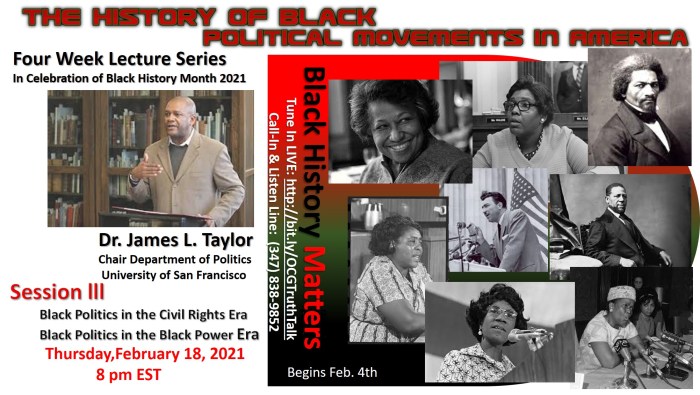
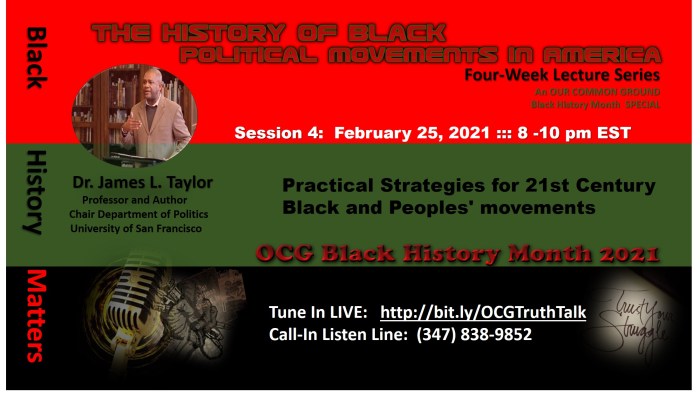
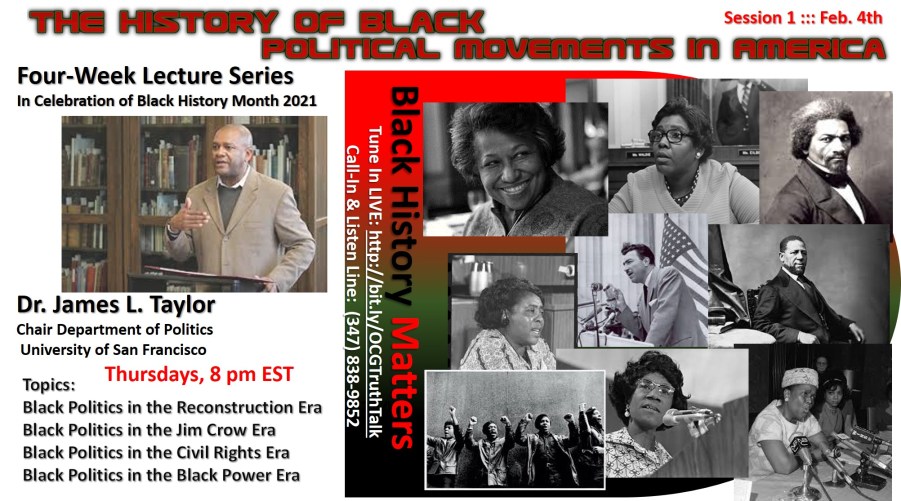
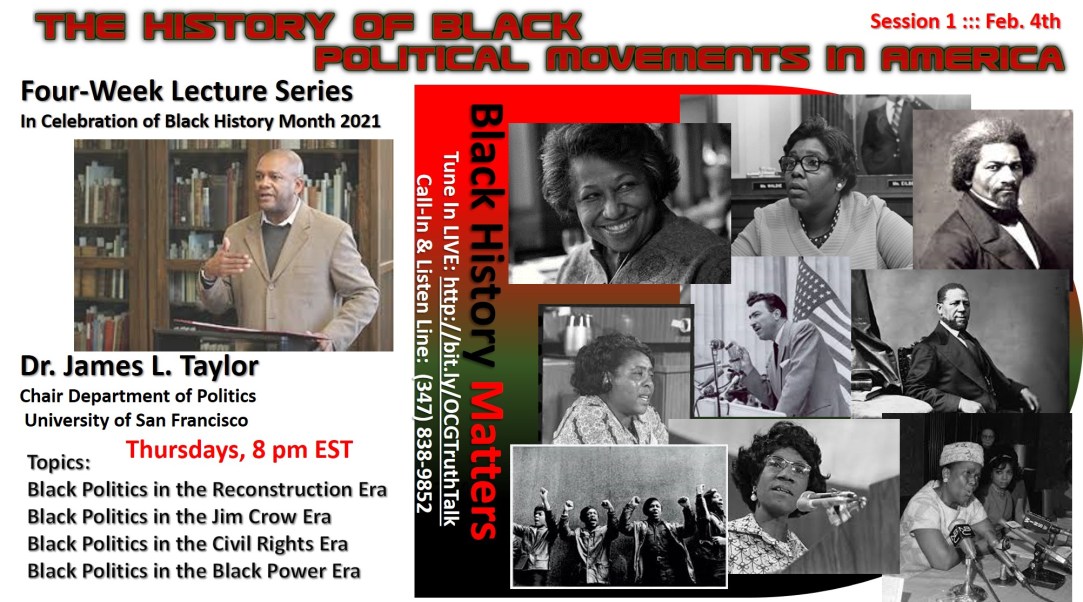
“The History of Black Political Movements in America” ::: Four-Week Lecture Series ::: An OUR COMMON GROUND BHM Special :::

An OUR COMMON GROUND Black History Month 2021

Special

“A History of Black Political Movements”

A Four-Week Lecture Series

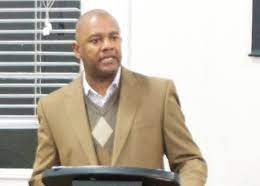
Presenter, Dr. James L. Taylor, Ph.D.

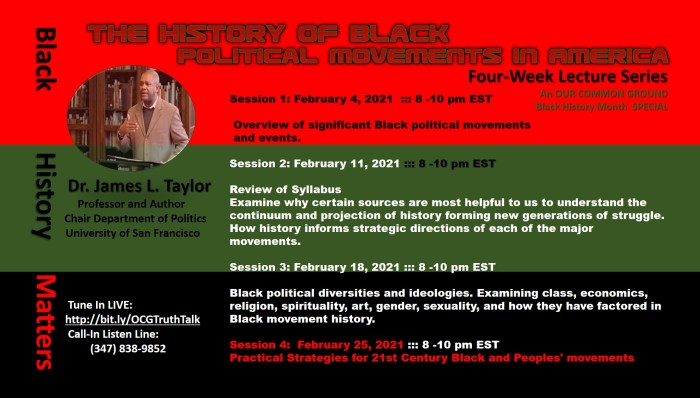
Each Session: Thursdays 8- 10 pm EST ::: February 4, 11, 18, 25, 2021

LIVE & InterActive: http://bit.ly/OCGTruthTalk

The Black Power movement grew out of the CIVIL RIGHTS MOVEMENT that had steadily gained momentum through the 1950s and 1960s. It was not a formal movement, however, the Black Power movement marked a turning point in Black-white relations in the United States and also in how Black people saw themselves. Both movements were hailed as significant struggles of Blacks to achieve full equality. They were complex events that took place at a time when society and culture were being transformed throughout the United States, and its legacy reflects that complexity. But what of the legacy political movements that occurred right after the Emancipation of slavery? We need to know and understand the networks that compose the many Black struggles and movement that brought us to our current political struggles.

This course of study will review the history of the many Black struggle movements and events that brought us to the election of Barack Obama resistance that brings us to the white supremacy insurrection and riots on January 6, 2021. We hope that you will join us.

Series SCHEDULE

February 4, 2021

   Session 1: Overview of significant historical Black political movements and events.

  • Black Politics and the Reconstruction Era

  • Black Politics of the Jim Crow Era

  • Black Politics creating the Civil Rights Era

  • Black Political development during the Black Power Era

      Reading Recommendations

      Timeline References

February 11, 2021

   Session 2: Review of Syllabus Examine why certain sources are most helpful to us to understand the continuum and projection of history forming new                               generations of struggle. How history informs strategic directions of each of the major movements.

February 18, 2021

   Session 3: Black political diversities and ideologies. Examining class, economics, religion, spirituality, art, gender, sexuality, and how they have factored in                         Black movement history.

February 25, 2021

    Session 4: Practical Strategies for 21st Century Black and Peoples’ movements.


About Dr. James L. Taylor, Ph.D.

Chair, Department of Politics, former President of the National Conference of Black Political Scientists (NCOBPS), an important organization of African American, African, and Afro Caribbean political scientist community in the United States, 2009-2011. 

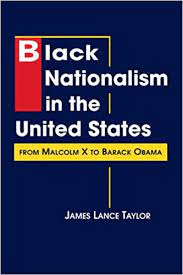
Professor James Lance Taylor is from Glen Cove, Long Island. He is the author of the book “Black Nationalism in the United States: From Malcolm X to Barack Obama”, which earned 2012 “Outstanding Academic Title” – Choice: Current Reviews for Academic Libraries. (Ranked top 2 percent of 25,000 books submitted and top 8 percent of 7,300 actually accepted for review by the American Library Association). Rated “Best of the Best.” The hardback version sold out in the U.S. and the paperback version was published in 2014.

He is a former President of the National Conference of Black Political Scientists (NCOBPS), an important organization of African American, African, and Afro Caribbean political scientists in the United States, 2009-2011. Taylor also served as Chair of the Department of Politics at the University of San Francisco from 2012-2015, and Faculty Coordinator of the African American Studies Program for 2015-2017. He served as the Chair for the “Committee on the Status of Blacks” in Political Science for the American Political Science Association (APSA), 2016-2017.

Professor Taylor is currently writing and researching a book with the working title, Peoples Temple, Jim Jones, and California Black Politics. He expects the book to be completed with a 2018-2019 publication range. The book is a study of the Peoples Temple movement and African American political history in the state of California.

His teaching and research scholarly interests are in religion and politics in the United States, race and ethnic politics, African American political history, social movements, political ideology, law and public policy, Black political leadership, and the U.S. Presidency. He lives with his family in Oakland, California.


A Broadcast Product of OUR COMMON GROUND Media

Global Right-Wing Extremism Networks Are Growing. The U.S. Is Just Now Catching Up. — ProPublica

ProPublica is a nonprofit newsroom that investigates abuses of power. Sign up to receive our biggest stories as soon as they’re published.

During the past two years, U.S. counterterrorism officials held meetings with their European counterparts to discuss an emerging threat: right-wing terror groups becoming increasingly global in their reach.

American neo-Nazis were traveling to train and fight with militias in the Ukraine. There were suspected links between U.S. extremists and the Russian Imperial Movement, a white supremacist group that was training foreigners in its St. Petersburg compounds. A gunman accused of killing 23 people at an El Paso Walmart in 2019 had denounced a “Hispanic invasion” and praised a white supremacist who killed 51 people at mosques in Christchurch, New Zealand, and who had been inspired by violent American and Italian racists.

But the efforts to improve transatlantic cooperation against the threat ran into a recurring obstacle. During talks and communications, senior Trump administration officials steadfastly refused to use the term “right-wing terrorism,” causing disputes and confusion with the Europeans, who routinely use the phrase, current and former European and U.S. officials told ProPublica. Instead, the FBI and Department of Homeland Security referred to “racially or ethnically motivated violent extremism,” while the State Department chose “racially or ethnically motivated terrorism.”

“We did have problems with the Europeans,” one national security official said. “They call it right-wing terrorism and they were angry that we didn’t. There was a real aversion to using that term on the U.S. side. The aversion came from political appointees in the Trump administration. We very quickly realized that if people talked about right-wing terrorism, it was a nonstarter with them.”

The U.S. response to the globalization of the far-right threat has been slow, scattered and politicized, U.S. and European counterterrorism veterans and experts say. Whistleblowers and other critics have accused DHS leaders of downplaying the threat of white supremacy and slashing a unit dedicated to fighting domestic extremism. DHS has denied those accusations.

In 2019, a top FBI official told Congress the agency devoted only about 20% of its counterterrorism resources to the domestic threat. Nonetheless, some FBI field offices focus primarily on domestic terrorism.

Former counterterrorism officials said the president’s politics made their job harder. The disagreement over what to call the extremists was part of a larger concern about whether the administration was committed to fighting the threat.

“The rhetoric at the White House, anybody watching the rhetoric of the president, this was discouraging people in government from speaking out,” said Jason Blazakis, who ran a State Department counterterrorism unit from 2008 to 2018. “The president and his minions were focused on other threats.”

Other former officials disagreed. Federal agencies avoided the term “right-wing terrorism” because they didn’t want to give extremists legitimacy by placing them on the political spectrum, or to fuel the United States’ intense polarization, said Christopher K. Harnisch, the former deputy coordinator for countering violent extremism in the State Department’s counterterrorism bureau. Some causes espoused by white supremacists, such as using violence to protect the environment, are not regarded as traditionally right-wing ideology, said Harnisch, who stepped down this week.

“The most important point is that the Europeans and the U.S. were talking about the same people,” he said. “It hasn’t hindered our cooperation at all.”

As for the wider criticism of the Trump administration, Harnisch said: “In our work at the State Department, we never faced one scintilla of opposition from the White House about taking on white supremacy. I can tell you that the White House was entirely supportive.”

The State Department focused mostly on foreign extremist movements, but it examined some of their links to U.S. groups as well.

There was clearly progress on some fronts. The State Department took a historic step in April by designating the Russian Imperial Movement and three of its leaders as terrorists, saying that the group’s trainees included Swedish extremists who carried out bombing attacks on refugees. It was the first such U.S. designation of a far-right terrorist group.

With Trump now out of office, Europeans and Americans expect improved cooperation against right-wing terrorists. Like the Islamist threat, it is becoming clear that the far-right threat is international. In December, a French computer programmer committed suicide after giving hundreds of thousands of dollars to U.S. extremist causes. The recipients included a neo-Nazi news website. Federal agencies are investigating, but it is not yet clear whether anything about the transaction was illegal, officials said.

“It’s like a transatlantic thing now,” said a European counterterror chief, describing American conspiracy theories that surface in the chatter he tracks. “Europe is taking ideology from U.S. groups and vice versa.”

The Crackdown

International alliances make extremist groups more dangerous, but also create vulnerabilities that law enforcement could exploit.

Laws in Europe and Canada allow authorities to outlaw domestic extremist groups and conduct aggressive surveillance of suspected members. America’s civil liberties laws, which trace to the Constitution’s guarantee of free speech spelled out in the First Amendment, are far less expansive. The FBI and other agencies have considerably more authority to investigate U.S. individuals and groups if they develop ties with foreign terror organizations. So far, those legal tools have gone largely unused in relation to right-wing extremism, experts say.

To catch up to the fast-spreading threat at home and abroad, Blazakis said, the U.S. should designate more foreign organizations as terrorist entities, especially ones that allied nations have already outlawed.

A recent case reflects the kind of strategy Blazakis and others have in mind. During the riots in May after the death of George Floyd in Minneapolis, FBI agents got a tip that two members of the anti-government movement known as the Boogaloo Bois had armed themselves, according to court papers. The suspects were talking about killing police officers and attacking a National Guard armory to steal heavy weapons, the court papers allege. The FBI deployed an undercover informant who posed as a member of Hamas, the Palestinian terrorist group, and offered to help the suspects obtain explosives and training. After the suspects started talking about a plot to attack a courthouse, agents arrested them, according to the court papers. In September, prosecutors filed charges of conspiring and attempting to provide material support to a foreign terrorist organization, which can bring a sentence of up to 20 years in prison. One of the defendants pleaded guilty last month. The other still faces charges.

If the U.S. intelligence community starts using its vast resources to gather information on right-wing movements in other countries, it will find more linkages to groups in the United States, Blazakis and other experts predicted. Rather than resorting to a sting, authorities could charge American extremists for engaging in propaganda activity, financing, training or participating in other actions with foreign counterparts.

A crackdown would bring risks, however. After the assault on the Capitol, calls for bringing tougher laws and tactics to bear against suspected domestic extremists revived fears about civil liberties similar to those raised by Muslim and human rights organizations during the Bush administration’s “war on terror.” An excessive response could give the impression that authorities are criminalizing political views, which could worsen radicalization among right-wing groups and individuals for whom suspicion of government is a core tenet.

“You will hit a brick wall of privacy and civil liberties concerns very quickly,” said Seamus Hughes, a former counterterrorism official who is now deputy director of the Program on Extremism at George Washington University. He said the federal response should avoid feeding into “the already existing grievance of government overreach. The goal should be marginalization.”

In recent years, civil liberties groups have warned against responding to the rise in domestic extremism with harsh new laws.

“Some lawmakers are rushing to give law enforcement agencies harmful additional powers and creating new crimes,” wrote Hina Shamsi, the director of the ACLU’s national security project, in a statement by the organization about congressional hearings on the issue in 2019. “That approach ignores the way power, racism, and national security laws work in America. It will harm the communities of color that white supremacist violence targets — and undermine the constitutional rights that protect all of us.”

The Pivot Problem


There is also an understandable structural problem. Since the Sept. 11 attacks in 2001, intelligence and law enforcement agencies have dedicated themselves to the relentless pursuit of al-Qaida, the Islamic State, Iran and other Islamist foes.

Now the counterterrorism apparatus has to shift its aim to a new menace, one that is more opaque and diffuse than Islamist networks, experts said.

It will be like turning around an aircraft carrier, said Blazakis, the former State Department counterterrorism official, who is now a professor at the Middlebury Institute of International Studies.

“The U.S. government is super slow to pivot to new threats,” Blazakis said. “There is a reluctance to shift resources to new targets. And there was a politicization of intelligence during the Trump administration. There was a fear to speak out.”

Despite periodic resistance and generalized disorder in the Trump administration, some agencies advanced on their own, officials said. European counterterror officials say the FBI has become increasingly active in sharing and requesting intelligence about right-wing extremists overseas.

A European counterterror chief described recent conversations with U.S. agents about Americans attending neo-Nazi rallies and concerts in Europe and traveling to join the Azov Battalion, an ultranationalist Ukrainian militia fighting Russian-backed separatists. About 17,000 fighters from 50 countries, including at least 35 Americans, have traveled to the Ukrainian conflict zone, where they join units on both sides, according to one study. The fighting in the Donbass region offers them training, combat experience, international contacts and a sense of themselves as warriors, a theater reminiscent of Syria or Afghanistan for jihadis.

“The far right was not a priority for a long time,” the European counterterror chief said. “Now they are saying it’s a real threat for all our societies. Now they are seeing we have to handle it like Islamic terrorism. Now that we are sharing and we have a bigger picture, we see it’s really international, not domestic.”

Galvanized

The assault on Congress signaled the start of a new era, experts said. The convergence of a mix of extremist groups and activists solidified the idea that the far-right threat has overtaken the Islamist threat in the United States, and that the government has to change policies and shift resources accordingly. Experts predict that the Biden administration will make global right-wing extremism a top counterterrorism priority.

“This is on the rise and has gotten from nowhere on the radar to very intense in a couple of years,” a U.S. national security official said. “It is hard to see how it doesn’t continue. It will be a lot easier for U.S. officials to get concerned where there is a strong U.S. angle.”

A previous spike in domestic terrorism took place in the 1990s, an era of violent clashes between U.S. law enforcement agencies and extremists. In 1992, an FBI sniper gunned down the wife of a white supremacist during an armed standoff in Ruby Ridge, Idaho. The next year, four federal agents died in a raid on heavily armed members of a cult in Waco, Texas; the ensuing standoff at the compound ended in a fire that killed 76 people.Both sieges played a role in the radicalization of the anti-government terrorists who blew up the Oklahoma City federal building in 1995, killing 168 people, including children in a day care center for federal employees. Oklahoma City remains the deadliest terrorist act on U.S. soil aside from the Sept. 11 attacks.

The rise of al-Qaida in 2001 transformed the counterterrorism landscape, spawning new laws and government agencies and a worldwide campaign by intelligence agencies, law enforcement and the military. Despite subsequent plots and occasionally successful attacks involving one or two militants, stronger U.S. defenses and limited radicalization among American Muslims prevented Islamist networks from hitting the United States with the kind of well-trained, remotely directed teams that carried out mass casualty strikes in London in 2005, Mumbai in 2008 and Paris in 2015.

During the past decade, domestic terrorism surged in the United States. Some of the activity was on the political left, such as the gunman who opened fire at a baseball field in Virginia in 2017. The attack critically wounded Rep. Steve Scalise, a Republican legislator from Louisiana who was the House Majority whip, as well as a Capitol Police officer guarding him and four others.

But many indicators show that far-right extremism is deadlier. Right-wing attacks and plots accounted for the majority of all terrorist incidents in the country between 1994 and 2020, according to a study by the Center for Strategic and International Studies. The Anti-Defamation League reported in 2018 that right-wing terrorists were responsible for more than three times as many deaths as Islamists during the previous decade.

“There have been more arrests and deaths in the United States caused by domestic terrorists than international terrorists in recent years,” said Michael McGarrity, then the counterterrorism chief of the FBI, in congressional testimony in 2019. “Individuals affiliated with racially-motivated violent extremism are responsible for the most lethal and violent activity.”

During the same testimony, McGarrity said the FBI dedicated only about 20% of its counterterrorism resources to the domestic threat. The imbalance, experts say, was partly a lingering result of the global offensive by the Islamic State, whose power peaked in the middle of the decade. Another reason: Laws and rules instituted in the 1970s after FBI spying scandals make it much harder to monitor, investigate and prosecute Americans suspected of domestic extremism.

The Trump Administration and the Europeans

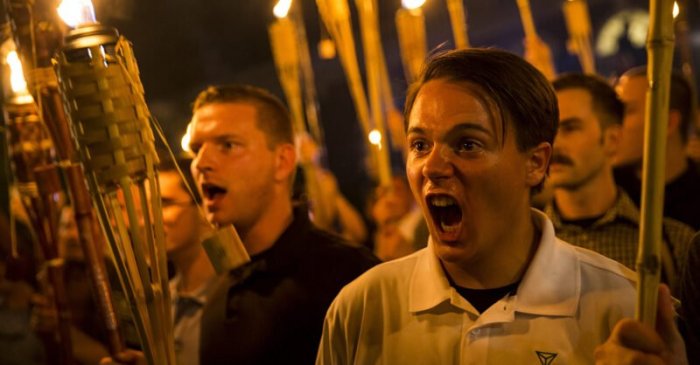
Critics say the Trump administration was reluctant to take on right-wing extremism. The former president set the tone with his public statements about the violent Unite the Right rally in Charlottesville, Virginia, in 2017, they say, and with his call last year telling the far-right Proud Boys group to “stand back and stand by.”

Still, various agencies increased their focus on the issue because of a drumbeat of attacks at home — notably the murders of 11 people at a synagogue in Pittsburgh in 2018 — and overseas. The Christchurch massacre of worshippers at mosques in New Zealand in March 2019 caught the attention of American officials. It was a portrait of the globalization of right-wing terrorism.

Brenton Tarrant, the 29-year-old Australian who livestreamed his attack, had traveled extensively in Europe, visiting sites he saw as part of a struggle between Christianity and Islam. In his manifesto, he cited the writings of a French ideologue and of Dylann Roof, an American who killed nine people at a predominantly Black church in South Carolina in 2015. While driving to the mosques, Tarrant played an ode to Serbian nationalist fighters of the Balkan wars on his car radio. And he carried an assault rifle on which he had scrawled the name of an Italian gunman who had shot African immigrants in a rampage the year before.

Christchurch was “part of a wave of violent incidents worldwide, the perpetrators of which were part of similar transnational online communities and took inspiration from one another,” said a report last year by Europol, an agency that coordinates law enforcement across Europe. The report described English as “the lingua franca of a transnational right-wing extremist community.”

With its long tradition of political terrorism on both extremes, Europe has also suffered a spike in right-wing violence. Much of it is a backlash to immigration in general and Muslim communities in particular. Responding to assassinations of politicians and other attacks, Germany and the United Kingdom have outlawed several organizations.

Closer to home, Canada has banned two neo-Nazi groups, Blood and Honour and Combat 18, making it possible to charge people for even possessing their paraphernalia or attending their events. Concerts and sales of video games, T-shirts and other items have become a prime source of international financing for right-wing movements, the European counterterror chief said.

During the past two years, officials at the FBI, DHS, State Department and other agencies tried to capitalize on the deeper expertise of European governments and improve transatlantic cooperation against right-wing extremism. Legal and cultural differences complicated the process, American and European officials said. A lack of order and cohesion in the U.S. national security community was another factor, they said.

“There was so little organization to the U.S. counterterrorism community that everybody decided for themselves what they would do,” a U.S. national security official said. “It was not the type of centrally controlled effort that would happen in other administrations.”

As a result, the U.S. government has sometimes been slow to respond to European requests for legal assistance and information-sharing about far-right extremism, said Eric Rosand, who served as a State Department counterterrorism official during the Obama administration.

“U.S.-European cooperation on addressing white supremacist and other far-right terrorism has been ad hoc and hobbled by a disjointed and inconsistent U.S. government approach,” Rosand said.

The semantic differences about what to call the threat didn’t help, according to Rosand and other critics. They say the Trump administration was averse to using the phrase “right-wing terrorism” because some groups on that part of the ideological spectrum supported the president.

“It highlights the disconnect,” Rosand said. “They were saying they didn’t want to suggest the terrorism is linked to politics. They didn’t want to politicize it. But if you don’t call it what it is because of concerns of how it might play with certain political consistencies, that politicizes it.”

Harnisch, the former deputy coordinator at the State Department counterterrorism bureau, rejected the criticism. He said cooperation with Europeans on the issue was “relatively nascent,” but that there had been concrete achievements.

“I think we laid a strong foundation, and I think the Biden administration will build on it,” Harnisch said. “From my perspective, we made significant progress on this threat within the Trump administration.”

Get the latest news from ProPublica every afternoon.
Portrait of Sebastian Rotella

Sebastian Rotella

Sebastian Rotella is a senior reporter at ProPublica. An award-winning foreign correspondent and investigative reporter, Sebastian’s coverage includes terrorism, intelligence and organized crime.

Source: Global Right-Wing Extremism Networks Are Growing. The U.S. Is Just Now Catching Up. — ProPublica

An FBI Agent Went Undercover to Study White Supremacists. He’s Now Speaking Out About Racist Police. – Mother Jones

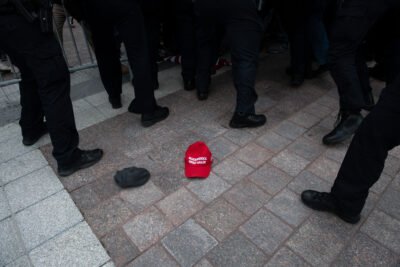
One Capitol Police officer was caught taking a selfie with a member of the white supremacist mob that overtook the US Capitol last week. A second officer has been suspended for wearing a “Make America Great Again” hat and directing insurrectionists around the building rather than handcuffing them. The storming of the Capitol has revived concerns about the ties between police and white supremacists, in part because officers arrested far more Black Lives Matter protesters this summer than they did Trump supporters who broke into the legislative building with weapons, at least one Confederate flag, and bundles of zip ties.

It wasn’t just on-duty cops who raised eyebrows: Off-duty law enforcement officers were allegedly part of the mob itself, with some flashing their badges and identification cards as they rushed through the doors, according to an on-duty DC Metro Police officer who saw them. “If these people can storm the Capitol building with no regard to punishment, you have to wonder how much they abuse their powers when they put on their uniforms,” the officer wrote later on Facebook, according to Politico.

Police departments around the country are now investigating officers who are suspected of attending the rally in DC, or were caught posting racist messages on social media. Days after the attack, New York Rep. Jamaal Bowman introduced a bill that would require a commission to examine whether Capitol Police officers have white supremacist ties.

For some experts, these investigations are far too little, too late: Police departments and federal agencies have long understood that certain cops are connected to racist groups, and have largely looked the other way. “We’ve known for decades that there are racial disparities in every step of the criminal justice process, from who gets stopped to who gets arrested to who police use force against to how they get charged,” says Michael German, a former FBI agent who now studies white supremacist infiltration of police departments as a fellow at the liberal Brennan Center for Justice, a think tank. “It’s treated as implicit bias or structural bias without an acknowledgment that there’s a lot of explicit bias driving these disparities.”

As an FBI agent in the 1990s, German went undercover with white supremacist and militia groups to thwart their bomb plots. At the time, the Justice Department warned him to be careful about sharing details of his investigations with cops, because some of them had ties to white supremacist groups themselves. Even so, in the decades since then, he says the FBI has not prioritized investigating those police officers and getting them off the streets, allowing them to continue their jobs. I caught up with German this week to ask how law enforcement agencies have fallen short in identifying and firing racist officers, and what they should be doing now, in the wake of the Capitol siege, to root them out.

Do we know roughly how many cops have ties to white supremacists? 

Unfortunately we don’t have a sense of the scope of the problem because no entity has made it their mission to identify the scope. But the FBI regularly warns its agents who are investigating white supremacists and far-right militants that the subjects of those investigations will often have active links to law enforcement, and that they need to alter their methodology to protect the integrity of their investigations. Those were warnings I received in the 1990s when I worked these cases, and they appear in published leaked FBI materials, including the 2015 counterterrorism policy guide.

When you say FBI agents alter their methodologies, do you mean they’re not supposed to collaborate as much with police while investigating white supremacists? 

Exactly. The counterterrorism policy guide recommends that the FBI put the subjects of these investigations on a watch list with what’s called the silent-hit function; if a police officer pulls over the subject of your investigation, a silent-hit function would not tell the officer that he’s interacting with someone who’s the subject of a terrorism investigation.

If the FBI knows this is a problem of such significance that it has to alter its methodologies of investigating cases, I would argue it also has to have a strategy to protect the public from these white supremacists and far-right militants who carry a badge. The fact that they don’t even document who these police officers are shows an inexcusable lack of attention to their mission to enforce the civil rights laws of this country as well as the counterterrorism laws.

In 2006, the FBI warned that for decades, white supremacist groups had been attempting to “recruit” police officers. Can you talk about the history of this?

It’s important to understand that the United States was founded as a white supremacist nation, so our laws enforced white supremacy, so those who were sworn to enforce the law were enforcing white supremacy. After slavery ended, you had Jim Crow. After the civil rights era, you still had sundown towns, where the police enforced unwritten rules about who could stay in town past dark. To imagine there was somehow a miraculous event that cured the police of that problem is foolish.

The most egregious are examples where police officers were actually members of white supremacist groups and would go to public events representing themselves as police officers. And their membership was known to law enforcement for years and unaddressed, and it was only when the public learned about it that the police department took action.

We do so little examination of police violence in this country, but we know it disproportionately targets people who are Black or brown. How much of that is driven from actual white supremacist ideology rather than isolated incidents that happen on the job is something the Justice Department has a responsibility to investigate.

What kind of recruitment techniques do white supremacist groups use with police?

Having spent time as an FBI undercover agent, I think the term [“recruit”] doesn’t accurately describe what’s happening. It’s not so much that this group will put a pamphlet together and make a recruiting pitch and approach officers. In many cases, these are people who grew up affiliating with white supremacists. One guy went to work as a prison guard, one guy went to work in factories, and the other guy went to work as a police officer. And they are just carrying on attitudes and associating with the same people they associated with when they weren’t a police officer.

Are there any police departments that have tried themselves to root out racist cops, and any that did a good job?

The departments tend to be reactive to public outrage. Part of the problem is that most law enforcement agencies don’t have written policies specifically addressing the issue. So when the public identifies somebody who’s operating in league with a white supremacist group or far-right militant group, they end up disciplining them under broad prohibitions against engaging in public conduct detrimental to the public interest, or similarly worded policies.

Sometimes this doesn’t stand up to the due process scrutiny that’s designed to protect innocent officers from being treating unfairly. So they end up getting their jobs back after they’re fired.

What I argue is that even where the conduct is not sufficient to terminate that officer, the police department still has an obligation to mitigate the threat they pose to the community. There are plenty of jobs in police departments that don’t regularly interact with the public. Or perhaps some extra level of supervision of that officer would be warranted.

What’s the main legal barrier to firing them? Police union contracts?

Right. Or just the lack of policy, or disparate treatment, where other officers known to engage in racist behavior weren’t fired in the past, so it’s unfair to fire this officer. Often, if the police department knew about your involvement with this white supremacist group for five years but is now trying to fire you, you can argue: “I’m not being fired because of the conduct, because the department knew about the conduct; I’m being fired because the public demanded it, and that’s not appropriate.” That’s the problem with the way we have just turned a blind eye to this problem for so many decades.

Is there anything else that government can do to address this problem?

What we need is to empower prosecutors and defense attorneys. When these [white supremacist] officers are identified by the agency or by the public, that information should be provided to prosecutors and they [the officer] should be put on no-call lists or Brady lists. Today these no-call lists are lists of officers who are known to have previously engaged in some kind of dishonest conduct that a defense attorney could use to impeach their testimony. My argument is that racist behavior is one of those categories that should be available to the defense attorney. [This can] force those agents off the street.

In an ideal world, what do you think the Justice Department or FBI’s role would be in rooting out white supremacist police officers?

What I would recommend is for the Justice Department to implement a national strategy to identify these officers, document the scope of the threat, and design programs to mitigate it. It’s a matter of priorities. If the FBI heard through the grapevine that a police officer was affiliating himself with Al Qaeda or ISIS, we can be confident the FBI would react quickly. They should act just as quickly when the police officer is associated with white supremacist and far-right militant groups.

Some people have expressed the idea that we need to create a list of designated domestic terrorist groups, but that’s a silly approach because these groups change their names regularly. In other words, writing a list of groups that are banned is not going to help. Because officers can look at the list and say, “Okay, I won’t join this group, but I’ll join this other group. Or I’ll be part of a group that previously called itself the KKK but now calls itself something else.” But it’s the same people engaged in the same racist conduct. It takes an understanding of how these groups actually organize before you can write a policy.

The officers and agents within these federal, state, and local law enforcement departments know who the racists are among them. What we need to do is make sure officers who see racist misconduct or far-right militancy within law enforcement are protected when they report it. We need to strengthen whistleblower protection laws.

You wrote in a recent report about a man in Anniston, Alabama, who applied to be a police officer, and listed on his application that he was part of the League of the South, a white supremacist secessionist group. He was hired anyway. Are cops’ racist ties often that obvious? 

Yes, often it is that obvious. So it’s not that they can’t be seen, it’s that nobody is looking for them.

Update (January 15): The Capitol Police officer who wore a MAGA hat claims he put on the cap as part of a plan to save some of his colleagues who were in danger, according to a new Wall Street Journal report.

Source: An FBI Agent Went Undercover to Study White Supremacists. He’s Now Speaking Out About Racist Police. – Mother Jones

The GOP Must Choose Between Conspiracy and Reality – The Atlantic

The GOP Must Choose Between Conspiracy and Reality

QAnon Is Destroying the GOP From Within

Until last week, too many in the Republican Party thought they could preach the Constitution and wink at QAnon. They can’t.

“The violence that Americans witnessed—and that might recur in the coming days—is not a protest gone awry or the work of “a few bad apples.” It is the blossoming of a rotten seed that took root in the Republican Party some time ago and has been nourished by treachery, poor political judgment, and cowardice. When Trump leaves office, my party faces a choice: We can dedicate ourselves to defending the Constitution and perpetuating our best American institutions and traditions, or we can be a party of conspiracy theories, cable-news fantasies, and the ruin that comes with them. We can be the party of Eisenhower, or the party of the conspiracist Alex Jones. We can applaud Officer Goodman or side with the mob he outwitted. We cannot do both.

If and when the House sends its article of impeachment against Trump to the Senate, I will be a juror in his trial, and thus what I can say in advance is limited. But no matter what happens in that trial, the Republican Party faces a separate reckoning. Until last week, many party leaders and consultants thought they could preach the Constitution while winking at QAnon. They can’t. The GOP must reject conspiracy theories or be consumed by them. Now is the time to decide what this party is about.”

Source: The GOP Must Choose Between Conspiracy and Reality – The Atlantic

“No One Took Us Seriously”: Black Cops Warned About Racist Capitol Police Officers for Years

“No One Took Us Seriously”: Black Cops Warned About Racist Capitol Police Officers for Years

Allegations of racism against the Capitol Police are nothing new: Over 250 Black cops have sued the department since 2001. Some of those former officers now say it’s no surprise white nationalists were able to storm the building.

Creative Commons

U.S. Capitol Police officers scuffle with insurrectionists after they breached security fencing on Jan. 6. (Graeme Sloan/Bloomberg via Getty Images)

ProPublica is a nonprofit newsroom that investigates abuses of power. Sign up to receive our biggest stories as soon as they’re published.

When Kim Dine took over as the new chief of the U.S. Capitol Police in 2012, he knew he had a serious problem.

Since 2001, hundreds of Black officers had sued the department for racial discrimination. They alleged that white officers called Black colleagues slurs like the N-word and that one officer found a hangman’s noose on his locker. White officers were called “huk lovers” or “FOGs” — short for “friends of gangsters” — if they were friendly with their Black colleagues. Black officers faced “unprovoked traffic stops” from fellow Capitol Police officers. One Black officer claimed he heard a colleague say, “Obama monkey, go back to Africa.”

In case after case, agency lawyers denied wrongdoing. But in an interview, Dine said it was clear he had to address the department’s charged racial climate. He said he promoted a Black officer to assistant chief, a first for the agency, and tried to increase diversity by changing the force’s hiring practices. He also said he hired a Black woman to lead a diversity office and created a new disciplinary body within the department, promoting a Black woman to lead it.

“There is a problem with racism in this country, in pretty much every establishment that exists,” said Dine, who left the agency in 2016. “You can always do more in retrospect.”

Whether the Capitol Police managed to root out racist officers will be one of many issues raised as Congress investigates the agency’s failure to prevent a mob of Trump supporters from attacking the Capitol while lawmakers inside voted to formalize the electoral victory of President-elect Joe Biden.

Already, officials have suspended several police officers for possible complicity with insurrectionists, one of whom was pictured waving a Confederate battle flag as he occupied the building. One cop was captured on tape seeming to take selfies with protesters, while another allegedly wore a red “Make America Great Again” hat as he directed protesters around the Capitol building. While many officers were filmed fighting off rioters, at least 12 others are under investigation for possibly assisting them.

Two current Black Capitol Police officers told BuzzFeed News that they were angered by leadership failures that they said put them at risk as racist members of the mob stormed the building. The Capitol Police force is only 29% Black in a city that’s 46% Black. By contrast, as of 2018, 52% of Washington Metropolitan police officers were Black. The Capitol Police are comparable to the Metropolitan force in spending, employing more than 2,300 people and boasting an annual budget of about a half-billion dollars.

The Capitol Police did not immediately respond to questions for this story.

Sharon Blackmon-Malloy, a former Capitol Police officer who was the lead plaintiff in the 2001 discrimination lawsuit filed against the department, said she was not surprised that pro-Trump rioters burst into the Capitol last week.

In her 25 years with the Capitol Police, Blackmon-Malloy spent decades trying to raise the alarm about what she saw as endemic racism within the force, even organizing demonstrations where Black officers would return to the Capitol off-duty, protesting outside the building they usually protect.

The 2001 case, which started with more than 250 plaintiffs, remains pending. As recently as 2016, a Black female officer filed a racial discrimination complaint against the department.

“Nothing ever really was resolved. Congress turned a blind eye to racism on the Hill,” Blackmon-Malloy, who retired as a lieutenant in 2007, told ProPublica. She is now vice president of the U.S. Capitol Black Police Association, which held 16 demonstrations protesting alleged discrimination between 2013 and 2018. “We got Jan. 6 because no one took us seriously.”

Retired Lt. Frank Adams sued the department in 2001 and again in 2012 for racial discrimination. A Black, 20-year veteran of the force, Adams supervised mostly white officers in the patrol division. He told ProPublica he endured or witnessed racism and sexism constantly. He said that before he joined the division, there was a policy he referred to as “meet and greet,” where officers were directed to stop any Black person on the Hill. He also said that in another unit, he once found a cartoon on his desk of a Black man ascending to heaven only to be greeted by a Ku Klux Klan wizard. When he complained to his superior officers, he said he was denied promotions and training opportunities, and suffered other forms of retaliation.

In an interview, he drew a direct line between racism in the Capitol Police and the events that unfolded last week. He blamed Congress for not listening to Black members of the force years ago.

“They only become involved in oversight when it’s in the news cycle,” said Adams, who retired in 2011. “They ignored the racism happening in the department. They ignored the hate.”

The department’s record in other areas of policing have drawn criticism as well.

In 2015, a man landed a gyrocopter on the Capitol lawn — top officials didn’t know the airborne activist was coming until minutes before he touched down. In 2013, when a lone gunman opened fire at the nearby Navy Yard, killing 12 people, the Capitol Police were criticized for standing on the sidelines. The force’s leadership board later determined its actions were justified.

Last month, days after a bloody clash on Dec. 12 between militant Trump supporters and counterprotesters, Melissa Byrne and Chibundu Nnake were entering the Capitol when they saw a strangely dressed man just outside the building, carrying a spear.

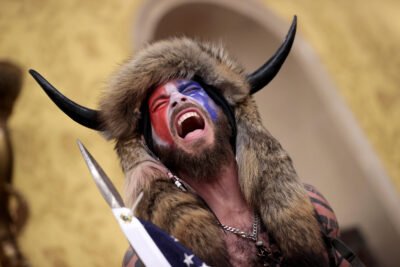
He was a figure they would come to recognize — Jacob Chansley, the QAnon follower in a Viking outfit who was photographed last week shouting from the dais of the Senate chamber.

They alerted the Capitol Police at the time, as the spear seemed to violate the complex’s weapons ban, but officers dismissed their concern, they said.

One officer told them that Chansley had been stopped earlier in the day, but that police “higher ups” had decided not to do anything about him.

We don’t “perceive it as a weapon,” Nnake recalled the officer saying of the spear.

Chansley told the Globe and Mail’s Adrian Morrow that Capitol Police had allowed him in the building on Jan. 6, which would normally include passing through a metal detector, although he was later charged with entering a restricted building without lawful authority, violent entry and disorderly conduct on Capitol grounds. As of Tuesday, he had not yet entered a plea.

QAnon follower Jacob Chansley screams “Freedom” inside the Senate chamber after the Capitol was breached by a mob on Jan. 6. (Win McNamee/Getty Images)

For Byrne and Nnake, their interactions with the “QAnon Shaman” on Dec. 14 highlighted what they perceive as double standards in how the Capitol Police interact with the public.

Like many people who regularly encounter the force, Nnake and Byrne said they were accustomed to Capitol officers enforcing rules aggressively — later that day, Nnake was told that he would be tackled if he tried to advance beyond a certain point. “As a Black man, when I worked on the Hill, if I forgot a badge, I couldn’t get access anywhere,” he told ProPublica.

Congress, which controls the agency and its budget, has a mixed record of oversight. For the most part, Congress has been deferential toward the force, paying attention to its workings only after serious security failures, and even then, failing to meaningfully hold its leaders accountable.

Rep. Eleanor Holmes Norton, a Democrat from D.C. who is a nonvoting member of Congress, told ProPublica she believes a national commission should be formed to investigate what occurred at the Capitol on Jan. 6, similar to what followed 9/11.

“Congress deserves some of the blame,” she told ProPublica. “We have complete control over the Capitol Police. … Long-term concerns with security have been raised, and they’ve not been dealt with in the past.”

The force has also suffered a spate of recent, internal scandals that may prove pertinent as Congress conducts its investigation.

Capitol Police officers accidently left several guns in bathrooms throughout the building in 2015 and 2019; in one instance, the loaded firearm was discovered by a small child.

The agency has been criticized for a lack of transparency for years. Capitol Police communications and documents are not subject to the Freedom of Information Act and, unlike many local law enforcement agencies, it has no external watchdog specifically assigned to investigate and respond to community complaints. The force has not formally addressed the public since the riot last week.

“All law enforcement is opaque,” said Jonathan M. Smith, executive director of the Washington Lawyers’ Committee for Civil Rights and Urban Affairs. “At least most local police departments are subject to some kind of civilian oversight, but federal police agencies are left to operate in the shadows.”

The agency’s past troubles have rarely resulted in reform, critics said.

After the April 2015 gyrocopter incident, Congress held a hearing to examine how 61-year-old postal worker and activist Doug Hughes managed to land his aircraft after he livestreamed his flight. Dozens of reporters and news cameras assembled in front of the Capitol to watch the stunt, which was designed to draw attention to the influence of money in politics. Capitol Police did not learn of the incoming flight until a reporter reached out to them for comment, minutes before Hughes landed.

Dine defended the force’s response to the incident, pointing out that Hughes was promptly arrested and no one was hurt.

Former Rep. Jason Chaffetz, a Republican from Utah, then the chairman of the Committee on Oversight and Government Reform, harshly criticized the department and other federal agencies for what he perceived as an intelligence failure.

“The Capitol Police is terrible and pathetic when it comes to threat assessment,” Chaffetz told ProPublica in an interview. “They have a couple people dedicated to it, but they’re overwhelmed. Which drives me nuts. … It’s not been a priority for leadership, on both sides of the aisle.” He said he is not aware of any serious changes to the force’s intelligence gathering following the debacle.

Norton, who also pressed Dine at the hearing, told ProPublica the intelligence lapses surrounding the gyrocopter landing should be considered a “forerunner” to last week’s riot.

“For weeks, these people had been talking about coming to the Capitol to do as much harm as they can,” Norton said. “Everyone knew it. Except the Capitol Police.” Reports show the force had no contingency plan to deal with an escalation of violence and mayhem at last week’s rally, even though the FBI and the New York Police Department had warned them it could happen.

Law enforcement experts said that the agency is in a difficult position. While it has sole responsibility for protecting the Capitol, it must work with other nearby federal law enforcement agencies, Washington’s Metropolitan Police and the National Guard in case of emergencies.

In an interview, Nick Zotos, a former D.C. National Guard commander who now works for the Department of Homeland Security, said that the roughly two dozen agencies responsible for public safety in Washington can cause territorial disputes, finger-pointing and poor communication.

“This is not a D.C. thing, necessarily, although it’s probably the worst in D.C.,” Zotos said. “Police departments just don’t play with each other nicely.”

Blackmon-Malloy told ProPublica that divisions within the Capitol Police could be just as dangerous, not only for Congress but for Black officers themselves. “Now you got to go to work on the 20th,” she told ProPublica, alluding to the inauguration. “And stand next to someone who you don’t even know if they have your back.”

Dara LindDavid McSwane and Kirsten Berg contributed reporting.

Josh was a Senior Reporting Fellow at ProPublica.

Source: “No One Took Us Seriously”: Black Cops Warned About Racist Capitol Police Officers for Years

Toward a Global History of White Supremacy | Boston Review

Toward a Global History of White Supremacy

The simultaneous success of Trump and Brexit was no coincidence: white supremacist politics are international in scope and often share entwined histories.

DANIEL GEARYCAMILLA SCHOFIELDJENNIFER SUTTON

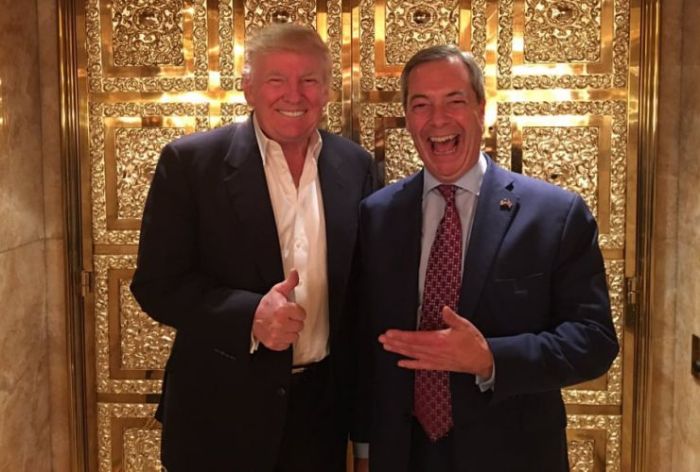
Image: Twitter/Nigel Farage

Editor’s Note: Adapted from Global White Nationalism: From Apartheid to Trump edited by Daniel Geary, Camilla Schofield, and Jennifer Sutton.


From promulgating the racist birther conspiracy theory to exhorting vigilante Proud Boys to “stand by,” Donald Trump has amplified white nationalist ideas in the United States. But neither Trump’s emergence nor his impact can be understood fully by looking at the United States in isolation. Rather, Trump must be understood for his place in a long line of Anglophone leaders who claimed to speak for besieged whites, with precedents including Ian Smith, the leader of the white minoritarian regime of Rhodesia, and Enoch Powell, the British MP who infamously warned of “rivers of blood” if Britain did not halt non-white immigration. Moreover, white nationalism is global not only in its history but in its present manifestations: white nationalists worldwide have hailed Trump’s actions and would be emboldened by his reelection.

White nationalists worldwide have hailed Trump’s actions and would be emboldened by his reelection.

While his authoritarian response to a season of Black Lives Matter protests has brought renewed attention to Trump’s racist politics, his investment in global white supremacy is long-standing and was instrumental to his election. Indeed, Nigel Farage, a leader of the UK’s far right, was an important international ally while Trump was campaigning. The morning after the June 2016 Brexit referendum vote, Donald Trump landed at his Scottish golf resort and tweeted that Britons “took their country back, just like we will take America back.” During his campaign that summer, Trump forged a close alliance with Farage, leader of the UK Independence Party and the most prominent advocate of British withdrawal from the European Union. Farage already knew Trump’s campaign manager, Steve Bannon, who hailed the rise of right-wing European nationalism as executive chairman of the alt-right website Breitbart News. In November, Farage was the first foreign leader to meet the president-elect; pleased with their successes on both sides of the Atlantic, they posed for a celebratory photograph before a glimmering set of golden elevator doors in Trump Tower. Trump and Farage’s image marked a victory in a struggle by linked resurgent white nationalists on both sides of the Atlantic to “take back” their countries from non-white immigrants and internationalist liberal elites.

Although many have observed the similarities between Brexit and Trumpism, few have noted that those similarities arise from the entwined histories of U.S. and British revanchist politics. Likewise, many have been baffled by the international spread of white supremacist violence, with authorities and the mass media wrongly depicting such attacks as the work of isolated loners rather than emanating from a dispersed political movement. Such bonds link not only Trump’s and Farage’s successes, but also the 2016 assassination of pro-Remain Labour MP Jo Cox in Yorkshire by a neo-Nazi proclaiming “Britain First”; the 2018 killings at a Pittsburgh synagogue by a white supremacist who believed that Jews were orchestrating white genocide by abetting immigration from Latin America; and the 2019 murder of Muslims in Christchuch, New Zealand, by an Australian white supremacist. Both the rise of ethnonationalism in electoral politics and of white supremacist violence in the English-speaking world need to be understood as related developments in a longer history of exchange among white nationalists globally.

Because white nationalists are primarily concerned with the racial integrity of states, they have wrongly been assumed to be parochial in their politics, focused solely on domestic issues. In fact, transnational ties and transnational flows of culture and capital have long undergirded the pursuit of white racial nationalism. The success of Brexit, for example, emboldened Trump’s nativist supporters to see themselves as part of a global movement that could achieve power in the United States. Trump’s victory in turn inspired the Christchurch killer, who praised the U.S. president as a “symbol of renewed white identity and common purpose.” We need to understand the history of these connections if we are to grasp what has sustained white nationalism despite global trends toward liberation and equality.

White nationalism is an ideology that asserts national identity and belonging in terms of European descent. Accordingly, white nationalists see their countries as threatened by immigration and social advancement by non-whites. They contend that national identity and belonging must be built around racial whiteness—rather than culture, language, or place—and that it is the whiteness of the nation’s past, present, and future that ensures its continued historical development and survival. The fundamental ideas of white nationalists are hardly new, yet they have taken on new formulations since the mid-twentieth century as a politics of reaction to the promise of racial equality and decolonization. Though the numbers of self-identified white nationalists remain small, their ideas resonate broadly, impacting contemporary debates about global demographic change, national identity, and mass migration.

The shift of white nationalist politics from center to ostensible periphery is a relatively recent phenomenon. At the British Empire’s zenith, its apologists claimed that the rule of law, free trade, and parliamentary sovereignty were natural virtues of the “English race.” At the turn of the twentieth century, U.S. elites shared with British imperialists a discourse of English racial heritage termed Anglo-Saxonism that was used to justify the subjugation of Native Americans, the subordination of African Americans, and the possession of the United States’ own overseas empire. According to Anglo-Saxonism, white, Protestant, English-speaking men naturally made modern nations. This racialized modernity is based on the presumption that only whites can govern and that the empowerment of non-whites is therefore an existential threat to white self-government.

Although many have observed the similarities between Brexit and Trumpism, few have noted that those similarities arise from the entwined histories of U.S. and British revanchist politics.

Anglo-Saxonism’s cherished ideal of a white man’s country reserving self-government and economic opportunity to whites may no longer be as dominant as it was a century ago, but neither has it disappeared. Popular historian Niall Ferguson still maintains that British colonial settler culture brought “modernity” to the world. Today some Brexiteers look to trade within an “Anglosphere” to reanimate this historical political tradition and harness racialized notions of kith and kin in the English-speaking world. Indeed, nostalgia for a past period of national glory in which white rule was unchallenged is a signature feature of today’s right-wing populists who seek to make their nations great again.

Any account of white nationalism’s influence today must take account of this longer history and also recognize that profound and persistent structures of white supremacy remain deeply rooted in the English-speaking world. To understand the politics of racism in the present requires locating and examining the histories of modern white nationalism in global terms: as a response to decolonization, struggles for equal rights, mass migration, and postwar international institutions. As Western political and social elites professed a commitment to color-blind ideals, assumptions of white supremacy were challenged and reformulated.

In particular, the declining legitimacy of overtly racist political expression produced new international alliances and new populist claims among white supremacists. As they saw themselves losing power locally, they looked abroad for allies. Countering liberal internationalist organizations such as the United Nations and the World Council of Churches, white nationalists increasingly adopted a rhetoric of ethnic populism, casting themselves as representatives of forgotten whites betrayed by globalist liberal elites. Even as they shifted their focus from opposing civil rights and preserving white rule in settler colonies to Islamophobia and opposing non-white immigration, they articulated a consistent mindset stressing the need to preserve the ethno-racial character of their nations.

section separator

In 1900 the ideal of the white man’s country was broadly shared among whites of all classes.

At the turn of the twentieth century, English-speaking whites throughout the world drew a global color line that marked out their own nations as white men’s countries. Their policies restricted immigration to “desirable” Europeans and limited non-whites’ right to vote to ensure whites’ ability to govern themselves. Though their aims were ethnonationalist, they developed ideas and policies in coordination with international networks. As historians Marilyn Lake and Henry Reynolds write: “The project of whiteness was thus a paradoxical politics, at once transnational in its inspiration and identification but nationalist in its methods and goals. The imagined community of white men was transnational in its reach, but nationalist in its outcomes, bolstering regimes of border protection and national sovereignty.”

In 1900 the ideal of the white man’s country was broadly shared among whites of all classes, even as it provoked tension between aggressive white settlers and cautious metropolitan elites. Nonetheless, the global color line was slowly erased over the twentieth century. The industrialized slaughter of World War I undermined notions of European civilization’s superiority. After the war, the colonized increasingly demanded self-determination and a new generation of intellectuals discredited the precepts of scientific racism. World War II, which pitted the Allies against a fascist enemy, also did much to discredit notions of racial hierarchy and subordination. The most important developments accelerated after World War II: the rise of national liberation movements and of movements for racial equality in existing nations. It was, as British prime minister Harold Macmillan put it to Australian prime minister Robert Menzies, “the revolt of the yellows and blacks from the automatic leadership of the whites.”

Many liberal elites, over the course of the twentieth century, evolved from a white nationalist perspective toward color-blind or multicultural conceptions of their nations. For instance, in the 1920s, the Carnegie Corporation funded studies to justify white minority rule in South Africa. But by 1944, it was publishing Swedish social scientist Gunnar Myrdal’s An American Dilemma, an influential text calling for the gradual extension of equal rights to African Americans. Rejection of explicit white supremacy became one of the components of a new liberal internationalism, embodied in the United Nations. While the violence of apartheid and Jim Crow continued unabated, in 1950 the United Nations Educational, Scientific, and Cultural Organization (UNESCO) released the first of its influential statements on race, drafted by an international team of prominent scholars and rejecting any notions of racial superiority. Many metropolitan elites also came to embrace decolonization, and thereby contain it, envisioning it as a historical step forward into modernity. Those who adhered to explicit white supremacy, however, experienced this new racial liberalism as a betrayal. Postwar white nationalism thus shifted toward a populist perspective, arrayed against white elites—the racial enemy within—as well as racial minorities.

The decades after the end of World War II saw the breakup of the British Empire as nations across the Global South won independence. As European empires dismantled, the United States extended its influence among newly independent nations. Despite losing its own major colony of the Philippines in 1946, the United States emerged from World War II as the preeminent world power, in many ways continuing the European imperial project of making the world safe for global capitalism. The need to maintain good relations with new nations and win their support in the Cold War put considerable pressure on the United States, UK, and British dominions to dismantle domestic racial discrimination. As Black sociologist E. Franklin Frazier, one of the principal author of the first UNESCO Statement on Race, acerbically remarked in 1954, “The white man is scared down to his bowels, so it’s be-kind-to-Negroes decade at last.”

E. Franklin Frazier, one of the authors of the first UNESCO Statement on Race, acerbically remarked in 1954, “The white man is scared down to his bowels, so it’s be-kind-to-Negroes decade at last.”

Black activists and intellectuals in both the civil rights and anticolonial nationalist movements saw themselves as fighting in a shared international struggle to dismantle white supremacy. By the 1960s, though civil rights movements were unable to achieve their goal of full racial equality, they forced recognition of the formal legal equality of all citizens regardless of race. Landmark legislation prohibited racial discrimination. In 1963 the United Nations General Assembly adopted a Declaration on the Elimination on All Forms of Racial Discrimination; two years later, Ghanaian ambassador George Lamptey led the campaign to introduce a UN convention against racial discrimination. Steeped in the language of human rights, this convention condemned colonialism and apartheid, affirmed equality before the law, and required its signatories to criminalize hate speech and institute national procedures to combat racial discrimination. The UN helped propel the extension of antidiscrimination laws globally. The United States passed the Civil Rights Act of 1964, the death knell to the southern system of Jim Crow, and followed that with the Voting Rights Act of 1965. The UK passed the Race Relations Act in 1965, Canada its Canadian Multiculturalism Policy in 1971, and Australia its Racial Discrimination Act in 1975.

White supremacy was on the defensive. Yet ideas about whiteness and natural ability for self-government continued to shape understandings of global demography, anticolonial violence, and uneven economic development. Racial anxieties ran through analyses of population growth in the Global South, for instance, echoing early twentieth-century panics about white “race suicide.” Anticolonial violence was routinely depoliticized and depicted as an expression of savagery, a rejection of civilization. Whites continued to assert themselves as natural agents of modernity via, for instance, international development; their authority now increasingly drawn from an emphasis on technical expertise rather than any explicit white man’s burden. Tenets of the white man’s country were transmuted by technocracy to appear universal or color-blind.

Though white nationalism developed transnationally and in response to common international changes, it evolved asynchronously and asymmetrically according to different local logics. The United States has a history of domestic slavery, mass immigration, and subjugation of Native Americans that contrasts with Britain’s long history as an imperial metropole or the history of white minoritarian regimes in Rhodesia and South Africa. These differences are perhaps clearest in immigration policy changes and their demographic effects. The civil rights movement made the existence of racial quotas in U.S. immigration policy untenable, leading to the passage of the Hart-Cellar Act of 1965 which soon (unintentionally) led to a mass wave of emigration from Latin America, Asia, and Africa. Similarly, Australia dismantled its restrictionist White Australia policy in 1973, leading to a sharp increase in non-white immigration, especially from Asia.

In Britain, however, the story was different. Migrants from colonies and former colonies, who held citizenship in the British Empire and Commonwealth, began to arrive in increasing numbers after World War II in search of economic opportunity. This moment is often marked by the 1948 London arrival of the ship Empire Windrush which carried migrants from the Caribbean. The non-white population in Britain increased tenfold by 1961. Then, as a result of domestic political opposition, the British government began to introduce migration controls. To signal that these controls were part of a wider government effort to benefit race relations, the government also passed new equality legislation modeled on that of the United States but accompanied by the imposition of immigration restrictions rather than their relaxation.

In different countries, white nationalists adapted in similar ways to outlast the challenges against them: they persisted not simply by becoming far-right fringe minorities but also by developing coded electoral appeals within major political parties, such as the Democratic Party’s southern strategy in the United States. Everywhere, though, the array of forces against them led white nationalists to take up a defensive posture. In this new mode, white nationalists mobilized emotions of besiegement, resentment, loss, and nostalgia. The populist language of aggrievement white nationalists developed in retreat enabled them to capture broad appeal when new forms of political activism—on both left and right—challenged the legitimacy of the postwar order and the political establishment.

White nationalists persisted not simply by becoming far-right fringe minorities but also by developing coded electoral appeals within major political parties.

In response to the efforts to challenge white racial privilege in the 1960s and ’70s, a reactionary discourse emerged that rejected any guilt complex over the long history of white supremacy and instead offered a counternarrative of white victimization. Histories of lost causes were marshalled to this goal. As Paul Gilroy has examined, in Britain the loss of empire produced a “postcolonial melancholia” attached to the lost glories of the past—one detached from any sense of the real history of the empire. In Britain, as in Australia and the U.S. South, white nationalists turned away from acknowledging the atrocities of white supremacy. Instead, theirs is a history of heroism in defeat: the Lost Cause of the U.S. Confederacy, Australia’s Battle of Gallipoli in World War I, and Britain’s myth of self-reliance at the retreat of Dunkirk in World War II all serve as sites for what Gilroy calls “dreamworlds” where white male heroism can be retrieved.

This sense of resentment framed around perceived loss gave additional resonance to a wider set of social and political tensions in the period of decolonization and equal rights. The sexual revolution, student protests, and progressive legal reforms on marriage and abortion came to be viewed by many white nationalists as further examples of the destruction of national culture. Women’s liberation and the moral revolution of the late twentieth century played into fears of a declining white population. White nationalisms throughout the Anglosphere are replete with anxious visions of lost white male and patriarchal authority. Opposition to gender equality has been and remains crucial to the making of modern white nationalism—as the defense of white women and white domesticity has long functioned as a focal point for white supremacy, colonial violence, and the dehumanization of people of color. Drawing from this long tradition, white nationalists present the white woman as the perennial potential victim, under constant threat from migrant rapists, Black male sexuality, and sharia law.

section separator

From the civil rights era to the present, white nationalists found a home in right-wing political parties, where leaders appealed to race despite formally renouncing racism. White nationalism fit within the broader constellation of ideas advocated by the transnational right, whose critique of liberal internationalism also included asserting the place of social hierarchy, patriarchal families, and fundamentalist Christian values while attacking the legitimacy of the postwar social welfare state.

White nationalism needs to be understood as a specific political movement of the right, though one hardly limited to just a handful of extremists.

Though white nationalism is nurtured most intensely by a small group of activists and intellectuals, the electoral right throughout the English-speaking world has consistently appealed to racial fears among whites about loss of status. The electoral right receives much of its dynamism from the far right. Yet the existence of such far-right groups makes the electoral right more respectable by contrast, able to appeal to white nationalist sentiment while disavowing violent and explicit racism, and thereby enabling it to assemble a broader political coalition. This dialectic of extremism and respectability operates not simply within national boundaries but in a transnational framework.

One of the key issues involved in understanding global white nationalism is whether it should be perceived as a marginal political movement or as part of the mainstream of contemporary political culture. We think white nationalism should be understood as both constitutive of our societies and as a specific political movement of the right whose fortunes are now resurgent. Given the deep ways in which notions of white man’s countries structured Britain, the United States, and British settler colonies just a century ago, it is hardly surprising that a foundation of white supremacy remains under the edifice of societies that have formally renounced racism. This is particularly true given the partial defeat of movements for racial equality, as reflected in the continuation of vast institutional inequalities. The unacknowledged persistence of white supremacy in our societies has provided a strong platform on which white nationalists can stand, and it must be dismantled.

We also believe that white nationalism needs to be understood as a specific political movement of the right, though one hardly limited to just a handful of extremists. The successes of anti-racist movements in the twentieth century were only partial, but they were enough to spark a powerful reaction from those who wished to openly assert that that their nations were still white men’s countries. White nationalists’ sense of betrayal and loss is very real. While their claims of victimhood often serve as cover for the assertion of racial dominance, they are rooted in very real changes to the racial order. Without question, combatting white nationalism requires truly grappling with the long history of white supremacy and the untold damage wrought by our contemporary racial order. But it does not mean accepting that our civic cultures must remain racist or that a majority of whites will be inevitably drawn to racist politics. Rather, it requires understanding contemporary Anglophone white nationalism as a specific historical formation which cannot be extricated from the history of slavery, settler colonialism, and white supremacy.

To many observers, Brexit and Trump made it seem as if an atavistic ideology was suddenly resurrected. But white nationalism has always been a presence in trans-Atlantic political culture. While rooted in the older ideal of the white man’s country associated with British settler colonialism, it has adapted to the challenges posed by decolonization, civil rights, and liberal internationalism.

Those seeking to explain white nationalism’s renewed political strength in our own time should then ask why it has begun to have greater appeal. To the minority who explicitly identify with white nationalist ideas, their sense of victimization and desire to return to an imagined past era of national glory has everything to do with the decline of white dominance. To many others, white nationalists’ rhetoric of betrayal, nostalgia, and denouncement of non-white immigrants and internationalist elites has increased appeal in a period of depressed wages and precarious employment.

Critically, the lack of a significant left-wing challenge to neoliberalism has made ethnonationalism the main political form in which antiestablishment sentiment can be articulated. The adaptations that white nationalists made since 1945 has enabled it to broaden its appeal in our time. White nationalism is a worldly ideology. Regardless of whether Trump wins or loses, its resilience should never again be underestimated.


Source: Toward a Global History of White Supremacy | Boston Review