How to Abolish the Police, According to Josie Duffy Rice | Vanity Fair

Long before the internet caught wind of him, Henry Earl was already a local legend. By the time the Charleston Gazette dubbed him a “cult-status hero” and Newsweek called him the “town drunk,” Earl was already known around Lexington, Kentucky, as James Brown. He liked to dance, and he’d do a few moves in exchange for a couple bucks, money which he’d usually promptly spend on alcohol.

Earl was born in the Jim Crow South and adopted at age seven. Drinking was a habit he picked up as a teenager after his mother died, one he never could quite shake. By age 19 he was homeless, and by 20 he’d been arrested for the first time. That was back in 1970. Over the next several decades, Earl was arrested more than 1,500 times, almost always for alcohol intoxication. This is how he became known as the World’s Most Arrested Man. Over the years, he spent a total of more than 16 years in jail, usually in couple-day spurts. He was never once charged with violence or theft. “I like to drink,” he said once. “Alcoholic, that’s what I am. Every police knows me on the force. They see me drunk; they pick me up; I get five days.”

For almost 50 years, this was Earl’s life. No home, no family, just alcohol and jail. He was a regular at the local bar scene, known for sometimes overstaying his welcome. The locals would see him at house parties sometimes; he’d go for the free beer. He tried court-mandated rehab a few times, but it didn’t stick. “It’s a weekly, if not every-two-or-three-days thing,” said a police spokesperson in 2013. “He’s never doing bad or illegal things purposely…. He’s just so highly intoxicated that he’s posing a danger to himself.”

Interest in Earl peaked a few years back, with websites dedicated to his mug shots that amusedly tracked his arrests. Late-night TV cracked jokes at his expense. National outlets ran stories on him. Around town, people called him harmless and happy, a “lovable loser.” But there were times Earl saw it differently. “It’s a sad life, it ain’t worth a dog,” he said in 2003, tearing up. “I got more sense than some people think I do. I’ve seen what it’s doing. It is ruining my life.”

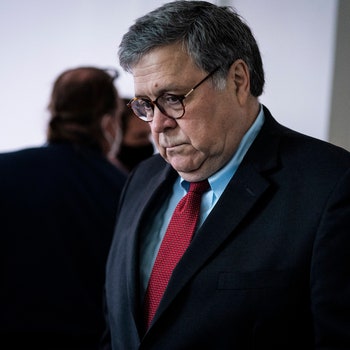
Last year Attorney General William Barr addressed the Fraternal Order of Police’s biennial conference. “[W]hat stands between chaos and carnage on the one hand, and the civilized and tranquil society we all yearn for,” Barr told his audience “is the thin blue line of law enforcement.” Barr is a right-wing Republican who has for years advocated for a harsher and more robust police state. But his proclamation reflected a deeply held idea in American politics—that police are essential to an ordered and just country. Barr’s worldview is time-honored and bipartisan. Democratic presidential nominee Joe Biden might not be the same politician he was when he championed the 1994 crime bill, but his belief in the necessity of American policing—Biden proposes to pump $300 million in federal dollars to the police—has not changed. And it’s not just politicians who proselytize the necessity of policing. Boilerplate TV procedurals, true-crime podcasts, and the evening news sell us a world where the police, beleaguered and badgered, are ultimately all that stands between those of us who wish to live in society and the others who would choose savagery.
This is a myth. Despite much reporting of a spike in murder this year, the long-term trend still shows the murder rate hovering roughly in the same place it was in the 1960s, half of what it was in 1980. And while procedurals may paint a picture of cops chasing serial killers weekly, the actual face of police is more mundane. In June, the New York Times culled available data and estimated that police spend roughly 4 percent of their time addressing “violent crime.” Most of their time is spent dealing with noncriminal matters. And yet no matter the call—the loud party next door, the permit for a parade, the expired car tags, the escort for a funeral procession, the elderly welfare check, the frolickers barbecuing in the park, the schoolyard fight, the opioid overdose, the homeless person outside in the cold, the stray dog—the state’s answer is to respond with armed agents blessed with the near unimpeachable right to kill. The impact is not theoretical. After James Smith noticed the door of his neighbor’s home was open and the lights were on, Smith called the police, hoping an officer would conduct “a wellness check” on his neighbor. Instead, Officer Aaron Dean shot and killed Atatiana Jefferson in her own home as she played video games with her young nephew. Smith was left to draw a grim conclusion. “We don’t have a relationship with the police because we don’t trust the police,” Smith recently told the BBC.

Even the impact of policing on violent crime is debatable. “We are fighting an unrelenting, never-ending fight against criminal predators in our society,” Barr claimed at the FOP conference in New Orleans. But the “never-ending fight” in the very city in which Barr was speaking is not going well. New Orleans has the fourth highest murder rate in the nation but clears only 35 percent of homicide cases. In 2018, the city’s police cleared only 2 percent of all rapes. The country at large isn’t much better. Last year, the Washington Post launched an investigation into murder clearance rates in 50 cities over the course of 10 years. The results were bracing. “Despite a nationwide drop in violence to historic lows,” the Post reported, “34 of the 50 cities have a lower homicide arrest rate than a decade ago.” In St. Louis, during the period the Post studied, it calculated that 54 percent of all homicides resulted in no arrest. In Baltimore, during the period it studied, the Post calculated that only 35 percent of all homicides resulted in an arrest. In Chicago the rate was 26 percent. The “line” isn’t just thin and blue—it’s porous and arbitrary.

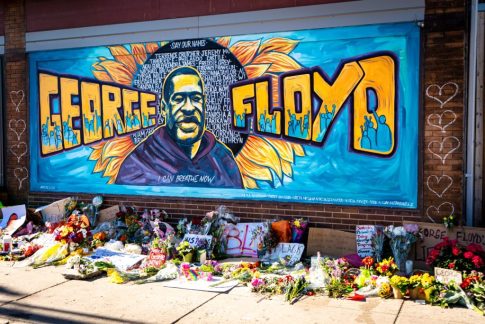
One argument for policing holds that while police may not solve much violent crime, their very presence helps ensure safety. In a survey of research, the National Institute of Justice concludes that “hot spot policing” was “associated with reductions in violent crime relative to control areas.” What is “hot spot policing”? According to the survey, it includes “order maintenance and drug enforcement crackdowns, increased gun searches and seizures and zero tolerance policing.” This isn’t just a list of policing tactics; it’s a list of prerequisites for the present moment. For “order maintenance,” Eric Garner was suffocated on a New York sidewalk. For “drug enforcement crackdowns,” Breonna Taylor was killed in her own home. For “gun search and seizure,” the Black neighborhoods of New York endured Stop and Frisk. For “zero tolerance policing,” George Floyd was choked on a Minneapolis street.

It would be at least honest if we said that enduring arbitrary harassing, beating, tasing, and strangulation by the state was the price of being “associated with reduction in violent crime relative to control areas.” That we don’t say this, and that we only imply it for certain classes of people, exposes the assumptions built into American policing. It’s those assumptions that, on the one hand, allow Henry Earl to be arrested more than a thousand times, and on the other offer a sporting chance for anyone who’d like to try their hand at murder or rape. Policing accomplishes this dubious feat by imposing costs on innocent people who happen to live in proximity to crime, and others who simply happen to resemble in skin color those we think of as criminal. This is a system begging for reform, and the best way to reform an institution as compromised as American policing is by abolishing it.

It is impossible to imagine American policing without the institution foundational to America itself—enslavement. Indeed, from colonial times up through the Civil War, the largest police force in the country wasn’t primarily found in the early towns or the bustling metropolises, but in the slave societies of the South, where to be a white man was to be deputized. Enslavement, where the enslaver is both the maker and enforcer of law, was the first experience of policing for Black people. But through the invention of slave patrols, militias charged with enforcing the law against the enslaved, the policing powers were expanded. “All white persons were permitted and in some regards required to exercise a police power over slaves,” the white supremacist historian U.B. Phillips noted. In many states, white people were not only allowed but required to whip, capture, and jail enslaved people they encountered. They had a mandate to “prevent all caballings amongst negros [sic], by dispersing of them when drumming or playing,” meaning they could punish any enslaved people for simply interacting with each other. The patrollers operated, as one of their number put it, “without warrant and at my own discretion.” The shadows of American policing are here—in the prisons, we find the absolute mastery once enjoyed by the planter class; in the wide discrepancy granted the slave patrol, one sees the echoes of broken windows policing; and the bodies of Trayvon Martin and Ahmaud Arbery reflect the extension of police powers far beyond official police.

Slave patrols were born of the propertied interests of white people seeking to maximally exploit Black labor, an endeavor that did not fade with emancipation. In many ways, it was reinforced. Planters may no longer have owned their labor force, but that didn’t stop them from seeking out means of preventing the formerly enslaved from freely selling their labor. Policing was key to this effort, which saw control lost through slavery regained through a panoply of laws that threatened arrest for everything from not having an annual work contract to “malicious mischief” and criminalized “persons who led idle or disorderly lives.” Depending on the state, the arresting officers could consist of urban police, militias drawn from former Confederate soldiers, or merely any white man. While there was a brief reprieve during Reconstruction, after federal troops departed the South in 1877, white Southerners employed policing to ensure a permanent and pliable source of labor. When Blacks tried to go north for jobs during the Great Migration, “the South resorted to coercion and interception worthy of the Soviet Union,” writes Isabel Wilkerson in The Warmth of Other Suns. “In Brookhaven, Mississippi, authorities stopped a train with 50 colored migrants on it and sidetracked it for three days. In Albany, Georgia, the police tore up tickets of colored passengers as they stood, waiting to board, dashing their hopes of escape. A minister in South Carolina, having seen his parishioners off, was arrested at the station on the charge of helping colored people get out.”

It is tempting to think the Northern police departments unsullied by white supremacy. The assumption would be wrong. Throughout the entirety of Jim Crow, Northern police often parroted their Southern counterparts. “From the moment the emigrants set foot in the North and West,” writes Wilkerson, “they were blamed for the troubles of the cities they fled to.” Indeed, police departments took the cue and regarded Blacks much as the broader society had—as outcasts and threats. In 1917, in East St. Louis, Illinois, white workers angered by Blacks brought in to replace them during a strike rioted and “fired shots into colored homes,” writes Wilkerson. “The police, charged with quelling the riot, in some cases joined in, as did some in the state militia.” In 1943, during the Detroit race riot, “Police openly sympathized with the white rioters,” writes historian Thomas J. Sugrue; “17 blacks were shot to death by the police, no whites were.” Ten years later, as Black families tried to integrate Chicago’s Trumbull Park Homes, they were granted minimal protection from the police who sympathized with the whites who terrorized the families. Still, the greatest indicator of the role law enforcement in the North played in suppressing their Black populations lay in the prison population. Even in an era of relatively low incarceration, the rate in the Northern cities stood at seven to one—exactly the same as today.

That the police were not concerned with neutrality nor “law enforcement” was always clear to Black people. In 1967, after a series of riots, President Lyndon Johnson convened the Kerner Commission to report on the riot’s origins and recommend a series of reforms. Read today, the report is bracing for a haunting quality—its timelessness. Just like the countless commissions that have followed it, the Kerner Commission found a police department with too many responsibilities, filling in for the defunding and decline of societal institutions. Just as today, the Kerner Commission found Black communities complaining of “stop and frisk” tactics. And then, as now, voices of authority blamed police violence on the inherent pathologies of the Black population instead of the learned brutality of the police. Among the commission’s recommendations: an intolerance for police brutality, “a clear and enforced policy…of law enforcement in ghetto areas as is the same as in other communities,” and eliminating a focus on smaller crimes such as “gambling or loitering” in favor of crimes that threaten “life and property.” After the report was published, it became a best seller, but Johnson quickly scuttled it, and the era of “law and order” commenced.

It is common to note, as the Kerner report does, that Black communities frequently complain of crime right alongside police brutality. This is not surprising. Black communities are on every level less safe than white communities. And yet it is curious the ease with which police, who never fail to note this safety gap, abandon these vulnerable neighborhoods. Calls for accountability are often met with indignance and threats to desert those most affected by crime. The practice of officers, at the slightest sign of public critique, calling in sick en masse and refusing to do their jobs has long been called “blue flu.”

At times, retaliation is even uglier. After becoming the New York City’s first Black mayor in 1990, David Dinkins angered the union by calling for police reform. The response was open defiance of the law. Police officers derided Dinkins as a “janitor” and a crack addict, drank openly, blocked traffic, and assaulted journalists. A photographer seeking the protection of a lieutenant after being assaulted by an officer was essentially told to flee. “I can’t protect you up here,” the lieutenant said. In 2011, after the NYPD was investigated for corruption, officers again rallied at the courthouse, blocking the cameras of journalists, mocking poor people by chanting “EBT” at people attempting to collect their benefits. In 2014, in the midst of a conflict with Mayor Bill de Blasio, the NYPD largely stopped policing, at the behest of the union.

This is all very strange behavior for a group which takes an oath “to serve and protect.” But policing is often revealed to be about something muddier. In June, the Times asked Chicago mayor Lori Lightfoot her opinion on the effort to “defund the police.” Lightfoot, a former prosecutor, didn’t even bother to defend her department—probably because a department with a history of torture, black sites, framing innocent people, and child killing is not easily defensible. Instead Lightfoot seemingly deflected to the lack of opportunity for Black and brown people in Chicago. Defunding “means you are eliminating one of the few tools that the city has to create middle class incomes for Black and brown folks.” That America’s second largest police department can only be defended as a kind of violent jobs program is a clear indictment of policing as an act of public safety. Furthermore, the fact that policing is one of the few tools available to bolster a racially diverse middle class is yet another indicator that police have far too much responsibility.

But America has never truly had a system of “public safety,” if only because Black “safety” has historically been imagined as being secured by more policing, whereas white “safety” is ensured by altogether different means. America does not flood the dorms of Harvard with cops because they are areas of “known drug activity.” It does not station armed officers in the cubicles of Wells Fargo. The white parents of Westchester do not generally have to subject their teenagers to The Talk. White safety, itself built on a foundation of enslavement and segregation, is ensured through familial wealth, home ownership, well-funded public schools, stable employment, and health care. Black safety is ensured by “zero tolerance policing” and “stop and frisk.” White safety is cancer prevention. Black safety is all-day chemotherapy.

Abolition seeks to eradicate this Jim Crow system of public safety—not merely a two-tiered system, but a system where one tier benefits by extracting from the other. To “reform” policing, to subject it to bias training of dubious import, to push for the return to an illusory past where Officer Friendly provided sanctuary, is to attempt to patch up the more nefarious features of a system that should be obsolete. Without the history of policies and practices that make up white supremacy, without enslavement and slave patrols, without black codes and miscegenation laws, without poll taxes and courthouse lynchings, without redlining and housing segregation, without mass incarceration, policing as we know it would not exist.

The outlines of the possible are already upon us. Defunding the police—divesting money from the back-end solution of policing and investing it on the front end—is a first step along the path. To meet the very real concerns about neighborhood violence, we could look to preventative programs like Cure Violence and Save Our Streets in cities like New York. These organizations view gun violence as a public health question rather than evidence of community moral rot. Both have been able to successfully reduce and prevent gun violence without inflicting more violence on communities they claim to protect.

Nowhere is the extra layer of unnecessary violence more reflected than in our insistence on sending men with guns to resolve mental health crises. In Eugene, Oregon, CAHOOTS, a crisis intervention program, was able to respond to 20 percent of the area’s 911 calls last year. Through the program, teams of medics and experienced mental health professionals are dispatched to handle certain emergencies instead of the police. For people suffering from mental health crises, addiction, and homelessness, introducing law enforcement in moments of desperation is an invitation for disaster. CAHOOTS reduces the risk of unnecessary violence and criminalization.

And removing police from our long and futile war against drug abuse is essential to abolition. This requires us to consider the role of harm reduction, rather than abstinence, as a possible avenue toward reducing the associated drug use. This solution is not theoretical. In countries such as Norway, Germany, and Canada, drug users can go to a safe injection site and use in regulated, medically supervised, and sanitary conditions. These facilities avoid relying on the stigma and shame that trails many of those suffering from addiction. And it works. When people have access to a safe environment for drug use, they are more likely to seek treatment on their own.

Abolition looks like justice for domestic violence and sexual assault survivors. According to RAINN, for every 1,000 sexual assaults, only about 230 are reported to law enforcement. Of those, less than five result in incarceration. In other words, 75 percent of sexual assaults go unreported and 99 percent go unpunished. Policing does not protect women from sexual assault, it facilitates it. Prison sexual violence, not only at the hands of other incarcerated people but also from correctional officers, is a persistent problem across the gender spectrum, including the thousands of juveniles housed in adult prisons. In place of our current system, abolition envisions providing domestic abuse survivors with crisis counselors and violence intervention teams trained to specifically navigate intimate relationships, available at a moment’s notice. What would a future look like for rape survivors if there were professionals or organizations that could provide not just physical safety but mental, emotional, and financial resources as well?

But more than an array of solutions to discrete, isolated issues, abolition envisions something more fundamental—entirely different values. A world where the resources put into not just policing but our robust system of prisons and jails is invested in the people to eventually render the present justice system obsolete. This is a world focused on the reduction of violence and harm. Certainly you would still need professionals responsible with holding accountable those who violate the social contract in the extreme—rape or murder—and an improved investigative system to catch the perpetrators. But even in that case, ensuring society’s protection should look very different. Even in the most extreme circumstances, it would demand an end to the conflation of public safety with public vengeance. Removing someone from society to stop them from enacting violence does not require subjecting someone to the current prison system, where solitary confinement, assault, sickness, torture, and rape are par for the course.

This is the world I imagine when I picture what I want for my children—a world where social consequences are weighted along with criminal consequences, where incapacitation is not conflated with torture, and murder and rape are taken so seriously that we do all we can to prevent either from happening in the first place. But ultimately abolition is not about a suite of options imposed by someone else—even me. The promise of abolition is the promise of democracy itself—one long denied Black people: the promise inherent in constructing an order of public safety originating in the needs and desires of a community, and not those who have, for so long, exploited them.

MORE STORIES FROM V.F.

— Ta-Nehisi Coates Guest-Edits THE GREAT FIRE, a Special Issue
— Breonna Taylor’s Beautiful Life, in the Words of Her Mother
— An Oral History of the Protest Movement’s First Days
— Celebrating 22 Activists and Visionaries on the Forefront of Change
— Novelist Jesmyn Ward on Witnessing Death Through a Pandemic and Protests
— Angela Davis and Ava DuVernay on Black Lives Matter
— How America’s Brotherhood of Police Officers Stifles Reform

Source: How to Abolish the Police, According to Josie Duffy Rice | Vanity Fair

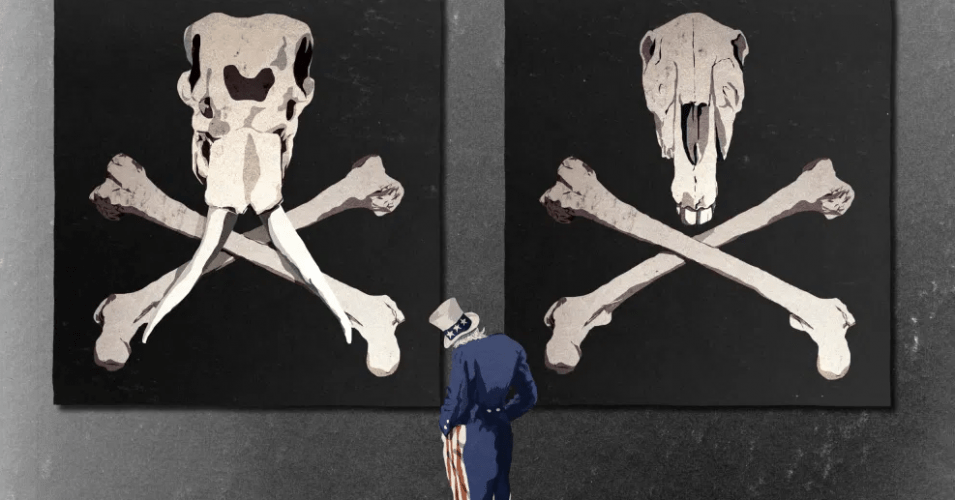
Opinion | America Is Now a Corpse

However inequitable its bias, capitalist democracy at least offered the possibility of incremental and piecemeal reform. We are past that now.

(Photo: Art by Mr. Fish / Original to Scheerpost)

There were many actors that killed America’s open society. The corporate oligarchs who bought the electoral process, the courts and the media, and whose lobbyists write the legislation to impoverish us and allow them to accumulate obscene amounts of wealth and unchecked power.  (Photo: Art by Mr. Fish / Original to Scheerpost)

Well, it’s over. Not the election. The capitalist democracy. However biased it was towards the interests of the rich and however hostile it was to the poor and minorities, the capitalist democracy at least offered the possibility of incremental and piecemeal reform. Now it is a corpse. The iconography and rhetoric remain the same. But it is an elaborate and empty reality show funded by the ruling oligarchs — $1.51 billion for the Biden campaign and $1.57 billion for the Trump campaign — to make us think there are choices. There are not. The empty jousting between a bloviating Trump and a verbally impaired Joe Biden is designed to mask the truth. The oligarchs always win. The people always lose. It does not matter who sits in the White House. America is a failed state.

“The American Dream has run out of gas,” wrote the novelist J.G. Ballard. “The car has stopped. It no longer supplies the world with its images, its dreams, its fantasies. No more. It’s over. It supplies the world with its nightmares now.”

There were many actors that killed America’s open society. The corporate oligarchs who bought the electoral process, the courts and the media, and whose lobbyists write the legislation to impoverish us and allow them to accumulate obscene amounts of wealth and unchecked power. The militarists and war industry that drained the national treasury to mount futile and endless wars that have squandered some $7 trillion and turned us into an international pariah. The CEOs, raking in bonuses and compensation packages in the tens of millions of dollars, that shipped jobs overseas and left our cities in ruins and our workers in misery and despair without a sustainable income or hope for the future. The fossil fuel industry that made war on science and chose profits over the looming extinction of the human species. The press that turned news into mindless entertainment and partisan cheerleading. The intellectuals who retreated into the universities to preach the moral absolutism of identity politics and multiculturalism while turning their backs on the economic warfare being waged on the working class and the unrelenting assault on civil liberties. And, of course, the feckless and hypocritical liberal class that does nothing but talk, talk, talk.

If there is one group that deserves our deepest contempt it is the liberal elites, those who posture as te moral arbiters of society while abandoning every value they purportedly hold the moment they become inconvenient. The liberal class, once again, served as pathetic cheerleaders and censors for a candidate and a political party that in Europe would be considered on the far-right. Even while liberals were being ridiculed and dismissed by Biden and by the Democratic Party hierarchy, which bizarrely invested its political energy in appealing to Republican neocons, liberals were busy marginalizing journalists, including Glenn Greenwald and Matt Taibbi, who called out Biden and the Democrats. The liberals, whether at The Intercept or The New York Times, ignored or discredited information that could hurt the Democratic Party, including the revelations on Hunter Biden’s laptop. It was a stunning display of craven careerism and self-loathing.

Biden’s campaign was utterly bereft of ideas and policy issues, as if he and the Democrats could sweep the elections by promising to save the soul of America.

The Democrats and their liberal apologists are, the election has illustrated, oblivious to the profound personal and economic despair sweeping through this country. They stand for nothing. They fight for nothing. Restoring the rule of law, universal health care, banning fracking, a Green New Deal, the protection of civil liberties, the building of unions, the preservation and expansion of social welfare programs, a moratorium on evictions and foreclosures, the forgiveness of student debt, stiff environmental controls, a government jobs program and guaranteed income, financial regulation, opposition to endless war and military adventurism were once again forgotten. Championing these issues would have resulted in a Democratic Party landslide. But since the Democratic Party is a wholly owned subsidiary of corporate donors, promoting any policy that might foster the common good, diminish corporate profits and restore democracy, including imposing campaign finance laws, was impossible. Biden’s campaign was utterly bereft of ideas and policy issues, as if he and the Democrats could sweep the elections by promising to save the soul of America. At least the neofascists have the courage of their demented convictions.

The liberal class functions in a traditional democracy as a safety valve. It makes piecemeal and incremental reform possible. It ameliorates the worst excesses of capitalism. It proposes gradual steps towards greater equality. It endows the state and the mechanisms of power with supposed virtues. It also serves as an attack dog that discredits radical social movements. The liberal class is a vital component within the power elite. In short, it offers hope and the possibility, or at least the illusion, of change.

The surrender of the liberal elite to despotism creates a power vacuum that speculators, war profiteers, gangsters and killers, often led by charismatic demagogues, fill. It opens the door to fascist movements that rise to prominence by ridiculing and taunting the absurdities of the liberal class and the values they purport to defend. The promises of the fascists are fantastic and unrealistic, but their critiques of the liberal class are grounded in truth. Once the liberal class ceases to function, it opens a Pandora’s box of evils that are impossible to contain.

The disease of Trumpism, with or without Trump, is, as the election illustrated, deeply embedded in the body politic. It is an expression among huge segments of the population, taunted by liberal elites as “deplorables,” of a legitimate alienation and rage that the Republicans and the Democrats orchestrated and now refuse to address. This Trumpism is also, as the election showed, not limited to white men, whose support for Trump actually declined.

Fyodor Dostoevsky saw the behavior of Russia’s useless liberal class, which he satirized and excoriated at the end of the 19th century, as presaging a period of blood and terror. The failure of liberals to defend the ideals they espoused inevitably led, he wrote, to an age of moral nihilism. In Notes From Underground, he portrayed the sterile, defeated dreamers of the liberal class, those who hold up high ideals but do nothing to defend them. The main character in Notes From Underground carries the bankrupt ideas of liberalism to their logical extreme. He eschews passion and moral purpose. He is rational. He accommodates a corrupt and dying power structure in the name of liberal ideals. The hypocrisy of the Underground Man dooms Russia as it now dooms the United States. It is the fatal disconnect between belief and action.

“I never even managed to become anything: neither wicked nor good, neither a scoundrel nor an honest man, neither a hero nor an insect,” the Underground Man wrote. “And now I am living out my life in my corner, taunting myself with the spiteful and utterly futile consolation that it is even impossible for an intelligent man seriously to become anything, and only fools become something. Yes, sir, an intelligent man of the nineteenth century must be and is morally obliged to be primarily a characterless being; and a man of character, an active figure – primarily a limited being.”

The refusal of the liberal class to acknowledge that power has been wrested from the hands of citizens by corporations, that the Constitution and its guarantees of personal liberty have been revoked by judicial fiat, that elections are nothing more than empty spectacles staged by the ruling elites, that we are on the losing end of the class war, has left it speaking and acting in ways that no longer correspond to reality.

The “idea of the intellectual vocation,” as Irving Howe pointed out in his 1954 essay This Age of Conformity, “the idea of a life dedicated to values that cannot possibly be realized by a commercial civilization — has gradually lost its allure. And, it is this, rather than the abandonment of a particular program, which constitutes our rout.” The belief that capitalism is the unassailable engine of human progress, Howe wrote, “is trumpeted through every medium of communication: official propaganda, institutional advertising and scholarly writings of people who, until a few years ago, were its major opponents.”

“The truly powerless people are those intellectuals — the new realists — who attach themselves to the seats of power, where they surrender their freedom of expression without gaining any significance as political figures,” Howe wrote. “For it is crucial to the history of the American intellectuals in the past few decades — as well as to the relationship between ‘wealth’ and ‘intellect’ — that whenever they become absorbed into the accredited institutions of society they not only lose their traditional rebelliousness but to one extent or another they cease to function as intellectuals.” 

Populations can endure the repression of tyrants, as long as these rulers continue to effectively manage and wield power. But human history has amply demonstrated that once those in positions of power become redundant and impotent, yet retain the trappings and privileges of power, they are brutally discarded. This was true in Weimar Germany. It was true in the former Yugoslavia, a conflict I covered for The New York Times. 

The historian Fritz Stern in The Politics of Cultural Despair, his book on the rise of fascism in Germany, wrote of the consequences of the collapse of liberalism. Stern argued that the spiritually and politically alienated, those cast aside by the society, are prime recruits for a politics centered around violence, cultural hatreds and personal resentments. Much of this rage, justifiably, is directed at a liberal elite that, while speaking the “I-feel-your-pain” language of traditional liberalism, sells us out.

“They attacked liberalism,” Stern writes of the fascists emerging at the time in Germany, “because it seemed to them the principal premise of modern society; everything they dreaded seemed to spring from it; the bourgeois life, Manchesterism, materialism, parliament and the parties, the lack of political leadership. Even more, they sense in liberalism the source of all their inner sufferings. Theirs was a resentment of loneliness; their one desire was for a new faith, a new community of believers, a world with fixed standards and no doubts, a new national religion that would bind all Germans together. All this, liberalism denied. Hence, they hated liberalism, blamed it for making outcasts of them, for uprooting them from their imaginary past, and from their faith.”

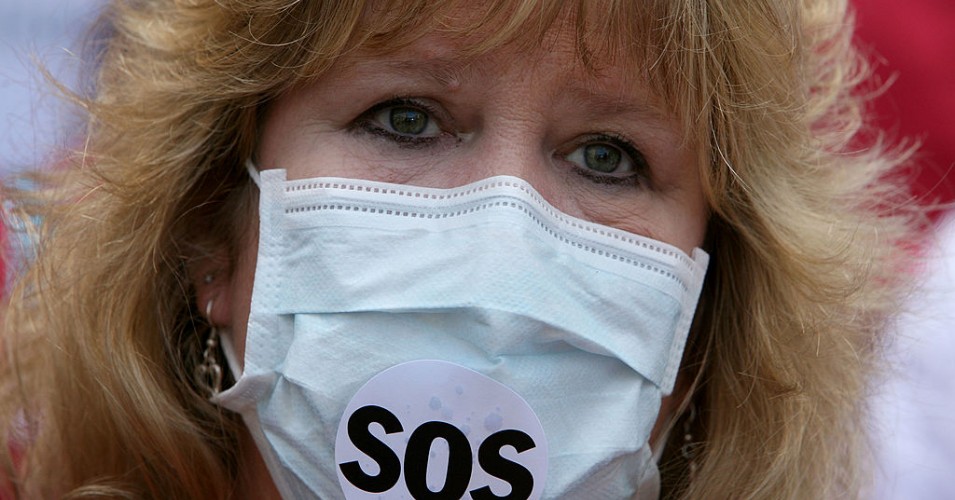
We are in for it. The for-profit health care system, designed to make money — not take care of the sick — is unequipped to handle a national health crisis. The health care corporations have spent the last few decades merging and closing hospitals, and cutting access to health care in communities across the nation to increase revenue — this, as nearly half of all front-line workers remain ineligible for sick pay and some 43 million Americans have lost their employee-sponsored health insurance. The pandemic, without universal health care, which Biden and the Democrats have no intention of establishing, will continue to rage out of control. Three hundred thousand Americans dead by December. Four hundred thousand by January. And by the time the pandemic burns out or a vaccine becomes safely available, hundreds of thousands, maybe a few million, will have died.

The inevitable social unrest will see the state, no matter who is in the White House, use its three principle instruments of social control — wholesale surveillance, the prisons and militarized police — buttressed by a legal system that routinely revokes habeas corpus and due process, to ruthlessly crush dissent.

The economic fallout from the pandemic, the chronic underemployment and unemployment — close to 20 percent when those who have stopped looking for work, those furloughed with no prospect of being rehired and those who work part-time but are still below the poverty line are included in the official statistics — will mean a depression unlike anything we have seen since the 1930s. Hunger in US households has already tripled since last year. The proportion of US children who are not getting enough to eat is 14 times higher than last year. Food banks are overrun. The moratorium on foreclosures and evictions has been lifted while over 30 million destitute Americans face the prospect of being thrown into the street.

There is no check left on corporate power. The inevitable social unrest will see the state, no matter who is in the White House, use its three principle instruments of social control — wholesale surveillance, the prisons and militarized police — buttressed by a legal system that routinely revokes habeas corpus and due process, to ruthlessly crush dissent. People of color, immigrants and Muslims will be blamed and targeted by our native fascists for the nation’s decline. The few who continue in defiance of the Democratic Party to call out the crimes of the corporate state and the empire will be silenced. The sterility of the liberal class, serving the interests of a Democratic Party that disdains and ignores them, fuels the widespread feelings of betrayal that saw nearly half the voters support one of the most vulgar, racist, inept and corrupt presidents in American history. An American tyranny, dressed up with the ideological veneer of a Christianized fascism, will, it appears, define the empire’s epochal descent into irrelevance.

Chris Hedges

Chris Hedges is a Pulitzer Prize–winning journalist who was a foreign correspondent for fifteen years for The New York Times, where he served as the Middle East Bureau Chief and Balkan Bureau Chief for the paper.  He is the host of the Emmy Award-nominated RT America show On Contact. His most recent book is “America: The Farewell Tour” (2019).

This is the world we live in. This is the world we cover.

Because of people like you, another world is possible. There are many battles to be won, but we will battle them together—all of us. Common Dreams is not your normal news site. We don’t survive on clicks. We don’t want advertising dollars. We want the world to be a better place. But we can’t do it alone. It doesn’t work that way. We need you. If you can help today—because every gift of every size matters—please do. Without Your Support We Simply Don’t Exist.

Source: Opinion | America Is Now a Corpse

Opinion | The Dangerous Fantasy of Hope Rooted in Self-Delusion

The Dangerous Fantasy of Hope Rooted in Self-Delusion

The real lesson we should learn from the rise of a demagogue such as Trump and a pandemic that our for-profit health care industry proved unable to contain is that we are losing control as a nation and as a species.

More of the same means more disaster. If we want to reclaim our open society and save the ecosystem, we must abolish the corporate stranglehold on global economic and political power. (Photo by Justin Sullivan/Getty Images)

More of the same means more disaster. If we want to reclaim our open society and save the ecosystem, we must abolish the corporate stranglehold on global economic and political power. (Photo by Justin Sullivan/Getty Images)

Joe Biden and the systems managers of the deep state and empire are returning to power. Trump and his coterie of buffoons, racists, con artists and Christian fascists are sullenly preparing to leave office. U.S. pharmaceutical corporations are starting to disseminate vaccines to mitigate the globe’s worst outbreak of COVID-19 that has resulted in more than 2,600 deaths per day. America, as Biden says, is back, ready to take its place at the head of the table. In the battle for the soul of America, he assures us, democracy has prevailed. Progress, prosperity, civility and a reassertion of American prestige and power are, we are promised, weeks away.

But the real lesson we should learn from the rise of a demagogue such as Trump, who received 74 million votes, and a pandemic that our for-profit health care industry proved unable to contain, is that we are losing control as a nation and as a species. Far more dangerous demagogues will arise from the imperial and neoliberal policies the Biden administration will embrace. Far worse pandemics will sweep the globe with higher rates of infections and mortality, an inevitable result of our continued consumption of animals and animal products, and the wanton destruction of the ecosystem on which we and other species depend for life.

Biden’s appointments are drawn almost exclusively from the circles of the Democratic Party and corporate elite, those responsible for the massive social inequality, trade deals, de-industrialization, militarized police, world’s largest prison system, austerity programs that abolished social programs such as welfare, the revived Cold War with Russia..

“One of the most pathetic aspects of human history,” Reinhold Niebuhr wrote, “is that every civilization expresses itself most pretentiously, compounds its partial and universal values most convincingly, and claims immortality for its finite existence at the very moment when the decay which leads to death has already begun.”

Biden’s appointments are drawn almost exclusively from the circles of the Democratic Party and corporate elite, those responsible for the massive social inequality, trade deals, de-industrialization, militarized police, world’s largest prison system, austerity programs that abolished social programs such as welfare, the revived Cold War with Russia, wholesale government surveillance, endless wars in the Middle East and the disenfranchisement and impoverishment of the working class. The Washington Post writes that “about 80 percent of the White House and agency officials he’s announced have the word ‘Obama’ on their résumé from previous White House or Obama campaign jobs.” Bernie Sanders, apparently rebuffed in his efforts to become secretary of labor in the Biden administration, has expressed frustration with the Biden nominations. Rep. Alexandria Ocasio-Cortez was denied a seat by House Democrats on the House Energy and Commerce Committee because of her support for the Green New Deal. The message of the Biden administration to progressives and left-wing populists is very clear – “Drop dead.”

The list of new administration officials includes retired General Lloyd J. Austin III who is being nominated to be secretary of defense. Austin is on the board of Raytheon Technologies and a partner at Pine Island Capital, a firm that invests in defense industries and also includes Antony Blinken, Biden’s nominee to be secretary of state.  Blinken, who was deputy national security adviser and deputy secretary of state, is a strong supporter of the apartheid state of Israel.  He was one of the architects of the invasion of Afghanistan and Iraq and a proponent of the overthrow of Muammar Gaddafi in Libya, resulting in yet another failed state in the Middle East.

Janet Yellen, former Federal Reserve chair under Barack Obama, is slated to be Treasury Secretary. Yellen as the chair of Bill Clinton’s Council of Economic Advisors (CEA) and later as a member of the board of the Federal Reserve, backed the repeal of Glass-Steagall, which led to the banking crisis of 2008.  She supported the North American Free Trade Agreement (NAFTA). She also lobbied for a new statistical metric intended to lower payments to senior citizens on Social Security.  Yellen backed “quantitative easing” that provided trillions in virtually no-interest loans to Wall Street, loans used to bail out banks and corporations and engage in massive stock buy-backs while the victims of financial fraud were abandoned.

Former Secretary of State John Kerry is to become a special envoy for climate. Kerry championed the massive expansion of domestic oil and gas production, largely through fracking, and, according to Obama’s memoir, worked doggedly to convince those concerned about the climate crisis to “offer up concessions on subsidies for the nuclear power industry and the opening of additional U.S. coastlines to offshore oil drilling.”

Avril Haines, a former Obama deputy CIA chief, is to become Biden’s director of national intelligence. Haines oversaw Obama’s expanded and murderous drone program overseas and backed Gina Haspel’s nomination to be the head of the CIA, despite Haspels’ direct involvement in the CIA torture program carried out in black sites around the globe. Haines called Haspel “intelligent, compassionate, and fair.” Brian Deese, the executive who was in charge of the “climate portfolio” at BlackRock, which invests heavily in fossil fuels, including coal, and who served as a former Obama economic adviser who advocated austerity measures, has been chosen to run the White House’s economic policy.

Neera Tanden, a former aide to Hillary Clinton, has been picked to be director of the Office of Management and Budget. Tanden, as the head of the Democratic Party’s thinktank, the Center for American Progress, raised millions in dark money from Silicon Valley and Wall Street.  Her donors include Bain Capital, Blackstone, Evercore, Walmart and the defense contractor Northrup Grumman. The United Arab Emirates, a close ally of Saudi Arabia in the war in Yemen, also gave the thinktank between $1.5 million and $3 million. She relentlessly ridicules Sanders and his supporters on cable news and social media. She also proposed a plank in the Democratic platform calling for the bombing Iran.

The perpetuation of the deeply unpopular wars and onerous neoliberal policies by the Biden administration will be accompanied by a fevered demonization of Russia, most recently blamed for cyber-attacks.  A new Cold War with Russia will be used by the corporate Democrats to discredit domestic and foreign critics and deflect attention from the political stagnation and the corporate pillaging of the country. It will allow MSNBC and The New York Times, which spent two years slogging empty Russiagate conspiracies, to disseminate a daily stream of emotionally charged rumors and shady accusations about Russia.  Cable celebrities such as Rachel Maddow will hyperventilate night after night about Russia while ignoring the corruption of the Biden administration.  The only reason Russia is not blamed for rigging the election in 2020, as opposed to 2016, by the Democratic Party is because Trump was defeated.

Biden, after his defeat in the Democratic Party Caucus in Nevada by Bernie Sanders, where Sanders got more than twice his vote, immediately played the Russian card, telling CBS News that the “Russians don’t want me to be the nominee, they like Bernie.”  Hillary Clinton started this dirty game when she attacked 2016 Green Party presidential candidate Jill Stein as a “Russian asset” and in 2020 leveled the same charge against Rep. Tulsi Gabbard.  The Democrats need an enemy, real or fictious, and Silicon Valley and major manufacturers will not allow them to target China.

More of the same means more disaster. If we want to reclaim our open society and save the ecosystem, we must abolish the corporate stranglehold on global economic and political power. If we want to avert zoonotic diseases such as COVID-19, swine flu, avian flu, bovine spongiform encephalopathy (Mad Cow disease), Ebola, and SARS we must stop consuming animals and their bodily secretions. We must abolish factory farming and adopt a vegan diet.  And we must keep fossil fuels in the ground.

The belief that we can maintain current levels of consumption, especially of animal products, capitalist expansion, imperial wars, a reliance on fossil fuels and abject subservience to unfettered corporate power, which has solidified the worst income inequality in human history, is not a form of hope but suicidal self-delusion.

Razing the rainforest for cattle grazing and vast tracts of farmland devoted to growing monocrops to feed animals destined for human consumption are responsible for up to 91 percent of Amazon rainforest destruction since 1970. The loss of forests is one of the single biggest contributors to climate change. Animal agriculture is the leading cause of ocean dead zones. Oceans could be devoid of fish by 2048. Each minute, 7 million pounds of feces are produced by the animals raised for human food in the US alone. The continued destruction of natural habitat, coupled with the vast factory farms which use 80 percent of the antibiotics in the U.S. and incubate drug-resistant pathogens that spread to human populations, presage new forms of the Black Death.

The belief that we can maintain current levels of consumption, especially of animal products, capitalist expansion, imperial wars, a reliance on fossil fuels and abject subservience to unfettered corporate power, which has solidified the worst income inequality in human history, is not a form of hope but suicidal self-delusion. We are not headed under the policies of the Biden administration and the global ruling elite for the broad sunlit uplands of a new and glorious future, but economic misery, vast climate migrations, waves of new and more virulent pandemics, of which COVID-19 is a mild precursor, along with irreversible ecological systems collapse and frightening forms of societal breakdown, authoritarianism and neofascism.

Global warming is inevitable. It cannot be stopped.  At best, it can be slowed. Over the next 50 years the earth will most likely heat up to levels that will make whole parts of the planet uninhabitable. Tens, perhaps hundreds, of millions of people will be displaced. Millions of species will go extinct. Cities on or near a coast, including New York and London, will be submerged.

Oceans absorb much of the excess CO2 and heat from the atmosphere. This absorption is rapidly warming and acidifying ocean waters, resulting in the deoxygenation of the oceans. Each of the earth’s five known mass extinctions was preceded by at least one part of what climate scientists call the “deadly trio” – warming, acidification and deoxygenation of the oceans. The next mass extinction of sea life is already under way, the first in some 55 million years.

This is not defeatism. It is realism. We appear to have bought four years with Biden’s election, but if we do not use it wisely – and there is nothing in the Biden nominations that offer any encouragement – we are merely reconstructing a shabby Potemkin village that will soon be flattened by the gale-force political and environmental hurricanes that are gathering around us.

One of the lessons I learned from covering wars and revolutions as a foreign correspondent is that the political, economic and cultural systems that are erected by any society are very fragile. The façade of power remains in place, as I saw in Eastern Europe during the 1989 revolutions and later in Yugoslavia, long after terminal rot has consumed the foundations. This façade fools a society into thinking the structures of authority remain solid, impervious to collapse. So, when collapse comes, which should have been long predicted, it appears sudden and incomprehensible. The ensuing chaos is disorienting and frightening. The cognitive dissonance between the perception of power and its rapid dissolution feeds self-delusion.  It creates, as I witnessed in the former Yugoslavia, what anthropologists call crisis cults, as well as bizarre conspiracy theories, fascism and the embrace of inchoate violence to purge society of the demons blamed for the national debacle. Hatred becomes the highest form of patriotism. The vulnerable are scapegoated. Intellectuals, journalists and scientists rooted in a fact-based world are despised. Ruling elites and ruling structures lose all credibility. This collapse is often a portal to a world of nihilism and blood-drenched fantasy.

After four years of lies, the stoking of racist violence, stunning ineptitude, rampant corruption and an abject failure to cope with a national health crisis, Trump expanded his base by 11 million votes. This should be a huge, flashing red light. Worse, 70 percent of Trump voters, 51 million Americans, believe that “radical Left Democrats” and the deep state rigged the elections through “voter fraud,” including the importation of Venezuelan voting software, illegitimate mail-in ballots and the wholesale destruction of Trump ballots by election officials. One hundred and twenty-six Republican House members joined a lawsuit filed by 18 Republican state attorneys general asking the Supreme Court to overturn Biden’s victory. The vast majority of Republican senators refused to acknowledge the election results following the November vote. Electors from the Electoral College were forced in several states to deliver their votes to state legislatures under armed guard. Some two dozen armed protesters carrying American flags and chanting “Stop the Steal” descended on the home of Democratic Michigan Secretary of State Jocelyn Benson. Seven hundred members of the white nationalist group the Proud Boys took over streets in Washington last weekend to protest the alleged theft of the election, leading to more than three dozen arrests, four stabbings, the vandalizing of four Black churches, and Black Lives Matter banners and signs ripped down and burned.

Trump may be gone soon, but he leaves behind a party that is openly authoritarian, dismissive of democratic norms, an enemy to science and fact-based discourse and which attempted a coup d’état. The next time around they won’t be so disorganized and inept.  This hostility to democracy by one of the two ruling parties, supported by millions of Americans, many of whom were betrayed by Biden and the leaders of the Democratic Party, will not dissipate but grow, especially as the hammer of economic dislocation, including the looming evictions of millions of Americans, pummels the country.

The decades-long corporate assault on culture, journalism, education, the arts, universities and critical thinking has left those who speak this truth marginalized and ignored. These Cassandras, locked out of the national debate, are dismissed as unhinged and depressingly apocalyptic. The country is consumed by a mania for hope, which our corporate masters lavishly provide, at the expense of truth. It is this delusional hope that will doom us.

The Austrian writer Stefan Zweig, who with a handful of other writers and artists desperately tried to warn of the suicidal folly of World War I, wrote of what he called “the mental superiority of the defeated.” His anti-war play Jeremiah, based on the Biblical prophet Jeremiah who issued warnings in vain, illustrated that those who face reality, however bitter, are able to endure and rise above it.

“Awaken, doomed city, that thou mayest save thyself,” the prophet cries out in Zweig’s play. “Awaken from your heavy slumbers, heedless ones, lest you be slain in sleep; awaken, for the walls are crumbling, and will crush you; awaken.”

But the warnings from Jeremiah, called “the weeping prophet,” were ignored and ridiculed. He was attacked for demoralizing the people. There were plots against his life.  When the Babylonian army captured Jerusalem, Jeremiah, like Julian Assange, was in prison.

“I was always attracted to showing how any form of power can harden a human being’s heart, how victory can bring mental rigidity to whole nations, and to contrasting that with the emotional force of defeat painfully and terribly ploughing through the soul,” Zweig wrote in his memoir, “The World of Yesterday”. “In the middle of war, while others, celebrating triumph too soon, were proving to one another that victory was inevitable, I was plumbing the depths of the catastrophe and looking for a way to emerge from them.”

We cannot use the word hope if we refuse to face the truth. All hope rooted in self-delusion is fantasy. We must lift the filter from our eyes to see the danger before us. We must heed the warnings of our own prophets. We must destroy the centers of power that lure us and our children, like the Pied Piper of Hamelin, to certain doom. The walls, daily, are closing in around us. The radical evil we face is as real under Trump as it will be under Biden. And if this radical evil is not smashed, then the world ahead will be one of torment and mass death.

Chris Hedges

Chris Hedges is a Pulitzer Prize–winning journalist who was a foreign correspondent for fifteen years for The New York Times, where he served as the Middle East Bureau Chief and Balkan Bureau Chief for the paper.  He is the host of the Emmy Award-nominated RT America show On Contact. His most recent book is “America: The Farewell Tour” (2019).

Source: Opinion | The Dangerous Fantasy of Hope Rooted in Self-Delusion

How Oath Keepers Are Quietly Infiltrating Local Government – POLITICO

GRANBURY, Texas — In late August, the constable in a small county outside Fort Worth logged on to his Facebook account and called for the execution of a mayor nearly 2,000 miles away.

“Ted Wheeler needs to be tried, convicted and executed posthaste,” John D. Shirley wrote on Aug. 31. “He has blood on his hands, and it’s time for justice.”

What precipitated Shirley’s outburst against the mayor of Portland, Ore., was the shooting death on Aug. 29 of a member of a right-wing group called Patriot Prayer by an antifa activist. The killing was a violent escalation of clashes that had roiled Portland in the weeks since George Floyd was suffocated to death by police. Shirley said “patriots” in “socialist-controlled cities” needed to protect themselves. As the presidential election approached, he warned of “open conflict.” Twitter suspended his account shortly after, but he continued to post about violent disputes on Facebook with crescendoing alarmism.

“If you doubt these lefties won’t put you and your family against a wall and pull the trigger, then you aren’t paying attention,” Shirley said on Oct. 10. “Their hatred for you is palpable. We dare never let them regain power again.”

Since 2018, Shirley has been the constable of Hood County, a conservative, mostly white community outside of Fort Worth popular among retirees. As constable, Shirley is empowered to serve warrants and subpoenas and make arrests. It might seem odd that an elected member of law enforcement would incite violence against another democratically elected official in one of the nation’s largest cities. But Shirley was also a sworn member of Oath Keepers, which in recent months has been warning of a civil war.

Depending on whom you ask, Oath Keepers is either “the last line of defense against tyranny” or an extremist militia. They describe themselves as a nonpartisan association of tens of thousands of current and former military, police and first responders who pledge to defend the Constitution and refuse to obey orders they consider unconstitutional. The Southern Poverty Law Center on the other hand lists Oath Keepers as “one of the largest radical antigovernment groups in the U.S. today” and has kept tabs on incidents involving members that may betray the idea that the group is just about defending the Constitution. In 2010, for example, a man in Tennessee driving a truck with an Oath Keepers logo was accused in a plot to arrest two dozen local officials.

By the time he was posting about Wheeler, Shirley had been an Oath Keeper for more than a decade, serving on the organization’s board of directors, as its national peace officer liaison, and as the Texas chapter president. But he isn’t the only elected official in Hood County affiliated with the group. One member, a newly elected justice of the peace, said in February that Oath Keepers was having a “surgence” there. Shirley has described an incoming county commissioner as an Oath Keeper.

I first learned about Oath Keepers in Hood County in March, when I received a message about the group’s growing presence there. Some residents have speculated that there are even more elected officials who are Oath Keepers, though no one else I spoke with said they belonged to the group and many denied knowing much about it at all.

Oath Keepers has made inroads across the country with thousands of law enforcement officers, soldiers and veterans. Still, it’s not common for elected officials to openly identify as members, said Sam Jackson, a University of Albany professor who wrote a new book about the organization. After all, Jackson said, this is a group that, in 2014, was prepared to shoot at police who weren’t on their side during the Bundy standoff, when hundreds of armed civilians confronted federal rangers trying to impound a Nevada rancher’s cattle that had been grazing on protected land.

Daniel Peters, a left-leaning gadfly who regularly challenges conservative county commissioners, told me that Shirley’s ominous postings made him afraid for his safety. Shirley, he said, “is very openly calling for violence toward people like me.”

Mendi Tackett, a Democrat who stays at home with her kids, said she thinks there’s a “healthy number of people here who are definitely in on the ideology.” It’s concerning that active law enforcement or military personnel could be involved with the organization, she told me, but she suspects that “some of these folks are more talk than they are actual action.”

Either way, what’s happening in Hood County may represent a shift for a group that was once seen as a governmental antagonist but is now establishing itself inside the halls of the elected officialdom. And it is setting up potentially dangerous conflicts between officials with different ideas of what constitutes legitimate government authority. Over the past 10 months, Shirley has promoted protests over orders to slow the spread of Covid-19 and cast doubt on a peaceful local demonstration against police brutality. And despite their avowed neutrality, the group’s attention of late has focused on defending one individual—Donald Trump—who himself has been accused of undermining the constitutional transfer of power by refusing to concede an election he lost resoundingly.

“Our POTUS will not go down without a fight,” Oath Keepers said in a recent email blast. “He WILL NOT concede. This election was stolen from We The People. We will prevail but we need your help! Or we lose our democracy.”

Oath Keepers was formed in 2009 after the election of Barack Obama. When the group’s founder, Stewart Rhodes, announced its debut, he wrote in a blog post that its primary mission would be “to prevent the destruction of American liberty by preventing a full-blown totalitarian dictatorship from coming to power.”

Ascertaining how widespread support is for that mission is subject to debate. In 2014, Rhodes said Oath Keepers had about 35,000 members who paid dues to the organization. This year, the Atlantic reported there were nearly 25,000 names on a membership list the magazine obtained.

But Hood County, named after the Confederate Army General John Bell Hood, could offer insight on a very local level of how the group has continued to grow in small but measurable ways across the country.

An early clue came this February at a candidate forum for local Republicans. Dub Gillum a retired state trooper who was running for justice of the peace in Hood County’s Precinct 4, said on Feb. 11 that Oath Keepers was experiencing “a resurgence—or surgence—in Hood County.”

When I reached out to Gillum he told me he did not remember saying that there was a “surgence” of Oath Keepers in Hood County. “Personally,” he said, “I do not see a ‘surgency’ of Oath Keepers in Hood County but rather a resurgence of patriotism.”

Gillum said he started following Oath Keepers on Facebook in 2010, when the social media platform suggested it to him as a group he might like. The Oath Keepers’ mission resonated with him. It felt like a reaffirmation of the oath he took when he became a state trooper in 1990. Oath Keepers was a networking resource for him when he was a trooper, he said, but he’s never attended any of the group’s events. He doesn’t consider himself “active” in the organization.

About a week later, on Feb. 20, Hood County News, the local newspaper, reported that Oath Keepers, “one of the nation’s largest anti-government militia groups,” was scheduled to hold a rally on Feb. 24 at the Harbor Lakes Golf Club in Granbury, the county seat named for another Confederate general that has twice won recognition as the “Best Historic Small Town in America.”

Rhodes, a former Army paratrooper and Yale Law School graduate who once worked for Texas Congressman Ron Paul, was supposed to lead the rally for “all Oath Keeper candidates running in the primary.” The event was also billed as a swearing-in for anyone who wanted to take the “Oath to the Constitution” for the first time.

But the next day, the paper reported that the meeting was canceled after the golf club backed out, saying the event was “misrepresented in the planning” and that the rally’s agenda was “unbeknownst to Harbor Lakes.”

Still, on Feb. 22, a post on the website Hood County Today written by Nathan Criswell, the county’s former Republican Party chair, declared “Oath Keepers emerge in Hood.” A local chapter would soon be operational in the county under John Shirley’s leadership, Criswell said.

On Feb. 25, an “insider’s perspective” of Oath Keepers written by the constable was published on the site. Shirley said he had first heard about Oath Keepers in 2008 and reached out to Rhodes before the group was even officially formed. Shirley “was immediately fascinated with the idea of peace officers and soldiers rededicating themselves to their oaths and to the Constitution,” he wrote.

He defended Oath Keepers as a “nonpartisan organization almost exclusively dedicated to teaching first responders and soldiers to respect their oaths, know what the Constitution says and how that knowledge applies to their jobs.” Descriptions of the group as a “right-wing,” “racist,” “anti-government” militia were “ad hominem attacks” lacking evidence, he said.

But some residents were alarmed by a scene that unfolded outside a local gym a couple months later. By then, the coronavirus pandemic had hobbled communities across the state and Governor Greg Abbott had ordered gyms, among other businesses, to shut down. Lift the Bar Fitness in Granbury followed that direction, at least for a while. By April, David Todd Hebert, who owns the gym with his wife, had grown impatient with what he considered an unconstitutional mandate from ”King Abbott.” They decided to reopen the gym even if it meant going to jail.

The gym announced on Facebook that members could finally come back even though Abbott’s executive order was still in effect. Someone commented that the police better “bring a lot of guns” if they were planning to stop them, Hood County News reported.

When Lift the Bar Fitness opened on April 28, about 10 Oath Keepers turned up “to make sure that we stayed open,” Hebert told me. They were friendly, he said, and they’d heard he was going to get arrested. They wanted to document any violations of his constitutional rights.

Hebert didn’t get arrested. In fact, he said, no officers showed up. But the story started to spread through the county. I heard that armed Oath Keepers prowled the parking lot and scared off city police officers who arrived to shut down the gym. In one telling, there was a near shootout between the cops and the Oath Keepers, Shirley and Stewart Rhodes among them.

“That didn’t happen,” said Matt Mills, the county attorney who also stopped by the gym that day and confirmed that both Shirley and Rhodes were there. But even if Granbury officers had arrested Hebert, it’s unlikely the case would have gone anywhere. Mills has refused to prosecute anyone who violates the governor’s orders, which he also considers unconstitutional.

Mills is not an Oath Keeper, he said, and he told me he didn’t know much about them. But the organization continued to extend itself to conservatives in the deeply red county, where Republicans hold every elected office.

On May 2, a group called Hood County Conservatives announced on Facebook that Scott London, a former New Mexico sheriff, would be “speaking about the New Organization (The Oath Keepers in Hood County)” at their upcoming meeting at the county courthouse.

Oath Keepers showed up to Black Lives Matter protests at the courthouse the following month. The events, held on June 6-7 in spite of some reported threats directed at one of the demonstration’s teenage organizers, were peaceful. But from their perch in the impressive limestone building that anchors the county’s charming downtown square, Shirley and two other constables asked Sheriff Roger Deeds whether the county had any riot shields, Deeds said.

It didn’t, perhaps because the county of about 60,000 people didn’t need them. But a couple weeks later the commissioners court accepted a donation of eight riot shields to be used by the sheriff’s office, Shirley and another constable, Chad Jordan. The agenda for the June 23 commissioners court meeting said the shields were donated by Scott London. Dub Gillum told me Oath Keepers had paid $1,000 for the “needed tactical equipment.”

Like several elected officials and most residents I spoke with in Hood County, Deeds, who once belonged to the Constitutional Sheriffs and Peace Officers Association, and last year backed a successful effort to declare the county a “Second Amendment sanctuary,” was aware of Oath Keepers but said he wasn’t too familiar with the organization. He said he isn’t a member and doesn’t think any of his deputies are either, though some folks in town suspect otherwise. His office also has never coordinated with Oath Keepers, he said, but he doesn’t “believe they’re bad people by any means.”

David Fischer, the county’s Republican Party chair, told me he knows some people in Hood County are Oath Keepers but said it’s “not an issue in this county — we don’t talk about it, it doesn’t come up very much. … I’m aware there are Oath Keepers here, but that’s all I know.”

When I asked him about some of the things Shirley has said on social media—about leftists murdering people, and that Ted Wheeler should be executed—he laughed.

“Constable Shirley is kind of outspoken,” he said. “He’s an elected official so nobody can do anything to him.”

Shirley, who has described Hood County leaders as “RINOs & closet authoritarians,” doesn’t get along with the other officials and thinks the commissioners court is “out to get him,” Fischer said. The constable’s comments also aren’t representative of the Republican Party in Hood County, Fischer said — “not at all.” The GOP chair said Shirley hasn’t even interacted with the party since he was elected.

In September, around the time Shirley’s Twitter account was suspended, Twitter also banned the accounts of Stewart Rhodes and Oath Keepers under its violent extremism policy. Oath Keepers had tweeted that there would be “open warfare against the Marxist insurrectionists by election night, no matter what you do” and that “Civil War is here, right now.”

As Election Day neared, both Republicans and Democrats in Hood County feared violence was looming across the United States. Smoking a cigarette outside the county’s early voting site after casting a ballot for Trump in late October, J.W. Williams said he was bracing for another civil war. He was sure there would be conflict, and that leftists would start it.

“You want to defund the police?” he said. “Better not, because the police are the only things keeping us from doing what we want to do.”

Shirley, meanwhile, warned that antifa and Black Lives Matter activists would cause mayhem every election cycle unless Democrats were “stopped cold.” Hood County did its part, voting for Trump by about 64 percentage points and electing every other Republican on the ballot by comfortable margins.

By the end of the week, it was clear that despite the county’s efforts, Trump had lost, even if he refused to concede. The kind of unrest that Shirley had predicted didn’t materialize, but the president marshaled his supporters around a new cause — overturning what he called a rigged election.

There is no evidence of widespread voter fraud but an avalanche of misinformation about the election has fueled falsehoods about hundreds of thousands of trashed Trump ballots and election officials tampering with votes cast for him. Some Republicans have called on the president to accept the election results. Shirley is not among them.

Until Trump does concede, Shirley said, “we fight.”

The morning after the election, Shirley wrote on Facebook that his previous speculations that Americans were experiencing a psychological operation had been “putting it lightly.”

“We’re living in evil times, folks,” he said. “Buckle up.”

He started to use new hashtags: #StopTheSteal and then #StopTheCoup. He continued to claim that Trump had won the election.

“YOU CAN FEEL IT IN YOUR BONES,” he said on Nov. 7. “THIS WAS TAKEN FROM US ILLEGALLY. THE ONLY WAY WE LOSE IS IF WE DON’T FIGHT. LEAVE IT ALL ON THE FIELD. IT’S TIME TO SEPARATE THE WINTER SOLDIERS FROM THE SUNSHINE PATRIOTS.”

Shirley called Bill Gates the “master manipulator of the heist” and shared posts from Steve Bannon, who was permanently suspended from Twitter after suggesting FBI Director Christopher Wray and infectious disease expert Anthony Fauci should be beheaded.

The constable traveled to Washington for the so-called Million Maga March on Nov. 14, and later described wading through the rally to keep “his fellow countrymen safe.” When he posted a photo from the event, he boasted there was no violence.

“ANTIFA was too scared of Proud Boys and Oath Keepers,” he said. “They actually hid behind a police line at SCOTUS.”

Despite the overheated posts flying on social media, Hood County, outwardly at least, looks like a lot of small American towns. People’s kids play sports together and their parents watch amicably from the sidelines, even if they disagree about politics. Hebert, the gym owner who worked in law enforcement in Louisiana, said “it’s got some small-town politics but it’s not that kind of county, even as close as it is to Fort Worth.”

Chris Coffman, city manager of Granbury, said that while there was polarization on the extreme ends of the political spectrum, “by and large people love each other here. They get along with each other, help each other.”

In some ways, though, the community’s facade as a tourist town and one of the best places to retire feels misleading, said Adrienne Martin, chair of the Democratic Party. “There’s a lot of ugly stuff underneath the surface that nobody talks about, that nobody deals with.” Her husband grew up in Granbury and he doesn’t recognize it anymore, she said. “It used to be a little quaint small town. Now it’s Trumpville.”

Dozens of flags supporting the president snap in the wind across the county, and Trump campaign signs line the roads. Robert Vick, the Democratic state Senate candidate, told me that one of his campaign signs was shot up with bullet holes. He worried about Shirley’s rhetoric, and in what ways it could inspire people who read and believe it. He pointed to the alleged militia plot to kidnap Michigan Governor Gretchen Whitmer as an example. Recent court filings claim that the men accused had drawn up a Plan B to take over the Michigan Capitol and stage a weeklong series of televised executions of public officials.

After I was alerted to Shirley’s posts earlier this year, I reached out to him for comment several times. He never responded to me directly but in October, he posted a letter addressed to POLITICO on his Facebook page.

“You attempt, in vain, to smear the Oath Keepers by trying to link constitution loving patriots to hate groups while in the same breath tell people ANTIFA isn’t violent and isn’t an organized terrorist group,” he said. “Shame on you. Your lies do nothing but further expose you for the frauds & conmen most Americans already know you are. Your sad attempt at pushing the loony left into a civil war will fail. Trump is going to win, and then we’ll see how our government will choose to deal with insurrectionists.”

Jack Wilson, an incoming county commissioner who was endorsed by Governor Abbott, also declined to talk when I reached him by phone. Wilson is a firearms instructor who has worked as a reserve sheriff’s deputy and attracted national attention when he shot and killed a gunman at a church on Dec. 29, 2019. At the time, Shirley tweeted his admiration, calling Wilson a hero.

“And more than that he’s an #OathKeeper,” Shirley said. “He’s served his nation and communities most of his life. Hood County is lucky to count him among our citizens.”

But on Nov. 24, Shirley announced on Facebook that he was stepping back from the organization.

“I’ve decided to retire from being an active member in Oath Keepers,” he said. “I’ve been part of that organization for 10 years and it’s time to let other younger patriots take up the mantel.”

He added that he was taking a “much needed break from social media,” and that he may be back at some point.

“I’m currently of the opinion that all social media was designed to be or has become weaponized,” he said.

I tried to ask Shirley about his decision to retire as an active member of Oath Keepers but he didn’t respond to my questions.

His account briefly appeared to be deactivated. But his silence lasted only about a week. Since then, he’s posted more than 30 times, a mix of claims about the election and debunked misinformation. He’s recently shared posts about 200,000 votes supposedly hijacked from Trump in Georgia and suitcases full of fraudulent ballots there. On Dec. 7, he shared an email from Scott London to Granbury City Council members and Hood County commissioners discouraging them from pursuing or enforcing any new coronavirus restrictions, and reminding them of their oaths to the Constitution.

“We are the #DigitalConstitutionalMilitia. Our weapons of war are FB posts, Tweets, YouTube Videos, TikTok,” Shirley said back in November. “It’s up to US to do OUR part of this existential battle for the soul of #America. Patriots… You have your orders.”

Source: How Oath Keepers Are Quietly Infiltrating Local Government – POLITICO

Why You Really Can’t Fight City Hall, At Least Over the Police – POLITICO

In the early morning hours of January 28, 2000, a Black police officer named Cornel Young Jr. —“Jai” to those who knew him—was off duty, dressed in plain clothes, and waiting on a steak sandwich from an all-night diner in a rough section of Providence, Rhode Island. A fight broke out at the front of the restaurant and quickly spilled outside. Someone brandished a gun. Young jumped into action, shouting “Police!” as he rushed through the diner and drew his weapon. Within seconds, he would be bleeding in the snow outside the restaurant, shot multiple times by two white, uniformed officers from his own department. Within hours, he would be dead.

Those are the basic facts, and the sadness of them transcends politics. If Black lives matter and blue lives matter, as they all most assuredly do, the killing of patrolman Cornel “Jai” Young was doubly tragic.

But the tragedy does not end there. As an attorney who has litigated civil rights cases, I can tell you that the tragedy of Jai Young’s story actually ends in a courtroom, some six years after his death, when the city of Providence slipped through a gaping chasm in federal civil rights law—one that has largely escaped scrutiny in the current national push for racial justice reform. It’s called the Monell Rule, and it’s why cities and police departments are rarely held accountable for the actions of police officers.

To learn more about her case, I recently reached out to Leisa Young, Jai’s mother, who fought the city of Providence in court for the better part of five years. She is an impressive woman: a bright, successful, former single mother who lifted herself out of poverty while raising an exceptional son. The pain of his death has hardened with time, the way scar tissue fills a wound that once might have been fatal. When she speaks of Jai now, Leisa’s voice does not crack, though she tends to change the subject.

The story she tells is awash in irony. Jai had entered the police force to change it, and he died, Leisa believes, because of the very problems he wanted to fix. Growing up, Jai had not been immune to the racial profiling so often experienced by young Black males. But his father—from whom Leisa had long since been divorced—was a police officer, and through him Jai developed an interest in community-based police reforms. By joining the force, Jai hoped to change what he saw as a militaristic approach to policing, especially in low-income neighborhoods like the one where he eventually died.

Leisa tells me that one of the cops who shot her son had been his classmate at the police academy and might have recognized him if he had only paused an instant before shooting: “Out of uniform, in that neighborhood, Jai was just another target.”

When asked about the city’s handling of her son’s case, Leisa responds with exasperation—the type of chronic emotional fatigue known only to those unfortunate souls who have spent years fighting a more powerful and highly motivated enemy. You can’t fight city hall, they say. Most people know the phrase; Leisa Young has lived it.

From the very beginning, the city circled the wagons. Just two days after Jai’s death, the mayor of Providence declared in the local press that race had not been a factor in the shooting. In a televised interview, a high-ranking officer predicted the two shooters would be exonerated by the department’s internal investigation, which was just barely underway. Meanwhile, Leisa says, city officials worked privately to convince her that Jai was somehow at fault in his own death because he had been pointing his firearm sideways, “like a thug.” Recalling the accusation now, Leisa dismisses it with a laugh that is somehow charming and bitter at the same time: “Where would he have learned that? In thug school?”

The 2003 verdict has never been overturned, and in the eyes of the law, the violation of Jai Young’s civil rights is an unassailable fact. That verdict almost certainly would have ended the case if Leisa had been suing a trucking company over a traffic accident, or a chemical company over a cancer-causing pesticide. But hers was a civil rights lawsuit against a city government, and though she still does not understand what it means or why, she would spend the next two years trying to overcome something called the Monell Rule.

I first learned about the Monell Rule in 2013, shortly after I accepted my first civil rights case. I had been practicing business law in Texas for 15 years when a friend asked for my help in a case involving threats and extortion by a small-time city government. It was not my area of the law, so I immersed myself in legal research, and it wasn’t long before I encountered this little-known legal rule that, despite its obscurity, plays a massive role in virtually every federal civil rights lawsuit against a city or county government. One case led to another, and I have been fighting the Monell Rule ever since.

To understand it, one must go back briefly to the end of the Civil War, when Congress passed the Civil Rights Act of 1871. The 13th, 14th and 15th Amendments had just been ratified, promising civil rights to emancipated slaves and other citizens. The 1871 law—also known as the Third Enforcement Act—was designed to provide a mechanism for enforcing these constitutional guarantees and it authorizes individual citizens to bring private lawsuits for civil rights violations committed by police and other persons cloaked in the authority of state or local governments. Today, among lawyers, this law is known simply as “Section 1983,” and it remains one of the most important civil rights statutes in the country.

In 1961, in a case called Monroe v. Pape, the U.S. Supreme Court ruled that city governments were exempt under Section 1983. The Monroe case involved horrific allegations of racial abuse at the hands of 13 Chicago police officers who had allegedly broken into a Black couple’s apartment and forced them to stand naked in front of their children as they beat the father with a flashlight, degraded him with racial slurs and ransacked the apartment. The Supreme Court ruled that the officers could be sued under Section 1983, but the city of Chicago could not.

Unsurprisingly, the Monroe decision was met with heavy criticism, and the Supreme Court eventually reversed itself—sort of. In Monell v. Department of Social Services of the City of New York, the high court ruled that cities are accountable under Section 1983, but only if the civil rights violation was caused by “official policy” of the city government. The court’s reasoning was based on a strained reading of the 1871 law, and has been often criticized ever since, but the rule established in Monell has nonetheless survived and evolved.

Today, “official policy” can be proven in multiple ways, but the gist is always the same: the civil rights violation must have been caused by a deliberate policy choice made at the highest levels of a city government, or by a pattern of institutional neglect so pervasive and consistent that it constitutes “deliberate indifference” by city policymakers. It is a very high bar, and clearing it often depends on facts and concepts that are inherently elusive.

The Monell Rule is unique to civil rights litigation and exists nowhere else in the legal world. If, for example, an Amazon delivery driver were to negligently cause a traffic accident while on the job, Amazon would ordinarily be liable for the victim’s injuries; there would be no need for the victim to prove that Jeff Bezos or Amazon’s board of directors had caused the accident through their corporate policies or their “deliberate indifference” to the rights of potential accident victims. In the civil rights context, however, that is essentially what the Monell Rule requires. In simplest terms, the Monell Rule is a barrier to government accountability. It puts legal distance between city governments and their employees, allowing cities to avoid responsibility for the on-the- job conduct of their own police officers.

As a practical matter, the Monell Rule blocks the only pathway by which civil rights victims can hold police departments accountable. Victims of police violence have three basic avenues to justice: criminal prosecution of the individual officers involved; a civil lawsuit against the same officers; or a civil lawsuit against the municipality that employs them. The first two avenues have their own unique challenges, such as the high burden of proof in criminal cases, or the qualified immunity standard that protects individual police officers from liability in civil suits. But the first two avenues—even where successful—punish only the individual officers. It is only the third avenue that has the potential to impact municipal police departments as a whole, and the Monell Rule blocks that avenue like a barricade.

Source: Why You Really Can’t Fight City Hall, At Least Over the Police – POLITICO

America doesn’t want unity. It wants absolution without restitution ::: Renee Graham :: The Boston Globe

America doesn’t want unity. It wants absolution without restitution

Renee Graham, Boston Globe

Throughout his campaign, and especially during his first speech as president-elect, Joe Biden stressed the need for unity. “Our nation is shaped by the constant battle between our better angels and our darkest impulses,” he said. “It is time for our better angels to prevail.”

Abraham Lincoln first summoned “the better angels of our nature” in his inaugural speech in 1861. A month later, the Civil War began; we’ve been waiting ever since for these rumored apparitions of our nation’s inherent goodness to prevail.

America has never wanted unity. It prefers absolution over restitution.

When this nation’s leaders speak of unity, that often means, “We need to move on,” even though unchecked trauma leaching from one generation to another prohibits any such thing. For many of us, especially Black and brown people, unity is a five-letter word for “Shut up and get over it.” That is how this nation regards calls for repair of systemic disenfranchisement.

Before accord, there must be an accounting — otherwise, it’s like leaving a tick’s head embedded beneath the skin. The problem is less visible, but the host body remains sick and unsound.

In his speech, Biden seemed to speak very specifically about the horrors imposed these past four years. (And they aren’t over.) Of course, what we witnessed during the Trump years was an amplification of the racism and other hatreds that plagued this country long before a failed businessman became a failed president.

“Every day we hear about how society is splitting apart — a polarized Congress, a fragmented media market, a persistent schism among Americans over social issues. But really, how bad are the divisions?” Bob Cohn (now president of The Economist), wrote in The Atlantic. His conclusion: “Pretty bad.”

That was seven years ago. Trump did not create the divisions; he exploited the hell out of them.

About 10 million more people voted for Trump in the 2020 election than in 2016. Again, most of them are white. This I believe: They want to be feared, not understood, and their only definition of unity is aligning against anyone who doesn’t think like them. They’re willing to tear this nation apart with baseless, anti-democracy conspiracies to slake one man’s flimsy ego and their own relevance in an increasingly multiracial, multicultural nation.

Fox News is even chiding Democrats for lobbing “angry rhetoric at those who have worked with and for, and even those who simply support, Trump.” For the president’s propaganda network, achieving unity is a burden to be borne only by those who oppose the president. I don’t hear many Trump supporters reckoning with why they still support the worst president in modern American history.

And that’s par for this country. During a 2017 Harvard conference on universities and slavery, writer Ta-Nehisi Coates said, “I don’t know how you conduct research that says your very existence is rooted in a great crime, and you just say, at best, ‘Sorry,’ and walk away.

For its entire existence, America has mostly walked away. From nearly 250 years of Black people in bondage to the genocidal “Trail of Tears” that forced thousands of Indigenous people from their lands in the 1800s; from the 1921 Tulsa Race Massacre during which white people killed hundreds and destroyed that Oklahoma city’s “Black Wall Street” to every barbarity the current administration concocted to punish those who sought only a better life, this nation continually opts for historical amnesia over atonement.

As the Rev. Bernice King, daughter of Martin Luther King Jr., tweeted, “We can’t skip justice and get to peace.” Nor can we get there without equality.

Scars of this catastrophic presidency will lie alongside festering wounds long untended. There’s no shortcut to unity, a challenge in a nation that would rather be comfortable than truthful. This unfinished democracy will never be whole until all of its practitioners abandon the collective silence that cloaks their complicity. To move toward unity, white supremacy must first be demolished. America has shown no serious inclination to do that, and more than 72 million Trump voters serve as damning proof.

For the sake of this country, I wish Biden every success. I hope he understands that unity is not self-achieving. The most arduous labor must be done by those who have inflicted or benefited from the pain of so many others. Until then, do not ask me to forgive all this nation is too eager to forget.


Renée Graham can be reached at renee.graham@globe.com. Follow her on Twitter @reneeygraham.

Source: America doesn’t want unity. It wants absolution without restitution – The Boston Globe

What a Black Power Attorney Tells Us About How to Handle a Biden/Harris Presidency | by Nkechi Taifa | Nov, 2020 | Medium

But the question is always this, at least when we talk about Black movements — relevant to whom? For what purpose? Where is the strategy other than demanding to stay alive, and then going into electoral politics as a moderate to progressive Democrat?

Source: What a Black Power Attorney Tells Us About How to Handle a Biden/Harris Presidency | by Nkechi Taifa | Nov, 2020 | Medium

Their Family Bought Land One Generation After Slavery. The Reels Brothers Spent Eight Years in Jail for Refusing to Leave It.

Their Family Bought Land One Generation After Slavery.

Licurtis Reels, left, and Melvin Davis.

The Reels Brothers Spent Eight Years in Jail for Refusing to Leave It.

ProPublica is a nonprofit newsroom that investigates abuses of power. Sign up for ProPublica’s Big Story newsletter to receive stories like this one in your inbox as soon as they are published.

reels-land

IN THE SPRING OF 2011, the brothers Melvin Davis and Licurtis Reels were the talk of Carteret County, on the central coast of North Carolina. Some people said that the brothers were righteous; others thought that they had lost their minds. That March, Melvin and Licurtis stood in court and refused to leave the land that they had lived on all their lives, a portion of which had, without their knowledge or consent, been sold to developers years before. The brothers were among dozens of Reels family members who considered the land theirs, but Melvin and Licurtis had a particular stake in it. Melvin, who was 64, with loose black curls combed into a ponytail, ran a club there and lived in an apartment above it. He’d established a career shrimping in the river that bordered the land, and his sense of self was tied to the water. Licurtis, who was 53, had spent years building a house near the river’s edge, just steps from his mother’s.

Their great-grandfather had bought the land a hundred years earlier, when he was a generation removed from slavery. The property — 65 marshy acres that ran along Silver Dollar Road, from the woods to the river’s sandy shore — was racked by storms. Some called it the bottom, or the end of the world. Melvin and Licurtis’ grandfather Mitchell Reels was a deacon; he farmed watermelons, beets and peas, and raised chickens and hogs. Churches held tent revivals on the waterfront, and kids played in the river, a prime spot for catching red-tailed shrimp and crabs bigger than shoes. During the later years of racial-segregation laws, the land was home to the only beach in the county that welcomed black families. “It’s our own little black country club,” Melvin and Licurtis’ sister Mamie liked to say. In 1970, when Mitchell died, he had one final wish. “Whatever you do,” he told his family on the night that he passed away, “don’t let the white man have the land.”

Mitchell didn’t trust the courts, so he didn’t leave a will. Instead, he let the land become heirs’ property, a form of ownership in which descendants inherit an interest, like holding stock in a company. The practice began during Reconstruction, when many African Americans didn’t have access to the legal system, and it continued through the Jim Crow era, when black communities were suspicious of white Southern courts. In the United States today, 76% of African Americans do not have a will, more than twice the percentage of white Americans.

Many assume that not having a will keeps land in the family. In reality, it jeopardizes ownership. David Dietrich, a former co-chair of the American Bar Association’s Property Preservation Task Force, has called heirs’ property “the worst problem you never heard of.” The U.S. Department of Agriculture has recognized it as “the leading cause of Black involuntary land loss.” Heirs’ property is estimated to make up more than a third of Southern black-owned land — 3.5 million acres, worth more than $28 billion. These landowners are vulnerable to laws and loopholes that allow speculators and developers to acquire their property. Black families watch as their land is auctioned on courthouse steps or forced into a sale against their will.

Between 1910 and 1997, African Americans lost about 90% of their farmland. This problem is a major contributor to America’s racial wealth gap; the median wealth among black families is about a tenth that of white families. Now, as reparations have become a subject of national debate, the issue of black land loss is receiving renewed attention. A group of economists and statisticians recently calculated that, since 1910, black families have been stripped of hundreds of billions of dollars because of lost land. Nathan Rosenberg, a lawyer and a researcher in the group, told me, “If you want to understand wealth and inequality in this country, you have to understand black land loss.”

20190821-heirs-property-series-3x2-1
The waterfront that borders the 65-acre tract.

By the time of Melvin and Licurtis’ hearing in 2011, they had spent decades fighting to keep the waterfront on Silver Dollar Road. They’d been warned that they would go to jail if they didn’t comply with a court order to stay off the land, and they felt betrayed by the laws that had allowed it to be taken from them. They had been baptized in that water. “You going to go there, take my dreams from me like that?” Licurtis asked on the stand. “How about it was you?”

They expected to argue their case in court that day. Instead, the judge ordered them sent to jail, for civil contempt. Hearing the ruling, Melvin handed his 83-year-old mother, Gertrude, his flip phone and his gold watch. As the eldest son, he had promised relatives that he would assume responsibility for the family. “I can take it,” he said. Licurtis looked at the floor and shook his head. He had thought he’d be home by the afternoon; he’d even left his house unlocked. The bailiff, who had never booked anyone in civil superior court, had only one set of handcuffs. She put a cuff on each brother’s wrist, and led them out the back door. The brothers hadn’t been charged with a crime or given a jury trial. Still, they believed so strongly in their right to the property that they spent the next eight years fighting the case from jail, becoming two of the longest-serving inmates for civil contempt in U.S. history.


LAND WAS AN IDEOLOGICAL PRIORITY for black families after the Civil War, when nearly 4 million people were freed from slavery. On Jan. 12, 1865, just before emancipation, the Union Army Gen. William Tecumseh Sherman met with 20 black ministers in Savannah, Georgia, and asked them what they needed. “The way we can best take care of ourselves is to have land,” their spokesperson, the Rev. Garrison Frazier, told Sherman. Freedom, he said, was “placing us where we could reap the fruit of our own labor.” Sherman issued a special field order declaring that 400,000 acres formerly held by Confederates be given to African Americans — what came to be known as the promise of “40 acres and a mule.” The following year, Congress passed the Southern Homestead Act, opening up an additional 46 million acres of public land for Union supporters and freed people.

The promises never materialized. In 1876, near the end of Reconstruction, only about 5% of black families in the Deep South owned land. But a new group of black landowners soon established themselves. Many had experience in the fields, and they began buying farms, often in places with arid or swampy soil, especially along the coast. By 1920, African Americans, who made up 10% of the population, represented 14% of Southern farm owners.

Swimmers at the beach on Silver Dollar Road.

A white-supremacist backlash spread across the South. At the end of the 19th century, members of a movement who called themselves Whitecaps, led by poor white farmers, accosted black landowners at night, beating them or threatening murder if they didn’t abandon their homes. In Lincoln County, Mississippi, Whitecaps killed a man named Henry List, and more than 50 African Americans fled the town in a single day. Over two months in 1912, violent white mobs in Forsyth County, Georgia, drove out almost the entire black population — more than a thousand people. Ray Winbush, the director of the Institute for Urban Research, at Morgan State University, told me, “There is this idea that most blacks were lynched because they did something untoward to a young woman. That’s not true. Most black men were lynched between 1890 and 1920 because whites wanted their land.”

By the second half of the 20th century, a new form of dispossession had emerged, officially sanctioned by the courts and targeting heirs’ property owners without clear titles. These landowners are exposed in a variety of ways. They don’t qualify for certain Department of Agriculture loans to purchase livestock or cover the cost of planting. Individual heirs can’t use their land as collateral with banks and other institutions, and so are denied private financing and federal home-improvement loans. They generally aren’t eligible for disaster relief. In 2005, Hurricane Katrina laid bare the extent of the problem in New Orleans, where 25,000 families who applied for rebuilding grants had heirs’ property. One Louisiana real-estate attorney estimated that up to $165 million of recovery funds were never claimed because of title issues.

Heirs are rarely aware of the tenuous nature of their ownership. Even when they are, clearing a title is often an unaffordable and complex process, which requires tracking down every living heir, and there are few lawyers who specialize in the field. Nonprofits often pick up the slack. The Center for Heirs’ Property Preservation, in South Carolina, has cleared more than 200 titles in the past decade, almost all of them for African-American families, protecting land valued at nearly $14 million. Josh Walden, the center’s chief operating officer, told me that it had mapped out a hundred thousand acres of heirs’ property in South Carolina. He said that investors hoping to build golf courses or hotels can target these plots. “We had to be really mindful that we didn’t share those maps with anyone, because otherwise they’d be a shopping catalogue,” he told me. “And it’s not as if it dries up. New heirs’ property is being created every day.”

Through interviews and courthouse records, I analyzed more than three dozen cases from recent years in which heirs’ property owners lost land — land that, for many of them, was not only their sole asset but also a critical part of their heritage and their sense of home. The problem has been especially acute in Carteret County. Beaufort, the county seat, was once the site of a major refugee camp for freed people. Black families eventually built homes near where the tents had stood. But in the 1970s the town became a tourist destination, with upscale restaurants, boutiques, and docks for yachts. Real-estate values surged, and out-of-town speculators flooded the county. David Cecelski, a historian of the North Carolina coast, told me, “You can’t talk to an African-American family who owned land in those counties and not find a story where they feel like land was taken from them against their will, through legal trickery.”


Gertrude’s yard, near the trailers of relatives.

BEAUFORT IS A QUAINT TOWN, lined with coastal cottages and Colonial homes. When I arrived, last fall, I drove 20 miles to Silver Dollar Road, where Melvin and Licurtis’ family lives in dozens of trailers and wood-panelled houses, scattered under pine and gum trees.

Melvin and Licurtis’ mother, Gertrude, greeted me at her house and led me into her living room, where porcelain angels lined one wall. Gertrude is tough and quiet, her high voice muffled by tobacco that she packs into her cheek. People call her Mrs. Big Shit. “It’s because I didn’t pay them no mind,” she told me. The last of Mitchell Reels’ children to remain on the property, she is the family matriarch. Grandchildren, nieces and nephews let themselves into her house to pick up mail or take out her trash. Around dinnertime on the day I was there, the trickle of visitors turned into a crowd. Gertrude went into the kitchen, coated fish fillets with cornmeal and fried them for everyone.

Her daughter Mamie told me that Melvin and Licurtis had revelled in the land as kids, playing among the inky eels and conch shells. In the evenings, the brothers would sit on the porch with their cousins, a rag burning to keep the mosquitoes away. On weekends, a pastor strode down the dirt street, robed in white, his congregants singing “Wade in the Water.” Licurtis was a shy, humble kid who liked working in the cornfields. Melvin was his opposite. “When the school bus showed up, when he come home, the crowd would come with him and stay all night,” Gertrude said. When Melvin was 9, he built a boat from pine planks and began tugging it along the shore. A neighbor offered to teach him how to shrimp, and, in the summer, Melvin dropped nets off the man’s trawler. He left school in the 10th grade; his catch was bringing in around a thousand dollars a week. He developed a taste for sleek cars, big jewelry and women, and started buying his siblings Chuck Taylors and Timberlands.

Gertrude was the administrator of the estate. She’d left school in the eighth grade and wasn’t accustomed to navigating the judicial system, but after Mitchell’s death she secured a court ruling declaring that the land belonged to his heirs. The judgment read, “The surviving eleven (11) children or descendants of children of Mitchell Reels are the owners of the lands exclusive of any other claim of any one.”

Gertrude in her living room overlooking the shoreline.

In 1978, Gertrude’s uncle Shedrick Reels tried to carve out for himself the most valuable slice of land, on the river. He used a legal doctrine called adverse possession, which required him to prove that he had occupied the waterfront for years, continuously and publicly, against the owners’ wishes. Shedrick, who went by Shade and worked as a tire salesman in New Jersey, hadn’t lived on Silver Dollar Road in 27 years. But he claimed that “tenants” had stood in for him — he had built a house on the waterfront in 1950, and relatives had rented it or run it as a club at various times since. Some figured that it was Shade’s land. He also produced a deed that his father, Elijah, had given him in 1950, even though Mitchell, another of Elijah’s sons, had owned the land at the time.

Shade made his argument through an obscure law called the Torrens Act. Under Torrens, Shade didn’t have to abide by the formal rules of a court. Instead, he could simply prove adverse possession to a lawyer, whom the court appointed, and whom he paid. The Torrens Act has long had a bad reputation, especially in Carteret. “It’s a legal way to steal land,” Theodore Barnes, a land broker there, told me. The law was intended to help clear up muddled titles, but, in 1932, a law professor at the University of North Carolina found that it had been co-opted by big business. One lawyer said that people saw it as a scheme “whereby rich men could seize the lands of the poor.” Even Shade’s lawyer, Nelson Taylor, acknowledged that it was abused; he told me that his own grandfather had lost a 50-acre plot to Torrens. “First time he knew anything about it was when somebody told him that he didn’t own it anymore,” Taylor said. “That was happening more often than it ever should have.”

Mitchell’s kids and grandkids were puzzled that Shade’s maneuver was legal—they had Mitchell’s deed and a court order declaring that the land was theirs. And they had all grown up on that waterfront. “How can they take this land from us and we on it?” Melvin said. “We been there all our days.” Gertrude’s brother Calvin, who handled legal matters for the family, hired Claud Wheatly III, the son of one of the most powerful lawyers in town, to represent the siblings at a Torrens hearing about the claim. Gertrude, Melvin and his cousin Ralphele Reels, the only surviving heirs who attended the hearing, said that they left confident that the waterfront hadn’t gone to Shade. “No one in the family thought at the end of the day that it was his land and we were going to walk away from it forever,” Ralphele told me.

Wheatly told me a different story. In his memory, the Torrens hearing was chaotic, but the heirs agreed to give Shade, who has since died, the waterfront. When I pressed Wheatly, he conceded that not all the heirs liked the outcome, but he said that Calvin had consented. “I would have been upset if Calvin had not notified them, because I generally don’t get involved in those things without having a family representative in charge,” he told me. He said that he never had a written agreement with Calvin — just a conversation. (Calvin died shortly after the hearing.) The lawyer examining Shade’s case granted him the waterfront, and Wheatly signed off on the decision. The Reels family, though it didn’t yet know it, had lost the rights to the land on the shoreline.

Licurtis had set up a trailer near the river a couple of years earlier, in 1977. He was working as a brick mason and often hosted men from the neighborhood for Budweiser and beans in the evenings. Melvin had become the center of a local economy on the shore. He taught the men how to work the water, and he paid the women to prepare his catch, pressing the soft crevice above the shrimps’ eyes and popping off their heads. He had a son, Little Melvin, and in the summers his nephews and cousins came to the beach, too. One morning, he took eight of them out on the water and then announced that he’d made a mistake: only four were allowed on the boat. He threw them overboard one by one. “We’re thinking, We’re gonna drown,” one cousin told me. “And he jumps off the boat with us and teaches us how to swim.”

In 1982, Melvin and Gertrude received a trespassing notice from Shade. They took it to a lawyer, who informed them that Shade now legally owned a little more than 13 acres of the 65-acre plot. The family was stunned, and suspicious of the claim’s validity. Many of the tenants listed to prove Shade’s continuous possession were vague or unrecognizable, like “Mitchell Reels’ boy,” or “Julian Leonard,” whom Gertrude had never heard of. (She had a sister named Julia and a brother named Leonard but no memory of either one living on the waterfront.) The lawyer who granted the land to Shade had also never reported the original court ruling that Gertrude had won, as he should have done.

Shade’s ownership would be almost impossible to overturn. There’s a one-year window to appeal a Torrens decision in North Carolina, and the family had missed it by two years. Soon afterward, Shade sold the land to developers.

Melvin’s club, Fantasy Island, still stands on the 13-acre plot that the Reels lost.

THE REELSES KNEW that if condos or a marina were built on the waterfront the remaining 50 acres of Silver Dollar Road could be taxed not as small homes on swampy fields but as a high-end resort. If they fell behind on the higher taxes, the county could auction off their property. “It would break our family right up,” Melvin told me. “You leave here, you got no more freedom.”

This kind of tax sale has a long history in the dispossession of heirs’ property owners. In 1992, the NAACP accused local officials of intentionally inflating taxes to push out black families on Daufuskie, a South Carolina sea island that has become one of the hottest real-estate markets on the Atlantic coast. Property taxes had gone up as much as 700% in a single decade. “It is clear that the county has pursued a pattern of conduct that disproportionately displaces or evicts African-Americans from Daufuskie, thereby segregating the island and the county as a whole,” the NAACP wrote to county officials. Nearby Hilton Head, which as recently as two decades ago comprised several thousand acres of heirs’ property, now, by one estimate, has a mere 200 such acres left. Investors fly into the county each October to bid on tax-delinquent properties in a local gymnasium.

In the upscale town of Summerville, South Carolina, I met Wendy Reed, who, in 2012, was late paying $83.81 in taxes on the lot she had lived on for nearly four decades. A former state politician named Thomas Limehouse, who owned a luxury hotel nearby, bought Reed’s property at a tax sale for $2,000, about an eighth of its value. Reed had a year to redeem her property, but, when she tried to pay her debt, officials told her that she couldn’t get the land back, because she wasn’t officially listed as her grandmother’s heir; she’d have to go through probate court. Here she faced another obstacle: heirs in South Carolina have 10 years to probate an estate after the death of the owner, and Reed’s grandmother had died 30 years before. Tax clerks in the county estimate that each year they send about a quarter of the people who try to redeem delinquent property to probate court because they aren’t listed on the deed or named by the court as an heir. Limehouse told me, “To not probate the estate and not pay the taxes shouldn’t be a reason for special dispensation. When you let things go, you can’t blame the county.” Reed has been fighting the case in court since 2014. “I’m still not leaving,” she told me. “You’ll have to pack my stuff and put me off.”


FOR YEARS, the conflict on Silver Dollar Road was dormant, and Melvin continued expanding his businesses. Each week, Gertrude packed two-pound bags of shrimp to sell at the farmers’ market, along with petunias and gardenias from her yard. Melvin was also remodelling a night club, Fantasy Island, on the shore. He’d decked it out with disco lights and painted it white, he said, so that “on the water it would shine like gold.”

The majority of the property remained in the family, including the land on which Gertrude’s house stood. But Licurtis had been building a home in place of his trailer on the contested waterfront. “It was the most pretty spot,” he told me. “I’d walk to the water, and look at my yard, and see how beautiful it was.” He’d collected the signatures of other heirs to prove that he had permission, and registered a deed.

A palm tree and colored lights inside Fantasy Island.

When real-estate agents or speculators came to the shore, Melvin tried to scare them away. A developer told me that once, when he showed the property to potential buyers, “Melvin had a roof rack behind his pickup, jumped out, snatched a gun out.” It wasn’t the only time that Melvin took out his rifle. “You show people that you got to protect yourself,” he told me. “Any fool who wouldn’t do that would be crazy.” His instinct had always been to confront a crisis head on. When hurricanes came through and most people sought higher ground, he’d go out to his trawler and steer it into the storm.

The Reels family began to believe that there was a conspiracy against them. They watched Jet Skis crawl slowly past in the river and shiny SUVs drive down Silver Dollar Road; they suspected that people were scouting the property. Melvin said that he received phone calls from mysterious men issuing threats. “I thought people were out to get me,” he said. Gertrude remembers that, one day at the farmers’ market, a white customer sneered that she was the only thing standing in the way of development.

In 1986, Billie Dean Brown, a partner at a real-estate investment company called Adams Creek Associates, had bought Shade’s waterfront plot sight unseen to divide and sell. Brown was attracted to the strength of the Torrens title, which he knew was effectively incontrovertible. When he discovered that Melvin and Licurtis lived on the property, he wasn’t troubled. Brown was known among colleagues as Little Caesar — a small man who finished any job he started. In the early 2000s, he hired a lawyer: Claud Wheatly III. The man once tasked with protecting the Reels family’s land was now being paid to evict them from it. Melvin and Licurtis saw Wheatly’s involvement as a clear conflict of interest. Their lawyers tried to disqualify Wheatly, arguing that he was breaching confidentiality and switching sides, but the judge denied the motions.

Claud Wheatly III at his office.

Earlier this year, I met Wheatly in his office, a few blocks from the county courthouse. Tall and imposing, he has a ruddy face and a teal-blue stare. We sat under the head of a stuffed warthog, and he chewed tobacco as we spoke. He told me that he had no confidential information about the Reelses, and that he’d never represented Melvin and Licurtis; he’d represented their mother and her siblings. “Melvin won’t own one square inch until his mother dies,” he said.

In 2004, Wheatly got a court order prohibiting the brothers from going on the waterfront property. The Reels family began a series of appeals and filings asking for the decree to be set aside, but judge after judge ruled that the family had waited too long to contest the Torrens decision.

Licurtis didn’t talk about the case, and tried to hide his stress. But, Mamie told me, “you could see him wearing it.” Occasionally, she would catch a glimpse of him pacing the road early in the morning. When he first understood that he could face time in jail for remaining in his house, he tried removing the supports underneath it, thinking that he could hire someone to wrench the foundation from the mud and move it elsewhere. Gertrude wouldn’t allow him to go through with it. “You’re not going with the house nowhere,” she told him. “That’s yours.”

At 4 a.m. on a spring day in 2007, Melvin was asleep in his apartment above the club when he heard a boom, like a crash of thunder. He went to the shore and found that his trawler, named Nancy J., was sinking. Yellow plastic gloves, canned beans and wooden crab boxes floated in the water. There was a large hole in the hull, and Melvin realized that the boom had been an explosion. He filed a report with the sheriff’s office, but it never confirmed whether an explosive was used or whether it was an accident, and no charges were filed. Melvin began to wake with a start at night, pull out his flashlight, and scan the fields for intruders.

By the time of the brothers’ hearing in 2011, Melvin had lost so much weight that Licurtis joked that he could store water in the caverns by his collarbones. The family had come to accept that the dispute wasn’t going away. If the brothers had to go to jail, they would. Even after the judge in the hearing found them guilty of civil contempt, Melvin said, “I ain’t backing down.” Licurtis called home later that day. “It’ll be all right,” he told Gertrude. “We’ll be home soon.”


ONE OF THE MOST PERNICIOUS legal mechanisms used to dispossess heirs’ property owners is called a partition action. In the course of generations, heirs tend to disperse and lose any connection to the land. Speculators can buy off the interest of a single heir, and just one heir or speculator, no matter how minute his share, can force the sale of an entire plot through the courts. Andrew Kahrl, an associate professor of history and African-American studies at the University of Virginia, told me that even small financial incentives can have the effect of turning relatives against one another, and developers exploit these divisions. “You need to have some willing participation from black families — driven by the desire to profit off their land holdings,” Kahrl said. “But it does boil down to greed and abuse of power and the way in which Americans’ history of racial inequality can be used to the advantage of developers.” As the Reels family grew over time, the threat of a partition sale mounted; if one heir decided to sell, the whole property would likely go to auction at a price that none of them could pay.

When courts originally gained the authority to order a partition sale, around the time of the Civil War, the Wisconsin Supreme Court called it “an extraordinary and dangerous power” that should be used sparingly. In the past several decades, many courts have favored such sales, arguing that the value of a property in its entirety is greater than the value of it in pieces. But the sales are often speedy and poorly advertised, and tend to fetch below-market prices.

On the coast of North Carolina, I met Billy Freeman, who grew up working in the parking lot of his uncle’s beachside dance hall, Monte Carlo by the Sea. His family, which once owned thousands of acres, ran the largest black beach in the state, with juke joints and crab shacks, an amusement park and a three-story hotel. But, over the decades, developers acquired interests from other heirs, and, in 2008, one firm petitioned the court for a sale of the whole property. Freeman attempted to fight the partition for years. “I didn’t want to lose the land, but I felt like everybody else had sold,” he told me. In 2016, the beach, which covered 170 acres, was sold to the development firm for $1.4 million. On neighboring beaches, that sum could buy a tiny fraction of a parcel so large. Freeman got only $30,000.

Billy Freeman on a pier that remains in his family’s possession.

The lost property isn’t just money; it’s also identity. In one case that I examined, the mining company PCS Phosphate forced the sale of a 40-acre plot, which contained a family cemetery, against the wishes of several heirs, whose ancestors had been enslaved on the property. (A spokesperson for the company told me that it is a “law-abiding corporate citizen.”)

Some speculators use questionable tactics to acquire property. When Jessica Wiggins’ uncle called her to say that a man was trying to buy his interest in their family’s land, she didn’t believe him; he had dementia. Then, in 2015, she learned that a company called Aldonia Farms had purchased the interests of four heirs, including her uncle, and had filed a partition action. “What got me was we had no knowledge of this person,” Wiggins told me, of the man who ran Aldonia. (Jonathan S. Phillips, who now runs Aldonia Farms, told me that he wasn’t there at the time of the purchase, and that he’s confident no one would have taken advantage of the uncle’s dementia.) Wiggins was devastated; the 18 acres of woods and farmland that held her great-grandmother’s house was the place that she had felt safest as a child. The remaining heirs still owned 61% of the property, but there was little that they could do to prevent a sale. When I visited the land with Wiggins, her great-grandmother’s house had been cleared, and Aldonia Farms had erected a gate. Phillips told me, “Our intention was not to keep them out but to be good stewards of the property and keep it from being littered on and vandalized.”

Last fall, Wiggins and her relatives gathered for the auction of the property on the courthouse steps in the town of Windsor. A bronze statue of a Confederate soldier stood behind them. Wiggins’ cousin Danita Pugh walked up to Aldonia Farms’ lawyer and pulled her deed out of an envelope. “You’re telling me that they’re going to auction it off after showing you a deed?” she said. “I’m going to come out and say it. The white man takes the land from the black.”

Hundreds of partition actions are filed in North Carolina every year. Carteret County, which has a population of 70,000, has one of the highest per-capita rates in the state. I read through every Carteret partition case concerning heirs’ property from the past decade, and found that 42% of the cases involved black families, despite the fact that only 6% of Carteret’s population is black. Heirs not only regularly lose their land; they are also required to pay the legal fees of those who bring the partition cases. In 2008, Janice Dyer, a research associate at Auburn University, published a study of these actions in Macon County, Alabama. She told me that the lack of secure ownership locks black families out of the wealth in their property. “The Southeast has these amazing natural resources: timber, land, great fishing,” she said. “If somebody could snap their fingers and clear up all these titles, how much richer would the region be?”

Mansions on land once owned by Freeman’s family.

Thomas W. Mitchell, a property-law professor at Texas A&M University School of Law, has drafted legislation aimed at reforming this system, which has now passed in 14 states. He told me that heirs’ property owners, particularly those who are African-American, tend to be “land rich and cash poor,” making it difficult for them to keep the land in a sale. “They don’t have the resources to make competitive bids, and they can’t even use their heirs’ property as collateral to get a loan to participate in the bidding more effectively,” he said. His law, the Uniform Partition of Heirs Property Act, gives family members the first option to buy, sends most sales to the open market, and mandates that courts, in their decisions to order sales, weigh non-economic factors, such as the consequences of eviction and whether the property has historic value. North Carolina is one of eight states in the South that has held out against these reforms. The state also hasn’t repealed the Torrens Act. It is one of fewer than a dozen states where the law is still on the books.

Last year, Congress passed the Agricultural Improvement Act, which, among other things, allows heirs’ property owners to apply for Department of Agriculture programs using nontraditional paperwork, such as a written agreement between heirs. “The alternative documentation is really, really important as a precedent,” Lorette Picciano, the executive director of Rural Coalition, a group that advocated for the reform, told me. “The next thing we need to do is make sure this happens with FEMA, and flood insurance, and housing programs.” The bill also includes a lending program for heirs’ property owners, which will make it easier for them to clear titles and develop succession plans. But no federal funding has been allocated for these loans.


THE FIRST TIME I MET Melvin and Licurtis in the Carteret jail, Melvin filled the entire frame of the visiting-room window. He is a forceful presence, and prone to exaggeration. His hair, neatly combed, was streaked with silver. He didn’t blink as he spoke. Licurtis had been given a diagnosis of diabetes, and leaned against a stool for support. He still acted like a younger brother, never interrupting Melvin or challenging his memory. He told me that, at night, he dreamed of the shore, of storms blowing through his house. “The water rising,” Licurtis said. “And I couldn’t do nothing about it.” He was worried about his mother. “If they took this land from my mama at her age, and she’d been farming it all her life, you know that would kill her,” he told me.

The brothers were seen as local heroes for resisting the court order. “They want to break your spirits,” their niece Kim Duhon wrote to them. “God had you both picked out for this.” Even strangers wrote. “When I was a kid, it used to sadden me that white folks had Radio Island, Atlantic Beach, Sea Gate and other places to swim, but we didn’t!” one letter from a local woman read. She wrote that, when she was finally taken to Silver Dollar Road, “I remember seeing nothing but my own kind (Blk Folks!).”

In North Carolina, civil contempt is most commonly used to force defendants to pay child support. When the ruling requires a defendant to pay money other than child support, a new hearing is held every 90 days. After the first 90 days had passed, Melvin asked a friend in jail to write a letter on his behalf. (Melvin couldn’t read well, and he needed help writing.) “I’ve spent 91 days on a 90 day sentence and I don’t understand why,” the letter read. “Please explain this to me! So I can go home, back to work. Sincerely, Melvin Davis.” The brothers learned that although Billie Dean Brown’s lawyer had asked for 90 days, the court had decided that there would be no time restriction on their case, and that they could be jailed until they presented evidence that they had removed their homes. They continued to hold out. Brown wasn’t demolishing their buildings while they were incarcerated, and so they believed that they still had a shot at convincing the courts that the land was theirs. That fall, Brown told the Charlotte Observer, “I made up my mind, I will die and burn in hell before I walk away from this thing.” When I reached Brown recently, he told me that he was in an impossible position. “We’ve had several offers from buyers, but once they learned of the situation they withdrew,” he said.

A house that Melvin built, now wrecked, near the waterfront.

Three months turned into six, and a year turned into several. Jail began to take a toll on the brothers. The facility was designed for short stays, with no time outside, and nowhere to exercise. They couldn’t be transferred to a prison, because they hadn’t been convicted of a crime. Early on, Melvin mediated fights between inmates and persuaded them to sneak in hair ties for him. But over time he stopped taking care of his appearance and became withdrawn. He ranted about the stolen land, though he couldn’t quite nail down who the enemy was: Shade or Wheatly or Brown, the sheriffs or the courts or the county. The brothers slept head to head in neighboring beds. “Melvin would say crazy things,” Licurtis told me. “Lay on down and go to sleep, wake up, and say the same thing again. It wore me down.” Melvin is proud and guarded, but he told me that the case had broken him. “I’m not ashamed to own it,” he said. “This has messed my mind up.”

Without the brothers, Silver Dollar Road lost its pulse. Mamie kept her blinds down; she couldn’t stand to see the deserted waterfront. At night, she studied her brothers’ case, thumbing through the court files and printing out the definitions of words that she didn’t understand, like “rescind” and “contempt.” She filled a binder with relatives’ obituaries, so that once her brothers got out they would have a record of who had passed away. When Claud Wheatly’s father died, she added his obituary. “I kept him for history,” she told me.

Gertrude didn’t have the spirit to farm. Most days, she sat in a tangerine armchair by her window, cracking peanuts or watching the shore like a guard. This winter, we looked out in silence as Brown’s caretaker drove through the property. Melvin and Licurtis wouldn’t allow Gertrude to visit them in jail. Licurtis said that “it hurt so bad” to see her leave.

Other members of the family — Melvin and Licurtis’ brother Billy, their nephew Roderick and their cousin Shawn — kept trying to shrimp, but the river suddenly seemed barren. “It might sound crazy, but it was like the good Lord put a curse on this little creek, where ain’t nobody gonna catch no shrimp until they’re released,” Roderick told me. Billy added, “It didn’t feel right no more with Melvin and them not there, because we all looked out for one another. Some mornings, you didn’t even want to go.”

Debris on the beach.

Sheriff’s deputies came to the property a few times a week, and they wouldn’t allow the men to dock their boats on the pier. One by one, the men lost hope and sold their trawlers. Shawn took a job at Best Buy, cleaning the store for $11.50 an hour, and eventually moved to Newport, 30 miles southwest, where it was easier to make rent. Billy got paid to fix roofs but soon defaulted on the mortgage for his house on Silver Dollar Road. “One day you good, and the next day you can’t believe it,” he told me.

Roderick kept being charged with trespassing, for walking on the waterfront, and he was racking up thousands of dollars in legal fees. He’d recently renovated his boat — putting in an aluminum gas tank, large spotlights and West Marine speakers — but, without a place to dock, he saw no way to hold on to it. He found work cutting grass and posted his boat on Craigslist. A white man responded. They met at the shore, and, as the man paid, Roderick began to cry. He walked up Silver Dollar Road with his back to the river. He told me, “I just didn’t want to see my boat leave.”


THE REELS BROTHERS were locked in a hopeless clash with the law. One judge who heard their case likened them to the Black Knight in “Monty Python and the Holy Grail,” who attempts to guard his forest against King Arthur. “Even after King Arthur has cut off both of the Black Knight’s arms and legs, he still insists that he will continue to fight and that no one may pass — although he cannot do anything,” the judge wrote, in an appeals-court dissent.

In February, nearly eight years after Melvin and Licurtis went to jail, they stood before a judge in Carteret to request their release. They were now 72 and 61, but they remained defiant. Licurtis said that he would go back on the property “just as soon as I walk out of here.” Melvin said, “I believe that land is mine.” They had hired a new lawyer, who argued that it would cost almost $50,000 to tear down the brothers’ homes. Melvin had less than $4,000 in the bank; Licurtis had nothing. The judge announced that he was releasing them. He warned them, however, that if they returned to their homes they’d “be right back in jail.” He told them, “The jailhouse keys are in your pockets.”

Melvin, left, and Licurtis, on his mother’s porch, with his former house behind him.

An hour later, the brothers emerged from the sheriff’s department. Melvin surveyed the parking lot, which was crowded with friends and relatives. “About time!” he said, laughing and exchanging hugs. “You stuck with me.” When he spotted Little Melvin, who was now 39, he extended his arm for a handshake. Little Melvin pulled it closer and buried his face in his father’s shoulder, sobbing.

When Licurtis came out, he folded over, as if his breath had been pulled out of him. Mamie wrapped her arms around his neck, led him to her car, and drove him home. When they reached Silver Dollar Road, she honked the horn all the way down the street. “Back on Silver Dollar Road,” Licurtis said, pines flickering by his window. “Mm-mm-mm-mm-mm.”

Melvin spent his first afternoon shopping for silk shirts and brown leather shoes and a cell phone that talked to him. Old acquaintances stopped him — a man who thanked him for his advice about hauling dirt, a DJ who used to spin at Fantasy Island. While in jail, Melvin had been keeping up with his girlfriends, and 11 women called looking for him.

Melvin told me that he’d held on for his family, and for himself, too. But away from the others his weariness showed. He acknowledged that he was worried about what would happen, his voice almost a whisper. “They can’t keep on doing this. There’s got to be an ending somewhere,” he said.

A few days later, Gertrude threw her sons a party, and generations of relatives came. The family squeezed together on her armchairs, eating chili and biscuits and lemon pie. Mamie gave a speech. “We gotta get this water back,” she said, stretching her arms wide. “We gotta unite. A chain’s only as strong as the links in it.” The room answered, “That’s right.” The brothers, who were staying with their mother, kept saying, “Once we get this land stuff sorted out . . .” Relatives who had left talked about coming back, buying boats and go-karts for their kids. It was less a plan than a fantasy — an illusion that their sense of justice could overturn the decision of the law.

Pine trees by the shore.

The brothers hadn’t stepped onto the waterfront since they’d been back. The tract was 100 feet away but out of reach. Fantasy Island was a shell, the plot around it overgrown. Still, Melvin seemed convinced that he would restore it. “Put me some palm trees in the sand and build some picnic tables,” he said.

After the party wound down, I sat with Licurtis on his mother’s porch as he gazed at his house, which was moldy and gutted, its frame just visible in the purple dusk. He reminisced about the house’s wood-burning heater, the radio that he’d always left playing. He said that he planned to build a second story and raise the house to protect it from floods. He wanted a wraparound deck and big windows. “I’ll pour them walls solid all the way around,” he said. “We’ll bloom again. Ain’t going to be long.”


Worried about protecting heirs’ property owners? We made a list of ways that families can protect themselves and describe legislative reforms that experts have proposed.

This story is not subject to our Creative Commons license.

Lizzie Presser covers health and healthcare policy at ProPublica. She previously worked as a contributing writer for The California Sunday Magazine, where she wrote about labor, immigration, and how social policy is experienced.

Design and production by Jillian Kumagai and Agnes Chang.

This national moment of grief and mourning can become a marker of public shame or a symbol of American renewal – Urbānitūs

This national moment of grief and mourning can become a marker of public shame or a symbol of American renewal

The public execution of George Floyd and the protests it sparked reflect the contemporary magnitude of racial injustice in America, and a tragic racial history in which Austin is implicated

An unidentified Austin mother, “worried about her children,” leads a protest down Interstate-35 on Sunday, May 31. Photos courtesy of Charles Reagan @charles.reagan

Editor’s note: On Wednesday, June 3 at 1 p.m., the author will co-host Justice and Equity in a Time of National Racial Crisis: A Community Conversation. Sign up and join here.

American cities are in upheaval, awakened by the duel pandemics of COVID-19 and white supremacy, which has resulted in 40 million people out of work and the spectacle of George Floyd’s death at the hands of the Minneapolis police.

Dozens of American cities are experiencing a scale of protests, clashes between police and demonstrators, and National Guard deployments not seen since the “long hot summers” of racial discontent and crisis that characterized much of the 1960s. Sympathy protests in Berlin and London’s Trafalgar Square outside the U.S. Embassy have drawn thousands of demonstrators who not only insist that “Black Lives Matter!” but reflect widespread global resistance against racial injustice manifested in the criminal justice system.

We are witnessing a level of national civil unrest that recalls the aftermath of Dr. Martin Luther King Jr.’s assassination on April 4, 1968, when 125 cities exploded in protest and violence. From peaceful demonstrations to clashes between protesters and Secret Service agents outside the White House, a national racial crisis is unfurling before our very eyes.

The public execution of George Floyd, a 46-year-old Black man, by Minneapolis police last week has sparked national protests that have, in some instances, evolved into open political rebellion contoured by violent skirmishes between police and demonstrators and the destruction of property. Racial unrest gripping major American cities, against the backdrop of the global COVID-19 pandemic, reflects the contemporary magnitude of racial injustice.

A national tragedy should be turned into a generational opportunity

The inhumanity of Floyd’s death heaped further indignity on African American communities suffering disproportionately from the brutal effects of the COVID-19 pandemic. Black folk have been diagnosed with, and died from, COVID-19 at alarming rates. The killing of George Floyd represents a national tragedy that should be turned into a generational opportunity.

Black death at the hands of the police is not new. Black Lives Matter (BLM) protests erupted in 2014, turning a hashtag commemorating the mounting number of African Americans killed, assaulted, and brutalized by the police and displayed in social media, into a social movement that combined the non-violent civil disobedience of the civil rights era with Black Power’s structural critique of white supremacy and anti-Black racism.

BLM activists argued that America’s criminal justice system represents a gateway to panoramic systems of racial and economic oppression. The criminalization of poverty has long roots, but the past four decades have institutionalized systems of punishment that have deepened and exacerbated racial inequality. During the 1980s and 1990s, as violence, crime, and poverty raged against the backdrop of the crack cocaine explosion, both Democrats and Republicans competed with each other over how best to criminalize black inner city residents. Ronald Reagan’s tough on crime rhetoric and policies begat George H.W. Bush’s use of Willie Horton and Bill Clinton’s crime and welfare “reforms” that further criminalized black communities and made it virtually impossible to successfully re-enter society by blocking avenues to employment, education, and housing after release.

The eruption of the BLM movement during the second term of Barack Obama, America’s first black president, illustrates how deeply entrenched the issues related to George Floyd’s death are. Donald J. Trump’s open embrace of white supremacists—from Charlottesville, Virginia’s 2017 demonstrations that left one woman dead to anti-government militias that marched to the Michigan state house in defiance of shelter-in-place orders armed with semi-automatic weapons—has fanned the flames of racial intolerance, police violence against black communities, and racially inflammatory.

Austin is implicated in America’s tragic racial history

Austin is implicated in America’s tragic racial history, from the 1928 “Master Plan” that institutionalized racial segregation as citywide policy, to the decades-long efforts to fully integrate the University of Texas, to the gentrification of the historic East Side neighborhood at the cost of longstanding black residents, businesses, and communities. Racial integration in Austin has since proceeded in fits and starts, with segregated public schools and neighborhoods remaining the comfortable norm. Gentrification along the city’s East Side has largely displaced Austin’s historic black residents who find themselves compelled to depart neighborhoods just as they are flooded with the kind of investment that attracts white families, creates high achieving schools, increases home owner values, and thriving communities.

As if to acknowledge this history, activists blocked Interstate-35 on Saturday, the highway serving as a barrier between black and white Austin by design, locking Austin’s African American communities from access to white spaces, properties, and power.

The problems of racial segregation, poverty, and criminal justice that have scarred Minneapolis are national, impact Austin and other major cities around the country and, indeed, the world.

Austin, one of the nation’s fastest growing, wealthiest, and well positioned urban cities, has a unique opportunity to emerge as a national leader on the issue of racial justice.

The University of Texas at Austin, with the motto that “what happens here changes the world,” can be a major part of the city’s much needed transition from its current status as an enviable hub of technology, education, venture capital, and music into a national incubator of social justice, equity, inclusion, and full citizenship for all Austinites.

Photo by munshots on Unsplash

On this score the Center for the Study of Race and Democracy, a center devoted to research, study, and social policy impact at the intersection of civil rights, race, and democracy, will be sponsoring an event designed to build community, forge networks, and problem-solve around issues of racial injustice that reverberate from Minneapolis to Austin and beyond. Justice and Equity in a Time of National Racial Crisis: A Community Conversation will feature Mayor Steve Adler, Councilwoman Natasha Harper-Madison, Councilwoman Alison Alter and be moderated by myself and Jeremi Suri, my colleague at the LBJ School of Public Affairs.

The protests erupting around the nation attest to a dearth of national leadership on race matters and the very meaning of American democracy. In times of national crisis—from the Great Depression to the Second World War to Civil Rights and 9-11—we come to better understand ourselves as Americans.

The fact that George Floyd could outlive the COVID-19 pandemic only to run into the even deadlier virus of white supremacy is both a national tragedy and a generational opportunity.

An opportunity to confront deep-seated racial inequities plaguing Austin

All of us can and must do more. From civil rights and faith communities to education, political, and business leaders, we must seize the combined tragedies of a pandemic that has killed more than 100,000 Americans and the tragedy of another unjustified killing of a black person at the hands of our justice system as an opportunity to finally confront deep-seated racial inequities that plague this city as much as any other.

Austin can turn this national moment of grief and mourning into a marker of public shame or a symbol of American renewal, with the knowledge that our city led the way in recognizing that a full commitment to anti-racist public policy and racial justice would allow us to achieve the community and nation we dream about.

How does an anti-racist Austin look? We can start by acknowledging the stubborn persistence of racial segregation in our city’s public schools and neighborhoods, a fact that amplifies opportunity gaps in education, employment, and housing and helps to create a feedback loop of racial disparities in rates of poverty, treatment before the criminal justice system, access to electoral politics, small business loans, venture capital and so much more. We must identify and understand negative disparities as part of systemic racism rather than behavior deficiencies in black people. We must root out injustice and inequities based on race in our policies, forging a community where racial equity centers our public conversation about the larger political good. So many Austinites of good will recognize aspects of the problem, but are unsure of where to begin, what organization to join, what would be the best use of their resources.

The Center for the Study of Race and Democracy’s Justice and Equity event is the first step in what we hope will be a socially impactful, politically relevant, and politically transformative movement in Austin to not only redress past mistakes but to acknowledge, repair, and build a future Austin worthy of our citizens.

Source: This national moment of grief and mourning can become a marker of public shame or a symbol of American renewal – Urbānitūs 

Peniel E. Joseph is an American scholar, teacher, and leading public voice on race issues who holds a joint professorship appointment at the LBJ School of Public Affairs and the History Department in the College of Liberal Arts at The University of Texas at Austin.