Historically Black Colleges and Universities Rankings

Methodology: Historically Black Colleges and Universities Rankings

In total, there were 80 HBCUs eligible to be ranked.

September 11, 2012

For the sixth consecutive year, U.S. News & World Report has produced a ranking of the undergraduate education athistorically black colleges and universities (HBCU). These colleges were compared only with one another for these rankings.

How did we choose the schools to be part of the survey? In order to be on the list, a school currently must be listed as part of the U.S. Department of Education’s Historically Black Colleges and Universities registry.

The Higher Education Act of 1965 defines an HBCU as “any historically black college or university that was established prior to 1964, whose principal mission was, and is, the education of black Americans, and that is accredited by a nationally recognized accrediting agency or association determined by the Secretary [of Education] to be a reliable authority as to the quality of training offered or is, according to such an agency or association, making reasonable progress toward accreditation.”

To qualify for the U.S. News ranking, an HBCU also must be an undergraduate baccalaureate-granting institution that enrolls primarily first-year, first-time students and must have been a school that was currently part of the 2013 Best Colleges rankings. In almost all cases, if an HBCU was listed as Unranked in the 2013 Best Colleges rankings, it was also listed as being Unranked in the HBCU rankings (see more details below). In total, there were 80 HBCUs eligible to be ranked, and 8 of those were Unranked.

The data that were used in the HCBU rankings—except the peer survey results, which used a separate HBCU peer assessment survey—were the same as those published and used in the 2013 edition of the Best Colleges rankings.

The U.S. News rankings system rests on two pillars: It relies on quantitative measures that education experts have proposed as reliable indicators of academic quality, and it’s based on our nonpartisan view of what matters in education. The indicators we use to capture academic quality fall into six categories: assessment by administrators at peer institutions, retention of students, faculty resources, student selectivity, financial resources, and alumni giving.

The indicators include input measures that reflect a school’s student body, its faculty, and its financial resources, along with outcome measures—such as graduation rates and freshman retention rates—that signal how well the institution does its job of educating students.

The HBCU rankings are based on the same statistical methodology and weights used in the Best Colleges 2013 rankings for the schools in the Regional Universities andRegional Colleges ranking categories. Following are detailed descriptions of the statistical indicators and the weights that were used to measure academic quality among the HBCUs that were ranked:

Peer assessment (weighting: 25 percent): The U.S. Newsranking formula gives greatest weight to the opinions of those in a position to judge a school’s undergraduate academic excellence. The peer assessment survey allows the top HBCU academics we consult to account for intangibles such as faculty dedication to teaching. Each individual is asked to rate peer schools’ academic programs on a scale from 1 (marginal) to 5 (distinguished). Those who don’t know enough about a school to evaluate it fairly are asked to mark “don’t know.”

In spring and summer of 2012, U.S. News conducted an exclusive peer survey among only the president, provost, and admission dean at each HBCU. Each HBCU received three surveys. The recipients were asked to rate all HBCUs for their undergraduate academic quality, considering each school’s scholarship record, curriculum, and quality of faculty and graduates at schools with which they were familiar.

2   3  >

http://www.usnews.com/education/articles/2012/09/11/methodology-historically-black-colleges-and-universities-rankings-2

Remembering Jayne Cortez, Jazz Poet

Jayne Cortez, Jazz Poet, Dies at 78

David Corio

Jayne Cortez performing in New York in 1994. Her work was known for its power and outrage.

By           Published: January 3, 2013
Jayne Cortez, a poet and performance artist whose work was known for its visceral power, its political outrage and above all its sheer, propulsive musicality, died on Dec. 28 in Manhattan. She was 78.
Her death, at Beth Israel Medical Center, was from heart failure, her son, the jazz drummer Denardo Coleman, said.

One of the central figures of the Black Arts Movement — the cultural branch of the black power movement that flourished in the 1960s and ’70s — Ms. Cortez remained active for decades afterward, publishing a dozen volumes of poetry and releasing almost as many recordings, on which her verse was seamlessly combined with avant-garde music.

She performed on prominent stages around the world, including, in New York, theSchomburg Center for Research in Black Culture, the Museum of Modern Art and Carnegie Hall.

Ms. Cortez’s work was beyond category by virtue of embodying so many categories simultaneously: written verse, African and African-American oral tradition, the discourse of political protest, and jazz and blues. Meant for the ear even more than for the eye, her words combine a hurtling immediacy with an incantatory orality.

Starting in the 1960s, Ms. Cortez began performing her work to musical accompaniment. For the past three decades she toured and recorded with her own band, the Firespitters, whose members include her son, from her first marriage, to the saxophonist and composer Ornette Coleman.

As performed, Ms. Cortez’s poems were not so much set to music as they were a part of the music. They were chanted more than recited, employing carefully calibrated repetitions, shifts in tempo and modulations of vocal tone.

It was as if her verse, which often took on large, painful subjects like racism and misogyny, had become an instrument itself — an instrument, Ms. Cortez felt strongly, to be wielded in the service of social change.

In one of her best-known works, “If the Drum Is a Woman,” for instance, she indicts violence against women. (The title invokes Duke Ellington’s 1956 composition “A Drum Is a Woman”):

why are you pounding your drum into an insane babble

why are you pistol-whipping your drum at dawn

why are you shooting through the head of your drum

and making a drum tragedy of drums

if the drum is a woman

don’t abuse your drum don’t abuse your drum

don’t abuse your drum

Sallie Jayne Richardson, always called Jayne, was born on the Army base at Fort Huachuca, Ariz., on May 10, 1934. (The year of her birth is often misreported as 1936.) Her father was a career soldier who would serve in both world wars; her mother was a secretary.

Reared in Los Angeles, young Jayne Richardson reveled in the jazz and Latin recordings that her parents collected. She studied art, music and drama in high school and later attended Compton Community College. She took the surname Cortez, the maiden name of her maternal grandmother, early in her artistic career.

In the summers of 1963 and 1964, Ms. Cortez worked with the Student Nonviolent Coordinating Committee, registering black voters in Mississippi. It was this work as much as anything, she later said, that caused her to regard art and political action as an indivisible whole.

She gave her first public poetry readings with the Watts Repertory Theater Company, a Los Angeles ensemble she founded in 1964. Ms. Cortez, who had homes in Manhattan and Dakar, Senegal, was also a founder of the Organization of Women Writers of Africa, established in 1991.

Ms. Cortez’s marriage to Mr. Coleman ended in divorce in 1964, after 10 years. Besides her son, she is survived by her second husband, Melvin Edwards, a prominent sculptor whom she married in 1975; a sister, Shawn Smith; three stepdaughters, Ana, Margit and Allma Edwards; and a grandson.

Her volumes of poetry, many illustrated by Mr. Edwards, include “Festivals and Funerals” (1971), “Coagulations” (1984) and “Jazz Fan Looks Back” (2002); her albums include “Everywhere Drums” (1990) and “Taking the Blues Back Home” (1996).

Ms. Cortez, who taught at universities throughout the United States, including Rutgers, was among the artists featured — others include Amiri Baraka, Charles Bukowski, John Cage and Allen Ginsberg — in Ron Mann’s esteemed 1982 documentary film, “Poetry in Motion.”

Despite her work’s eclecticism, Ms. Cortez was comfortable invoking a single genre to describe it, precisely because that genre was itself so encompassing.

“Jazz isn’t just one type of music, it’s an umbrella that covers the history of black people from African drumming to field hollers and the blues,” she told The Weekly Journal, a black newspaper in Britain, in 1997. “In the sense that I also try to reflect the fullness of the black experience, I’m very much a jazz poet.”

A version of this article appeared in print on January 4, 2013, on page A15 of the New York edition with the headline: Jayne Cortez, Jazz Poet, Dies at 78.

 NYT for full version

KineticsLive.com | Emilie Townes named dean of Vanderbilt Divinity School

The pioneering scholar in the field of womanist theology is the author of Womanist Justice, Womanist Hope (Scholars Press, 1993) and In a Blaze of Glory: Womanist Spirituality as Social Witness (Abingdon Press, 1995). Her most recent book is Womanist Ethics and the Cultural Production of Evil (Palgrave Macmillan Press, 2006). In addition, she co-editedWomanist Theological Ethics: A Reader (Westminster John Knox Press, 2011).

Her other broad areas of teaching and research include Christian ethics, critical social theology, cultural theory and studies, and postmodernism and social postmodernism.

via KineticsLive.com | Emilie Townes named dean of Vanderbilt Divinity School.

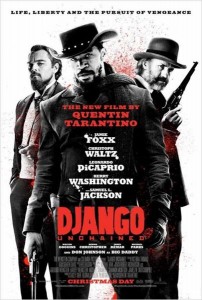
Django Unchained: A Critical Conversation Between Two Friends | The Feminist Wire

Django Unchained: A Critical Conversation Between Two Friends

December 31, 2012

By David J. Leonard and Tamura A. Lomax

There have been so many great discussions on Django Unchained, so many thoughtful and engaging articles, and even more critical engagements within social media.  We’ve seen everything from harsh critiques to high praise, and of course everything else in between.  The analyses, conversations and comments have all been challenging.  Rather than write a review per se, we thought we’d have a public conversation.  Regardless of how we individually interpret the film, we agree that Django needs lots of discussion.  There’s still a fair amount of unsullied ground to cover, or perhaps, previously examined ground to rehash.  Whatever the case may be we invite you to join us.

DJL:  Let me start with this: I am not a fan of Quentin Tarantino (QT), Westerns, or action films.  This is not my wheelhouse so it is no wonder that I left the movie with both questions and concerns about its message and representations, and a MEH feeling about the film.  I just didn’t feel it.  More importantly, I find QT to be really arrogant and problematic as a filmmaker and as a PERSONA on a number of levels.  His responses to critics, his self-aggrandizement, his lack of critical self-reflection, his lack of growth as a filmmaker (the fact that this film is so much like his past films is not a ringing endorsement), and his comfort in cashing in on his privileges trouble me.  My reading of the film is clouded by all of these feelings.

via Django Unchained: A Critical Conversation Between Two Friends | The Feminist Wire.

“The Idol Smasher” l Ismael Reed l TruthDig OpEd Chris Hedges

 The Idol Smasher


by CHRIS HEDGES

TruthDig.org/TruthDig OpEd

Published: Monday 31 December 2012

Ishmael Reed has spent the last five decades smashing idols—idols of race, idols of capitalism, celebrity idols and the idols of national virtue and greatness. His essays, novels, poems, plays, songs and cartoons routinely shatter the delusions and myths of a nation stubbornly unwilling to confront its past or understand its present. He rips open a history that saw white Europeans exterminate one race and enslave another to create the nation’s prosperity, a past that includes the violent plundering of nations around the globe—Cuba, the Philippines, Vietnam, Iraq and Afghanistan among them—to show us who we have become. He names the corrosive disease of empire. He excoriates what Alexis de Tocqueville called our “perpetual practice of self-applause.” He battles back against the sophisticated forms of propaganda—especially from Hollywood—that perpetuate patriotic fantasies and pander to the dark streams of paranoia, racism and fear that run like electric currents through white society.


Reed’s righteous fury is a heartening antidote to the squeamishness of liberals and the lunacy of the right wing. He says the editors of The New York Times and most other major media outlets “sound like they get their instructions from Julius Streicher [the Nazi propagandist] when it comes to blacks.” He calls the HBO series “The Wire” “a Neo-Nazi portrait of black people” and dismisses the movie “Precious” as a film that “makes D.W. Griffith look like a progressive.”

Ishmal Reed, Author, Philosopher and Editor
Pre-eminent African American literary figure, Ishmael Reed, lends his name to two e-zines features many different authors of science fiction, poems, and articles.

“Lazy, no-good black people, who are welfare cheats, sitting around eating chicken, and having sex with their children, right out of the Lee Atwater-Paul Ryan playbook,” he said of the portrayals in “Precious” when I reached him by phone at his home in Oakland, Calif. “The wonderful novelist Diane Johnson was right when she said that ‘largely white’ audiences are thrilled by images of black people as dysfunctional. This has become a billion-dollar market which led critics to assert that Black Bogeyman movies sell better than sex, according to the critic C. Liegh McInnis. You even have a critic at The Root website, a post-racial ‘Talented Tenth’ hangout for ‘exceptional blacks,’ praising Quentin Tarantino’s latest sick exercise into racial porn, called ‘Django Unchained,’ ” which I critique at the Wall Street Journal site Speakeasy. This movie is being praised by the same critics who loved ‘The Color Purple’ and ‘Precious,’ probably because it revives Stanley Elkins’ discredited ‘Sambo Thesis.’ ”

Reed has no time for Black Bloc anarchists, whom he calls “alienated, spoiled middle-class white kids from the suburbs” as well as “vandals and thugs.” He calls the Oscar presentation “a white supremacist pageant.” He detests the Clintons, who he reminds us sold out the poor and the working class. Hillary, he says, makes “Eva Peron seem benign.” He predicts more tragedies like the recent Connecticut massacre, noting that many white Americans stockpile assault rifles because they are terrified of black people and that mass shootings in the United States almost always are carried out by estranged white men.

“ ‘The Turner Diaries,’ the book that inspired Timothy McVeigh to bomb the federal building in Oklahoma, and assaults by gunmen including one against the North Valley Jewish Community Center [in Granada Hills, Calif.,] in 1999, are very explicit,” he said not long after we were on a panel together at the Miami Book Festival. “The [novel] tells whites they need guns because if they give up their assault weapons blacks will kidnap white women and Jewish men will be their pimps. This fantasy, however absurd, at least addresses the deepest, unspoken fears of whites. The white power structure looks around at what is happening. It sees we are going down. It is terrified of an uprising by a coalition of whites, blacks, Asian-Americans and Hispanics that elected Obama—even though Obama with his pretty, multicultural face and elegant style and his spouse, who is more militant than he and who for that reason has been silenced, serve the empire. The only problem is that white crazies like [Michele] Bachmann and the others are so blinded by white supremacy that they won’t go along with the script. She [Rep. Bachmann] said that Obama was costing the taxpayers $250 million per day on his trip to India, a lie, when Obama’s taking over 100 CEOs along with him brought back billions in contracts.”


“The other part of the white public, the underclass and working class, has proven that they will go to any lengths to uphold white supremacy,” he said. “Even when they had no fight in the Civil War, owning no slave assets like the planters, they caused the deaths of 640,000 Americans in order to uphold white supremacy. Then, as now, parts of the white working class, who are anti-union and get drunk on the cheap moonshine of racism, are willing to exercise self-extinction in order to uphold white supremacy.”

“One part of the slavery deal was the patriarchal planter’s ownership of black women’s wombs,” he went on. “Now they [the powerful] are mandating this demand of all women. Yet, white women favored Romney by 14 points. They’re intimidated I think by their husbands, brothers, fathers and employers, which is why they scapegoat the [black] brothers for worldwide misogyny.”

“When Eve Ensler cited the Congo, Haiti and New Orleans as where all of the cruelty to women [was], I figured that she was excusing white men because she has some kind of financial relationship with them,” he said. “One report from SUNY Buffalo has it that 90 percent of middle-class white women who were interviewed report being battered or witnessing their mothers, daughters and sisters being battered. Nicholas Kristof, who is on a world tour for the purpose of blaming black and brown men for cruelty to women, probably missed this report. So the white power structure, at least the Northeastern part, hopes having a black man as president will save the empire, just as the Germans, who were considered the underclass by the Romans, continued the Roman Empire until the 1800s, according to some historians. But they can’t sell this to the majority of white women, who voted for Romney, the kind of dated ‘50s face and style that alienates the rest of the world, instead of a president who is actually charming to those who hate the United States. The president, whom I have both admired and criticized, is good for business. His face is more welcomed in many parts of the world than the usual white Yalie or Harvard person who hasn’t a clue about what’s happening on the global streets—the kind of people who constantly get us into international trouble and even wars because they can’t read the values of other cultures … while Obama can go to places and tell Muslims, ‘Well, you know, I have Muslims in my family.’ ”

“The reason that I supported Obama for re-election is because of the vitriol, bordering on the psychotic, aimed at him and his family,” Reed said. “Also, because he faced not only opposition from the neo-Confederate caucus in Congress, but from a tea party that was created by [Rupert] Murdoch and [Roger] Ailes and from CNN, which made a business alliance with the Tea Party Express, led formerly by Mark Williams, who was fired over his so-called colored people letter. He wrote:

Mr. Lincoln, you were the greatest racist ever. We had a great gig. Three squares, room and board, all our decisions made by the massa in the house.

We Coloreds have taken a vote and decided that we don’t cotton to that whole emancipation thing. Freedom means having to work for real, think for ourselves, and take consequences along with the rewards. That is just far too much to ask of us Colored People and we demand that it stop!

Williams went on to say blacks don’t want taxes cut because “how will we Colored People ever get a wide screen TV in every room if non-coloreds get to keep what they earn?”

Reed said: “That they [CNN leaders] would make an alliance with this scum explains how blacks are depicted on CNN usually during the time when they have black anchors. I feel sorry for these people. It’s because of CNN and Hollywood that when I visited Palestinian schools in Jerusalem in October I was asked why all black people are on drugs. And he [former Tea Party Express Chairman Williams] was replaced by a woman named Amy Kremer, who said to a CNN interviewer that ‘I just don’t believe that he [Obama] loves America the way we do.’ CNN’s bonding with this outfit explains the way it portrays blacks. The network has Soledad O’Brien scolding black men for not showing up at their daughters’ birthday parties, or blacks making excuses for not being successful, or it does a 24-hour show about blacks committing dumb street crimes, or black athletes doing DUIs, while the audience, described by [former CNN anchor] Rick Sanchez as ‘angry white men,’ are shown doing altruistic deeds. They ignore the widespread pathologies afflicting white women. They’re always shown helping people with their homework or adopting kids from Africa.”

“I hold up a mirror to our hypocrisy,” Reed said. “This is a tradition among writers that goes back to Nathaniel Hawthorne, who exposed the hypocrisy of the Puritans. In Haitian mythology there is a figure named Ghede. In West Africa he is called Iku. His role is to show each man his devil. He wears a top hat and smokes a cigar. That’s what I do. I show each man, woman, or institution their devils.”

Read the full Commentary Here

From The Nation of Change


About Ismael Reed and His Work


ABOUT CHRIS HEDGES
Chris Hedges is a weekly Truthdig columnist and a fellow at The Nation Institute. His newest book is “The World As It Is: Dispatches on the Myth of Human Progress.”


Black Feminist Intellectual: A Conversation with Professor Imani Perry l Darnell L. Moore l The Feminist Wire

Black Feminist Intellectual: A Conversation with Professor Imani Perry

December 20, 2012

By 

DM: At present, you hold a primary appointment as a Professor within the Center for African American Studies and a secondary appointment in Law and Public Affairs at Princeton University. You hold a Ph.D. (Harvard University) and J.D. (Harvard Law), and your interdisciplinary research focuses on race and African American culture. You describe yourself as a Black feminist who was born in the South and who presently lives in a major northeast city. Can you give our readers the short version of your amazing journey?
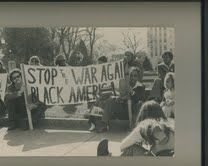
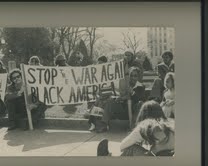
Imani as a little girl with her parents at a protest in Birmingham. The sign reads “Stop the War Against Black America.”

IP: It’s hard to make this short: I was born in Birmingham, Alabama into a large Black Catholic family nine years after the 16th street Baptist church bombing. I am the child of intellectuals and activists; the freedom movement was a constant theme in my coming of age. I moved North to Cambridge, Massachusetts at age 5 (after a brief time in Milwaukee where I attended a “freedom” pre-school that was built in response to a boycott of segregation in city schools.) In Cambridge, my mother began doctoral work again (she had been one of four Black women at Yale in the Theology and Philosophy program before I was born). I was educated at a progressive Quaker school and lived in a counter-culture, multi-racial environment. In the summers, I returned home to Alabama or visited my father in Chicago. My father lived in a gay community and was very active in social justice work around prisons and Central America. I attended camp at Jane Addams Hull House and the New City YMCA, which was a few blocks away from The Cabrini Green housing projects back then. Many of my fellow campers lived in Cabrini. Needless to say, I experienced a wide cross section of American life. I also had access to excellent schools, and my parents are both active scholars and people who have devoted their lives to trying to make a meaningful contribution to the world. It is unsurprising that I became an academic; although, until I was 19, I thought I was going to be a math professor. I attended Yale as an undergraduate student in the era when 3rd wave feminism was born there; the queer community was thriving and our expressions of Blackness were expansive. And I went into a Ph.D. program at Harvard in the “dream team” era in African American studies. I began Harvard Law School when Lani Guinier first joined the faculty. I was educated, and educated well, in an exciting time.

When I graduated, my first job was as a law professor at Rutgers Camden School of Law. I worked there for 7 years, earned tenure in my 5th year and was double promoted to full professor early. At Rutgers, I taught doctrinal courses like contracts and constitutional law but also taught critical race theory and a good deal of critical race feminism. After teaching a course in African American studies at Columbia and loving it, I decided I really wanted to teach in an interdisciplinary program. I’m now in my 4th year at Princeton, where I serve on the faculty in African American studies. I’m affiliated with other departments: Law and Public Affairs, Gender and Sexuality Studies, American Studies. And I also teach courses cross-listed with the Woodrow Wilson School and the Politics Department. What’s wonderful about that is that I meet students from across the University, and they work together to learn from the texts we read that come from a range of disciplines.

DM: You recently offered a compelling critique via social media in which you noted: “Black feminism used to be inherently radical, critical of classism, sexism, racism, heterosexism, and structures of domination, exploitation and imperialism everywhere. But now we have our own versions of NOW feminism, derivative 2nd wave feminism, and tone-deaf elitist middle class feminism.” Can you say more about these contemporary Black feminisms that you’ve named and why it might be important to remember the political and intellectual frameworks out of which Black feminisms emerged?
IP: Neoliberalism has infected every area of thought, even those we think of as inherently progressive. Feminism that is about “choice” (read consumption) rather than an analysis of power, and comes through the mechanisms, and reflects the priorities, of large corporations has very limited potential to actually say much of anything about the deep structure of inequality. I think it is important to remember early Black feminisms because those women had a deep analysis of inequality, one that began with, but extended far beyond their existences as Black women to address all forms of oppression at home and abroad. Those feminists did not celebrate the powerful, but rather advocated for the least of these. And their intellectual work was never simply about the fact of someone being born in a Brown skinned xx body, but rather about the interpretive power of beginning one’s thought from the experience of being Black and a girl or woman. I am worried when I read the title “Black feminism” applied to championing women like Susan Rice. I think a traditional and sophisticated Black feminist analysis does understand that she was targeted as a function of her race and gender; and yet, it also takes a critical posture towards her ideology which lies contrary to global principles of justice. Black feminist thought is not simply an interest group advocating for powerful Black women, it is about seeing the world with a vision of liberation. At least it should be.

DM: If a shift has taken place, do you think it is possible to conceive Black feminisms that reach back–to recuperate and bring into the present—a tradition of intersectional analyses and radical praxis–and push forward–to rethink and extend analyses and political work in areas under-theorized and not yet explored?

IM: I am currently writing about gender, and I am absolutely trying to do that. I think many other scholars are as well: Sara Ahmed and Sharon Holland immediately come to mind. Moreover, a lot of the women of the generation before me (I’m 40 years old) are still thinking and writing, such as Patricia Hill Collins and Bonnie Thornton Dill. The issue is: how do we get young feminists to turn to the books and to the grassroots, as much as they turn to celebrity feminists and the non-profit industrial complex, for their intellectual and political development? There is nothing more macho than corporate power and empire, feminists ought to be immediately skeptical of both even as we have to engage with them if we live in the United States. I’m worried that not enough self-proclaimed feminists have that skepticism. Black queer studies is probably the most robust area right now, in that it is a field that remains explicitly political and deeply analytical, yet connected to the lives of ordinary people: I’m thinking of scholars like E. Patrick Johnson or Rinaldo Walcott, here. All that to say, I think exposing students to sophisticated ideas and modes of analysis will provide them with the tools to push us further. Young people will be at the vanguard of a revitalized intellectual movement for gender justice.

DM: How do these questions figure into your present and/or future intellectual/political projects?

IP: As I said, I’m writing a book about gender. It is heavily theoretical, rooted in philosophy, jurisprudence and the literature of Black women of the renaissance of the 70s-90s. I’m pushing in a different direction than intersectionality. If we read the Combahee River Collective Statement, we see something that isn’t so specific or sited at the crossroads, but expansive and frankly both Marxist and infused with the sensibilities of liberation movements across the globe. I’m pushing in the direction they, and others, set forth.

DM: And speaking of your work, you’ve mentioned that your recent book, More Beautiful and More Terrible: The Embrace and Transcendence of Racial Inequality in the United States, “called [you], rather than one [you] looked for.” How so?

IP: I think part of being an intellectual is both being an active and constant reader of books and articles and also reading one’s environment. So when I say the book called me, I mean that I didn’t plan to write it but, rather, it took shape through my reading and thinking and living. The same thing with my current book projects. In academia, we are often told to have a fixed research agenda from the beginning of one’s career. I have never subscribed to that approach. I write consistently, but I write where my passion lies, and that is an ever-changing and growing thing. Living as an intellectual is prayerful. You immerse yourself in ideas; you live and love the life of the mind; and at opportune times you find insight thrust upon you. It is a blessing.

DM: Lastly, who would you name as your Black feminist sheroes, those whose lives and work invigorate your own? And why?
IP: This is an extremely hard question. There are so many, so this is just a handful of them: all women I’ve known. Certainly, the women in my family, helmed by my late grandmother Neida Mae Garner Perry, are all models of organic feminism. The sense of personal power that I learned from them has enabled every aspiration. And, as a girl, I met Ella Baker several times. She was elderly by then, and I took her to the park. Knowing who she was, I learned early on that a woman who developed a politic around ways of thinking that are traditionally conceived of as female–collaboration, participation, inclusion, process, humility–could initiate an organization that would change the world. That had a huge impact on me. Mary Helen Washington’s landmark and beautiful, Black Eyed Susans, was the first Black feminist anthology I ever read–I read it when I was in middle school–and she went to my church so doing this kind of work was “real” for me. When I was a young scholar, she praised me for maintaining a class analysis in my scholarship. That attention meant the world to me. Beverly Smith, one of the authors of the Combahee River Collective Statement, and other women of that community were often in my living room for gatherings when I was young, and the conversations they had influenced me. Kate Rushin encouraged me to read Black feminist writers specifically when I was a teenager. I listened. I also began to read her poetry as an adult. It is so human and so Black and so womanly.

In college, I interned at South End Press and, as a result, spent a significant amount of time with bell hooks. Her way of both naming injustice and the thought that produces it, but also remaining hopeful, was inspiring. And she did away with any thought that feminism had to be staid. And then, in my senior year of college, I read Patricia Hill Collins Black Feminist Thought, and I remember calling my mom and saying “THIS is what I want to do when I grow up!” It turns out she knew Pat from Black Catholic activist days. Years later, I got to know Pat myself, and I continue to be amazed by the complex maps she creates of how gender and race and class operate. Lani Guinier inspired me to go to law school and inspires me still with her ability to be critical of the site of her own privilege as a scholar who is at a very powerful institution. I try very hard to replicate that critical posture. My play-sister, Farah Jasmine Griffin, models what it means to prioritize Black women as creative and intellectual subjects, to challenge their place in dominant epistemologies, and open up new epistemological frameworks that center Black women writers and musicians. She teaches us how much we matter. And, Toni Morrison is everything. She announces to the world that the very best, the most profound, the most beautiful and the deepest cutting words emerge from the embodied lives of Black women. What better license to write could there be?

__________________________________

Professor Perry is an interdisciplinary scholar who studies race and African American culture using the tools provided by various disciplines including: law, literary and cultural studies, music, and the social sciences. She has published numerous articles in the areas of law, cultural studies, and African American studies, many of which are available for download at: imaniperry.typepad.com. She also wrote the notes and introduction to the Barnes and Nobles Classics edition of the Narrative of Sojourner Truth. She is the author of Prophets of the Hood: Politics and Poetics in Hip Hop (Duke University Press, 2004) and More Beautiful and More Terrible: The Embrace and Transcendence of Racial Inequality in the United States (New York University Press, 2011). Professor Perry teaches interdisciplinary courses that train students to use multiple methodologies to investigate African American experience and culture.


The Feminist Wire

Another Hair Piece: Exploring New Strands of Analysis under Title VII – Race, Racism and the Law

Another Hair Piece: Exploring New Strands of Analysis under Title VII

Parent Category: Intersectionality

Category: Gender

Written by Angela Onwuachi-Willig

Abstracted from: Angela Onwuachi-Willig, Another Hair Piece: Exploring New Strands of Analysis under Title VII, 98 Georgetown Law Journal 1079-1131 (April, 2010)(260 Footnotes)


Imagine that you are a white woman who works as a bartender in a popular casino in an alternate racial universe. Your employer has issued and enforces the following grooming policy as it relates to hairstyles:

POLICY

Employees will adhere to the following appearance guidelines within the workplace. Failure to abide by these guidelines may result in disciplinary action, including termination.

Appearance: Employees must maintain a professional image at all times.

Hair: Extreme or fad hairstyles are prohibited.

• Males:

Hair must be worn in a short style and must not extend below the top of your shirt collar. Ponytails are prohibited.

• Females:

Hair must be worn in braids of any kind, including cornrows, locks, twists, or a short style that does not extend below the top of your shirt collar.

You file a lawsuit, alleging discrimination at the intersection of race and gender. You do not contest the difference in hair length restrictions placed on male and female workers. Courts have repeatedly applied the undue burden test–a special hybrid, disparate treatment-disparate impact test used in sex-discrimination grooming cases–and upheld policies that allow women to wear their hair long but require men to wear their hair short. These courts reason that such hair-length policies impose different but essentially equal burdens on men and women.

via Another Hair Piece: Exploring New Strands of Analysis under Title VII – Race, Racism and the Law.

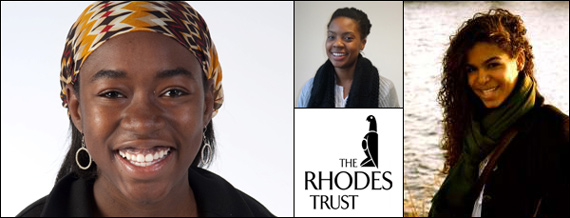
Three African American Women Win Rhodes Scholarships : The Journal of Blacks in Higher Education

Three African American Women Win Rhodes Scholarships

Filed in Features on November 19, 2012

The Rhodes Scholarships, considered by many to be the most prestigious awards given to U.S. college students, were created in 1902 by the will of Cecil Rhodes, an industrialist who made a vast fortune in colonial Africa. Each year, 32 Americans are named Rhodes Scholars. The scholarships provide funds for two or three years of graduate study at Oxford University in Britain. Rhodes Scholars from the United States join students from 14 other jurisdictions including Australia, southern Africa, Kenya, India, and Canada. All told, about 80 Rhodes Scholars worldwide are selected each year for study at Oxford.

This year, 1,700 American students sought Rhodes Scholarships. Of those, 838 were endorsed for selection by 302 different colleges and universities. Of the 32 American winners this year, six attend Harvard University and seven have been students at Yale University.

via Three African American Women Win Rhodes Scholarships : The Journal of Blacks in Higher Education.

NewBlackMan (in Exile): ‘King Abraham Africanus’?: Lincoln Review

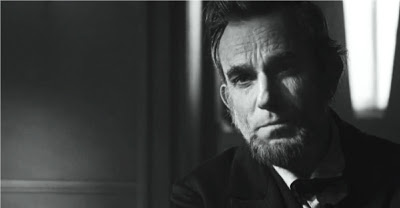
‘King Abraham Africanus’?: Lincoln Review

by Stephane Dunn | special to NewBlackMan (in Exile)

When I was in college, one of those too rare truly provocative discussions occurred over an assigned reading about the nineteenth century in America. I don’t remember the reading, but I do remember that it led to some discussion of President Abraham Lincoln. Lincoln was discussed unquestionably as the ‘Great Emancipator.’ I dared to contradict, having not too long before read some books that gave me a history lesson I hadn’t gotten in all of my middle or high school years. I suggested that the Emancipation was less about a racially progressive Lincoln and more about saving the country and that Lincoln was no great supporter of racial equality or black folk generally. It got heated in the classroom. A girl actually cried she was so disturbed by what she saw as my blasphemy against noble Lincoln. I felt badly and was disturbed as well as further fascinated by the enigma that I think Lincoln remains. The classroom incident heightened my consciousness of Lincoln’s tall complicated, controversial historical shadow.

via NewBlackMan (in Exile): ‘King Abraham Africanus’?: Lincoln Review.

When the Scholar Becomes the Jezebel

When the Scholar Becomes the Jezebel

Some scholars feel that in academia on a college campus, the problems of the outside, “real” world don’t exist, but that’s not always the case. For Tamura A. Lomax, a post-graduate student who wrote a gutsy critique of a senior male colleague’s work, she learned this the hard way. Instead of praise, she writes on the Feminist Wire, she was shunned and demeaned.

I was punished. I wrote a critical book review essay that spoke my truth as I saw it, regardless. I knew it would cause tension. However, I never imagined fire. To my mind, I was jumping into a game of intellectual hopscotch, just as I’d seen my male colleagues do many times before. Naively, I thought it was my turn. However, I learned quickly that the game of intellectual criticism is not only gendered, but also has psychological, emotional and reputational (and thus, representational) risks—if you are a black woman.

I was a newly minted black feminist scholar of religion … who critiqued the work of a tenured black male scholar.  Among all other sorts of criticisms re: staying in my lane, people asked, “Are they f—ing?”  Really?!??  I pledged Delta Sigma Theta Sorority, Inc. at Sigma Chapter at Clark Atlanta University in 1995.  I know full well how to let things that people say about or to me, “roll off my back,” and have been known to withstand the harshest of criticisms without even flinching.  However, the idea that my work as a black feminist scholar of religion and black cultural critic was somehow underpinned by some sort of fantastic and unscrupulous sexual liaison between the author and I sent me into a year long, deep depression and almost two years of silence.

I had spent years researching linguistic and representational deployments of the Jezebel trope in scholarship, religion, and popular culture.  I never imagined that I too would be reconfigured and cast with the veil of Jezebel.  How the hell did that happen?!?  I’m a scholar—an academic M.C. (so I thought).

via When the Scholar Becomes the Jezebel.