Black Feminist Intellectual: A Conversation with Professor Imani Perry l Darnell L. Moore l The Feminist Wire

Black Feminist Intellectual: A Conversation with Professor Imani Perry

December 20, 2012

By 

DM: At present, you hold a primary appointment as a Professor within the Center for African American Studies and a secondary appointment in Law and Public Affairs at Princeton University. You hold a Ph.D. (Harvard University) and J.D. (Harvard Law), and your interdisciplinary research focuses on race and African American culture. You describe yourself as a Black feminist who was born in the South and who presently lives in a major northeast city. Can you give our readers the short version of your amazing journey?
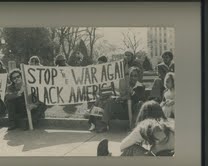
Imani as a little girl with her parents at a protest in Birmingham. The sign reads “Stop the War Against Black America.”

IP: It’s hard to make this short: I was born in Birmingham, Alabama into a large Black Catholic family nine years after the 16th street Baptist church bombing. I am the child of intellectuals and activists; the freedom movement was a constant theme in my coming of age. I moved North to Cambridge, Massachusetts at age 5 (after a brief time in Milwaukee where I attended a “freedom” pre-school that was built in response to a boycott of segregation in city schools.) In Cambridge, my mother began doctoral work again (she had been one of four Black women at Yale in the Theology and Philosophy program before I was born). I was educated at a progressive Quaker school and lived in a counter-culture, multi-racial environment. In the summers, I returned home to Alabama or visited my father in Chicago. My father lived in a gay community and was very active in social justice work around prisons and Central America. I attended camp at Jane Addams Hull House and the New City YMCA, which was a few blocks away from The Cabrini Green housing projects back then. Many of my fellow campers lived in Cabrini. Needless to say, I experienced a wide cross section of American life. I also had access to excellent schools, and my parents are both active scholars and people who have devoted their lives to trying to make a meaningful contribution to the world. It is unsurprising that I became an academic; although, until I was 19, I thought I was going to be a math professor. I attended Yale as an undergraduate student in the era when 3rd wave feminism was born there; the queer community was thriving and our expressions of Blackness were expansive. And I went into a Ph.D. program at Harvard in the “dream team” era in African American studies. I began Harvard Law School when Lani Guinier first joined the faculty. I was educated, and educated well, in an exciting time.

When I graduated, my first job was as a law professor at Rutgers Camden School of Law. I worked there for 7 years, earned tenure in my 5th year and was double promoted to full professor early. At Rutgers, I taught doctrinal courses like contracts and constitutional law but also taught critical race theory and a good deal of critical race feminism. After teaching a course in African American studies at Columbia and loving it, I decided I really wanted to teach in an interdisciplinary program. I’m now in my 4th year at Princeton, where I serve on the faculty in African American studies. I’m affiliated with other departments: Law and Public Affairs, Gender and Sexuality Studies, American Studies. And I also teach courses cross-listed with the Woodrow Wilson School and the Politics Department. What’s wonderful about that is that I meet students from across the University, and they work together to learn from the texts we read that come from a range of disciplines.

DM: You recently offered a compelling critique via social media in which you noted: “Black feminism used to be inherently radical, critical of classism, sexism, racism, heterosexism, and structures of domination, exploitation and imperialism everywhere. But now we have our own versions of NOW feminism, derivative 2nd wave feminism, and tone-deaf elitist middle class feminism.” Can you say more about these contemporary Black feminisms that you’ve named and why it might be important to remember the political and intellectual frameworks out of which Black feminisms emerged?
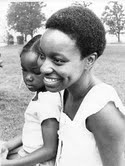
IP: Neoliberalism has infected every area of thought, even those we think of as inherently progressive. Feminism that is about “choice” (read consumption) rather than an analysis of power, and comes through the mechanisms, and reflects the priorities, of large corporations has very limited potential to actually say much of anything about the deep structure of inequality. I think it is important to remember early Black feminisms because those women had a deep analysis of inequality, one that began with, but extended far beyond their existences as Black women to address all forms of oppression at home and abroad. Those feminists did not celebrate the powerful, but rather advocated for the least of these. And their intellectual work was never simply about the fact of someone being born in a Brown skinned xx body, but rather about the interpretive power of beginning one’s thought from the experience of being Black and a girl or woman. I am worried when I read the title “Black feminism” applied to championing women like Susan Rice. I think a traditional and sophisticated Black feminist analysis does understand that she was targeted as a function of her race and gender; and yet, it also takes a critical posture towards her ideology which lies contrary to global principles of justice. Black feminist thought is not simply an interest group advocating for powerful Black women, it is about seeing the world with a vision of liberation. At least it should be.

DM: If a shift has taken place, do you think it is possible to conceive Black feminisms that reach back–to recuperate and bring into the present—a tradition of intersectional analyses and radical praxis–and push forward–to rethink and extend analyses and political work in areas under-theorized and not yet explored?

IM: I am currently writing about gender, and I am absolutely trying to do that. I think many other scholars are as well: Sara Ahmed and Sharon Holland immediately come to mind. Moreover, a lot of the women of the generation before me (I’m 40 years old) are still thinking and writing, such as Patricia Hill Collins and Bonnie Thornton Dill. The issue is: how do we get young feminists to turn to the books and to the grassroots, as much as they turn to celebrity feminists and the non-profit industrial complex, for their intellectual and political development? There is nothing more macho than corporate power and empire, feminists ought to be immediately skeptical of both even as we have to engage with them if we live in the United States. I’m worried that not enough self-proclaimed feminists have that skepticism. Black queer studies is probably the most robust area right now, in that it is a field that remains explicitly political and deeply analytical, yet connected to the lives of ordinary people: I’m thinking of scholars like E. Patrick Johnson or Rinaldo Walcott, here. All that to say, I think exposing students to sophisticated ideas and modes of analysis will provide them with the tools to push us further. Young people will be at the vanguard of a revitalized intellectual movement for gender justice.

DM: How do these questions figure into your present and/or future intellectual/political projects?

IP: As I said, I’m writing a book about gender. It is heavily theoretical, rooted in philosophy, jurisprudence and the literature of Black women of the renaissance of the 70s-90s. I’m pushing in a different direction than intersectionality. If we read the Combahee River Collective Statement, we see something that isn’t so specific or sited at the crossroads, but expansive and frankly both Marxist and infused with the sensibilities of liberation movements across the globe. I’m pushing in the direction they, and others, set forth.

DM: And speaking of your work, you’ve mentioned that your recent book, More Beautiful and More Terrible: The Embrace and Transcendence of Racial Inequality in the United States, “called [you], rather than one [you] looked for.” How so?

IP: I think part of being an intellectual is both being an active and constant reader of books and articles and also reading one’s environment. So when I say the book called me, I mean that I didn’t plan to write it but, rather, it took shape through my reading and thinking and living. The same thing with my current book projects. In academia, we are often told to have a fixed research agenda from the beginning of one’s career. I have never subscribed to that approach. I write consistently, but I write where my passion lies, and that is an ever-changing and growing thing. Living as an intellectual is prayerful. You immerse yourself in ideas; you live and love the life of the mind; and at opportune times you find insight thrust upon you. It is a blessing.

DM: Lastly, who would you name as your Black feminist sheroes, those whose lives and work invigorate your own? And why?
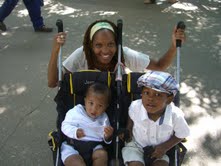
IP: This is an extremely hard question. There are so many, so this is just a handful of them: all women I’ve known. Certainly, the women in my family, helmed by my late grandmother Neida Mae Garner Perry, are all models of organic feminism. The sense of personal power that I learned from them has enabled every aspiration. And, as a girl, I met Ella Baker several times. She was elderly by then, and I took her to the park. Knowing who she was, I learned early on that a woman who developed a politic around ways of thinking that are traditionally conceived of as female–collaboration, participation, inclusion, process, humility–could initiate an organization that would change the world. That had a huge impact on me. Mary Helen Washington’s landmark and beautiful, Black Eyed Susans, was the first Black feminist anthology I ever read–I read it when I was in middle school–and she went to my church so doing this kind of work was “real” for me. When I was a young scholar, she praised me for maintaining a class analysis in my scholarship. That attention meant the world to me. Beverly Smith, one of the authors of the Combahee River Collective Statement, and other women of that community were often in my living room for gatherings when I was young, and the conversations they had influenced me. Kate Rushin encouraged me to read Black feminist writers specifically when I was a teenager. I listened. I also began to read her poetry as an adult. It is so human and so Black and so womanly.

In college, I interned at South End Press and, as a result, spent a significant amount of time with bell hooks. Her way of both naming injustice and the thought that produces it, but also remaining hopeful, was inspiring. And she did away with any thought that feminism had to be staid. And then, in my senior year of college, I read Patricia Hill Collins Black Feminist Thought, and I remember calling my mom and saying “THIS is what I want to do when I grow up!” It turns out she knew Pat from Black Catholic activist days. Years later, I got to know Pat myself, and I continue to be amazed by the complex maps she creates of how gender and race and class operate. Lani Guinier inspired me to go to law school and inspires me still with her ability to be critical of the site of her own privilege as a scholar who is at a very powerful institution. I try very hard to replicate that critical posture. My play-sister, Farah Jasmine Griffin, models what it means to prioritize Black women as creative and intellectual subjects, to challenge their place in dominant epistemologies, and open up new epistemological frameworks that center Black women writers and musicians. She teaches us how much we matter. And, Toni Morrison is everything. She announces to the world that the very best, the most profound, the most beautiful and the deepest cutting words emerge from the embodied lives of Black women. What better license to write could there be?

__________________________________

Professor Perry is an interdisciplinary scholar who studies race and African American culture using the tools provided by various disciplines including: law, literary and cultural studies, music, and the social sciences. She has published numerous articles in the areas of law, cultural studies, and African American studies, many of which are available for download at: imaniperry.typepad.com. She also wrote the notes and introduction to the Barnes and Nobles Classics edition of the Narrative of Sojourner Truth. She is the author of Prophets of the Hood: Politics and Poetics in Hip Hop (Duke University Press, 2004) and More Beautiful and More Terrible: The Embrace and Transcendence of Racial Inequality in the United States (New York University Press, 2011). Professor Perry teaches interdisciplinary courses that train students to use multiple methodologies to investigate African American experience and culture.


The Feminist Wire

Activist. Angela Davis, “Bury the Ratchet” campaign interview

During an interview with television personality Jacque Reid last week, civil rights activist Angela Davis (pictured) announced a new campaign, “Bury the Ratchet,” aimed at improving the depictions of Black women in mainstream media.SEE ALSO: George Washington’s Runaway Slave, Harry

The “Bury the Ratchet” campaign specifically targets Black women who live in Atlanta, Ga., because of reality shows such as “The Real Housewives of Atlanta.” According to Davis, when people encounter African-American women from Atlanta, “the first image that comes to mind is mean, gold-digging women. It has become completely evident that there has been a brand of women from Atlanta that are adverse to what most of these women are like.

Which is why Davis is starting this campaign, “The goal is to get the spotlight off the ratchetness and on the successful women in Atlanta.”

Consequently, Davis will launch a symposium at Spelman College in March 2013, where she will engage other African-American leaders in analyzing how reality television is harming Black culture. Bury the Ratchet will then pool its resources into creating a public service announcement showing how young Black women feel about their depictions in the media.

But can this really help change what women think of these reality programs without removing them from the air? Davis seems confident it can.

“We want to change the mind of young women who absorb these images,” she said. “The first thing we are doing is giving them a voice.”

http://newsone.com/2100749/angela-davis-bury-the-ratchet/

The Black Community Remains Quiet As Woman Serves 20 Year Sentence | Kulture Kritic

The Black Community Remains Quiet As Woman Serves 20 Year Sentence

September 17, 2012.

A little over four months ago,  a Florida judge sentenced 31-year-old Marissa Alexander to 20 years in prison for three charges of aggravated assault with a deadly weapon. Alexander  fired a gun into the air in an attempt to scare her violent husband, who’d gone into a rage after reading text message exchanges between Alexander and her ex-husband. “That’s when he strangled me. He put his hands around my neck,” Alexander said.

In a desperate attempt to save her life, she broke from his grip and ran into the garage to flee the home in her car. Allowing her panic to get the best of her, she forgot to grab her keys and couldn’t open the garage door. Alexander found one solution that could save her from her crazed husband. “I knew I had to protect myself,” she said. “I could not fight him. He was 100 pounds more than me. I grabbed my weapon at that point.”

When her husband, Rico Gray, saw the pistol at her side, Alexander claims he threatened to kill her — that’s when she decided to make the hasty decision to fire the weapon. Instead of aiming the gun towards Gray, Alexander aimed the weapon to the ceiling. ”I believe when he threatened to kill me, that’s what he was absolutely going to do. That’s what he intended to do. Had I not discharged my weapon at that point, I would not be here,” Alexander said. She said she fired into the air intending to scare him away, and Gray quickly left the house with his two children. No one was hurt in the incident, but Alexander sits in jail facing a 20-year sentence on three charges of aggravated assault with a deadly weapon. Alexander attempted to use Florida’s “stand your ground” law — the same law that George Zimmerman is using to defend his decision to kill 17-year-old Trayvon Martin in February this year; however, for some reason the law, did not apply to Alexander’s case. Many are questioning whether or not race is playing a role in the judge’s decision to sentence her 20 years.

via The Black Community Remains Quiet As Woman Serves 20 Year Sentence | Kulture Kritic.


LISTEN LIVE

5-12 aCTION aLERT

OUR COMMON GROUND INTERVIEW with Marissa Alexander LIVE hours following her sentencing.

Jada Pinkett-Smith: “The War on Men Through the Degradation of Woman”

Jada Pinkett-Smith: “The War on Men Through the Degradation of Woman” – “How is man to recognize his full self, his full power through the eye’s of an incomplet

e woman? The woman who has been stripped of Goddess recognition and diminished to a big ass and full breast for physical comfort only. The woman who has been silenced so she may forget her spiritual essence because her words stir too much thought outside of the pleasure space. The woman who has been diminished to covering all that rots inside of her with weaves and red bottom shoes.I am sure the men, who restructured our societies from cultures that honored woman, had no idea of the outcome. They had no idea that eventually, even men would render themselves empty and longing for meaning, depth and connection.There is a deep sadness when I witness a man that can’t recognize the emptiness he feels when he objectifies himself as a bank and truly believes he can buy love with things and status. It is painful to witness the betrayal when a woman takes him up on that offer.

He doesn’t recognize that the [creation] of a half woman has contributed to his repressed anger and frustration of feeling he is not enough. He then may love no woman or keep many half women as his prize.

He doesn’t recognize that it’s his submersion in the imbalanced warrior culture, where violence is the means of getting respect and power, as the reason he can break the face of the woman who bore him 4 four children.

When woman is lost, so is man. The truth is, woman is the window to a man’s heart and a man’s heart is the gateway to his soul.

Power and control will NEVER out weigh love.

May we all find our way.

~ Jada Pinkett-Smith, Sinuous Magazine (http://www.sinuousmag.com/)

Yvette Carnell: CNN’s Soledad O’Brien Isn’t Black Enough, But President Obama Is? | Your Black World

Yvette Carnell: CNN’s Soledad O’Brien Isn’t Black Enough, But President Obama Is?


by Yvette Carnell

Funny thing. Right around the time Soledad O’Brien started buzzing about her “Black in America” special, entitled “Who is Black in America?”,  she was barraged on Twitter by purists, accusing her of not being black enough to have that conversation.

Lately I’ve been trying not to really comment on colorism because I think, no I know, it’s an antiquated discussion.

When Zoe Saldana was tapped to play Nina Simone, I spoke up because that selection represents a standard set by Hollywood, one which has all but eliminated darker skinned women from leading roles. And I would be the first to admit that Hollywood’s penchant for fairer skinned actresses,  which resulted in Saldana’s casting,  is at work in other vocations, including media (maybe even CNN, although I see no indication of that).

via Yvette Carnell: CNN’s Soledad O’Brien Isn’t Black Enough, But President Obama Is? | Your Black World.

REVISIT: The Soul On Ice Effect – Why The Lives Of Black Women And Children Have No Value

SATURDAY, MARCH 8, 2008

The Soul On Ice Effect – Why The Lives Of Black Women And Children Have No Value

Former Black Panther Eldridge Cleaver published the world famous manifestoSoul On Ice in 1968, many consider this work a classic political text. I do not. While I acknowledge the power in Cleaver’s words, the text is also infamous for Cleaver’s admission of being a rapist. Cleaver attempts to justify his rapes of white women as a strike back at the white man and a way to recover his black manhood, as he states about his rapes [“an insurrectionary act. It delighted me that I was defying and trampling upon the white man’s law … defiling his women.”]

As frightening and problematic as that explanation is, Cleaver admits to “practicing on black girls in the ghetto” first. Cleaver never served a day in prison for his assaults on black women, in fact he would become a celebrated black leader during the Black Power movement, a voice of the people, black people. I have always been troubled by this glaring double standard image of Cleaver and the Black Power movement. Forty years later, black women as rape victims, murder victims are considered even less valuable than they were in 1968. We are expendable. And it is not just because white people have devalued the lives of black women, we have, the black community. We make excuses for black men who hurt and kill, for black men who hurt and kill their own people.

On my blog, I have covered the gang-rape at Dunbar Village in West Palm Beach, the slaying of an entire deputy sheriff’s family by her own son in Atlanta, the murder of Nailah Franklin in Chicago, the senseless murders of black women and children on Hovey Street in Indianapolis and on Lester Street in Memphis. All these cases have received more detailed attention on black-owned blogs than on the mainstream media. Our so-called black leadership, the Al Sharptons, the Jesse Jacksons, the Tavis Smileys, the Cornell Wests, including black presidential candidate Barack Obama have been woefully silent and hopelessly inadequate at making any of these cases have any sense of importance in terms of getting a resolution or some sense of justice. The overall black community has been outraged and saddened at these cases, but not enough to last more than a few days, no lasting impression. Once the bodies get buried, our collective interest wanes. We just seem to wait for the next case.

All these cases represent one black woman gang-raped, her black son beaten and terrorized, six black women and six black children murdered. I do not discount the value of the 2 black men that were murdered as well, but a running total of 12 to 2 in less than a year is shocking. When one considers that the suspects in all these cases are black men, one must feel a deep sense of unsettling despair about these cases. Where is the collective black outrage? Black folks mobilized and marched with passion for the quite frankly, extremely unworthy Jena 6 group, but have been virtually dead silent about the black women and children that have been battered, raped, and murdered, then discarded like paper cups when the picnic is finished.

Recently, the two high profile murders of a Auburn University student, Lauren Burk and a UNC Chapel Hill student, Eve Carson received the lion’s share of media attention as is the habit when young and privileged white women are murdered, I was reminded again of the scant attention that black women regardless of age, social or economic background that are missing or murdered ever receive. When confronted with the fact that the alleged murderers of these women are black men, I was reminded of Eldridge Cleaver. I wondered if these same black men that murdered white women so callously and senselessly, what were they doing in the black communities where they came from? How many of their own people had they victimized before they moved on to harming people that would attract the attention to mobilize the police to stop them? How much “practice” had they had in our community before they moved on to white communities?

White people will make no excuses in these cases. They will accept nothing less than the highest level of prosecution under the law. Not just because the murderer was black, they demand the same when the murderer is white, they will demand justice because one of their own has been senselessly murdered, for no good reason at all. Where are the Megan’s Law and the Polly Klass’ laws for black children? Jerry Lee Lewis career was destroyed when he married his 13 year old cousin, but black folks celebrate R. Kelly for his sexual relationships with underage girls. Why does this man still have a career? Do you actually think white people would have waited this long for such a clear case of pornography, underage sex and statutory rape to be prosecuted if R. Kelly was white or his victim was?

Black people should be outraged that black murderers are allowed to “practice” in our neighborhoods first, before they move on. Black people should be outraged that convicted murderer Jessie Dotson was released from prison, only to commit multiple murders of his own family members just two months after his release.

Yet, we won’t be, we will make excuses. We will talk about what these black men didn’t have and how they didn’t get what they needed. We will blame white people, we will blame the prison system, the educational system, we will blame television, music, and movies, we will even blame the victims themselves, but we will most certainly refuse to hold the murderers 100% accountable. We will refuse to call for justice and demand that these predators be locked up and the key to their freedom forever destroyed. And that makes absolutely no sense at all.

It doesn’t matter if black men feel trapped by their personal circumstances and the only people available to hurt and destroy are black women and children, you don’t have the right to murder people. It doesn’t matter how dire your life, no matter how much you are struggling, you have no right to murder people. It doesn’t matter if you suffered racism or any kind of discrimination, you have no right to murder people. No matter how hungry you get, no matter how desperate you get, you have no right to take someone’s life. That is what is supposed to separate us, human beings from wild animals.

We really need to stop wondering why black women and children that go missing or turn up murdered get scant attention in the white-owned mainstream media, we, us, black people have made it a standard practice in our own communities. The black community repeatedly fails to openly and honestly discuss and confront domestic violence, rape, incest, or sexual abuse in our own communities, but we expect white people to care about black victims of these types of crimes when we do not.

The black community continuously asks and expects black women to hold black families together in the most trying and difficult circumstances without the assistance of the majority of black men and then have the nerve to ask black women to be the most forgiving and understanding victims in the universe when the perpetrators are black men. We are always expected to blindly support black men no matter what they do to us, no matter how they fail us, and never ask any questions, but do black women receive the same kind of unconditional support and protection? I think not, the Soul On Ice Effect has become standard practice in the black community.

Posted by Dr. Tracey Salisbury at 3:40 PM 
Read Here:  http://auntjemimasrevenge.blogspot.com/2008/03/soul-on-ice-effect-why-lives-of-black.html

Remember Their Names: In Memory of Kasandra, Cherica & Others

Remember Their Names: In Memory of Kasandra, Cherica & Others

3DEC

I am sure that by now many of you know the name Jovan Belcher.  If you didn’t know his name (as I didn’t) before this weekend, you know it now.  He is the Kansas City Chiefs player who shot and killed his girlfriend before taking his own life on Saturday.  Headlines and news stories have focused on the tragedy from the lens of the perpetrator (including speculation of potential brain trauma, his involvement, as an undergraduate, in a Male Athletes Against Violence initiative, and his standing as an allstar athlete), in some ways dismissing or overshadowing the lens of the victim, who in headlines is simply referred to as “(his) girlfriend.”

kasandra

Her name is Kasandra Michelle Perkins.  She was 22 years old, a new mother, and an aspiring teacher.  Her picture shows off a beautiful smile and her friends describe her as selfless, kind, and generous.  She was excited about being a mother to her newborn, Zoey, and was optimistic about her future.  But her future was cut short, her life was taken away, and I think you should know her name.

This tragic story pushes to the forefront an important issue in terms of domestic violence and murder.  When the murderer is famous, attractive, rich, or charming people don’t want to believe that they are guilty.  I don’t pretend to know Jovan Belcher’s heart, motives, or mind set when he fired numerous gunshots into the body of his baby’s mother, and then turned the gun on himself.  I don’t know why his only option, in that moment, felt like a desperate one.  I don’t know what caused him to murder Kasandra, but what I do know is that it was not Kasandra’s fault.  I know that staying out until 1 o’clock in the morning at a concert was not an invitation to die.  I know that it doesn’t matter what she wore that night, or what she may have said, or whether or not she may have been intoxicated, or rolled her eyes at him, or called him out of his name, or talked to another guy in passing, she didn’t deserve to die.  I know Kasandra didn’t start it, or run off at the mouth, or otherwise instigate her murder.  I don’t know what happened in her relationship, or in that room that night/morning, but I do know that there is nothing Kasandra could have said, done, or imagined that would justify what happened to her.

It is ridiculous that I have to write a disclaimer of responsibility, anticipating an assumption of accountablity for the victim, a young woman who had not even began to live her life, a new mother who will not get to see her child’s first Christmas…but there are (or will be) people who, in Jovan Belcher’s defense, will ask aloud (or wonder silently) what she did to set him off.  They will say she had no business going out with a three-month old at home.  They will wonder what she did to make him so mad that he would jeopardize everything he had worked so hard for.  They will speculate about her cheating, or lying, or disrespecting him.  They will assume that somehow she is at least partially to blame for her own demise.  But I posit that there is nothing that she did do, didn’t do, or could have done to justify her tragic, violent and untimely death.

Don’t get me wrong, I don’t doubt that Jovan Belcher was a good man, a good athlete, a good friend, a good father, or a generous son, but his desperate act in a moment of rage or confusion made him a murderer, and his pre-death accolades and post-death reputation should not be protected at the expense of the person he killed.  Many articles are focusing on how shocked people are that this happened because he was such a good man, and did not have violent tendencies…but imaging that makes him a martyr is problematic because it makes it seem like Kasandra Perkins must have provoked him.  The insinuation, even mildly, that the victim of a violent act is somehow responsible for what happens to them is reprehensible…but unfortunately not uncommon when the victim is black, brown, nonheterosexual, working-class, non-cissexual, disable bodied, or a woman. (NOTE:  A recent example of this “blame the dead victim” mentality was shown when George Zimmerman’s defense requested access to Trayvon Martin’s social media records, as if a facebook status, re-tweet, or candid photograph of a 17-year-old black boy would somehow prove his culpability in his own killing).


Read the full article:  http://crunkfeministcollective.wordpress.com/2012/12/03/remember-their-names-in-memory-of-kasandra-cherica-others/

Three African American Women Win Rhodes Scholarships : The Journal of Blacks in Higher Education

Three African American Women Win Rhodes Scholarships

Filed in Features on November 19, 2012

The Rhodes Scholarships, considered by many to be the most prestigious awards given to U.S. college students, were created in 1902 by the will of Cecil Rhodes, an industrialist who made a vast fortune in colonial Africa. Each year, 32 Americans are named Rhodes Scholars. The scholarships provide funds for two or three years of graduate study at Oxford University in Britain. Rhodes Scholars from the United States join students from 14 other jurisdictions including Australia, southern Africa, Kenya, India, and Canada. All told, about 80 Rhodes Scholars worldwide are selected each year for study at Oxford.

This year, 1,700 American students sought Rhodes Scholarships. Of those, 838 were endorsed for selection by 302 different colleges and universities. Of the 32 American winners this year, six attend Harvard University and seven have been students at Yale University.

via Three African American Women Win Rhodes Scholarships : The Journal of Blacks in Higher Education.

Oprah, Beyoncé, and Truth

F

Radical feminist, artist, and media activist Alexis Pauline Gumbs calls herself,

rom Beyoncé and Oprah to Serena and Venus Williams, African American women are some of the most celebrated people in today’s media-saturated culture. Despite the largely positive nature of this attention, misconceptions and stereotypes are often reinforced when we see these women on screens and in the pages of magazines. In a new book of poems contemplating celebrity, race, and representation, Alexis Pauline Gumbs considers “what it is possible to know about the most famous Black women alive today.” Gumbs describes her book, One Hundred and One Things That Are Not True About the Most Famous Black Women Alive, as “part prayer part polemic […] an intervention into the consumption of Black women.”

via Oprah, Beyoncé, and Truth.

Can Your Beauty Products Cause Diabetes? – Diabetes Center – Everyday Health

Can Your Beauty Products Cause Diabetes?

According to some recent research, your hair spray, nail polish, or perfume could add to your diabetes risk, thanks to a class of chemicals called phthalates.

By Chris Iliades, MD

Medically reviewed by Niya Jones, MD, MPH

Related Articles

Can Chemicals Cause Diabetes ?

What Cause Diabetes ?

Nephrotic Syndrome – Exams And Tests

You probably haven’t heard of phthalates, a type of chemical found in beauty products, like nail polish, hair spray, skin lotions, and perfumes; and household products, including raincoats, shower curtains, and food packaging. But you should expect to hear a lot more about them soon

via Can Your Beauty Products Cause Diabetes? – Diabetes Center – Everyday Health.