Check out Commentaries in Our Times by Playthell Benjamin, posted earlier. “Open Letter to Dr. Cornel West”

Davey D's avatarDavey D's Hip Hop Corner

Cornel-West-purple

Who am I to defend Dr. West who is a considerably one of the greatest minds God has blessed humanity with in the 21 century. He is a prophetic voice out of the African American Baptist tradition, a scholar, writer, historian and musicologist. He has been critical of President Obama and because of his criticism he and Tavis Smiley, his partner in criticizing the president have both been accused of profiteering and jealousy. Frankly, I cannot say if that is or is not absolutely false.

However, I do welcome Dr. West’s well placed articulation for the poor and disenfranchised. I applaud his truth telling in season and out of season. I encourage his well aimed perspectives on President Obama’s administration and policies. I disregard the claim that our President cannot be the Black President as a ridiculous comment, which seems only African American make about themselves and accept from…

View original post 1,176 more words

The Façade of the American Dream l Press TV Documentary l Parts 1-4

Documentary

The Façade of the American Dream

Published on Jan 15, 2013

 A cross section of people discuss the fraud of the American dream and how systemic racism keeps millions of people down while offering others hope and opportunity. Executive producer Dr. Randy Short, M.div. and senior director Marzieh Hashemi’s film gives voice to those who believe That African Americans are far from achieving the American Dream in health, education, welfare, and justice.

The documentary features commentary from a number of OUR COMMON GROUND Voices, Dr. Vernellia Randall, Dr. Wilmer Leon, Rev. Graylan Haigler, Dr. Mary Scott, Dr. Charles Norman, Dr. Joseph Richardson, Glen Ford, Atty. Efia Nwangaza, and  Dr. Mary Neal.

WE STILL AIN’T FREE :THE FAÇADE OF THE AMERICAN DREAM

Part 1: This is Why We Have the Blues

Part 2: From School House to Jail House

Part 3: Lack of Wealth, Lack of Health

Part 4: You Aren’t Free

If you like this series, try sharing  your feedback, and encourage PRESSTV to produce documentaries that tell the truth about the African Diaspora and its legacy.

It depicts how the US removed Africans from their country of origin, worked them to death as slaves and today, in schools, is brainwashing them to make believe they are inferior in many aspects.

 The Façade of the American Dream Part 1

This is Why We Have the Blues

 The Façade of the American Dream Part 2

From School House to Jail House

The Façade of the American Dream Part 3

Lack of Wealth, Lack of Health

 The Façade of the American Dream Part 4

You Aren’t Free

ABOUT PRESS TV
PRESS TV produces more than 350 episodes of documentaries annually. PRESS TV documentaries, produced in many countries in the four corners of the world, try to reveal the truth with a different outlook to people around the world. Through these documentaries, PRESS TV presents a different point of view on current world affairs compared with the mainstream media.

The Documentary Department of PRESS TV is interested in selling the broadcasting rights of its documentaries to other television networks, websites, companies, distributors, independent buyers etc.

Check out the “Online Catalogue” to select your favorite film by clicking here!

You can watch Press TV by visiting the following websites:

Press TV watch live services (Worldwide)

OHTV Box (internet Set-top box) (Worldwide)

Livestation (internet platform. Supports PC MAC, Linux and all tablet PCs and smartphones)

Windows Mobile app

Press TV Mobile Page

Dhoruba talked about the rise of a police state where the stripping of constitutional rights would seem normal to a beleaguered population

Davey D's avatarDavey D's Hip Hop Corner

Hard Knock Radio logoIt’s always a pleasure to chop it up with author, former Black Panther and political prisoner Dhoruba bin Wahad. His political insights and analysis are always astute as he challenges us to not settle for anything less than justice for those who are oppressed.  Because of Dhoruba’s sharpness, we had to include him in our post-election series of  ‘Where Do We Do Now That Barack Obama Is Re-Elected?‘  He did not disappoint..

Below is our Hard knock Radio interview w/ Dhoruba Bin Wahad..

As you listen to the interview, here’s some background. The opening of our interview starts off with an excerpt from a landmark speech Dhoruba gave in the summer of 2008 at the National Hip Hop Political Convention in Las Vegas. We dubbed ‘A Message to the Hip Hop Grassroots‘.  Here Dhoruba talked at length about a 30 year attempt by far right forces…

View original post 148 more words

Debtor’s Hell – What to do about debt and debt collection harassment l Another Kind of Financial Crime in America


The battle by Joanne M. Johnson of Leominster, who lives on a disability check, to get her car back took an emotional toll. (Globe Staff Photo / Michele McDonald)

If you are being hounded by debt collectors. STOP ! Don’t talk to them. Let them call. DON’T TALK TO THEM. Find out if they are licensed to collect in your state and what your state rights are. If they are not licensed in most states, they have no legal standing to collect from you ! Get on the web and get your free credit report that you are entitled to annually from all the Credit Reporting agencies. Find out who is listing you as owing and is a collector ( meaning you never owed them any $$ ever directly). Get the address and then go here. DO NOT FALL FOR ANY SERVICE THAT CHARGES YOU TO HANDLE THIS. There is NOTHING that they can do, that you can’t do. Then study this site which is outstanding to guide you in what your next step is. IF IT IS BAD, study this site and get a very clear training on how to handle your debt collectors problems. All the education, form letters and addresses, etc are on this board. There is a sane way out. This was one of the first web projects that I was involved in putting together. These people know their stuff and there are lots of people willing to help. State and federal laws regulate how these bottomfeeders behave.

Get your education and get them off your back here . . . CreditBoards

A few of the many forums with detailed information and discussion that you will find . . 

Credit Forum

Credit Reports, Collections, Credit Cards and related discussion

Medical Billing & Medical Collections

Discussion of medical billing issues and collections.

Bankruptcy

Bankruptcy discussion

Foreclosures/Loan Modifications

While every lender, foreclosure and modification situation is different, this is a place to discuss and share your experiences.


Chexsystems Help

Discussion and help for consumers who have trouble getting a bank account.


Debt Consolidation, Counseling and Management

Discussion of debt management inc’ DMP’s, consolidation, settlement and consumer credit counseling

Military Credit

For the credit issues that are unique to our military members

In 2006, a  Boston Globe Spotlight Team investigation into the world of consumer debt in the United States found a system where debt collectors have a lopsided advantage, debtors are often treated shabbily by collectors and the courts, and consumers can quickly find themselves in a life-upending financial crisis.


No mercy for consumers

Firms’ tactics are one mark of a system that penalizes those who owe

This story was reported by Spotlight team members Michael Rezendes, Beth Healy, Francie Latour, Heather Allen, and editor Walter V. Robinson. It was written by Rezendes and Latour.

First of four parts | July 30, 2006

   READ THE FULL SERIES HERE

This Boston Globe Spotlight Team investigation into the world of consumer debt in the United States found a system where debt collectors have a lopsided advantage, debtors are often treated shabbily by collectors and the courts, and consumers can quickly find themselves in a life-upending financial crisis. Audio AUDIO: Spotlight reporters talk about the series
Debtors' Hell -- Peter Damon
(Michele McDonald / Globe Staff)

Dignity faces a steamroller

Debtors' Hell -- Connie Sorenson

Enforcers’ might goes unchecked

MA Help & advice: ( Laws and agencies in other States vary.  Start with the State Banking regulators)

Groups & associations:

Roe v. Wade at 40: What Keeps Black Women from Going Public with Our Stories? l Ebony Magazine

Roe v. Wade at 40:
What Keeps Black Women from Going Public with Our Stories?

AS WE MARK THE ANNIVERSARY OF THE HISTORIC SUPREME COURT DECISION, DANI MCCLAIN WONDERS WHEN BLACK WOMEN WILL HAVE THE FREEDOM TO SPEAK OUT ABOUT ABORTION

ByDANI MCCLAIN
January 22nd marks 40 years since the Supreme Court affirmed a woman’s right to a safe, legal abortion. Reports from nationwide rallies celebrating the landmark decsion will inevitably include photos of women wearing “I had an abortion” t-shirts and holding signs with slogans that tie their personal to the political.

And if 2013 is anything like years past, very few of those women will be Black.

Of course we, like other women, decide not to carry our unplanned pregnancies to term. In fact, we tend to do so at higher rates because of barriers to quality birth control and accurate information about our bodies. But when we do choose abortion, few of us go on to share our experiences in online and offline spaces. We don’t purchase t-shirts or offer testimonies that open us up to having to defend our decisions.

This week, the DC-based reproductive health organization Advocates for Youth will release a book that builds on its “1 in 3” campaign. The name references the fact that one in three U.S. women will have an abortion in her lifetime. Out of the 31 moving, intimate videos posted online, four appear to feature Black women. Why so few, given our rates of choosing these procedures? As Steph Herold, an advocate who tracks abortion storytelling, has noted, middle class, young, White women are more likely to offer up their stories and have them published.

Black women have been targeted in recent anti-choice attacks,including a billboard that read “The Most Dangerous Place for an African American is in the Womb” and others like it that popped up in AtlantaNew YorkOakland and elsewhere beginning in 2010. Anti-choice advocates use images of Black women and girls to sell their agenda. Why the cultural gap when it comes to telling our own stories?

One reason, says Mia Herndon, is that it’s not clear how this gets us closer to securing the healthcare we need. Herndon is a reproductive justice leader and former executive director of Third Wave Foundation.

“We need leadership in terms of connecting the dots,” Herdon told me. “How does me telling my story actually change the conversation rather than get me more judgment?”

Many of us just don’t believe in putting our personal business in the street. And some of us fear blowback from family members or religious communities if word gets out. But Black women face the added burden of having our stories colored by media depictions that tell the world we’re oversexed, poor decision-makers or both.

…SOME OF US FEAR BLOWBACK FROM FAMILY MEMBERS OR RELIGIOUS COMMUNITIES IF WORD GETS OUT. BUT BLACK WOMEN FACE THE ADDED BURDEN OF HAVING OUR STORIES COLORED BY MEDIA DEPICTIONS THAT TELL THE WORLD WE’RE OVERSEXED, POOR DECISION-MAKERS OR BOTH.

 “Because images of Black women are so compromised, the idea of coming out and saying ‘I had an abortion’ and feeling like you can still hold your head high and be fine, that’s just not our experience,” Herndon said. “We don’t have that many experiences of being treated well publicly.”

When 28-year-old Brittany Mostiller got an abortion in 2008, talking about it with her family was hard enough. She never expected she’d be telling her story in high schools or in the Chicago neighborhoods where she now passes out condoms and information on laws related to reproductive health.

But the organization that helped pay for her procedure, Chicago Abortion Fund (CAF), invited her to join a group of women who meet regularly for peer support and to organize in their communities. Last year, CAF raised $60,000 to help 184 low-income women access second trimester abortions. Four out of five women who receive funds from CAF are of color, said its executive director, Gaylon Alcaraz.

The process of getting these women engaged takes time. After checking in to see what help they need post-abortion – from sexual health information to housing and employment referrals – the organization supports the women in building trust and friendships. That’s the necessary foundation to storytelling.

“I think that women of color want to tell their stories,” Alcaraz said. “There’s no platform. And let you be poor, or let you be fat, or let you be gay. The media is not friendly to that.”

To get around the gatekeepers, CAF creates its own media, including a monthly local TV show called “The A Word.” Mostiller, who is mother to four girls and attends college full-time, has been on the show. At the start, the host introduces herself by saying, “My name is ________, and I’ve had an abortion.”

It was difficult to speak those words on camera early on, Mostiller said. But that’s changed.

“It’s my story. It’s mine to tell,” she told me. “And it’s someone else’s truth also.”

Dani McClain is a Nation Institute fellow, reporting on reproductive health and sexuality.

RELATED TAGS

Read more at EBONY http://www.ebony.com/news-views/roe-v-wade-at-40-994#ixzz2IihH6xCP
Follow us: @EbonyMag on Twitter | EbonyMag on Facebook

The Audacity of Fluff: A Critical Reading of Obama’s Inaugural Address l The Atlantic


The Audacity of Fluff: A Critical Reading of Obama’s Inaugural Address


 The president’s words elided inconvenient realities and too often lacked rigor.

Conor Friedersdorf

o inaug reuters.jpg

Reuters

President Obama’s Second Inaugural Address is unlikely to be much remembered by future generations. Its authors have a talent for “rhetorical craftsmanship,” as James Fallows astutely noted. But to what end?

Were hard truths expressed? Were complicated concepts rendered in clarifying language? Were the disagreements that divide us insightfully characterized? Was an argument advanced? No, the craftsmanship was marshaled in place of substance rather than in support of it. The president expertly associated himself with certain ideas and evoked certain impressions.

He burnished his brand rather than acting like a leader.

I don’t mean to suggest a total dearth of ideas.

The speech’s theme: As Americans, we’re in this together. That’s a fine theme. Like the vast majority of Americans, I favor a social safety net to care for those who can’t care for themselves; I grant the wisdom of funding infrastructure projects through federal and state governments; I agree that “our country cannot succeed when a shrinking few do very
well and a growing many barely make it”; and I think the present generation has some obligations to posterity.

Of course, sharing those concerns needn’t mean accepting that any one related policy proposal would be effective or desirable. I often disagree with Obama’s proposed remedies. I am hardly alone. What did the second inaugural offer an American like me? Neither a serious, reasoned attempt to persuade me of his vision nor an acknowledgement that it is deeply contested.

As he often does, Obama proceeded as if leadership is an exercise in eliding disagreements; as if defeating a straw man in argument is persuasive; and sometimes even as if pretty lies are preferable to the truth. Certain passages met a basic threshold of substance. But they were surrounded by fluff: rhetoric so light, soft, and fuzzy it ought to be beneath a historical occasion. We now expect no better of our pols. So they meet our expectations.

What follows are passages I found particularly objectionable (for a variety of reasons).

Said Obama:

Through it all, we have never relinquished our skepticism of central authority, nor have we succumbed to the fiction that all society’s ills can be cured through government alone.

Oh really?

Obama favors greater central authority in health care, energy, education, gun regulation, and occupational safety. His underlings have actively undermined state efforts to decentralize marijuana policy. And on national-security matters, he has worked to centralize authority in the executive branch. In what way has Obama’s supposed skepticism of central authority manifested itself in the last four years? I can think of no significant step he has taken to check it. This is phrased as a nod to ideological opponents, but the concession has no substance behind it.

Said Obama:

Preserving our individual freedoms ultimately requires collective action. For the American people can no more meet the demands of today’s world by acting alone than American soldiers could have met the forces of fascism or communism with muskets and militias. No single person can train all the math and science teachers we’ll need to equip our children for the future, or build the roads and networks and research labs that will bring new jobs and businesses to our shores. Now, more than ever, we must do these things together, as one nation, and one people.

That apples-and-oranges comparison at the beginning reads like a passage from a Tom Friedman column. It’s trivially true that no single person can train all the math teachers we need, or build all the research labs. But it hardly follows that we need to do all those things together, “as one nation, and one people.” Some of the math teachers can be trained by Jesuit institutions that secular Americans are uninclined to support. Some of the research labs can be built with private money to conduct research that many wouldn’t care to fund, whether due to moral objections or because they don’t appreciate its value. A great strength of America is the fact that we don’t have to do everything collectively, “as one nation, and one people.” Individuals and diverse groups work alone or in private collaboration to pursue their own notions of the good, and everyone benefits from their greatest achievements. If we’re smart, we also benefit from the science teachers and research laboratories of other peoples and nations. In a pluralistic nation, actually doing anything as one is either a vapid illusion or creeping fascism. Progressives feel that way when they’re told opposing a particular war is un-American.

Said Obama:

America’s possibilities are limitless, for we possess all the qualities that this world without boundaries demands: youth and drive; diversity and openness; an endless capacity for risk and a gift for reinvention. My fellow Americans, we are made for this moment, and we will seize it — so long as we seize it together.

Our world is not without boundaries. And America’s capacity for risk is not “endless,” thank goodness.

Said Obama:

We are true to our creed when a little girl born into the bleakest poverty knows that she has the same chance to succeed as anybody else, because she is an American, she is free, and she is equal, not just in the eyes of God but also in our own.

In America, it has never been true that a little girl born into the bleakest poverty “knows” she has the same chance to succeed as anybody else, because she has never and does not currently have the same chance. Equality of opportunity is something to which America ought to keep aspiring. So I suppose I agree with what I take to be his point. What I don’t understand is why Obama would phrase things as if, when we’ve been true to ourselves, the destitute poor enjoyed that equality. They never have (though some of them have managed to “make it” anyway).

Said Obama:

We understand that outworn programs are inadequate to the needs of our time. We must harness new ideas and technology to remake our government, revamp our tax code, reform our schools, and empower our citizens with the skills they need to work harder, learn more, reach higher.

This elides the reason for our woes. The tax code is flawed because it accommodates special interests as often as the general interest, among other reasons, not because it’s waiting for “new ideas” or “technology” to fix it. It isn’t “ideas” or “technology” that are going to fix our government or our schools either. Pretending as much is a frivolous evasion that serves no one.

Obama:

We must make the hard choices to reduce the cost of health care and the size of our deficit. But we reject the belief that America must choose between caring for the generation that built this country and investing in the generation that will build its future.

Are today’s retirees “the” generation that built this country? No. Is there anyone arguing that America must choose between the binary options caring for the elderly and investing in the children?

No.

There are people suggesting that the relative amounts flowing to those groups must be re-calibrated. Obama’s words create a straw man that is marshaled to elide the fact that society must decide how much the state spends on young and on old, and that the two decisions impact one another.

Said Obama:

We, the people, still believe that our obligations as Americans are not just to ourselves, but to all posterity. We will respond to the threat of climate change, knowing that the failure to do so would betray our children and future generations. Some may still deny the overwhelming judgment of science, but none can avoid the devastating impact of raging fires, and crippling drought, and more powerful storms.

It isn’t actually clear that the United States will respond to the threat of climate change, partly because most Americans can still mostly escape the impact of wildfires, droughts, and more powerful storms. The politics are difficult precisely because the costs are borne by other people.

Said Obama:

The path towards sustainable energy sources will be long and sometimes difficult. But America cannot resist this transition; we must lead it. We cannot cede to other nations the technology that will power new jobs and new industries — we must claim its promise.

Actually, if Japan or Germany or Brazil invented an awesome new technology that made clean energy cheaply, without any American leadership, we’d still benefit from it, and there would be no danger of us “ceding” it, whatever that means. We’d adopt the technology, obviously. Again, Obama is trying to elide something: in this case, that “clean energy” is presently inferior, at least when you can ignore its externalities, and that the transition is being resisted for that reason. What purpose does it serve to frame controversies in a way that elides their core?

Said Obama:

We, the people, still believe that enduring security and lasting peace do not require perpetual war. Our brave men and women in uniform, tempered by the flames of battle, are unmatched in skill and courage.

Actually, America is presently engaged in a War on Terrorism, and no one, the president included, thinks it is going to end in the foreseeable future. Nor has he put forth any strategy or analytic framework under which it would end, or defined what a victory would mean. Also, there is no evidence for the belief that American soldiers are unmatched in their courage. There are almost certainly people of other nationalities as brave. Why pretend otherwise?

Said Obama, “We will defend our people and uphold our values through strength of arms and rule of law.” But the last two presidents have repeatedly broken domestic and international law in the course of fighting the War on Terrorism. He continued, “No one has a greater stake in a peaceful world than its most powerful nation.” Actually, weaker nations have a greater stake in a peaceful world, because they’re unable to prevent violent aggressors from invading and killing their people.

“We will support democracy from Asia to Africa; from the Americas to the Middle East, because our interests and our conscience compel us to act on behalf of those who long for freedom,” Obama said, though neither our interests nor our conscience will cause him to support democracy in Saudi Arabia or Qatar.

Said Obama:

We, the people, declare today that the most evident of truths — that all of us are created equal — is the star that guides us still; just as it guided our forebears through Seneca Falls, and Selma, and Stonewall; just as it guided all those men and women, sung and unsung, who left footprints along this great Mall, to hear a preacher say that we cannot
walk alone; to hear a King proclaim that our individual freedom is inextricably bound to the freedom of every soul on Earth.

But in his actions, he makes abundantly clear his belief that people in Pakistan, Yemen, and Somalia, to name three countries where he approves drone strikes, are not to be treated as if their lives are equally valuable as American lives, or as if they enjoy the very same rights and liberties. If our freedom is “inextricably bound to the freedom of every soul on Earth,” when does the invasion of North Korea begin? Or are we actually quite free despite their living in tyranny? If Obama is being guided by the stars of Selma and Stonewall he’s an awful navigator.

So many passages in Obama’s second inaugural betrayed a predictable yet disappointing lack of rigor and forthrightness. But other than all the quoted passages above, the speech was okay. I’m sure Obama’s defenders will point out that many of the shortcomings I’ve detailed are no worse than what is found in most every politician’s speech. I concede the point, but encourage everyone to stop treating that as a good reason to withhold criticism.


 – Conor Friedersdorf is a staff writer at The Atlantic, where he focuses on politics and national affairs. He lives in Venice, California, and is the founding editor of The Best of Journalism, a newsletter devoted to exceptional nonfiction.

The Fiscal Cliff Fallout: This Is Not What MLK Would Have Wanted l P365

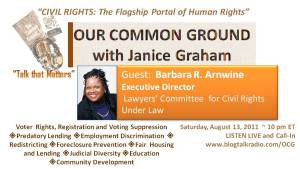
   Guest Contributor, Barbara R. Arnwine, President and Executive Director, Lawyers’ Committee for Civil Rights Under Law

The Fiscal Cliff Fallout: This Is Not What MLK Would Have Wanted

By Barbara R. Arnwine, President and Executive Director, Lawyers’ Committee for Civil Rights Under Law

The Fiscal Cliff Fallout: This Is Not What MLK Would Have Wanted

As we reflect on Martin Luther King Day, many of us reflect on his famous and stirring “I Have A Dream Speech.” This speech is memorialized as the centerpiece of the “March on Washington for Jobs and Freedom,” which spoke of the twin evils of racial discrimination and economic deprivation that prevailed because of the defaulted promissory note that stipulated equality for all. In an earlier speech in Detroit (1963), Dr. King linked the “twin evils” stating that “I have a dream this afternoon that one day right here in Detroit, Negroes will be able to buy a house or rent a house anywhere their money will carry them and they will be able to get a job.” Then and now the civil rights movement is about much more than ending racial discrimination, it’s also advocating  for economic justice and opportunities for all people.

Until there is equal access to economic opportunities, America cannot call itself a post racial society. The modern form of racial discrimination is realized through an economic proxy. We find evidence of this in the fiscal cliff compromise, which was hard fought and difficult to reach. The fruition of the compromise allowed racial minorities to avoid a compound of injustice and discrimination that could have manifested without a decision.

According to the August, 2012 report from the Congressional Budget Office in “An Update to the Budget and Economic Outlook: Fiscal Years 2012 to 2022 Report” the cuts could have sent the entire country into another recession. As we have learned from the Great Recession, racial minorities are disproportionately impacted by downturns in the economy. In 2001, nearly 65 percent of White adults and just over 60 percent of Black adults were employed. The Great Recession caused the share of Black working adults to slide down to 52 percent, nearly seven points behind Whites.

Throughout the recession, the unemployment rate for African Americans continued to rise in the double digits, with the December 2012 unemployment rate at 14 percent for African Americans, while it was only 6.9 percent for Whites. Even though racial minorities can count this fiscal cliff compromise as a win, the political showdowns surrounding the compromise have fostered a breeding ground of animosity that may preview continual struggles ahead.

Debates in coming months concerning spending cuts and raising the nation’s limit on borrowing are raising legitimate concerns in minority communities. Those who opposed the compromise and  were against raising taxes on the wealthy, have vowed that in any future debates they would stalwartly include significant cuts in government benefit programs like Medicare and Medicaid, which could potentially have a disparate impact on minorities and low income families. This debate illustrates the twin evils of racial discrimination and economic deprivation that Dr. King spoke of so eloquently.

Many of Dr. King’s remarks are almost prescient of today’s economic issues. His remark that “God never intended for one group of people to live in superfluous wealth while others live in abject deadening poverty” resonates soundly with the fiscal cliff compromise to tax wealthy Americans at a higher rate in order to supplant the harrowing growth of the minority poverty rate, which had previously been narrowed prior to the recession. In a similar fashion, his observation that “Injustice anywhere is a threat to justice everywhere” speaks to how politicians should approach future economic debates.

Decisions in any upcoming fiscal debates should ensure that all Americans are treated fairly and should not create an undue burden on those in our country who are already struggling. That type of injustice only impedes the growth our nation in becoming a post-racial society. Dr. King’s speeches push beyond issues of economic inequality, calling for parity in all facets of life. However, it is hard to envision the dream of equality manifesting without an equal economic playing field.

###

Barbara R. Arnwine is president and executive director of the Lawyers’ Committee for Civil Rights Under Law. The Lawyers’ Committee is a nonpartisan, nonprofit organization, formed in 1963 at the request of President John F. Kennedy to enlist the private bar’s leadership and resources in combating racial discrimination and the resulting inequality of opportunity – work that continues to be vital today. Tahirah Marston, a Business Major at George Washington University and intern for the Lawyers’ Committee, contributed to this editorial. For more information on the Lawyers’ Committee, please visithttp://www.lawyerscommittee.org

 Barbara Arnwine is an OUR COMMON GROUND Voice

Arwine

About Politic365

Politic365 is the premier digital destination for politics and policy related to communities of color. Not only do we create a positive media outlet for the empowerment and enrichment of our elected officials and community leaders, we also provide a venue for the exploration of issues important to our communities.

‘Post-racial’? No: with a black president, all issues are racialized l Professor Anthea Butler

‘Post-racial’? No: with a black president, all issues are racialized

Anthea Butler

12:05 pm on 01/21/2013
File Photo: In this handout from the The White House, U.S. President Barack Obama bends over so the son of a White House staff member can pat his head during a visit to the Oval Office May 8, 2009 in Washington, DC.  (Photo by Pete Souza/The White House via Getty Images, File)File Photo: In this handout from the The White House, U.S. President Barack Obama bends over so the son of a White House staff member can pat his head during a visit to the Oval Office May 8, 2009 in Washington, DC. (Photo by Pete Souza/The White House via Getty Images, File)

The inauguration of President Obama on Martin Luther King Jr. day is a powerful symbol of the progress in race relations in America. Symbols, however, do not have universal meaning. Since the 2008 election of Barack Obama, the nation has had to contend with two competing narratives: one, the election of the nation’s first African-American president meant America was now post-racial. The second narrative was that the election of Barack Obama meant that “America” was in peril, and that a Socialist Kenyan became president again through nefarious means. Which narrative will prevail in President Obama’s second term?  It depends on how race is confronted in the president’s second term, not only by the president, but by concerned Americans.

Since the presidential election of 2008, race relations in this country have deteriorated with the rumors that the president is a crypto Muslim, a Kenyan or any of the myriad of names (Obozo, Obummer) that have been given to him by conservative talk show pundits and detractors. Consistent calls for the president’s birth certificate during his first term, and other racial epithets and slurs from many sources including Sarah Palin, Donald Trump, and Rush Limbaugh seeped into portions of the country’s psyche, angering many people of color and galvanizing disenfranchised whites into polarized political camps. These racialized slurs against the president, fueled by conservative radio, television, and print media, have turned into a cottage industry of T-shirts, buttons and posters sold online and at Tea Party and other political rallies. Those who have promoted this racism are also quick to say that they are not “racists,” further compounding the issue.

All of this racial animus tumbled into the 2012 election campaign, leaving the Romney/Ryan ticket to win 59% of white voters in the 2012 election. That was 20 points more than the Obama/Biden ticket.  Despite this, the president won by a large margin, and with a broad coalition of support from all ethnic groups. With the president’s win, the racial animus has continued, threatening to engulf his second term as well.

There is no better time than the anniversary of Martin Luther King’s Jr. birthday for the president to address the legacy of race and racism in the United States.  Most Americans remember one important line from the “I have a Dream Speech”:  “I have a dream that my four little children will one day live in a nation where they will not be judged by the color of their skin, but by the content of their character.” The quote of King is lifted out of a critical speech highlighting the problems of the civil rights movement. Now it is used to validate America’s so-called post-racial society. The reality is, the last four years have been anything but “post racial.”

At the beginning of President Obama’s second term, it is important that the boil of racism festering during the last four years be lanced. How? By the president’s acknowledging the tensions in this country that are being currently racialized: gun control, health care, and immigration.  While the president’s race speech back in 2008 was a necessity on the campaign trail, perhaps the inauguration speech or his State of the Union address could acknowledge these tensions, explaining how they they subvert or distort our attempts to deal with the problems themselves.

How we as a nation work through our racial issues is important as we draw closer to the 50th anniversary of the Civil Rights Act of 1964. America’s history in race relations has always been fraught, and it is time to revisit the legacy of the civil rights movement once more. The issues of race are not simply black and white, but now encompass a changing demographic in a nation of immigrants. If the president ignores the clamor, the poison will continue to seep, destroying “our more perfect union.” Now is the time to address the festering survival of racism, before divisions in our nation grow any deeper. We will become “post racial” not byceasing to talk about race, but by talking more: pulling the ugliness out of the codes and subtexts where it lurks, and confronting it directly.

Anthea Butler is Associate Professor of Religious Studies and Africana Studies at the University of Pennsylvania.


Straight, no chaser

Anthea Butler is Associate Professor of Religious Studies and Africana Studies at the University of Pennsylvania and Graduate Chair of Religious Studies. She holds a Ph.D from Vanderibilt University in Religion, a Masters in Religion from Vanderbilt, and a Masters in Theology from Fuller Theological Seminary. A historian of American and African American Religion, Professor Butler’s research and writing spans Religion and Politics, Religion and Gender, African American Religion, Sexuality, and Religion and Popular culture.

Professor Butler’s forthcoming book The Gospel According to Sarah on The New Press, explores the exploring the role of religion in Sarah Palin’s political action, and Palin’s influence on the Republican Party. Her first book, Women in the Church of God in Christ: Making A Sanctified World on The University of North Carolina Press is the first full-length academic book focused on The Women’s Department of the Church of God in Christ (COGIC). The book is an engaging look at African American women’s lives and civic engagement, highlighting how the of African American women’s social uplift in the church is rooted not only in respectability, but in strict religious beliefs.

A regular guest on the Melissa Harris Perry Show on MSNBC and a sought after media commentator, Professor Butler also provides commentary on contemporary politics, religion and social issues at Religion Dispatches, and her own blog, “You Might Think So” She also served as a consultant to PBS series God in America, and the American Experience on Aimee Semple McPherson.

Professor Butler’s future research projects include a book on African American Women education and missions work in the 19th and 20th century, and the sexual abuse cases in the American Catholic Church.


Books

cogic

The Church of God in Christ (COGIC), an African American Pentecostal denomination founded in 1896, has become the largest Pentecostal denomination in the United States today. In this first major study of the church, Anthea Butler examines the religious and social lives of the women in the COGIC Women’s Department […]

Read More >>

palinBook

The Gospel According to Sarah is a fascinating new look at a little-understood but crucial side of Sarah Palin: her Pentecostal roots. Anthea Butler’s analysis trains the keen eye of a noted religion scholar on religious and political currents that have been widely caricatured but, until now, poorly understood.

[…]

Read More >>


A Rock, A River, A Tree l Maya Angelou

cropped-sunset

A Rock, A River, A Tree

Inaugural Poem

Maya Angelou
20 January 1993


A Rock, A River, A Tree
Hosts to species long since departed,
Marked the mastodon.The dinosaur, who left dry tokens
Of their sojourn here
On our planet floor,
Any broad alarm of their hastening doom
Is lost in the gloom of dust and ages.

But today, the Rock cries out to us, clearly, forcefully,
Come, you may stand upon my
Back and face your distant destiny,
But seek no haven in my shadow.

I will give you no more hiding place down here.

You, created only a little lower than
The angels, have crouched too long in
The bruising darkness,
Have lain too long
Face down in ignorance.

Your mouths spilling words
Armed for slaughter.

The Rock cries out today, you may stand on me,
But do not hide your face.

Across the wall of the world,
A River sings a beautiful song,
Come rest here by my side.

Each of you a bordered country,
Delicate and strangely made proud,
Yet thrusting perpetually under siege.

Your armed struggles for profit
Have left collars of waste upon
My shore, currents of debris upon my breast.

Yet, today I call you to my riverside,
If you will study war no more. Come,

Clad in peace and I will sing the songs
The Creator gave to me when I and the
Tree and the stone were one.

Before cynicism was a bloody sear across your
Brow and when you yet knew you still
Knew nothing.

The River sings and sings on.

There is a true yearning to respond to
The singing River and the wise Rock.

So say the Asian, the Hispanic, the Jew
The African and Native American, the Sioux,
The Catholic, the Muslim, the French, the Greek
The Irish, the Rabbi, the Priest, the Sheikh,
The Gay, the Straight, the Preacher,
The privileged, the homeless, the Teacher.
They hear. They all hear
The speaking of the Tree.

Today, the first and last of every Tree
Speaks to humankind. Come to me, here beside the River.

Plant yourself beside me, here beside the River.

Each of you, descendant of some passed
On traveller, has been paid for.

You, who gave me my first name, you
Pawnee, Apache and Seneca, you
Cherokee Nation, who rested with me, then
Forced on bloody feet, left me to the employment of
Other seekers–desperate for gain,
Starving for gold.

You, the Turk, the Swede, the German, the Scot …
You the Ashanti, the Yoruba, the Kru, bought
Sold, stolen, arriving on a nightmare
Praying for a dream.

Here, root yourselves beside me.

I am the Tree planted by the River,
Which will not be moved.

I, the Rock, I the River, I the Tree
I am yours–your Passages have been paid.

Lift up your faces, you have a piercing need
For this bright morning dawning for you.

History, despite its wrenching pain,
Cannot be unlived, and if faced
With courage, need not be lived again.

Lift up your eyes upon
The day breaking for you.

Give birth again
To the dream.

Women, children, men,
Take it into the palms of your hands.

Mold it into the shape of your most
Private need. Sculpt it into
The image of your most public self.
Lift up your hearts
Each new hour holds new chances
For new beginnings.

Do not be wedded forever
To fear, yoked eternally
To brutishness.

The horizon leans forward,
Offering you space to place new steps of change.
Here, on the pulse of this fine day
You may have the courage
To look up and out upon me, the
Rock, the River, the Tree, your country.

No less to Midas than the mendicant.

No less to you now than the mastodon then.

Here on the pulse of this new day
You may have the grace to look up and out
And into your sister’s eyes, into
Your brother’s face, your country
And say simply
Very simply
With hope
Good morning.