Sobbing Rev. Jackson on son’s resignation: Jesse Jr. ‘is not well’


Sobbing Rev. Jackson on son’s resignation: Jesse Jr. ‘is not well’

Congressman Jesse JacksJr. left talks with his father Rev. Jesse Jacksduring 2005 Rainbow PUSH CoalitiSaturday Morning Forum Chicago. Sun-Times Medifile
BY MARY MITCHELL

marym@suntimes.com

Last Modified: Nov 22, 2012 12:14PM

The Rev. Jesse Jackson has always been a man with a plan.

But on Thanksgiving eve, when it was painfully clear that his namesake would resign as a member of Congress, Jackson was emotionally broken.

“What makes this so hard is that Jesse is real sick. We don’t know how things can happen like this, but sick people do sick stuff,” Jackson said, sobbing.

“For 13 years, he was on track.”

Facing mounting political pressure, U.S. Rep. Jesse Jackson Jr. sent House Speaker John Boehner his letter of resignation on Wednesday afternoon.

Jackson cited his “deteriorating” health but acknowledged the “ongoing federal investigation” into his “activities.”

“My health issues and treatment regimen have become incompatible with service in the House of Representatives,” Jackson said.

The two-page letter ended a 17-year political career that was the crown jewel of the iconic civil rights family.

The senior Jackson twice ran unsuccessfully for president and has never held elected office. But at age 30, without any political experience, Jackson Jr. was elected in a special election to fill the South Side seat left vacant by the disgraced Mel Reynolds.

He defeated a slew of seasoned politicians, including Emil Jones, then a state senator, and went to Congress in December of 1995.

Then, he used his political cachet to get his wife, Sandi Jackson, elected as 7th Ward alderman.

Although his star power came from his father, Jackson made a name for himself by doggedly pursuing a third airport that would bring jobs to the South Side, and by compiling a near perfect voting record in Congress.

There was no mistaking the pride the Reverend took in his son’s status as a member of Congress. It was in his swagger, and it was in the way he beamed whenever he watched his son address that illustrious body.

Yet just like any ordinary father, there is only so much this famous father could do when trouble came knocking on his door.

Though Rev. Jackson has brokered deals with presidents and foreign leaders, he was powerless to intercede against the rising howls for his son’s resignation; or to derail the federal investigation into the former congressman’s use of campaign funds, or to end Jesse Jr.’s battle with mental illness.

The Jackson family’s main concern continues to be Jesse Jr.’s mental state.

The former congressman was diagnosed with a bipolar condition in June and had been on a leave of absence since June 10.

“He is not well. He is up and down,” the father told me. “When he’s up, he can talk, but he breaks down. He had a perfect record, and all of a sudden this erratic behavior comes up,” Jackson told me in a telephone call in which he struggled to keep his composure.

“I am too broken up to talk.”

Although it is still not clear what transgressions may have taken place since there is no plea deal, sources close to the negotiations claim lawyers and prosecutors are working toward that goal.

Apparently, a big part of the negotiations has to do with whether Jackson, who easily won re-election to his House seat last month, will have to spend time in jail.

Ironically, every Christmas Day since 1971, the elder Jackson, often accompanied by his son, would deliver an Annual Christmas Day message to prisoners at Cook County jail and Illinois prisons.

“Really, it’s a sad day,” noted U.S. Rep. Bobby L. Rush, who visited Jesse Jr., at his Washington D.C. home last month as he was preparing to return to the Mayo Clinic.

“It reminds me to a certain extent of the day before Thanksgiving in 1987 when Harold Washington died.

“Although Harold’s death was sudden, and the shock of Harold’s death was paralyzing, this is a dramatic reality that we are losing another leader. It is hard to digest.

“I certainly feel pain for Jesse Jr. and Sandi and the entire Jackson family, all of whom have contributed so much to the well being of the African-American community and to the city and nation. I just pray for Jesse. Jr., the Reverend and Jackie.”

Whatever your politics, there is no good time for the bad news that Congressman Jesse Jackson Jr. had to deliver to his constituents, his family, his friends.


Copyright © 2012 — Sun-Times Media, LLC

The African Blood Brotherhood for African Liberation and Redemption

from the research of  Dr. Raymond Winbush

Morgan State University, Institute for Urban Research

The African Blood Brotherhood for African Liberation and Redemption was a radical black liberation organization with ties to the Communist Party. The group was the brainchild of Cyril Briggs, a Nevis-born radical of mixed racial parentage living in New York.

During the second decade of the 20th Century a socialist movement for the liberation of American blacks began to emerge in the Harlem secti

on of New York City. The movement included a substantial number of immigrants from the British West Indies and other islands from the Caribbean region, who, having been raised and educated as part of a racial majority population in their homelands, had found themselves thrust into the position of an oppressed racial minority in America. As products of the unequal system of colonialism, many of these newcomers to America were predisposed to hostility towards capitalism and the notion of empire-building.

Briggs was a staunch exponent of the theory of racial separatism who, after feeling his work had been censored at The Amsterdam New, quit and launched his own monthly magazine The Crusader in November 1918. The African Blood Brotherhood was launched shortly thereafter, early in 1919, beginning with about a score of activists in Harlem and gradually adding membership through the recruiting clout of the magazine, which had a peak circulation of 36,000.

2012 NAM Women Immigrants Fellowship Stories – New America Media

NAM Home | 2012 NAM Women Immigrants Fellowship Stories

Reporting on the intersection of immigration and gender

New America Media’s 2012 Women Immigrants Fellowship Program is funded by a grant from Atlantic Philanthropies. NAM’s immigration coverage and collaborative reporting projects are also made possible by grants from the Evelyn & Walter Haas, Jr. Fund, Ford Foundation, The Overbrook Foundation, Rockefeller Brothers Fund and by the support of individual donors.

via 2012 NAM Women Immigrants Fellowship Stories – New America Media.

FCC Abandons Diversity, Embraces Rupert Murdoch – New America Media

FCC Abandons Diversity, Embraces Rupert Murdoch

FCC Abandons Diversity, Embraces Rupert Murdoch

New America Media / Free Press, News Report, Joseph Torres, Posted: Nov 20, 2012

Days before the election, President Obama told an Iowa newspaper that if he won a second term, he would owe his victory in large part to how the Republican Party had “alienated” Latino voters.

The president was right. But it wasn’t just Latino voters who made the difference for Obama in 2012; it was a coalition that included women, African Americans and young people that won it for the president — groups often marginalized by our nation’s political and media systems.

So it’s inexplicable that Federal Communications Commission Chairman Julius Genachowski would choose to alienate these very same groups in what could be the first major policy decision of President Obama’s second term.

via FCC Abandons Diversity, Embraces Rupert Murdoch – New America Media.

The Race Card | Psychology Today

Culture in Mind

Mental health, culture, and ethnicity

by Ruth C. White, Ph.D.

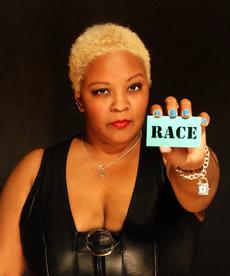
The Race Card

The scariest card in the deck

Published on November 20, 2012 by Ruth C. White, Ph.D. in Culture in Mind


Everyone in the USA is born with a race card.

As infants turn into children and children into teenagers, some people acquire other racial accroutrements like a race filter through which all their experiences are seen or various sizes of race chips that sit on shoulders burdened by a life of slights, insults, discrimination and outright hostility.

via The Race Card | Psychology Today.

Dr. David J. Leonard: When Sorry Isn’t Enough: Blackface and the Duke Problem


Dr. David J. LeonardAuthor, Educator

FROM DR. DAVID J. LEONARD


When Sorry Isn’t Enough: Blackface and the Duke Problem

Posted: 11/21/2012 4:41 pm


This past month students at Duke University attended a Halloween party at the home of Duke lacrosse coach, Kerstin Kimel. At this party for the Women’s Lacrosse team, a group decided to come as Our Gang/The Little Rascals, which, not surprisingly, included Buckwheat. With one player donning blackface, this became the latest incident at a university demonstrating the intransigent nature of white privilege and racism.

via Dr. David J. Leonard: When Sorry Isn’t Enough: Blackface and the Duke Problem.

Does Obama Have a Mandate to Save Palestinian Children?

Does Obama Have a Mandate to Save Palestinian Children?

Israeli Prime Minister Benjamin Netanyahu and President Barack Obama 


Does Obama Have a Mandate to Save Palestinian Children?

Israeli Prime Minister Benjamin Netanyahu and President Barack Obama

via Does Obama Have a Mandate to Save Palestinian Children?.

Being Black With Postpartum Depression: Too Blessed To Be Stressed?

Not a single person told me about postpartum depression as I came to experience it. Sure, I received pamphlets from my OBGYN about it, but they only mentioned feeling sad, depressed, and having the “baby blues.”

They didn’t mention the uncontrollable rage that would explode in my chest when I least expected it.

The pamphlet said absolutely nothing about the sweat-inducing anxiety that made me jumpy and left me wanting to crawl out of my skin. I was unaware anxiety would hit me like a wrecking ball, immobilizing me

Being Black With Postpartum Depression: Too Blessed To Be Stressed?.

Davey D's avatarDavey D's Hip Hop Corner

Everyone is talking about all the signatures being collected from citizens in 40 states demanding that some sort of secession take place.. The latest update notes that folks from 7 states have signed a petition numbering 25k or more on the We the People page on the White House website which will thus garner an official response.. You can read about that HERE

For many all the secession talk is new, but the concept has been around for a minute especially in Texas where they have a well-heeled movement around this concept.. Today folks are shocked that more than a 100 thousand people from the Lone Star state have signed a petition. Folks in Texas are not. A few years back Governor Rick Perry famously threatened to have the state secede. It’s something he now says he doesn’t support..Below is an article I penned when I lived in Texas and…

View original post 2,484 more words

The GOP’s Voter Suppression Strategy | The Nation

The GOP’s Voter Suppression Strategy

Ari Berman November 20, 2012   |    This article appeared in the December 10, 2012 edition of The Nation.

(AP Photo/Damian Dovarganes)

In a little-noticed yet significant development on election day, Minnesota voters defeated a constitutional amendment that would have required them to present a government-issued photo ID to cast a ballot. It was the first time voters had rejected a voter ID ballot initiative in any state. 

About the Author

Ari Berman

Ari Berman is a contributing writer for The Nation magazine and an Investigative Journalism Fellow at The Nation…

Also by the Author

Why We Still Need Section 5 of the Voting Rights Act (Racism and Discrimination, Supreme Court, Voter Rights)

New voting restrictions prove why the Voting Rights Act is as relevant as it ever was.

Ari Berman

How the GOP’s War on Voting Backfired (Voter Rights, Race and Religion, Election 2012)

The backlash to voter suppression laws led to higher turnout among young, black and Hispanic voters.

Ari Berman

In May 2011, a poll showed that 80 percent of Minnesotans supported a photo ID law. “Nearly everyone in the state believed a photo ID was the most common-sense solution to the problem of voter fraud,” says Dan McGrath, executive director of Take Action Minnesota, a progressive coalition that led the campaign against the amendment. “We needed to reframe the issue. We decided to never say the word ‘fraud.’ Instead we would only talk about the cost, complications and consequences of the amendment.” According to the coalition, the photo ID law would have disenfranchised eligible voters (including members of the military and seniors) dumped an unfunded mandate on counties and imperiled same-day voter registration. On election day, 52 percent of Minnesotans opposed the amendment.

via The GOP’s Voter Suppression Strategy | The Nation.