Victims Of Violent Military Rapes l National Review Rebuttal to NYT Coverage

National Review: Victims Of Violent Military Rapes Struggle In Life Because Of ‘Their Own Bad Decision-Making’

By Adam Peck on Feb 28, 2013 at 6:15 pm

A victim of M.S.T. profiled by the New York Times.

In Thursday’s paper, the New York Times ran theharrowing story of Tiffany Jackson, a female veteran grappling with the effects of military sexual trauma. Jackson had been violently raped while deployed overseas at the Suwon Air Base in South Korea, and upon her return to the states had difficulty finding and keeping a job, struggled with drugs and alcohol and fought uphill battles to keep her anger at bay. All of which, according to a growing consensus of researchers and psychologists, are common manifestations of post-traumatic stress disorder brought about by M.S.T.

But expert opinion is not enough to convince the scribes at National Review Online, which issued its own rebuttal to the Times piece and proclaimed — without a shred of evidence — that the hardships befallen upon Jackson and as many as 1 in 5 of all female servicemembers are attributable to their upbringing in underprivileged communities and not to their sexual assaults. And they engage in an especially pernicious form of victim-blaming in the process:

Now here is a tentative alternative hypothesis: Some of these women come from environments that made their descent into street life overdetermined, whether or not they experienced alleged sexual assault in the military. To blame alleged sexual assault for their fate rather than their own bad decision-making is ideologically satisfying, but mystifying. Having children out of wedlock, as a huge proportion of them do, also does not help in avoiding poverty and homelessness…

But let’s say that for these homeless female vets, it really was their sexual experiences in the military that caused their downward spiral into, as the Times puts it, “alcohol and substance abuse, depression and domestic violence.” Why then have those same feminists who are now lamenting the life-destroying effects of “MST” insisted on putting women into combat units?

Writer Heather MacDonald fails to acknowledge once in her almost 1000-word post that there is a problem at all, preferring instead to leverage the horrific rate of sexual assault and violent rape against women in the military as a means to attack gender equality in the armed forces. Nastier still, she attacks the “feminists” who are fighting for greater accountability and protections for the thousands of women who enlist.

Of course, the National Review Online has a strong lineage of sexist, misogynistic and racistremarks. In January, the conservative publication blamed the Sandy Hook elementary school shooting on the fact that women ran the school, and for years kept author John Derbyshire in their employ despite vocally questioning whether or not women should have the right to vote.


“The Ashes of A Manifesto: The LAPD and the Deaths of Christopher Dorner and His Victims” l February 16, 2013 l 10 pm ET

OUR COMMON GROUND with Janice Graham

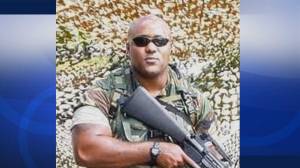
dornergun“The Ashes of A Manifesto: The LAPD and the Deaths of Christopher Dorner and His Victims”

OPEN MIC

February 16, 2013 10pm ET

LIVE and Call In

“His self-definition could not survive separation from the institution that became his personal nemesis. In the end, he was as lonely as Rambo in First Blood, and just as politically lost.

A public death belongs to the public. Dorner’s fans, his African American public, whom he did not serve but who would inevitably embrace his weeklong death-throe defection from the LAPD, imbue him with qualities they wish were reliably available to the struggle: a Nat Turner, a Spook Who Sat by the Door. The Bronx, New York dope dealer, Larry Davis, who in1986 succeeded in shooting six of seven cops who came to his sister’s apartment to arrest or assassinate him, achieved similar fame. Davis eluded capture for 17 days, negotiated a surrender at his public housing hideout as residents chanted “Lar-ry! Lar-ry!” – and beat the charges of attempted murder of cops. (William Kunstler and Lynne Stewart were his lawyers.) His fans forgave Davis’s dope dealing ways, just as Dorner’s fans forgave his previous service to the Los Angeles Occupation Army.

The enduring lesson of Dorner’s saga is that the transformation of the LAPD into a majority-minority police force does not change its nature as an army of occupation whose mission is racist to the core, regardless of its ethnic composition. That fact finally dawned on Christopher Dorner – and it killed him.”
– BLACK AGENDA REPORT

Join us and share your views.

OUR COMMON GROUND with Janice Graham

“Speaking Truth to Power and Ourselves”

BROADCASTING BRAVE BOLD BLACK

Community Forum: http://www.ourcommonground-talk.ning.com/
Twitter: @JaniceOCG #TalkthatMatters
Web: http://www.wordpress.ourcommongroundtalk.com/


V-Day l ONE BILLION RISING l World Wide February 14, 2013

vDAYABOUT V-Day

English | Deutsch | Español | Français

To read V-Day founder Eve Ensler’s bio, click here

V-Day is a global activist movement to end violence against women and girls. V-Day is a catalyst that promotes creative events to increase awareness, raise money, and revitalize the spirit of existing anti-violence organizations. V-Day generates broader attention for the fight to stop violence against women and girls, including rape, battery, incest, female genital mutilation (FGM), and sex slavery.

Through V-Day campaigns, local volunteers and college students produce annual benefit performances of The Vagina Monologues, A Memory, A Monologue, A Rant and A Prayer, Any One Of Us: Words From Prison, screenings of V-Day’s documentary Until The Violence Stops, and the PBS documentary What I Want My Words To Do To You, Spotlight Teach-Ins and V-Men workshops, to raise awareness and funds for anti-violence groups within their own communities. In 2012, over 5,800 V-Day benefit events took place produced by volunteer activists in the U.S. and around the world, educating millions of people about the reality of violence against women and girls.

Performance is just the beginning. V-Day stages large-scale benefits and produces innovative gatherings, films and campaigns to educate and change social attitudes towards violence against women including the documentary Until The Violence Stops; community briefings on the missing and murdered women of Juarez, Mexico; the December 2003 V-Day delegation trip to Israel, Palestine, Egypt and Jordan; the Afghan Women’s Summit; the March 2004 delegation to India; the Stop Rape Contest; the Indian Country Project; Love Your Tree; the June 2006 two-week festival of theater, spoken word, performance and community events UNTIL THE VIOLENCE STOPS: NYC ; the 2008, V-Day 10-year anniversary events V TO THE TENTH at the New Orleans Arena and Louisiana Superdome; the Stop Raping Our Greatest Resource: Power To The Women and Girls of the Democratic Republic of Congo Campaign; theV-Girls Campaign, and the V-Men Campaign.

In Africa, the Middle East, and Asia, V-Day commits ongoing support to build movements and anti-violence networks. Working with local organizations, V-Day provided hard-won funding that helped open the first shelters for women in Egypt and Iraq; sponsored annual workshops and three national campaigns in Afghanistan; convened the “Confronting Violence” conference of South Asian women leaders; and donated satellite-phones to Afghan women to keep lines of communication open and action plans moving forward. V-Day was instrumental in the founding of Karama, a program working in Egypt, Sudan, Morocco, Tunisia, Algeria, Jordan, Syria and Lebanon that works to build upon and strengthen efforts to end violence against women by bringing together local women’s organizations and other civil society groups in collaboration, analysis and advocacy at national, regional and international levels.

In conjunction with the 15th anniversary, V-Day launched its most ambitious campaign to date – ONE BILLION RISING. The concept of the campaign is simple. If you take into account the statistic that 1 out of 3 women will experience violence in her lifetime, you are left with the staggering statistic that over 1 billion women on this planet will be impacted by violence. On V-Day’s 15th Anniversary, 2.14.13, we are inviting ONE BILLION women and those who love them to WALK OUT, DANCE, RISE UP, and DEMAND an end to this violence. V-Day wants the world to see our collective strength, our numbers, our solidarity across borders.

VDAY2The V-Day movement is growing at a rapid pace throughout the world, in 167 countries from Europe to Asia, Africa and the Caribbean and all of North America. V-Day, a non-profit corporation, distributes funds to grassroots, national and international organizations and programs that work to stop violence against women and girls. In 2001, V-Day was named one of Worth Magazine‘s “100 Best Charities,” in 2006 one of Marie Claire Magazine‘s Top Ten Charities, and in 2010 was named as one of the Top-Rated organizations on GreatNonprofits. In fourteen years, the V-Day movement has raised over $90 million.

The ‘V’ in V-Day stands for Victory, Valentine and Vagina.

To learn more about how to organize a V-Day event, click here.

How Did the Gates of Hell Open in Vietnam?

How Did the Gates of Hell Open in Vietnam?

Posted on Jan 17, 2013

Ron Cogswell (CC BY 2.0)

By Jonathan Schell, TomDispatch

This piece originally appeared at TomDispatch. Read Tom Engelhardt’s introduction here.

For half a century we have been arguing about “the Vietnam War.” Is it possible that we didn’t know what we were talking about? After all that has been written (some 30,000 books and counting), it scarcely seems possible, but such, it turns out, has literally been the case.

Now, in Kill Anything that MovesNick Turse has for the first time put together a comprehensive picture, written with mastery and dignity, of what American forces actually were doing in Vietnam. The findings disclose an almost unspeakable truth.  Meticulously piecing together newly released classified information, court-martial records, Pentagon reports, and firsthand interviews in Vietnam and the United States, as well as contemporaneous press accounts and secondary literature, Turse discovers that episodes of devastation, murder, massacre, rape, and torture once considered isolated atrocities were in fact the norm, adding up to a continuous stream of atrocity, unfolding, year after year, throughout that country.

It has been Turse’s great achievement to see that, thanks to the special character of the war, its prime reality—an accurate overall picture of what physically was occurring on the ground—had never been assembled; that with imagination and years of dogged work this could be done; and that even a half-century after the beginning of the war it still should be done. Turse acknowledges that, even now, not enough is known to present this picture in statistical terms. To be sure, he offers plenty of numbers—for instance the mind-boggling estimates that during the war there were some two million civilians killed and some five million wounded, that the United States flew 3.4 million aircraft sorties, and that it expended 30 billion pounds of munitions, releasing the equivalent in explosive force of 640 Hiroshima bombs.

Yet it would not have been enough to simply accumulate anecdotal evidence of abuses. Therefore, while providing an abundance of firsthand accounts, he has supplemented this approach. Like a fabric, a social reality—a town, a university, a revolution, a war—has a pattern and a texture.  No fact is an island. Each one is rich in implications, which, so to speak, reach out toward the wider area of the surrounding facts. When some of these other facts are confirmed, they begin to reveal the pattern and texture in question.

Turse repeatedly invites us to ask what sort of larger picture each story implies. For example, he writes:

“If one man and his tiny team could claim more KIAs [killed in action] than an entire battalion without raising red flags among superiors; if a brigade commander could up the body count by picking off civilians from his helicopter with impunity; if a top general could institutionalize atrocities through the profligate use of heavy firepower in areas packed with civilians—then what could be expected down the line, especially among heavily armed young infantrymen operating in the field for weeks, angry, tired, and scared, often unable to locate the enemy and yet relentlessly pressed for kills?”

Like a tightening net, the web of stories and reports drawn from myriad sources coalesces into a convincing, inescapable portrait of this war—a portrait that, as an American, you do not wish to see; that, having seen, you wish you could forget, but that you should not forget; and that the facts force you to see and remember and take into account when you ask yourself what the United States has done and been in the last half century, and what it still is doing and still is.

Scorched Earth in I Corps

My angle of vision on these matters is a highly particular one. In early August 1967, I arrived in I Corps, the northernmost district of American military operations in what was then South Vietnam.  I was there to report for the New Yorker on the “air war.” The phrase was a misnomer.  The Vietnamese foe, of course, had no assets in the air in the South, and so there was no “war” of that description.

There was only the unilateral bombardment of the land and people by the fantastic array of aircraft assembled by the United States in Vietnam.  These ranged from the B-52, which laid down a pattern of destruction a mile long and several football fields wide; to fighter bombers capable of dropping, along with much else, 500-pound bombs and canisters of napalm; to the reconfigured DC-3 equipped with a cannon capable of firing 100 rounds per second; to the ubiquitous fleets of helicopters, large and small, that crowded the skies. All this was abetted by continuous artillery fire into “free-fire” zones and naval bombardment from ships just off the coast.

By the time I arrived, the destruction of the villages in the region and the removal of their people to squalid refugee camps was approaching completion. (However, they often returned to their blasted villages, now subject to indiscriminate artillery fire.) Only a few pockets of villages survived. I witnessed the destruction of many of these in Quang Ngai and Quang Tinh provinces from the back seat of small Cessnas called Forward Air Control planes.

As we floated overhead day after day, I would watch long lines of houses burst into flames one after another as troops moved through the area of operation.  In the meantime, the Forward Air Controllers were calling in air strikes as requested by radio from troops on the ground. In past operations, the villagers had been herded out of the area into the camps.  But this time, no evacuation had been ordered, and the population was being subjected to the full fury of a ground and air assault. A rural society was being torn to pieces before my eyes.

The broad results of American actions in I Corps were thus visible and measurable from the air. No scorched earth policy had been announced but scorched earth had been the result.  Still, a huge piece was missing from the puzzle.  I was not able to witness most of the significant operations on the ground firsthand. I sought to interview some soldiers but they would not talk, though one did hint at dark deeds.  “You wouldn’t believe it so I’m not going to tell you,” he said to me. “No one’s ever going to find out about some things, and after this war is over, and we’ve all gone home, no one is ever going to know.”

In other words, like so many reporters in Vietnam, I saw mainly one aspect of one corner of the war.  What I had seen was ghastly, but it was not enough to serve as a basis for generalizations about the conduct of the war as a whole. Just a few years later, in 1969, thanks to the determined efforts of a courageous soldier, Ron Ridenhour, and the persistence of a reporter, Seymour Hersh, one piece of the hidden truth about ground operations in I Corp came to light.

1         NEXT PAGE >>>

Emmett and Trayvon l Washington Monthly

January/ February 2013

Washington Monthly

Emmett and Trayvon

How racial prejudice in America has changed in the last sixty years.

By Elijah Anderson


A tale of two teens: After their tragic and premature deaths, both Emmett Till, 14 (left), and Trayvon Martin, 17 (right), became symbols of the unique challenges that have faced young black men in America.

Separated by a thousand miles, two state borders, and nearly six decades, two young African American boys met tragic fates that seem remarkably similar today: both walked into a small market to buy some candy; both ended up dead.

The first boy is Emmett Till, who was fourteen years old in the summer of 1955 when he walked into a local grocery store in Money, Mississippi, to buy gum. He was later roused from bed, beaten brutally, and possibly shot by a group of white men who later dumped his body in a nearby river. They claimed he had stepped out of his place by flirting with a young white woman, the wife of the store’s owner. The second boy is Trayvon Martin, who was seventeen years old late last winter when he walked into a 7-Eleven near a gated community in Sanford, Florida, to buy Skittles and an iced tea. He was later shot to death at close range by a mixed-race man, who claimed Martin had behaved suspiciously and seemed out of place. The deaths of both boys galvanized the nation, drew sympathy and disbelief across racial lines, and, through the popular media, prompted a reexamination of race relations.

In the aftermath of Martin’s death last February, a handful of reporters and columnists, and many members of the general public, made the obvious comparison: Trayvon Martin, it seemed, was the Emmett Till of our times. And while that comparison has some merit—the boys’ deaths are similar both in some of their details and in their tragic outcome—these killings must also be understood as the result of very different strains of racial tension in America. The racism that led to Till’s death was embedded in a virulent ideology of white racial superiority born out of slavery and the Jim Crow codes, particularly in the Deep South. That sort of racism hinges on the idea that blacks are an inherently inferior race, a morally null group that deserves both the subjugation and poverty it gets.

The racial prejudice that led to Trayvon Martin’s death is different. While it, too, was born of America’s painful legacy of slavery and segregation, and informed by those old concepts of racial order—that blacks have their “place” in society—it in addition reflects the urban iconography of today’s racial inequality, namely the black ghetto, a uniquely urban American creation. Strikingly, this segregation of the black community coexists with an ongoing racial incorporation process that has produced the largest black middle class in history, and that reflects the extraordinary social progress this country has made since the 1960s. The civil rights movement paved the way for blacks and other people of color to access public and professional opportunities and spaces that would have been unimaginable in Till’s time.

While the sort of racism that led to Till’s death still exists in society today, Americans in general have a much more nuanced, more textured attitude toward race than anything we’ve seen before, and usually that attitude does not manifest in overtly hateful, exclusionary, or violent acts. Instead, it manifests in pervasive mindsets and stereotypes that all black people start from the inner-city ghetto and are therefore stigmatized by their association with its putative amorality, danger, crime, and poverty. Hence, in public a black person is burdened with a negative presumption that he must disprove before he can establish mutually trusting relationships with others.

Most consequentially, black skin, and its association with the ghetto, translates into a deficit of credibility as black skin is conflated with lower-class status. This deficit impacts poor blacks of the ghetto one way and middle-class black people another. While middle-class blacks may be able to successfully disabuse others of their negative presumptions, lower-class blacks may not. For instance, all blacks, particularly “ghetto-looking” young men, are at risk of enduring yet another “stop and frisk” from the police as well as suspicion from potential employers, shopkeepers, and strangers on the street. Members of the black middle class and black professionals can usually pass inspection and withstand such scrutiny; many poorer blacks cannot. And many blacks who have never stepped foot in a ghetto must repeatedly prove themselves as non-ghetto, often operating in a provisional status, in the workplace or, say, a fancy restaurant, until they can convince others—either by speaking “white” English or by demonstrating intelligence, poise, or manners—that they are to be trusted, that they are not “one of those” blacks from the ghetto, and that they deserve respect. In other words, a middle-class black man who is, for instance, waiting in line for an ATM at night will in many cases be treated with a level of suspicion that a middle-class white man simply does not experience.

But this pervasive cultural association—black skin equals the ghetto—does not come out of the blue. After all, as a result of historical, political, and economic factors, blacks have been confined in the ghetto. Today, with persistent housing discrimination and the disappearance of manufacturing jobs, America’s ghettos face structural poverty. In addition, crime and homicide rates within those communities are high, young black men are typically the ones killing one another, and ghetto culture, made iconic by artists like Tupac Shakur, 50 Cent, and the Notorious B.I.G., is inextricably intertwined with blackness.

As a result, in America’s collective imagination the ghetto is a dangerous, scary part of the city. It’s where rap comes from, where drugs are sold, where hoodlums rule, and where The Wire might have been filmed. Above all, to many white Americans the ghetto is where “the black people live,” and thus, as the misguided logic follows, all black people live in the ghetto. It’s that pervasive, if accidental, fallacy that’s at the root of the wider society’s perceptions of black people today. While it may be true that everyone who lives in a certain ghetto is black, it is patently untrue that everyone who is black lives in a ghetto. Regardless, black people of all classes, including those born and raised far from the inner cities and those who’ve never been in a ghetto, are by virtue of skin color alone stigmatized by the place.

I call this idea the “iconic ghetto,” and it has become a powerful source of stereotype, prejudice, and discrimination in our society, negatively defining the black person in public. In some ways, the iconic ghetto reflects the old version of racism that led to Till’s death. In Till’s day, a black person’s “place” was in the field, in the maid’s quarters, or in the back of the bus. If a black man was found “out of his place,” he could be punished, jailed, or lynched. In Martin’s day—in our day—a black person’s “place” is in the ghetto.

If he is found “out of his place,” like in a fancy hotel lobby, on a golf course, or, say, in an upscale community, he can be treated with suspicion, avoided, pulled over, frisked, arrested—or worse.

Emmett and Trayvon

Elijah Anderson is the William K. Lanman Jr. Professor of Sociology at Yale University. His latest book is “The Cosmopolitan Canopy: Race and Civility in Everyday Life.”

Violence, Demonization, & Apocalyptic Aggression l Chip Berlet l The Spirit House Project

Violence, Demonization, & Apocalyptic Aggression

Chip Berlet

Wed Aug 22, 2012

Anders Behring Breivik, being sentenced on Friday for his 2011 terror attacks in Oslo, Norway, sees himself as a Christian Warrior. Breivik grabbed many of his Islamophobic and anti-socialist conspiracy theories off the Internet. These theories are still promulgated by right-wing groups in the United States, especially Christian Right ideologue William S. Lind, formerly director of the Center for Cultural Conservatism at the Free Congress Foundation.

The recent attacks on a Sikh Temple near Milwaukee, an Islamic Mosque in Joplin, Missouri, and the Christian Right Family Research Council in Washington, DC, illuminate a central tension within Christianity. Progressive Christian activist Ruby Sales calls this the struggle between Empire Christianity and Liberation Christianity.

The former represents an apocalyptic view built around subjugation of enemies and use of violence. The latter sees the apocalypse bringing justice and peace.

Sales wants to:

unveil the lies of White Christian Conservatives so that Black folk understand that these lesbian and gay hating folk come out the same tradition of the people who threw Emmett Till’s body in the Tallahatchie River. Their teachings birthed and fermented the hatred that poisoned the minds and spirits of the killers of Samuel Younge and Jonathan Daniels.

Most mainstream media discussions about the recent wave of violent attacks dismiss the idea that political, cultural, or economic hierarchies and tensions, when coupled to the demonization of an “Other,” can encourage violence. When the Right demonizes the Left and the Left Demonizes the Right, sometimes an individual or group decides to take action to stop the evildoers before it is too late. This type of apocalyptic aggression can be carried out by people who are legally sane or insane; and whose political ideas come from the Left or Right or somewhere outside of rational thought.

I oppose acts of violence or terrorism to achieve political goals. My analysis of vilification, demonization, and apocalyptic rhetoric in the United States today, however, compels me to conclude that it comes overwhelmingly from the Right, especially apocalyptic rhetoric from the Christian Right. Nevertheless, we need to pay more attention to the linkages of demonization, apocalyptic aggression, and violence, no matter what part of the political spectrum employs this dynamic…wittingly or unwittingly.

Apocalypse is a word common in popular culture, what with the 1979 film “Apocalypse Now” and the heroics of Buffy the Vampire Slayer. Buffy stopped the Apocalypse on a weekly basis in a television series from 1997-2003. (reruns are easily discovered online and off). Buffy and her team were stopping evil from taking over the world. Nothing wrong with that.

The word “apocalypse” is often misunderstood. The words apocalypse, prophecy, and revelation are all related, and in the broadest sense an “apocalypse” is an upcoming struggle between good and evil during which hidden truths will be revealed and the world dramatically reshaped forever.  So an apocalypse can bring bad news—or good news. Apocalyptic rhetoric that warns of an evil plot by “Them” can be interpreted as a call to act “before it is too late.”

Vilification by demagogues anywhere on the political spectrum can lead to incidents of directed violence by individuals who adopt a superhero complex to save “Us” from “Them.” This dynamic was first thoroughly analyzed by Hannah Arendt and Gordon Allport in the 1950s. The process involves the theory of Constitutive Rhetoric in which a leader creates (interpolates) an actual constituency in society.

Almost a decade ago I was invited by Ruby Sales, founder of the Spirit House Project, to have a public conversation in Washington, DC at a forum on the demonization and scapegoating common in the Christian Right. My focus was exploring how apocalyptic demagoguery prompted not only Christian Right political activism but sometimes acts of apocalyptic aggression and violence. We were demoralized in 2004 by the second term of George W. Bush, and we felt there needed to be more analysis of how the Christian Right was pursuing a path toward theocracy frequently based on apocalyptic conspiracy theories that vilified and targeted named “Others.”

Constitutive Rhetoric prompting Directed Violence fuels the real life and death consequences we are witnessing today, and has prompted similar incidents in the past. The New Hampshire Supreme Court Society recently presented the Life and Liberty Award posthumously to slain 1960s civil rights activist Jonathan Daniels, and a very much alive U.S. Rep. John Lewis of Georgia who is a past chair of the Student Non-Violent Coordinating Committee (SNCC). Ruby Sales accepted the award on behalf of Daniels. They and many others whose names should be better known are amongst those who put their lives on the line and are Veterans of the Civil Rights Movement. Another activist from the Civil Rights Movement, Ruby Sales, accepted the award on behalf of her murdered friend and colleague, Daniels.

Sheila Zakre, a disability and employment rights attorney wrote that at the ceremony Lewis and Sales “pulled no punches in warning of a rollback in the civil rights they fought to obtain. How fitting that they did so in a state whose legislature seeks to do just that.” In a column in the Concord Monitor, Zakre said:

Shouldn’t we expect our appointed representatives, both federal and state, to appreciate that history teaches us that restrictions on voting are tied to discrimination on the basis of race, class, gender and disability, and that morality teaches us that voting rights is a nonpartisan issue? The warning about history repeating itself may be hackneyed but is nonetheless true. Sadly, the lessons of the civil rights movement can be forgotten even as we venerate its heroes.

Photobucket
John Lewis and Ruby Sales at the presentation of the Third Life and Liberty Award
photo credit David Wolowitz . [View event photos here].


My first encounter with Ruby Sales was over a decade ago at a lecture I gave to a class at the Episcopal Divinity School in Cambridge, Massachusetts. My topic was the challenge to equality posed by right-wing social movements.  During the Q&A with students an older Black women pursued a series of questions about right-wing violence and our response as people of faith. They were sharp questions delivered with intensity but no hint of rancor. After class the professor explained the student was Ruby Sales, a veteran of the Civil Rights Movement, and she suggested I should learn more about her concern with apocalyptic demonization and violence.

I found out that Sales made her life altering choice to stand up against apocalyptic aggression as a teenager in the 1960s when she joined the Civil Rights Movement while a student at Tuskegee University. In 1965 the Student Non-Violent Coordinating Committee sent Sales with an organizing team to Lowndes County, Alabama—known among Blacks in the South as “Bloody Lowndes.” Sales was arrested with some 20 other activists protesting segregation and conducting a voter registration drive.

Released from jail, Sales and a few others were confronted by an enraged White racist wielding a shotgun. Sales witnessed her organizing colleague and friend Jonathan Daniels, a seminary student, shot to death on the street after he pushed Sales out of harm’s way. Another organizer was seriously wounded. The trauma left Sales literally speechless for seven months, but she persevered, found her voice, and carried on with her activism, eventually attending the same Episcopal Divinity School where Daniels had studied.

Apocalyptic Christian Right activists often link their plans to “take dominion” over the United States to their view of an End Times battle between good and evil; in which godly Christians must struggle against literal agents of Satan. In case it is not clear—those of us who read Talk to Action because we care about social, political, and economic justice are the agents of Satan in this Christian Right script. The overall tendency that seeks to make America a Christian nation is called “Dominionism;” and it comes in soft forms as well as hard forms that produce apocalyptic aggression against the targeted scapegoats.

Author and apocalypse scholar Lee Quinby calls these attacks “rituals of purification.”  The destructive negative form of apocalyptic thinking is in part why the Christian Right blames all of the problems we face in this nation on scapegoats such as gay people, reproductive rights activists, feminists, and folks on the Left in general.

In the narrative of Liberation Christianity the Apocalypse brings an end to systems of oppression and exploitation, and let’s “justice roll down like waters and righteousness like an ever flowing stream.” This quote from the book of Amos was a favorite of the Rev. Martin Luther King, Jr. But as the Rev. R. William Carroll wrote in his essay on this theme, while Rev. King “spoke as a Christian…in so doing, he appealed to deep longings of every human being for freedom and righteousness, for brotherhood and sisterhood, for what he called the Beloved Community.” Rev. Carroll continued:

How easily do we forget that King’s vision was not limited to ending legal segregation!    How easily do we forget how he confronted our nation with a shining vision of a beloved community that has not yet arrived!   King’s dream was not limited to racial justice, though we should be quick to add that even here, his dream, like America’s promise, remains unfulfilled.   If anything, in the last thirty years or so, we have moved backwards.    King’s dream included peace and justice among nations.   It also included justice and fairness for working people.

An activist for decades, Sales builds communities of compassion, commitment, liberation, and spirit. Her life was indelibly marked as a teenage college student when a friend was shot dead while they were organizing Black voters during the 1960s Civil Rights Movement. Now, more than four decades after this act of apocalyptic violence, Sales devotes her life to demanding justice for all of us. 

Photobucket

Ruby Sales, Spirit House Project


In a number of essays and interviews and activities over many years, Ruby Sales has been on the road to fulfilling the task of building the “beloved community.”  Perhaps the best-known essay by Sales concerning the ongoing struggle for freedom and justice is “Empire Christianity vs. Liberation Christianity.” She wrote it following the contested election of George W. Bush as President in 2004. Conservative Christians played a key role in electing Republicans to public office nationwide that year.

Sales placed the elections in the context of a historic struggle within Christianity—between those who support “Empire Christianity” and those who support “Liberation Christianity.” Sales charged that the “Empire religion espoused by George Bush and his white Christian conservative allies is headed by a God who appears to be white supremacist, patriarchal, and upper class, one who stood on the side of enslavement and the genocide of native peoples throughout the globe, including the Americas.”

Opposed to that form of theology is Liberation Christianity, which “begins with the assertion that God is on the side of the oppressed rather than the side of the Empire,” wrote Sales, who added that “Jesus made clear the radical nature of his mission”:

  • to bring sight to the blind, i.e. to bring a new consciousness that freed his community and others from the false consciousness of identifying with the goals of the Roman Empire
  • to feed the hungry, i.e. a systemic redistribution of resources that is not charity, but systemic economic justice
  • to set the prisoners free, i.e. a recognition that the Empire uses law and order as tools of oppression and domination.”

Sales has a vision of Liberation Christianity that leads her to reach across many divides, not only of spiritual and ethical belief, but also race, gender, and class. She uses a wide range of tools to help prepare people for nonviolent action in pursuit of justice. Sales currently leads the Spirit House Project, “an intergenerational network of diverse people” using “the arts, research, education, action, and spirituality to bring diverse peoples together to work for racial, economic, and social justice, as well as for spiritual maturity.” Sales and Spirit House co-director Cheryl Blankenship oversee the Jonathan Daniels and Samuel Younge Institute for Justice and Nonviolence Fellows Program. This internship program is now based in Atlanta, Georgia, where the organization re-located after years in the Washington, DC area. The intern program:

Supports and prepares a new generation of peace and justice workers who want to discern a call to social justice and nonviolence; strengthens their courage, hope, resolve and reason to do this work; prepares them to play leading roles in public policy debates about issues such as poverty, prison industrial complex, militarism, and the shrinking budget for human needs, voting rights, privacy and judicial issues, and neo-conservatism; and helps grassroots communities meet their urgent need for trained and committed volunteers or staff.

Fellows of the internship program at the Spirit House Project


I have been inspired by Ruby Sales, and have written about my experience working collaboratively with her to sort out the tough issues of violence and oppression—the hallmarks of Empire Christianity in the United States that have delayed the promise of equality and democracy for too many for too long. Now in 2012 it is easy to see the forces allied in this country to barricade the path of progress trod by so many before us.

While acts of dramatic violence and the cacophony of hyperbolic election rhetoric snares our attention, Sales reminds us that there is an ongoing wave of police violence against people of color and immigrants. I will cover her views on this urgent matter in a follow-up essay here at Talk to Action.

In a book on “Dispatches from the Religious Left: The Future of Faith and Politics in America” I wrote a chapter explaining that both Sales and I felt compelled by our spiritual beliefs to stand up and speak out in support of justice. “We all have to choose sides in an endless struggle,” I wrote:

Are we on the side of the powerful, the arrogant, the bullies who seek empire? Or are we on the side of the weak, the impoverished, the marginalized, and seek liberation for those who are suffering under the weight of oppression? Which side are you on?

Ruby Sales chose which side she was on at a young age, but it is never too late to make a commitment to justice, especially if you have spirit—no matter how you define that word.


Boston Police Awards 3 Officers involved in High-Profile Brutality cases infused with race l The Blackstonian

Boston Police Awards 3 Officers involved in High-Profile Brutality cases infused with race

By   /   January 9, 2013  /

  © 2013 Blackstonian. // Black Boston 411 24/7

Boston Police Awards

BLACKSTONIAN EXCLUSIVE:
Boston Police Awards 3 Officers involved in High-Profile Brutality cases infused with race

The Boston Police department in its latest routine round of awarding officers for “outstanding performance” of their duties during the past year has named among its many recipients 3 officers in particular who were involved in some of the departments most highly publicized and controversial cases, all of which include elements of race and police brutality and use of excessive and/or deadly force.

These officers are: Brian R. Dunford, Michael T. McManus, Christopher R. Carr

These awards send a message of disregard and disrespect to the Black Community. Remember the outrage after the tragedy of DJ Henry when Officer Aaron Hess was awarded Officer of the Year by the Pleasantville Police Dept??? Here in Boston, these 3 separate cases are all hot buttons and the BPD is well aware of the message that these awards send to a community in constant struggle with its Police Department. Shame on the BPD, you dont have to be a detective to know this is not a good look.

Editor’s Note: We contacted BPD top brass and the official position of the BPD is that they stand by each of these officers and have their own reasoning and logic by which these officers are all worthy and deserving of these awards. The BPD noted that in the cases in question that these officers were all exonerated after an investigation by both internal affairs and Suffolk County DA Dan Conley. The BPD also stated that in the case of at least one of the officers they were disciplined for filing a false report and that no further punishment was needed and since then there have been no further incidents. The position of the Blackstonian which we expressed to the BPD is that the fact that these Officers were exonerated is only indicative of the problem, bearing in mind that 99% of officers are exonerated which is part of our contention that internal affairs and the Suffolk County DA are incapable of conducting fair investigations.

Note: 2 of the officers named below, Dunford and Carr were also part of a 2004 lawsuit against the City of Boston because they felt they were discriminated against because of their “Caucasian race”.
see it here: http://www.clearinghouse.net/chDocs/public/EE-MA-0020-0002.pdf

Now, on to the awards…

Officer Brian R. Dunford is awarded “The Department Medal of Honor” among other officers for their response to a call on October 16, 2011.
Officer Brian Dunford also happens to be the same officer who was involved with the vicious 3/23/08 beating of Boston Firefighter Wayne Abron. At the time Abron was villianized, but later (9/21/09) he was acquitted of all charges against him and is currently engaged in a lawsuit against the City of Boston and the BPD.
This is what Wayne Abron looked like after his encounter with Department Medal of Honor recipient Dunford.
Wayne Abron

see the results of a basic google search for BPD Officer Brian Dunford – click here

Dunford Award

click image for larger version

**************************************************************************************************

Officer Michael T. McManus is awarded The Mayor’s Medal of Excellence among other officers for general performance of duty and achieving a cumulative count of over 250 arrests in B-2. In addition to this actual award McManus was also in a separate ceremony appointed to one of the most coveted and high profile assignments within the BPD. McManus was appointed by Commissioner Ed Davis to the BPD Fugitive Squad which we are told includes the much wanted perks of: unlimited overtime, make your own hours and a personal take home vehicle.

Office Michael T. McManus also happen to be the same Officer involved in 2 separate incidents which were some of the city’s most controversial cases. McManus only joined the force in 2007 and has made quite an impression.

A. The death of David Woodman – on June 18, 2008 David Woodman was being arrested in the Fenway after a Boston Celtics Championship. He died 11 days later and his family was subsequently paid a 3 million dollar out of court settlement by the City of Boston.
Woodman Family
http://www.masslive.com/news/index.ssf/2010/11/investigation_of_boston_police.html

B. The beating of 17 yr old boy at RCC – On October 22, 2010 a 17 yr old teenage black boy was apprehended by members of the BPD and DYS. The event was captured on video and went viral on youtube and became highly publicized. McManus was one of the officers in the video involved in the beating of this young man. A year later Suffolk County DA Dan Conley declared no wrong doing.

McManus Award

click image for larger version

**************************************************************************************************

Officer Christopher R. Carr along with another officer, is awarded The Schroeder Brothers Memorial Medal; The Department Medal of Honor. It should be noted that the Schroeder Brothers Memorial Medal is the highest medal given by the BPD from the Boston Police Relief Association Memorial Award.

Also please note that this award is different from the others because in this case, which to the Blackstonian is the most despicable award, is for the specific incident in question. Unlike the other awardees who were awarded for other instances and not the particular one which was notorious and in question, this specific honor the very highest medal given by the BPD is specifically for the very incident that our community is so traumatized from.

Officer Christopher Carr is the same officer involved in the Sept. 7, 2011 police chase from Roxbury to Rockland, MA which ended in the death of Mark McMullen. For those who have been following the Blackstonian you know that we have organized around this very issue. We have sat with the family and this case is VERY MUCH in question.

Mark McMullen

The Blackstonian seriously questions how an officer can be awarded for a high speed chase 30 min out of the city, when BPD policy forbids chases out of city limits, except in the case where a suspect is fleeing a serious, violent felony and people are in imminent danger. this was not even remotely close to such a case.

Please read the narrative supplied by the BPD describing the incident for which this award is given.

Officer Carr Award

click image for larger version


**************************************************************************************************


About the Blackstonian

A word used to symbolize the spirit and culture of Black Bostonians. We created the Blackstonian newspaper as a community service to the Black, Latino, Cape Verdean and other Peoples of Color in Boston and the surrounding area.

Who We Are

We represent Black Boston, centrally Roxbury, Dorchester, Mattapan but really all through the other burroughs and suburbs to wherever Black people are found in our extended midst. Our definition of Black is very inclusive, in Boston we have a lot of Brothers and Sisters from all over the Globe…Puerto Rico, Dominican Republic, Haiti, Jamaica, Cape Verde, Africa, Trinidad, wherever…. in our eyes you are all Black People and we are family here in Boston aka The Bean.

Blackstonian Team

Jamarhl Crawford
Publisher

A Reign of Terror on People of Color

WEEKEND EDITION JANUARY 4-6, 2013


The Central Park Five Case and the Dehumanization of Black America

A Reign of Terror on People of Color

by KIM NICOLINI

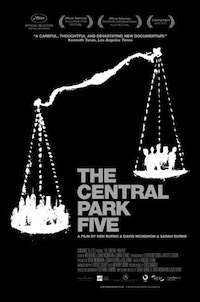
I saw my first film of the new year last night – The Central Park Five, a documentary about the five black and Latino boys who were falsely accused, bullied into confessing, and then served time for the rape and beating of the Central Park Jogger back in 1989. After serving 6-13 years in prison, the boys were exonerated of the crimes when the true rapist confessed and his DNA matched that found on the crime scene.

Certainly this film is a devastating story of racial injustice and the failure of the American criminal system. The film was made by famed PBS documentary filmmaker Ken Burns based on a book by his daughter Sarah Burns, and it largely focuses on the stories of the surviving boys (who are now men), their families, and archival footage.

The police, lawyers, and District Attorney involved in the case refused to participate. They are included in the documentary via archival footage, including the videotaped confessions which were extorted from the boys, four of whom were fourteen years old at the time of the crime and one who was sixteen.

During their 30 hours plus of interrogation, they had no legal representation, no child advocates, no social services presence, and no contact with their parents and family. They eventually confessed, being fed the details by the cops, simply to “make it stop.” Their confessions were inconsistent, full of errors and mistakes. None of the boys’ DNA was found at the crime scene; likewise, none of the DNA of the victim was found on the boys, though the crime was brutal and bloody. The boys were convicted on the sole evidence of the false confessions that were forced out of them by the brutal interrogation of the Central Park Precinct detectives.

Certainly this is a tragic tale of race in this country. It is particularly resonant after recently seeing Django Unchained. (I’ll be publishing my essay on that film next week). What is most interesting to me is how this incident was used by the media and governing forces as a catalyst event to propagate and reignite racial fear in this country. The terminology used to reference the boys by the so-called liberal media was as dehumanizing as that of the Jim Crow south. The boys were referred to as a “wild pack” who were “wilding” and terrorizing white people. They were spoken and written about as if they were wild animals, something less than human.

I remember the incident well. I was a woman jogger at the time, and I recall how this single incident framed a new Environment of Fear which was based on the threat of the black man against the white woman. It is the same fear that was propagated during Reconstruction (post Civil War America), when it was within the economic interest of white power to keep black men demonized.

It must be noted, that the Central Park Five event occurred in the wake of the ongoing fallout from the economic recession following Reaganomics. During hard economic times, the country likes to find a scapegoat for the economic chaos and despair that permeates the environment. In the case of the Central Park Five, the media, police and government forces created Wilding and the fear of Blacks in Packs. Also, it must be noted that censorship of black music was instituted at this time.

Certainly demonizing “the racial other” is nothing new in this country, but I see the Central Park Five incident as a kind of historical pivotal moment in the Post Civil Rights Era when American governing forces began re-escalating its reign of terror on people of color, immigrants and the disenfranchised (see the institution of the Patriot Act and Homeland Security for evidence). We have to remember that this country and its economic base were largely founded on racial demonization and dehumanization. Slavery was the economic backbone of early America. When the slaves were freed, many of them ended up packed away in housing projects such as those that tower the streets of Harlem.  When housing projects didn’t work to contain America’s Big Ugly History, prisons were expanded and race was largely criminalized. This trend has not stopped to this day and certainly played a role in the Central Park Five.

To me, the most tragic part of the film is that when the boys are finally exonerated of their crimes, they greet this news with a kind of quiet and devastating resignation and acceptance. Certainly they are happy to no longer have to be “registered sex offenders” for the crimes they never committed, but there is also a sense that they feel that “this is just how things are in this country.” And the sad truth is that this is how things are in this country.

One boy who is now a man says with tears in his eyes (I paraphrase), “I will never get those years of my life back. No prom. No high school. They have been taken from me, and I will always have this hole or gap in my life where those years were stolen.” Yet, he also seems to accept it as a fact of life in America, a country that was founded on “stolen lives,” the legacy of which still largely lives and breathes up in Harlem where these boys lived.

It is a sobering and sad film. It is also critical to revisit this case to remember what it stood for as emblematic of the paradigm shift that occurred during the Reagan years and continued as we moved into the era of ultra conservatism that continues to dominate our political landscape today. We have not come a long way, baby. Not by a long shot.

Kim Nicolini is an artist, poet and cultural critic living in Tucson, Arizona. Her writing has appeared in Bad Subjects, Punk Planet, Souciant, La Furia Umana, and The Berkeley Poetry Review. She recently published her first book, Mapping the Inside Out, in conjunction with a solo gallery show by the same name. She can be reached at knicolini@gmail.com.


Visit CounterPunch

More on the Centrl Park 5

America’s Rape Problem: We Refuse to Admit That There Is One

America’s Rape Problem: We Refuse to Admit That There Is One

Jessica Valenti on January 4, 2013 – 11:58 AM ET

The same week that a leaked video out of Steubenville, Ohio showed high school boys joking and laughing about an unconscious teenager in the next room who had just been raped—“They raped her quicker than Mike Tyson!”—House Republicans let the Violence Against Women Act (VAWA) expire. They opposed an expanded version of the legislation that had increased protections for the LGBT community, immigrants and Native American women.

This week we’ve also seen mass protests in India after a woman was brutally gang raped and died from her injuries. American media covering the Indian protests have repeatedly referenced the sexist culture, reporting how misogyny runs rampant in India. The majority of mainstream coverage of what happened in Steubenville (click here for a primer), however, has made no such connection. In fact, the frequent refrain in discussions of Steubenville in comment threads is that these boys are “sociopaths,” shameful anomalies. We’d rather think of them as monsters than hold ourselves accountable as a nation and tell the truth—these rapists are our sons.

Like this article? Support this journalism with a $5 donation now.

It’s not just the parents of the accused rapists or the boys who made jokes who are complicit—it’s not just Steubenville, a town criticized for putting their prized high school football team above the law and justice for a young woman. Steubenville happens every day in the United States, and we’re all responsible.

We live in a country where politicians call rape a “gift from God” and suggest that women regularly lie about being raped. Where a group of young men in high school think so little of sexual assault that they thought it was fine—hilarious, even—to post pictures online of a passed out rape victim, and to live-tweet the rape, joking about the victim being urinated on. We live in a country where media as revered as The New York Times finds it necessary todescribe an 11-year-old gang rape victim as “wearing makeup and fashions more appropriate to a woman in her 20s.” Where a woman can be fired because her boss finds her “irresistable” and a woman’s rape case falls flat because she isn’t married.

It’s time to acknowledge that the rape epidemic in the United States is not just about the crimes themselves, but our own cultural and political willful ignorance. Rape is as American as apple pie—until we own that, nothing will change.

Undocumented women are some of the most vulnerable to sexual violence. Read how the GOP has left these victims with even fewer options. And don’t miss anything from Jessica Valenti, by signing up for The Nation’sweekly Feminist Roundup.

http://www.thenation.com/blog/172024/americas-rape-problem-we-refuse-admit-there-one#


The Unspeakable Truth About Rape in India l NYT OpEd

OP-ED CONTRIBUTOR

The Unspeakable Truth About Rape in India

By SONIA FALEIRO

Published: January 1, 2013

I LIVED for 24 years in New Delhi, a city where sexual harassment is as regular as mealtime. Every day, somewhere in the city, it crosses the line into rape.

Joanna Neborsky

As a teenager, I learned to protect myself. I never stood alone if I could help it, and I walked quickly, crossing my arms over my chest, refusing to make eye contact or smile. I cleaved through crowds shoulder-first, and avoided leaving the house after dark except in a private car. At an age when young women elsewhere were experimenting with daring new looks, I wore clothes that were two sizes too large. I still cannot dress attractively without feeling that I am endangering myself.

Things didn’t change when I became an adult. Pepper spray wasn’t available, and my friends, all of them middle- or upper-middle-class like me, carried safety pins or other makeshift weapons to and from their universities and jobs. One carried a knife, and insisted I do the same. I refused; some days I was so full of anger I would have used it — or, worse, had it used on me.

The steady thrum of whistles, catcalls, hisses, sexual innuendos and open threats continued. Packs of men dawdled on the street, and singing Hindi film songs, rich with double entendres, was how they communicated. To make their demands clear, they would thrust their pelvises at female passers-by.

If only it was just public spaces that were unsafe. In my office at a prominent newsmagazine, at the doctor’s office, even at a house party — I couldn’t escape the intimidation.

On Dec. 16, as the world now knows, a 23-year-old woman and a male friend were returning home after watching the movie “Life of Pi” at a mall in southwest Delhi. After they boarded what seemed to be a passenger bus, the six men inside gang-raped and tortured the woman so brutally that her intestines were destroyed. The bus service had been a ruse. The attackers also severely beat up the woman’s friend and threw them from the vehicle, leaving her to die.

The young woman didn’t oblige. She had started that evening watching a film about a survivor, and must have been determined to survive herself. Then she produced another miracle. In Delhi, a city habituated to the debasement of women, tens of thousands of people took to the streets and faced down police officers, tear gas and water cannons to express their outrage. It was the most vocal protest against sexual assault and rape in India to date, and it set off nationwide demonstrations.

To protect her privacy the victim’s name was not released publicly. But while she remains nameless, she did not remain faceless. To see her face, women had only to look in the mirror. The full measure of their vulnerability was finally understood.

Read the Full Opinion/Ed 

Related