Triaging Public Health Services Based on Race: What Are The Legal Challenges? :: Race and the Law

Race and the Law Prof Blog

Triaging Public Health Services Based on Race: What Are The Legal Challenges?

By Christopher Ogolla.

According to the CDC, race and ethnicity are risk markers for other underlying conditions that affect health including socioeconomic status, access to health care, and exposure to the Covid-19 virus.[1] For example, American Indian or Alaska Natives are 4 times more likely to be hospitalized for Covid-19 and 2.6 more times to die, compared to White non Hispanic persons. Black or African American non Hispanics are 3.7 times more likely to be hospitalized and 2.8 times more likely to die from Covid-19 compared to White non-Hispanic persons.[2] The disparate impact of the Coronavirus has drawn national attention to how public health resources are used in times of emergency. In light of these circumstances, if states were to prioritize racial minorities in public health emergencies, such as distribution of vaccines during a pandemic, for example, would that focus survive equal protection challenge? Put succinctly, can we triage public health services based on race?

As an example, California’s Covid-19 vaccination plan includes this statement: “One of the primary efforts of the Community Vaccine Advisory Committee will be to help ensure vaccine planning supports all Californians, but particularly for individuals in communities that are disproportionally impacted, including Latinos, African, Americans, Native Hawaiians, Pacific Islanders, and other Asians including Filipinos.”[3] Will this plan pass constitutional muster?

The Supreme Court has countenanced the use of race in public programs when it is narrowly tailored to achieve a compelling governmental interest. The downside of this standard of review is that public health agencies, particularly those offering services to the underprivileged or victims of poverty, may be barred from giving preferential treatment in services to groups based on ethnicity, even if those groups may be in dire need of those services.”[4]

Professors Schmidt, Gostin and Williams, writing on whether it is lawful and ethical to prioritize racial minorities for Covid-19 vaccines, note that “there is no direct precedent in which courts have considered race in allocating scarce health care resources.[5] They write that “[s]trict judicial scrutiny would not permit vaccine priority strategies. First, a healthcare worker could not give priority to vaccinating persons from minority groups, for instance, by skipping White people waiting in line at a health care facility. Second, public health agencies could not provide vaccines exclusively, or in large shares, to geographic areas identified by race alone.”[6] Nevertheless, they suggest that a vaccine distribution formula could lawfully prioritize populations based on factors like geography, socioeconomic status and housing density status that would favor minorities de facto, but not explicitly include race.”[7]

The geographic/ proportional distribution suggested by Schmidt et al., would be consistent with other race neutral suggestions or solutions for other affirmative action-based programs, such as school admissions.  In Fisher v. University of Texas at Austin, 136 S.Ct. 2198 (2016) (Fisher II), the Court affirmed diversity in higher education as a compelling state interest, and held the race-conscious admissions program in use at the time of petitioner’s application lawful under the Equal Protection Clause. We could analogize the geographical distribution to University of Texas, Austin’s use of top 10% plan, where the university used a race neutral method of equalizing the structural inequities by guaranteeing acceptance of students who graduate in the top 10% of their graduating class.  This plan cures the obstacles that minorities often face in getting admitted to elite universities: parental educational background, attending under-resourced schools because they are located in economically depressed neighborhoods, kids having to work to support the family, language barriers, low socio-economic status, etc.[8]

However, this legal analogy flounders in times of a pandemic. Unlike the school admission cases (where the lack of diversity that elite schools are trying to improve is a self-inflicted wound), Covid-19 is an emergency, a disaster of epic proportions. As of this writing, there are over 21 million confirmed cases and over 356,000 deaths in the United States.[9] During a pandemic, there is more urgency and a race neutral alternative might not be as equally effective. For example, vulnerable populations might slip through the cracks while waiting for their priority groups. One can conclude that race-based policies have the greatest chance of passing strict scrutiny during pandemics.[10] But will they? This will depend on how the Justices view racial inequalities during a pandemic. For example, after acknowledging the serious nature of the pandemic, Justice Kavanaugh, in his concurring opinion in Roman Catholic Diocese of Brooklyn, New York v. Cuomo  writes, “[B]ut judicial deference in an emergency or a crisis does not mean wholesale judicial abdication, especially when important questions of religious discrimination, racial discrimination, free speech, or the like are raised.”[11]

All in all, focusing on vulnerable populations in vaccine distribution is likely to succeed only if it doesn’t explicitly use racial categories. Even though using a race neutral distribution plan presents little or no constitutional challenges, if success (and here success is defined as getting the vaccine to the most neediest people to reduce the pandemic) means focusing on vulnerable groups, whether delineated by race or socioeconomic status, shouldn’t such a distribution plan be countenanced? Put differently, if admission to colleges and universities based on race can be narrowly tailored to achieve a compelling governmental interest, then surely a plan that benefits a race can be upheld on the basis of urgency due to COVID-19.   Then again, maybe not. In July 2020, Oregon state lawmakers passed the Oregon Cares Fund. This state fund was meant to steer coronavirus relief money directly to black Oregonians and black-owned businesses.[12] The state earmarked $62 million of its $1.4 billion in federal Covid-19 relief money to provide grants to black residents, business owners and community organizations enduring pandemic-related hardships. However, a Mexican-American and two white business owners sued the state, arguing that the fund discriminated against them.[13] Although the lawsuit has not been decided yet, the outcome will have far reaching implications on any state planning to distribute vaccines or any public health services based on racial categories.


[1] CDC COVID-19 Hospitalization and Death by Race/Ethnicity, available at https://www.cdc.gov/coronavirus/2019-ncov/covid-data/investigations-discovery/hospitalization-death-by-race-ethnicity.html

 (Updated Nov 30, 2020).

[2] Id.

[3] See Covid-19 Vaccination Plan, State of California. Interim Draft, 14-15 (Cal. Dept. Pub Health, 10-16-2020).

[4] Christopher Ogolla, Will The Use of Racial Statistics Survive Equal Protection Challenges? A Prolegomenon for The Future, 31 N.C. Cent. L. Rev, 1, 19 (2008).

[5] Harald Schmidt, Lawrence Gostin & Michelle Williams, Is it Lawful and Ethical to Prioritize Racial Minorities for Covid 19-Vaccines? 324 JAMA 2023 (Nov. 2020).

[6] Id., at 2024.

[7] Id.

[8] Professor Eang Ngov, Barry University Dwayne O. Andreas School of Law. (Pers. Comm., Dec 6, 2020).

[9]See John Hopkins University, Corona Virus Resource Center available at https://coronavirus.jhu.edu/ (last visited on Jan 5, 2021).

[10] Ngov, supra note 8.

[11] Roman Catholic Diocese of Brooklyn, New York v. Cuomo, 2020 WL 6948354 * 8 (Nov. 25, 2020) (Kavanaugh, J., concurring).

[12] Dirk VanderHart, Fund to help Black Oregonians cope with Covid-19 put on hold. OPB Dec. 18, 2020. https://www.opb.org/article/2020/12/18/oregon-cares-fund-black-community-business-covid-19/

[13] John Eligon, A Covid-19 relief fund was only for black residents. Then came the lawsuits. N.Y. Times Jan. 3, 2021. https://www.nytimes.com/2021/01/03/us/oregon-cares-fund-lawsuit.html

Permalink

Source: Race and the Law Prof Blog
What should we do with plantations? – The Boston Globe

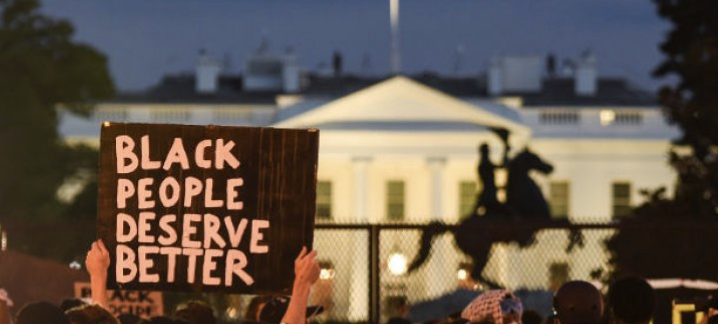
Black Lives Matter signs have popped up nearly everywhere. In June this slogan, or judiciously crafted approximations of it, began flooding my email inbox in the form of company statements that fell into a gray area between corporate responsibility, virtue signaling, and free advertising. During a 4th of July road trip to Vermont after I turned onto the wrong highway and found myself lost in New Hampshire, I saw the slogan painted in massive letters on the front of an aging barn. I thought then that a barn in a white, rural area took the prize for the most unexpected placement of a rallying cry for the fight against anti-Black racism, police brutality, and the lack of funding for social services. But the strangest place I have yet encountered the political mantra is the home page of a lavish Southern plantation house museum.

Berkeley Plantation, a National Historic Landmark that bills itself as “Virginia’s Most Historic Plantation,” is situated along the James River in Virginia, a colony and then state that enchained thousands of African Americans to produce lucrative tobacco crops before feeding, in the early 19th century, a massive forced migration of nearly one million Black people into the formerly Indigenous cotton lands of the Old Southwest. Berkeley Plantation’s home page features the romanticized lexicon and imagery that tourists anticipate and scholars of plantation tourism have long catalogued and criticized: genteel white owners, ornate architecture, splendid gardens, fine antiques, and decorous housewares. At Berkeley, the wealthy former residents who are extolled include Virginia Governor Benjamin Harrison and two of his descendants who became president, William Henry Harrison and Benjamin Harrison. The idealized domestic setting is enlivened, the home page text promises, by “enthusiastic guides in period costume.” Visitors here, the website suggests, will step into an Old South fantasy that obscures how slavery in its myriad grotesque realities shaped the site economically, socially, politically, and culturally. But in this moment of public foment, the Berkeley Plantation website now fronts a bold banner across the top of the screen proclaiming: “Berkeley Plantation believes that Black Lives Matter.”

I was stunned to see this claim appearing above photographs of grounds once maintained by enslaved people and formal parlors with slaveholder portraits hanging on walls. It struck me as the most supreme irony, and even as a cruel joke, that an estate built on the chewed-up and spat-out lives of Black people was now purporting to cherish Black existence. Given that we live in a time when not saying something of this sort exposes businesses and cultural institutions to the scrutiny of public opinion, this plantation was disingenuous at best and opportunistic at worst, I thought.

Then I clicked on the banner and discovered a direct statement indicating the harm done to Black and Native people on those grounds. The statement opens with an affirmation, “We believe that Black Americans, Indigenous People and their descendants deserve justice,” and continues with an admission of responsibility as well as an aspirational action plan. “We recognize that enslaved people were present at Berkeley plantation,” the statement reads. “We are working with researchers and historians to uncover all aspects of this site’s past and there is much work and responsibility ahead to make this site a place for healing and awareness.” I was persuaded that Berkeley Plantation’s current operators care about this past and its legacy.

Nevertheless, they are stewarding a racist landmark among an entire class of public memorials — plantation homes and landscapes — with a grandeur and impact equal to or greater than the Confederate statues currently being toppled or secreted away in our summer of national reckoning with anti-democratic symbols. As Patricia J. Williams stated in a September 2019 piece in The Nation on plantation weddings: These iconic homes and landscapes are “monuments to slavery.” The relevant question is not whether any site staff believes in their hearts that Black life is valuable — but rather, what caretakers of plantation sites and visitors to these historic places will do differently as a result of this belief.

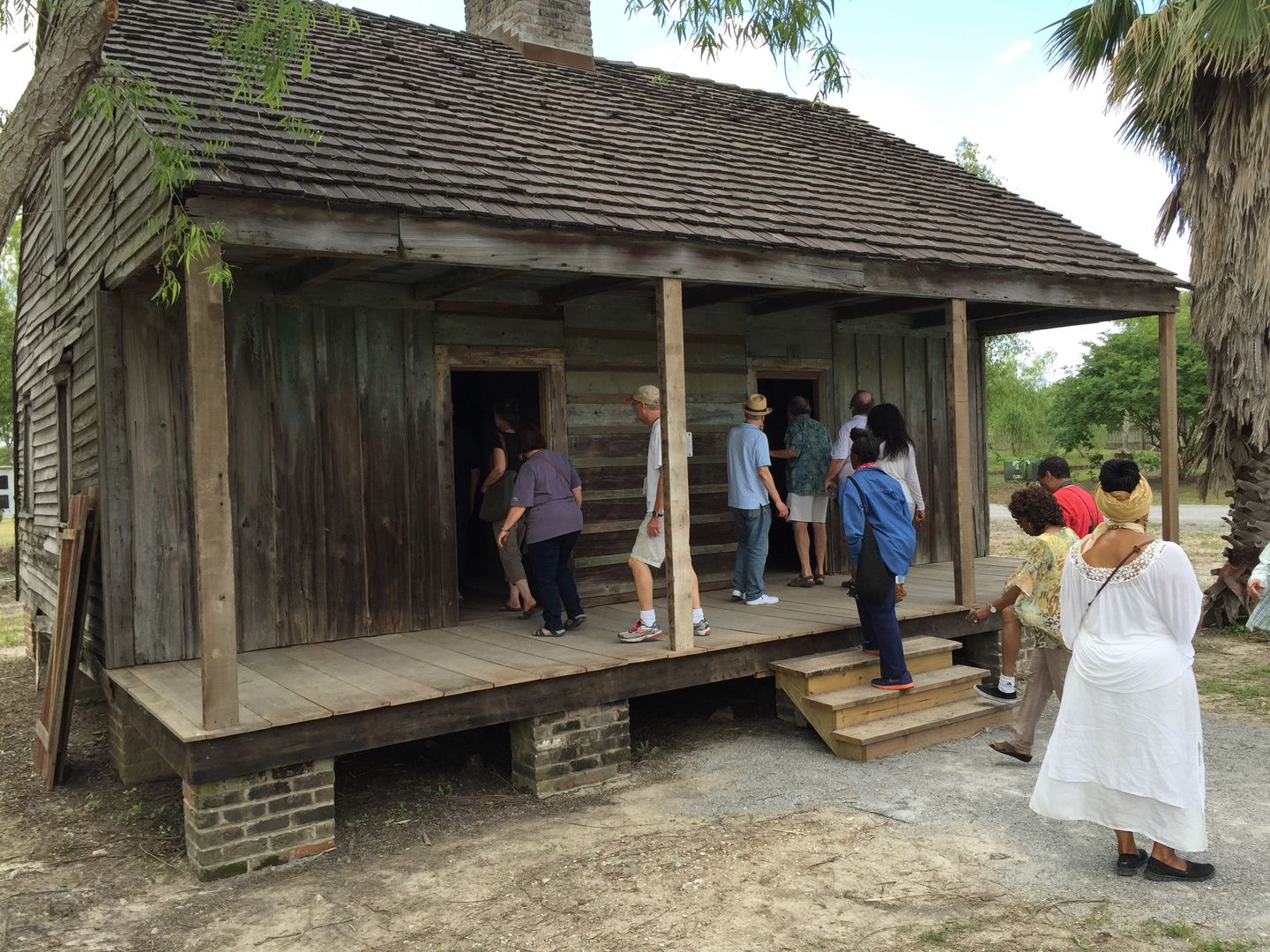
Visitors took a close look at a slave cabin at Whitney Plantation.
Visitors took a close look at a slave cabin at Whitney Plantation.DOUG WARREN FOR THE BOSTON GLOBE

NUMEROUS STUDIES OF plantation tourism, such as Jennifer Eichstedt and Stephen Small’s classic 2002 sociological study, “Representations of Slavery,” have found that plantation sites (especially those that are privately owned) tend toward Eurocentric portrayals of the past that participate in a process of “symbolic annihilation” in which Black presence is ignored or marginalized. Geographers E. Arnold Modlin, Derek Alderman, and Glenn Gentry argued in the journal Tourist Studies that even when plantation museums incorporate African Americans into tour narratives, they often do so in a distant manner that reduces Black experience to a cold recitation of population numbers, ages, and work tasks, rather than elevating Black residents to the level of white owners through stories that induce empathetic responses in visitors. The National Science Foundation has funded a team of geographers and historians headed by David Butler to conduct the most systematic study to date of a famous cluster of cotton estates known as the River Road Plantations spanning the Mississippi-Louisiana border. The team members are finding, as detailed in the Journal of Heritage Tourism, that even at sites that have made an effort to interpret enslaved people’s presence, features of the built environment, such as the location and size of the front-facing “big house” in comparison to “slave quarters” in the rear of a property, emphasize elite white experiences to the detriment of others.

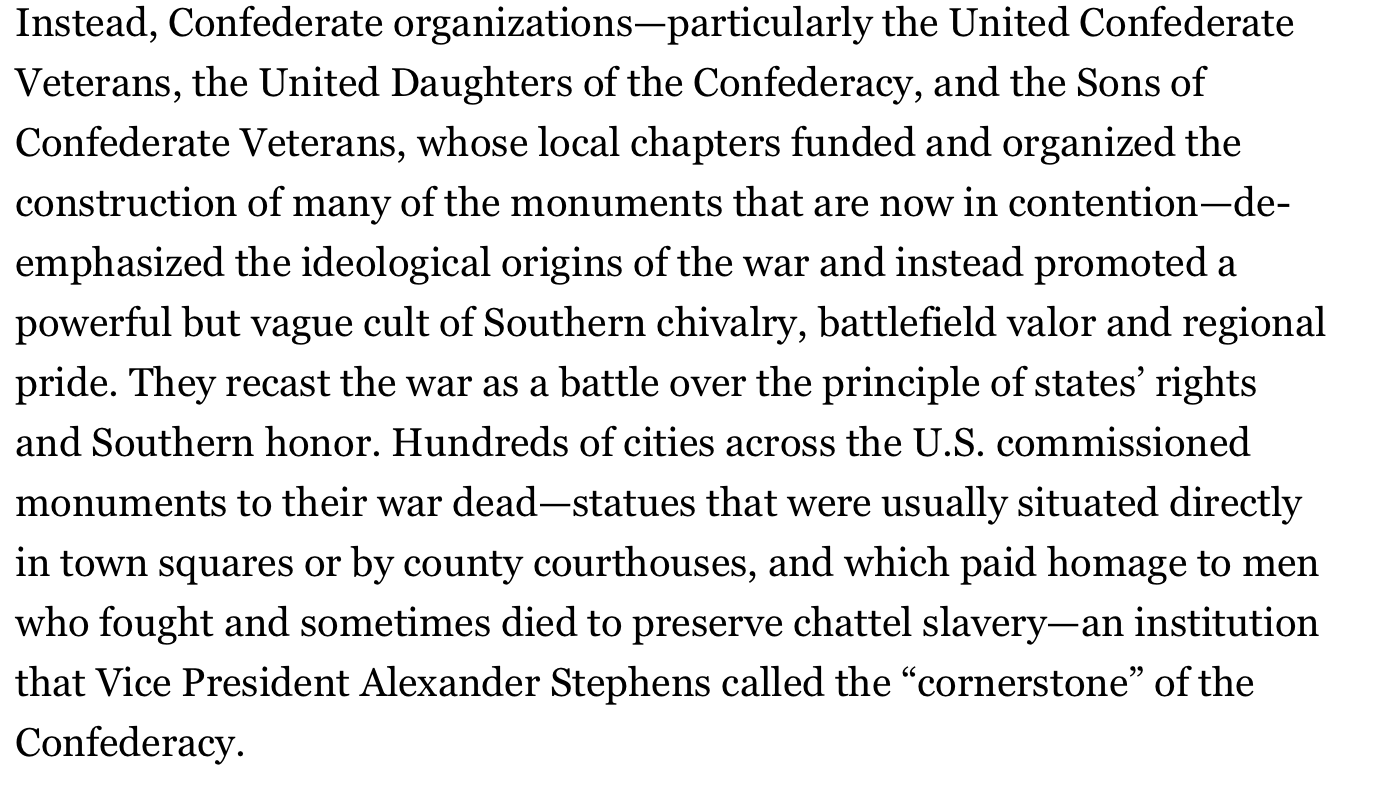
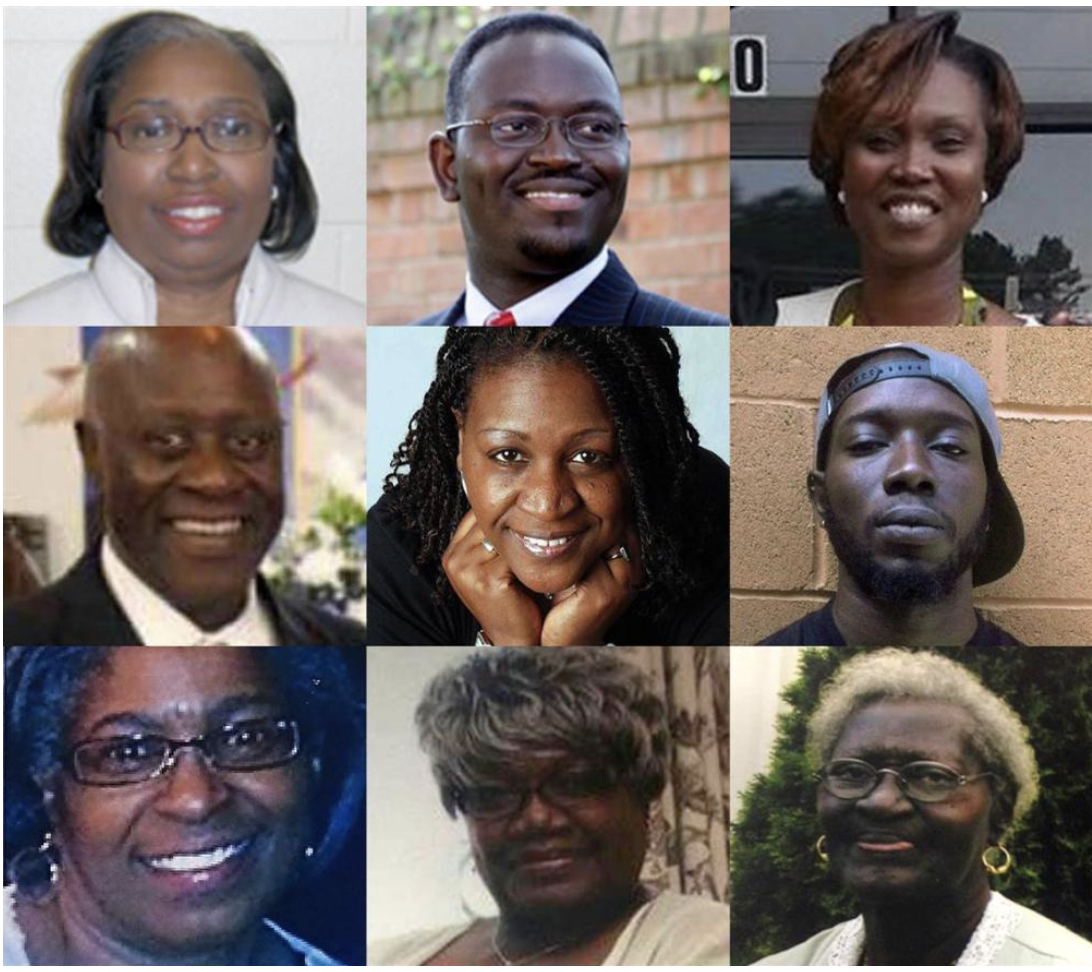
Tourists who enter these landscapes often carry romanticized notions of the Old South that find affirmation in the spatial arrangement of the plantation that aggrandizes white mastery. I have found in my own research on ghost tourism in South Carolina, Louisiana, and Georgia, recounted in my book “Tales from the Haunted South,” that a handful of privately run plantation sites and walking tours market Black suffering in the form of horrific tales of sexual abuse and murder trivialized as ghost stories. It is heartbreaking and noteworthy, as well, that plantations can be heritage sites for white supremacists. Dylann Roof, who killed nine people participating in Bible study at Charleston’s Mother Emanuel AME Church in 2015, visited South Carolina plantation sites in the months leading up to his racially motivated attack.

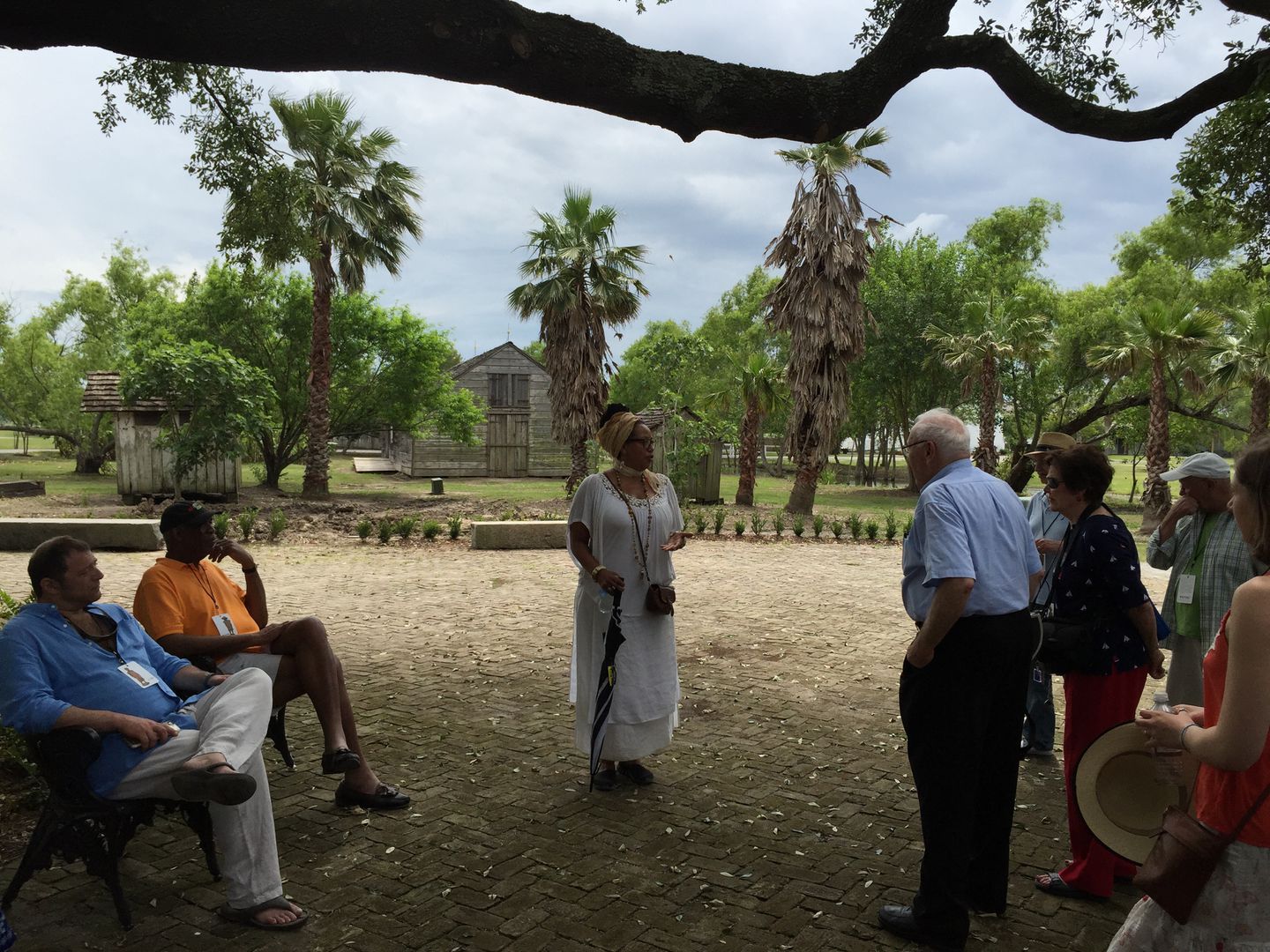
Whitney Plantation tour guide Mikhala Iversen answered questions from visitors.
Whitney Plantation tour guide Mikhala Iversen answered questions from visitors.DOUG WARREN FOR THE BOSTON GLOBE

Plantation tourism has changed slowly but substantially over the last decade, particularly with the 2014 opening of the innovative, privately owned Whitney Plantation in Louisiana that consciously centers African and African American experiences and with the 2015 opening of the McLeod Plantation in South Carolina, which is operated by Charleston County and interprets Black experiences before and after the Civil War. These sites are models for how the plantation museum experience has been reimagined, and yet, they have remained in the minority of Southern estate museums. The gradual shift at Whitney and McLeod has provoked resistance from white visitors who have expressed resentment at tours that address racial subjugation. Most plantation sites dependent on tourism dollars and public funding have tended not to risk the discomfort of their majority white visitors by highlighting Black experience and the trauma of slavery. In this fraught context, the Berkeley Plantation statement that openly engages contemporary racial politics seems rather courageous.

As public debate continues about commemorations to the Confederacy in the built environment, we should ask what is to be done with the hundreds of monuments to a pre-Civil War culture of racialized power that proliferate across the Southern landscape — and indeed, the Northern terrain — in the form of the plantation and country estate. How do we turn these homages to slavery into stages for meaningful dialogue? Not, I would suggest, by pretending they do not exist or taking aim with the wrecking ball.

The latter approach seems to have been adopted this July in South Carolina on the former Oaks Plantation of 18th-century ricing patriarch Arthur Middleton, where, according to The Post and Courier, a late 19th-century plantation revival home built on the original grounds was recently demolished by the corporate owner under the cover of night. Instead, we should push ourselves as visitors and stewards of these sites to reinvent them as spaces of facilitated conversation at the nexus of multiple social histories, as places of homecoming and meaning-making for descendants of the enslaved, and as sites where managers and tour guides of color have equal employment and advancement opportunities as well as shared authority to research and incorporate fresh interpretations. This vision might include any number of concrete actions. Among them could be a reversal of how visitors enter and experience physical places. Rather than entering a mansion first, tourists might be welcomed into the comparatively humble quarters to learn about the unfree population who built the wealth of others but also sustained their own lives and families.

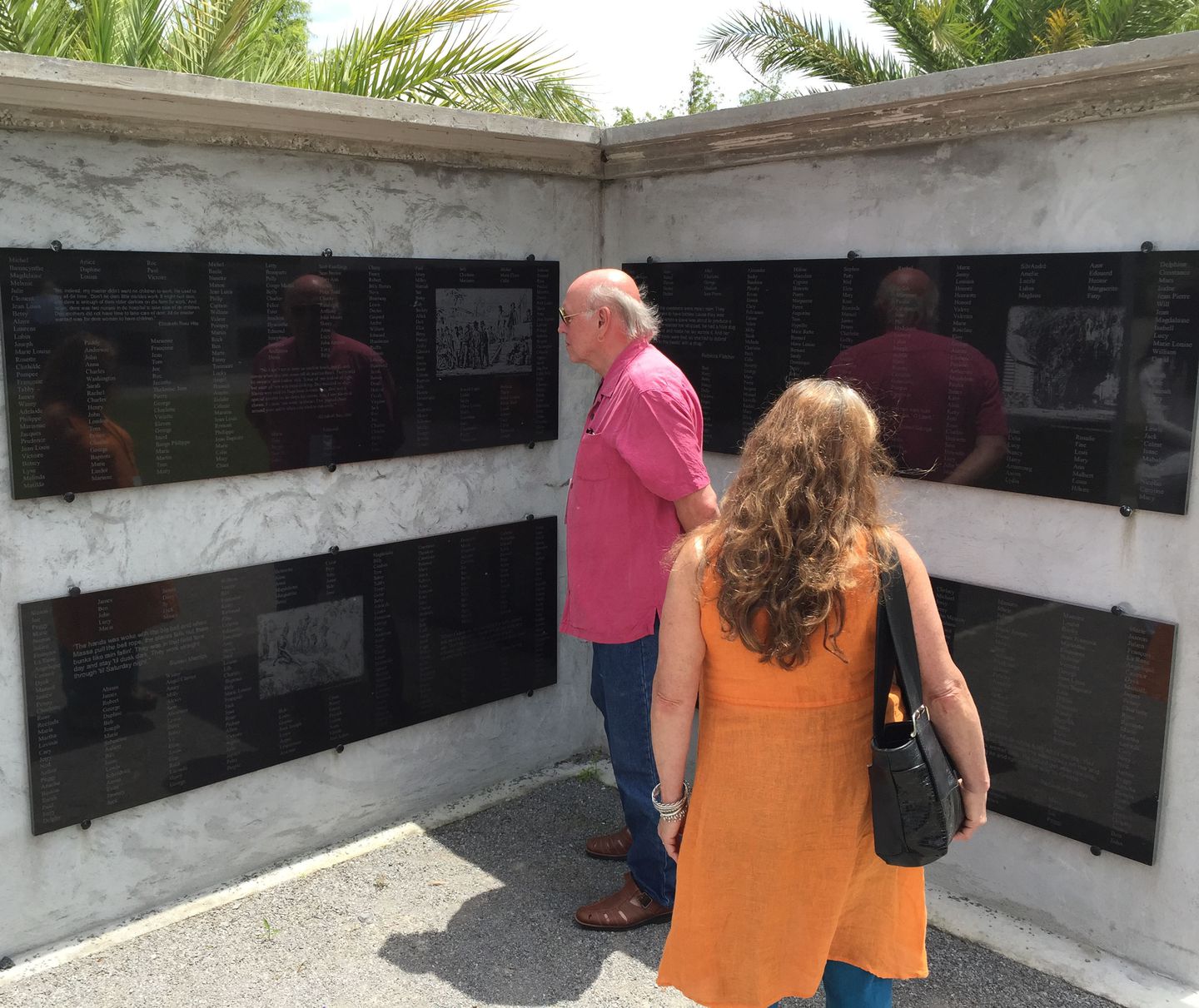
Jim Smith and Paula Barry of Conway, Mass., examined names of Louisiana slaves recorded on the 18 monument walls in the Allées Gwendolyn Midlo Hall at Whitney Plantation.
Jim Smith and Paula Barry of Conway, Mass., examined names of Louisiana slaves recorded on the 18 monument walls in the Allées Gwendolyn Midlo Hall at Whitney Plantation.DOUG WARREN FOR THE BOSTON GLOBE

Visitors might be invited to walk fields and survey outbuildings where many enslaved people spent the bulk of their time, to traverse any remaining wooded areas where enslaved people secretly met to practice their faith or temporarily escape corporal punishment, to tarry in work yards and kitchens where unfree workers practiced the range of skills necessary for supplying the white household. This approach would reveal not only the human strivings of Black and Indigenous people, but also the intricate, intimate, and violent relations that entwined the worlds of enslaved and enslaver.

With greater attention to plantation grounds, tour guides might even bring visitors into active, productive engagement. Volunteers could tend reproduction gardens of the type some enslaved people kept and, as the historian Peter Wood has often urged, “plant gourds!” The fruits of such gardens might be donated for the benefit of local community food security, connecting physical sites and histories of slavery (including the scourge of hunger that was often part of that trauma) to present-day social issues. Sites might attract diverse visitors with planned conversations, book clubs, poetry readings, and overnight stays — along the lines of Joseph McGill’s Slave Dwelling Project — that openly link past histories with current racial, economic, and political challenges. While such approaches may disabuse tourists of romantic notions about life in the United States prior to the formal end of racial slavery, they yield other and deeper satisfactions: earnest historical investigation, hands-on learning, social connection, and civic contribution. This dramatic summer of mass protest may represent an unprecedented opening for plantation sites to find receptive audiences for this tough work of collaborative reinvention, and indeed, some are already doing so.

FOR EXAMPLE, PUBLIC visits to the Royall House and Slave Quarters, an 18th century estate in Medford, Mass. (home to Governor John Winthrop as well as Isaac Royall, whose fortune built on slave labor and commercial trade helped to establish Harvard Law School), begin in the quarters. Board Co-President Penny Outlaw continually interweaves the activities of Blacks with those of white residents even as the tour moves into and through the main house. Recently, the house museum hosted a poetry reading with Malcolm Tariq, prize-winning author of “Heed the Hollow,” and featured an Instagram Live event with activist and performer Alok Vaid-Menon. Kyera Singleton, the first African American woman to lead the site as executive director, planned these virtual events. Singleton told me about her museum’s special charge in these times: “I cannot stress enough that the Royall House and Slave Quarters is a museum that seeks not only to get the history of slavery right, but also to function as a site of memory. It is a place that memorializes the lives of enslaved people. We do that quite simply by centering their lives, their experiences with violence, and their resistance. I believe one of our strengths is the ability to help people reckon with our current political moment by being honest about slavery and the legacies of enslavement today.”

The Broadway actor Robert Hartwell also had reinvention in mind when he purchased an antebellum house in Great Barrington, Mass., originally built for the Russell family that owned a local cotton manufacture. Hartwell said on Instagram: “I wish I could’ve told my ancestors when they were breaking their backs in 1820 to build this house that 200 years later a free gay Black man was going to own it and fill it with love and find a way to say their name.” Given that Massachusetts began taking steps to abolish slavery in the 1780s in response to Revolutionary-era ideals and legal suits brought by enslaved people, Hartwell’s home was probably not built by unfree workers. Nevertheless, New England mills routinely procured cotton grown and harvested by enslaved people in the South. Northern entrepreneurs shipped textiles woven from that cotton across the Atlantic Ocean to European markets and back down South to cheaply clothe the very people whose stolen labor had produced the lucrative raw material. Hartwell’s personal association of his house with that entangled history reminds us just how close the cultural memory of slavery is for many African Americans.

Black Lives Matter protests, however imperfect, have ignited widespread recognition that symbols we have long accepted as features of local landscapes wear down our potential to weave a new national fabric even as they archive physical evidence of our troubled racial history. Retiring, reimagining, and repurposing misplaced symbols that glorify racial oppression have the potential to open psychic and civic space for the descendants of enslaved people to finally call this nation home.

Tiya Miles is a professor of history at Harvard and the author of five books. Her latest, “All That She Carried: The Journey of Ashley’s Sack, A Black Family Keepsake,” is forthcoming from Random House in 2021.

Housing will test white support for Black lives – The Boston Globe

As a young housing activist about a decade ago, Jesse Kanson-Benanav started to notice that many liberal residents of Cambridge were hostile to integration. Whenever a developer proposed a few units of affordable housing, white homeowners would line up in opposition, citing concerns about parking or residential “character.” Although they said they valued diversity, they worked tirelessly to thwart the developments that would actually make it more feasible for Black and brown families to move into their neighborhoods.

“It really struck me as out of step with the image that Cambridge purports as a progressive and welcoming community,” he said.

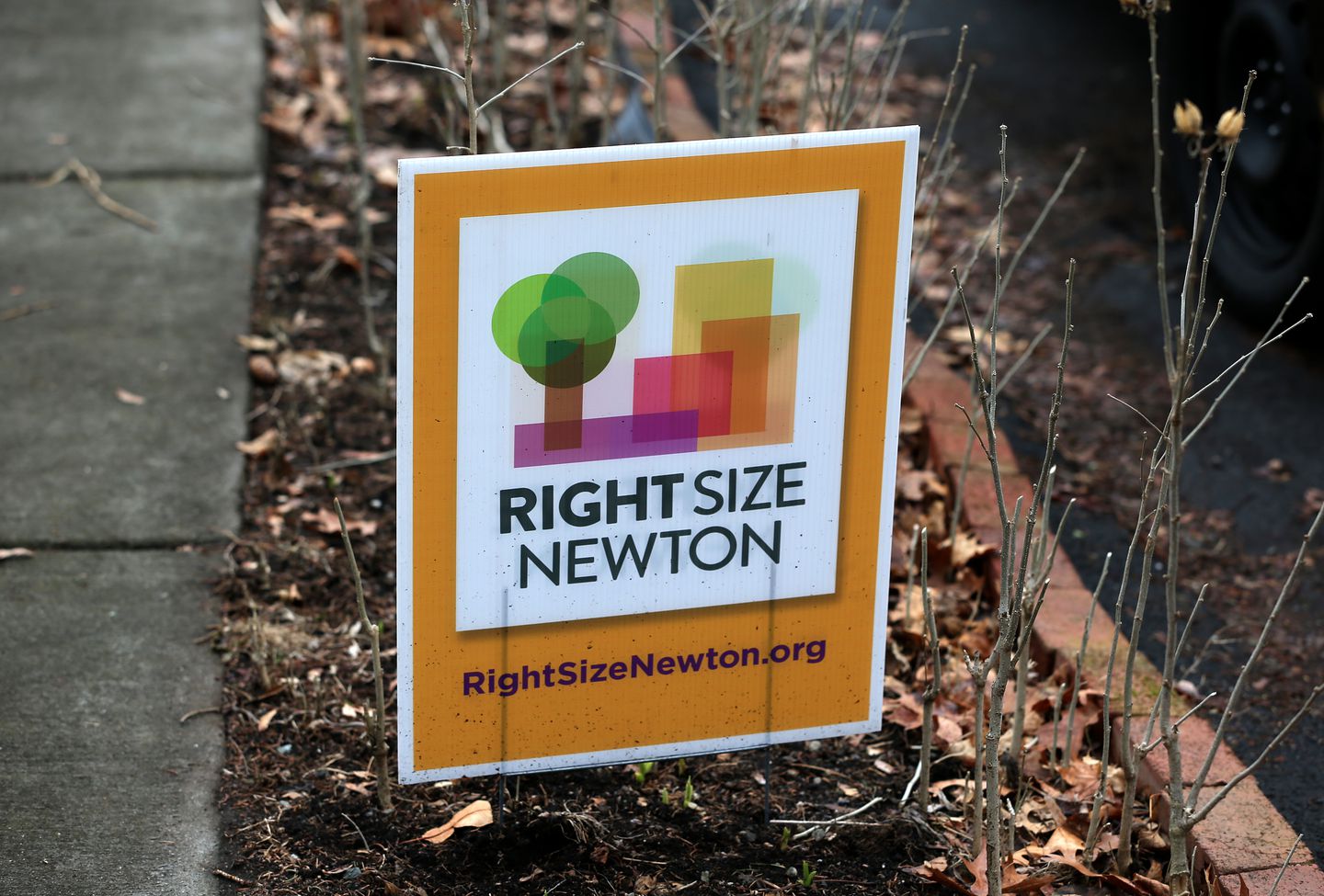
Kanson-Benanav, now the president of Abundant Housing Massachusetts, recently thought of those Boston-area liberals when a friend sent him a photo of a lawn in Newton with three yard signs. Two pushed back against affordable housing projects, reading: “Right Size Newton” and “Right Size Riverside.” The third sign said, “Black Lives Matter.”

Increasing the housing supply for Black Americans would be one of the quickest and most effective ways to bring about a more just society. Even now, the legacies of “red-lining” and other forms of segregation, predatory lending, and housing discrimination continue to push many Black Americans away from wealthier, better-schooled neighborhoods. But efforts to fix this problem by building affordable housing in suburban communities and affluent parts of cities have often been met with anger from white residents worried about “density” and “crowding.” White progressives in particular have a long history of refusing to integrate their communities, even as they vocally support civil rights movements.

At a time when the Black Lives Matter movement has record levels of support, large, even majority-white crowds have gathered in cities across America to call for the end of systemic racism and police brutality. To achieve real equity, though, white allies will have to move beyond symbolic displays of solidarity and actually help Black Americans get into their neighborhoods.

ONE OF OUR great societal myths is that Black and white neighborhoods are separate because Americans like to live alongside people with shared backgrounds or because poor and rich people pick the neighborhoods they can afford. The reality is that federal and local governments segregated communities through elaborate feats of social engineering.

In the 1940s and ’50s, the federal government created the suburbs by insuring home mortgages and offering subsidies to developers who mass produced single-family homes. As a result, suburban subdivisions began to sell at rates easily affordable to Black and white Americans alike. But the Federal Housing Administration incentivized developers to keep the suburbs white-only, refusing to grant loans unless there were physical barriers between people of different races, such as highways and, in at least one instance, an actual wall. Oftentimes, Black Americans were explicitly barred from suburban homeownership by leases that forbid renting or selling to “any person other than members of the Caucasian race.” The federal Public Works Administration even went so far as to purposely segregate previously integrated neighborhoods, building separate housing projects for Black and white families and listing each development’s racial designation. These programs concentrated Black Americans in poverty-stricken areas without easy access to jobs, health care, or transportation.

After the Supreme Court deemed segregation unconstitutional in a series of cases, white cities and suburbs fought to maintain the old layouts anyway, passing local zoning restrictions that served to prevent Black Americans from moving into their communities. Since the restrictions had to appear race-neutral to be legal, they relied on economic means to keep out Black Americans, who had not accumulated wealth at the same rate as whites because of segregationist housing programs. Zoning requirements typically enforced minimum lot sizes or forbid developers from building low-income housing in all-white neighborhoods, rendering homes in those communities unaffordable to Black buyers and renters. Many of these same ordinances continue to ensure that Black and white Americans remain separate and unequal.

The effects have been disastrous. Effectively barred from high-quality housing, Black Americans stayed renters, often in economically depressed areas, while white Americans gained hundreds of thousands of dollars in equity as their homes appreciated in value. As Richard Rothstein writes in his book “The Color of Law,” the modern wealth gap between Black and white households is entirely attributable to this difference. As of 2016, the median Black family had only 8.7 percent as much wealth as the median white family. In the greater Boston area, the median net worth of non-immigrant African American households was $8 in 2015, while the median net worth of white households was $247,500. Housing inequality has also limited educational opportunities for Black children by concentrating them in the same underfunded schools, contributed to mass incarceration and police brutality by ghettoizing Black Americans in over-surveilled neighborhoods, and even shortened Black life expectancies by placing Black people in polluted areas with poor access to medical care.

What this means is that there is an obvious contradiction between supporting social justice movements and trying to maintain the segregated system behind almost every modern racial disparity. “When you talk about preserving the character of a community that exists because of oftentimes intentional racist exclusion, you’re really perpetuating the white supremacy that post-World War II suburban expansion was built upon,” said Kanson-Benanav.

Opponents of new housing often say they're objecting to increased density and want to preserve the "right size" of their communities. But strict limits on the housing supply have the effect of furthering decades of segregation.
Opponents of new housing often say they’re objecting to increased density and want to preserve the “right size” of their communities. But strict limits on the housing supply have the effect of furthering decades of segregation.DAVID L. RYAN/GLOBE STAFF

But even in an era of heightened racial consciousness, efforts to undo exclusionary zoning or build low-income housing in white neighborhoods tend to trigger fierce backlashes. Adriane Musgrave, a former candidate for the Cambridge City Council, still remembers meeting a woman who talked enthusiastically about wanting to empower the Black community but quickly grew hostile at the mention of the Frost Terrace apartments, an affordable housing development under construction near Porter Square. The woman claimed that she was planning to leave the area once the apartments were built because they were going to “ruin the neighborhood” and “bring drugs and loud music.”

Musgrave had previously been booed, hissed, and berated for speaking in favor of public housing, but the encounter with the woman still shocked her. “I’m sure she thinks she’s super progressive,” Musgrave said. “But she didn’t want to live next to lower-income people of color.”

André Leroux, founder of the Great Neighborhoods Program, a network of advocates for affordable housing and zoning reform, believes that most white progressives are able to hold these contradictory stances because they simply lack historical knowledge. “I think a lot of people are not aware of the history of segregation and how our communities became segregated through housing and zoning policies and planning,” Leroux said. “People just assume that this is the way that it is.”

Another reason housing reform has failed to gain momentum is that white residents want the physical characteristics of their neighborhoods to remain the same. Many of them worry that new developments will ruin the qualities that attracted them to low-density areas in the first place: the wide open spaces, the greenery, the direct sunlight, the easy parking. It’s easy to understand why homeowners would want to hold onto these benefits, but the problem is that they are almost always maintained at the expense of other people who don’t have the privilege of choosing where and how they live. As Brookline Select Board Member Raul Fernandez put it, “All of those creature comforts are more important to [homeowners] than someone else’s ability to be able to afford to live in whatever condition that is.”

The irony is that the vast majority of affordable housing developments exist free of controversy after they get built. Most of them have little to no effect on crime rates and property values, and long-term residents eventually forget about the toxic political fights they generated. “After these drawn out battles, the lawsuits, the yelling, there’s not a peep about it,” Leroux said. “People just move on.”

HOUSING ACTIVISM IN the North was a prominent but lesser-known part of Martin Luther King Jr.‘s campaign for racial justice. In 1966, King held a march in Chicago to demand that the city allow Black residents to buy homes in all-white neighborhoods. As the protesters crossed Marquette Park, they encountered a white mob that pelted them with projectiles, one of which struck King in the head. He would later claim that he had never faced “mobs as hostile and as hate-filled” as in Chicago. He added: “Many whites who opposed open housing would deny that they are racists.”

Building off King’s legacy, Black Lives Matter has been trying to link affordable housing to racial equality for years with limited success. But as the movement gathers momentum, activists are hoping that real change is finally on the horizon. “I don’t think wealthy, educated white liberals can play ignorant any longer,” said Stacy Thompson, executive director of Liveable Streets Alliance. “There’s just so much data.”

It’s not clear whether the recent protest movement has had any tangible effects on debates over whether to build more housing in the suburbs. Some activists, like Beyazmin Jimenez, a board member of Kanson-Benanav’s organization, Abundant Housing Massachusetts, told me that the current racial climate has been an “awakening” for many white homeowners. “They’re now asking questions like, ‘Educate me. What are the policies that have led to our city being so segregated?’” she said. As an example, Jimenez cited the town of Hamilton, Mass., previously a hotbed of anti-affordable housing sentiment, which began to hold conversations around fair housing after the George Floyd protests.

Others, however, said that they haven’t seen sufficient evidence that the surge of racial awareness among white Americans has carried over into housing policy. “I don’t think enough people have made the connection yet,” says Jarred Johnson, also a board member at Abundant Housing Massachusetts. Adriane Musgrave told me that she is “not optimistic at all” that newly enlightened white liberals will bring about meaningful reform on the issue.

Their main fear is that the white homeowners supporting Black Lives Matter will abandon the movement once it begins to make material demands on their neighborhoods — just as many white liberals abandoned King in the ’60s. Although many northerners supported King in his campaign to desegregate the South, they quickly grew antagonistic when he shifted his attention to the racist housing policies in their own communities. By the time of his assassination, he had grown increasingly unpopular with the white liberals who had once heralded his activism. “People with privilege are comfortable signing a statement, are comfortable calling someone else racist, but that’s different than the long hard work of transforming a policy,” said Thompson.

There have already been worrisome signs that history is repeating itself. In June, the CT Mirror reported, the residents of Weston, Conn., marched through the town in solidarity with Black Lives Matter, chanting slogans and raising placards. Weston’s elected officials urged the overwhelmingly white crowd to fight systemic racism and examine their personal biases. Eight days later, those same officials voted unanimously to adopt a housing plan promoting the development of two-acre single-family homes. The town’s median sale price of $668,000 seems unlikely to dip. Weston is only 1.4 percent Black.

More tests of this new civil rights movement will occur at the local and state levels as white liberals are once again called upon to integrate their communities. President Trump grasps this, which is why he’s been tweeting lately that “suburban dreams” are endangered by the prospect of more low-income housing coming to prosperous communities. Essentially, Trump is goading suburbanites to weigh their fear of affordable housing against their commitments to racial justice, and he’s betting that white people will fall back on standard operating procedure.

Indeed, without an obvious boogeyman like a murderous cop to condemn, white allies will have to ask themselves if they are truly willing to make the compromises necessary to alleviate racial injustice. This would entail the elimination of single-family zoning, a receptiveness to building affordable developments, and increased tenant protections for low-income residents. In practice, it would look like Minneapolis — which recently reformed its zoning code to allow taller buildings with more units in areas that previously contained only single-family homes — or Newton, which just voted to approve the affordable Northland development after a contentious and drawn-out debate.

Jarred Johnson, one of the activists with Abundant Housing Massachusetts, told me that increasing levels of support for policies like defunding the police have made him cautiously optimistic about the prospect of substantive housing reform. “I wouldn’t underestimate the capacity of folks to change their minds,” he said. “I do think there’s a capacity for change. And hopefully when they have that light turned on them, they’ll respond in a positive way. I get it. It’s hard. Change is hard. But it’s essential.”

Noah Y. Kim is a writer based in Washington, D.C.

Show 215 comments

Source: Housing will test white support for Black lives – The Boston Globe

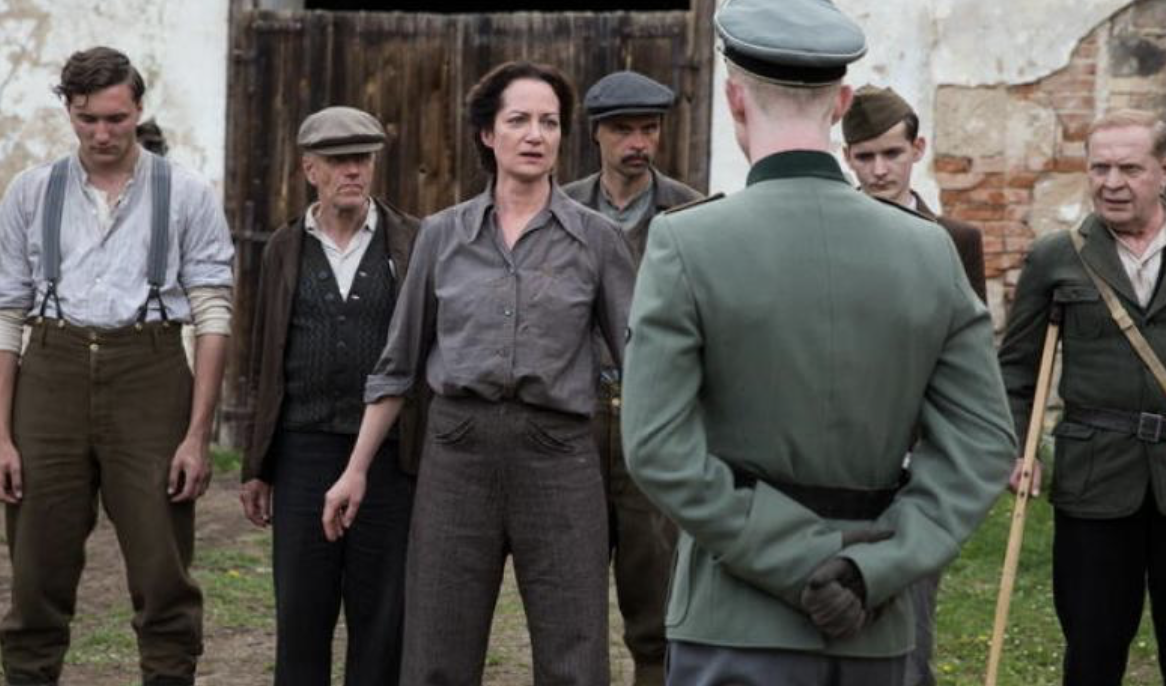
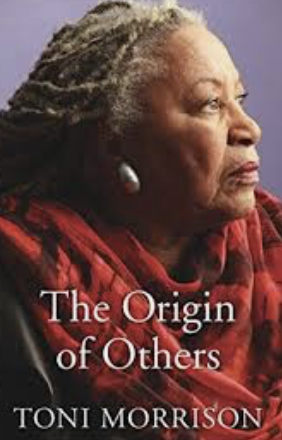
Toni Morrison & American Racism. In the current PBS drama, ‘Line of Separation’ 

Toni Morrison & American Racism

|  Bumpy J | AfroSapiophile |

Jan, 2021 | Medium

Line of Separation

Image for post

PBS

Image for post

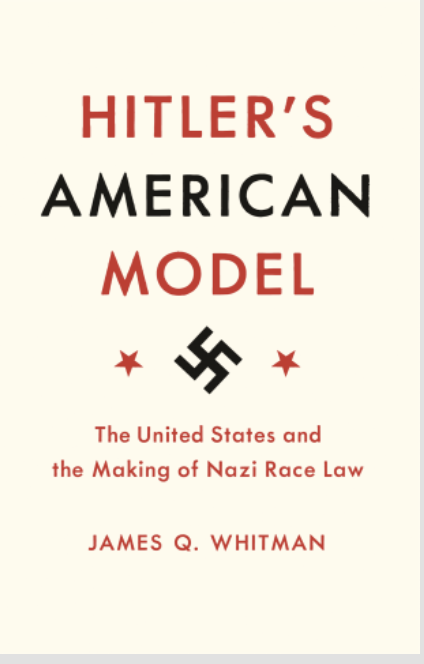
The Confederacy and the Nazis

Image for post

PBS

Image for post

Image for post

Image for post

A Racial Paradox

Central European University

Image for post

AfroSapiophile

Intelligent Black thought

Bumpy J

WRITTEN BY

Bumpy J

Numbers runner. Cigar smoker.
AfroSapiophile

AfroSapiophile

AfroSapiophile’s is a hub for critical thinking and analysis pertaining to civil rights, human rights, politics, systemic racism and sexism.

Source: Toni Morrison & American Racism. In the current PBS drama, ‘Line of… | by Bumpy J | AfroSapiophile | Jan, 2021 | Medium

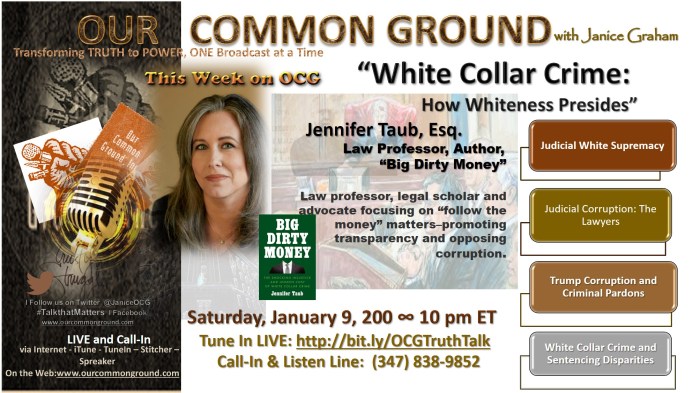
OCG This Week ::: “White Collar Crime: How Whiteness Presides” ::: Professor Jennifer Taub :: Author, “Big Dirty Money”

“White Collar Crime: How Whiteness Presides”

“Big Dirty Money”, Author, Professor Jennifer Taub

Professor Jennifer Taub, Esq.

  January 9, 2021 :: 10 pm EST

Join us LIVE: http://bit.ly/OCGTruthTalk

In a controversial 1975 article, titled “White Racism, Black Crime, and American Justice,” criminologist Robert Staples argued that discrimination pervades the justice system. He said the legal system was made by white men to protect white interests and keep Blacks down. (At the time this was received as “outlandish and untrue”). Staples charged that the system was characterized by second-rate legal help for Black defendants, biased jurors, and judges who discriminate in sentencing. No matter, study after study demonstrates how extreme racial disparities address for Blacks in the judicial system, no matter the income strata or available resources.

Unwarranted disparity is defined as different treatment of individual offenders who are similar in relevant ways, or similar treatment of individual offenders who differ in characteristics that are relevant to the purposes of charging and sentencing. Whiteness is honored, it is protected and it blinds much of the judicial process. We can no longer deny, racial disparities exist because the system protects whiteness for the most part. It is clear that in sentencing especially, “departure” from the guidelines is reserved for mostly whites, and rarely extended to Blacks. Fair sentencing is individualized sentencing and it is mostly decided by people who value whiteness, having a value system of what crimes are punishable with distinct stereotyping of criminals.

Our guest, Professor Jennifer Taub, in her book, “Big Dirty Money” suggests we first attempt to measure white-collar crime as a whole. Then we need to measure the harm to victims in terms that go beyond the economic costs. She points out that “The wealthy have the resources either to exert political influence or become lawmakers themselves”. But Taub explicitly and persuasively places the breakdown of enforcement and accountability in the context of money and class.

What happens when a group of wealthy bankers fraudulently bring foreclosures on an entire class of people, as they did after the crash of 2008? Unlike a loss of, say, $210, the loss of a person’s home affects their life and well-being in ways that cannot be assigned a dollar amount. Thousands of people have spent the years since the recession uprooted from their communities. Taub posits that “the elite class had the power to define what was criminal.”

What happens when the President of the United States pardons criminals who have violated security, foreign interference, sedition, and treason laws? Trump is a stark illustration of why so few wealthy malefactors are held accountable. Like other members of the .01 percent, he can act with seeming impunity, able to buy or influence his way out of trouble. He empathizes with rich people who run afoul of the law. He minimizes their guilt, suggesting white-collar crimes aren’t really crimes, especially when the accused are white men, as the vast majority of all rich white-collar criminals are. Yet Trump is a symptom, not the cause. What happens when white politicians create laws to intentionally suppress and violate voters? How can we measure the social and political costs of mass dispossession because the defendant and violator are protected by a cloud of whiteness?

We will talk with Professor Taub who clearly articulates in her book, the cause and effect of white-collar crime “blinded by the whiteness” that plagues the judicial system. Leaving white-crime bosses to their devices operated by their money and “white card”.

ABOUT Jennifer Taub

Jennifer Taub is a legal scholar and advocate, devoted to making complex business law topics engaging inside and outside of the classroom. Her research and writing focuses on corporate governance, banking and financial market regulation, and white collar crime. Similarly, her advocacy centers on “follow the money” matters  –– promoting transparency and opposing corruption.

Her new book, Big Dirty Money: The Shocking Injustice and Unseen Cost of White Collar Crime (Viking) will be published on September 29, 2020. Taub was a co-founder and organizer of the April 15, 2017 Tax March where more than 120,000 people gathered in cities nationwide to demand President Donald Trump release his tax returns. She is a professor of law at the Western New England University School of Law where she teaches Civil Procedure, White Collar Crime, and other business and commercial law courses, and was the Bruce W. Nichols Visiting Professor of Law at Harvard Law School during the fall 2019 semester. She formerly was a professor at Vermont Law School.

An authority on the 2008 mortgage meltdown and related financial crisis, Taub is also an emerging expert in white collar crime. In addition to Big Dirty Money, she is co-author with the late Kathleen Brickey of Corporate and White Collar Crime: Cases and Materials, 6th edition (Wolters Kluwer 2017). Relatedly, she has appeared on cable news programs including MSNBC’s Morning Joe and CNN Newsroom to discuss the Special Counsel investigation into links between Russia and the Trump presidential campaign.

In the area of banking and financial market regulation, Taub’s book Other People’s Houses: How Decades of Bailouts, Captive Regulators, and Toxic Bankers Made Home Mortgages a Thrilling Business was published in May 2014 by Yale University Press. Recognized as accessible and informative, OPH was honored by the Massachusetts Center for the Book as one of the 2015 finalists in the nonfiction category. Other People’s Houses was favorably mentioned by Nobel Laureate, Robert Shiller in his 2015 edition of Irrational Exuberance. Taub testified as an expert before the United States Senate Banking Committee and a United States House Financial Services Subcommittee. She also co-organized a conference and co-lead a panel discussion at the Financial Stability Law Workshop at the U.S. Treasury Department, hosted by the Office of Financial Research.

In addition to Other People’s Houses, Taub has written extensively on the financial crisis. Her publications include “The Sophisticated Investor and the Global Financial Crisis” in the peer-reviewed Corporate Governance Failures (UPenn Press, 2011) and a case study on AIG in Robert A. G. Monks and Nell Minow’s fifth edition of Corporate Governance (Wiley, 2011). In response to Roberta Romano, she presented and wrote “Regulating in the Light: Harnessing Political Entrepreneurs’ Energy for Post-Crisis Sunlight Hearings” (St. Thomas L. Rev. 2015). Additional works include the chapter “Delay, Dilutions, and Delusions: Implementing the Dodd-Frank Act” in Restoring Shared Prosperity (2013) and “What We Don’t Talk About When We Talk About Banking,” in the Handbook on the Political Economy of the Financial Crisis (Oxford, 2012). She wrote entries on “Shadow Banking” and “Financial Deregulation” for the Oxford Encyclopedia of American Business, Labor and Economic History (Oxford, 2013) and the chapter “Great Expectations for the Office of Financial Research,” in Will it Work? How Will We Know? The Future of Financial Reform (2010). In addition, she has published Reforming the Banks for Good in Dissent (2014). Her article, “The Subprime Specter Returns: High Finance and the Growth of High-Risk Consumer Debt,” was published in the New Labor Forum (2015). And, she recently wrote a book chapter on “New Hopes and Hazards for Social Investment Crowdfunding” in Law and Policy for a New Economy (Edward Elgar, 2017).

Taub’s corporate governance work often focuses on the role of institutional investors, including mutual funds. Her article “Able but Not Willing: The Failure of Mutual Fund Advisers to Advocate for Shareholders’ Rights,” published in the Journal of Corporation Law (2009) was presented at a conference jointly sponsored by the Millstein Center for Corporate Governance and the Oxford Said Business School. Her article “Managers in the Middle: Seeing and Sanctioning Corporate Political Spending after Citizens United” was presented at the Brennan Center for Justice at NYU and later published in the NYU Journal of Legislation and Public Policy (2012). Taub’s article, “Is Hobby Lobby a Tool for Limiting Corporate Constitutional Rights,” was presented at Harvard Law School and later published in a symposium issue of Constitutional Commentary in 2015 on Money, Politics, Corporations, and the Constitution (2015).

Taub has also ventured into the area of legal education and pedagogy. This includes her article “Unpopular Contracts and Why They Matter: Burying Langdell and Enlivening Students,” published in the Washington Law Review (2013). She is a co-author with Martha McCluskey and Frank Pasquale of “Law and Economics: Contemporary Approaches,” published in Yale Law & Policy Review (2016). With McCluskey and Pasquale, Taub is a co-founder of APPEAL (the Association for the Promotion of Political Economy and the Law), a research network linking economists, legal scholars, and policy makers concerned with inequality and instability who view markets and the government as mutually constituted. She has also developed a model syllabus for course on Financial Stability.

In 2017, Taub received the Vermont Law School, Women’s Law Association Phenomenal Woman Award in the faculty category. She also served as chair of the Section on Financial Institutions and Consumer Financial Services for the 2017 AALS annual meeting. Prior to joining academia, Taub was an associate general counsel with Fidelity Investments. She received her BA degree, cum laude, from Yale University, with distinction in the English major, and her JD, cum laude, from Harvard Law School where she was the Recent Developments Editor at the Harvard Women’s Law Journal. She was a visiting professor at the University of Illinois College of Law for a short course in 2015 and a visiting fellow at the Yale School of Management during the 2016 spring semester. She was a visiting professor at the University of Connecticut School of Law during the 2019 spring semester.

Taub has written pieces for a variety of platforms including The Washington PostCNN opinion page, Slate, the New York Times Dealbook, Dame Magazine, The Baseline Scenario, Race to the Bottom, Pareto Commons, The Conglomerate, and Concurring Opinions.

::: “Transforming Truth to Power, One Broadcast At a Time” :::

“I’ll Be Listening for YOU”

The Trump Coup: An American Autocratic Movement

Steve Schmidt, the former 2008 McCain Campaign Manager has broken down the 7 aspects of Trumpism in a 13 tweets thread. Read it here in one easy-to-view format. #SchmidtStorm. He writes, “Trumpism is an American autocratic movement with fascistic markers. There are seven specific parts that comprise its core.”

#3 states:

3. ELITES: All autocratic movements fuse an unholy alliance between society’s elites and losers. It is a coalition of convenience between two groups who despise each other, yet need each other. The boundless cynicism of the elites and the endless grievances of the losers becomes an unbreakable cement. Josh Hawley and Ted Cruz are perfect examples. Hawley graduated from Stanford and Yale Law School. He taught at Oxford and clerked for the Chief Justice of the United States. Ted Cruz graduated from Princeton and Harvard Law School. They have become completely faithless to their oaths and American democracy in the name of their ambition. They have no convictions, only self-interest.”

A must read that provides a concise description of the chaos being led by the current sitting President and the threat against America.

SOURCE: https://www.maxnewstoday.com/post/the-seven-aspects-of-trumpism

Editor’s Note: Steve Schmidt is one of the founding members of the Lincoln Project. He is a communications and public affairs strategist who has worked on several Republican campaigns, including John McCain’s 2008 bid for the White House, and he is now a regular political contributor to MSNBC.

A Moment or a Movement? The Blowback Will Tell | Black Agenda Report

A Moment or a Movement? The Blowback Will Tell

You cannot separate the racist police aggression in the streets of the US and the racist US aggression against Venezuela, Bolivia, Afghanistan, Zimbabwe, Yemen, Libya and Syria.

“Chauvin was sending a message to the community by holding his knee on Mr. Floyd’s neck in broad daylight.”

“George Floyd should not be among the deceased. He did not die of common health conditions. He died of a common American criminal justice malfunction.” Rev. Al Sharpton June 4, 2020

I understand Rev. Sharpton’s point, but to cast this lynching in the context of a “malfunction” is to lose site of the much broader historical context in which African’s in America and later African Americans have existed since 1619.  I am not inferring that it was Rev. Sharpton’s intent, but to cast this horror in the context of a “malfunction,” is to give America a pass.  We can no longer afford to do that.

The total disregard for George Floyd as a human being, coupled with a hatred for the Black Community that Officer Derek Chauvin took an oath to protect and serve, led to the lynching on May 25. Chauvin was sending a message to the community by holding his knee on Mr. Floyd’s neck in broad daylight. “Black people, know your place, understand your place and stay in your place.” Even the knowledge that he was being videotaped didn’t deter Chauvin. His inhumanity towards Mr. Floyd as his life was slowly choked out of his handcuffed body emanates from America’s historic inhumanity towards people of color since Tristan de Luna established the short-lived settlement at Pensacola Bay in 1559.

This hatred is woven into the very fabric of America.  It is in the founding documents of this country. It’s evident in Supreme Court decisions and the blowback from America’s dominant culture to any modicum of success achieved by African Americans (The Red Summer of 1919 or Tulsa 1921). A clear and indisputable pattern is obvious. Within this historic context, this atrocity captured on video, this act of domestic terrorism was America in action. The power of the State as carried out through Officer Chauvin was in full effect. This was no malfunction…it was business as usual.

“This act of domestic terrorism was America in action.”

Our ancestors were brought to these shores for only one purpose; free labor. Our task was to perform all the requisite dirty work to build an economy and empire for Europe.  The so-called “christians” who swore in the Mayflower Compact of 1620 that they undertook, “…for the Glory of God, and Advancement of the Christian Faith, and the Honour of our King and Country, a Voyage to plant the first Colony in the northern Parts of Virginia…” could not reconcile their inhumane treatment of their African captives with their “Christianity.” To absolve themselves of the dilemma posed by the true Christian ethic that God created man in his own image, the Europeans slowly dehumanized their captives and codified this in law and constitution.

Examine the Laws of Virginia:

  • Act XII 1662, “children got by Englishmen upon a Negro woman, is the child slave or free?”  The status of the child shall be determined by the status of the mother.
  • Act II 1667 addresses, “What happens to the status of a baptized slave?” Answer: “the conferring of baptism doth not alter the condition of person as to his bondage…”
  • Act I 1669, a master cannot be charged with murder for the “casual killing of slaves” since no one in their right mind would destroy their own property.

By 1669, the enslaved were no longer persons, they were no longer human; they were property.

The Constitution gave us the Three Fifths Compromise, the Fugitive Slave Provision (the constitutional validation for slave patrols, the early form of American policing) and allowed for the importation of enslaved Africans for twenty years, until January 1, 1808.  In 1857 the Supreme Court via Chief Justice Taney gave us the Dred Scott decision, validating the belief that all blacks — enslaved as well as free — were not and could never become citizens of the United States. The framers of the Constitution, he wrote, believed that blacks“had no rights which the white man was bound to respect…”  

These are a few examples of what is meant by structural or “institutional racism.”  Stripping our ancestors of their humanity, relegating them to the position of property or things and codifying it in the founding documents and court decisions of this country. This is not a malfunction; this is the machine operating as designed!

Yes, there has been legislation and court decisions that have amended and/or eliminated many of these laws from the books. The Brown decision, the 64’ Civil Rights Act, the 65’ Voting Rights Act and the Fair Housing Act were all great legal and legislative advancements. This progress has lulled us to sleep with a false sense of accomplishment and optimism. The reality remains that legislation alone does not do anything to disabuse those in power and those they represent of the controlling mindset of this country, of the notion that African Americans are less than human.

“This is the machine operating as designed.”

For example, banning the chokehold is a great idea, but that same banned chokehold is what killed Eric Garner.  Until we get to the real crux of the issue, the controlling and racist mindset of an entire criminal justice system that turns a blind eye to choking, shooting unarmed suspects and not holding officers accountable when they use excessively violent tactics, nothing substantive will change.  Jury verdicts validating police abuse and police departments staging sickouts to protest fellow officers being charged with crimes is evidence of the machine making corrections to protect itself.

Are the ongoing protests a moment or a movement?  The jury is still out.  The verdict will be determined by the blowback that comes from this moment and how those who are protesting and advocating for change respond to it. The response to judicial and legislative advancements is always substantive blowback.  The Supreme Court has dismantled the Voting Rights Act and conservative groups have escalated voter suppression tactics such as The Crosscheck Program. The Supreme Court has made it more difficult to prove discrimination under the Civil Rights Act.  The election of Donald Trump was blowback to the election of Barak Obama as was Sen. McConnell’s not allowing the nomination of Merrick Garland to go forward.

“The verdict will be determined by the blowback that comes from this moment.”

The American ethos of exceptionalism and the illusion of white supremacy are under attack. The battle is playing out right before our eyes on both the foreign and domestic fronts.  You cannot separate the racist aggression being carried out against people of color in the streets of the US by the State (aka the police) and the racist aggression being carried out by the US against Venezuela, Bolivia, Afghanistan, Zimbabwe, Yemen, Libya and Syria (just to name a few). Dr. King warned us about the three major evils: “poverty, global racial oppression and militarism”… King told us, “And we must face the hard fact that many Americans would like to have a nation which is a democracy for white Americans but simultaneously a dictatorship over black Americans.”

Too many white Americans are insecure and losing their footing in the shifting sands of the quest for ethnic equality in America.  How those of good conscience and morality respond to the violent blowback will determine if and how the country can move from this moment of unrest and uncertainty to a movement of peace and equality.  I am certain that we will never get there until Congress and others stop wading in the safety of the shallow waters of chokeholds and panels and begin to swim into the deep waters of the real issue… the racist ethos of America.

Dr. Wilmer J. Leon III is the Producer/ Host of the nationally broadcast call-in talk radio program “Inside the Issues with Leon,” on SiriusXM Satellite radio channel 126. Go to http://www.wilmerleon.com or email: wjl3us@yahoo.com. www.twitter.com/drwleon and Dr. Leon’s Prescription at Facebook.com © 2020 InfoWave Communications, LLC

Source: A Moment or a Movement? The Blowback Will Tell | Black Agenda Report

Building a More Inclusive Federal Judiciary – Center for American Progress

The federal judiciary does not reflect the population that it serves, which has severe consequences for both the institution’s legitimacy and the parties who come before it.

Source: Building a More Inclusive Federal Judiciary – Center for American Progress

Sedition Must Have Consequences

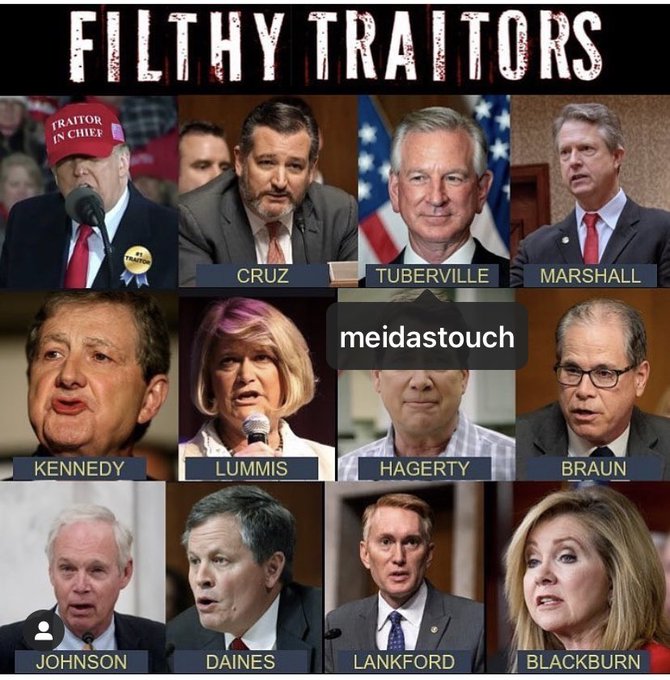
The Dirty Dozen Ted Cruz Ron Johnson James Lankford Steve Daines John Kennedy Marsha Blackburn Mike Braun Cynthia Lummis Roger Marshall Bill Hagerty Tommy Tuberville Josh Hawley #SeditionHasConsequences

#WeWillRemember

  • Halsey
  • Cruz
  • Johnson
  • Lankford
  • Daines
  • Kennedy
  • Blackburn
  • Braun
  • Senators-Elect: Lummis Marshall, Hagerty, Tuberville

SEDITION: Ted Cruz @tedcruz Ron Johnson @RonJohnsonWI Marsha Blackburn @MarshaBlackburn and the eight others seeking an “emergency audit…in the disputed states” have just put a match to the Constitution. There are no disputed states. There is only an attempted Trump coup.

The GOP was outraged at Obama for 4 deaths in Benghazi. Had 16 investigations. COVID deaths? 350,000. No GOP outrage, no investigations. Craven assholes. #SeditionHasConsequences #GOPSeditiousTraitors

Image

Octavia Butler and Toni Morrison Gave Us New Eyes to See | Sojourners

OCTAVIA BUTLER AND TONI MORRISON GAVE US NEW EYES TO SEE

How speculative imaginations are providing tools to act for change.

A FEW YEARS ago, an acquaintance and I found ourselves debating the value of art in a capitalist society—a suitably light topic for a summer evening. My companion believed strongly that art must explicitly denounce the world’s injustices, and if it did not, it was reinforcing exploitative systems. I, ever the aesthete, found this stance reasonably sound from a moral perspective but incredibly dubious otherwise.

Then, as now, I consider art’s greatest function to be its capacity for expanding our conceptions of reality, not simply acting as moralistic propaganda. After all, the foundational thing you learn in art history is that the first artists were mystics, healers, and spiritual interlocutors—not politicians.

We started making art, it seems, to cross the border between our world and one beyond. Prehistoric wall paintings of cows and lumpy carvings of fertility goddesses serve as the earliest indications of our species’ artistic inclinations, blurring the lines between religious ritual and art object. Even as the world crumbles around us, I am convinced we must hold onto art’s spiritual properties rather than succumbing to the allure of work that only addresses our current systems.

Source: Octavia Butler and Toni Morrison Gave Us New Eyes to See | Sojourners