Congratulations to Author, Researcher and OUR COMMON GROUND Voice Dr. Tamelyn Tucker-Worgs
Winner of the National Conference of Black Political Scientists’sW.E.B. DuBois Distinguished Book Award.
ABOUT THE AUTHOR
Tamelyn Tucker-Worgs specializes in American Politics, Race and Politics, African American Religion, Public Policy, Gender and Politics, and Urban Politics.
Her work is interdisciplinary and her courses include the Politics of the Black Church, Black Theology, African American Politics, and Women and Politics.
Her current research focuses on the black megachurch phenomenon and faith-based community development. Her publications focus on the black church and politics, megachurch-based community development and black women’s contemporary political activism.
An explosion of flourishing black megachurches has changed the landscape of American religious life. Boasting memberships into the tens of thousands and meeting within both adorned walls and refurbished warehouse buildings, these contemporary fruits of the Civil Rights Movement hold many of the resources necessary to address America’s contemporary social disparities. After studying nearly 150 black megachurches, Tamelyn N. Tucker-Worgs asks, How are these church communities engaging the public sphere? And, why are their approaches so varied?
The Black Megachurch sets aside the broad assumptions usually applied to the study of black churches and analyzes the three factors most necessary for social engagement- theological orientation, organization of community development initiatives, and genderbased spheres of labor and leadership. In doing so, Tucker-Worgs underscores the myriad ways in which black megachurches have responded to the changing social climate and concludes that while some have lived up to their potential, others have a long way to go.
Endorsements
A timely analysis of a much discussed but rarely understood phenomenon. Finally, we have a book on religion and black politics that begins to provide some rigorous insight into the black megachurch movement. The Black Megachurch will be an important resource for years to come.”
-FREDRICK C. HARRIS, Professor of Political Science and Director for the Institute in African-American Studies,
Columbia University
“Tucker-Worgs advances a progressive framework for evaluating the impact of black megachurches while providing one of the most comprehensive profiles of these churches available to date.”
-R. DREW SMITH, Director, Center for the Church and the Black Experience, Garrett-Evangelical Theological Seminary
“The Black Megachurch is the best empirical study of black megachurches and politics. Covering 149 churches, Tucker-Worgs astutely shows their wide variety and relates their theological orientation to the types of public engagement they undertake.
-LAWRENCE MAMIYA, Professor of Religion and Africana Studies on the Mattie M. Paschall Davis and Norman H. Davis Chair, Vassar College
Taibbi: Geithner is ‘the architect of too big to fail’
By Arturo Garcia
Saturday, January 12, 2013 18:03 EST
The legacy of outgoing U.S. Treasury Secretary Tim Geithner will be simple, said Rolling Stone contributing editor Matt Taibbi on Friday — and unflattering.
“He’s the architect of “too big to fail,” Taibbi told Democracy Now hosts Amy Goodman and Juan Gonzalez. ” When this all blows up — and it’s going to blow up, for sure, because things can’t continue the way they are right now — people are going to look back in history, and they’re going to say, “Who was to blame for this?” And Timothy Geithner is going to be the guy who designed this entire system.”
That picture is quite different from the one President Barack Obama painted in his sendoff to Geithner on Thursday, when he said that the history books would portray him as “one of our finest secretaries of the Treasury.” Geithner will be succeeded by Obama’s chief of staff, Jack Lew, a choice Taibbi described as a signal that the White House intends to keep bailing Wall Street out.
Author and former financial regulator William Black also criticized Geithner, saying he “created crony capitalism, American style” and helped develop regulations that will not prevent further financial trouble for the country. He also scoffed atthe recent deal made by 10 major mortgage-lenders that will include $3.5 billion in payments to almost 4 million homeowners.
“The rest of the supposed $5 billion in settlement is really just what in the commercial world we call ‘troubled debt restructurings,’ which are the things you would do anyway if the government didn’t exist, because in most cases it’s better for the bank not to have the default, to instead reduce the principal slightly,” said Black. “So, none of that is actually a bailout. None of it is actually a settlement. It’s just the banks doing that which will profit maximize for the banks anyway.”
Watch Taibbi and Black discuss Geithner’s legacy and the issues behind the government’s Wall Street bailout, originally aired on January 11, 2013, below. Raw Story (http://s.tt/1ym7E)
Matt Taibbi is Rolling Stone contributing editor, and is an OUR COMMON GROUND Voice
July 9, 2009 Matt Taibbi, Author and Journalist, Rolling Stone Magazine on OUR COMMON GROUND with Janice Graham
In this excerpt from the Independent Lens documentary, Soul Food Junkies, filmmaker Byron Hurt visits Jackson, Mississippi to learn more about soul food cooking and describes some of the health concerns related to traditional Southern cuisine.
About the Film
Baffled by his dad’s reluctance to change his traditional soul food diet in the face of a health crisis, filmmaker Byron Hurt sets out to learn more about this rich culinary tradition and it’s relevance to black cultural identity. He discovers that the love affair that his dad and his community have with soul food is deep-rooted, complex, and in some tragic cases, deadly. Through candid interviews with soul food cooks, historians and scholars, as well as doctors, family members, and everyday people, Soul Food Junkies puts this culinary tradition under the microscope to examine both its benefits and consequences. Hurt looks at the socioeconomics of predominantly black neighborhoods, where it can be difficult to find healthy options, and wonders if soul food has become an addiction in his community.
When I was 7 years old, my friends and I would play football in my backyard for hours, often with my mother watching through the kitchen window. One of the games we played was called “smear the queer.” At the time I didn’t know what “queer” meant. I only knew if you were brave enough to pick up the ball, you were “the queer” and would get creamed.
As I got older, I learned what that term meant, and then, in high school, I realized that I was gay. But that image of how “the queer” got “smeared” stayed with me. I ultimately realized my goal of becoming a professional football player, but being open about my sexuality while I was a player seemed far too dangerous to consider.
[Sports journalist] LZ Granderson, who has been honored for his efforts to combat homophobia in sports, called closeted gay professional athletes “chickens.” He’s not alone in demanding that athletes and other public figures divulge their sexual orientation and other aspects of their personal lives. But as someone who was closeted during my time in the NFL, I’d suggest it’s not always that simple.
I understand the hope that some brave athlete in one of the “manly” sports will come out and that this will transform sports culture, redefine our notion of masculinity and inspire millions of gay athletes battling the perception that gay men can’t play sports. But that’s a lot of hope to hang on a single act. Transformation is likely to happen more slowly, and it’s important that during that process, advocates of equality don’t create their own form of oppression by bullying or calling out gay athletes who have chosen not to go public about their sexuality.
When I was playing I had a partner. But he presented as straight so people would think, oh that’s just his boy. There is no interrogation of people’s friends. You choose very strategically when you’re in the closet. You choose someone who’s very masculinely presenting, who can pass as just a friend. And a lot of guys rolled with crews. So if there’s four or five guys waiting on you afterwards no one’s gonna know who that is. And there are other guys who don’t have their partners come to the games at all.
Wade Davis played for the Tennessee Titans, Washington Redskins and the Seattle Seahawks. I interviewed Davis and former basketball players DeMarco Majors and Will Sheridan on “Coming Out in the Locker Room” for the new anthology For Colored Boys Who Have Considered Suicide When The Rainbow Is Still Not Enough. Since the book’s publication, it has been a pleasure to watch Davis emerge as an eloquent and strong voice for LGBT youth.
Written by SpriritHouse and Johnathan Daniels and Samuel Younge Fellow, Dean Steed
A variety of communities, including the Black community, continue to praise the American Broadcasting Channel’s (ABC) latest prime-time television series, Scandal. They celebrate it for being the first one-hour dramatic network television series produced and written by a Black woman (Rhonda Shimes) for an African American woman lead. Among such shows as Basketball Wives, Housewives of Atlanta, and Love and Hip Hop, capitalizing upon the racist mythologies of Black women as Sapphires and Jezebels, Scandal appeared as the beginning or genesis of a new Black woman who does not fit into these stereotypes. Scandal, presents the leading character, Olivia Pope, as an intelligent, independent, and resourceful Black woman. However, contrary to this representation, Olivia is not a new Black woman, Olivia is the quintessential Mammy, Jezebel, and Tragic Mulatto, wrapped into one. As a Mammy figure, she cleans up the messes of White men, covers their flaws, and protects their interests, while overlooking the needs of her own community. Essentially, her work is in the big house. Not only do White men see her as the Mammy, for them she is the tragic Mulatto and Jezebel. With her mulatto-like acceptability, she allows them to think White, while sleeping Black.
John Mayer, a White folk artist, reflects this attitude, when he states in Playboy magazine interview, that he possesses a “white supremacist ‘d–k” and that he would deviate from this and sleep with Kerry Washington, a black woman, because she is “super hot, white girl crazy, and would break your heart like a white girl.”
Although the series presents Olivia as a new woman, the center of gravity remains the same. The real scandal is that we accept the interracial love affair of Olivia Pope and the Republican president without recognizing that the image of Powerful White men, who sexually use Black women, is not new or liberating. It has it’s roots in a racist history that extends back to enslavement.
Olivia is the mistress and not the legitimate heir to the power and status of her White lover. Olivia’s position as mistress, echoes Sally Hemming’s affair with Thomas Jefferson. In season one, Olivia Pope engages in a heated argument with Fitzgerald Grant, over their torrid affair in which she likens their relationship to that of Thomas Jefferson and his slave mistress, Sally Hemming. Although Olivia draws on the example of Sally Hemming, she acts if her relationship with the President exists without a history or context. In other words, in a racialized society, the relationship is stripped of any racial meaning.
Despite the fact that many in the audience view Scandal as a groundbreaking series for it’s position in history as the first primetime series to be written and produced by a Black woman to feature and an African American woman as the lead, the show remains profoundly silent on the issue of race. It ignores that racism and White Supremacy are core values and organizing tools of the Republican party. In reality, members of the Republican party exploit and mobilize White resentment towards the gains that we achieved in the 1960s and 70s, viewing these gains as a loss of White power. Building on this resentment, the Republican party strategically uses codified language, distorted images, and a rhetoric of colorblind post-racialism to cover their racist assaults against our community.
The real scandal is that Olivia Pope, helps these men manipulate the public and to promote an anti-black agenda.
As I became further involved in the series, watching episode after episode, season after season, I slowly became increasingly aware of the incredible deception of the the producers who present the Republican party as supportive of democratic values while using a Black face to encourage the support of a Black audience.
In the first season, we witness Republican President, Fitzgerald Grant and his administration lobbying for the passage of the DREAM Act, a bill providing amnesty for young undocumented residents in the U.S and the support of immigration. In reality, the Republican party vehemently opposed the DREAM Act, executed under President, Barack Obama.
In 2011, Republican presidential candidate, Mitt Romney voiced his opposition to the DREAM Act, vowing to veto it, if elected.
Another prevalent deception in this series is the representation of the Republican party as supportive and accepting of LGBT rights. This is exemplified through the show’s representation of the Republican administration as supportive of the openly gay Chief of Staff, Cyrus. Scandal, presents Cyrus as an out gay Republican who is married to a young, male journalist.
In reality, the Republican party is very vocal in its opposition to gay rights and has strongly advocated against same-sex marriage, adoption by same-sex couples and the existence of gay men and women in the military. It was the Democratic President, Barack Obama who repealed “Don’t Ask, Don’t Tell” along with vocalizing his support of same sex marriage.
Scandal is inspired by the life of co-producer and writer Judy Smith, Washington’s D.C’s crisis management expert and former Deputy Press Secretary and Public Relations consultant to the George H.W. Bush administration.
Judy Smith involved herself in the Clarence Thomas saga, when she provided her services to clear his image during Anita Hill’s charge of sexual harassment.
Judy Smith and actress Kerry Washington, (cast in the role of Olivia Pope) together lend a Black face to a party that builds its platform upon the continued oppression of all people of color.
The real scandal is that we know this and yet we allow this to invade our living room week after week.
(In my next article, I will reveal the ways in which Scandal mask the racist deeds of the Republican party)
Writer, Dean Steed, is the Lead Educator and Youth Organzinger at the Johnathan Daniels and Samuel Younge Institute and Senior at Georgia State University, majoring in African American studies.
Through the program, The SpiritHouse Project: (1) supports and prepares a new generation of peace and justice workers who want to discern a call to social justice and nonviolence; (2) strengthens their courage, hope, resolve, and reason to do this work; (3) prepares them to play leading roles in public policy debates about issues such as racism, poverty, prison industrial complex, militarism, and the shrinking budget for human needs, voting rights, privacy and judicial issues, and neo-conservatism; and (4) helps grassroots communities meet their urgent need for trained and committed volunteers or staff.
The SpiritHouse Project is a national 501(c)3 non-profit organization that uses the arts, research, education, action, and spirituality to bring diverse peoples together to work for racial, economic, and social justice, as well as for spiritual maturity.
The SpiritHouse Project
1884 N. Ponce de Leon Ave. NE, Unit 1
Atlanta, GA 30307 Phone: (404) 228-1715 Email: info@spirithouseproject.org
Despite the army of NGOs and a strong commitment of the international community, Haiti is still broken and its prospects are dim. Is something fundamentally wrong with the aid programs? And can Haitians break out of it? Ezili Dantò, Stanley Lucas and Nicolas Rossier share their first-hand experience on CrossTalk.
The Revolution which created the nation of Haiti was inspired by the divine decree of the warrior love goddess known as Ezili Dantò who danced in the head of the great Haitian priestess, Cecile Fatiman, on that famous Haitian night in 1791, on a red hilltop, at a forest thicket in Haiti called Bwa Kayiman.
Led by the powerful warrior spirit of Ezili Dantò, Cecile Fatiman crowned the African warrior Boukman with her royal red Petwo scepter, ushering in the Haitian war which forever slashed the chains of European slavery in Haiti to create Africa’s sacred trust, Manman Ayiti – the first Black nation in the Western Hemisphere.
Ezili Dantò is the symbol of the irreducible essence of that ancient Black mother, mother of all the races, who holds Haiti’s umbilical chord back to Africa, back to Anba Dlo*. Calling on her essence, breath, vision and cosmic power brought forth Haiti’s release from 300-hundred years of brutal European enslavement.
Ezili Dantò of HLLN performs the banda dance as Gede for Breaking Sea Chain. See also Intro to Breaking Sea Chains and RBM Video Reel
Ezili Dantò is the spiritual mother of Haiti and the preeminent cosmic symbol of Black independence, unity, self-determination, justice, equality and freedom.
The Ginen root – Haitian identity – forged at Bwa Kayiman is THE UNITY that’s never wavered in Haiti. One people, one African culture, one language, one Vodun spiritual imperative – to live free or die. That’s the consensus, the- “Linyon Fè la Fòs” – Haitian union, that’s never wavered.
One of Joseph Campbell’s most famous quotes is that “If you want to change the world, you have to change the metaphor.” The power of myth, metaphor and archetypal psychology are no longer disputed. If we were to look upon Ezili Dantò as a major African-Haitian archetype, myth, metaphor or narrative and note Vodun’s major role in the Haitian revolution and that during the Haitian revolution, this archetype was the only spirit principle or hero who was injured, who actually lost her voice, then it would be easier to understand why our work at Ezili’s HLLN has used Vodun lexicon to describe modern pathologies and given the great mother Goddess, Ezili Dantò, her tongue back. Supposedly, after Bwa Kay Iman, in the course of the war for liberation and freedom, Ezili Dantò was the only higher spirit and the only female symbol of love and nurture that was mutilated. Her tongue was cut out. And thus, in some sections of Haiti when this intangible, invisible, untouchable and eternal energy manifests into form through a living Haitian being, it can’t talk. This generation of Haitians at Ezili’s HLLN are not willing to continue putting life into that particular neocolonial metaphor. At Ezili’s HLLN, our work intends to change the world, Haiti’s world, by changing the metaphors and colonial narratives and uplift the warrior mother Goddess Ezili Dantò’s spirit, Dessalines’ three Ideals and the Haitian paradigm for universal freedom. We understand the psychological warfare, neocolonialism, racism and paternalism that would silence the feminine warrior, Ezili Dantò and the role archetypes and archetypal psychology plays in the liberation, life, values and culture of a people. Haiti doesn’t have superman, batman, Tarzan or any vampire heroes in its cultural narrative or popular folklore. But there’s Jean Jacques Dessalines, Toya, Sanit Belè, Defile, Kapwa Lamò, Ezili Dantò, Danbala, Ayida Wedo, Papa Legba, Simbi, Ogou Feray, Gede yo, et al. To witness to the African-Haitian ancestors’ original and untrammeled inherited pattern of thought or symbolic imagery derived from the collective past African experience is to counter the distasteful, inferior, neocolonial patterns inculcated, over two centuries of colonial/French ecclesiastic and other re-education, present in the individual conscious and unconscious of many modern Haitians.
There’s much work to done to counter the colonial narrative. Ezili Dantò’s HLLN focuses mainly on two archetypes – Ezili Dantò and the historical Papa Jan Jak. There’s nothing more important than putting our life force behind the re-MEMBERment of Ezili Dantò and Jean Jacques Dessalines to counter our African/Haitian dismemberment. Just as, there is also a move to not use the pictures of the white Catholic saints to stand for the African principles, values and irreducible Vodun essences – Lwa yo. The twenty-one nations who gathered at Bwa Kay Iman in 1791, the amalgamated African tribes who became African-Ayisyen in the land of the Taino-Ayisyen formed the only nation in the Americas not named by the white settlers and not founded upon colonial imperatives and values. Our imperative, their descendants, is to extend the universal freedom they fought for, live free or die.
The powerful nations’ constant attack on Haiti’s poor has not changed much. Haiti’s is still an international crime scene where the Haitian Oligarchs/mercenary families act for the neocolonialists. But Haitian resistance is deep with too many creative and spititual roots for capitulation to be a factor. Haitians use the power of the enemy to bend the enemy, never living by the values of the enemy. For, there are some things worst than death. Haiti’s masses refuse to submit to the colonizing nations’ mindset. What does it profit a (wo)/man to gain the whole world but to lose her/his soul. Nature recycles all form, including the tyrant’s form and profits, back to source even as the universal energy warehoused in all form is eternal and always safe, so why lose virtue or bother assist these others fearful and small enough to wish to shatter you for earthly profit.
During the Haitian Revolutionary War, this was the white nations’ “enlightenment” mindset Haitians faced:
“It is not everything to have removed Toussaint, there are two thousand other chiefs here to have taken away…Here is my opinion of this country. It is necessary to destroy all the negroes of the mountains, men and women, sparing only children under the age of twelve, and destroy half of those of the plain, without leaving a single colored man in the colony who ever wore an epaulette. Without that, the colony will never be at peace.” —French General Charles Victor Emmanuel Leclerc
The Haitian revolution helped the United States double its size and gain 15 extra States through the Louisiana Purchase. The Haitian people got rid of physical enslavement but were forced, after the assassination of Haiti’s founding father, into the Independence Debt. Today, economic enslavement reigns unfettered with the UN occupation, endless debt, free trade, privatization and wage slavery.
But, to the colonizing nations’ everlasting dismay, the great triumph of Ezili Dantò’s Haitian warriors, where Dessalines did what Spartacus couldn’t, cannot be equaled or erased in world history. No matter the tyranny imposed over the last two centuries of Haiti’s existence, Haiti’s invisible essence still cannot be colonized.
During the great Haitian war of liberation, the old Haitian ancestors burnt down all the port cities and retreated INLAND, knowing that if they valued any property, family, children or valuables above their freedom and liberty, that that would be used by the more powerful white tribes and their enforcers to re-enslave Africa’s masses. The African warrior Henri Christophe burnt his great mansion down first and then went to meet Lerclerc’s 50,000 French soldiers come to commit genocide and re-enslave the African masses. That courage, that single-minded focus, that ultimate Haitian sacrifice, after 300-years of Euro-enslavement, allowed for the eventual freedom for all the Blacks in the Americas and ended racial slavery. It is evidence that living from the unseen center where Haitians meet the primordial energy that has always been and is behind everything, where they stand together with the vital African Ancestors and Ezili Dantò, the warrior mother’s invisible but tangible and eternal love – is and has always been the core protection, faith and sustenance of the Haitian people. It used to be “Grenadye alaso, sa ki mouri zafè ya yo, nanpren manman, nanpren papa, sa ki mouri zafè ya yo. The revolutionary song, because African-Haitians are still here despite all powerful efforts to silence Ezili Dantò and her warriors, is updated: Grenadye alaso, sa ki mouri na vanje yo!
Haiti, the first Black nation in the Western Hemisphere, is the pioneer in ushering back the reign of the goddess and of women as religious figures equal with men in performing religious ceremonies.
On August 14, 1791 Haitians remembered their dark, African mothers and honored Her culture. August 14, 1791 Boukman remembered Mother Africa. Cecil Fatiman remembered Mother Africa. All the “Feys” – leafs – at Bwa Kayiman remembered Mother Africa. Then, the amalgamated African tribes, in Haiti, found and took hold of Ezili Dantò who said, “Kanga Mundele” – Kill the stranger amongst us, meaning both the brutal enslavers as well as mental colonization. Over two hundred delegations of Blacks from various plantations throughout the North of Haiti where present.
The Haitians had stretched their heart, nerve and sinew way back to call on this authentic pagan (or the pre-Judeo-Christian, pre-Muslim described) spirits of ancient and pre-colonial Africa – they called on – Ezili Dantò (along with Danbala, Atibon Legba, Ogou Feray, Manman Lasirene, ect). But Ezili Dantò appeared first at that Petwo ceremony on August 14, 1791 day on that red clay hilltop in Haiti.
Performance poet, Ezili Dantò of HLLN (in RBM) onstage as Ezili Dantò performs Anba Dlo, Nan Guinen (See also Bwa Kayiman (texts) and PhotoGallery)
All the Africans at Bwa Kayiman, all, be they Muslim or Christians converts, went HOME that day, back to Vodun and, that, has been the road less traveled by any African nation to date. That Movement has made ALL the difference to Africans in the New World and around the world, globally, for it initiated and propelled forward universal human rights as well as initiating the first sparks for Pan-Americanism and Pan-Africanism in modern world history. For, the Haitian people were the first Blacks and enslaved workers taken in shackles out of Africa to the “New World”, the first treated as savages and as subhumans and the first to respond to this treatment definitively and forever, by validating themselves as human beings entitled to equality, self-defense and entitled to their own African religious beliefs. For those days, as well as for today, that was REVOLUTIONARY. (See Video excerpt of Bwa Kayiman playand the Bwa Kayiman performance texts).
But a Black nation inspired by an African goddess/liberator was a bad omen for the white European settlers who claimed themselves superior to Blacks and certainly to free Black women. Yet, the Haitian people, without arms, allies or financial resources where so inspired by their Vodun gods and goddesses and the powers of their Ancestors that, led by the warrior goddess, Ezili Dantò, and after 300-years of Christian-based enslavement in the Americas and over one thousand years of Islamic conquest and enslavement incursions all over Africa, they decided to “live free or die” – liberte ou lamò! and set themselves free in Haiti, defeating all the mighty European powers of that time – France, Spanish and British, in combat.
Today, Haitian women and men follow the long legacy of the warriors of Haitian independence. They are tireless fighters, beholden to no-one – heroic leaders on the cutting edge of the human rights struggle.
Ezili Dantò of HLLN
(See also info on: Ezili Dantò/Aset/Isis (photos) and Bio of Ezili Dantò, 1791 and Ezili, Aset, Isis and Black Woman: Mother of All the Races and Vodun: The Light and Beauty of Haiti.)
**********************************************
Ezili Dantò performs the banda dance as Gede for Breaking Sea Chain. See also Intro to Breaking Sea Chains and RBM Video Reel
The Haitian struggle – the greatest David vs. Goliath battle being played ou on this planet
***********************
*Anba Dlo literally means “beneath the ocean, the waters.” It is that primordial, cosmic space where all potentiality lives. It’s the mythological “Haitian Heaven” (to use a non-African point of reference). It’s where all that ever lived, will live and is living will end up. It is, to the African warriors who founded Haiti, the road back to Manman “Africa” – Nan Guinen, that cosmic space where the world began with “Lè Marasa, lè Mò e lè Mistè.”
Anba Dlo to the Haitian is where the great African Ancestors’, where our sacred energies, our strengths and force – the “Lwa yo,” – those sacred irreducible essences of the Haitian/African/Black soul – reside. Anba Dlo is the sacred stillness, cosmic place, where life sources issue from and return to.
************************
Performance poet, Ezili Dantò of HLLN (in RBM) onstage as Ezili Dantò performs Anba Dlo, Nan Guinen (See also Bwa Kayiman (texts) and PhotoGallery)
************
More info on the sacred energies, light and beauty of Haiti and Haitian culture and on the Haitian Lwa – Gods and Goddesses, the irreducible essences.
Black abolitionists. Black outlaws. Black gunslingers of the west, south, east or north. These are the three groups of people that truly scare white Americans. And they rarely, if ever, appear on a Hollywood screen. They don’t appear in Quentin Tarantino’s Django Unchained, either.
So what do we get? A violently entertaining, rugged individualist and shallow “abolitionist” by the name of Django, a bounty hunter whose killing spree is sanctioned by the U.S. government. That would be the same government which, in 1858, maintains “the peculiar institution” of slavery as a legal entity in many states. The same government that in most circumstances would have considered Django as bounty to be captured, not the bounty hunter. But this is Tarantino’s playground.
Watch Tarantino in interviews. He’s rather cocky about the history he thinks he’s relating to Americans (which is sad, actually), so while Django is not a documentary, it’s not “just a movie,” either. Unfortunately, much critical history is lost or completely skewed in Tarantino’s telling, even when totally unnecessary. This is a major flaw in a film that is supposed to be about a black superhero turning the tables on history. The problem is, you have to know the history first.
Let’s start with the history of the way blacks have been stereotypically portrayed on the silver screen. In the film, Monsieur Candie (played by Leonardo DiCaprio), the French-speaking owner of the plantation Candyland tells Django that he is “one in 10,000.” In his interview with Henry Louis Gates Jr. in The Root, Quentin Tarantino states, ”The fact is, Django is an exceptional human being. That’s why he is able to rise to this occasion.”
This fascination with “the exceptional negro” is an old stereotype born of white supremacy. It’s another form of what we might think of as the “model minority” — the exception that proves the rule. It implies that most blacks are something very far from laudable.
There’s also a problem of white characters “teaching” black characters about their own historical circumstances. Pondering slavery, Candie asks Django, “Why don’t they rise up?”
It”s supremely offensive, as if African people had never seen, dreamt of or participated in killing a white slavemaster, overseer or other plantation worker. Perhaps Tarantino has forgotten the many enslaved people who mastered “accidents” involving the burning of crops, sheds and houses, and the house slaves who, among other things, poisoned “Big Daddy” and “Miss Ann” with their culinary marksmanship.
In the first scene, when a German dentist known as Dr. King Schultz (oh, come on) tells the others enslaved on Django’s chain gang what their options are to get free, he points out the North Star for them. You’ve got to be kidding me. What slave, captive, runaway or free, would not know about the role of the North Star in African liberation? Ask Nat Turner, Gabriel Prosser, David Walker, Maria Stewart, Harriet Tubman, Sojourner Truth or any of the Maroons who used the star to guide their way. Ask the Africans who fled amongst the Native Americans and the ones who escaped to Mexico and later fought in the Spanish-American War, on the Spanish side.
In Django Unchained, Tarantino suggests that whites led the way for blacks to free themselves. But black abolitionists spearheaded the movement for their own freedom. It’s true that they were, thankfully, aided by conscientious whites who assisted them in various ways. But the violent revolts, the mutinies, the secret societies, the machete wielders, the forgers, the runaways, the spies, the fakers, the poseurs, the Underground Railroad leaders were overwhelming black. Let’s not forget the hundreds of thousands of blacks who joined the Union Army to “live free or die” for themselves and their loved ones.
Tarantino also doesn’t seem to understand that gunslinging alone was not going to defeat the monstrosity of inhumanity that was slavery. Has the self-described film buff ever seen Sankofa, Ethiopian filmmaker Haile Gerima’s tale of resistance?
Sadly, the ultimate showdown in Django Unchained – the Armageddon between Django and Samuel Jackson’s Uncle Tom – turns out to be not much of a climax at all. In the end, Uncle Tom is still a slave with largely truncated choices. A true Western outlaw would not treat the lackey as the ultimate villain. He would know the truest villains were the slavemasters and the laws that supported them. That’s why he would be an outlaw. That’s what makes the Western work. For white Americans, anyway.
The gore and violence of slavery in Django, it must be said, were actually pretty well-depicted and at least two of the whippings could have been taken directly out of Narrative of the Life of Frederick Douglass and other slave narratives. But even in the 19th century, some whites had begun treating the sexualized violence in these narratives as pornography. They were high on the masochism. Such is the case with Django, except we are all high on the violence, now.
In a Daily Beast interview, Tarantino expresses amazement that Westerns “could get away with not dealing with slavery at all.” Why the surprise? The American West is North America’s grand mythological narrative and Tarantino is wondering why the genre never dealt with America’s greatest contradiction and unresolved racial conflict? Is he unaware that when it comes to black Americans, in particular, and our right and responsibility to be either “the law” (as buffalo soldiers, American militia, the sheriff or President Obama as Commander-in-Chief) or “outlaws” of American injustice (as practitioners of civil disobedience from Martin Luther King Jr. to Fannie Lou Hamer, Deacons of Defense or the Black Panther Party), we have more often been what Walter Mosley calls, “Always Outnumbered, Always Outgunned.” Has he never heard of the Houston Race Riot of 1917? Or Tulsa, 1921?
“Negroes with Guns” has always scared a particular set of Americans committed to maintaining the structural inequality from slavery. It’s natural, then, that Hollywood would find it hard to promote a black outlaw with his/her “own set of rules.” Indeed, black, radical political groups embracing Second Amendment rights to bear arms caused the U.S. government and then-governor Ronald Reagan (and Western movie star) to consider them America’s “public enemy number one.” Enter gun control laws, not Django.
But at least we are entertained. I love that Hollywood’s vast historical inaccuracies are all being highlighted, simultaneously. The CIA is pissed at Zero Dark Thirty, American historian Eric Foner, has frowned upon the lack of facts in Lincoln (but still told people to “enjoy the movie, then read a book”) and now we get Django, living as the only African in America who wanted to be free from chattel slavery and did something about it. I was certainly entertained. But an alternate history? Child, please. Hollywood isn’t ready; but maybe Tarantino’s efforts (and huge box office sales) will pave the way for something entirely new: a black hero with ancestral memory and community accountability who can be accepted by the mainstream. Now, that would be something. Yippie ki-yay.
Kimberly Ellis is a former Sr. Producer of OUR COMMON GROUND Media & Communications. She is affectionately known throughout the ‘Net community and the twitterzone as Dr. Goddess.
Kimberly C. Ellis, Ph.D., is affectionately known as Dr. Goddess,” and a true Renaissance Woman. She is a writer, an entertainer, an entrepreneur, a scholar (of American and Africana Studies), and an activist. Dr. Goddess engages social media to promote a new age liberation ideology undergirded by revolutionary love and uses art, humor, scholarship and politics to do it. Her slogan is “Meet Dr. Goddess. Become a Believer.”—a believer in empowerment, in Womanism, in freedom, justice, equality, citizenship and in the fullness of our humanity.
In addition to her online column work and blogging, Dr. Goddess is a published author and scholar, whose works include poetry, essays, and a chapter (“Enemies, Both Foreign and Domestic: The Tulsa Race Riot, War and Massacre of 1921”) in the book, The Paradox of Loyalty: An African American Response to the War on Terror edited by Julianne Malveaux and Reginna Green, as well as a forthcoming publication, “A Tale of Two Cities: Teaching August Wilson in Pittsburgh”Approaches to Teaching August Wilson,by the Modern Language Association, edited by Sandra D. Shannon. Dr. Goddess is also an award-winning poet, playwright and performing artist, who is presently on tour with, “Dr. Goddess!: A One Woman Show” and screenings of its sequel, the ensemble production of “Dr. Goddess Goes to Jail: A Spoken Word, Musical Comedy (Unfortunately) Based on a True Story,” now on DVD.
Social Media
Named one of the “Most Influential Black Women on Twitter” by “For Harriet” Digital Magazine and profiled as one of the “Exquisite Women” by The Black Man Can, Dr. Goddess is known for her “Twectures” (Lectures on Twitter) on American and Black History, Popular Culture and Activism. She has also created some of the most memorable trending topics to date, including #FoodiesUnite (for people who like to eat mostly healthy but delicious food), #GradChat (for people of color who want to learn more about graduate school), #BlkNat (for discussions and critiques about Black Nationalism and its cousin, Pan-Africanism), #BlkTheater (to promote and discuss Black Theater) and the humorous, cult-favorite, #BaracksFlagPin (providing hilariously irreverent translations of President Obama’s speeches as information and inspiration for the masses).
Dr. Goddess’ knowledge of and love for technology and keen sense of the media are quickly making her one of the most recognizable and influential personalities online. Her commentary has been referenced onNPR Radio, KDKA, WQED, WTAE, KQV News Radio, WAMO, “Blackademics” in Washington, D.C. and numerous other radio stations and news media outlets.
Activism and Social Media
Dr. Goddess is the Creative Organizer and Media Director for the “Are You for Fannie Lou?” Campaign on behalf of the Fannie Lou Hamer Statue Fund and Consultant for the Veterans of the Mississippi Civil Rights Movement. In addition, she organized and moderated the “Tweeting the Revolution: How Hip Hop Transformed 140 into 360″ panel for Netroots Nation 2010 in Las Vegas as well as discussed taking online activism offline at Blogalicious Bloggers Conference 2010 in Miami. Dr. Goddess was the Lead Organizer for Pennsylvania’s Statewide, progressive, “RootsCamp” with 32 other states for the New Organizing Institute.
A veteran of lecture performances, workshops, and master classes, Dr. Goddess has lectured and taught throughout the United States and abroad, including Jamaica, Ghana, China, Dubai, and UAE. She also engages in local artist residencies for young people, lending her expertise and leadership to such places as the Urban League Charter School, the Hill House Summer Arts Camp, the Hill Dance Academy Theater and the Lighthouse Project at Westinghouse High School.
Education and Scholarship
As a graduate student in American Studies at Purdue University, she launched the “All Eyes on Tulsa” Campaign in order to secure reparations on behalf of survivors of the Tulsa Race Riot, War and Massacre of 1921; and worked with a “dream team” of lawyers (including the late Johnnie Cochran, Harvard Law Professor Charles Ogletree, #1 Washington, D.C. Lawyer, Michelle Roberts, former TransAfrica Forum’s Randall Robinson and Al Brophy) to file a lawsuit in the U.S. Supreme Court. Dr. Ellis testified at aCongressional Black Caucus Hearing in May 2005.
Currently
Dr. Goddess completed an artist residency at the Banff International Center in Alberta, Canada, where she focused on her upcoming works, “She Put a Hammer in My Hand”, a one woman performance about women and home improvement and “Community Meeting” an ensemble cast, spoken word, musical comedy about, well, a community, meeting.
Dr. Goddess is presently working on her scholarly manuscript and memoir, “The Way We Fought and Why: The Tulsa Race Riot, War and Massacre of 1921”. To order Books, CDs, DVDs or to Book the Show or Speaking Engagements, please contact Dr. Goddess Arts, Education and Management Co.
Why the celebrated Rwandan president really deserves an indictment.
When Rwandan-backed rebels recently took Goma, the biggest city in the eastern part of the Democratic Republic of the Congo, Paul Kagame had every reason to think the world would give him a pass. That, after all, has been the pattern for years.
Does the celebrated Rwandan president really deserve an indictment? (Sven Torfinn/Panos Pictures)Frequently lauded by people such as Bono, Tony Blair, and Pastor Rick, the Rwandan president enjoys some extraordinary backing in the West—support that is particularly remarkable given his alleged hand in ongoing regional conflicts believed to have killed more than 5 million people since the mid-’90s.
On the aid and awards circuit, Kagame is known as the man who led Rwanda from the ashes of the 1994 genocide—one of the late 20th century’s greatest atrocities—to hope and prosperity: a land of fast growth and rare good economic governance with enviable advances in health care, education, and women’s rights. Bestowing his foundation’s Global Citizen Award on Kagame three years ago, Bill Clinton said: “From crisis, President Kagame has forged a strong, unified, and growing nation with the potential to become a model for the rest of Africa and the world.”
But that model narrative seems to be shifting in the aftermath of the Goma takeover. After a United Nations report found that Rwanda created and commands the rebel group known as M23, important European friends such as Britain and Belgium partially suspended aid donations to Rwanda, and President Obama called Kagame to warn him against any continued military adventurism.
Leading observers say the reevaluation of Kagame and his legacy is long overdue. Filip Reyntjens, a Belgian scholar whom many consider the world’s foremost expert on Rwanda, describes Kagame as “probably the worst war criminal in office today.” In an interview, Reyntjens told me that Kagame’s crimes rank with those perpetrated by former Iraqi president Saddam Hussein or Sudanese leader Omar al-Bashir, who is wanted by the International Criminal Court on charges of genocide, war crimes, and crimes against humanity.
Washington and London have long supported Kagame as a bulwark of stability in a volatile region. But a recent U.N. report accused his government of instigating trouble across the border in the Democratic Republic of the Congo. Meanwhile, specialists in African affairs say a regime like Kagame’s, an ethnic dictatorship built along unusually narrow lines, represents a political dead end. And international human-rights organizations, including Human Rights Watch, have raised serious questions about violence committed against journalists and opposition figures. Kagame has generally been dismissive of such accusations of abuse.
Tall, gaunt, and almost professorial in manner, Kagame cuts an unusual figure for a former African guerrilla leader. His rise to power began in 1990, when as head of the Rwandan Patriotic Front, an exiled movement made up primarily of Tutsis, he launched a war to take over his native country from bases in neighboring Uganda.
Four years later, the course of history took a dramatic turn: on April 6, 1994, an airplane carrying Rwanda’s president, Juvénal Habyarimana, an ethnic Hutu, was mysteriously shot down on its approach to the capital, Kigali, unleashing the murder spree that became known as the Rwandan genocide. In the space of 100 days, about 800,000 people—most of them members of the Tutsi minority—were killed at the instigation of Hutu extremists. As Kagame and his army gained control of the country, ending the genocide, the Hutu extremists, along with hundreds of thousands of ordinary people, fled to neighboring states, in particular Zaire, as it was then known.
Pasteur Bizimungu, a Hutu, was named president in what seemed an effort at providing representation for the roughly 84 percent Hutu majority in Rwanda’s new national unity government. However, Kagame, a Tutsi and the nominal vice president, kept control of the Rwandan Army, becoming the country’s de facto leader. And by 2000, after numerous cases of forced exiles, disappearances, and assassinations of politicians, Bizimungu resigned the presidency, bringing a definitive end to the illusion of ethnic balance in high office. (The government now prohibits the use of ethnic labels.)
Since then, former Rwandan officials say, almost every position of meaningful power in the country has been held by a Tutsi. In 2001, when Bizimungu began organizing a political party in order to run for president, it was outlawed on charges of being a radical Hutu organization. The following year, Bizimungu was arrested on charges of endangering the state, and later he was sentenced to 15 years in prison.
(Bizimungu, whom Amnesty International called a prisoner of conscience, was pardoned by Kagame in 2007, but the methods used to sideline him have been applied broadly ever since, with critics of the regime of all stripes being prosecuted for promoting “genocide ideology,” which has become an all-purpose charge.)
Troubled Neighborhood: For years Rwandan government forces and their proxies have operated in Congo, setting off conflicts that have killed millions.
Theogene Rudasingwa, a Tutsi who was appointed Rwanda’s ambassador to Washington after serving as an officer in Kagame’s army, puts it bluntly: “If you differ strongly with Kagame and make your views known from the inside, you will be made to pay the price, and very often that price is your life.”
Rudasingwa, who now lives in exile in the United States, describes Kagame as an extreme control freak who has concentrated power in the hands of a select group of Tutsis who, like Kagame himself, returned to Rwanda from years of exile in Uganda after the genocide.
“When you look at the structure of key parts of government, leadership is occupied almost entirely by Tutsis from the outside, and this is especially true in the military,” Rudasingwa says. “As for the Hutus, they are completely marginalized, and things [for them] have never been as bad as they are today. Almost the entire Hutu elite that was built up since 1959 is either outside the country or dead. They are marginalized and banished, forced into exile when they haven’t simply been killed.”
Kagame tightly controls the country and its citizens through the Tutsi- dominated Army and the Rwandan Patriotic Front, the country’s dominant political party. Throughout Rwanda—in every town and tiny village—the RPF is present, not unlike the Stasi in East Germany during the Cold War. While a town may have a Hutu mayor, under Kagame’s system government officeholders have little authority compared with the RPF representatives who work in parallel to them and often pull rank.
RPF regulations—enforced by local commissars with vigor and steep fines—govern almost every aspect of daily life. There are laws requiring peasants to wear shoes and good clothes when not working their fields and prohibition of drinking banana wine from shared straws—a traditional gesture of reconciliation—and myriad other rules, generally resented as gratuitous and insulting.
“The RPF saturates every aspect of life in Rwanda,” said Susan Thomson, a longtime Rwanda expert at Colgate University. “They know everything: if you’ve been drinking, if you’ve had an affair, if you’ve paid your taxes.” Everything is reported on, Thomson says, and there is no appeal.
From the beginning, Kagame’s legitimacy was founded on his image as the man who had halted the genocide committed by the Hutu-led government and extremist militias. While the vast majority of the 800,000 people killed in the frenzy were Tutsis and moderate Hutus, there are profound flaws in what is usually a rather simplistic telling of the country’s history.
Pointing to the origins of the war and its bloody aftermath, Scott Straus, a political scientist at the University of Wisconsin, said: “An honest analysis … would show that the reasons for what happened were much more complicated than the idea that the Hutus hate the Tutsis and want to wipe them out.”
For one thing, there is abundant evidence that Kagame’s forces in the early days carried out targeted executions of the Hutu elite, followed later by much larger extermination campaigns that killed tens of thousands of people.
A year after the genocide had ended, blood was still being spilled, recalls Timothy Longman, then the country director for Human Rights Watch. “People would take me around and say, ‘There’s mass grave right over here,’ and you would ask, ‘From when?’ And they would say, ‘Just from a few weeks ago—not from the genocide,’” says Longman, who now directs the African Studies Center at Boston University.
One of the earliest investigations was undertaken by a U.N. team led by the American Robert Gersony in the fall of 1994. The team conducted research by interviewing people in refugee camps and the countryside. In a report later suppressed by the U.N., partly as a result of American political pressure aimed at supporting the new RPF government, Gersony’s team concluded that four provinces had seen “systematic and sustained killing and persecution of their civilian Hutu populations by the RPA,” the armed wing of the RPF.
Furthermore, the report estimated that the RPA killed between 15,000 and 30,000 people in just four of its survey areas in the summer of 1994. Years later a key member of Gersony’s team told me that the real number of Hutus killed during this period was likely much higher, but that a low estimate had been published because of fears of a political backlash within the U.N. so soon after its failure to stop the larger-scale killing of Tutsis. “What we found was a well-organized military-style operation, with military command and control, and these were military-campaign-style mass murders,” the team member told me.
(In one notorious incident in April 1995, the RPA attacked an internally displaced people’s camp in Kibeho using automatic weapons, grenades, and mortars. A team of Australian medics listed more than 4,000 dead when the RPA forced them to stop counting. France’s leading researcher on the region, Gérard Prunier, estimates that at least 20,000 more people from the camp “disappeared” after the massacre.)
Many people inside the country know this history well but have been prevented from talking about it as the political space has narrowed.
Almost professorial in manner, Kagame cuts an unusual figure for a former guerrilla leader. (Fred Dufour/AFP/Getty)
In the run-up to the 2010 election in which Kagame was declared the winner, there was widespread violence, with several journalists and figures from the opposition attacked or killed, including a politician who was beheaded. Amnesty International condemned the violence and the “killings, arrests, and the closure of newspapers and broadcasters [which] reinforced a climate of fear.”
The case of Victoire Ingabire, a politician from the opposition, was instructive. When she returned to Rwanda that year, having lived 16 years in exile, to prepare a run for president, her first stop was at the official genocide memorial. “We are here honoring at this memorial the Tutsi victims of the genocide. There are also Hutu who were victims of crimes against humanity and war crimes, not remembered or honored here,” she said in a prepared statement. “Hutu are also suffering. They are wondering when their time will come to remember their people. In order for us to get to that desirable reconciliation, we must be fair and compassionate towards every Rwandan’s suffering.”
Ingabire was promptly arrested and accused of “genocide ideology.” During her trial, President Kagame publicly declared that she was guilty.
Tiny Rwanda is called the land of a thousand hills because of its verdant, rolling countryside of strikingly fertile farmland. It is a land of beauty and unrelenting order. But unlike its much larger neighbor Congo, it is not endowed with any mineral wealth to speak of. Yet Rwanda’s economy depends on the exploitation of Congolese resources.
Through mafialike networks reportedly run by the Rwandan Army and the RPF, huge quantities of Congo’s minerals are siphoned out of the country, experts say.
As early as 2000, Rwanda was believed to be making $80 million to $100 million annually from Congolese coltan alone, roughly the equivalent of the entire defense budget, according to Reyntjens, the Belgian expert.
Pillaging the Congo obscures Rwanda’s giant military budget from foreign donors who provide as much as 50 percent of the country’s budget every year. It also provides a rich source of income to the urban elites, especially returnees from Uganda, who form the regime’s core.
“After the first Congo war, money began coming in through military channels and never entered the coffers of the Rwandan state,” says Rudasingwa, Kagame’s former lieutenant. “It is RPF money, and Kagame is the only one who knows how much money it is—or how it is spent. In meetings it was often said, ‘For Rwanda to be strong, Congo must be weak, and the Congolese must be divided.’”
Congo looms large in the story of Kagame in other ways as well. For years Rwandan government forces and their proxies have operated in Congo. Twice Rwanda has invaded the country outright, in September 1996, when with U.S. acquiescence it successfully waged war to overthrow Mobutu Sese Seko, and again beginning in August 1998, when it mounted a repeat operation to depose Laurent-Désiré Kabila. This second operation, to replace the very man Kagame installed to replace Mobutu, ended in failure but established a pattern of intervention and meddling aimed at undermining its much larger neighbor. The ensuing war, involving several African nations, is believed to have cost the lives of 5 million people.
As early as 1997, the U.N. estimated that Rwandan forces had caused the deaths of 200,000 Hutus in Congo; Prunier, the French expert, has since estimated that the toll is closer to 300,000. According to the U.N. report, these deaths could not be attributed to the hazards of war or to collateral damage. “The majority of the victims were children, women, elderly people and the sick, who were often undernourished and posed no threat to the attacking forces.” The report concluded that the systematic and widespread attacks, “if proven before a competent court, could be characterized as crimes of genocide.”
Two years ago, Kagame delivered a lecture in London on “The Challenges of Nation-Building in Africa: The Case of Rwanda.” When confronted with a U.N. report that was then making headlines with the suggestion that his forces had committed genocide in Congo, he dismissed such allegations as “baseless” and “absurd.” Clearly he was keener to talk about economic indicators and repeat the oft-told success story of his country.
But even that is a truth with modification. Social inequality in Rwanda is high and rising, experts say. Despite an average annual growth rate of about 5 percent since 2005, poverty is soaring in the countryside, where few Western journalists report without official escort.
“The rural sector has suffered enormous extraction under the post-genocide government, far more than what had happened before,” said one longtime researcher who spoke on the condition of anonymity. “There is a real increase in misery. When you speak of Rwanda as a volcano, that’s what’s involved.”
Will Rwanda explode again? The big, looming issue is whether Kagame will leave office in 2017, as the Constitution calls for. With so much to answer for, few expect a straightforward exit.
Minister Louis Farrakhan Speaks: Analysis of 2012 and Insights into 2013
Published on Jan 5, 2013
(Finalcall.com) – In a wide-ranging interview, Minister Louis Farrakhan gives analysis of 2012 and insight into 2013. Topics include Pres. Obama, the movie, Django Unchained, Tyler Perry
ABOUT MINISTER LOUIS FARRAKHAN
National Representative of the Honorable Elijah Muhammad and The Nation of Islam
The Nation of Islam under the leadership of the Honorable Minister Louis Farrakhan is the catalyst for the growth and development of Islam in America. Founded in 1930 by Master Fard Muhammad and led to prominence from 1934 to 1975 by the Honorable Elijah Muhammad, the Nation of Islam continues to positively impact the quality of life in America.
Minister Louis Farrakhan, born on May 11, 1933 in Bronx, N.Y., was reared in a highly disciplined and spiritual household in Roxbury, Massachusetts. Raised by his mother, a native of St. Kitts, Louis and his brother Alvan learned early the value of work, responsibility and intellectual development. Having a strong sensitivity to the plight of Black people, his mother engaged her sons in conversations about the struggle for freedom, justice and equality. She also exposed them to progressive material such as the Crisis magazine, published by the NAACP.
Popularly known as “The Charmer,” he achieved fame in Boston as a vocalist, calypso singer, dancer and violinist. In February 1955, while visiting Chicago for a musical engagement, he was invited to attend the Nation of Islam’s Saviours’ Day convention.
Although music had been his first love, within one month after joining the Nation of Islam in 1955, Minister Malcolm X told the New York Mosque and the new convert Louis X that Elijah Muhammad had said that all Muslims would have to get out of show business or get out of the Temple. Most of the musicians left Temple No. 7, but Louis X, later renamed Louis Farrakhan, chose to dedicate his life to the Teachings of the Honorable Elijah Muhammad.
The departure of the Honorable Elijah Muhammad in 1975 and the assumption of leadership by Imam W. Deen Mohammed brought drastic changes to the Nation of Islam. After approximately three years of wrestling with these changes, and a re-appraisal of the condition of Black people and the value of the Teachings of the Honorable Elijah Muhammad, Minister Farrakhan decided to return to the teachings and program with a proven ability to uplift and reform Blacks.
His tremendous success is evidenced by mosques and study groups in over 120 cities in America, Europe, the Caribbean and missions in West Africa and South Africa devoted to the Teachings of the Honorable Elijah Muhammad. In rebuilding the Nation of Islam, Minister Farrakhan has renewed respect for the Honorable Elijah Muhammad, his Teachings and Program.
Soon to be 80 years of age, Minister Farrakhan still maintains a grueling work schedule. He has been welcomed in a countless number of churches, sharing pulpits with Christian ministers from a variety of denominations, which has demonstrated the power of the unity of those who believe in the One God. He has addressed diverse organizations, been received in many Muslim countries as a leading Muslim thinker and teacher, and been welcomed throughout Africa, the Caribbean and Asia as a champion in the struggle for freedom, justice and equality.
In 1979, he founded The Final Call, an internationally circulated newspaper that follows in the line of The Muhammad Speaks. In 1985, Minister Farrakhan introduced the POWER concept. In 1988, the resurgent Nation of Islam repurchased its former flagship mosque in Chicago and dedicated it as Mosque Maryam, the National Center for the Re-training and Re-education of the Black Man and Woman of America and the World. In 1991, Minister Farrakhan reintroduced the Three Year Economic Program, first established by the Honorable Elijah Muhammad to build an economic base for the development of Blacks through business ventures. In 1993, Minister Farrakhan penned the book, “A Torchlight for America,” which applied the guiding principles of justice and good will to the problems perplexing America. In May of that year, he traveled to Libreville, Gabon to attend the Second African-African American Summit where he addressed African heads of state and delegates from America. In October of 1994, Minister Farrakhan led 2,000 Blacks from America to Accra, Ghana for the Nation of Islam’s first International Saviours’ Day. Ghanaian President Jerry Rawlings officially opened and closed the five-day convention.
The popular leader and the Nation of Islam repurchased farmland in Dawson, Georgia and enjoyed a banner year in 1995 with the successful Million Man March on the Mall in Washington, D.C., which drew nearly two million men. Minister Farrakhan was inspired to call the March out of his concern over the negative image of Black men perpetuated by the media and movie industries, which focused on drugs and gang violence. The Million Man March established October 16 as a Holy Day of Atonement, Reconciliation and Responsibility. Minister Farrakhan took this healing message of atonement throughout the world during three World Friendship Tours over the next three years. His desire was to bring solutions to such problems as war, poverty, discrimination and the right to education. Minister Farrakhan would return to the Mall on Washington, D.C. in 2000 convening the Million Family March, where he called the full spectrum of members of the human family to unite according to the principle of atonement. Minister Farrakhan performed thousands of weddings, as well as renewed the vows of those recommitting themselves in a Marriage Ceremony.
As part of the major thrust for true political empowerment for the Black community, Minister Farrakhan re-registered to vote in June 1996 and formed a coalition of religious, civic and political organizations to represent the voice of the disenfranchised on the political landscape. His efforts and the overwhelming response to the call of the Million Man March resulted in an additional 1.7 million Black men voting in the 1996 presidential elections. In July 1997, the Nation of Islam, in conjunction with the World Islamic People’s Leadership, hosted an International Islamic Conference in Chicago. A broad range of Muslim scholars from Europe, Asia, Africa and the Middle East, along with Christian, Jewish and Native American spiritual leaders participated in the conference.
Following the September 11, 2001 attacks against the United States, Minister Farrakhan was among the international religious voices that called for peace and resolution of conflict. He also wrote two personal letters to President George Bush offering his counsel and perspective on how to respond to the national crisis. He advised President Bush to convene spiritual leaders of various faiths for counsel. Prior to the war on Iraq, Minister Farrakhan led a delegation of religious leaders and physicians to the Middle East in an effort to spark the dialogue among nations that could prevent war.
Marking a new milestone in a life that has been devoted to the uplift of humanity, Minister Farrakhan launched a prostate cancer foundation in his name May 10-11, 2003. First diagnosed in 1991 with prostate cancer, he survived a public bout and endured critical complications after treatment that brought him 180 seconds away from death.
In July of that year, Minister Farrakhan accepted the request to host the first of a series of summits centered on the principles of reparations. Nearly 50 activists from across the country answered his call to discuss operational unity within the reparations movement for Black people’s suffering in the trans-Atlantic slave trade. Culminating the Nation of Islam’s Saviours’ Day convention in February 2004, Minister Farrakhan delivered an international address entitled, “Reparations: What does America and Europe Owe? What does Allah (God) promise?” stepping further into the vanguard position of leadership calling for justice for the suffering masses of Black people and all oppressed people throughout the world.
On May 3, 2004, Minister Farrakhan held an international press conference at the National Press Club in Washington, D.C. themed, “Guidance to America and the World in a Time of Trouble.” The press conference sought to expose the plans and schemes of President George W. Bush and his neo-conservative advisors who plunged American soldiers into worldwide conflict with the occupations of Afghanistan and Iraq. This international press conference was translated into Arabic, French and Spanish.
In October 2005, after months of a demanding schedule traveling throughout the U.S., Minister Farrakhan called those interested in establishing a programmatic thrust for Black people in America and oppressed people across the globe to participate in the Millions More Movement, which convened back at the National Mall in Washington, D.C. on the 10th Anniversary of the Historic Million Man March. The Millions More Movement involved the formation of 9 Ministries that would deal with the pressing needs of our people. Also in 2005, Minister Louis Farrakhan was voted as BET.com’s “Person of The Year” as the person users believed made “the most powerful impact on the Black community over the past year.”
In April 2006, Minister Farrakhan led a delegation to Cuba to view the emergency preparedness system of the Cuban people, in the wake of the massive failure to prevent the loss of human life after Hurricane Katrina in August 2005.
In January 2007, the Honorable Minister Louis Farrakhan underwent a major 14-hour pelvic exoneration. In just a few weeks, and as a testament to the healing power of God, Minister Farrakhan stood on stage at Ford Field in Detroit, Michigan on February 25, 2007 to deliver the first of several speeches that year with the theme “One Nation Under God.”
On October 19, 2008, after nearly a year of extensive repairs and restoration, Minister Farrakhan opened the doors and grounds of Mosque Maryam to thousands of people representing all creeds and colors during a much anticipated Rededication Ceremony themed “A New Beginning.” This day also served as the commemoration of the 13th Anniversary of the Historic Million Man March and Holy Day of Atonement.
The prayers of spiritual leaders representing the three Abrahamic faiths—Judaism, Christianity and Islam—were offered to bless this momentous affair. Those who were present that day, and who watched live via internet webcast throughout the world, witnessed Minister Farrakhan’s message of unity and peace for the establishment of a universal government of peace for all of humanity.
Its hard to ignore the fact that a lot of focus has shifted away from the Black community and has moved on to other things, such as the Fiscal Cliff. While it is true that the Black Community is not the only “agenda” that the Obama administration should be worried about, it is becoming increasingly hard to ignore the fact that the Obama administration seems more interested in Black people’s voting power than the actual people.
Dr. Boyce Watkins recently had a discussion with political expert, Yvette Carnell to discuss this topic. The discussion is below:
Dr. Boyce: Hi. I’m Dr. Boyce Watkins from YourBlackWorld.com. Today I was thinking about something as we start the New Year. I was watching MSNBC and I happened to catch some of Al Sharpton’s new show, “Politics Nation.” The show seems to be doing really well. The ratings are really high and I think it’s because Reverend Sharpton is a sharp guy. He’s smarter than most people give him credit for.
But, one of the things I can also say is that I noticed that the rhetoric has adjusted since the election. I noticed that the engagement with black folks was at an all time high right before the President was attempting to get reelected. Much of the prodding resulted from this constant conversation about, “Oh, they’re trying to take away your voting rights. Dr. King died for your voting rights,” and all this other stuff. But, when black people showed up and said, “Well, what about our unemployment rate? What about our mass incarceration issue? What about the other things that we have concerns with but the politicians don’t have time anymore?” So, I think the ultimate measure of whether or not the Democrats and the Obama administration care anything about you is how they are responding to you right now.
So, to talk about this issue, I wanted to bring in my homegirl, my partner in crime, Ms. Yvette Carnell.
Happy New Year, Yvette!
Yvette: Happy New Year. How are you doing?
Dr. Boyce: I’m doing very, very well. Now, I wanted to ask you about something. About two months ago, I had become very frustrated with these meetings that were happening in the White House with Ben Jealous, Al Sharpton… the usual suspects. Nothing seemed to come out of these meetings. It almost seemed as if they had these meetings so that people could say that they had meetings.
So, I wrote a piece where I basically said, “They need to stop inviting these people to the White House because obviously nothing is getting done.” Well, less than about two weeks later, Al Sharpton and his team responded and they came out and said, “We’ve got this black agenda. We got together and we wrote down all these agenda items and now, we’re going to push forward with the black agenda.” He seems to enjoy occupying a certain space even if he’s doing nothing with it. But, one thing I’ve noticed is that since that day, when they made the announcement, nothing has happened. What have you observed, Yvette, and what are your thoughts?
Yvette: Well, I’ve observed the same thing. I mean, right before the election there was sort of a rallying cry in terms of, “Black people, you have to go out and vote. You have to vote for this guy because if you don’t go and vote for this guy then we’re going to have a problem. You voting rights…people died for them.” Just like you said before, that was the rhetoric. They were intentionally targeting black people.
But, what you notice here is that it’s almost as if Al Sharpton is just doing what he has to do. There are enough black people now who say, “Okay. There’s some credence to what Yvette Carnell’s been saying. There’s some credence to what Dr. Boyce has been saying. We do need an agenda.” So, what they came out and did in order to respond to that is they had a meeting and said “We’ve come up with an agenda.” Which included a lot of things that were just kind of general. First of all, some of it mentioned the fiscal cliff. Okay. They set up this fiscal cliff, but that’s not a black issue. The fiscal cliff is an American issue. They said something about, “It impacts black people.” Well, yeah, that’s true. But that’s not black stuff. We need targeted issues.
So, it’s almost as if they used that meeting just as window dressing to say, “Yeah. We’re doing something. We do have a plan.” But, there’s no plan to put that plan into action and quite frankly, I don’t think there ever was.
Dr. Boyce: I think it’s funny that we often accuse black Republicans of being poster children for their party, basically being puppets or being used by their party just so they can save face. Honestly, it seems that this happens also on the Democratic side. You have these black individuals who are chosen by the powers that be, to allegedly represent the black community and, effectively, they don’t have any power. They can’t walk into a room and command much of anything because, ultimately, their overseers don’t respect them very much.
And, I think that when you talk about what Sharpton, and Morial and Jealous . ( and I’m not as critical of Morial because I actually like Morial ,) in terms of what he’s trying to do with the Urban League,) but Sharpton and Jealous I have some serious concerns with. When you listen to the way they approach the black agenda and the way they approach the African American issues, it’s incredibly sad and timid. And, you notice there has been a dramatic shift in the rhetoric since before the election. Before the election, all the Obama surrogates where going into every black church, every black organization they could find, gathering as many black people as possible, warranting every black media outlet, and literally poking at us and saying, “You know what, those white people are trying to take your voting rights. Dr. King died for you to have the right to vote. Are you going to let them take your right to vote?”
What people don’t understand is that while you’re getting pumped up and saying, “No, I’m not going to let them take my right to vote,” guess what? They’re pushing you to fight for your right to vote so you can keep them in power. So, my question is: That same rhetoric; that same energy that they had before the election when they were pushing us to go out and vote, do they have that same rhetoric now when they’re trying to fight for our right to get a good education, fight for our right to have a job, fight for our right to get out of prison? When you’ve got all these black men in prison over laws that are no longer in effect. You have laws from the war on drugs that having been adjusted when they changed the crack to powder disparity, but there are still people who are still in prison under the old laws. So, if you are going to come into the church and fight for us to go out and vote for you, you need to go into the church and fight for the right for us to go out and vote for ourselves by getting things done that are going to actually help our community and not just help you. Yvette?
Yvette: Well, I agree. But, here’s the issue that all black people need to face: You have to face the fact that your leadership is a representation of you. And, we have to face the fact that too many of us are not serious people. Let me just say what I mean by that. People are going to say, “No, we are serious. We’re just like every other population.” No, we’re not because when you look at the Jewish community; when you look at the gay community; when you look at other contingencies; when you look at the Latino community, these people judge their leaders by their effectiveness. It’s not about how many times you’ve marched. That’s wonderful. That’s great. We appreciate your service.
But, in terms of what we’re doing right here and now, everything you do is about your effectiveness as a leader. What have you moved to the goal post? What have you achieved for us? Show me the legislation that you have pushed through. Show me the legislation that you forced the President to sign and other members of Congress to develop. Show me that. And they can show you that. They gay community can say, “Look, we got Don’t Ask, Don’t Tell, that we’ve been working on”. The Latino community’s leaders can show you, “Look, we got the dream back. We’ve been working for our people.”
Al Sharpton and Ben Jealous can’t show us anything and yet, we rally around them as if they have achieved some monumental level of success. It is our fault that they are still able to have that spotlight and still go to meet with the White House. In any other community, they would be finished. There would be someone else who’s holding that job. They would have been given their pink slips and the people would say, “You know what, we appreciate that you’re a part of this community, but you’re no longer leaders of that community.” The fact that we can’t say that; that we can’t look at them with clear eyes and say, “Yeah, they may be good people but they are not the people to lead the black community in the 21rst century.” That’s a problem that we have and we need to face that in our community.
Everything isn’t about who can give you a good sermon, who can give you a good speech, who can tell you what they used to do in the 1970′s and where they marched, and tell you about when they moved into Harlem. All of that stuff, that’s not leadership. So until we get to the point where we can understand what leadership is in terms of what leadership is supposed to get us, in terms of the exchange, then we’re going to be here.
I think that black people have to face that. I do hold Al Sharpton accountable 100 percent because I don’t know whether he did this on purpose or whether he’s just ineffective. The only thing that it tells me is that he shouldn’t be the one to speak for black people; to go to the White House and speak for black people about policy initiatives. He’s not that guy. So, I think the black community has to face that and be like, “We like you but you’re not that guy.”
Dr. Boyce: I agree with you 100 percent. I think that we all are owed an explanation. We need to know what happened with your so-called black agenda that you came up with magically a few weeks ago, or a couple of months ago, (whenever they did this stuff), which I think was just reactionary. I don’t think there was any intention to push this.
I also have a question for Reverend Sharpton: Are these Democrats, your political buddies, going fight as hard for us on specific issues as they expected us to fight when it came to voting and keeping them in power? It’s very easy to go into a church and invoke the imagery of a civil rights movement and to leverage that to your benefit. We will not allow the civil rights movement to be exploited for the benefit of those who seek to keep us in oppression. And, when you buy out the leaders at the top and try to control them, then effectively you are pressing a mess that we cannot accept.
So, I’m going to keep speaking on this. I know that we are going to get criticized for this but, honestly, anybody who knows anything about us knows we just don’t care. Because, when it comes to telling the truth, somebody has to do it because we’re in an era where the BS just piles to the ceiling. We can’t allow this to continue because too many people are struggling.
Thank you, Yvette, for your time. I really appreciate it.
Yvette: No problem.
Dr. Boyce: Thank you all for checking us out at YourBlackWorld.com. Until we meet again, please, stay strong, be blessed, and be educated. Peace.

 An explosion of flourishing black megachurches has changed the landscape of American religious life. Boasting memberships into the tens of thousands and meeting within both adorned walls and refurbished warehouse buildings, these contemporary fruits of the Civil Rights Movement hold many of the resources necessary to address America’s contemporary social disparities. After studying nearly 150 black megachurches, Tamelyn N. Tucker-Worgs asks, How are these church communities engaging the public sphere? And, why are their approaches so varied?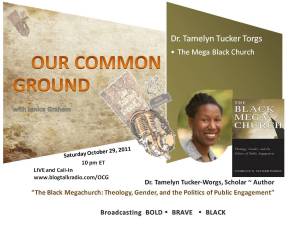


 Raw Story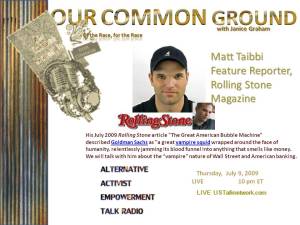




 JONATHAN DANIELS & SAMUEL YOUNGE INSTITUTE



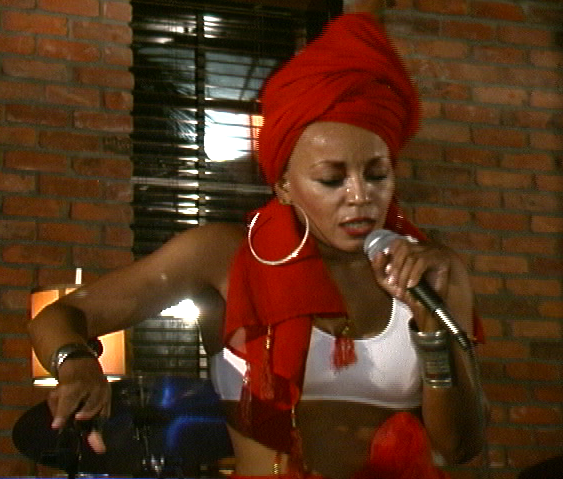


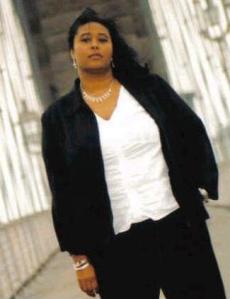


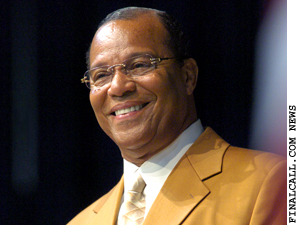 Minister Louis Farrakhan Speaks: Analysis of 2012 and Insights into 2013


 Kulture Kritic is a leading website for socio-political commentary that reflects conscious and liberal viewpoints. Readers tend to be educated and politically conscious, and of various minority groups. Many issues on Kulture Kritic are those that affect the black and latino communities, from education policy to crime, women, and breaking news.
 OCG
OCG 
