Martin Luther King Jr: New documentary on FBI surveillance – BBC News

Martin Luther King Jr: New documentary on FBI surveillanceMartin Luther King Jr: New documentary on FBI surveillance

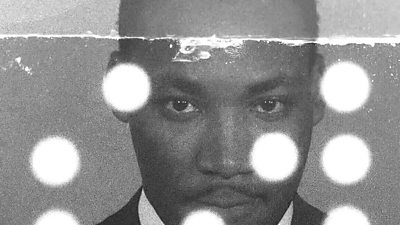
CloseShortly after Dr. Martin Luther King Jr led the march on Washington in 1963, FBI agents were ordered to start following the famed civil rights leader.The extent of the surveillance shocked documentary maker Sam Pollard so much he decided to start digging. He managed to uncover FBI documents, sourced secret White House phone calls, and found long-forgotten footage of King at the peak of his career. With interviews from King’s contemporaries Clarence Jones and Andrew Young and former FBI agents, MLK/FBI paints a picture which, as Pollard tells the BBC’s Alex Stanger, mirrors today’s reality.

Watch preview here:  https://www.bbc.com/news/av-embeds/55620286/vpid/p093xfl2“>

Source: Martin Luther King Jr: New documentary on FBI surveillance – BBC News

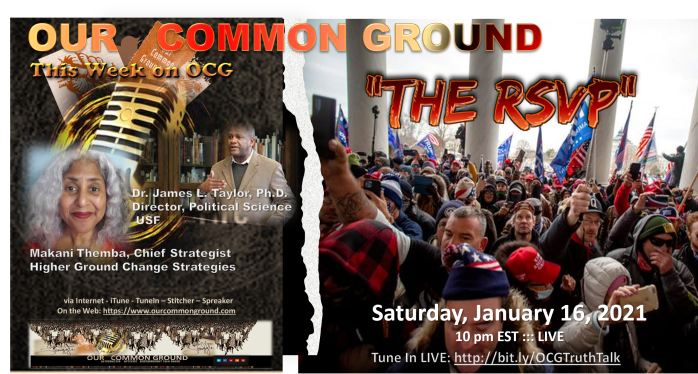
“The RSVP: Invitations to Insurrection” :: This Week OCG :: LIVE Jan-16-21 :: 10 pm EST


“The RSVP: Invitations to Insurrection”

LIVE and Call-In

Saturday, January 16, 2021 ∞ 10 pm EST ∞ LIVE

Tune In LIVE Here: http://bit.ly/OCGTruthTalk

Listen & Call In Line: 347-838-9852


About this Episode of OUR COMMON GROUND

The images from Wednesday’s coup attempt will be seared into people’s memories. Terrorists stormed Capitol Hill and incited a riot that resulted in five deaths, including the killing of a Capitol Police officer who physically engaged with rioters as he attempted to secure the building. The mob of Trump’s supporters endangered the lives of thousands as they flew the Confederate flag – a symbol of racism and violence that did not even enter the halls of Congress during the Civil War. This attempted coup on our democracy comes as no surprise. White nationalist groups have been energized by Trump since he was a presidential candidate.

This nationally coordinated coup attempt revealed highly organized networks of white supremacist organizations, extending beyond the Capitol and into statehouses around the U.S. that have been the target of protests. Unsurprisingly, statehouses in the South – a region with high populations of communities of color – have been particularly targeted. These hate groups, emboldened by the president, pose a direct threat to the lives of millions of Black and Indigenous people, as well as other people of color around the country. They will not go away after President-elect Joe Biden’s inauguration. 

For years, many of the domestic terrorists that breached, attacked, and mobbed the US government have been issued invitations from the highest level of government, including a mob boss President, to be present. Remember Trump’s words, “Stand Back and Stand By” ? On January 6th, they accepted those invitations. We were warned. Black people warned this nation that they were coming. And now, there is a disingenuous apology tour by the very people who sent those invitations requiring an RSVP.

“I’ll Be Listening for You”

Janice

ABOUT OUR GUESTS THIS WEEK

Makani Themba, an OUR COMMON GROUND Voice since 2009.


Makani Themba, Chief Strategist at Higher Ground Change Strategies

Makani Themba is Chief Strategist at Higher Ground Change Strategies based in Jackson, Mississippi. A social justice innovator and pioneer in the field of change communications and narrative strategy, she has spent more than 20 years supporting organizations, coalitions and philanthropic institutions in developing high impact change initiatives.  Higher Ground Change Strategies provides her the opportunity to bring her strong sense of history, social justice and organizing knowledge, and deft movement facilitation skills  in support of change makers seeking to take their work to the next level.  Higher Ground helps partners integrate authentic engagement, systems analysis, change communications and more for powerful, vision-based change.

Previously, Makani served as the founder and executive director of The Praxis Project, a nonprofit organization helping communities use media and policy advocacy to advance health justice.  Under her leadership, The Praxis Project raised more than $20 million for advocacy organizations working in communities of color and provided training and technical assistance to hundreds of organization and public agencies nationwide.  These initiatives include Communities Creating Healthy Environments (C-CHE), an initiative of the Robert Wood Johnson Foundation to support policy advocacy to advance healthy food outlets and safe places to play in communities of color and Building Capacity Building Power, a partnership with Ford Foundation to support grassroots civic engagement and Policy Advocacy on Tobacco and Health (PATH)

Makani is a highly sought-after public speaker, capacity builder, and trusted facilitator.  Her publications have helped set the standard for policy advocacy work and contributed significantly to the field of public health’s current emphasis on media and policy advocacy to address root causes of health problems.  

Makani has published numerous articles and case studies on race, class, media, policy advocacy and public health. She is co-author of Media Advocacy and Public Health: Power for Prevention, a contributor to the volumes We the Media, State of the Race: Creating Our 21st Century, along with many other edited book projects. Makani was chosen as one of “Ten Black Thinkers” asked to comment on Black conditions as part of the NAACP Crisis magazine’s 60th anniversary commemoration of the landmark article What the Negro Wants.  She is author of Making Policy, Making Change, and she has also co-authored with Hunter Cutting Talking the Walk: Communications Guide for Racial Justice and Fair Game: A Strategy Guide for Racial Justice Communications in the Obama Era (under The Praxis Project).

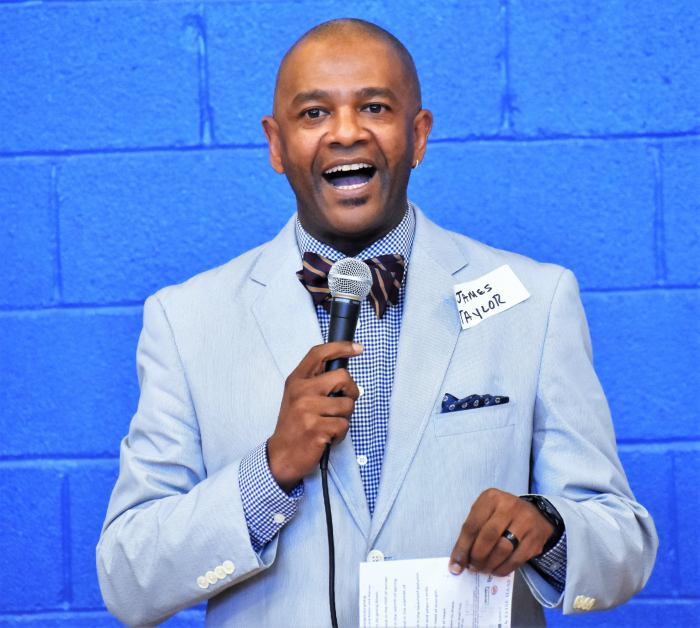
Dr. James Lance Taylor, an OUR COMMON GROUND VOICE

since 2013

Dr. James Lance Taylor, Ph.D.

Professor James Lance Taylor is the Chair of the Department of Politics at the University of San Francisco and is from Glen Cove, Long Island. He is author of the book “Black Nationalism in the United States: From Malcolm X to Barack Obama”, which earned 2012 “Outstanding Academic Title” – Choice: Current Reviews for Academic Libraries. (Ranked top 2 percent of 25,000 books submitted and top 8 percent of 7,300 actually accepted for review by the American Library Association). Rated “Best of the Best.” The hardback version sold out in the U.S. and the paperback version was published in 2014.

He is a former President of the National Conference of Black Political Scientists (NCOBPS), an important organization of African American, African, and Afro Caribbean political scientists in the United States, 2009-2011. Taylor also served as Coordinator of the African American Studies Program for 2015-2017 at the University of San Francisco. He served as the Chair for the “Committee on the Status of Blacks” in Political Science for the American Political Science Association (APSA), 2016-2017.

We Are Not Slaves — An Author’s Response – AAIHS

During a symposium on We Are Not SlavesErnest McMillen, a co-founder of SNCC, Dallas, and an activist for the incarcerated, observed that, “The prison system is a microcosm, a concentration, of what is actually in the whole of society. This idea of going from the universal to the particular, and back to the particular and to the universal, is very important for people to see,” McMillen continued, “because the very forces [of oppression] that are at work concentrated in the prison system, are the same as those at work in our everyday society—from economic exploitation, to racism, to sexism, to untold injustices that we see every day. They are perfected first in the prison system.” This incredibly thoughtful observation is precisely why I wrote We Are Not Slaves.

*This post is part of our online roundtable on Robert T. Chase’s We Are Not Slaves. On Friday, January 15, at 12noon EST, Chase will be in conversation with Talitha LeFlouria about this book. The event is free and open to all. Click here to register for the event. During a symposium on We Are


“Hicks’ poignant conclusion reminds us that the ravages of COVID-19 leave today’s incarcerated peoples especially vulnerable. In a recent discussion with Kinetik Justice, the co-founder of the Free Alabama Movement, he told me that he had been placed in permanent solitary because of his organizing, but was recently relocated. In his words, “it’s obvious that several people in this neighborhood have been exposed to the virus and it’s very probable that the Administration knew that prior to moving me. Could it be coincidence? Lol. Well, it could be.” 2 This twenty-first century punitive cell displacement near a bio-virus harkens back to the disciplinary strategy I uncovered of purposeful cell displacement to generate racial and sexual violence. The disciplinary tools may change, but the strategies remain similar. Hughett’s final point is where I also concluded We Are Not Slaves, ending carceral violence “will require abolishing the prison.” That political project requires resistance against both the prison particular and the universal carceral apparatus and with a broad coalition of people inside and outside of prison.”

Source: We Are Not Slaves — An Author’s Response – AAIHS

“No One Took Us Seriously”: Black Cops Warned About Racist Capitol Police Officers for Years

“No One Took Us Seriously”: Black Cops Warned About Racist Capitol Police Officers for Years

Allegations of racism against the Capitol Police are nothing new: Over 250 Black cops have sued the department since 2001. Some of those former officers now say it’s no surprise white nationalists were able to storm the building.

Creative Commons

U.S. Capitol Police officers scuffle with insurrectionists after they breached security fencing on Jan. 6. (Graeme Sloan/Bloomberg via Getty Images)

ProPublica is a nonprofit newsroom that investigates abuses of power. Sign up to receive our biggest stories as soon as they’re published.

When Kim Dine took over as the new chief of the U.S. Capitol Police in 2012, he knew he had a serious problem.

Since 2001, hundreds of Black officers had sued the department for racial discrimination. They alleged that white officers called Black colleagues slurs like the N-word and that one officer found a hangman’s noose on his locker. White officers were called “huk lovers” or “FOGs” — short for “friends of gangsters” — if they were friendly with their Black colleagues. Black officers faced “unprovoked traffic stops” from fellow Capitol Police officers. One Black officer claimed he heard a colleague say, “Obama monkey, go back to Africa.”

In case after case, agency lawyers denied wrongdoing. But in an interview, Dine said it was clear he had to address the department’s charged racial climate. He said he promoted a Black officer to assistant chief, a first for the agency, and tried to increase diversity by changing the force’s hiring practices. He also said he hired a Black woman to lead a diversity office and created a new disciplinary body within the department, promoting a Black woman to lead it.

“There is a problem with racism in this country, in pretty much every establishment that exists,” said Dine, who left the agency in 2016. “You can always do more in retrospect.”

Whether the Capitol Police managed to root out racist officers will be one of many issues raised as Congress investigates the agency’s failure to prevent a mob of Trump supporters from attacking the Capitol while lawmakers inside voted to formalize the electoral victory of President-elect Joe Biden.

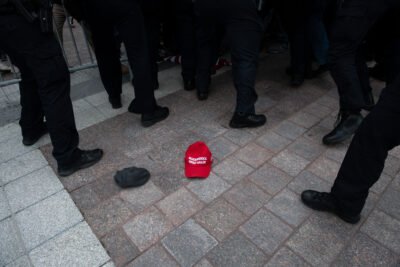
Already, officials have suspended several police officers for possible complicity with insurrectionists, one of whom was pictured waving a Confederate battle flag as he occupied the building. One cop was captured on tape seeming to take selfies with protesters, while another allegedly wore a red “Make America Great Again” hat as he directed protesters around the Capitol building. While many officers were filmed fighting off rioters, at least 12 others are under investigation for possibly assisting them.

Two current Black Capitol Police officers told BuzzFeed News that they were angered by leadership failures that they said put them at risk as racist members of the mob stormed the building. The Capitol Police force is only 29% Black in a city that’s 46% Black. By contrast, as of 2018, 52% of Washington Metropolitan police officers were Black. The Capitol Police are comparable to the Metropolitan force in spending, employing more than 2,300 people and boasting an annual budget of about a half-billion dollars.

The Capitol Police did not immediately respond to questions for this story.

Sharon Blackmon-Malloy, a former Capitol Police officer who was the lead plaintiff in the 2001 discrimination lawsuit filed against the department, said she was not surprised that pro-Trump rioters burst into the Capitol last week.

In her 25 years with the Capitol Police, Blackmon-Malloy spent decades trying to raise the alarm about what she saw as endemic racism within the force, even organizing demonstrations where Black officers would return to the Capitol off-duty, protesting outside the building they usually protect.

The 2001 case, which started with more than 250 plaintiffs, remains pending. As recently as 2016, a Black female officer filed a racial discrimination complaint against the department.

“Nothing ever really was resolved. Congress turned a blind eye to racism on the Hill,” Blackmon-Malloy, who retired as a lieutenant in 2007, told ProPublica. She is now vice president of the U.S. Capitol Black Police Association, which held 16 demonstrations protesting alleged discrimination between 2013 and 2018. “We got Jan. 6 because no one took us seriously.”

Retired Lt. Frank Adams sued the department in 2001 and again in 2012 for racial discrimination. A Black, 20-year veteran of the force, Adams supervised mostly white officers in the patrol division. He told ProPublica he endured or witnessed racism and sexism constantly. He said that before he joined the division, there was a policy he referred to as “meet and greet,” where officers were directed to stop any Black person on the Hill. He also said that in another unit, he once found a cartoon on his desk of a Black man ascending to heaven only to be greeted by a Ku Klux Klan wizard. When he complained to his superior officers, he said he was denied promotions and training opportunities, and suffered other forms of retaliation.

In an interview, he drew a direct line between racism in the Capitol Police and the events that unfolded last week. He blamed Congress for not listening to Black members of the force years ago.

“They only become involved in oversight when it’s in the news cycle,” said Adams, who retired in 2011. “They ignored the racism happening in the department. They ignored the hate.”

The department’s record in other areas of policing have drawn criticism as well.

In 2015, a man landed a gyrocopter on the Capitol lawn — top officials didn’t know the airborne activist was coming until minutes before he touched down. In 2013, when a lone gunman opened fire at the nearby Navy Yard, killing 12 people, the Capitol Police were criticized for standing on the sidelines. The force’s leadership board later determined its actions were justified.

Last month, days after a bloody clash on Dec. 12 between militant Trump supporters and counterprotesters, Melissa Byrne and Chibundu Nnake were entering the Capitol when they saw a strangely dressed man just outside the building, carrying a spear.

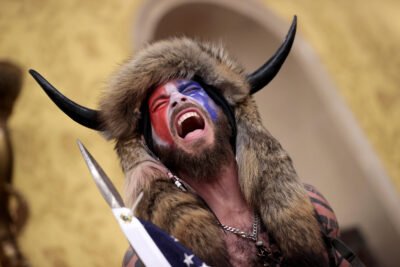
He was a figure they would come to recognize — Jacob Chansley, the QAnon follower in a Viking outfit who was photographed last week shouting from the dais of the Senate chamber.

They alerted the Capitol Police at the time, as the spear seemed to violate the complex’s weapons ban, but officers dismissed their concern, they said.

One officer told them that Chansley had been stopped earlier in the day, but that police “higher ups” had decided not to do anything about him.

We don’t “perceive it as a weapon,” Nnake recalled the officer saying of the spear.

Chansley told the Globe and Mail’s Adrian Morrow that Capitol Police had allowed him in the building on Jan. 6, which would normally include passing through a metal detector, although he was later charged with entering a restricted building without lawful authority, violent entry and disorderly conduct on Capitol grounds. As of Tuesday, he had not yet entered a plea.

QAnon follower Jacob Chansley screams “Freedom” inside the Senate chamber after the Capitol was breached by a mob on Jan. 6. (Win McNamee/Getty Images)

For Byrne and Nnake, their interactions with the “QAnon Shaman” on Dec. 14 highlighted what they perceive as double standards in how the Capitol Police interact with the public.

Like many people who regularly encounter the force, Nnake and Byrne said they were accustomed to Capitol officers enforcing rules aggressively — later that day, Nnake was told that he would be tackled if he tried to advance beyond a certain point. “As a Black man, when I worked on the Hill, if I forgot a badge, I couldn’t get access anywhere,” he told ProPublica.

Congress, which controls the agency and its budget, has a mixed record of oversight. For the most part, Congress has been deferential toward the force, paying attention to its workings only after serious security failures, and even then, failing to meaningfully hold its leaders accountable.

Rep. Eleanor Holmes Norton, a Democrat from D.C. who is a nonvoting member of Congress, told ProPublica she believes a national commission should be formed to investigate what occurred at the Capitol on Jan. 6, similar to what followed 9/11.

“Congress deserves some of the blame,” she told ProPublica. “We have complete control over the Capitol Police. … Long-term concerns with security have been raised, and they’ve not been dealt with in the past.”

The force has also suffered a spate of recent, internal scandals that may prove pertinent as Congress conducts its investigation.

Capitol Police officers accidently left several guns in bathrooms throughout the building in 2015 and 2019; in one instance, the loaded firearm was discovered by a small child.

The agency has been criticized for a lack of transparency for years. Capitol Police communications and documents are not subject to the Freedom of Information Act and, unlike many local law enforcement agencies, it has no external watchdog specifically assigned to investigate and respond to community complaints. The force has not formally addressed the public since the riot last week.

“All law enforcement is opaque,” said Jonathan M. Smith, executive director of the Washington Lawyers’ Committee for Civil Rights and Urban Affairs. “At least most local police departments are subject to some kind of civilian oversight, but federal police agencies are left to operate in the shadows.”

The agency’s past troubles have rarely resulted in reform, critics said.

After the April 2015 gyrocopter incident, Congress held a hearing to examine how 61-year-old postal worker and activist Doug Hughes managed to land his aircraft after he livestreamed his flight. Dozens of reporters and news cameras assembled in front of the Capitol to watch the stunt, which was designed to draw attention to the influence of money in politics. Capitol Police did not learn of the incoming flight until a reporter reached out to them for comment, minutes before Hughes landed.

Dine defended the force’s response to the incident, pointing out that Hughes was promptly arrested and no one was hurt.

Former Rep. Jason Chaffetz, a Republican from Utah, then the chairman of the Committee on Oversight and Government Reform, harshly criticized the department and other federal agencies for what he perceived as an intelligence failure.

“The Capitol Police is terrible and pathetic when it comes to threat assessment,” Chaffetz told ProPublica in an interview. “They have a couple people dedicated to it, but they’re overwhelmed. Which drives me nuts. … It’s not been a priority for leadership, on both sides of the aisle.” He said he is not aware of any serious changes to the force’s intelligence gathering following the debacle.

Norton, who also pressed Dine at the hearing, told ProPublica the intelligence lapses surrounding the gyrocopter landing should be considered a “forerunner” to last week’s riot.

“For weeks, these people had been talking about coming to the Capitol to do as much harm as they can,” Norton said. “Everyone knew it. Except the Capitol Police.” Reports show the force had no contingency plan to deal with an escalation of violence and mayhem at last week’s rally, even though the FBI and the New York Police Department had warned them it could happen.

Law enforcement experts said that the agency is in a difficult position. While it has sole responsibility for protecting the Capitol, it must work with other nearby federal law enforcement agencies, Washington’s Metropolitan Police and the National Guard in case of emergencies.

In an interview, Nick Zotos, a former D.C. National Guard commander who now works for the Department of Homeland Security, said that the roughly two dozen agencies responsible for public safety in Washington can cause territorial disputes, finger-pointing and poor communication.

“This is not a D.C. thing, necessarily, although it’s probably the worst in D.C.,” Zotos said. “Police departments just don’t play with each other nicely.”

Blackmon-Malloy told ProPublica that divisions within the Capitol Police could be just as dangerous, not only for Congress but for Black officers themselves. “Now you got to go to work on the 20th,” she told ProPublica, alluding to the inauguration. “And stand next to someone who you don’t even know if they have your back.”

Dara LindDavid McSwane and Kirsten Berg contributed reporting.

Josh was a Senior Reporting Fellow at ProPublica.

Source: “No One Took Us Seriously”: Black Cops Warned About Racist Capitol Police Officers for Years

Whiteness Is the Greatest Racial Fraud | Boston Review

Whiteness Is the Greatest Racial Fraud

The Krugs and Dolezals dominate the headlines, but they are distractions from the fraud that imperils us all: believing oneself to be white.

LUVELL ANDERSON

Image: Boston Review

What is racial fraud and how is it possible? The answer would be clear enough, perhaps, if race were a biological reality. But the consensus seems to be that race is a social construction, a product of human ingenuity. So why can’t you choose to be any race you want?

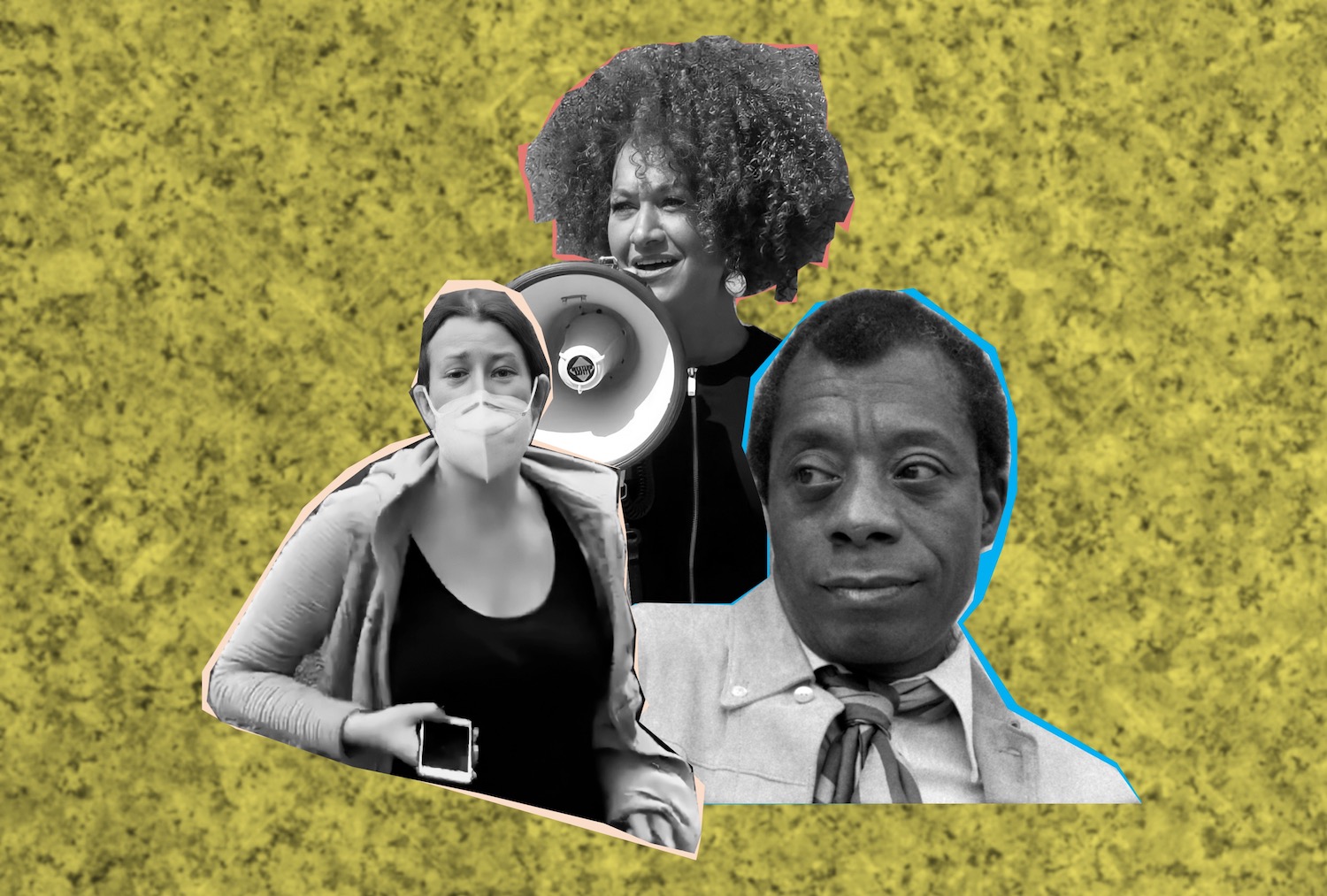
Rachel Dolezal, the former president of the Spokane NAACP who identifies as Black despite being born to white parents, clearly believes we are free to choose our racial identity. Her case would seem to expose the limits of thinking of race as a social construction. If races are social rather than biological, some commentators on Dolezal suggest, we are free to make of them what we will; there are no rules. Yet responses to Dolezal tell a different tale. A 2015 Rasmussen survey of 1,000 likely U.S. voters found that 63 percent believed Dolezal was being deceitful in claiming to be Black: she was engaged in a kind of racial fraud.

The subtlest version of racial fraud—the fraud of whiteness itself—is the one we should be most concerned about, for it is by far the most destructive to our polity.

Is it incoherent to believe both that race is a social construct and that racial fraud is possible? In other words, does endorsing the notion of racial fraud require believing races are biological, after all? Literary scholar Walter Benn Michaels makes this sort of argument in his 1994 essay “The No-Drop Rule,” and versions of that idea endure. Michaels’s claim basically amounts to this: in order for a charge of racial fraud to have any normative power—that is, the kind of authority we generally grant to statements about what we should and should not do—it must rely on the claim that race is an essential, biological part of who we are.

But Michaels is wrong: normative significance does not ride on racial essences. In his 2008 essay “Race, Multiculturalism and Democracy,” philosopher Robert Gooding-Williams explains the error. Following Adrian Piper, Gooding-Williams claims that racial classification is the result of being subjected to a practice that counts one as a member of a particular race. Michaels wrongly assumed that for social constructionists, one’s racial identity is determined solely by visual features. But, at least in the United States, racial identification draws on both visual and cognitive criteria: facial characteristics, hair texture, skin color, ancestry. That is why, Gooding-Williams writes, “someone who would not be classified as black on the basis of visual criteria could still be black because Americans’ conventional (though not universal) adherence to the one-drop rule cognitively identifies her as black.” In saying that Dolezal committed racial fraud, you do not have to believe that race is biological. You simply have to think that the practice of racial classification cognitively identifies her as white. In other words, social construction can be ruled-governed without appealing to biological essence.

What does this tell us about debates over racial fraud today? While people like Dolezal, former George Washington University professor Jessica Krug, graduate student CV Vitolo-Haddad, and activist Satchuel Cole dominate the headlines, there are more subtle forms of this phenomenon to which we should pay attention. The most obvious versions are often easiest to denounce, perhaps because they are more easily detected or recognized. But I think the subtlest version—the fraud of whiteness itself—is the one we should be most concerned about, for it is by far the most destructive to our polity. To understand its stakes, we must see how it differs from two other, more familiar types of racial fraud.

section separator

Perhaps the most familiar type of racial fraud amounts to identity theft. A classic example occurs in the 1986 movie Soul Man, in which the character Mark Watson (played by C. Thomas Howell), a white Californian, poses as a Black man in order to get a scholarship from Harvard Law School. To pull it off, Watson takes tanning pills, perms his hair, learns a few cultural references, essentially donning blackface for the sake of personal gain. He attempts to defraud Harvard and others by misrepresenting himself, the white son of a wealthy psychiatrist, as a Black man.

Racial fraud as identity theft seems to be quite clearly what is happening in cases like that of Krug as well. Krug outed herself as a white woman last fall after having claimed various Black identities over the years. She deceived others by misrepresenting herself as something she isn’t, appropriating the identities of North Africans, African Americans, and finally Bronx-based Afro-Latinx. Krug’s posing took place all while building her career as a scholar working on the history of Africa and the African diaspora. Perhaps she believed doing so would boost her credibility as a scholar.

However, personal gain is only one basis for engaging in this kind of identity theft. Another basis is fetishization. Sometimes a person’s admiration for a group of people can result in a kind of conflation where that person no longer recognizes a distinction between themselves and the group. Arguably, this is what may have happened with Dolezal. Before her true parentage was revealed, part of her identification included claiming a Black man as her father, claiming her adopted Black brothers as her sons, wearing hairstyles typically associated with Black women, and tanning her skin to make it darker. Dolezal continues to identify as Black even after being exposed. This suggests a different motivation from that of the personal gain of things like money or social status.

It is the need to protect the ultimate fraud of whiteness that imperils not only the vulnerable other, but everyone.

Perhaps a clearer instance of fetishization is the case of German model Martina Big. Once a blonde-haired, white-skinned German woman, she has since transitioned into a brown-skinned, black-haired “Black” woman. On her website, she says she changed her ethnicity in 2017 to Black and has changed her legal name to Malaika Kubwa. She also notes that she very much likes her “new African look” and will complete the transformation by changing her facial features to “African” and enlarging her buttocks. Big—along with her husband, Michael Eurwen, who has also been injecting Melanotan to darken his skin—expressed plans to move to Kenya to “be with her ‘people’ and learn how to raise a family in the African way.”

Why should we be concerned with racial identity theft? Engaging in racial fraud for personal gain is wrong because it typically cheats members of marginalized groups out of resources intended to redress historic injustices. Racial fraud motivated by fetishization, however, is more complicated. Dolezal, for instance, was certainly wrong for the lies she told in presenting herself as Black. Big, on the other hand, does not appear to have engaged in such behavior. Her actions appear more pathological than diabolical. Big is also an extreme case. Less extreme cases may provoke more debate about what exactly is at issue. Perhaps the mildest form of these cases falls into a second type of fraud—a certain kind of appropriation.

In her book White Negroes (2019), Lauren Michele Jackson thinks through the stakes of cultural appropriation. She makes clear that the “act of cultural transport is not in itself an ethical dilemma. Appropriation can often be a means of social and political repair.” What matters, in her view, is the combination of cultural appropriation with power: white people profiting from the cultural productions of Black people, all the while denying credit to the originators—resulting in the erasure of Black contributions to society. And as Jackson notes, these kinds of appropriations exacerbate and prolong our society’s inequalities.


Instances of these kinds of erasure are quite widespread. In music, Elvis Presley is a vivid illustration; Jackson alerts us to instances of erasure in the culinary world, too. Hattie B’s Hot Chicken, a white-owned restaurant based in Nashville, has become the embodiment of this distinctively Nashville cuisine. But as it turns out, Black-owned restaurants—Prince’s Hot Chicken Shack and Bolton’s Spicy Chicken and Fish—are responsible for its creation and existence. When the mainstream culinary outlets got wind of it, Prince’s and Bolton’s were all but erased from the picture. What makes both of these cases instances of racial fraud is the consuming of the cultural productions of the group coupled with the erasure of that group’s contribution. Apportioning credit to the Elvises and Hattie B’s of the world rests on a fraud, a fraud perpetrated by the erasure of someone else.

section separator

Beyond these two types of racial fraud, however, there is a third type—less often discussed, but perhaps most consequential—that has to do with one’s relationship to one’s own history. By “history” I don’t mean exclusively, or even primarily, a person’s particular history, but more so corporate or social history: the kind of thing a person is a part of with others in virtue of being identified in a particular way. There are narratives that provide a unified sense of the various happenings to a group of people who evolve over time. But the sense of history I have in mind is slightly different. It is the notion of history found in James Baldwin’s essay “Unnameable Objects, Unspeakable Crimes” (1965):

History, as nearly no one seems to know, is not merely something to be read. And it does not refer merely, or even principally, to the past. On the contrary, the great force of history comes from the fact that we carry it within us, are unconsciously controlled by it in many ways, and history is literally present in all that we do. It could scarcely be otherwise, since it is to history that we owe our frames of reference, our identities, and our aspirations.

The presence of this history in our present, its impact on our frames of reference and identity, is crucial to the third type of racial fraud.

There are at least two versions of this type. The first is exemplified by the incident last year in New York City’s Central Park when Amy Cooper, a white woman, called the police on Christian Cooper, an African American man (no relation, despite the common last name), after he asked her to leash her dog. Amy became more and more irate in response to Christian’s insistence that she leash her dog. She became so upset that she called the police and claimed Christian threatened her, making sure to emphasize that he was “an African American man.” Amy signaled the urgency of the situation in her voice, sounding agitated and fearful.

What preexisting ideas and practices did Amy have available to her to make her think her indignation over being told to leash her dog was a violation worthy of police intervention and to lead her to emphasize the perpetrator was an “African American male”? It is the latter thing that is most revealing. Amy’s inclination to point out Christian’s African American maleness drew—consciously or not—on an understanding of the world as one in which African Americans stand in a particular kind of relationship to white people. Christian was out of line, out of place, in calling Amy’s attention to the park’s rules and insisting she follow them. Given the kind of person she is, as well as the kind of person he is, this was especially egregious.

The basis of white identity is a “lie of their history,” a lie used to justify dominating others.

This understanding of the world presumes a natural relationship of ruler to ruled, reminiscent of the one Aristotle describes in his Politics. To be sure, Amy Cooper and many others would likely deny believing anything like this, but her reflex to act this way hints at something present practically, almost like muscle memory. I think that Amy’s actions can possibly be linked to what Baldwin might say is her belief in being white. In “On Being ‘White’ and Other Lies” (1984), Baldwin details the fraud of those who “believe they are white.” In a powerful passage, Baldwin registers a catalog of the effects of white racial fraud:

Because they think they are white, they do not dare confront the ravage and the lie of their history. Because they think they are white, they cannot allow themselves to be tormented by the suspicion that all men are brothers. Because they think they are white, they are looking for, or bombing into existence, stable populations, cheerful natives and cheap labor. Because they think they are white, they believe, as even no child believes, in the dream of safety. Because they think they are white, however vociferous they may be and however multitudinous, they are as speechless as Lot’s wife—looking backward, changed into a pillar of salt.

Baldwin points out that the “price of the ticket” for Europeans immigrating to the North American continent was to become “white.” What this meant, in essence, was leaving behind their history as English or Spanish or German to forge something different. But this newly forged whiteness was so monstrous that it became necessary to misrepresent it as something else—something grander, superior, innocent.

This kind of racial fraud differs from the others in that those perpetrating it do not attempt to pass themselves off as a member of another race or attempt to pass off as their own the cultural traits or mannerisms of another group. Instead, perpetrators of this fraud commit to something so disturbing that it becomes necessary to hide it even from themselves. The basis of their identity is a “lie of their history,” a lie used to justify dominating others. A stark example of this phenomenon is arguably present in our current political context. The election of figures like Donald Trump reflects, at least in part, the desperation of some to hold onto whiteness. It is as Baldwin noted: “Just so does the white community, as a means of keeping itself white, elect, as they imagine, their political (!) representatives. No nation in the world, including England, is represented by so stunning a pantheon of the relentlessly mediocre.”

A second manifestation of this type of fraud is highlighted in Frantz Fanon’s Black Skins, White Masks (1952). Fanon considers the case of an Antillean who spends time in the French metropole getting educated and then returns to his homeland with a new outlook, one that has him looking down on his fellow Antilleans with disgust:

All colonized people—in other words, people in whom an inferiority complex has taken root, whose local cultural originality has been committed to the grave—position themselves in relation to the civilizing language: i.e., the metropolitan culture. The more the colonized has assimilated the cultural values of the metropolis, the more he will have escaped the bush. The more he rejects his blackness and the bush, the whiter he will become.

The fraud in this instance is in the colonized believing the deceptive history of the colonizer. The colonized Antillean who goes to France for a “civilized” education and believes the terrible lies told about him and his descendants has failed to confront his history honestly and has identified himself with a fraudulent identity. Once again, the basis of this racial identity is a lie, and to behave on the basis of that lie is to perpetrate a fraud.

section separator

The pervasiveness of the third type of racial fraud is a grave problem. Addressing it is much more difficult because it is less detectable, even by its perpetrators. It is not just dyed-in-the-wool racists, confident in their superior racial stock, who are racially fraudulent. The good white liberal is also guilty of this kind of fraud. That is, good white liberals also believe they are white. Amy Cooper’s political contributions to Barack Obama, Pete Buttigieg, and John Kerry suggest she identifies politically as a liberal.

While the Krugs, Dolezals, and Vitolo-Haddads attract all of the media attention, the focus on figuring out what motivates their behavior provides a neat scapegoat on which to load all of our anxieties, fears, misgivings, and disdain. Doing this allows us to avoid confronting turbulent histories that become repressed and, in turn, produce fraudulent identities that become the basis for destructive behavior.

Perhaps the fire James Baldwin foresaw in 1963 will be set by those who have had so much practice setting things ablaze.

Our present is full of such instances of destruction, as is our past. Rosewood, a small Black town in northern Florida, was burned out of existence in 1923 all in the service of protecting whiteness. As the story goes, a white woman, Fannie Taylor, was sexually assaulted, allegedly by a Black man. Sarah Carrier, a Black woman employed as a domestic worker by Taylor, remembered things differently. Carrier and her granddaughter were in the back of the house that day, preparing to wash clothes, when they saw a white man—an engineer who worked on the railroad and rumored paramour of Taylor—enter the house. Taylor and her lover apparently got into a heated argument that became physical. Carrier and her granddaughter both heard the altercation and saw him subsequently run from the house. Taylor then made her way into the street, screaming that she had been attacked by a Black man. What ensued was a rampage that resulted in the burning of the town and the lynching of several residents. (Estimates of how many were killed vary, with an official death toll of 8 but claims of up to 200.)

The massacre at Rosewood was made possible by the belief of so many that they were white. The need to protect “the purity of the white woman” from the advances of the ravenous Black man was a pretense used to lynch countless numbers of people. The belief in an identity boasting purity and superiority instigated murderous behavior that has created and sustained various inequalities in our land till this day. As we saw last week, when hundreds of white Trump supporters staged a violent insurrection at the U.S. Capitol, it is the need to protect this fraud at all costs—the ultimate fraud of whiteness—that imperils not only the vulnerable other, but everyone. What happens when reality comes crashing down and the fraudsters realize the scam cannot be maintained? In 1963 Baldwin spoke of the fire to come if America did not heed the warning of the oppressed and turn from its wicked ways. Perhaps the fire Baldwin foresaw will instead be set by those who have had so much practice setting things ablaze.

Source: Whiteness Is the Greatest Racial Fraud | Boston Review

Once again, job losses fall unequally across the US economy

WASHINGTON (AP) — Ten months into America’s viral outbreak, low-income workers are still bearing the brunt of job losses — an unusual and harsh feature of the pandemic recession that flattened the economy last spring.

In December, the nation shed jobs for the first time since April. Once again, the layoffs were heavily concentrated in the industries that have suffered most because they involve the kind of face-to-face contact that is now nearly impossible: Restaurants, bars and hotels, theaters, sports arenas and concert halls.

With the virus transforming consumer spending habits, economists believe some portion of these service jobs won’t return even after the economy has regained its footing. That trend will likely further widen the economic inequalities that have left millions of families unable to buy food or pay rent.

Typically in a recession, layoffs strike a broad array of industries — both those that employ higher- and middle-income workers and those with lower-paid staff — as anxious consumers slash spending. Economists had worried that the same trend would emerge this time.

Instead, much of the rest of the economy is healing, if slowly and fitfully. Factories, while not fully recovered, are cranking out goods and have added jobs every month since May. Home sales have soared 26% from a year ago, fueled by affluent people able to work from home who are looking for more space. That trend has, in turn, bolstered higher-paying jobs in banking, insurance and real estate.

“Such differences in … employment loss between the highest- and lowest-wage workers are almost certainly unprecedented among U.S. recessions over the past 100-plus years,” Brad Hershbein, an economist at the Upjohn Institute for Employment Research, and Harry Holzer, an economist at Georgetown University, concluded in a new research paper.

On the surface, the December jobs report the government issued Friday was dismal: The economy lost 140,000 jobs. It was the sixth straight month in which hiring has slumped from the previous month. Unemployment remained stuck at a still-high 6.7%.

But the negative number stemmed entirely from a brutal loss — nearly 500,000 jobs — in a category that includes restaurants, bars, hotels, casinos and entertainment.

State and local governments also cut workers. So did hair salons and other personal services. There were layoffs, too, in education.

More at Source: Once again, job losses fall unequally across the US economy

How Lawmakers Failed Jacob Blake – Mother Jones


How Lawmakers Failed Jacob Blake

The decision not to charge the officer who shot him stems in part from weak legislation.

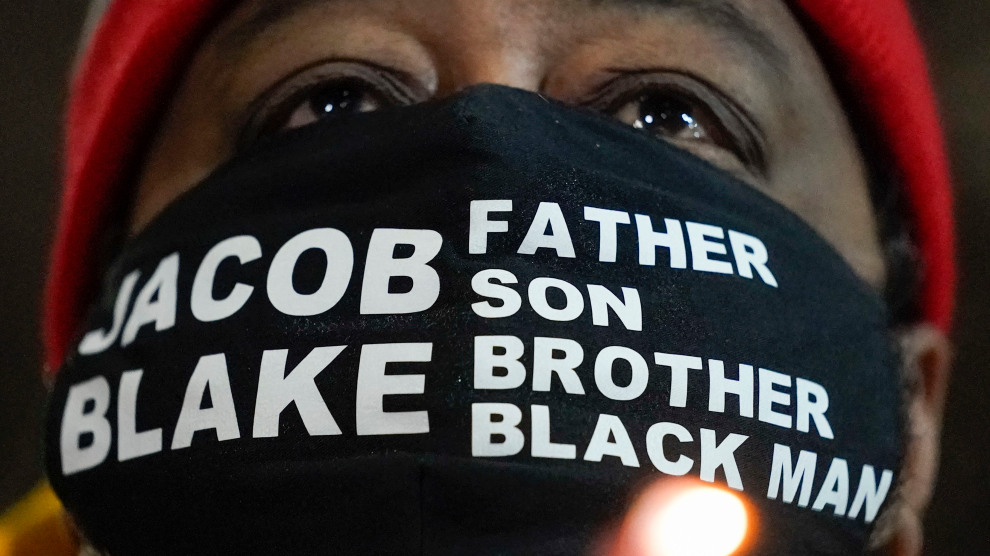
Jacob Blake Sr., father of Jacob Blake, holds a candle at a rally Monday in Kenosha.Morry Gash/AP

Let our journalists help you make sense of the noise: Subscribe to the Mother Jones Daily newsletter and get a recap of news that matters.

Jacob Blake, paralyzed and still suffering from injuries, got a phone call on Tuesday afternoon from Kenosha District Attorney Michael Graveley with some news: There would be no charges filed against the police officer who shot Blake seven times in August, sparking massive protests in the city.

“Based on the facts and the law, I have decided not to issue criminal charges against Officer Sheskey, Officer Meronek, or Officer Arenas. This decision was by no means easy,” Graveley wrote in a report published later that day. In a press conference, he described the shooting as a “tragedy.”

The video of the shooting has been viewed by millions of people, and is difficult to watch: Blake, who is Black, walks toward the driver’s side of a parked car in a residential Kenosha neighborhood, with his children in the back seat. A white officer, Rusten Sheskey, follows behind him with a gun drawn. As Blake approaches the door, Sheskey grabs him by the shirt and then fires his weapon.

It can be hard to imagine how Sheskey’s actions wouldn’t warrant criminal charges, even considering the blatant racism of our criminal justice system. But District Attorney Graveley, in a roughly two-hour press conference, argued that pressing charges would be unethical because, given the state’s law about when officers can use force, there was no way he could win at court

Even after atrocious policing, even after a man is paralyzed, use-of-force laws around the country often make it very, very difficult to punish cops. In Wisconsin and most states, police can legally fire their weapons against someone if they have “reasonable” fear the person will otherwise gravely harm them or someone in the vicinity. And here’s the kicker: The law usually says police officers get to define what’s reasonable.

At the press conference, Graveley explained why police could successfully argue that Sheskey’s decision to shoot was reasonable under the circumstances, using evidence not visible in the viral video most of the country watched.

According to Graveley, the police had reason to be nervous off the bat: Three officers were called to the scene by Laquisha Booker, the mother of Blake’s children, who told a 911 dispatcher that Blake had grabbed the keys to her rental car and was trying to take their kids away from her, according to a recording of the call played at the press conference. The officers knew that Blake had a felony warrant for alleged domestic abuse and sexual assault. When they arrived at the scene and tried to arrest him, a physical confrontation ensued—Blake says the officers punched him and dragged him to the ground, and the officers say he resisted their orders. At one point during the struggle, Blake was on top of Sheskey on the ground, according to a second video. Officers tried to stun him with a taser, but he tore the prongs out.

In the video footage, it looks like Sheskey then shot Blake seven times in the back. But according to the district attorney, two police officers and citizen witnesses told investigators that before the shooting began, Blake started turning toward Sheskey and made a motion with his knife hand; this allegation couldn’t be confirmed in the video because the camera view was obstructed by the car door and another officer. A medical examiner later concluded that Blake was shot four times in the back but also three times on his left side, adding some corroboration to the allegation that he turned.

Ray, the independent police expert, concluded it was reasonable for Sheskey to fear that Blake was trying to stab him at that time. Blake denies this allegation and says he was simply trying to put the knife back into the car. “They didn’t have to shoot me like that,” he said in a statement later, published in the district attorney’s report. “I was just trying to leave and he had options to shoot my tires and even punch me, tase me again, hit me with the night stick.”

If you asked many people on the street, they’d probably say it’s unreasonable for a cop to follow behind a man who is walking away, grab him by the shirt, and proceed to fire multiple shots into him at close range while his children watch from the back seat. But our laws are set up so that it doesn’t really matter what most people think: It matters what a police officer decides is a reasonable fear. And in a racist society where Black people are too often viewed as threats, police will almost always be able to come up with some justification for why they were afraid and believed they had to shoot.

Prosecuting cases like this will require states to change their use-of-force laws, so that officers don’t have so much power to define what’s reasonable. Until that happens, law enforcement will regularly get away with shooting people, including those sleeping in a car or at home on a couch, when it might have been possible to deescalate the situation instead. Officers continue to get away with violence because it’s not very hard to come up with a reason why they thought someone would harm them, especially when the law doesn’t require them to prove that they were correct or that the person was actually a threat. “Without any new rules from the legislature, we’re going to have this problem again and again,” says Farhang Heydari executive director of the Policing Project at the NYU School of Law. “We saw it in Breonna Taylor’s case, Eric Garner’s case, with Tamir Rice. It will happen over and over again until legislators step up and enact clear rules around force.”

It’s possible to change these use-of-force laws, which often differ from state to state and even city to city. California recently amended its statute so that an officer can only legally shoot if it’s “necessary,” rather than “reasonable,” to protect against an imminent threat of death or serious injury. But even there, it’s hard to predict whether the statute will bring justice after future police shootings, because California lawmakers didn’t define what “necessary” means in the law, again potentially leaving some room for discretion among police officers.

More than half of states considered legislation last year dealing at least in some way with police use of force, and at least several focused on deadly force. But many of the bills didn’t go as far as some criminal justice reform activists would hope. Delaware’s attorney general has pushed to reform her state’s law, but her proposed changes wouldn’t even go as far as California’s did: Delaware’s statute currently allows deadly force if an officer believes he or she is in danger. The attorney general wants to reform the law merely to specify that it must be a “reasonable” belief—which brings us back to the problem in Wisconsin and many other states.

The Policing Project’s Heydari recommends that new laws require officers to take deescalative steps, and to only use force as a last resort, limiting the types of response depending on the situation. Fair and Just Prosecution, an advocacy group that works with district attorneys, recommends a ban on deadly force against suspects who are fleeing.

Under the Biden administration, the federal government could step in to encourage these changes. The Justice Department, which may soon be led by US Circuit Judge Merrick Garland, Joe Biden’s nominee for attorney general, could set a national guidance on when it’s acceptable for officers to use lethal force. The agency or Congress could also require states to follow this guidance in order to receive federal funding for training or other programs. Biden’s pick to head the Justice Department’s Civil Rights Division, Kristen Clarke of the National Lawyers’ Committee for Civil Rights Under Law, formerly prosecuted police brutality at the department. She supports efforts to scale back law enforcement and invest more in social services, and has encouraged the federal government to stop funding agencies with a long history of violence and racism.

In terms of Blake’s case, federal prosecutors at the Justice Department and a US attorney’s office are now conducting a civil rights investigation and could later decide to bring federal charges. The Justice Department could also launch an investigation into the Kenosha Police Department and push for a consent decree that would require reforms.

“Now our battle must go in front of the Congress, it must go in front of the Senate,” Blake’s father, Jacob Blake Sr., told reporters Tuesday after the district attorney’s decision not to file charges locally. One of Blake’s attorneys, Benjamin Crump, said they would press forward with a civil rights lawsuit. “It is now our duty to broaden the fight for justice on behalf of Jacob and the countless other Black men and women who are victims of racial injustice and police brutality in this country,” he said in a statement.

“We’re going to talk with the Speaker of the House, Speaker of the Senate,” Blake Sr. added. “We’re going to change some laws. Some laws have to be reckoned.”

How to Abolish the Police, According to Josie Duffy Rice | Vanity Fair

Long before the internet caught wind of him, Henry Earl was already a local legend. By the time the Charleston Gazette dubbed him a “cult-status hero” and Newsweek called him the “town drunk,” Earl was already known around Lexington, Kentucky, as James Brown. He liked to dance, and he’d do a few moves in exchange for a couple bucks, money which he’d usually promptly spend on alcohol.

Earl was born in the Jim Crow South and adopted at age seven. Drinking was a habit he picked up as a teenager after his mother died, one he never could quite shake. By age 19 he was homeless, and by 20 he’d been arrested for the first time. That was back in 1970. Over the next several decades, Earl was arrested more than 1,500 times, almost always for alcohol intoxication. This is how he became known as the World’s Most Arrested Man. Over the years, he spent a total of more than 16 years in jail, usually in couple-day spurts. He was never once charged with violence or theft. “I like to drink,” he said once. “Alcoholic, that’s what I am. Every police knows me on the force. They see me drunk; they pick me up; I get five days.”

For almost 50 years, this was Earl’s life. No home, no family, just alcohol and jail. He was a regular at the local bar scene, known for sometimes overstaying his welcome. The locals would see him at house parties sometimes; he’d go for the free beer. He tried court-mandated rehab a few times, but it didn’t stick. “It’s a weekly, if not every-two-or-three-days thing,” said a police spokesperson in 2013. “He’s never doing bad or illegal things purposely…. He’s just so highly intoxicated that he’s posing a danger to himself.”

Interest in Earl peaked a few years back, with websites dedicated to his mug shots that amusedly tracked his arrests. Late-night TV cracked jokes at his expense. National outlets ran stories on him. Around town, people called him harmless and happy, a “lovable loser.” But there were times Earl saw it differently. “It’s a sad life, it ain’t worth a dog,” he said in 2003, tearing up. “I got more sense than some people think I do. I’ve seen what it’s doing. It is ruining my life.”

Last year Attorney General William Barr addressed the Fraternal Order of Police’s biennial conference. “[W]hat stands between chaos and carnage on the one hand, and the civilized and tranquil society we all yearn for,” Barr told his audience “is the thin blue line of law enforcement.” Barr is a right-wing Republican who has for years advocated for a harsher and more robust police state. But his proclamation reflected a deeply held idea in American politics—that police are essential to an ordered and just country. Barr’s worldview is time-honored and bipartisan. Democratic presidential nominee Joe Biden might not be the same politician he was when he championed the 1994 crime bill, but his belief in the necessity of American policing—Biden proposes to pump $300 million in federal dollars to the police—has not changed. And it’s not just politicians who proselytize the necessity of policing. Boilerplate TV procedurals, true-crime podcasts, and the evening news sell us a world where the police, beleaguered and badgered, are ultimately all that stands between those of us who wish to live in society and the others who would choose savagery.

This is a myth. Despite much reporting of a spike in murder this year, the long-term trend still shows the murder rate hovering roughly in the same place it was in the 1960s, half of what it was in 1980. And while procedurals may paint a picture of cops chasing serial killers weekly, the actual face of police is more mundane. In June, the New York Times culled available data and estimated that police spend roughly 4 percent of their time addressing “violent crime.” Most of their time is spent dealing with noncriminal matters. And yet no matter the call—the loud party next door, the permit for a parade, the expired car tags, the escort for a funeral procession, the elderly welfare check, the frolickers barbecuing in the park, the schoolyard fight, the opioid overdose, the homeless person outside in the cold, the stray dog—the state’s answer is to respond with armed agents blessed with the near unimpeachable right to kill. The impact is not theoretical. After James Smith noticed the door of his neighbor’s home was open and the lights were on, Smith called the police, hoping an officer would conduct “a wellness check” on his neighbor. Instead, Officer Aaron Dean shot and killed Atatiana Jefferson in her own home as she played video games with her young nephew. Smith was left to draw a grim conclusion. “We don’t have a relationship with the police because we don’t trust the police,” Smith recently told the BBC.

Even the impact of policing on violent crime is debatable. “We are fighting an unrelenting, never-ending fight against criminal predators in our society,” Barr claimed at the FOP conference in New Orleans. But the “never-ending fight” in the very city in which Barr was speaking is not going well. New Orleans has the fourth highest murder rate in the nation but clears only 35 percent of homicide cases. In 2018, the city’s police cleared only 2 percent of all rapes. The country at large isn’t much better. Last year, the Washington Post launched an investigation into murder clearance rates in 50 cities over the course of 10 years. The results were bracing. “Despite a nationwide drop in violence to historic lows,” the Post reported, “34 of the 50 cities have a lower homicide arrest rate than a decade ago.” In St. Louis, during the period the Post studied, it calculated that 54 percent of all homicides resulted in no arrest. In Baltimore, during the period it studied, the Post calculated that only 35 percent of all homicides resulted in an arrest. In Chicago the rate was 26 percent. The “line” isn’t just thin and blue—it’s porous and arbitrary.

One argument for policing holds that while police may not solve much violent crime, their very presence helps ensure safety. In a survey of research, the National Institute of Justice concludes that “hot spot policing” was “associated with reductions in violent crime relative to control areas.” What is “hot spot policing”? According to the survey, it includes “order maintenance and drug enforcement crackdowns, increased gun searches and seizures and zero tolerance policing.” This isn’t just a list of policing tactics; it’s a list of prerequisites for the present moment. For “order maintenance,” Eric Garner was suffocated on a New York sidewalk. For “drug enforcement crackdowns,” Breonna Taylor was killed in her own home. For “gun search and seizure,” the Black neighborhoods of New York endured Stop and Frisk. For “zero tolerance policing,” George Floyd was choked on a Minneapolis street.

It would be at least honest if we said that enduring arbitrary harassing, beating, tasing, and strangulation by the state was the price of being “associated with reduction in violent crime relative to control areas.” That we don’t say this, and that we only imply it for certain classes of people, exposes the assumptions built into American policing. It’s those assumptions that, on the one hand, allow Henry Earl to be arrested more than a thousand times, and on the other offer a sporting chance for anyone who’d like to try their hand at murder or rape. Policing accomplishes this dubious feat by imposing costs on innocent people who happen to live in proximity to crime, and others who simply happen to resemble in skin color those we think of as criminal. This is a system begging for reform, and the best way to reform an institution as compromised as American policing is by abolishing it.

It is impossible to imagine American policing without the institution foundational to America itself—enslavement. Indeed, from colonial times up through the Civil War, the largest police force in the country wasn’t primarily found in the early towns or the bustling metropolises, but in the slave societies of the South, where to be a white man was to be deputized. Enslavement, where the enslaver is both the maker and enforcer of law, was the first experience of policing for Black people. But through the invention of slave patrols, militias charged with enforcing the law against the enslaved, the policing powers were expanded. “All white persons were permitted and in some regards required to exercise a police power over slaves,” the white supremacist historian U.B. Phillips noted. In many states, white people were not only allowed but required to whip, capture, and jail enslaved people they encountered. They had a mandate to “prevent all caballings amongst negros [sic], by dispersing of them when drumming or playing,” meaning they could punish any enslaved people for simply interacting with each other. The patrollers operated, as one of their number put it, “without warrant and at my own discretion.” The shadows of American policing are here—in the prisons, we find the absolute mastery once enjoyed by the planter class; in the wide discrepancy granted the slave patrol, one sees the echoes of broken windows policing; and the bodies of Trayvon Martin and Ahmaud Arbery reflect the extension of police powers far beyond official police.

Slave patrols were born of the propertied interests of white people seeking to maximally exploit Black labor, an endeavor that did not fade with emancipation. In many ways, it was reinforced. Planters may no longer have owned their labor force, but that didn’t stop them from seeking out means of preventing the formerly enslaved from freely selling their labor. Policing was key to this effort, which saw control lost through slavery regained through a panoply of laws that threatened arrest for everything from not having an annual work contract to “malicious mischief” and criminalized “persons who led idle or disorderly lives.” Depending on the state, the arresting officers could consist of urban police, militias drawn from former Confederate soldiers, or merely any white man. While there was a brief reprieve during Reconstruction, after federal troops departed the South in 1877, white Southerners employed policing to ensure a permanent and pliable source of labor. When Blacks tried to go north for jobs during the Great Migration, “the South resorted to coercion and interception worthy of the Soviet Union,” writes Isabel Wilkerson in The Warmth of Other Suns. “In Brookhaven, Mississippi, authorities stopped a train with 50 colored migrants on it and sidetracked it for three days. In Albany, Georgia, the police tore up tickets of colored passengers as they stood, waiting to board, dashing their hopes of escape. A minister in South Carolina, having seen his parishioners off, was arrested at the station on the charge of helping colored people get out.”

It is tempting to think the Northern police departments unsullied by white supremacy. The assumption would be wrong. Throughout the entirety of Jim Crow, Northern police often parroted their Southern counterparts. “From the moment the emigrants set foot in the North and West,” writes Wilkerson, “they were blamed for the troubles of the cities they fled to.” Indeed, police departments took the cue and regarded Blacks much as the broader society had—as outcasts and threats. In 1917, in East St. Louis, Illinois, white workers angered by Blacks brought in to replace them during a strike rioted and “fired shots into colored homes,” writes Wilkerson. “The police, charged with quelling the riot, in some cases joined in, as did some in the state militia.” In 1943, during the Detroit race riot, “Police openly sympathized with the white rioters,” writes historian Thomas J. Sugrue; “17 blacks were shot to death by the police, no whites were.” Ten years later, as Black families tried to integrate Chicago’s Trumbull Park Homes, they were granted minimal protection from the police who sympathized with the whites who terrorized the families. Still, the greatest indicator of the role law enforcement in the North played in suppressing their Black populations lay in the prison population. Even in an era of relatively low incarceration, the rate in the Northern cities stood at seven to one—exactly the same as today.

That the police were not concerned with neutrality nor “law enforcement” was always clear to Black people. In 1967, after a series of riots, President Lyndon Johnson convened the Kerner Commission to report on the riot’s origins and recommend a series of reforms. Read today, the report is bracing for a haunting quality—its timelessness. Just like the countless commissions that have followed it, the Kerner Commission found a police department with too many responsibilities, filling in for the defunding and decline of societal institutions. Just as today, the Kerner Commission found Black communities complaining of “stop and frisk” tactics. And then, as now, voices of authority blamed police violence on the inherent pathologies of the Black population instead of the learned brutality of the police. Among the commission’s recommendations: an intolerance for police brutality, “a clear and enforced policy…of law enforcement in ghetto areas as is the same as in other communities,” and eliminating a focus on smaller crimes such as “gambling or loitering” in favor of crimes that threaten “life and property.” After the report was published, it became a best seller, but Johnson quickly scuttled it, and the era of “law and order” commenced.

It is common to note, as the Kerner report does, that Black communities frequently complain of crime right alongside police brutality. This is not surprising. Black communities are on every level less safe than white communities. And yet it is curious the ease with which police, who never fail to note this safety gap, abandon these vulnerable neighborhoods. Calls for accountability are often met with indignance and threats to desert those most affected by crime. The practice of officers, at the slightest sign of public critique, calling in sick en masse and refusing to do their jobs has long been called “blue flu.”

At times, retaliation is even uglier. After becoming the New York City’s first Black mayor in 1990, David Dinkins angered the union by calling for police reform. The response was open defiance of the law. Police officers derided Dinkins as a “janitor” and a crack addict, drank openly, blocked traffic, and assaulted journalists. A photographer seeking the protection of a lieutenant after being assaulted by an officer was essentially told to flee. “I can’t protect you up here,” the lieutenant said. In 2011, after the NYPD was investigated for corruption, officers again rallied at the courthouse, blocking the cameras of journalists, mocking poor people by chanting “EBT” at people attempting to collect their benefits. In 2014, in the midst of a conflict with Mayor Bill de Blasio, the NYPD largely stopped policing, at the behest of the union.

This is all very strange behavior for a group which takes an oath “to serve and protect.” But policing is often revealed to be about something muddier. In June, the Times asked Chicago mayor Lori Lightfoot her opinion on the effort to “defund the police.” Lightfoot, a former prosecutor, didn’t even bother to defend her department—probably because a department with a history of torture, black sites, framing innocent people, and child killing is not easily defensible. Instead Lightfoot seemingly deflected to the lack of opportunity for Black and brown people in Chicago. Defunding “means you are eliminating one of the few tools that the city has to create middle class incomes for Black and brown folks.” That America’s second largest police department can only be defended as a kind of violent jobs program is a clear indictment of policing as an act of public safety. Furthermore, the fact that policing is one of the few tools available to bolster a racially diverse middle class is yet another indicator that police have far too much responsibility.

But America has never truly had a system of “public safety,” if only because Black “safety” has historically been imagined as being secured by more policing, whereas white “safety” is ensured by altogether different means. America does not flood the dorms of Harvard with cops because they are areas of “known drug activity.” It does not station armed officers in the cubicles of Wells Fargo. The white parents of Westchester do not generally have to subject their teenagers to The Talk. White safety, itself built on a foundation of enslavement and segregation, is ensured through familial wealth, home ownership, well-funded public schools, stable employment, and health care. Black safety is ensured by “zero tolerance policing” and “stop and frisk.” White safety is cancer prevention. Black safety is all-day chemotherapy.

Abolition seeks to eradicate this Jim Crow system of public safety—not merely a two-tiered system, but a system where one tier benefits by extracting from the other. To “reform” policing, to subject it to bias training of dubious import, to push for the return to an illusory past where Officer Friendly provided sanctuary, is to attempt to patch up the more nefarious features of a system that should be obsolete. Without the history of policies and practices that make up white supremacy, without enslavement and slave patrols, without black codes and miscegenation laws, without poll taxes and courthouse lynchings, without redlining and housing segregation, without mass incarceration, policing as we know it would not exist.

The outlines of the possible are already upon us. Defunding the police—divesting money from the back-end solution of policing and investing it on the front end—is a first step along the path. To meet the very real concerns about neighborhood violence, we could look to preventative programs like Cure Violence and Save Our Streets in cities like New York. These organizations view gun violence as a public health question rather than evidence of community moral rot. Both have been able to successfully reduce and prevent gun violence without inflicting more violence on communities they claim to protect.

Nowhere is the extra layer of unnecessary violence more reflected than in our insistence on sending men with guns to resolve mental health crises. In Eugene, Oregon, CAHOOTS, a crisis intervention program, was able to respond to 20 percent of the area’s 911 calls last year. Through the program, teams of medics and experienced mental health professionals are dispatched to handle certain emergencies instead of the police. For people suffering from mental health crises, addiction, and homelessness, introducing law enforcement in moments of desperation is an invitation for disaster. CAHOOTS reduces the risk of unnecessary violence and criminalization.

And removing police from our long and futile war against drug abuse is essential to abolition. This requires us to consider the role of harm reduction, rather than abstinence, as a possible avenue toward reducing the associated drug use. This solution is not theoretical. In countries such as Norway, Germany, and Canada, drug users can go to a safe injection site and use in regulated, medically supervised, and sanitary conditions. These facilities avoid relying on the stigma and shame that trails many of those suffering from addiction. And it works. When people have access to a safe environment for drug use, they are more likely to seek treatment on their own.

Abolition looks like justice for domestic violence and sexual assault survivors. According to RAINN, for every 1,000 sexual assaults, only about 230 are reported to law enforcement. Of those, less than five result in incarceration. In other words, 75 percent of sexual assaults go unreported and 99 percent go unpunished. Policing does not protect women from sexual assault, it facilitates it. Prison sexual violence, not only at the hands of other incarcerated people but also from correctional officers, is a persistent problem across the gender spectrum, including the thousands of juveniles housed in adult prisons. In place of our current system, abolition envisions providing domestic abuse survivors with crisis counselors and violence intervention teams trained to specifically navigate intimate relationships, available at a moment’s notice. What would a future look like for rape survivors if there were professionals or organizations that could provide not just physical safety but mental, emotional, and financial resources as well?

But more than an array of solutions to discrete, isolated issues, abolition envisions something more fundamental—entirely different values. A world where the resources put into not just policing but our robust system of prisons and jails is invested in the people to eventually render the present justice system obsolete. This is a world focused on the reduction of violence and harm. Certainly you would still need professionals responsible with holding accountable those who violate the social contract in the extreme—rape or murder—and an improved investigative system to catch the perpetrators. But even in that case, ensuring society’s protection should look very different. Even in the most extreme circumstances, it would demand an end to the conflation of public safety with public vengeance. Removing someone from society to stop them from enacting violence does not require subjecting someone to the current prison system, where solitary confinement, assault, sickness, torture, and rape are par for the course.

This is the world I imagine when I picture what I want for my children—a world where social consequences are weighted along with criminal consequences, where incapacitation is not conflated with torture, and murder and rape are taken so seriously that we do all we can to prevent either from happening in the first place. But ultimately abolition is not about a suite of options imposed by someone else—even me. The promise of abolition is the promise of democracy itself—one long denied Black people: the promise inherent in constructing an order of public safety originating in the needs and desires of a community, and not those who have, for so long, exploited them.

MORE STORIES FROM V.F.

— Ta-Nehisi Coates Guest-Edits THE GREAT FIRE, a Special Issue
— Breonna Taylor’s Beautiful Life, in the Words of Her Mother
— An Oral History of the Protest Movement’s First Days
— Celebrating 22 Activists and Visionaries on the Forefront of Change
— Novelist Jesmyn Ward on Witnessing Death Through a Pandemic and Protests
— Angela Davis and Ava DuVernay on Black Lives Matter
— How America’s Brotherhood of Police Officers Stifles Reform

Source: How to Abolish the Police, According to Josie Duffy Rice | Vanity Fair

“White Collar Crime: How Whiteness Presides” ∴ Jennifer Taub, Esq. ∴ Author, “Big Dirty Money” ∴ January 23, 2021 ∴ 10 pm EST


“White Collar Crime: How Whiteness Presides”

We all witnessed how whiteness protects white criminals at the nation’s Capitol Building and in DC. Law enforcement and the judiciary operate from principles that are formed from the public perspective of who should be arrested, charged, and prosecuted. For this reason, 100s of criminals were able to break the law and breach the building, and will not face the consequences. We all know what Black people would have faced under the same circumstances. Whiteness is a protection.   – Janice

In a controversial 1975 article, titled “White Racism, Black Crime, and American Justice,” criminologist Robert Staples argued that discrimination pervades the justice system. He said the legal system was made by white men to protect white interests and keep Blacks down. (At the time this was received as “outlandish and untrue”). Staples charged that the system was characterized by second-rate legal help for Black defendants, biased jurors, and judges who discriminate in sentencing. No matter, study after study demonstrates how extreme racial disparities address for Blacks in the judicial system, no matter the income strata or available resources.

Unwarranted disparity is defined as different treatment of individual offenders who are similar in relevant ways, or similar treatment of individual offenders who differ in characteristics that are relevant to the purposes of charging and sentencing. Whiteness is honored, it is protected and it blinds much of the judicial process. We can no longer deny, racial disparities exist because the system protects whiteness for the most part. It is clear that in sentencing especially, “departure” from the guidelines is reserved for mostly whites, and rarely extended to Blacks. Fair sentencing is individualized sentencing and it is mostly decided by people who value whiteness, having a value system of what crimes are punishable with distinct stereotyping of criminals.

Our guest, Professor Jennifer Taub, in her book, “Big Dirty Money” suggests we first attempt to measure white-collar crime as a whole. Then we need to measure the harm to victims in terms that go beyond the economic costs. She points out that “The wealthy have the resources either to exert political influence or become lawmakers themselves”. But Taub explicitly and persuasively places the breakdown of enforcement and accountability in the context of money and class.

What happens when a group of wealthy bankers fraudulently bring foreclosures on an entire class of people, as they did after the crash of 2008? Unlike a loss of, say, $210, the loss of a person’s home affects their life and well-being in ways that cannot be assigned a dollar amount. Thousands of people have spent the years since the recession uprooted from their communities. Taub posits that “the elite class had the power to define what was criminal.”

What happens when the President of the United States pardons criminals who have violated security, foreign interference, sedition, and treason laws? Trump is a stark illustration of why so few wealthy malefactors are held accountable. Like other members of the .01 percent, he can act with seeming impunity, able to buy or influence his way out of trouble. He empathizes with rich people who run afoul of the law. He minimizes their guilt, suggesting white-collar crimes aren’t really crimes, especially when the accused are white men, as the vast majority of all rich white-collar criminals are. Yet Trump is a symptom, not the cause. What happens when white politicians create laws to intentionally suppress and violate voters? How can we measure the social and political costs of mass dispossession because the defendant and violator are protected by a cloud of whiteness?

We will talk with Professor Taub who clearly articulates in her book, the cause and effect of white-collar crime “blinded by the whiteness” that plagues the judicial system. Leaving white-crime bosses to their devices operated by their money and “white card”.   

ABOUT Jennifer Taub, Esq.

Jennifer Taub is a legal scholar and advocate, devoted to making complex business law topics engaging inside and outside of the classroom. Her research and writing focuses on corporate governance, banking and financial market regulation, and white collar crime. Similarly, her advocacy centers on “follow the money” matters  –– promoting transparency and opposing corruption.

Her newest book is, Big Dirty Money: The Shocking Injustice and Unseen Cost of White Collar Crime (Viking). Taub was a co-founder and organizer of the April 15, 2017 Tax March where more than 120,000 people gathered in cities nationwide to demand President Donald Trump release his tax returns. She is a professor of law at the Western New England University School of Law where she teaches Civil Procedure, White Collar Crime, and other business and commercial law courses, and was the Bruce W. Nichols Visiting Professor of Law at Harvard Law School during the fall 2019 semester. She formerly was a professor at Vermont Law School.

An authority on the 2008 mortgage meltdown and related financial crisis, Taub is also an emerging expert in white collar crime. In addition to Big Dirty Money, she is co-author with the late Kathleen Brickey of Corporate and White Collar Crime: Cases and Materials, 6th edition (Wolters Kluwer 2017). Relatedly, she has appeared on cable news programs including MSNBC’s Morning Joe and CNN Newsroom to discuss the Special Counsel investigation into links between Russia and the Trump presidential campaign.

In the area of banking and financial market regulation, Taub’s book Other People’s Houses: How Decades of Bailouts, Captive Regulators, and Toxic Bankers Made Home Mortgages a Thrilling Business was published in May 2014 by Yale University Press. Recognized as accessible and informative, OPH was honored by the Massachusetts Center for the Book as one of the 2015 finalists in the nonfiction category. Other People’s Houses was favorably mentioned by Nobel Laureate, Robert Shiller in his 2015 edition of Irrational Exuberance. Taub testified as an expert before the United States Senate Banking Committee and a United States House Financial Services Subcommittee. She also co-organized a conference and co-lead a panel discussion at the Financial Stability Law Workshop at the U.S. Treasury Department, hosted by the Office of Financial Research.

In addition to Other People’s Houses, Taub has written extensively on the financial crisis. Her publications include “The Sophisticated Investor and the Global Financial Crisis” in the peer-reviewed Corporate Governance Failures (UPenn Press, 2011) and a case study on AIG in Robert A. G. Monks and Nell Minow’s fifth edition of Corporate Governance (Wiley, 2011). In response to Roberta Romano, she presented and wrote “Regulating in the Light: Harnessing Political Entrepreneurs’ Energy for Post-Crisis Sunlight Hearings” (St. Thomas L. Rev. 2015). Additional works include the chapter “Delay, Dilutions, and Delusions: Implementing the Dodd-Frank Act” in Restoring Shared Prosperity (2013) and “What We Don’t Talk About When We Talk About Banking,” in the Handbook on the Political Economy of the Financial Crisis (Oxford, 2012). She wrote entries on “Shadow Banking” and “Financial Deregulation” for the Oxford Encyclopedia of American Business, Labor and Economic History (Oxford, 2013) and the chapter “Great Expectations for the Office of Financial Research,” in Will it Work? How Will We Know? The Future of Financial Reform (2010). In addition, she has published Reforming the Banks for Good in Dissent (2014). Her article, “The Subprime Specter Returns: High Finance and the Growth of High-Risk Consumer Debt,” was published in the New Labor Forum (2015). And, she recently wrote a book chapter on “New Hopes and Hazards for Social Investment Crowdfunding” in Law and Policy for a New Economy (Edward Elgar, 2017).

Taub’s corporate governance work often focuses on the role of institutional investors, including mutual funds. Her article “Able but Not Willing: The Failure of Mutual Fund Advisers to Advocate for Shareholders’ Rights,” published in the Journal of Corporation Law (2009) was presented at a conference jointly sponsored by the Millstein Center for Corporate Governance and the Oxford Said Business School. Her article “Managers in the Middle: Seeing and Sanctioning Corporate Political Spending after Citizens United” was presented at the Brennan Center for Justice at NYU and later published in the NYU Journal of Legislation and Public Policy (2012). Taub’s article, “Is Hobby Lobby a Tool for Limiting Corporate Constitutional Rights,” was presented at Harvard Law School and later published in a symposium issue of Constitutional Commentary in 2015 on Money, Politics, Corporations, and the Constitution (2015).

Taub has also ventured into the area of legal education and pedagogy. This includes her article “Unpopular Contracts and Why They Matter: Burying Langdell and Enlivening Students,” published in the Washington Law Review (2013). She is a co-author with Martha McCluskey and Frank Pasquale of “Law and Economics: Contemporary Approaches,” published in Yale Law & Policy Review (2016). With McCluskey and Pasquale, Taub is a co-founder of APPEAL (the Association for the Promotion of Political Economy and the Law), a research network linking economists, legal scholars, and policy makers concerned with inequality and instability who view markets and the government as mutually constituted. She has also developed a model syllabus for a course on Financial Stability.

In 2017, Taub received the Vermont Law School, Women’s Law Association Phenomenal Woman Award in the faculty category. She also served as chair of the Section on Financial Institutions and Consumer Financial Services for the 2017 AALS annual meeting. Prior to joining academia, Taub was an associate general counsel with Fidelity Investments. She received her BA degree, cum laude, from Yale University, with distinction in the English major, and her JD, cum laude, from Harvard Law School where she was the Recent Developments Editor at the Harvard Women’s Law Journal. She was a visiting professor at the University of Illinois College of Law for a short course in 2015 and a visiting fellow at the Yale School of Management during the 2016 spring semester. She was a visiting professor at the University of Connecticut School of Law during the 2019 spring semester.

Taub has written pieces for a variety of platforms including The Washington Post, CNN opinion page, Slate, the New York Times Dealbook, Dame Magazine, The Baseline Scenario, Race to the Bottom, Pareto Commons, The Conglomerate, and Concurring Opinions.

“I’ll Be Listening for You”

Janice

Join us LIVE: http://bit.ly/OCGTruthTalk

Call & Listen Line: (347) 838-9852

Building a More Inclusive Federal Judiciary – Center for American Progress

The federal judiciary does not reflect the population that it serves, which has severe consequences for both the institution’s legitimacy and the parties who come before it.

Source: Building a More Inclusive Federal Judiciary – Center for American Progress