We all witnessed how whiteness protects white criminals at the nation’s Capitol Building and in DC. Law enforcement and the judiciary operate from principles that are formed from the public perspective of who should be arrested, charged, and prosecuted. For this reason, 100s of criminals were able to break the law and breach the building, and will not face the consequences. We all know what Black people would have faced under the same circumstances. Whiteness is a protection. – Janice
In a controversial 1975 article, titled “White Racism, Black Crime, and American Justice,” criminologist Robert Staples argued that discrimination pervades the justice system. He said the legal system was made by white men to protect white interests and keep Blacks down. (At the time this was received as “outlandish and untrue”). Staples charged that the system was characterized by second-rate legal help for Black defendants, biased jurors, and judges who discriminate in sentencing. No matter, study after study demonstrates how extreme racial disparities address for Blacks in the judicial system, no matter the income strata or available resources.
Unwarranted disparity is defined as different treatment of individual offenders who are similar in relevant ways, or similar treatment of individual offenders who differ in characteristics that are relevant to the purposes of charging and sentencing. Whiteness is honored, it is protected and it blinds much of the judicial process. We can no longer deny, racial disparities exist because the system protects whiteness for the most part. It is clear that in sentencing especially, “departure” from the guidelines is reserved for mostly whites, and rarely extended to Blacks. Fair sentencing is individualized sentencing and it is mostly decided by people who value whiteness, having a value system of what crimes are punishable with distinct stereotyping of criminals.
Our guest, Professor Jennifer Taub, in her book, “Big Dirty Money” suggests we first attempt to measure white-collar crime as a whole. Then we need to measure the harm to victims in terms that go beyond the economic costs. She points out that “The wealthy have the resources either to exert political influence or become lawmakers themselves”. But Taub explicitly and persuasively places the breakdown of enforcement and accountability in the context of money and class.
What happens when a group of wealthy bankers fraudulently bring foreclosures on an entire class of people, as they did after the crash of 2008? Unlike a loss of, say, $210, the loss of a person’s home affects their life and well-being in ways that cannot be assigned a dollar amount. Thousands of people have spent the years since the recession uprooted from their communities. Taub posits that “the elite class had the power to define what was criminal.”
What happens when the President of the United States pardons criminals who have violated security, foreign interference, sedition, and treason laws? Trump is a stark illustration of why so few wealthy malefactors are held accountable. Like other members of the .01 percent, he can act with seeming impunity, able to buy or influence his way out of trouble. He empathizes with rich people who run afoul of the law. He minimizes their guilt, suggesting white-collar crimes aren’t really crimes, especially when the accused are white men, as the vast majority of all rich white-collar criminals are. Yet Trump is a symptom, not the cause. What happens when white politicians create laws to intentionally suppress and violate voters? How can we measure the social and political costs of mass dispossession because the defendant and violator are protected by a cloud of whiteness?
We will talk with Professor Taub who clearly articulates in her book, the cause and effect of white-collar crime “blinded by the whiteness” that plagues the judicial system. Leaving white-crime bosses to their devices operated by their money and “white card”.
ABOUT Jennifer Taub, Esq.
Jennifer Taub is a legal scholar and advocate, devoted to making complex business law topics engaging inside and outside of the classroom. Her research and writing focuses on corporate governance, banking and financial market regulation, and white collar crime. Similarly, her advocacy centers on “follow the money” matters –– promoting transparency and opposing corruption.
Her newest book is, Big Dirty Money: The Shocking Injustice and Unseen Cost of White Collar Crime (Viking). Taub was a co-founder and organizer of the April 15, 2017 Tax March where more than 120,000 people gathered in cities nationwide to demand President Donald Trump release his tax returns. She is a professor of law at the Western New England University School of Law where she teaches Civil Procedure, White Collar Crime, and other business and commercial law courses, and was the Bruce W. Nichols Visiting Professor of Law at Harvard Law School during the fall 2019 semester. She formerly was a professor at Vermont Law School.
An authority on the 2008 mortgage meltdown and related financial crisis, Taub is also an emerging expert in white collar crime. In addition to Big Dirty Money, she is co-author with the late Kathleen Brickey of Corporate and White Collar Crime: Cases and Materials, 6th edition (Wolters Kluwer 2017). Relatedly, she has appeared on cable news programs including MSNBC’s Morning Joe and CNN Newsroom to discuss the Special Counsel investigation into links between Russia and the Trump presidential campaign.
In the area of banking and financial market regulation, Taub’s book Other People’s Houses: How Decades of Bailouts, Captive Regulators, and Toxic Bankers Made Home Mortgages a Thrilling Business was published in May 2014 by Yale University Press. Recognized as accessible and informative, OPH was honored by the Massachusetts Center for the Book as one of the 2015 finalists in the nonfiction category. Other People’s Houses was favorably mentioned by Nobel Laureate, Robert Shiller in his 2015 edition of Irrational Exuberance. Taub testified as an expert before the United States Senate Banking Committee and a United States House Financial Services Subcommittee. She also co-organized a conference and co-lead a panel discussion at the Financial Stability Law Workshop at the U.S. Treasury Department, hosted by the Office of Financial Research.
In addition to Other People’s Houses, Taub has written extensively on the financial crisis. Her publications include “The Sophisticated Investor and the Global Financial Crisis” in the peer-reviewed Corporate Governance Failures (UPenn Press, 2011) and a case study on AIG in Robert A. G. Monks and Nell Minow’s fifth edition of Corporate Governance (Wiley, 2011). In response to Roberta Romano, she presented and wrote “Regulating in the Light: Harnessing Political Entrepreneurs’ Energy for Post-Crisis Sunlight Hearings” (St. Thomas L. Rev. 2015). Additional works include the chapter “Delay, Dilutions, and Delusions: Implementing the Dodd-Frank Act” in Restoring Shared Prosperity (2013) and “What We Don’t Talk About When We Talk About Banking,” in the Handbook on the Political Economy of the Financial Crisis (Oxford, 2012). She wrote entries on “Shadow Banking” and “Financial Deregulation” for the Oxford Encyclopedia of American Business, Labor and Economic History (Oxford, 2013) and the chapter “Great Expectations for the Office of Financial Research,” in Will it Work? How Will We Know? The Future of Financial Reform (2010). In addition, she has published Reforming the Banks for Good in Dissent (2014). Her article, “The Subprime Specter Returns: High Finance and the Growth of High-Risk Consumer Debt,” was published in the New Labor Forum (2015). And, she recently wrote a book chapter on “New Hopes and Hazards for Social Investment Crowdfunding” in Law and Policy for a New Economy (Edward Elgar, 2017).
Taub’s corporate governance work often focuses on the role of institutional investors, including mutual funds. Her article “Able but Not Willing: The Failure of Mutual Fund Advisers to Advocate for Shareholders’ Rights,” published in the Journal of Corporation Law (2009) was presented at a conference jointly sponsored by the Millstein Center for Corporate Governance and the Oxford Said Business School. Her article “Managers in the Middle: Seeing and Sanctioning Corporate Political Spending after Citizens United” was presented at the Brennan Center for Justice at NYU and later published in the NYU Journal of Legislation and Public Policy (2012). Taub’s article, “Is Hobby Lobby a Tool for Limiting Corporate Constitutional Rights,” was presented at Harvard Law School and later published in a symposium issue of Constitutional Commentary in 2015 on Money, Politics, Corporations, and the Constitution (2015).
Taub has also ventured into the area of legal education and pedagogy. This includes her article “Unpopular Contracts and Why They Matter: Burying Langdell and Enlivening Students,” published in the Washington Law Review (2013). She is a co-author with Martha McCluskey and Frank Pasquale of “Law and Economics: Contemporary Approaches,” published in Yale Law & Policy Review (2016). With McCluskey and Pasquale, Taub is a co-founder of APPEAL (the Association for the Promotion of Political Economy and the Law), a research network linking economists, legal scholars, and policy makers concerned with inequality and instability who view markets and the government as mutually constituted. She has also developed a model syllabus for a course on Financial Stability.
In 2017, Taub received the Vermont Law School, Women’s Law Association Phenomenal Woman Award in the faculty category. She also served as chair of the Section on Financial Institutions and Consumer Financial Services for the 2017 AALS annual meeting. Prior to joining academia, Taub was an associate general counsel with Fidelity Investments. She received her BA degree, cum laude, from Yale University, with distinction in the English major, and her JD, cum laude, from Harvard Law School where she was the Recent Developments Editor at the Harvard Women’s Law Journal. She was a visiting professor at the University of Illinois College of Law for a short course in 2015 and a visiting fellow at the Yale School of Management during the 2016 spring semester. She was a visiting professor at the University of Connecticut School of Law during the 2019 spring semester.
Taub has written pieces for a variety of platforms including The Washington Post, CNN opinion page, Slate, the New York Times Dealbook, Dame Magazine, The Baseline Scenario, Race to the Bottom, Pareto Commons, The Conglomerate, and Concurring Opinions.
As a young housing activist about a decade ago, Jesse Kanson-Benanav started to notice that many liberal residents of Cambridge were hostile to integration. Whenever a developer proposed a few units of affordable housing, white homeowners would line up in opposition, citing concerns about parking or residential “character.” Although they said they valued diversity, they worked tirelessly to thwart the developments that would actually make it more feasible for Black and brown families to move into their neighborhoods.
“It really struck me as out of step with the image that Cambridge purports as a progressive and welcoming community,” he said.
Kanson-Benanav, now the president of Abundant Housing Massachusetts, recently thought of those Boston-area liberals when a friend sent him a photo of a lawn in Newton with three yard signs. Two pushed back against affordable housing projects, reading: “Right Size Newton” and “Right Size Riverside.” The third sign said, “Black Lives Matter.”
Increasing the housing supply for Black Americans would be one of the quickest and most effective ways to bring about a more just society. Even now, the legacies of “red-lining” and other forms of segregation, predatory lending, and housing discrimination continue to push many Black Americans away from wealthier, better-schooled neighborhoods. But efforts to fix this problem by building affordable housing in suburban communities and affluent parts of cities have often been met with anger from white residents worried about “density” and “crowding.” White progressives in particular have a long history of refusing to integrate their communities, even as they vocally support civil rights movements.
At a time when the Black Lives Matter movement has record levels of support, large, even majority-white crowds have gathered in cities across America to call for the end of systemic racism and police brutality. To achieve real equity, though, white allies will have to move beyond symbolic displays of solidarity and actually help Black Americans get into their neighborhoods.
ONE OF OUR great societal myths is that Black and white neighborhoods are separate because Americans like to live alongside people with shared backgrounds or because poor and rich people pick the neighborhoods they can afford. The reality is that federal and local governments segregated communities through elaborate feats of social engineering.
In the 1940s and ’50s, the federal government created the suburbs by insuring home mortgages and offering subsidies to developers who mass produced single-family homes. As a result, suburban subdivisions began to sell at rates easily affordable to Black and white Americans alike. But the Federal Housing Administration incentivized developers to keep the suburbs white-only, refusing to grant loans unless there were physical barriers between people of different races, such as highways and, in at least one instance, an actual wall. Oftentimes, Black Americans were explicitly barred from suburban homeownership by leases that forbid renting or selling to “any person other than members of the Caucasian race.” The federal Public Works Administration even went so far as to purposely segregate previously integrated neighborhoods, building separate housing projects for Black and white families and listing each development’s racial designation. These programs concentrated Black Americans in poverty-stricken areas without easy access to jobs, health care, or transportation.
After the Supreme Court deemed segregation unconstitutional in a series of cases, white cities and suburbs fought to maintain the old layouts anyway, passing local zoning restrictions that served to prevent Black Americans from moving into their communities. Since the restrictions had to appear race-neutral to be legal, they relied on economic means to keep out Black Americans, who had not accumulated wealth at the same rate as whites because of segregationist housing programs. Zoning requirements typically enforced minimum lot sizes or forbid developers from building low-income housing in all-white neighborhoods, rendering homes in those communities unaffordable to Black buyers and renters. Many of these same ordinances continue to ensure that Black and white Americans remain separate and unequal.
The effects have been disastrous. Effectively barred from high-quality housing, Black Americans stayed renters, often in economically depressed areas, while white Americans gained hundreds of thousands of dollars in equity as their homes appreciated in value. As Richard Rothstein writes in his book “The Color of Law,” the modern wealth gap between Black and white households is entirely attributable to this difference. As of 2016, the median Black family had only 8.7 percent as much wealth as the median white family. In the greater Boston area, the median net worth of non-immigrant African American households was $8 in 2015, while the median net worth of white households was $247,500. Housing inequality has also limited educational opportunities for Black children by concentrating them in the same underfunded schools, contributed to mass incarceration and police brutality by ghettoizing Black Americans in over-surveilled neighborhoods, and even shortened Black life expectancies by placing Black people in polluted areas with poor access to medical care.
What this means is that there is an obvious contradiction between supporting social justice movements and trying to maintain the segregated system behind almost every modern racial disparity. “When you talk about preserving the character of a community that exists because of oftentimes intentional racist exclusion, you’re really perpetuating the white supremacy that post-World War II suburban expansion was built upon,” said Kanson-Benanav.
Opponents of new housing often say they’re objecting to increased density and want to preserve the “right size” of their communities. But strict limits on the housing supply have the effect of furthering decades of segregation.DAVID L. RYAN/GLOBE STAFF
But even in an era of heightened racial consciousness, efforts to undo exclusionary zoning or build low-income housing in white neighborhoods tend to trigger fierce backlashes. Adriane Musgrave, a former candidate for the Cambridge City Council, still remembers meeting a woman who talked enthusiastically about wanting to empower the Black community but quickly grew hostile at the mention of the Frost Terrace apartments, an affordable housing development under construction near Porter Square. The woman claimed that she was planning to leave the area once the apartments were built because they were going to “ruin the neighborhood” and “bring drugs and loud music.”
Musgrave had previously been booed, hissed, and berated for speaking in favor of public housing, but the encounter with the woman still shocked her. “I’m sure she thinks she’s super progressive,” Musgrave said. “But she didn’t want to live next to lower-income people of color.”
André Leroux, founder of the Great Neighborhoods Program, a network of advocates for affordable housing and zoning reform, believes that most white progressives are able to hold these contradictory stances because they simply lack historical knowledge. “I think a lot of people are not aware of the history of segregation and how our communities became segregated through housing and zoning policies and planning,” Leroux said. “People just assume that this is the way that it is.”
Another reason housing reform has failed to gain momentum is that white residents want the physical characteristics of their neighborhoods to remain the same. Many of them worry that new developments will ruin the qualities that attracted them to low-density areas in the first place: the wide open spaces, the greenery, the direct sunlight, the easy parking. It’s easy to understand why homeowners would want to hold onto these benefits, but the problem is that they are almost always maintained at the expense of other people who don’t have the privilege of choosing where and how they live. As Brookline Select Board Member Raul Fernandez put it, “All of those creature comforts are more important to [homeowners] than someone else’s ability to be able to afford to live in whatever condition that is.”
The irony is that the vast majority of affordable housing developments exist free of controversy after they get built. Most of them have little to no effect on crime rates and property values, and long-term residents eventually forget about the toxic political fights they generated. “After these drawn out battles, the lawsuits, the yelling, there’s not a peep about it,” Leroux said. “People just move on.”
HOUSING ACTIVISM IN the North was a prominent but lesser-known part of Martin Luther King Jr.‘s campaign for racial justice. In 1966, King held a march in Chicago to demand that the city allow Black residents to buy homes in all-white neighborhoods. As the protesters crossed Marquette Park, they encountered a white mob that pelted them with projectiles, one of which struck King in the head. He would later claim that he had never faced “mobs as hostile and as hate-filled” as in Chicago. He added: “Many whites who opposed open housing would deny that they are racists.”
Building off King’s legacy, Black Lives Matter has been trying to link affordable housing to racial equality for years with limited success. But as the movement gathers momentum, activists are hoping that real change is finally on the horizon. “I don’t think wealthy, educated white liberals can play ignorant any longer,” said Stacy Thompson, executive director of Liveable Streets Alliance. “There’s just so much data.”
It’s not clear whether the recent protest movement has had any tangible effects on debates over whether to build more housing in the suburbs. Some activists, like Beyazmin Jimenez, a board member of Kanson-Benanav’s organization, Abundant Housing Massachusetts, told me that the current racial climate has been an “awakening” for many white homeowners. “They’re now asking questions like, ‘Educate me. What are the policies that have led to our city being so segregated?’” she said. As an example, Jimenez cited the town of Hamilton, Mass., previously a hotbed of anti-affordable housing sentiment, which began to hold conversations around fair housing after the George Floyd protests.
Others, however, said that they haven’t seen sufficient evidence that the surge of racial awareness among white Americans has carried over into housing policy. “I don’t think enough people have made the connection yet,” says Jarred Johnson, also a board member at Abundant Housing Massachusetts. Adriane Musgrave told me that she is “not optimistic at all” that newly enlightened white liberals will bring about meaningful reform on the issue.
Their main fear is that the white homeowners supporting Black Lives Matter will abandon the movement once it begins to make material demands on their neighborhoods — just as many white liberals abandoned King in the ’60s. Although many northerners supported King in his campaign to desegregate the South, they quickly grew antagonistic when he shifted his attention to the racist housing policies in their own communities. By the time of his assassination, he had grown increasingly unpopular with the white liberals who had once heralded his activism. “People with privilege are comfortable signing a statement, are comfortable calling someone else racist, but that’s different than the long hard work of transforming a policy,” said Thompson.
There have already been worrisome signs that history is repeating itself. In June, the CT Mirror reported, the residents of Weston, Conn., marched through the town in solidarity with Black Lives Matter, chanting slogans and raising placards. Weston’s elected officials urged the overwhelmingly white crowd to fight systemic racism and examine their personal biases. Eight days later, those same officials voted unanimously to adopt a housing plan promoting the development of two-acre single-family homes. The town’s median sale price of $668,000 seems unlikely to dip. Weston is only 1.4 percent Black.
More tests of this new civil rights movement will occur at the local and state levels as white liberals are once again called upon to integrate their communities. President Trump grasps this, which is why he’s been tweeting lately that “suburban dreams” are endangered by the prospect of more low-income housing coming to prosperous communities. Essentially, Trump is goading suburbanites to weigh their fear of affordable housing against their commitments to racial justice, and he’s betting that white people will fall back on standard operating procedure.
Indeed, without an obvious boogeyman like a murderous cop to condemn, white allies will have to ask themselves if they are truly willing to make the compromises necessary to alleviate racial injustice. This would entail the elimination of single-family zoning, a receptiveness to building affordable developments, and increased tenant protections for low-income residents. In practice, it would look like Minneapolis — which recently reformed its zoning code to allow taller buildings with more units in areas that previously contained only single-family homes — or Newton, which just voted to approve the affordable Northland development after a contentious and drawn-out debate.
Jarred Johnson, one of the activists with Abundant Housing Massachusetts, told me that increasing levels of support for policies like defunding the police have made him cautiously optimistic about the prospect of substantive housing reform. “I wouldn’t underestimate the capacity of folks to change their minds,” he said. “I do think there’s a capacity for change. And hopefully when they have that light turned on them, they’ll respond in a positive way. I get it. It’s hard. Change is hard. But it’s essential.”
You cannot separate the racist police aggression in the streets of the US and the racist US aggression against Venezuela, Bolivia, Afghanistan, Zimbabwe, Yemen, Libya and Syria.
“Chauvin was sending a message to the community by holding his knee on Mr. Floyd’s neck in broad daylight.”
“George Floyd should not be among the deceased. He did not die of common health conditions. He died of a common American criminal justice malfunction.” Rev. Al Sharpton June 4, 2020
I understand Rev. Sharpton’s point, but to cast this lynching in the context of a “malfunction” is to lose site of the much broader historical context in which African’s in America and later African Americans have existed since 1619. I am not inferring that it was Rev. Sharpton’s intent, but to cast this horror in the context of a “malfunction,” is to give America a pass. We can no longer afford to do that.
The total disregard for George Floyd as a human being, coupled with a hatred for the Black Community that Officer Derek Chauvin took an oath to protect and serve, led to the lynching on May 25. Chauvin was sending a message to the community by holding his knee on Mr. Floyd’s neck in broad daylight. “Black people, know your place, understand your place and stay in your place.” Even the knowledge that he was being videotaped didn’t deter Chauvin. His inhumanity towards Mr. Floyd as his life was slowly choked out of his handcuffed body emanates from America’s historic inhumanity towards people of color since Tristan de Luna established the short-lived settlement at Pensacola Bay in 1559.
This hatred is woven into the very fabric of America. It is in the founding documents of this country. It’s evident in Supreme Court decisions and the blowback from America’s dominant culture to any modicum of success achieved by African Americans (The Red Summer of 1919 or Tulsa 1921). A clear and indisputable pattern is obvious. Within this historic context, this atrocity captured on video, this act of domestic terrorism was America in action. The power of the State as carried out through Officer Chauvin was in full effect. This was no malfunction…it was business as usual.
“This act of domestic terrorism was America in action.”
Our ancestors were brought to these shores for only one purpose; free labor. Our task was to perform all the requisite dirty work to build an economy and empire for Europe. The so-called “christians” who swore in the Mayflower Compact of 1620 that they undertook, “…for the Glory of God, and Advancement of the Christian Faith, and the Honour of our King and Country, a Voyage to plant the first Colony in the northern Parts of Virginia…” could not reconcile their inhumane treatment of their African captives with their “Christianity.” To absolve themselves of the dilemma posed by the true Christian ethic that God created man in his own image, the Europeans slowly dehumanized their captives and codified this in law and constitution.
Examine the Laws of Virginia:
Act XII 1662, “children got by Englishmen upon a Negro woman, is the child slave or free?” The status of the child shall be determined by the status of the mother.
Act II 1667 addresses, “What happens to the status of a baptized slave?” Answer: “the conferring of baptism doth not alter the condition of person as to his bondage…”
Act I 1669, a master cannot be charged with murder for the “casual killing of slaves” since no one in their right mind would destroy their own property.
By 1669, the enslaved were no longer persons, they were no longer human; they were property.
The Constitution gave us the Three Fifths Compromise, the Fugitive Slave Provision (the constitutional validation for slave patrols, the early form of American policing) and allowed for the importation of enslaved Africans for twenty years, until January 1, 1808. In 1857 the Supreme Court via Chief Justice Taney gave us the Dred Scott decision, validating the belief that all blacks — enslaved as well as free — were not and could never become citizens of the United States. The framers of the Constitution, he wrote,believed that blacks“had no rights which the white man was bound to respect…”
These are a few examples of what is meant by structural or “institutional racism.” Stripping our ancestors of their humanity, relegating them to the position of property or things and codifying it in the founding documents and court decisions of this country. This is not a malfunction; this is the machine operating as designed!
Yes, there has been legislation and court decisions that have amended and/or eliminated many of these laws from the books. The Brown decision, the 64’ Civil Rights Act, the 65’ Voting Rights Act and the Fair Housing Act were all great legal and legislative advancements. This progress has lulled us to sleep with a false sense of accomplishment and optimism. The reality remains that legislation alone does not do anything to disabuse those in power and those they represent of the controlling mindset of this country, of the notion that African Americans are less than human.
“This is the machine operating as designed.”
For example, banning the chokehold is a great idea, but that same banned chokehold is what killed Eric Garner. Until we get to the real crux of the issue, the controlling and racist mindset of an entire criminal justice system that turns a blind eye to choking, shooting unarmed suspects and not holding officers accountable when they use excessively violent tactics, nothing substantive will change. Jury verdicts validating police abuse and police departments staging sickouts to protest fellow officers being charged with crimes is evidence of the machine making corrections to protect itself.
Are the ongoing protests a moment or a movement? The jury is still out. The verdict will be determined by the blowback that comes from this moment and how those who are protesting and advocating for change respond to it. The response to judicial and legislative advancements is always substantive blowback. The Supreme Court has dismantled the Voting Rights Act and conservative groups have escalated voter suppression tactics such as The Crosscheck Program. The Supreme Court has made it more difficult to prove discrimination under the Civil Rights Act. The election of Donald Trump was blowback to the election of Barak Obama as was Sen. McConnell’s not allowing the nomination of Merrick Garland to go forward.
“The verdict will be determined by the blowback that comes from this moment.”
The American ethos of exceptionalism and the illusion of white supremacy are under attack. The battle is playing out right before our eyes on both the foreign and domestic fronts. You cannot separate the racist aggression being carried out against people of color in the streets of the US by the State (aka the police) and the racist aggression being carried out by the US against Venezuela, Bolivia, Afghanistan, Zimbabwe, Yemen, Libya and Syria (just to name a few). Dr. King warned us about the three major evils: “poverty, global racial oppression and militarism”… King told us, “And we must face the hard fact that many Americans would like to have a nation which is a democracy for white Americans but simultaneously a dictatorship over black Americans.”
Too many white Americans are insecure and losing their footing in the shifting sands of the quest for ethnic equality in America. How those of good conscience and morality respond to the violent blowback will determine if and how the country can move from this moment of unrest and uncertainty to a movement of peace and equality. I am certain that we will never get there until Congress and others stop wading in the safety of the shallow waters of chokeholds and panels and begin to swim into the deep waters of the real issue… the racist ethos of America.
The federal judiciary does not reflect the population that it serves, which has severe consequences for both the institution’s legitimacy and the parties who come before it.
Black patients were losing limbs at triple the rate of others.
The doctor put up billboards in the Mississippi Delta.
Amputation Prevention Institute, they read.
He could save their limbs, if it wasn’t too late.
The Black American Amputation Epidemic
by Lizzie Presser
ProPublica is a nonprofit newsroom that investigates abuses of power. Sign up to receive our biggest stories as soon as they’re published.
IT WAS A FRIDAY EVENING in the hospital after a particularly grueling week when Dr. Foluso Fakorede, the only cardiologist in Bolivar County, Mississippi, walked into Room 336. Henry Dotstry lay on a cot, his gray curls puffed on a pillow. Fakorede smelled the circumstances — a rancid whiff, like dead mice. He asked a nurse to undress the wound on Dotstry’s left foot, then slipped on nitrile gloves to examine the damage. Dotstry’s calf had swelled to nearly the size of his thigh. The tops of his toes were dark; his sole was yellow, oozing. Fakorede’s gut clenched. Fuck, he thought. It’s rotten.
Fakorede, who’d been asked to consult on the case, peeled off his gloves and read over Dotstry’s chart: He was 67, never smoked. His ultrasound results showed that the circulation in his legs was poor. Uncontrolled diabetes, it seemed, had constricted the blood flow to his foot, and without it, the infection would not heal. A surgeon had typed up his recommendation. It began: “Mr. Dotstry has limited options.”
Fakorede scanned the room. He has quick, piercing eyes, a shaved head and, at 38, the frame of an amateur bodybuilder. Dotstry was still. His mouth arched downward, and faint eyebrows sat high above his lids, giving him a look of disbelief. Next to his cot stood a flesh-colored prosthetic, balancing in a black sneaker.
Fakorede explained that he wasn’t the kind of doctor who cuts. He was there because he could test circulation, get blood flowing, try to prevent any amputation that wasn’t necessary. He hated that doctors hadn’t screened Dotstry earlier — when he’d had the stroke or lost his leg. “Your legs are twins,” he said. “What happens in one happens in the other.”
Dotstry needed an immediate angiogram, an imaging test that would show blockages in his arteries. He also needed a revascularization procedure to clean them out, with a thin catheter that shaves plaque and tiny balloons to widen blood vessels. His foot was decaying, fast. Though Fakorede ran an outpatient practice nearby, when doctors consulted him on inpatients at Bolivar Medical Center, the local hospital, he expected to use its facilities.
He asked his nurse to schedule the procedures. But by the time he had driven home to his ranch house on the northern edge of town, he hadn’t received an answer. Nor had he when he woke up on Saturday at 3:30 a.m., as he did every morning. By sunrise, he was restless at his kitchen counter, texting the hospital’s radiology director, explaining the need for an intervention on Monday, Martin Luther King Jr. Day. Within a few hours, he got a response: “I don’t have the staff or the supplies. I’m sorry.”
Now Fakorede was mad, walking briskly into his office, dialing friends on speaker phone, pacing around his conference room. He’d been raised in Nigeria, moved to New Jersey as a teenager and had come to practice in Mississippi five years earlier. He’d grown obsessed with legs, infuriated by the toll of amputations on African Americans. His billboards on Highway 61, running up the Delta, announced his ambitions: “Amputation Prevention Institute.”
Nobody knew it in January, but within months, the new coronavirus would sweep the United States, killing tens of thousands of people, a disproportionately high number of them black and diabetic. They were at a disadvantage, put at risk by an array of factors, from unequal health care access to racist biases to cuts in public health funding. These elements have long driven disparities, particularly across the South. One of the clearest ways to see them is by tracking who suffers diabetic amputations, which are, by one measure, the most preventable surgery in the country.
Look closely enough, and those seemingly intractable barriers are made up of crucial decisions, which layer onto one another: A panel of experts decides not to endorse screening for vascular disease in the legs; so the law allows insurance providers not to cover the tests. The federal government forgives the student loans of some doctors in underserved areas, but not certain specialists; so the physicians most critical to treating diabetic complications are in short supply. Policies written by hospitals, insurers and the government don’t require surgeons to consider limb-saving options before applying a blade; amputations increase, particularly among the poor.
Despite the great scientific strides in diabetes care, the rate of amputations across the country grew by 50% between 2009 and 2015. Diabetics undergo 130,000 amputations each year, often in low-income and underinsured neighborhoods. Black patients lose limbs at a rate triple that of others. It is the cardinal sin of the American health system in a single surgery: save on preventive care, pay big on the backend, and let the chronically sick and underprivileged feel the extreme consequences.
Henry Dotstry, Dr. Foluso Fakorede’s patient. (Ruddy Roye for ProPublica)
Fakorede grabbed his car keys and headed to the hospital. He walked straight to the lab. As he suspected, it had all the supplies that he needed. Why won’t they give me staff? he wondered. They wouldn’t do that to a surgeon.
He has little tolerance for this kind of transgression. He is militaristic, to an extreme. To him, nonhealing wounds are like heart attacks. “Time is muscle,” he repeats. He calls huddles when nurses forget to check a patient’s ankles: “If you haven’t assessed both legs, I don’t want to walk into that room.” He considers each of his procedures an act of war. When people stand in his way, he sends a barrage of text messages, punctuated by exclamation marks. And he uses his cellphone to collect evidence that the system is working against his patients, and his efforts.
He pulled out his iPhone and photographed the hospital’s wires and catheters, IVs and port protectors. He shot the images over to the hospital’s radiology director. Fakorede’s private practice was closed for the holiday weekend. He calculated that he had only a few days to carry out some plan before Dotstry’s remaining leg was amputated.
TWO MAPS EXPLAIN why Fakorede has stayed in the Mississippi Delta. One shows America’s amputations from vascular disease. The second shows the enslaved population before the Civil War; he saw it at a plantation museum and was stunned by how closely they tracked. On his phone, he pulls up the images, showing doctors, or history buffs, or anyone who will listen. “Look familiar?” he asks, toggling between the maps. He watches the realization set in that amputations are a form of racial oppression, dating back to slavery.
AVERAGE ANNUAL AMPUTATIONS, 2007–9
0–5
5–8
8–10
10–13
13+
The average number of amputations for peripheral artery disease per 10,000 patients per year. Source: Dartmouth Atlas of Healthcare
ENSLAVED POPULATION IN 1860
0%
0–10%
10–30%
30–50%
50%+
The percentage of the population enslaved in 1860. Source: IPUMS NHGIS, University of Minnesota
Fakorede was initially tempted to move to the Delta while practicing in Tennessee. He befriended a medical device sales rep named Maurice Hampton who had grown up in the Mississippi region. Hampton talked about how black families were leery of local hospitals and how few black doctors in the Delta specialized in vascular work. “It’s the norm to go to Walmart and see an amputation or a permacath in the neck,” he’d told Fakorede. “If you don’t see one, then you didn’t stay but two minutes.”
Then, a little over a year into his Tennessee job, Fakorede found himself at loose ends. He’d raised concerns that he was being billed for expenses that weren’t his and asked for an audit; though the audit later found that the clinic where he worked had claimed over $314,000 in improper expenses, he was quickly terminated. Fakorede sued the clinic for retaliation under the False Claims Act and lost. (The clinic’s lawyer said his client had no comment, but there were “numerous” reasons for Fakorede’s departure.) In the spring of 2015, he had a mortgage, a quarter of a million dollars in student debt and four months of severance pay. He also had an impulse to understand the Delta.
A highway in the Mississippi Delta. (Andrea Morales for ProPublica)
Fakorede spent four days driving through its long, flat stretches of farmland dotted with small towns and shotgun houses. The wood-slat homes and bumpy roads reminded him of his grandparents’ village in the Nigerian state of Ondo, where he’d spent summers as a kid. He drove scores of miles on the Mississippi highways without seeing a single grocery store; fast-food chains lit the busiest intersections. He was startled by the markers of disease — the missing limbs and rolling wheelchairs, the hand-built plywood ramps with metal rails. He thought of amputees like “an hourglass,” he said, “that was turned the day they had their amputation.” Mortality rates rise after the surgeries, in part, because many stop walking. Exercise improves circulation and controls blood sugar and weight. The less activity a person does, the higher the risk of heart attacks and strokes. Within five years, these patients were likely to be dead.
Fakorede weighed taking a lucrative job up north, near his parents, who had both been diagnosed with diabetes. He had professional connections there; he’d gone to Rutgers Robert Wood Johnson Medical School and done a residency at NewYork-Presbyterian Weill Cornell Medical Center. But the South, he felt, needed him. About 30 million people in America had diabetes, and Mississippi had some of the highest rates. The vast majority had Type 2; their bodies resisted insulin or their pancreas didn’t produce enough, making their blood sugar levels rise. Genetics played a role in the condition, but so did obesity and nutrition access: high-fat meals, sugary foods and not enough fiber, along with little exercise. Poverty can double the odds of developing diabetes, and it also dictates the chances of an amputation. One major study mapped diabetic amputations across California, and it found that the lowest-income neighborhoods had amputation rates 10 times higher than the richest.
The Delta was Mississippi’s poorest region, with the worst health outcomes. Fakorede had spent years studying health disparities: African Americans develop chronic diseases a decade earlier than their white counterparts; they are twice as likely to die from diabetes; they live, on average, three years fewer. In the Delta, Fakorede could treat patients who looked like him; he could find only one other black interventional cardiologist in the entire state. A growing body of evidence had shown how racial biases throughout the medical system meant worse results for African Americans. And he knew the research — black patients were more responsive to, and more trustful of, black doctors. He decided after his trip that he’d start a temporary practice in Mississippi, and he rented an apartment deep in the Delta.
He fantasized about building a cardiovascular institute and recruiting a multidisciplinary team, from electrophysiologists to podiatrists. But as he researched what it would take, he found a major barrier. Medical specialists with student debt, who graduate owing a median of $200,000, generally could not benefit from federal loan forgiveness programs unless they got jobs at nonprofit or public facilities. Only a few types of private practice providers — primary care, dentists, psychiatrists — qualified for national loan forgiveness. The Delta needed many other physicians. Though Bolivar County was at the center of a diabetes epidemic, there wasn’t a single diabetes specialist, an endocrinologist, within 100 miles.
Fakorede in his clinic with a patient. (Ruddy Roye for ProPublica)
Fakorede leased a windowless space in the Cleveland Medical Mall, a former shopping center that had been converted to doctors’ offices. People came to him with heart complaints, but he also asked them to remove their socks. Their legs alarmed him. Their toes were black and their pulses weak. Their calves were cold and hairless. Some had wounds but didn’t know it; diabetes had numbed their feet. Many had been misdiagnosed with arthritis or gout, but when Fakorede tested them, he found peripheral artery disease, in which clogged arteries in the legs limit the flow of blood.
This is what uncontrolled diabetes does to your body: Without enough insulin, or when your cells can’t use it properly, sugar courses through your bloodstream. Plaque builds up faster in your vessels’ walls, slowing the blood moving to your eyes and ankles and toes. Blindness can follow, or dead tissue. Many can’t feel the pain of blood-starved limbs; the condition destroys nerves. If arteries close in the neck, it can cause a stroke. If they close in the heart, a heart attack. And if they close in the legs, gangrene.
Within a month, Bolivar Medical Center had credentialed Fakorede, allowing him to consult on cases and do procedures in the hospital. His most complicated patients came in through the emergency room. Some arrived without any inkling that they had gangrene. One had maggots burrowing in sores. Another showed up after noticing his dog eating the dead flesh off the tips of his toes. Fakorede took a photo to add to his collection. “It was a public health crisis,” he told me. “And no one was talking about amputations and the fact that what was happening was criminal.”
On weekends, Fakorede had been driving back to his five-bedroom home in Tennessee, but in August of 2015, he decided to go all-in on Bolivar County. He sold his house and black Mercedes G-Wagon, and applied for funding to build a practice in the Delta: Cardiovascular Solutions of Central Mississippi. He pitched himself as a heart guy and a plumber, removing buildup in the arteries. Four banks denied him loans, so he borrowed money from friends. He gave himself a two-year window to reduce amputations and publish his outcomes.
The Delta was once a cotton empire. (Andrea Morales for ProPublica)
THE DELTA FLOOD PLAIN runs 7,000 square miles along the northwestern edge of the state, with sweet-smelling, clay-like soil cordoned between bluffs and the banks of the Mississippi River. By the 19th century, the primeval forests had been transformed into a cotton empire; at the start of the Civil War, more than 80% of people in many Delta counties were enslaved. Sharecropping emerged after emancipation, and black farmers cultivated small plots in return for a portion of their crop. They lived on credit — for food and feed and clothing — until the harvest, but even then, their earnings rarely covered their expenses.
For decades, African Americans in the South struggled to find and afford health care. The American Medical Association excluded black doctors, as did its constituent societies. Some hospitals admitted black patients through back doors and housed them in hot, crowded basements. Many required them to bring their own sheets and spoons, or even nurses. Before federal law mandated emergency services for all, hospitals regularly turned away African Americans, some in their final moments of life.
Fakorede was drawn to Bolivar County, in part, because of its history. He’d run out of gas there when he was first scouting the region, and later that evening, he’d Googled its background. For a brief moment, Bolivar was the center of a movement for public health care, driven by the conviction that racial equality was not possible without justice in health. In 1964, when a group of physician activists traveled to the Delta, Robert Smith, a black doctor from Jackson, saw rocketing rates of intestinal parasites and maternal death. “I understood for the first time what it truly meant to be black in Mississippi,” he told a magazine. Under President Lyndon B. Johnson’s War on Poverty, a Boston doctor secured funding to open a community health center in Bolivar, which he grew with the help of Smith. Clinicians worked with residents to take on housing, sanitation, exercise and nutrition. Its success spawned a national project of more than a thousand Federally Qualified Health Centers for the underserved. But funding shrank under President Richard Nixon, and the centers’ initiatives were scaled back to basic primary care.
By the time Fakorede moved to the Delta, in 2015, the state had the nation’s lowest number of physicians per capita. It had not expanded Medicaid to include the working poor. Across the country, 15% of African Americans were still uninsured, compared with 9% of white Americans. That year, Jennifer Smith, a professor at Florida A&M University College of Law, wrote in the National Lawyers Guild Review what Fakorede saw firsthand: “While the roots of unequal and inequitable health care for African Americans date back to the days of slavery, the modern mechanisms of discrimination in health care has shifted from legally sanctioned segregation to inferior or non-existent medical facilities due to market forces.”
Fakorede understood that to reach patients, he needed referrals, so he met primary care providers at hospitals and clinics. He asked them to screen for vascular disease, measuring blood pressure at the ankle and the arm. Many didn’t have the time; given the shortage of local physicians, some were seeing up to 70 patients a day. Others didn’t know much about peripheral artery disease or why it was important to diagnose. Some were offended by Fakorede’s requests. Michael Montesi, a family doctor, was grateful for the help, but he found it brash for the new doctor in town to start telling the veterans what to do. He recalled thinking, “Where were you the first 12 years of my practice, when I needed a cardiologist, when I needed an OB-GYN, when I needed a surgeon, when I had to do an amputation in the ER, or deliver a baby that was 23 weeks and watch the baby die because there was nobody there that could take care of him?”
The brushoffs disturbed Fakorede, but when he dug deeper, he realized that the doctors weren’t only overwhelmed; they had no guaranteed payment for this vascular screening. The Affordable Care Act mandates that insurers cover all primary care screenings that are recommended by the U.S. Preventive Services Task Force, an independent panel of preventive care experts. The group, though, had not recommended testing anybody without symptoms, even the people most likely to develop vascular disease — older adults with diabetes, for example, or smokers. (Up to 50% of people who have the disease are believed to be asymptomatic.) As specialists, cardiologists are reimbursed if they screen patients with risk factors. But by the time patients got to Fakorede, the disease was sometimes too far along to treat. Many already had a nonhealing wound, what’s known as “end stage” peripheral artery disease, the last step before an amputation.
When Luvenia Stokes came to Fakorede, she had already lost her right leg at the age of 48. Like many Delta residents, she grew up in a food desert, and without money for fresh produce, she’d developed diabetes at a young age. She said that a pedicurist nicked her toe, and the small cut developed an infection. Without good blood flow, it began bubbling with pus. Stokes told Fakorede that no doctor had performed an angiogram to get a good look at the circulation or a revascularization to clean out the arteries. A surgeon removed her second toe. Without cleared vessels, though, the infection spread. Within weeks, a new surgeon removed her leg.
Luvenia Stokes. (Ruddy Roye for ProPublica)
Stokes lived in a single-wide trailer with her mother. Her wheelchair could not fit in the doorways, so she inched through sideways with a walker. Because she could hardly exercise, she gained 48 pounds in two years. The amputation hadn’t treated her vascular disease, and a stabbing pain soon engulfed her remaining leg, “like something is clawing down on you,” she said. When she finally made it to Fakorede, she told him that one doctor had prescribed neuropathy medication and another had diagnosed her with arthritis. “I’m not letting them get that other leg,” Fakorede told her. Stokes’ grandmother, Annie, who lives in a nearby trailer, had lost both her legs, above the knee, to diabetes. Her cousin Elmore had lost his right leg, too.
General surgeons have a financial incentive to amputate; they don’t get paid to operate if they recommend saving a limb. And many hospitals don’t direct doctors to order angiograms, the most reliable imaging to show if and precisely where blood flow is blocked, giving the clearest picture of whether an amputation is necessary and how much needs to be cut. Insurers don’t require the imaging, either. (A spokesperson for America’s Health Insurance Plans, a leading industry trade association, said, “This is not an area where there is likely to be unnecessary surgery.”) To Fakorede, this was like removing a woman’s breast after she felt a lump, without first ordering a mammogram.
Nationwide, more than half of patients do not get an angiogram before amputation; in the Delta, Fakorede found that the vast majority of the amputees he treated had never had one. Now, he was determined to make sure that no one else lost a limb before getting the test. This wasn’t a controversial view: The professional guidelines for vascular specialists — both surgeons and cardiologists — recommend imaging of the arteries before cutting, though many surgeons argue that in emergencies, noninvasive tests like ultrasounds are enough. Marie Gerhard-Herman, an associate professor of medicine at Harvard Medical School and a cardiologist at Brigham and Women’s Hospital, chaired the committee on guidelines for the American College of Cardiology and the American Heart Association. She told me that angiography before amputation “was a view that some of us thought was so obvious that it didn’t need to be stated.” She added: “But then I saw that there were pockets of the country where no one was getting angiograms, and it seemed to be along racial and socioeconomic lines. It made me sick to my stomach.”
Stokes wasn’t at immediate risk of losing her left leg when she met Fakorede, but pain prevented her from walking. She had a severe form of the disease, and Fakorede booked her for an angiogram and revascularization. He inserted a wire into her arteries and cleaned out the clogged vessels, letting oxygen-rich blood rush to her remaining foot. While she was recovering in Fakorede’s lab, she thought about her neighbors who had the same problems. “I really don’t like what’s happening to us,” she said to me. “They’re not doing the tests on us to see if they can save us. They’re just cutting us off.”
A wooden ramp and concrete steps outside Stokes’ trailer. (Ruddy Roye for ProPublica)
Patients didn’t know about vascular disease, or why their legs throbbed or their feet blackened, so Fakorede went to church. The sales rep, Hampton, introduced him to pastors, and several times each month, he stood before a pulpit. He told the crowds that what was happening was an injustice, that they didn’t need to accept it. He told them to get screened, and if any surgeon wanted to cut off their limbs, to get a second opinion. In the lofty Pilgrim Rest Baptist Church, in Greenville, he asked the congregation, “How many of you know someone or know of someone who’s had an amputation?” Almost everyone raised their hands.
At first, Fakorede took a confrontational approach with colleagues. Some seemed skeptical that he could “prevent” amputations; it’s a tall claim for a complex condition. Once, when a doctor had disregarded his advice, he’d logged it in the electronic health record, so the oversight would be on display for anyone who looked up his patient’s chart. Fakorede could fume when people questioned his authority; self-confidence carried him, but it sometimes blinded him to his missteps. Over time, though, Fakorede tried to rein in the arrogance. “You peel off a layer that may be comprised of: I’m from up North, I know it all, you should be thankful we’re here to provide services that you probably wouldn’t get before.” He picked up some Southern manners. Fakorede began texting doctors with photos of their patients’ feet along with X-rays of their arteries, before his intervention and afterward. Referrals picked up, and within a year, he’d seen more than 500 patients.
But Bolivar Medical Center, he learned, was turning away people who couldn’t pay a portion of their revascularization bill upfront. Several former employees told me the same. “It’s a for-profit hospital, it’s no secret, it’s the name of the game,” Fakorede said. “But a for-profit hospital is the only game in town in one of the most underserved areas. So what happens when a patient comes in and can’t afford a procedure that’s limb salvage? They eventually lose their limbs. They’ll present back to the emergency room with a rotten foot.” And a surgeon would have no choice but to amputate. (A hospital spokeswoman said that last year, it gave $25 million in charity care, uncompensated care and uninsured discounts. Asked if it turned away patients who couldn’t pay for revascularization, she did not respond directly: “We are dedicated to providing care to all people regardless of their ability to pay.”)
The practice was discriminatory, he reasoned, and also financially backward. At $237 billion in medical costs each year, diabetes is the most expensive chronic disease in the country; one of every four health care dollars is spent on a person with the condition. Left untreated, the costs pile on. Medicare spendsmore than $54,000 a year for an amputee, including follow-ups, wound care and hospitalizations; the government program is the country’s largest payer. Then come the uncounted tolls: lost jobs, a dependence on disability checks, relatives who sacrifice wages to help with cooking and bathing and driving.
By the time Carolyn Williams came to see Fakorede, in 2016, she’d been uninsured with diabetes for 20 years; she’d worked at a housing nonprofit and for a food assistance program, but neither had offered coverage. At the age of 36, she’d needed a triple bypass surgery, and at 44, she had three toes amputated. Untreated leg pain left her needing a wheelchair; she pulled out of Delta State University, where she was pursuing a degree in social work. Fakorede reconstituted blood flow in her legs and got her walking. But the diabetes was already destroying her kidneys. She joined the government’s disability rolls. She also went on dialysis, at a yearly cost to Medicare of $90,000.
On the days when Fakorede wanted to give up and leave, he drove to an Emmett Till memorial in Money, Mississippi. After 14-year-old Till was mutilated and murdered, in 1955, his mother had insisted on opening his casket. “Let the people see what I’ve seen,” she said, and his image brought national outrage to racist violence in the South. Fakorede thought often about how that decision sparked the Civil Rights movement. He thought about it as he exhibited his photos of rotten feet and limbless bodies, his own proof of what he considered a modern atrocity. He didn’t want to live by Bolivar Medical’s policies. He decided that in order to treat as many people as possible, irrespective of income or insurance, he needed to build a lab of his own.
THIS JANUARY, THAT LAB was now Dotstry’s best shot. The hospital’s consulting surgeon expected to amputate his leg below the knee. He had written that because Dotstry’s kidneys were impaired, the contrast dye in an angiogram would be dangerous. But Fakorede could replace the dye with a colorless gas, which wouldn’t jeopardize Dotstry’s health.
It would have made the most sense to perform the procedure at the hospital; Dotstry had been admitted and was occupying a bed. But after Fakorede opened his outpatient lab and hired away two techs and a nurse, a spokeswoman said the hospital stopped doing certain interventions. She told me it shouldn’t have surprised Fakorede that they couldn’t schedule Dotstry’s case, and that if he had been unable to treat a patient in his lab, the hospital could have worked with him to find another. Fakorede told me he’d never received such a message. When a doctor asks him to treat an inpatient with an acute condition, his responsibility, as he sees it, is to do it in the hospital. “If I don’t have a hospital that wants to coordinate,” he asked, “what do I do?”
Fakorede prepares for a procedure. (Ruddy Roye for ProPublica)
The answer, at least this time, was to get his patient out of there. He called Dotstry’s doctor and convinced her to discharge him for the intervention. Then, at noon on Saturday, Fakorede walked back into Room 336. Dotstry’s sister, Judy, was standing by his bed. She wore tall leather boots over acid-washed jeans, with a thick, black wig in a braid down her back.
Fakorede handed over his card. “I called the hospital to see if we can do this case on Monday,” he said, “and they said no.”
Judy inhaled. “What now?”
Fakorede laid out the plan for a Monday morning angiogram in his own procedure room. He would open up as many vessels as he could. If he could get circulation to Dotstry’s foot, he might be able to save it. He wasn’t sure about the toes.
When Dotstry had suffered his stroke several years back, Judy had become his caregiver. She’d stopped taking jobs in home care and supported her brother without pay — shuttling him to doctors’ appointments, controlling his sugars, managing his medications. After his amputation, she’d helped him learn to walk again. In place of a salary, she’d drawn disability for an old work injury; she’d been electrocuted while operating a machine, and the nerves in her arm were damaged, making her hands tremble. But she couldn’t stay unemployed forever. This past fall, she had gone back to work, cleaning the local post office.
After Fakorede left, Judy looked over at her brother, who sat slumped over the side of the cot, a blue gown slipping off his bony shoulders. Their father had been a sharecropper, and Dotstry had dropped out of elementary school to help on the farm, harvesting soybeans, rice and cotton. Of 10 kids, he was the oldest boy, and he took care of the others, bringing in cash and cooking them dinner. They almost never saw a doctor. Instead, they’d relied on cod liver oil, or tea from hog hoofs, parched over a fire.
Dotstry had spent his career driving tractors, hauling crops and plowing fields, but he wasn’t insured and still rarely saw doctors. At 60, when he was diagnosed with Type 2 and prescribed insulin, he didn’t know how to manage the medicine properly; he had never learned to read. Insulin pumps were too expensive —more than $6,000. His blood sugar levels often dropped, and he sometimes passed out or fell on the job. Little by little, his employer cut back his duties. In 2015, he had a stroke; diabetes had raised his risk. A year later, his right foot blackened and was amputated at the ankle. The infection kept spreading, and soon, his lower leg went. He could no longer work.
Two of his sisters had died after complications of diabetes. Judy had stood over their beds like she was now standing over Dotstry’s. He’s still here, she reminded herself.
Dotstry with his niece Shequita, his girlfriend and his sister Judy. (Ruddy Roye for ProPublica)
She pulled out her phone and called another brother. “They gonna amputate his foot, cause it’s bad,” she said. “Toe’s rotted.”
Dotstry looked up from the bed. “No!” he shouted. “They can’t take that off. Why?”
“Why you think your foot look like that? Why you think it smells? It stinks!” she said. Dotstry reached down to unwind the gauze. Judy wondered why he hadn’t told her that his foot was infected sooner. She lowered her voice. “You were doing pretty good. If you wasn’t, I could have tried to get back in there and do something.”
Her daughter, Shequita, ran into the room, huffing. She was loud and pissed off. “Whose foot is that?” she shrieked. She kneeled by the cot and helped Dotstry scoot up onto his pillow, stretching out his legs. He was usually a prankster, a hard-headed contrarian, the uncle who’d picked her up and spun her around like an airplane. She was thrown off by how quiet he’d become.
“Your daughter wants to know if you want to come stay with her, if you want to come to Texas,” Shequita told him.
Dotstry knew the offer was on the table, but he hadn’t yet accepted. A few days earlier, a tornado had torn the roof from his trailer, and he was, for the moment, without a home.
“She said it’s a lot better doctors up there,” Shequita continued, “and if she gotta stop working to take care of you, she can do that.” She gripped her hands around the frame of the bed and leaned over it, locking her eyes with his. “I need you to be thinking hard about this, sir. This ain’t you. I need you to get back to you.”
“He ain’t gotta go to Texas,” Judy interrupted.
Shequita shot back: “You gonna take care of him?”
Judy was silent. She knew that she couldn’t, not like before. She needed her paycheck for home repairs; a flood had warped her wooden floors. But Dotstry’s daughter was younger, and Judy thought that if she quit her job at Walmart, she’d get restless. Besides, Dotstry knew no one in Texas. She pictured him in a wheelchair, staring off, confused about where he was. Judy figured if he went, he’d go on and die.
She crossed her arms. “He’ll be all right if they don’t have to amputate that leg,” she said.
Shequita looked at her mother. She walked over to where she stood, by a shaded window, and threw her arms around her neck. Then, she left the room. Judy hoisted herself up onto the foot of her brother’s cot. She swung her legs up so that she faced him, and she laid herself down.
ABOUT EVERY FIVE YEARS, the doctors and researchers who make up the U.S. Preventive Services Task Force reassess their screening guidelines. In 2018, the members returned to peripheral artery disease and the blood flow tests that Fakorede had asked local primary care doctors to conduct. Once again, the panel declined to endorse them, saying there was not enough evidence that the tests benefited the average asymptomatic American.
In their statement, they acknowledged that public commenters had raised concerns that the disease “is disproportionately higher among racial/ethnic minorities and low-socioeconomic populations” and that this recommendation “could perpetuate disparities in treatment and outcomes.” In response, the panel said it needed better evidence. But as the National Institutes of Health has found, minorities in America make up less than 10% of patients in clinical trials.
Dr. Joshua Beckman, the director of vascular medicine at Vanderbilt University Medical Center, was an expert reviewer of the evidence base for the task force, and its final report struck him as irresponsible. It hardly noted the advantages of treatment after screening; the benefits were right there in the data that he saw. The panel discounted the strongest study, a randomized control trial, which demonstrated that vascular screening, for men ages 65 to 74, reduced mortality and hospital days. (The study bundled peripheral artery disease screening with two other tests, but in Beckman’s eyes, the outcomes remained significant.) He was confused about why the task force had published its evaluation of screening the general public, when it was clear that the condition affects specific populations. Several American and European professional society guidelines recommended screening people with a higher risk. “You wouldn’t test a 25-year-old for breast cancer,” he told me. “Screening is targeted for the group of women who are likely to get it.”
Dr. Alex Krist, the chair of the task force, repeated the group’s position in an email that the data was not strong enough to endorse screening, even for at-risk patients. “The Task Force does not do its own research, so we can’t fix these research gaps, but we can — and did — ring the alarm bell to raise awareness of this vital issue among researchers and funders.”
Fakorede performs a revascularization procedure with an assistant. (Ruddy Roye for ProPublica)
Vascular surgeons who have spent their careers studying limb salvage have come to see preventive care as perhaps more important than their own last-ditch efforts to open blood vessels. Dr. Philip Goodney, a vascular surgeon and researcher at Dartmouth and White River Junction VA Medical Center, made a name for himself with research that showed how the regions of the country with the lowest levels of revascularization, like the Delta, also had the highest rates of amputation. But revascularizations aren’t silver bullets; patients still must manage their health to keep vessels open. Now, Goodney believes his energy is better spent studying preventive measures earlier in the disease’s progression, like blood sugar testing, foot checks and vascular screening. Many patients have mild or moderate disease, and they can be treated with medicine, counseled to quit nicotine, exercise and watch their diet. “We need to build a health system that supports people when they are at risk, when they are doing better and when they can keep the risk from coming back,” he told me. “And where there’s a hot spot, that’s where we need to focus.”
Fakorede scrolled through the task force’s statement. “You want more data? Really? Who has the highest amputation rates in America?” he asked. “That’s your data.” He had taken to the national stage, speaking at conferences about what he’d witnessed in Bolivar. On behalf of the Association of Black Cardiologists, he testified before Congress, convincing U.S. Rep. Donald M. Payne Jr., a Democrat from New Jersey, along with U.S. Rep. Gus Bilirakis, a Republican from Florida, to start a Congressional Peripheral Artery Disease Caucus. The group is pushing for the task force to reevaluate the evidence on screening at-risk patients, for federal insurers to start an amputation prevention program and for Medicare to ensure that no amputation is allowed before evaluating arteries. Other groups are advocating for legislation that would require hospitals to publicly report their amputation rates.
In Bolivar, Fakorede had seen more than 10,000 cardiovascular patients from around the Delta. Dr. DeGail Hadley, a primary care provider in town, told me that before Fakorede arrived, he wasn’t sure what was best to do for patients with rotting feet. “It was always a process of transferring the patients to Jackson or Memphis, which can be difficult.” Both cities were two hours away. Now, Fakorede was performing about 500 angiograms annually in town. Last year, he published a paper in Cath Lab Digest describing an 88% decrease in major amputations at Bolivar Medical Center, from 56 to seven. (Fakorede did not provide me with all of his sources.) The hospital has different internal figures, which also reflect a significant decrease. Between 2014 and 2017, the hospital recorded that major amputations had fallen 75% — from 24 to six.
Fakorede couldn’t catch everyone in time, and he was haunted by the patients who got to him too late. A week before he’d met Dotstry, Sandra Wade had come in with an open sore on her right big toe. She came from a family of diabetics. Her mother had died after a diabetic coma. Her cousin had just lost a leg. Her oldest sister, who’d raised her, had given up on walking when a tired, burning, itching sensation consumed her legs. Now, Wade felt it, too.
Sandra Wade. (Ruddy Roye for ProPublica)
“I don’t want to give up like that,” Wade had said, reclining in a cot in Fakorede’s pre-procedure room. “I want my toes. I don’t want to lose not one limb. I choose life.” She elongated her O’s. She was 55 and had a high, gentle voice, a wide smile and big, curled lashes under loose, curled hair. She had spent most of her career in food service and retail, recently managing a Family Dollar, but after diabetes took her eyesight, she’d had to quit. She wondered if the sodas and chips that had fueled her at the store had accelerated her disease. Or if she’d focused so much on her son, who was developmentally disabled, that she’d neglected herself. She didn’t like to offload blame onto her genes. “Somebody’s gotta try to change the cycle,” she’d said. “I really want to be the one.”
Fakorede inserted an IV into the top of her leg. He opened up each of her blocked arteries, one at a time, until he got to the most important one, which ran along her inner calf. It was supposed to supply blood to her open wound, and she needed it to heal. Without it, she’d likely lose her toe. If she didn’t control her sugars, she could lose her lower leg next. Fakorede was hopeful as he slid a wire through the vessel in her knee, and into that crucial artery in her calf. But then, about a third of the way down, it stopped. It was as if the vessel itself had evaporated.
UNDER A CRISP, WIDE SKY, on Martin Luther King Jr. Day, churches around town were opening their doors for services. Fakorede’s office was scheduled to be closed, but he’d called in his nurses and radiology technicians, even those out hunting deer, to staff Dotstry’s case.
“What’s up, young man?” Fakorede greeted Dotstry, who was slowly fading into his Ambien, and he handed Judy a diagram of a leg. “The prayer is that we can find this many vessels to open up,” he said, pointing to the paper. “As soon as I’m done, I’ll let you know what I find.”
In the procedure room, he put on his camouflage-patterned lead apron, and with an assistant, he inserted an IV near Dotstry’s waist. He wound a wire across Dotstry’s iliac artery, into the top of his left leg. The femoral artery was open, even though it had hardened around the edges, a common complication of diabetes. They shot a gas down the arteries in Dotstry’s lower leg so the X-ray could capture its flow. Fakorede looped his thumbs into the top of his vest, waiting for the image. Other than a small obstruction, circulation to the toes was good. “They don’t need to whack off the knee,” he said, staring at the screen. Dotstry would lose one toe.
After they’d cleaned out the plaque, Fakorede called Judy into the lab and pulled up the X-rays. Dotstry snored in the background. The doctor showed Judy a playback of the blood moving through the vessels. She could tell that his foot had enough flow. She folded over, running her palms along her thighs. “Y’all have done a miracle, Jesus.”
Dotstry would need aggressive wound care, help controlling his sugars and a month in rehab following his toe amputation. In the meantime, Judy and her daughter would have to learn to manage his antibiotics and find him an apartment. He’d still be able to tinker with his cars, as he did most afternoons. And as far as Judy was concerned, he wasn’t moving to Texas.
Fakorede scrubbed out. He sat at his desk to update Dotstry’s doctors. He called an infectious disease specialist, 35 miles south, to check on whether he could see Dotstry the following morning. Then, he dialed the hospital and asked for one of the nurses. He explained what he’d found: that Dotstry didn’t need a leg amputation.
“Oh, great,” the nurse replied. “The surgeon was calling and asking about that. He called and tried to schedule one.”
Fakorede had been typing up notes at the same time, but now he stopped. “He was trying to schedule it when?” he asked.
“He was trying to schedule it today.”
ABOUT THE REPORTING
For this story, Lizzie Presser spent over a month in Mississippi, in December and January, speaking with dozens of patients and shadowing doctors, in clinic and in procedures. She interviewed over a dozen medical professionals whose work has intersected with Fakorede’s, including nurses, limb-salvage specialists, primary care providers and the hospital’s consulting surgeon, Dr. Roger Blake, who corroborated all facts related to his treatment plan for Henry Dotstry. She asked Bolivar Medical Center if it believed it provided Dotstry with adequate care. Even with Dotstry’s permission, the hospital declined to comment on his case, citing patient privacy.
The scenes in the story are informed by her own observations and interviews with the subjects to fill in details, including their thoughts at the time.
To put her observed reporting into national context, she reviewed the salient medical research and interviewed more than a dozen experts in all corners of the health care system, from those who treat diabetic patients to those who inform and set policies around care.
Lizzie Presser covers health, inequality and how policy is experienced for ProPublica.
In the early morning hours of January 28, 2000, a Black police officer named Cornel Young Jr. —“Jai” to those who knew him—was off duty, dressed in plain clothes, and waiting on a steak sandwich from an all-night diner in a rough section of Providence, Rhode Island. A fight broke out at the front of the restaurant and quickly spilled outside. Someone brandished a gun. Young jumped into action, shouting “Police!” as he rushed through the diner and drew his weapon. Within seconds, he would be bleeding in the snow outside the restaurant, shot multiple times by two white, uniformed officers from his own department. Within hours, he would be dead.
Those are the basic facts, and the sadness of them transcends politics. If Black lives matter and blue lives matter, as they all most assuredly do, the killing of patrolman Cornel “Jai” Young was doubly tragic.
But the tragedy does not end there. As an attorney who has litigated civil rights cases, I can tell you that the tragedy of Jai Young’s story actually ends in a courtroom, some six years after his death, when the city of Providence slipped through a gaping chasm in federal civil rights law—one that has largely escaped scrutiny in the current national push for racial justice reform. It’s called the Monell Rule, and it’s why cities and police departments are rarely held accountable for the actions of police officers.
To learn more about her case, I recently reached out to Leisa Young, Jai’s mother, who fought the city of Providence in court for the better part of five years. She is an impressive woman: a bright, successful, former single mother who lifted herself out of poverty while raising an exceptional son. The pain of his death has hardened with time, the way scar tissue fills a wound that once might have been fatal. When she speaks of Jai now, Leisa’s voice does not crack, though she tends to change the subject.
The story she tells is awash in irony. Jai had entered the police force to change it, and he died, Leisa believes, because of the very problems he wanted to fix. Growing up, Jai had not been immune to the racial profiling so often experienced by young Black males. But his father—from whom Leisa had long since been divorced—was a police officer, and through him Jai developed an interest in community-based police reforms. By joining the force, Jai hoped to change what he saw as a militaristic approach to policing, especially in low-income neighborhoods like the one where he eventually died.
Leisa tells me that one of the cops who shot her son had been his classmate at the police academy and might have recognized him if he had only paused an instant before shooting: “Out of uniform, in that neighborhood, Jai was just another target.”
When asked about the city’s handling of her son’s case, Leisa responds with exasperation—the type of chronic emotional fatigue known only to those unfortunate souls who have spent years fighting a more powerful and highly motivated enemy. You can’t fight city hall, they say. Most people know the phrase; Leisa Young has lived it.
From the very beginning, the city circled the wagons. Just two days after Jai’s death, the mayor of Providence declared in the local press that race had not been a factor in the shooting. In a televised interview, a high-ranking officer predicted the two shooters would be exonerated by the department’s internal investigation, which was just barely underway. Meanwhile, Leisa says, city officials worked privately to convince her that Jai was somehow at fault in his own death because he had been pointing his firearm sideways, “like a thug.” Recalling the accusation now, Leisa dismisses it with a laugh that is somehow charming and bitter at the same time: “Where would he have learned that? In thug school?”
Leisa was convinced the shooting was wrongful. To vindicate her son, she filed suit against the city of Providence and in late 2003 she and the city each had their day in court. Over the course of three weeks, a federal jury heard evidence about the night of the shooting: how Jai had been holding his gun; whether he had identified himself as an officer on exiting the diner; whether he had been given any warning before the fatal shots were fired. In the end, the verdict was unanimous, and Leisa had essentially won: the jury found that Jai’s constitutional rights had been violated in the shooting that ended his life.
The 2003 verdict has never been overturned, and in the eyes of the law, the violation of Jai Young’s civil rights is an unassailable fact. That verdict almost certainly would have ended the case if Leisa had been suing a trucking company over a traffic accident, or a chemical company over a cancer-causing pesticide. But hers was a civil rights lawsuit against a city government, and though she still does not understand what it means or why, she would spend the next two years trying to overcome something called the Monell Rule.
I first learned about the Monell Rule in 2013, shortly after I accepted my first civil rights case. I had been practicing business law in Texas for 15 years when a friend asked for my help in a case involving threats and extortion by a small-time city government. It was not my area of the law, so I immersed myself in legal research, and it wasn’t long before I encountered this little-known legal rule that, despite its obscurity, plays a massive role in virtually every federal civil rights lawsuit against a city or county government. One case led to another, and I have been fighting the Monell Rule ever since.
To understand it, one must go back briefly to the end of the Civil War, when Congress passed the Civil Rights Act of 1871. The 13th, 14th and 15th Amendments had just been ratified, promising civil rights to emancipated slaves and other citizens. The 1871 law—also known as the Third Enforcement Act—was designed to provide a mechanism for enforcing these constitutional guarantees and it authorizes individual citizens to bring private lawsuits for civil rights violations committed by police and other persons cloaked in the authority of state or local governments. Today, among lawyers, this law is known simply as “Section 1983,” and it remains one of the most important civil rights statutes in the country.
In 1961, in a case called Monroe v. Pape, the U.S. Supreme Court ruled that city governments were exempt under Section 1983. The Monroe case involved horrific allegations of racial abuse at the hands of 13 Chicago police officers who had allegedly broken into a Black couple’s apartment and forced them to stand naked in front of their children as they beat the father with a flashlight, degraded him with racial slurs and ransacked the apartment. The Supreme Court ruled that the officers could be sued under Section 1983, but the city of Chicago could not.
Unsurprisingly, the Monroe decision was met with heavy criticism, and the Supreme Court eventually reversed itself—sort of. In Monell v. Department of Social Services of the City of New York, the high court ruled that cities are accountable under Section 1983, but only if the civil rights violation was caused by “official policy” of the city government. The court’s reasoning was based on a strained reading of the 1871 law, and has been often criticized ever since, but the rule established in Monell has nonetheless survived and evolved.
Today, “official policy” can be proven in multiple ways, but the gist is always the same: the civil rights violation must have been caused by a deliberate policy choice made at the highest levels of a city government, or by a pattern of institutional neglect so pervasive and consistent that it constitutes “deliberate indifference” by city policymakers. It is a very high bar, and clearing it often depends on facts and concepts that are inherently elusive.
The Monell Rule is unique to civil rights litigation and exists nowhere else in the legal world. If, for example, an Amazon delivery driver were to negligently cause a traffic accident while on the job, Amazon would ordinarily be liable for the victim’s injuries; there would be no need for the victim to prove that Jeff Bezos or Amazon’s board of directors had caused the accident through their corporate policies or their “deliberate indifference” to the rights of potential accident victims. In the civil rights context, however, that is essentially what the Monell Rule requires. In simplest terms, the Monell Rule is a barrier to government accountability. It puts legal distance between city governments and their employees, allowing cities to avoid responsibility for the on-the- job conduct of their own police officers.
As a practical matter, the Monell Rule blocks the only pathway by which civil rights victims can hold police departments accountable. Victims of police violence have three basic avenues to justice: criminal prosecution of the individual officers involved; a civil lawsuit against the same officers; or a civil lawsuit against the municipality that employs them. The first two avenues have their own unique challenges, such as the high burden of proof in criminal cases, or the qualified immunity standard that protects individual police officers from liability in civil suits. But the first two avenues—even where successful—punish only the individual officers. It is only the third avenue that has the potential to impact municipal police departments as a whole, and the Monell Rule blocks that avenue like a barricade.
America doesn’t want unity. It wants absolution without restitution
Renee Graham, Boston Globe
Throughout his campaign, and especially during his first speech as president-elect, Joe Biden stressed the need for unity. “Our nation is shaped by the constant battle between our better angels and our darkest impulses,” he said. “It is time for our better angels to prevail.”
Abraham Lincoln first summoned “the better angels of our nature” in his inaugural speech in 1861. A month later, the Civil War began; we’ve been waiting ever since for these rumored apparitions of our nation’s inherent goodness to prevail.
America has never wanted unity. It prefers absolution over restitution.
When this nation’s leaders speak of unity, that often means, “We need to move on,” even though unchecked trauma leaching from one generation to another prohibits any such thing. For many of us, especially Black and brown people, unity is a five-letter word for “Shut up and get over it.” That is how this nation regards calls for repair of systemic disenfranchisement.
Unity first requires dismantling white supremacy, the scaffolding of every American ill from systemic racism to police violence. It demands recompense for those whose lives it has stalled, even crushed. It insists on a sharp understanding of how to eradicate the most virulent preexisting condition — racism — that has inevitably led to disproportionate COVID-19 deaths in Black, brown, and Indigenous communities.
Before accord, there must be an accounting — otherwise, it’s like leaving a tick’s head embedded beneath the skin. The problem is less visible, but the host body remains sick and unsound.
In his speech, Biden seemed to speak very specifically about the horrors imposed these past four years. (And they aren’t over.) Of course, what we witnessed during the Trump years was an amplification of the racism and other hatreds that plagued this country long before a failed businessman became a failed president.
“Every day we hear about how society is splitting apart — a polarized Congress, a fragmented media market, a persistent schism among Americans over social issues. But really, how bad are the divisions?” Bob Cohn (now president of The Economist), wrote in The Atlantic.His conclusion: “Pretty bad.”
That was seven years ago. Trump did not create the divisions; he exploited the hell out of them.
About 10 millionmore people voted for Trump in the 2020 election than in 2016. Again, most of them are white. This I believe: They want to be feared, not understood, and their only definition of unity is aligning against anyone who doesn’t think like them. They’re willing to tear this nation apart with baseless, anti-democracy conspiracies to slake one man’s flimsy ego and their own relevance in an increasingly multiracial, multicultural nation.
Fox News is even chiding Democrats for lobbing “angry rhetoric at those who have worked with and for, and even those who simply support, Trump.” For the president’s propaganda network, achieving unity is a burden to be borne only by those who oppose the president. I don’t hear many Trump supporters reckoning with why they still support the worst president in modern American history.
For its entire existence, America has mostly walked away. From nearly 250 years of Black people in bondage to the genocidal “Trail of Tears” that forced thousands of Indigenous people from their lands in the 1800s; from the 1921 Tulsa Race Massacre during which white people killed hundreds and destroyed that Oklahoma city’s “Black Wall Street” to every barbarity the current administration concocted to punish those who sought only a better life, this nation continually opts for historical amnesia over atonement.
As the Rev. Bernice King, daughter of Martin Luther King Jr., tweeted, “We can’t skip justice and get to peace.” Nor can we get there without equality.
Scars of this catastrophic presidency will lie alongside festering wounds long untended. There’s no shortcut to unity, a challenge in a nation that would rather be comfortable than truthful. This unfinished democracy will never be whole until all of its practitioners abandon the collective silence that cloaks their complicity. To move toward unity, white supremacy must first be demolished. America has shown no serious inclination to do that, and more than 72 million Trump voters serve as damning proof.
For the sake of this country, I wish Biden every success. I hope he understands that unity is not self-achieving. The most arduous labor must be done by those who have inflicted or benefited from the pain of so many others. Until then, do not ask me to forgive all this nation is too eager to forget.
What Joe Biden should say about white supremacy – The Boston Globe
The results of the Nov. 3 election indicate that a small majority of Americans no longer want a white nationalist to run this country. This is a great relief, especially to the millions of people of color who have been the target of some of the worst racial attacks since the Jim Crow era. From profanity-laced diatribes about Black countries, the Muslim ban, and caging children, to the murderous vigilantes Trump has inspired in Pittsburgh, El Paso, and Kenosha his administration has been a spectacle of white supremacy. Voting Trump out of office, however, is only one step in confronting America’s ongoing racial crisis.
There are numerous calls for the nation to unify and heal its divisions, but how can that occur without confronting the racial chasm that has been the most consistent source of conflict since the country began?
The start of the Biden-Harris administration would be the ideal time to attempt something that has never been done before, which is to name, confront, and end white supremacy.
Get Today in Opinion in your inboxGlobe Opinion’s must-reads, delivered to you every Sunday-Friday.
Sign Up
The following is a speech that President-elect Joe Biden could deliver during the first week of his presidency:
“I ultimately made the decision to run for president because of what occurred in Charlottesville in 2017 and how my predecessor characterized both those who oppose racism and those who promote it as ‘very fine people.’ Like many Americans, I was sickened by the divisive direction in which the country was headed. In the past year, with the horrific killing of George Floyd, many other incidents of racial violence, and the disproportionate impact of COVID-19 on communities of color, I have spoken out against systemic racism and pledged that my administration is committed to challenging it.
“In recent weeks, however, I have become aware that the situation of racial injustice that the nation faces is even more urgent and complex than I had previously believed. I now understand that what we face is not merely racial discrimination or even systemic racism, but institutionalized white supremacy.
“Although seldom acknowledged and purposefully hidden, systemic white supremacy has shaped America’s economy, politics, social relations, and culture from the very beginning. The nation’s origin story embodies it. This land was stolen from Indigenous people through genocide and removal, and its wealth was built by labor stolen from enslaved Africans. Those events have massive repercussions to this day, especially when we look at the high rates of poverty and unemployment in Indigenous, Black, and brown communities.
“I know that some folks may not like the term systemic white supremacy because they see it as an attack on white people. I wondered about that too, but I found out that it does not primarily refer to individual attitudes or behaviors, but to a powerful, entrenched system that consistently disadvantages people of color and privileges whites.
“When we talk about racism, we usually focus on race relations, how different kinds of people do or do not get along. Challenging individual bigotry is critical, but we have a much larger task. We need to look at the impact of systemic white supremacy on all aspects of American life.
“These are only a few examples of how discriminatory policies and practices make the words ‘land of opportunity’ sound hollow to far too many hard-working people of color. It is time to stop playing around the edges of this problem and to fix it.
“Here are some of the actions my administration will take in the first one hundred days:
▪ I will appoint a racial justice czar who will oversee all governmental actions to address systemic white supremacy. One of their duties will be to determine the feasibility of launching a comprehensive set of interventions on the scale of the Marshall Plan to eradicate white supremacy. My current proposals for advancing racial equity in the economy, criminal justice, and health care could become core components of this larger initiative.
▪ I will engage in open dialogue with leaders who call for defunding or abolishing the police to better understand their recommendations for transforming our criminal justice system.
▪ We will examine how our foreign policy and military interventions have promoted white supremacist and xenophobic agendas and will develop more just ways to interact with the global community.
“What I have outlined here are only the first steps to righting historic wrongs that have held back this nation for centuries. I will not be able to do any of this without your open-hearted participation and support. It will not be easy, but I believe that when we end racial injustice once and for all, we will become the vibrant, inclusive democracy that America was meant to be.”
This is the kind of speech that I would like Biden to give, but I do not expect that he will. It is possible that his extensive plans for increasing racial equity through economic opportunity could havean impact if fully implemented. I continue to hold onto a larger vision that challenges all of us to look at the reasons we have been stuck in this racial nightmare for more than 400 years and what we finally need to do to change it.
We can take comfort that during this perilous time we have grown tenacious grass-roots movements in opposition to violent policing, economic inequality, white supremacy, and more. As always, it is the people on the ground speaking out and doing the day-to-day work of organizing that will push America closer to freedom.
But the question is always this, at least when we talk about Black movements — relevant to whom? For what purpose? Where is the strategy other than demanding to stay alive, and then going into electoral politics as a moderate to progressive Democrat?
But how can anyone in 2020 lead on this issue? Chapter 3 of Barack Obama’s book Dreams from My Father, talks about his awakening to the existence of systemic racism. In Chapter 8 he introduces us to his discovery of the fatalism from decades of frustrated hopes and promises denied that led to an ennui in Black communities as the industrial economy changed. Barack Obama’s book was first published in 1995, 25 years ago! Few people took his talk about systemic racism to heart.


 Jennifer Taub is a legal scholar and advocate, devoted to making complex business law topics engaging inside and outside of the classroom. Her research and writing focuses on corporate governance, banking and financial market regulation, and white collar crime. Similarly, her advocacy centers on “follow the money” matters –– promoting transparency and opposing corruption.

 A Flourish chart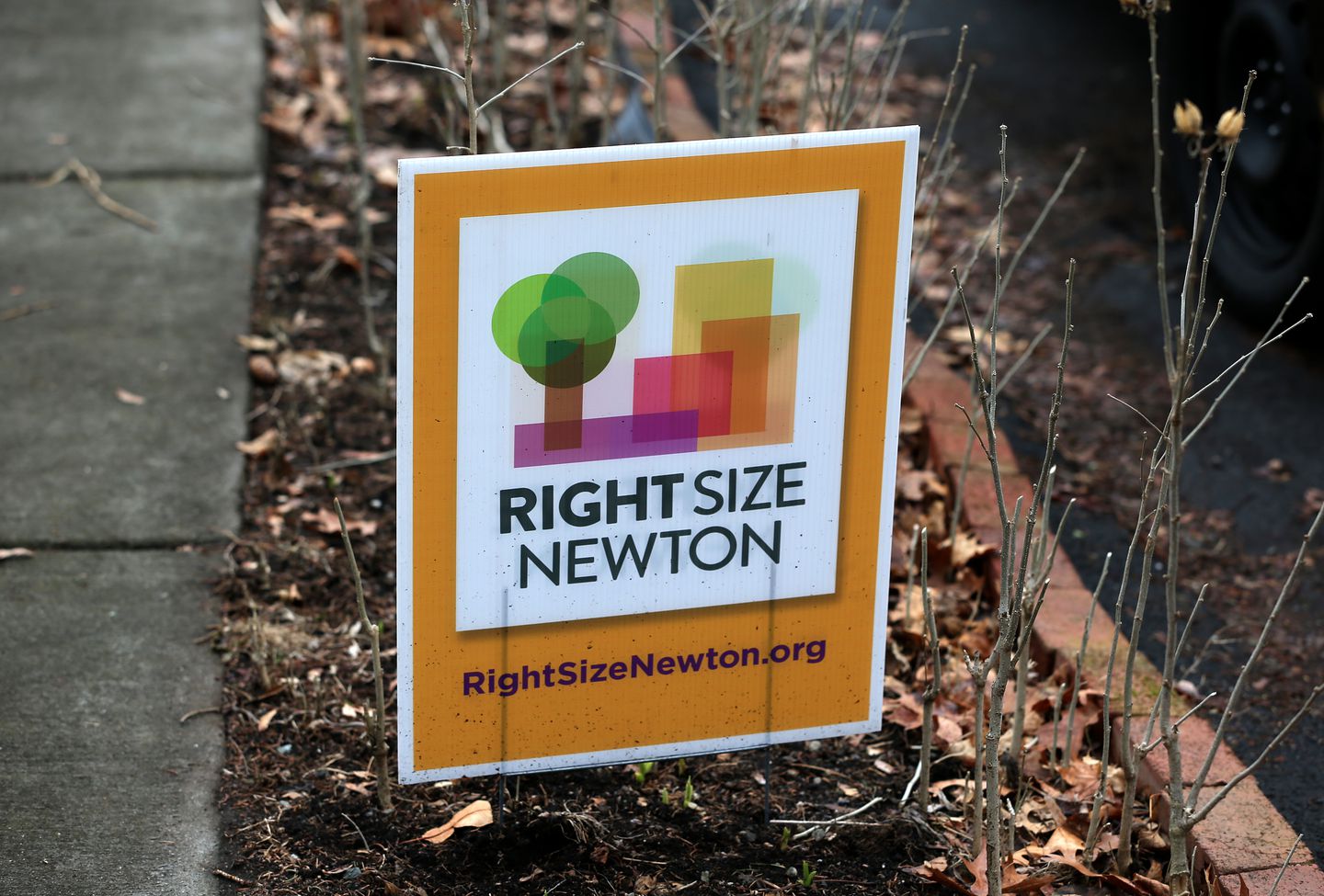

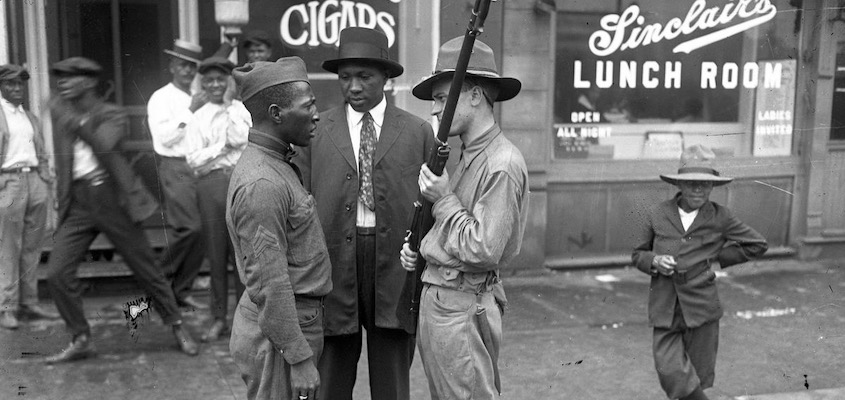


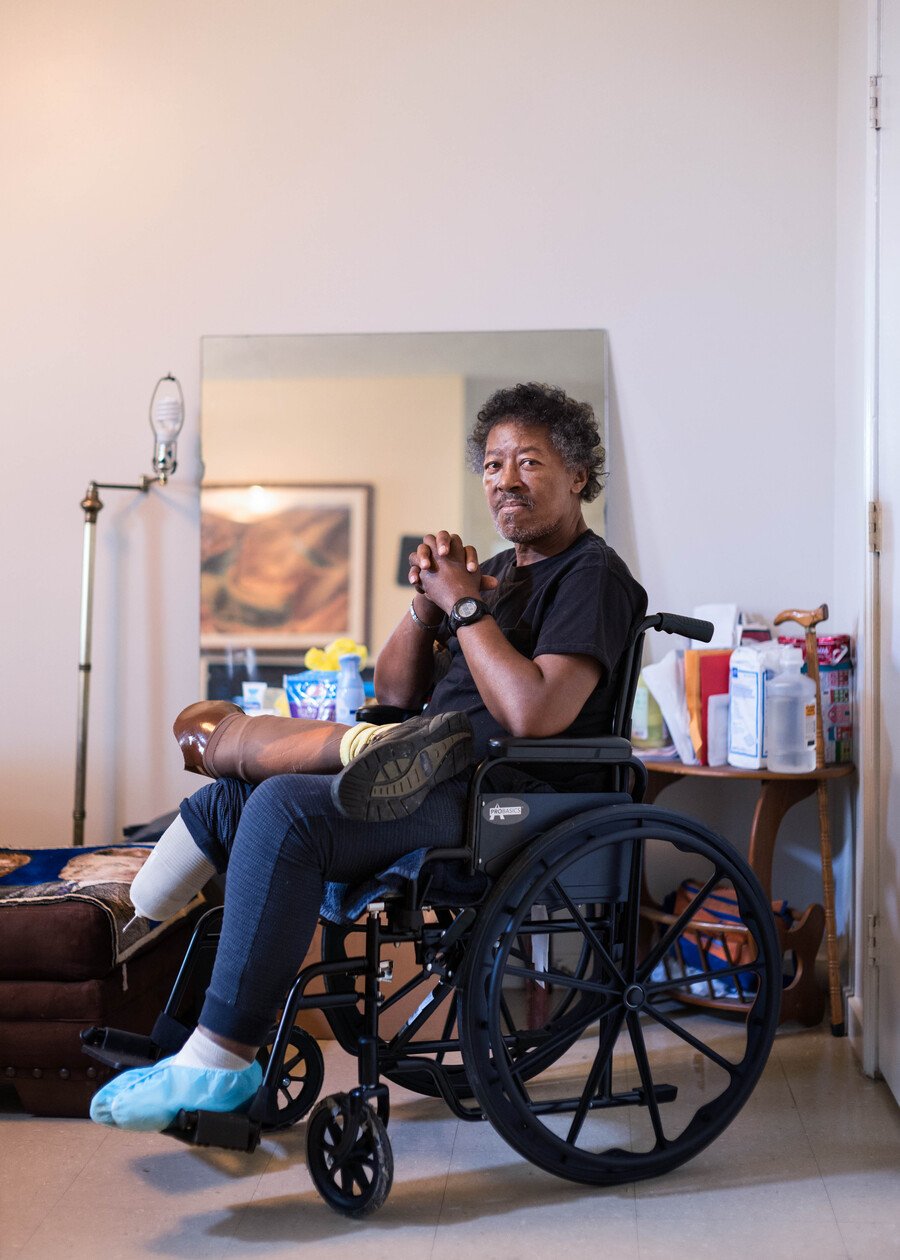

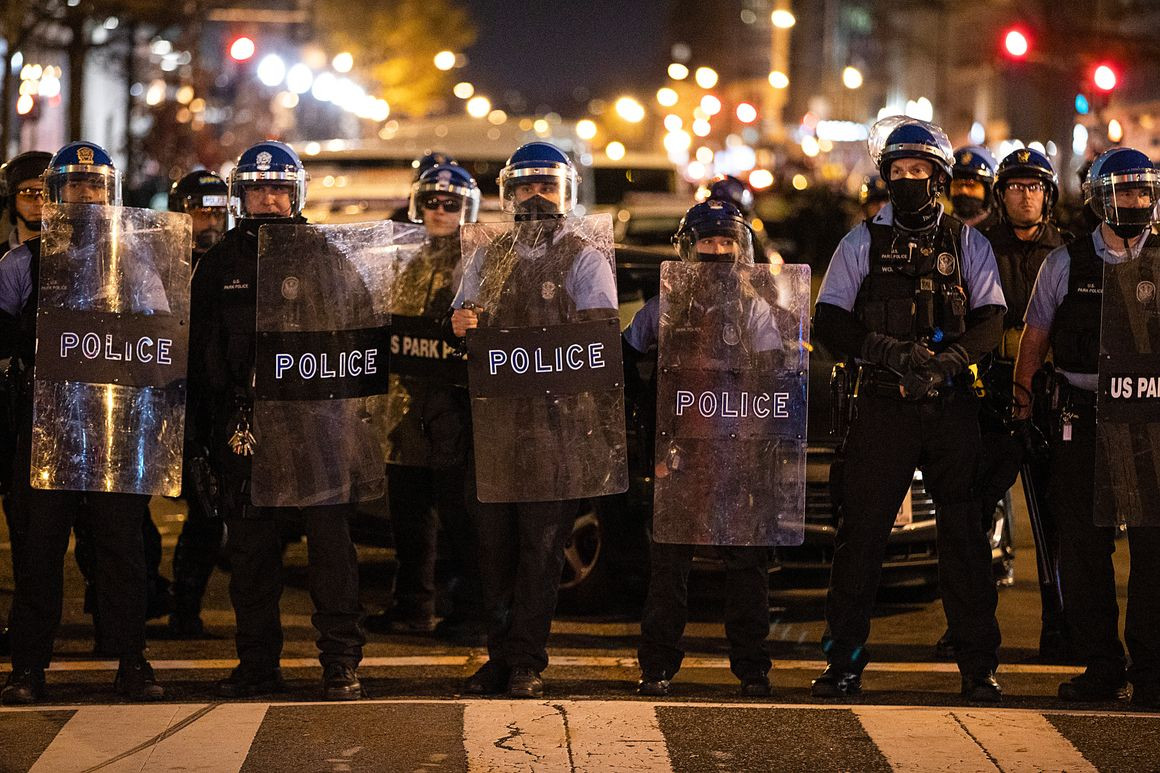



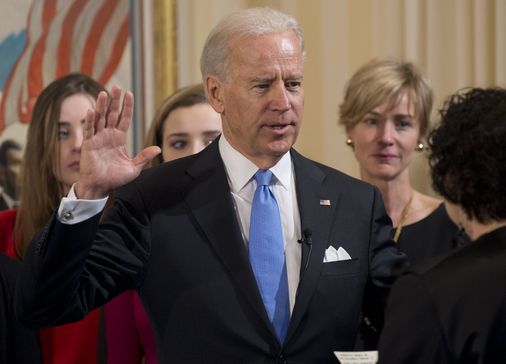

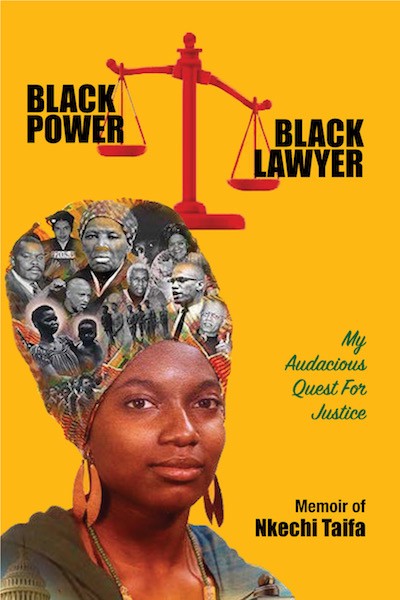



 OCG
OCG 