
Hope You Will Join us LIVE
“White Collar Crime: How Whiteness Presides” ∴ Jennifer Taub, Esq. ∴ Author, “Big Dirty Money” ∴ January 23, 2021 ∴ 10 pm EST
Hope You Will Join us LIVE
Hope You Will Join us LIVE

We all witnessed how whiteness protects white criminals at the nation’s Capitol Building and in DC. Law enforcement and the judiciary operate from principles that are formed from the public perspective of who should be arrested, charged, and prosecuted. For this reason, 100s of criminals were able to break the law and breach the building, and will not face the consequences. We all know what Black people would have faced under the same circumstances. Whiteness is a protection.
– Janice
In a controversial 1975 article, titled “White Racism, Black Crime, and American Justice,” criminologist Robert Staples argued that discrimination pervades the justice system. He said the legal system was made by white men to protect white interests and keep Blacks down. (At the time this was received as “outlandish and untrue”). Staples charged that the system was characterized by second-rate legal help for Black defendants, biased jurors, and judges who discriminate in sentencing. No matter, study after study demonstrates how extreme racial disparities address for Blacks in the judicial system, no matter the income strata or available resources.
Unwarranted disparity is defined as different treatment of individual offenders who are similar in relevant ways, or similar treatment of individual offenders who differ in characteristics that are relevant to the purposes of charging and sentencing. Whiteness is honored, it is protected and it blinds much of the judicial process. We can no longer deny, racial disparities exist because the system protects whiteness for the most part. It is clear that in sentencing especially, “departure” from the guidelines is reserved for mostly whites, and rarely extended to Blacks. Fair sentencing is individualized sentencing and it is mostly decided by people who value whiteness, having a value system of what crimes are punishable with distinct stereotyping of criminals.
Our guest, Professor Jennifer Taub, in her book, “Big Dirty Money” suggests we first attempt to measure white-collar crime as a whole. Then we need to measure the harm to victims in terms that go beyond the economic costs. She points out that “The wealthy have the resources either to exert political influence or become lawmakers themselves”. But Taub explicitly and persuasively places the breakdown of enforcement and accountability in the context of money and class.
What happens when a group of wealthy bankers fraudulently bring foreclosures on an entire class of people, as they did after the crash of 2008? Unlike a loss of, say, $210, the loss of a person’s home affects their life and well-being in ways that cannot be assigned a dollar amount. Thousands of people have spent the years since the recession uprooted from their communities. Taub posits that “the elite class had the power to define what was criminal.”
What happens when the President of the United States pardons criminals who have violated security, foreign interference, sedition, and treason laws? Trump is a stark illustration of why so few wealthy malefactors are held accountable. Like other members of the .01 percent, he can act with seeming impunity, able to buy or influence his way out of trouble. He empathizes with rich people who run afoul of the law. He minimizes their guilt, suggesting white-collar crimes aren’t really crimes, especially when the accused are white men, as the vast majority of all rich white-collar criminals are. Yet Trump is a symptom, not the cause. What happens when white politicians create laws to intentionally suppress and violate voters? How can we measure the social and political costs of mass dispossession because the defendant and violator are protected by a cloud of whiteness?
We will talk with Professor Taub who clearly articulates in her book, the cause and effect of white-collar crime “blinded by the whiteness” that plagues the judicial system. Leaving white-crime bosses to their devices operated by their money and “white card”.

Her newest book is, Big Dirty Money: The Shocking Injustice and Unseen Cost of White Collar Crime (Viking). Taub was a co-founder and organizer of the April 15, 2017 Tax March where more than 120,000 people gathered in cities nationwide to demand President Donald Trump release his tax returns. She is a professor of law at the Western New England University School of Law where she teaches Civil Procedure, White Collar Crime, and other business and commercial law courses, and was the Bruce W. Nichols Visiting Professor of Law at Harvard Law School during the fall 2019 semester. She formerly was a professor at Vermont Law School.
An authority on the 2008 mortgage meltdown and related financial crisis, Taub is also an emerging expert in white collar crime. In addition to Big Dirty Money, she is co-author with the late Kathleen Brickey of Corporate and White Collar Crime: Cases and Materials, 6th edition (Wolters Kluwer 2017). Relatedly, she has appeared on cable news programs including MSNBC’s Morning Joe and CNN Newsroom to discuss the Special Counsel investigation into links between Russia and the Trump presidential campaign.
In the area of banking and financial market regulation, Taub’s book Other People’s Houses: How Decades of Bailouts, Captive Regulators, and Toxic Bankers Made Home Mortgages a Thrilling Business was published in May 2014 by Yale University Press. Recognized as accessible and informative, OPH was honored by the Massachusetts Center for the Book as one of the 2015 finalists in the nonfiction category. Other People’s Houses was favorably mentioned by Nobel Laureate, Robert Shiller in his 2015 edition of Irrational Exuberance. Taub testified as an expert before the United States Senate Banking Committee and a United States House Financial Services Subcommittee. She also co-organized a conference and co-lead a panel discussion at the Financial Stability Law Workshop at the U.S. Treasury Department, hosted by the Office of Financial Research.
In addition to Other People’s Houses, Taub has written extensively on the financial crisis. Her publications include “The Sophisticated Investor and the Global Financial Crisis” in the peer-reviewed Corporate Governance Failures (UPenn Press, 2011) and a case study on AIG in Robert A. G. Monks and Nell Minow’s fifth edition of Corporate Governance (Wiley, 2011). In response to Roberta Romano, she presented and wrote “Regulating in the Light: Harnessing Political Entrepreneurs’ Energy for Post-Crisis Sunlight Hearings” (St. Thomas L. Rev. 2015). Additional works include the chapter “Delay, Dilutions, and Delusions: Implementing the Dodd-Frank Act” in Restoring Shared Prosperity (2013) and “What We Don’t Talk About When We Talk About Banking,” in the Handbook on the Political Economy of the Financial Crisis (Oxford, 2012). She wrote entries on “Shadow Banking” and “Financial Deregulation” for the Oxford Encyclopedia of American Business, Labor and Economic History (Oxford, 2013) and the chapter “Great Expectations for the Office of Financial Research,” in Will it Work? How Will We Know? The Future of Financial Reform (2010). In addition, she has published Reforming the Banks for Good in Dissent (2014). Her article, “The Subprime Specter Returns: High Finance and the Growth of High-Risk Consumer Debt,” was published in the New Labor Forum (2015). And, she recently wrote a book chapter on “New Hopes and Hazards for Social Investment Crowdfunding” in Law and Policy for a New Economy (Edward Elgar, 2017).
Taub’s corporate governance work often focuses on the role of institutional investors, including mutual funds. Her article “Able but Not Willing: The Failure of Mutual Fund Advisers to Advocate for Shareholders’ Rights,” published in the Journal of Corporation Law (2009) was presented at a conference jointly sponsored by the Millstein Center for Corporate Governance and the Oxford Said Business School. Her article “Managers in the Middle: Seeing and Sanctioning Corporate Political Spending after Citizens United” was presented at the Brennan Center for Justice at NYU and later published in the NYU Journal of Legislation and Public Policy (2012). Taub’s article, “Is Hobby Lobby a Tool for Limiting Corporate Constitutional Rights,” was presented at Harvard Law School and later published in a symposium issue of Constitutional Commentary in 2015 on Money, Politics, Corporations, and the Constitution (2015).
Taub has also ventured into the area of legal education and pedagogy. This includes her article “Unpopular Contracts and Why They Matter: Burying Langdell and Enlivening Students,” published in the Washington Law Review (2013). She is a co-author with Martha McCluskey and Frank Pasquale of “Law and Economics: Contemporary Approaches,” published in Yale Law & Policy Review (2016). With McCluskey and Pasquale, Taub is a co-founder of APPEAL (the Association for the Promotion of Political Economy and the Law), a research network linking economists, legal scholars, and policy makers concerned with inequality and instability who view markets and the government as mutually constituted. She has also developed a model syllabus for a course on Financial Stability.
In 2017, Taub received the Vermont Law School, Women’s Law Association Phenomenal Woman Award in the faculty category. She also served as chair of the Section on Financial Institutions and Consumer Financial Services for the 2017 AALS annual meeting. Prior to joining academia, Taub was an associate general counsel with Fidelity Investments. She received her BA degree, cum laude, from Yale University, with distinction in the English major, and her JD, cum laude, from Harvard Law School where she was the Recent Developments Editor at the Harvard Women’s Law Journal. She was a visiting professor at the University of Illinois College of Law for a short course in 2015 and a visiting fellow at the Yale School of Management during the 2016 spring semester. She was a visiting professor at the University of Connecticut School of Law during the 2019 spring semester.
Taub has written pieces for a variety of platforms including The Washington Post, CNN opinion page, Slate, the New York Times Dealbook, Dame Magazine, The Baseline Scenario, Race to the Bottom, Pareto Commons, The Conglomerate, and Concurring Opinions.
“I’ll Be Listening for You”
Janice
“Capitalism forgets that life is social. And the kingdom of brotherhood is found neither in the thesis of communism nor the antithesis of capitalism, but in a higher synthesis. The time has come for us to civilize ourselves by the total, direct and immediate abolition of poverty
– Dr. Martin Luther King Jr.


The images from Wednesday’s coup attempt will be seared into people’s memories. Terrorists stormed Capitol Hill and incited a riot that resulted in five deaths, including the killing of a Capitol Police officer who physically engaged with rioters as he attempted to secure the building. The mob of Trump’s supporters endangered the lives of thousands as they flew the Confederate flag – a symbol of racism and violence that did not even enter the halls of Congress during the Civil War. This attempted coup on our democracy comes as no surprise. White nationalist groups have been energized by Trump since he was a presidential candidate.
This nationally coordinated coup attempt revealed highly organized networks of white supremacist organizations, extending beyond the Capitol and into statehouses around the U.S. that have been the target of protests. Unsurprisingly, statehouses in the South – a region with high populations of communities of color – have been particularly targeted. These hate groups, emboldened by the president, pose a direct threat to the lives of millions of Black and Indigenous people, as well as other people of color around the country. They will not go away after President-elect Joe Biden’s inauguration.
For years, many of the domestic terrorists that breached, attacked, and mobbed the US government have been issued invitations from the highest level of government, including a mob boss President, to be present. Remember Trump’s words, “Stand Back and Stand By” ? On January 6th, they accepted those invitations. We were warned. Black people warned this nation that they were coming. And now, there is a disingenuous apology tour by the very people who sent those invitations requiring an RSVP.
“I’ll Be Listening for You”
Janice

Makani Themba is Chief Strategist at Higher Ground Change Strategies based in Jackson, Mississippi. A social justice innovator and pioneer in the field of change communications and narrative strategy, she has spent more than 20 years supporting organizations, coalitions and philanthropic institutions in developing high impact change initiatives. Higher Ground Change Strategies provides her the opportunity to bring her strong sense of history, social justice and organizing knowledge, and deft movement facilitation skills in support of change makers seeking to take their work to the next level. Higher Ground helps partners integrate authentic engagement, systems analysis, change communications and more for powerful, vision-based change.
Previously, Makani served as the founder and executive director of The Praxis Project, a nonprofit organization helping communities use media and policy advocacy to advance health justice. Under her leadership, The Praxis Project raised more than $20 million for advocacy organizations working in communities of color and provided training and technical assistance to hundreds of organization and public agencies nationwide. These initiatives include Communities Creating Healthy Environments (C-CHE), an initiative of the Robert Wood Johnson Foundation to support policy advocacy to advance healthy food outlets and safe places to play in communities of color and Building Capacity Building Power, a partnership with Ford Foundation to support grassroots civic engagement and Policy Advocacy on Tobacco and Health (PATH)
Makani is a highly sought-after public speaker, capacity builder, and trusted facilitator. Her publications have helped set the standard for policy advocacy work and contributed significantly to the field of public health’s current emphasis on media and policy advocacy to address root causes of health problems.
Makani has published numerous articles and case studies on race, class, media, policy advocacy and public health. She is co-author of Media Advocacy and Public Health: Power for Prevention, a contributor to the volumes We the Media, State of the Race: Creating Our 21st Century, along with many other edited book projects. Makani was chosen as one of “Ten Black Thinkers” asked to comment on Black conditions as part of the NAACP Crisis magazine’s 60th anniversary commemoration of the landmark article What the Negro Wants. She is author of Making Policy, Making Change, and she has also co-authored with Hunter Cutting Talking the Walk: Communications Guide for Racial Justice and Fair Game: A Strategy Guide for Racial Justice Communications in the Obama Era (under The Praxis Project).

Professor James Lance Taylor is the Chair of the Department of Politics at the University of San Francisco and is from Glen Cove, Long Island. He is author of the book “Black Nationalism in the United States: From Malcolm X to Barack Obama”, which earned 2012 “Outstanding Academic Title” – Choice: Current Reviews for Academic Libraries. (Ranked top 2 percent of 25,000 books submitted and top 8 percent of 7,300 actually accepted for review by the American Library Association). Rated “Best of the Best.” The hardback version sold out in the U.S. and the paperback version was published in 2014.
He is a former President of the National Conference of Black Political Scientists (NCOBPS), an important organization of African American, African, and Afro Caribbean political scientists in the United States, 2009-2011. Taylor also served as Coordinator of the African American Studies Program for 2015-2017 at the University of San Francisco. He served as the Chair for the “Committee on the Status of Blacks” in Political Science for the American Political Science Association (APSA), 2016-2017.


We all witnessed how whiteness protects white criminals at the nation’s Capitol Building and in DC. Law enforcement and the judiciary operate from principles that are formed from the public perspective of who should be arrested, charged, and prosecuted. For this reason, 100s of criminals were able to break the law and breach the building, and will not face the consequences. We all know what Black people would have faced under the same circumstances. Whiteness is a protection. – Janice
In a controversial 1975 article, titled “White Racism, Black Crime, and American Justice,” criminologist Robert Staples argued that discrimination pervades the justice system. He said the legal system was made by white men to protect white interests and keep Blacks down. (At the time this was received as “outlandish and untrue”). Staples charged that the system was characterized by second-rate legal help for Black defendants, biased jurors, and judges who discriminate in sentencing. No matter, study after study demonstrates how extreme racial disparities address for Blacks in the judicial system, no matter the income strata or available resources.
Unwarranted disparity is defined as different treatment of individual offenders who are similar in relevant ways, or similar treatment of individual offenders who differ in characteristics that are relevant to the purposes of charging and sentencing. Whiteness is honored, it is protected and it blinds much of the judicial process. We can no longer deny, racial disparities exist because the system protects whiteness for the most part. It is clear that in sentencing especially, “departure” from the guidelines is reserved for mostly whites, and rarely extended to Blacks. Fair sentencing is individualized sentencing and it is mostly decided by people who value whiteness, having a value system of what crimes are punishable with distinct stereotyping of criminals.
Our guest, Professor Jennifer Taub, in her book, “Big Dirty Money” suggests we first attempt to measure white-collar crime as a whole. Then we need to measure the harm to victims in terms that go beyond the economic costs. She points out that “The wealthy have the resources either to exert political influence or become lawmakers themselves”. But Taub explicitly and persuasively places the breakdown of enforcement and accountability in the context of money and class.
What happens when a group of wealthy bankers fraudulently bring foreclosures on an entire class of people, as they did after the crash of 2008? Unlike a loss of, say, $210, the loss of a person’s home affects their life and well-being in ways that cannot be assigned a dollar amount. Thousands of people have spent the years since the recession uprooted from their communities. Taub posits that “the elite class had the power to define what was criminal.”
What happens when the President of the United States pardons criminals who have violated security, foreign interference, sedition, and treason laws? Trump is a stark illustration of why so few wealthy malefactors are held accountable. Like other members of the .01 percent, he can act with seeming impunity, able to buy or influence his way out of trouble. He empathizes with rich people who run afoul of the law. He minimizes their guilt, suggesting white-collar crimes aren’t really crimes, especially when the accused are white men, as the vast majority of all rich white-collar criminals are. Yet Trump is a symptom, not the cause. What happens when white politicians create laws to intentionally suppress and violate voters? How can we measure the social and political costs of mass dispossession because the defendant and violator are protected by a cloud of whiteness?
We will talk with Professor Taub who clearly articulates in her book, the cause and effect of white-collar crime “blinded by the whiteness” that plagues the judicial system. Leaving white-crime bosses to their devices operated by their money and “white card”.
Jennifer Taub is a legal scholar and advocate, devoted to making complex business law topics engaging inside and outside of the classroom. Her research and writing focuses on corporate governance, banking and financial market regulation, and white collar crime. Similarly, her advocacy centers on “follow the money” matters –– promoting transparency and opposing corruption.Her newest book is, Big Dirty Money: The Shocking Injustice and Unseen Cost of White Collar Crime (Viking). Taub was a co-founder and organizer of the April 15, 2017 Tax March where more than 120,000 people gathered in cities nationwide to demand President Donald Trump release his tax returns. She is a professor of law at the Western New England University School of Law where she teaches Civil Procedure, White Collar Crime, and other business and commercial law courses, and was the Bruce W. Nichols Visiting Professor of Law at Harvard Law School during the fall 2019 semester. She formerly was a professor at Vermont Law School.
An authority on the 2008 mortgage meltdown and related financial crisis, Taub is also an emerging expert in white collar crime. In addition to Big Dirty Money, she is co-author with the late Kathleen Brickey of Corporate and White Collar Crime: Cases and Materials, 6th edition (Wolters Kluwer 2017). Relatedly, she has appeared on cable news programs including MSNBC’s Morning Joe and CNN Newsroom to discuss the Special Counsel investigation into links between Russia and the Trump presidential campaign.
In the area of banking and financial market regulation, Taub’s book Other People’s Houses: How Decades of Bailouts, Captive Regulators, and Toxic Bankers Made Home Mortgages a Thrilling Business was published in May 2014 by Yale University Press. Recognized as accessible and informative, OPH was honored by the Massachusetts Center for the Book as one of the 2015 finalists in the nonfiction category. Other People’s Houses was favorably mentioned by Nobel Laureate, Robert Shiller in his 2015 edition of Irrational Exuberance. Taub testified as an expert before the United States Senate Banking Committee and a United States House Financial Services Subcommittee. She also co-organized a conference and co-lead a panel discussion at the Financial Stability Law Workshop at the U.S. Treasury Department, hosted by the Office of Financial Research.
In addition to Other People’s Houses, Taub has written extensively on the financial crisis. Her publications include “The Sophisticated Investor and the Global Financial Crisis” in the peer-reviewed Corporate Governance Failures (UPenn Press, 2011) and a case study on AIG in Robert A. G. Monks and Nell Minow’s fifth edition of Corporate Governance (Wiley, 2011). In response to Roberta Romano, she presented and wrote “Regulating in the Light: Harnessing Political Entrepreneurs’ Energy for Post-Crisis Sunlight Hearings” (St. Thomas L. Rev. 2015). Additional works include the chapter “Delay, Dilutions, and Delusions: Implementing the Dodd-Frank Act” in Restoring Shared Prosperity (2013) and “What We Don’t Talk About When We Talk About Banking,” in the Handbook on the Political Economy of the Financial Crisis (Oxford, 2012). She wrote entries on “Shadow Banking” and “Financial Deregulation” for the Oxford Encyclopedia of American Business, Labor and Economic History (Oxford, 2013) and the chapter “Great Expectations for the Office of Financial Research,” in Will it Work? How Will We Know? The Future of Financial Reform (2010). In addition, she has published Reforming the Banks for Good in Dissent (2014). Her article, “The Subprime Specter Returns: High Finance and the Growth of High-Risk Consumer Debt,” was published in the New Labor Forum (2015). And, she recently wrote a book chapter on “New Hopes and Hazards for Social Investment Crowdfunding” in Law and Policy for a New Economy (Edward Elgar, 2017).
Taub’s corporate governance work often focuses on the role of institutional investors, including mutual funds. Her article “Able but Not Willing: The Failure of Mutual Fund Advisers to Advocate for Shareholders’ Rights,” published in the Journal of Corporation Law (2009) was presented at a conference jointly sponsored by the Millstein Center for Corporate Governance and the Oxford Said Business School. Her article “Managers in the Middle: Seeing and Sanctioning Corporate Political Spending after Citizens United” was presented at the Brennan Center for Justice at NYU and later published in the NYU Journal of Legislation and Public Policy (2012). Taub’s article, “Is Hobby Lobby a Tool for Limiting Corporate Constitutional Rights,” was presented at Harvard Law School and later published in a symposium issue of Constitutional Commentary in 2015 on Money, Politics, Corporations, and the Constitution (2015).
Taub has also ventured into the area of legal education and pedagogy. This includes her article “Unpopular Contracts and Why They Matter: Burying Langdell and Enlivening Students,” published in the Washington Law Review (2013). She is a co-author with Martha McCluskey and Frank Pasquale of “Law and Economics: Contemporary Approaches,” published in Yale Law & Policy Review (2016). With McCluskey and Pasquale, Taub is a co-founder of APPEAL (the Association for the Promotion of Political Economy and the Law), a research network linking economists, legal scholars, and policy makers concerned with inequality and instability who view markets and the government as mutually constituted. She has also developed a model syllabus for a course on Financial Stability.
In 2017, Taub received the Vermont Law School, Women’s Law Association Phenomenal Woman Award in the faculty category. She also served as chair of the Section on Financial Institutions and Consumer Financial Services for the 2017 AALS annual meeting. Prior to joining academia, Taub was an associate general counsel with Fidelity Investments. She received her BA degree, cum laude, from Yale University, with distinction in the English major, and her JD, cum laude, from Harvard Law School where she was the Recent Developments Editor at the Harvard Women’s Law Journal. She was a visiting professor at the University of Illinois College of Law for a short course in 2015 and a visiting fellow at the Yale School of Management during the 2016 spring semester. She was a visiting professor at the University of Connecticut School of Law during the 2019 spring semester.
Taub has written pieces for a variety of platforms including The Washington Post, CNN opinion page, Slate, the New York Times Dealbook, Dame Magazine, The Baseline Scenario, Race to the Bottom, Pareto Commons, The Conglomerate, and Concurring Opinions.
“I’ll Be Listening for You”
Janice
Join us LIVE: http://bit.ly/OCGTruthTalk
Call & Listen Line: (347) 838-9852
| Bumpy J | AfroSapiophile |
Jan, 2021 | Medium
 Toni Morrison died in 2019. She didn’t witness the death of George Floyd or the global response. She also wasn’t around to see all those Confederate memorials come tumbling down this past summer.
Nor did she witness the following:
Morrison warned us all of the hatred of the “other” and how it would continue to poison all. Her steady hand, and wise and willful voice, is missing right now.
I was watching the current PBS drama, Line of Separation when I learned of Morrison’s death. It was appropriate because Nazism and racial and ethnic hatred is central to that story.
Line of Separation is a drama about a small village in Germany (Tannbach) that finds itself caught in the crosshairs of the beginning stages of the Cold War between Russia and the United States when Nazi Germany collapses.
It is a story perfect for our globally connected world, right now — Hitler’s racism, Stalin’s fortitude and evil, and the West’s market based ideals all mixed into a drama about inhumanity.

In one memorable scene, in Line of Separation, the death of Adolph Hitler is heard over a radio in a small, crowded cafe.
With a mixture of U.S. soldiers, Nazis who have been captured, German citizens, and Germans of Jewish ancestry, the complexity of the world but also the factions is revealed.
The hardcore Nazis are disappointed Hitler is dead. The U.S. soldiers salute his death. The others — the Germans of various backgrounds and political persuasions — cheer even louder that the racist, genocidal leader is dead.
You wonder what would happen if suddenly Donald Trump were to die.
In another scene, U.S. soldiers liberate a Nazi Concentration Camp. Corpses litter the screen, skeletons are pulled from ovens, men frail and near death are rescued. It is sickening.
Many are not aware that Hitler studied American racism systems to design his own racial systems in Germany. It is well documented.

Watching those segments in ‘Line of Separation’ makes me think of the end of the Civil War in 1865 and Toni Morrison.
Morrison spent her career exposing the dark side of American history in books like her classic, awarding winner, Beloved.
In that book, a black woman, rather than see her child face the evil of slavery and white supremacy, kills her own child.
Morrison, in her writings, and in her talks, knew, as most black writers today know who are fully engaged, that white supremacy is wicked and toxic. It leads to frequent death.
Many debates have erupted online comparing the Confederacy in the U.S. to the Nazis in the last few months. There has been fierce pushback but the Confederacy is finally receiving the slow send-off it should have gotten in 1865.
The General Robert E. Lee’s statue, that was inside the U.S. Capitol, was just removed. U.S. military bases named after Confederate leaders are being renamed.
You wonder how it took this long.

Yet, one also wonders? Did the U.S. take the memorials down for the greater good or to maintain white supremacy.
Here is the history that Morrison never let go of when she was alive and writing. A war was fought to keep Black people enslaved— the Confederates lost that war.
Black people fought in that war for their freedom. Many died so their offspring would be free.
That didn’t happen.
Instead, the Confederates got welcomed back into the country again and got memorials. Black people got Jim Crow laws and lynchings and had to begin to fight like dogs again for everything.
Then, there was the “Lost Cause” movement.

‘The Lost Cause’ movement perpetuated the lie that the Africans who had been enslaved were loyal to their masters and did not want to be freed. Their masters had treated them well and had provided for all of their needs.
The masters, according to this sick theory, had protected them. There was no focus on the savagery of evil of slavery and the terror and violence used to maintain it.
When that lie got old, and discredited to a degree, they shifted to a new narrative that was just as absurd.
Writer, Joshua Zeitz summarized that narrative in POLITICO last year when he wrote about the current movement to remove all Confederate monuments in the U.S.:

The dirty history of the Confederacy has been hidden, altered, and repressed to this day. White southerners and the many today who still proudly display the Confederate Flag refuse to face the racial evils of the past and present.
In addition, the average person living in the U.S. likely has no idea of the terror and racial wickedness that it has caused.
We saw it in action in Charleston in June 2015. A white teen walked into a church one evening, prayed with some Black people, and then shot and killed nine of them.
The Confederate ideas of white supremacy were his motivations.

The Confederate flag, and all of the Confederate monuments, that were built after the Civil War and into America’s Jim Crow period, all stand for terror, hate, and racist evil. All of them should come down.

Here’s the real kicker though.
Line of Separation, the PBS program, is interesting because it is more complex than our racial madness. Some people joined the Nazi party and Hitler for Germany, some joined for ideology, some joined for just Germany.
It is all over the place.
But one thing that has now happened is, a unified Germany has rejected Nazism. This began about 40 years after May 8, 1945, the original “day of liberation” following the fall of the Third Reich.
There is now a Day of Liberation for the end of Nazism in Germany and it means just that — the end of Nazism. Swaztikas are banned in Germany. Nazi monuments have been removed. Memorials to victims are being erected.
There would be no more celebratory moments for Nazism in Germany like in the U.S. with the Confederacy. Nazism is evil. Racism is evil.
What Germany did during the 30’s and 40’s under Hitler was wrong and evil and that needs to be said all the time. More importantly, it wasn’t just Hitler’s doing either; anyone who stood by and said nothing was responsible and that was a lot of Germans.

I wish Morrison were around to write about what we are witnessing, especially if it continues.

#WeWillRemember
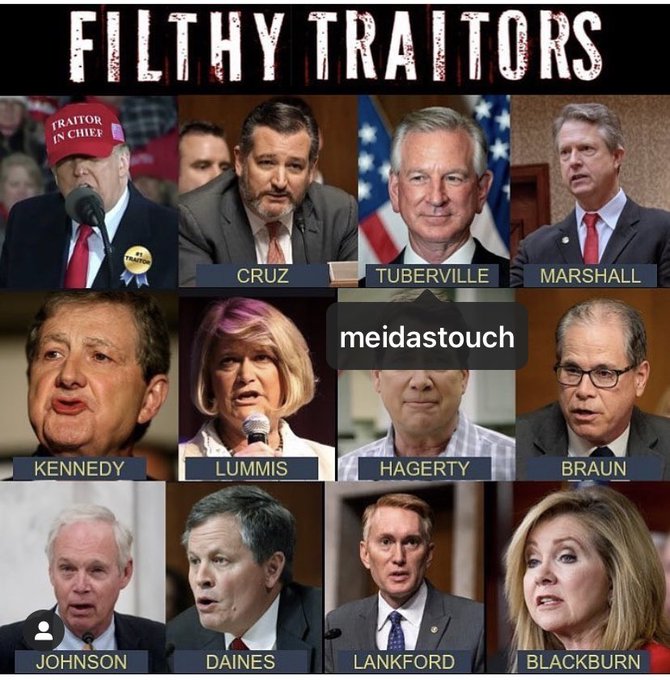
SEDITION: Ted Cruz @tedcruz Ron Johnson @RonJohnsonWI Marsha Blackburn @MarshaBlackburn and the eight others seeking an “emergency audit…in the disputed states” have just put a match to the Constitution. There are no disputed states. There is only an attempted Trump coup.
The GOP was outraged at Obama for 4 deaths in Benghazi. Had 16 investigations. COVID deaths? 350,000. No GOP outrage, no investigations. Craven assholes. #SeditionHasConsequences #GOPSeditiousTraitors
Listen & Call In Line: 347-838-9852

Tonight we feature the history of and discuss “the numbers” game.
The numbers were a sprawling, Black-run business for decades. In 1971, The NYTimes reported that an estimated “60 percent of the area’s economic life depends on cash flow from the numbers,” which employed an estimated 100,000 workers across the five boroughs. Numbers men also in many ways filled the void left by a formal economy indifferent to black residents’ needs: They bankrolled many small businesses, from bars to restaurants to corner groceries, and also saved many businesses from bankruptcy. These bankers helped get out the vote, buttressed black civil rights groups and contributed to Black political candidates’ campaigns.
In most of the history, you may read the criminal aspects of the numbers, rather than the everyday-ness — the communal, reciprocal and congratulatory qualities. Only one image captures the whimsically designed “tip sheets” used to help players choose a number to play. Most of us are familiar with Sonny Boy Dream book, Old Aunt Dinah’s Dream Book of Numbers, and Gypsy’s Witch Dream Book of Numbers, two of many simple yet illuminating publications used as bibles for numbers players. These encyclopedic books interpreted dreams by assigning three-digit numbers to different symbols, and nearly any image or experience that could appear in a dream. Each week, Sony Boy’s Numbers were published in the national Black newspaper, the Pittsburgh Courier. Many remember, specifically in the South, numbers being referred to as “boleeta”.
Although the numbers racket targeted working-class and poor communities, and were unregulated and untaxed by the local governments, there was little, if any, stigma among blacks to being involved with policy. Numbers bosses nevertheless sought respectability by investing gambling profits in legitimate businesses. During the 1930s, Black baseball attracted a great deal of this money.
The Numbers was originally a Black community game. Then the NY mafia wanted In. It is an intriguing part of our cultural and economic history.
Updates and Discussion:
“I’ll Be Listening for You”
Janice
Join us LIVE: http://bit.ly/OCGTruthTalk
Call & Listen Line: (347) 838-9852
We recommend :
Join us LIVE: http://bit.ly/OCGTruthTalk
“Transforming Truth to Power, One Broadcast At a Time”
OCG Studios: http://bit.ly/OCGTruthTalk
Listen or Call – In: (347) 838-9852
Join us on FACEBOOK and Learn More about this episode
OCG on the Web OCG YouTube OCG Instagram
Follow us on Twitter: @JaniceOCG #TalkthatMatters #TrustYourStruggle


Our listeners have spoken and we are indeed listening.
On our Saturday night episodes of OUR COMMON GROUND with Janice Graham, we constantly provide analysis, examination, ideas and solutions of the most vigorous thought leaders in America. Scholars, authors, journalists and activists with long-records of working for and searching for a way forward to a more informed Black community. They provide information, credible research, insight and vision about our struggle, living as an oppressed people inside a democracy articulated, offered but denied. Many times we are unable to take your calls as much as we want. This OPEN MIC Night is an opportunity to give our listeners more time to chime in on what our guests have to say. Listener POV is important.
OUR COMMON GROUND with Janice Graham began broadcasting in 1985. Since we have been committed to the proposition that Black people in this country require information which is filtered through a lens that respects the importance of history, centuries of governmental negligence and betrayal, and the human toll of many Black generations. We offer our broadcasts, host guests, and engage with our listeners as a place of sanctuary to respect and lift up their truth. Heartbreaking politics, socio-economic realities, structural racism in every facet of Black lives. Our truth is formed through our experience as a people, mass incarceration of our Brother and Sisters; intentional miseducation of our children, state-sanctioned and legal murdering under law; medical, environmental, and employment justice. The duality of our citizenship, agency requires specialized filters honed from living, studying, and listening. We see Amerikka, and we have been its dilemma, savior, and visionary. We call what we speak, “Black Truth”.
Join us to ‘speak Truth to Power and Ourselves’. In the sanctuary where Black Truth is spoken and respected.
OUR COMMON GROUND post hoc
Wednesdays ::: 10 pm EST
OUR COMMON GROUND with Janice Graham
Saturdays ::: 10 pm EST


