Unraveling the Freddie-Fannie Tangle l ProPublica

Unraveling the Freddie-Fannie Tangle

The taxpayer-backed mortgage giants, Freddie Mac and Fannie Mae, play a huge and growing role in the economy yet are riven by conflicts of interest and clashing goals. (Pablo Martinez Monsivais/AP Photo)

by Jesse Eisinger and Cora Currier
ProPublica, Jan. 2, 2013, 10:09 a.m.

In the aftermath of the financial crisis, American taxpayers poured $187.5 billion into two huge but poorly understood companies: Freddie Mac and Fannie Mae. Now controlled by the government, the companies play an even larger role in the economy than they did before the crisis and their bailout, but they are riven by conflicts of interest and clashing goals. Are they private companies, only out to increase their profits, or are they instruments of government policy, dedicated to keeping home ownership available?

ProPublica has focused on the tensions within Freddie Mac and Fannie Mae, as well as those besetting their regulator, the Federal Housing Finance Agency (FHFA).

NPR’s Chris Arnold and ProPublica revealed that Freddie Mac had placed multibillion-dollar bets that pay off only if homeowners stay trapped in expensive mortgages with interest rates well above current rates. Freddie began increasing these bets dramatically in late 2010, the same time that the company was making it harder for homeowners to get out of such high-interest mortgages.

The scoop, “Freddie Mac Bets Against American Homeowners,” caused an immediate firestorm. As countless media outlets picked up the story, multiple senators criticized the company and wrote to Edward DeMarco, the acting head of the FHFA, calling for an investigation into the transactions and the company’s activities.

The FHFA responded, saying it had told Freddie not to make any more transactions in the kind of securities at issue, called inverse floaters. The agency said it had “identified concerns regarding the controls, including risk management, surrounding the inverse floaters.” The agency did not specify those “concerns,” but said Freddie agreed in December that “these transactions would not resume pending completion of [FHFA’s] examination work.” The statement also said that Freddie had ceased making the deals earlier in 2011 but did not explain why.


Full Article and Relevant References at ProPublica


Connect with Facebook to share articles you read on ProPublica. Learn more »

All You Wanted to Know About Housing in Three Minutes » Counterpunch: Tells the Facts, Names the Names

“So, here’s the million dollar question: If prices are already at “normal”, and sales are already above trend, and President Obama isn’t going to approve another round of fiscal stimulus, (He won’t) and the Fed’s $85 billion per month QE4 program continues to have no impact on sales (it doesn’t), then what magical force is going to push the market higher?

The only way that prices can continue to rise is if the banks start issuing loans to unqualified mortgage applicants en masse like they did back in 2005-2006. Otherwise, the market’s going to stay right where it is today, in the dumps.”

DECEMBER 31, 2012

In the Dumps

All You Wanted to Know About Housing in Three Minutes

by MIKE WHITNEY

There’s a terrific video at Bloomberg News that will tell you everything you want to know about housing in just under 3 minutes. Unfortunately, the video hasn’t gotten much attention, probably because it veers from the MSMs fairytale about a housing recovery. Even so, I have transcribed the interview below so that readers can judge for themselves whether housing is really bouncing back or it’s just a bunch of baloney.

Keep in mind that Robert Shiller, who predicted both the dot.com and housing bubbles, is widely regarded as the nation’s top housing market expert. Also, the S&P Case-Shiller Home Price Index, which he co-founded, is the benchmark index for home price trends in the country’s 20 largest cities. Here’s the interview (with some commentary):

Bloomberg anchor:

“According to the latest Case-Shiller Home Price Index, which we got yesterday, home values are up over 4 percent on the year. Can this positive housing news weather the fiscal cliff and all the uncertainty into 2013?

For a closer look at what the housing recovery means for the economy, we turn to Robert Shiller of Yale University, the co-founder of the Case-Shiller Home Price Index.

Good morning Bob. You’ve been very, very hesitant to call a bottom for home prices and an all-out housing recovery, but don’t the data pretty broadly speak to the fact that housing is on the mend?

via All You Wanted to Know About Housing in Three Minutes » Counterpunch: Tells the Facts, Names the Names.


MIKE WHITNEY lives in Washington state. He is a contributor to Hopeless: Barack Obama and the Politics of Illusion (AK Press). Hopeless is also available in a Kindle edition. He can be reached at fergiewhitney@msn.com. 

Why Race Matters After Sandy

Why Race Matters After Sandy

Thursday, 13 December 2012 10:30By Isabelle Nastasia and Manissa McCleave Maharawal Waging Nonviolence | Op-Ed

During the fall of 1962, residents of the Bedford-Stuyvesant neighborhood of Brooklyn saw the trash accumulating on their sidewalks and realized that the city didn’t care about them the way it did about others. Their children had to play in stinky garbage while other neighborhoods had trees and parks. They complained to elected officials and the Sanitation Department, but the problem never got better. So, in response, they began organizing weekly garbage clean-ups across Bed-Stuy — a temporary solution — while also working toward a holistic solution to the abundance of garbage and the scarcity of city resources devoted to the area through on-the-ground organizing. For two years residents and members of the Brooklyn chapter of the Congress of Racial Equality (CORE) organized tirelessly for increased garbage collection, asserting over and over again that “taxation without sanitation is tyranny.”

For decades, the red-lining of black and brown neighborhoods by real estate agencies, banks and insurance companies has starved these communities of investment and served to geographically marginalize poor people. This history of economic and social marginalization helped ensure that these communities are also the ones hardest hit by disasters such as Hurricane Sandy. The challenge now facing Occupy Sandy and similar grassroots recovery efforts is to build community power around these structural inequalities through an environmental justice framework, while confronting environmental racism head on.

The concept of environmental racism emerged in the 1980s in East Harlem and the South Bronx as residents realized that their neighborhoods were home to waste processing plants that process over half of the city’s commercial waste (in the case of the Bronx) and a disproportionate number of polluting bus depots (in the case of Harlem). These facilities were causing frequent illness, high rates of cancer and chronic asthma among children. Environmental racism gives a name to the harmful burden of facilities such as waste transplant stations, bus depots and power plants on communities where people of color tend to live.

This kind of analysis is important for two reasons. Firstly, it articulates that environmental factors are part of broader systematic disenfranchisement. Upper-middle class white neighborhoods are able to keep polluting facilities out while working-class neighborhoods of color get disproportionately saddled with this harmful infrastructure. Secondly, this analysis came from activists living and working in these neighborhoods, standing up against noxious facilities and clamoring for meaningful job opportunities, well-funded public schools, healthy and affordable food, and parks and other community spaces.

After Sandy, people in the affected communities are feeling the effects of this same phenomenon of environmental racism. Speaking to the Associated Press, one Staten Island resident, a Mexican immigrant named Miguel Alaracon Morales, explained, “My son has asthma and now he is worse. The house has this smell of humidity and sea water. It is not safe to live there. I am starting to feel sick, too.” As he spoke, he held his two-year-old asthmatic son, Josias. This storm, and all disasters of its type, are not a “great equalizer,” as is often claimed; they’re actually only a disaster for the 99 percent, and in particular for the poorest and most disenfranchised members of our society.

In New York City’s post-Sandy moment there are lessons to be learned from the community-led centers that emerged in New Orleans after Katrina. Our School at Blair Grocery, a community home-school and urban farm — which Isabelle helped to establish and has spent every summer since 2008 working with — is currently the only school that serves high school-aged youth and the only food vendor besides a corner store in the Lower Ninth Ward, whose population is down to 4,000 from over 14,000 before the storm. This independent alternative school confronts structural disenfranchisement by highlighting four main community needs: meaningful employment, healthy and affordable food, education for young people, and community-led public planning. Helping students earn their GEDs and avoid the school-to-prison pipeline, Our School at Blair Grocery works with black youth from the Lower Ninth with the long-term goal of building alternative institutions for the neighborhood that can withstand any crisis: economic, political and environmental.

In working with these youth one learns that they wouldn’t articulate their day-to-day activities as “resistance,” and they would also never call it “recovery.” The students understand that the challenges their neighborhood faces are rooted in a history that goes much further back than Katrina, so their efforts are not merely an attempt to return their community to the status quo before the storm. The teachers and students at the school are working together to build an institution outside of the corporate, top-down model offered to them. This vision allows them to re-envision how they generate and consume energy, as well as how to transform the production, distribution and consumption components of the food system — local visions of energy independence and food sovereignty.

From Click here to support news free of corporate influence by donating to Truthout. Help us reach our fundraising goal so we can continue doing this work in 2013!

Financiers Bet on Rental Housing – NYTimes.com

Big Money Bets on a Housing Rebound

By JANET MORRISSEY

Published: December 8, 2012

DAVID N. MILLER, a master of bailouts, steps to the dais and coolly explains how the financial world went crazy.


David Miller, a former Treasury official who is now in private industry, is trying to buy up family homes cheaply.

It is February 2010. The anger behind Occupy Wall Street is building. Flicking through slides, Mr. Miller, a Treasury official working with the department’s $700 billion Troubled Asset Relief Program, lays out what caused the housing bubble: easy credit, shoddy banking, feeble regulation, and on and on.

“History has demonstrated that the financial system over all — not every piece of it, but over all — is a force for good, even if it goes off track from time to time,” Mr. Miller tells a symposium at Columbia University in remarks posted on YouTube. “As we’ve experienced, sometimes this system breaks down.”

But, it turns out, sometimes when the system breaks down, there is money to be made.

Mr. Miller, who arrived at the Treasury after working at Goldman Sachs, described himself as a “recovering banker” in the video.

Today, he has slipped back through the revolving door between Washington and Wall Street. This time, he has gone the other way, in a new company, Silver Bay Realty, which is about to go public. He is back in the investment game and out to make money with a play that was at the center of the financial crisis: American housing.

As the foreclosure crisis grinds on, knowledgeable, cash-rich investors are doing something that still gives many ordinary Americans pause: they are leaping headlong into the housing market. And not just into tricky mortgage investments, collateralized this or securitized that, but actual houses.

A flurry of private-equity giants and hedge funds have spent billions of dollars to buy thousands of foreclosed single-family homes. They are purchasing them on the cheap through bank auctions, multiple listing services, short sales and bulk purchases from local investors in need of cash, with plans to fix up the properties, rent them out and watch their values soar as the industry rebounds. They have raised as much as $8 billion to invest, according to Jade Rahmani, an analyst at Keefe Bruyette & Woods.

The Blackstone Group, the New York private-equity firm run by Stephen A. Schwarzman, has spent more than $1 billion to buy 6,500 single-family homes so far this year. The Colony Capital Group, headed by the Los Angeles billionaire Thomas J. Barrack Jr., has bought 4,000.

via Financiers Bet on Rental Housing – NYTimes.com.

How Home Ownership Keeps Blacks Poorer Than Whites – Forbes

LEADERSHIP | 12/10/2012 @ 12:28PM |128 views

How Home Ownership Keeps Blacks Poorer Than Whites

+ Comment now

This article is by Dorothy Brown, a professor of tax law at Emory University Law School.

The racial wealth gap has hit an all-time high while Barack Obama has been president. The median net worth of white households is now 20 times that of black households. Why?

Some argue that the gap is a current manifestation of a historical problem. Others say blacks are to blame. While I can’t eliminate the lingering effects of slavery and Jim Crow, or change stereotypes, I can highlight one area where blacks may be inadvertently contributing to the racial wealth gap: When most black people buy homes, we hurt ourselves economically.

Home ownership has been an important vehicle in creating a solid white middle class, but it has not done the same for most black homeowners, because blacks and whites buy homes in very different neighborhoods. Research shows that homes in majority black neighborhoods do not appreciate as much as homes in overwhelmingly white neighborhoods. This appreciation gap begins whenever a neighborhood is more than 10% black, and it increases right along with the percentage of black homeowners. Yet most blacks decide to live in majority minority neighborhoods, while most whites live in overwhelmingly white neighborhoods.

via How Home Ownership Keeps Blacks Poorer Than Whites – Forbes.

African American Leaders Deliver Agenda For Obama’s Second Term

African American Leaders Deliver Agenda For Obama’s Second Term

December 4, 2012 | Filed under: Headlines | Posted by: Editorial_Staff

African America leaders de

liver “black agenda”

Following a four-hour closed door meeting Monday, the leaders of four African American advocacy groups emerged looking pleased to announce a collective wish list they plan to deliver to President Barack Obama for his second term.

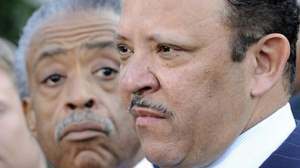
The “black agenda,” as the groups have called their wish list on Twitter, starts with ensuring the fiscal cliff doesn’t disproportionately hurt African Americans. That’s something Marc Morial, president and CEO of the National Urban League, has worried about before. But Morial also listed five new priorities that came out of what he called Monday’s “historic gathering.” Those include: working for parity for Blacks in education, health care and the economy; reforming the criminal justice system; and protecting and defending voting rights.

The White House did not immediately respond to request for comment about whether the president would make these priorities a focus during his second term.

But according to Morial, the voting rights priority is key. “When our community was challenged by voter suppression…they reacted with power, with dignity and with force,” he said.

via African American Leaders Deliver Agenda For Obama’s Second Term.

Families United for Racial and Economic Equality


Mission & History

“You don’t need an army. You don’t need to know important, influential people. You don’t even need to be rich to leave a mark on history and make change happen!” –FUREE member


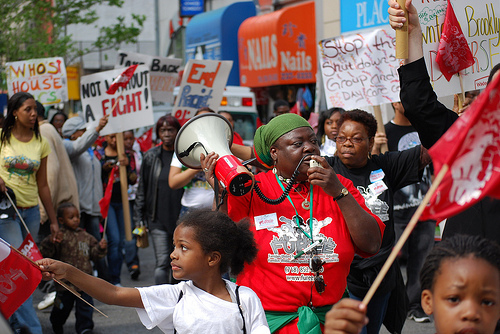
Families United for Racial and Economic Equality (FUREE) is a Brooklyn-based multi-racial organization made up almost exclusively of women of color.  We organize low-income families to build power to change the system so that all people’s work is valued and all of us have the right and economic means to decide and live out our own destinies. We use direct action, leadership development, community organizing, civic engagement and political education to win the changes our members seek. Our guiding principle is that those directly affected by the policies we are seeking to change should lead the organization.


Mission & History | Families United for Racial and Economic Equality.

For public housing residents after Sandy, ‘a slow-motion Katrina’ | San Francisco Bay View

For public housing residents after Sandy, ‘a slow-motion Katrina’

November 10, 2012

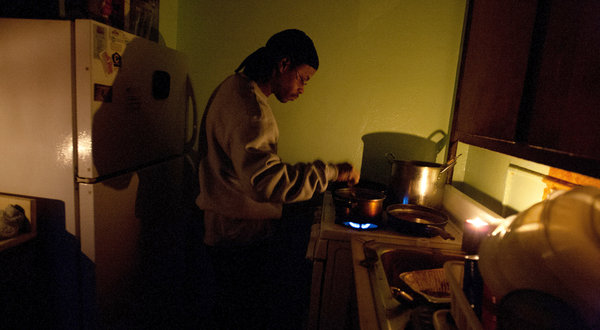
The gas is on, so Richard Bates can cook by candlelight, but life has been hard in Brooklyn’s Red Hook Houses and for tens of thousands of other public housing residents without heat, water or power since Hurricane Sandy hit. No lights or elevators function in their 12-story buildings. – Photo: Ruth Fremson, New York Times

by Lucas Kavner

Brooklyn, N.Y. – Ask anyone living in Cobble Hill or Carroll Gardens or Park Slope earlier this week, and they would tell you that they have power, hot water and wi-fi. In fact, most of the $1 million-plus townhouses and local businesses in Brooklyn’s wealthier neighborhoods never lost any basic necessities, even during the worst of the storm.

The gas is on, so Richard Bates can cook by candlelight, but life has been hard in Brooklyn’s Red Hook Houses and for tens of thousands of other public housing residents without heat, water or power since Hurricane Sandy hit. No lights or elevators function in their 12-story buildings. – Photo: Ruth Fremson, New York Times

But the Gowanus Houses, a low-income public housing complex owned and operated by the New York City Housing Authority (NYCHA), which falls almost at the intersection of those three neighborhoods, is an exception. During flooding from Hurricane Sandy, water seeped into the basement of one of the larger buildings, shorting out electrical cables that were located there and destroying its boiler. It took days before the water was even drained and the damage assessed, despite the fact that the complex houses almost 3,000 residents.

Power was restored on Friday, but its 12-day absence created severe conditions in the area, according to Councilman Stephen Levin, who represents the district where the Gowanus Houses is located. Many on the highest floors couldn’t get down without climbing 14 flights of stairs. Elderly residents with debilitating diseases and respiratory problems were literally stuck for a week, surviving off of food, medical supplies and flashlights donated primarily by individual volunteers, who have been working for these residents every day since Sandy hit.

One Occupy Sandy volunteer discovered a family without heat, warming their apartment with an open stove. Levin said a young girl with epilepsy was not able to plug in her nebulizer, while another woman, whose son is asthmatic, needed an electrical oxygen machine.

And as of Wednesday morning, more than a week after Sandy hit, at least two of the buildings at the Gowanus Houses were still without power, though a few residents said that number was actually five, and many others were without hot water and heat. Comparatively, power had been restored to most NYCHA complexes last week, including those in Lower Manhattan, Queens and other parts of Brooklyn.

via For public housing residents after Sandy, ‘a slow-motion Katrina’ | San Francisco Bay View.

Non Profit Organizations & the Privatization of Public Housing | Black Agenda Report

An Against the Grain Interview with Prof. Jay Arena

In this Against the Grain interview, about 50 minutes, Jay Arena outlines the process of destroying public housing in New Orleans and more broadly across the country, with particular attention to the roles played by not for profit organizations and black elites carrying out the neoliberal agenda of gentrification.

This interview was broadcast recently on KPFA Berkeley, and can be found online, with hundreds more like it at Against the Grain Radio, http://againstthegrain.org.

via Non Profit Organizations & the Privatization of Public Housing | Black Agenda Report.