The Irony Behind Tim Wise and White Privilege

SOUL LATTE

A strong dose of soulful thought.


The Irony Behind Tim Wise and White Privilege

Tim_WiseLast week, renowned anti-racist advocate, Tim Wise, came to UMass for a screening of his new documentary, “White Like Me,” followed by a question and answer period with the audience. I won’t go into details about the actual documentary, y’all can check that on your own time, but during the post-screening  period, Wise was confronted about some online beef that occurred after a post on his blog in remembrance of the 50th anniversary of the Birmingham 16th Street Church bombing that killed 4 African-American girls on September 16th, 1963. His post not only acknowledges the tragedy, but also pays tribute to a man named Charles Morgan, Jr, a white southerner who lived in Birmingham at the time, but who opposed the bombings and was ultimately chased out of the South because of his willingness to speak out against racism.

Following the post, a stream of opposition came. In general, they criticized Wise’s emphasis on the need for white allies. After all, they said, if it wasn’t for white people making the lives so hard for Black-Americans to begin with, they wouldn’t need white partnership in the first place. Wise retaliated to the responses through his Facebook page, the status update wasn’t so friendly.

Wise admitted to the audience at UMass that he was wrong for how he reacted, saying that he is “only human,” and he can’t be perfect all the time. Once the applause ended after the apology, a man of color rose and told his own story of dealing with anger. He was a professor at Hampshire College, from the Bronx, and he explained how living in western Massachusetts is never easy for men of color. He told Wise of the discrimination he deals with on a regular basis. Despite being a college professor, it was the color of his skin that was seen first, and it would always put him in a disadvantage. Any man of color knows, he said, that we don’t get the luxury of “being only human,” because being of color, any outburst could be your last–you don’t need to read a James Baldwin novel to come to that realization.

Tim Wise, a renowned expert on white privilege, could recognize he was a product of white privilege, but he could never fully understand how it manifested itself in his own life. If I he could, then he would never have been so openly accepting of the fact that he can have angry outbursts over issues as sensitive as the Birmingham bombing, and so easily get applause over it.

It was a year ago on my college campus when I had first met Tim Wise. I had no idea how famous Tim was, I had never heard of him before. As I sat down to hear him speak to a packed auditorium, I was impressed and unimpressed all in one. I remember being amused by his delivery, you cannot deny he wouldn’t fair too badly as a stand up comedian. He has a way of fusing irony and raw facts through stating just the obvious reality. That is always refreshing to hear from someone who isn’t of color. But then that becomes the real issue: Tim Wise isn’t a person of color. What he was saying wasn’t anything new or profound, but it was the fact that he was white which was why people gave him so much praise. So to put it ironically: In the same way Tim Wise goes around raising awareness on white privilege, he also benefits from it–he is white privilege.

At the end of the lecture, a friend who helped organized the event asked if I would go with him to take Tim to the airport. I couldn’t turn down an opportunity to get some one one one with Tim Wise after hearing everything he just said. We covered a lot of ground in that 40-minute car ride. He told me about where he grew up, what he studied in college, why he does the work he does, he even told me how he met his wife. We talked about my own studies, intellectual curiosities, and some of the research I was currently working on. It was an inspirational car ride, one that influenced the direction of a lot of the research I did that semester, along with many of the things I write on this blog.

And then he did admit what I had been thinking all along: that his whiteness was the reason for his success. He knew why he was getting called to speak all over the country. He knew why he was able to get through to white people. He was aware of his whiteness, and how that created so many privileges that automatically put him ahead of blacks who were saying much of the very same things he was, and who were also working in the field of anti-racism. And for me, my criticism of Wise doesn’t come from the fact that he is a white guy discussing racism. It’s how he utilizes his whiteness. He continually makes mention of how he is a “white ally” for Black America, and then goes on to expect us to give him a gold star. As stated in the blogGroupThink:

It’s great that that guy stood up for what was right, but to try to piggy back on a very significant and painful part of AA history to sing the praises of a white guy who did the right things is… missing the point. It’s great he did that. It’s awesome, but he doesn’t get a cookie. Why is it so hard for people to understand that you don’t get applause for being a decent person?

I don’t have issues with Tim Wise wanting to stand up against racism, it’s quite commendable when anyone–white or black–stands up for racial justice. My issues are with the fact of how righteously he goes about parading his whiteness when speaking about these issues, and then expects us to view him as some kind of “white knight.”

I don’t care if he goes around speaking to large audiences, it’s the fact that he has become more than just a spokesperson on white privilege and that he feels he can also become a spokesperson for Black America, as well. I don’t have any inner-conflicts being upset when people ask Tim Wise to speak on national television over issues of race when there is a sea of well qualified black scholars who can say the same things Tim says, if not better.

My words to Tim Wise: Black-America could use a few white allies, but we don’t need white leaders attempting to claim some sort of moral medal for doing what every human being should be expected to do: the right thing.

Follow Soul Latte

At the Very Least, Your Days of Eating Pacific Ocean Fish Are Over

At the Very Least, Your Days of Eating Pacific Ocean Fish Are Over


Radiation

Opinion by Gary Stamper

The heart-breaking news from Fukushima just keeps getting worse…a LOT worse…it is, quite simply, an out-of-control flow of death and destruction. TEPCO is finally admitting that radiation has been leaking to the Pacific Ocean all along. and it’s NOT over….

I find myself moving between the emotions of sorrow and anger.

It now appears that anywhere from 300 to possibly over 450 tons of contaminated water that contains radioactive iodone, cesium, and strontium-89 and 90, is flooding into the Pacific Ocean from the Fukushima Daichi site everyday. To give you an idea of how bad that actually is, Japanese experts estimate Fukushima’s fallout at 20-30 times as high as as the Hiroshima and Nagasaki nuclear bombings in 1945

There’s a lot you’re not being told. Oh, the information is out there, but you have to dig pretty deep to find it, and you won’t find it on the corporate-owned evening news.

  • An MSNBC article in April of 2012 reported that seals and polar bears were found to have “external maladies” that consisted of fur loss and open sores, obvious signs of radiation burns from the Fukushima meltdown, despite the conclusions of the article.
  • Fukushima radiation appears to be causing an epidemic of dead and starving Sea Lions in California and the FDA has refused to test for radiation
  • Since the summer of 2011, U.S. scientists have observed several dozen living and dead Pacific Ocean marine mammals with a strangely similar condition of skin sores and hair loss. These animals may be suffering from ‘beta burns,’ which are caused by significant external exposure to ‘beta emitters’ such as radiostrontiums, which were released in copious quantities to the Pacific Ocean at Fukushima Daiichi in 2011
  • .Almost a third more US West Coast newborns may face thyroid problems after Fukushima nuclear disaster
  • Contaminated water from Fukushima reactors could double radioactivity levels of US coastal waters in 5 years — “We were surprised at how quickly the tracer spread”

Radiation

IS THE PACIFIC OCEAN FOOD CHAIN DOOMED? – May 2013 – Incredibly worrisome levels of cesium, including short-lived radioactive cesium-134, have been found near Hawaii in the LOWEST part of the marine food chain: plankton. Levels up the food chain, i.e. fish, whales, seals, due to bioaccumulation, MUST be magnitudes higher in contamination now or soon – stop eating Pacific wild seafood now – Researchers find high cesium in some Pacific plankton

SEAFOOD LOVERS ACROSS THE WORLD – The ‘levels’ of radiation in the seafood you are eating now and in the future certainly contain Fukushima radiation but will be considered ‘safe’ by government scientists. Let’s boil it down quickly: Scientists say the only safe level of radiation is zero. YET, governments set ‘limits’ for radiation in food well above zero. These limits actually increase every decade or so. If you love nuclear power and nuclear weapons complexes, then you should accept these limits as well as the fact that a fraction of our cancer epidemic is blamed on nuclear emissions. If you don’t want people (or yourself) to die of cancer to preserve nuclear power and nuclear weapons, then you should heed the scientific consensus conclusion that the safe level of radiation is zero becquerels of anything. Unless you are a nuclear nut, please protect your own health and regulate your genetic stability for the sake of your children, grandchildren, etc…by NOT EATING SEAFOOD OR CONSUMING ANYTHING MADE IN THE SEA. Learn more about food safety.

KEYPOINTS ABOUT FISH CONTAMINATION

  • Bluefin tuna will grow in radioactivity over years with each migration back to West Pacific; older caught fish will be hotter
  • Media is neglecting March (2012) lab study find that North Pacific albacore ‘tuna fish’ has same Fukushima cesium contaminant
  • All Pacific migratory fish are probably Fukushima contaminated – why isn’t this all over Twitter?
  • Alaska Halibut also found with same Fuku-cesium contaminant – but did not migrate to Japan’s waters. How did cesium-134 get into Alaska halibut?
  • Bluefin tuna in 2012 study aren’t all equally radioactive; sample #8 contained 50% higher cesium concentrations than the average of the 15 samples
  • Bluefin scientists did a most non-stellar job. They cherrypicked isotopes for dose comparison.
  • FDA is telling media and consumers it is ‘testing fish.’ It is testing imports and not testing U.S.-caught wild seafood (billions of pounds caught annually in U.S.) More
  • Cesium-134 is marker for strontium-90 – causes bone cancer and immune-disorders; babies are ‘sponges’ for calcium and strontium
  • Levels in bluefin tuna are similar to record food concentrations in 1960s
  • ECRR (Busby) predicts ’61,600,000 deaths from cancer’ (and 3.5 million baby deaths) ‘from the nuclear project since 1945,’ mostly the 1960s.
  • Bulk of 1960s exposure was internal, largely from ingested FOOD made radioactive from hydrogen bomb test fallout.
  • FDA saying levels are safe is a lie. FDA says its intervention levels will kill people. Downplays risk as ‘small’ compared to our ~40-50% cancer rate. But much of that rate is prolonged fallout effects from 1960s.
  • Baseline levels of manmade-radionuclides in Pacific seafood pre-Fukushima caused some genetic defects and cancers in world population
  • FDA uses faulty dose calculations that lowball rate of cancer carnage by several magnitudes. Genetic harm from cesium’s gamma rays ignored in dose models
  • Alvarez asks would a 1950′s NPR ‘trivialize’ ‘impacts of open-air hydrogen bomb testing?’ You bet. Our government and media is herding us into rail-cars destined for another radioactive holocaust.

Hawaii Is Hot

Hawaii is Hot with Radiation


5 CONSPIRACY THEORIES WHICH TURNED OUT TO BE TRUE Truth Theory

5 CONSPIRACY THEORIES WHICH TURNED OUT TO BE TRUE

There are types of stories called “conspiracy theories” and the people who teach them are considered by “society” as crazy fanatics who often need medical treatment. What if I tell you that “society” should take some of that medical treatment, because sometimes such incredible stories, nobody believed in, turn out to be 100% true.

What if I tell you that the doctors did not treat us, just wait until we die to cut our bodies?

1. Tuskegee syphilis experiment

In the years 1932-1972, there were a series of experiments on about 400 syphilis-infected black citizens of the United States. The study selected the poor, simple and uneducated – most of them did not even know about their illness. U.S. Public Health Service had promised free treatment to patients. In fact, they were given aspirin. The purpose of this “experiment” was to observe a progressive disease in representatives of the black race, and the scientific autopsy of deceased participants in these studies. As a result, 28 people died directly of syphilis, 100 died as a result of complications directly related to the disease, 40 women were infected by unconscious patients, and 19 children were born with congenital disease.male_blood_testThe sad truth about the Tuskegee Experiment was confirmed in 1997 by President Bill Clinton, who officially and publicly apologized to the eight surviving participants in these studies.

What if I tell you that the U.S. government itself commits “acts of terror” on its land, just to have an excuse to invade another country?

2. Operation Northwoods

In 1997, as a result of the murder of J.F. Kennedy, fifteen hundred pages of documents entitled “Operation Northwoods” were declassified. In the 60s, the United States was preparing for war with Cuba. To fire up the war machine public support was needed. In turn the defense secretary presented a paper called “Justification for U.S. Military Intervention in Cuba” so they had a whole range of interesting provocations, such as terrorist attacks involving the blowing up military bases, starting fires, aircraft hijacking, “landing” of Cuban troops , bombings, and even the sinking of a boat full of armed Cubans.
 see the full document for yourself: http://www.gwu.edu/~nsarchiv/news/20010430/northwoods.pdf

see the full document for yourself here

These false flag terrorist attacks were to be carried out by the CIA on a massive scale so that the citizens of the United States would feel threatened by Fidel Castro and the government had an excuse to start a war. The plan was never implemented however, as president Kennedy met with the General Lyman Lemnitzer the plan for the operation was rejected. This time it did not work …

What if I tell you that it is just about oil?

3. Nayirah Testimony

In August 1990 there was conflict between Iraq and Kuwait, mostly over oil fields as Saddam Hussein accused Kuwaitis of theft of these resources. On October 10th the whole world turned its eyes toward a fifteen-year old girl named Nayirah, who wept profusely as she talked about inhumane crimes committed by Iraqi soldiers. The young Kuwaiti was to witness the killing of more than 300 babies in a hospital. The dramatic speech touched the hearts of viewers and managed to drum up overwhelming support for the involvement of the United States in this conflict and the outbreak of the Gulf War.
liar1When the battle dust settled, someone took a closer look at Nayirah. Quickly it became apparent that the sobbing girl in front of millions of viewers was the daughter of Sheikh Saud Nasser Al-Saud Al-Sabah – Kuwaiti Ambassador to the United States and a member of the royal family. The child was handed to PR whizzes – Hill & Knowlton company, where she passed a course in comprehensive acting training. It had to work out – the company bosses signed an $11.9 million contract with the Kuwaiti royal family. The task was simple — to persuade the U.S. military to take action against Iraq. Nayirah lied. This time it worked …

What if I tell you that the leading Nazi scientists got a job in the USA after the war?

4. Operation Paperclip.

World War II was coming to an end and nothing more could change the situation of the Third Reich. American special forces had acknowledged that it would be a pity if some people lost their lives, especially those whose knowledge and experience could potentially serve the interests of the United States. As part of Operation Paperclip, they smuggled into the U.S. a group of gifted scientists from the Nazi rocket industry, medicine and chemical weapons divisions.
operation-paperclip-picIn the safe arms of Uncle Sam there were, among others, Wernher Von Braun (SS-man, the creator of the famous missile V-2), Kurt Blome (a doctor specializing in biological weapons, which tested their inventions on prisoners in Auschwitz) and Hubertus Strughold (“father of space medicine” who examined the effect of extremely low temperatures on the human body in camp Dachau). In total, 700 German “men of science”, found their new home on American soil.

What if I tell you that the government controls your mind?

5. MK-Ultra

It turns out that playing with people’s minds was actually done by the CIA a good half a century ago! In the 60s, thanks to the NY Times reporters, details of the MK-Ultra project came to light, which was aimed to investigate the human ability to be controlled by the use of certain chemicals, subliminal messages, electrical impulses and psychoactive substances. The project itself consisted of a number of sub-projects. For example, MK-Search was designed to create the perfect truth serum that could be used on captured Russian spies.
1148930404_5d249926b8_o

They also looked into research on the practical use of LSD. Experiments were conducted on prostitutes, prisoners and people with mental illness. Often times without their knowledge or consent. One such experiment was to give the drug to seven volunteers continuously for 77 days … Among the substances, with which the CIA dealt was alsoamphetamines, psilocybin and mescaline. They also experimented with hypnotic seances. When information about MK-Ultra was released to the public, a number of committees of inquiry were established and this research was formally and publicly condemned.

It is often said that the infamous project was one of the factors which resulted in the generation of the hippie movement. Ken Kesey – author of “One Flew Over the Cuckoo’s Nest”, as a volunteer, was participating in one of the experiments, prepared by the CIA. The effect of LSD on the human mind intrigued the writer so much, that he became one of the first proponents of the use of psychedelic drugs in the context of recreation. Another member of psychedelic experimentation was Robert Hunter of the Grateful Dead …


We know that these theories turned out to be true. And how many more are waiting to be revealed? There are some people who do a lot to hide the truth.

THIS ARTICLE IS OFFERED UNDER CREATIVE COMMONS LICENSE. IT’S OKAY TO REPUBLISH IT ANYWHERE AS LONG AS ATTRIBUTION BIO IS INCLUDED AND ALL LINKS REMAIN INTACT.
Creative Commons Licence
This work is licensed under a Creative Commons Attribution-NoDerivs 3.0 Unported License.

Recommended for you

ID Theft AND CC PROTECTION – Preparedness for Tragedy

PhotoFunia-a349ATTORNEY’S ADVICE – NO CHARGE

Facebook Friend pass this along.

Read this and make a copy for your files in case you need to refer to it someday. Maybe we should all take some of his advice! A corporate attorney sent the following out to the employees in his company:

1. Do not sign the back of your credit cards. Instead, put ‘PHOTO ID REQUIRED.’

2. When you are writing checks to pay on your credit card accounts, DO NOT put the complete account number on the ‘For’ line. Instead, just put the last four numbers. The credit card company knows the rest of the number, and anyone who might be handling your check as it passes through all the check processing channels won’t have access to it.

3. Put your work phone # on your checks instead of your home phone. If you have a PO Box use that instead of your home address. If you do not have a PO Box, use your work address. Never have your SS# printed on your checks. (DUH!) You can add it if it is necessary. But if you have It printed, anyone can get it.

4. Place the contents of your wallet on photocopy machine. Do both sides of each license, credit card, etc. You will know what you had in your wallet and all of the account numbers and phone numbers to call and cancel. Keep the photocopy in a safe place.

I also carry a photocopy of my passport when I travel either here or abroad. We’ve all heard horror stories about fraud that’s committed on us in stealing a Name, address, Social Security number, credit cards..

Unfortunately, I, an attorney, have firsthand knowledge because my wallet was stolen last month. Within a week, the thieves ordered an expensive monthly cell phone package, applied for a VISA credit card, had a credit line approved to buy a Gateway computer, received a PIN number from DMV to change my driving record information online, and more.

But here’s some critical information to limit the damage in case this happens to you or someone you know:

5. We have been told we should cancel our credit cards immediately. But the key is having the toll free numbers and your card numbers handy so you know whom to call. Keep those where you can find them.

6.. File a police report immediately in the jurisdiction where your credit cards, etc., were stolen. This proves to credit providers you were diligent, and this is a first step toward an investigation (if there ever is one).

But here’s what is perhaps most important of all: (I never even thought to do this.)

7. Call the 3 national credit reporting organizations immediately to place a fraud alert on your name and also call the Social Security fraud line number. I had never heard of doing that until advised by a bank that called to tell me an application for credit was made over the Internet in my name.

The alert means any company that checks your credit knows your information was stolen, and they have to contact you by phone to authorize new credit.

By the time I was advised to do this, almost two weeks after the theft, all the damage had been done. There are records of all the credit checks initiated by the thieves’ purchases, none of which I knew about before placing the alert. Since then, no additional damage has been done, and the thieves threw my wallet away this weekend (someone turned it in). It seems to have stopped them dead in their tracks.

Now, here are the numbers you always need to contact about your wallet, if it has been stolen:

1.) Equifax: 1-800-525-62851-800-525-6285

2.) Experian (formerly TRW): 1-888-397-3742 1-888-397-3742

3.) Trans Union : 1-800-680 7289 1-800-680 7289

4.) Social Security Administration (fraud line):

1-800-269-0271 1-800-269-0271

We pass along jokes on the Internet; we pass along just about everything.

If you are willing to pass this information along, it could really help someone that you care about.

2013 Black History Note l From Footnote to Fame in Civil Rights History

From Footnote to Fame in Civil Rights History

By BROOKS BARNES

Published: November 25, 2009

On that supercharged day in 1955, when Rosa Parks refused to give up her bus seat to a white passenger in Montgomery, Ala., she rode her way into history books, credited with helping to ignite the civil rights movement.

Nicole Bengiveno/The New York Times (left), The Montgomery Advertiser, via Melanie Kroupa Books/Farrar, Straus & Giroux

Claudette Colvin in a portrait taken in November (left) and as a child around 1953.

Nicole Bengiveno/The New York Times

Claudette Colvin’s historic stand preceded that of Rosa Parks.

Michael Appleton for The New York Times

Phillip Hoose, with Claudette Colvin, accepting a National Book Award last week for “Claudette Colvin: Twice Toward Justice.”

The Montgomery Advertiser, via Melanie Kroupa Books/Farrar, Straus & Giroux


But there was another woman, named Claudette Colvin, who refused to be treated like a substandard citizen on one of those Montgomery buses — and she did it nine months before Mrs. Parks. The Rev. Dr. Martin Luther King Jr. made his political debut fighting her arrest. Moreover, she was the star witness in the legal case that eventually forced bus desegregation.

Yet instead of being celebrated, Ms. Colvin has lived unheralded in the Bronx for decades, initially cast off by black leaders who feared she was not the right face for their battle, according to a new book that has plucked her from obscurity.

Last week Phillip Hoose won the National Book Award for Young People’s Literature for “Claudette Colvin: Twice Toward Justice,” published by Farrar, Straus & Giroux. The honor sent the little-selling title shooting up 500 spots on Amazon.com’s sales list and immediately thrust Ms. Colvin, 70, back into the cultural conversation.

“Young people think Rosa Parks just sat down on a bus and ended segregation, but that wasn’t the case at all,” Ms. Colvin said in an animated interview at a diner near her apartment in the Parkchester section of the Bronx. “Maybe by telling my story — something I was afraid to do for a long time — kids will have a better understanding about what the civil rights movement was about.”

Ms. Colvin made her stand on March 2, 1955, and Mrs. Parks made hers on Dec. 1 that same year. Somehow, as Mrs. Parks became one of Time Magazine’s 100 most important people of the 20th century, and streets and schools were named after her, Ms. Colvin managed to let go of any bitterness. After Ms. Colvin was arrested, Mrs. Parks, a seasoned N.A.A.C.P. official, sometimes let her spend the night at her apartment. Ms. Colvin remembers her as a reserved but kindly woman who fixed her snacks of peanut butter on Ritz crackers.

“My mother told me to be quiet about what I did,” Ms. Colvin recalled. “She told me: ‘Let Rosa be the one. White people aren’t going to bother Rosa — her skin is lighter than yours and they like her.’ ”

Ms. Colvin said she came to terms with her “raw feelings” a long time ago. “I know in my heart that she was the right person,” she said of Mrs. Parks.

Ms. Colvin was riding the bus home from school when the driver demanded that she give up her seat for a middle-age white woman, even though three other seats in the row were empty, one beside Ms. Colvin and two across the aisle.

“If she sat down in the same row as me, it meant I was as good as her,” Ms. Colvin said.

Two police officers, one of them kicking her, dragged her backward off the bus and handcuffed her, according to the book. On the way to the police station, they took turns trying to guess her bra size.

At the time, the arrest was big news. Black leaders, among them Dr. King, jumped at the opportunity to use her case to fight segregation laws in court. “Negro Girl Found Guilty of Segregation Violation” was the headline in The Alabama Journal. The article said that Ms. Colvin, “a bespectacled, studious looking high school student,” accepted the ruling “with the same cool aloofness she had maintained” during the hearing.

As chronicled by Mr. Hoose, more than 100 letters of support arrived for Ms. Colvin — sent in care of Mrs. Rosa Parks, secretary of the Montgomery branch of the N.A.A.C.P.

But Ms. Colvin was ultimately passed over.

“They worried they couldn’t win with her,” Mr. Hoose said in an interview from his home in Portland, Me. “Words like ‘mouthy,’ ‘emotional’ and ‘feisty’ were used to describe her.”

Mrs. Parks, on the other hand, was considered “stolid, calm, unflappable,” he said. The final straw: Ms. Colvin became pregnant by a married man.

A second Montgomery teenager, Mary Louise Smith, was also arrested for refusing to give up her bus seat — after Ms. Colvin’s arrest but before Ms. Parks’s — and she was also deemed an unsuitable symbol for the movement partly because of rumors that her father had an alcohol problem.

Although Ms. Colvin quickly left Montgomery, she returned during the peak of the bus boycott that Mrs. Parks had subsequently sparked, and testified in federal court in Browder v. Gayle, the landmark case that effectively ended bus segregation.

“It’s an important reminder that crucial change is often ignited by very plain, unremarkable people who then disappear,” said David J. Garrow, a Pulitzer Prize-winning biographer of Dr. King.

Even Mrs. Parks was forgotten for the better part of 20 years, only re-emerging as a world-famous figure in the early 1970s after magazine articles and attention in several children’s books.

Ms. Colvin, who relies on a cane to steady herself, retired in 2004 after 35 years as a nurse’s aide at a Manhattan nursing home. She contributed to her own obscurity: after settling in New York, she never talked about how her arrest helped prompt the famous bus boycott.

“She continued to heed her mother’s advice, and worried that drawing attention to herself would result in the loss of her job. “I wasn’t going to take that chance,” she said.

So she settled into living an average life. She never married. The son she had in Montgomery died at age 37; a second son is an accountant in Atlanta. She watches television — “Who Wants to Be a Millionaire” is a favorite — and is a regular at the diner.

Ms. Colvin said she reads two newspapers every day to keep up on current events, chatting about recent Nobel Prize winners. She likes Chris Rock and Alicia KeysAretha Franklincould stand to lose a few pounds, but she wore a good hat to President Obama’sinauguration. Don’t get Ms. Colvin started on Sarah Palin.

She has fond memories of Dr. King. “He was just an average-looking fellow — it’s not like he was Kobe Bryant or anything,” she said, fluttering her eyelashes. “But when he opened his mouth he was like Charlton Heston playing Moses.”

Mr. Hoose said he stumbled across Ms. Colvin’s story while researching a previous book, “We Were There, Too! Young People in U.S. History.” Several sources told him to investigate what had almost become an urban myth: that a teenager had beaten Mrs. Parks to the punch in Montgomery.

He eventually tracked down Ms. Colvin, who has an unlisted telephone number. She refused to talk to Mr. Hoose for almost four years.

Mr. Hoose won over his reluctant subject over a long lunch at the diner. It was clear, he said, that she yearned to have her story told despite protests to the contrary. “It was easy to find the rebel girl inside of her,” he said.

One of her first questions: “Can you get it into schools?”

This article has been revised to reflect the following correction:

Correction: December 4, 2009
An article on Nov. 26 about Claudette Colvin, who protested segregation on theMontgomery, Ala., buses nine months before Rosa Parks did and is the subject of a book for young people that won a National Book Award last month, referred imprecisely to Mrs. Parks’s protest. While the boycott that followed her arrest for refusing to give up her seat to a white passenger was planned by civil rights leaders who were waiting for the right case, her protest itself on Dec. 1, 1955, was not “carefully planned.”

More Articles in Books »A version of this article appeared in print on November 26, 2009, on page A1 of the New York edition.

Visit our Honoring Our Past Pages

Is Trinidad James an Artist or a Buffoon? Dr. Chistopher Emdin (OUR COMMON GROUND Voice)with Dr. Boyce Watkins

Is Trinidad James an Artist or a Buffoon? Dr. Chistopher Emdin discusses

December 28, 2012 |

trinidad-chrisDr. Boyce Watkins had a conversation about the impact that hip-hop is having on the youth that listen to it. To add to the conversation, he invited Dr. Christopher Emdin to weigh in on the conversation about what rappers like Trinidad James are actually doing to young people when they release records full of destructive messages.

The interview is below:

Dr. Watkins:     Hi.  I’m Dr. Boyce Watkins from YourBlackWorld.com.  Last week I was in New York City and I stopped by a radio station, in the City, called Power 105.1, which is a hip-hop station.  One of my buddies is one of the hosts on the show called the Breakfast Club.  His name is Charlamagne Tha God.  So, I stopped through to talk to Charlamagne and we were talking about some of this nonsense with BET and whether or not it’s affecting our kids and stuff like that.

I asked Charlamagne,

“What do you think about this guy, this new rapper, Trinidad James?”

Charalamagne said,

“Oh, yeah.  Trinidad was here right before you got here.”  I said, “I’m so happy I didn’t cross paths with him on my way in the door because I think that might have been my first arrest for assault because I probably would have tried to beat this brother down.  His music just bothers me so much.  But, then again, maybe I’m just a hater because he’s got more money than me.”

So, to kind of get some perspective on this, I wanted to bring in one of my buddies who is one of the scholars I respect the most in the country, Dr. Christopher Emdin.  He’s not just a Professor of Education at Columbia University, which is impressive enough; but he’s also a very, very good hip-hop artist.  I’ve literally seen him bust freestyle in front of a group of high school kids and at the same time talk to them about how the power of hip-hop can be used to teach them science.  So, I’ve got Dr. Emdin on the line.

Dr. Boyce:          How are you doing today, brother?

Dr. Emdin:         I’m doing well, man.  I’m really appreciative that you gave me the opportunity to share some insight on this situation with Trinidad James.  He’s blowing up over night.

Dr. Boyce:          Yeah.  He really is.  Is it true he’s been rapping for about  8 or 9 months?

Dr. Emdin:         The interview narrative has been about 8 or 9 months but I think he’s been rapping a little bit longer.  I vividly remember actually being in Atlanta about a year and a half ago and I was talking with some young people.  Some of them were saying, “Yo.  Trinidad James is next.  Trinidad James is the truth.”  So, I think he’s actually been rapping a little bit longer than the narrative that’s being put out to the public.  His fan base has been there for quite a while.

Dr. Boyce:          Really.  Okay.

Dr. Emdin:         Yes, sir.

Dr. Boyce:          So, Trinidad just got a deal with Def Jam Records.  It’s so interesting because I’m kind of, mentally, in that space.  I literally had an hour and a half long meeting yesterday with Russell Simmons talking about bringing in hip-hop artists to support our campaign on mass incarceration.  You’re also in that space because you just finished an extraordinary event with Gza from the Wu Tang Clan on how to use hip-hop to teach science.

So, what is your take on the legitimacy now – or the perceived legitimacy of this artist who is producing music that many people might call straight coonery and buffoonery?

Dr. Emdin:         See, this is my take and I want to be very, very clear.  I do not blame Trinidad James for his over-night success.  I don’t blame Trinidad James for the fact that he is on every radio station across the country.  Nor do I blame him for the fact that he has become an over-night phenomena.  What I do blame is a record company that will sign this artist, support this artist, give him money, and continue in this trajectory or piggy back off of this underground success he’s made at the expense of promoting a caricature of blackness.  I don’t blame the brother.

The black experience has its nuances.  There is somebody who Trinidad James raps to and for.  Just like there’s somebody that Gza raps to and for.  There’s a wide array of that.  There’s intellectual rap.  There’s street rap.  There’s pop and molly rap.  I don’t advocate for the negative but I realize that it exists.

In my view, my issue is not with the artist himself.  My issue is with a public and with a corporate hip-hop system.  We call it hip-hop.  We call it something — an institution that’s supposed to advocate for our culture only identifying the negative caricature and making sure that that becomes what the picture is of the entire culture.  That’s what I have a problem with.  I have a problem with radio stations choosing to take Trinidad James and put him on their station in New York City or across the globe as what is the newest and hottest artist in the country.  Because they have the power to be able to identify another artist that is much more talented and perhaps has a different robust subject matter, and make that person be the picture of hip-hop.

So, I don’t blame the man.  The man that’s speaking based on his experiences, or his circumstances, or what he sees in Atlanta everyday, or his

self-construction, however flawed that may be.  I won’t critique that one publicly.  I would like to have a conversation with him about why that is how he constructs who he is; why it is that he sees the world this way.  I’ve heard interviews with the brother.  He’s actually quite articulate.  So, I’d like to talk to him about, “Why don’t you pull forth more of the complexity of who you are into your music?”  That’s conversation between me and Trinidad James or anybody who loves hip-hop or loves black men and wants to see them be more then what they are portrayed to be.  That’s a conversation between us and Trinidad.

My critique is not him.  My critique is the system.  My critique is the corporate system that allows us to force-feed this nonsense to our young people.  My critique is of the fact that we are now at a point where we are advocating for these who are spitting nursery school rhymes as if that’s complex hip-hop.  I don’t think Trinidad James is a product of isolation.  He didn’t come out of nowhere.  Trinidad James is the ancestor of Rick Ross.   Rick Ross has a nursery school rhyme and he pauses and says, “uh.”  And then, Trinidad James says, “Hot tamale, I’m sweating, whoo.”  That’s the same cadence.  It’s the basic baseline nursery rhyme cadence.  You know, Trinidad James is the evolution of Rick Ross.  And, there will be many more incarnations of that simplistic rap if we don’t get to the point where we start critiquing it and saying, “Hey, Company, there’s a brother right now, called “X”, who is spitting hip-hop on a consistent basis about every social dynamic of our time.  Every social construction where he talks about black maleness, politics, the media, and corporate entity, he talks about all these things that really affect black men but you’re not going to offer him a deal.  You won’t give him the debility.  He won’t get spins on 105.1 or Hot 97.  Then you blame the audience like the audience is asking for it.  The audience isn’t asking for it.  The audience is asking for complexity and blackness.  You take that as the message you want to show us and then you blame us because we’re the one’s consuming.  We’re consuming because you’re feeding it.”

And this is why I go back to what a great man once said, “It is that time that we turn off the radio, turn off the BS, and we get to the point where we start supporting artists who speak to and for us.  And when we have those artists that don’t do that, we critique them individually; we critique them personally.  We have a conversation about them because those brothers are hurt.  They’re lonely.  They’re speaking those narratives because they’re still trying to find themselves.  I hear Trinidad James.  I don’t get angry at the brother.  I get angry at the circumstances that allowed him to feel like this is the only way that he can get some visibility.

So, where we are right now is to really focus on the entities who push these messages upon us. , that take one artist out of Atlanta and put him on a National billboard.  And the question we have to ask ourselves is not why Trinidad James is creating that rap, it’s why is the public and the company and the record label and MTV and Viacom and Clear Channel and 105.1, 97.1, or whatever radio station it is that you’re listening to throughout the country, singling him out as what we should be showing our young people as an example.  That’s who I blame, not the man.

Dr. Boyce:     I’m in complete agreement with you.  And, I’ll say this: anybody who hasn’t seen Trinidad James’ video has got to check out his song.  The song that made him successful is called “All Gold Everything.”  And, it’s about the biggest caricature of black manhood that you’ve ever seen in your life.  Everybody in the video is pretty much running around with guns and money and drugs. Every buffoonish, ignorant, self-destructive stereotype that is fed to our black men on a regular basis is featured in this video. The next book that I’m releasing is related to what I call the gospel of black-male self-destruction, which is being fed to African American males through this music.  It’s being played out all around us and we see black boys imitating this on a regular basis.  It only leads them to either prison or the morgue.  We’ve got to stop it and we’ve got to deal with it and get it where it stands.

Now, I want to ask you the last question, Dr. Emdin.  One of the things that bothered me about Trinidad James is…I would have felt more comfortable if somebody had said, “Well, you know, he just doesn’t know what he does.  The poor boy, his IQ is about 80.”  Which is why his lyrics, as you mentioned, sound like kindergarten nursery rhymes.  But, one of the hosts at Power 105 said to me, “You know, he’s actually quite articulate and very intelligent.”  And, I said, “That is a damn shame that an intelligent black man has to be ashamed of his intelligence.  He has to hide his intelligence in order to make a dollar.”  That is pathetic to me.

So, what is your take on that, Dr. Emdin?  How deep is this anti-intellectualism issue within commercialized hip-hop; within the broader culture?  What is this doing to us as black men?

Dr. Emdin:         Well, it’s ruining us.  I mean… I’ll just be completely frank.  I’ve listened to a bunch of Trinidad James’ interviews just because I’ve been curious about this man’s psyche.  When I initially saw the video and heard the song, I thought the song was catchy.  I’m not going to front; when I heard it the first time, I said, “Man, it’s a catchy beat.”  I heard the song and I knew the lyrics were trash and I also watched the video. So, I started researching and listening to interviews.  I heard him on 105.1.  And, yes, he is articulate.  Yes, he can form a sentence.  But, the problem is why is it that we should be surprised when a black man can be articulate?  Why does it have to be like, “You know what, he actually is.”  Why can’t the stuff that he presents from the beginning be that articulate and that complex self?  Why does he have to play a character in order for him to be able to be successful?

But the reality is…my solution and my take on it… and this is not something I’ve created: There’s a bunch of hip-hop scholars and African American scholars that have said this for a very long time.  What I’m saying is we’ve got to reach the point where we start showing people that there is a different narrative.  And the piece of that different narrative I’m talking about is that you can have the hypothesized identity. You can rhyme, speak intelligently through that rhyme, be articulate through that rhyme, be aware of politics in your environment through that rhyme and be validated for it.  You don’t have to be stupid to be accepted.  You don’t have to play stupid to be accepted.  Because, what happens when you’re playing a character?

Psychologists tell us this all the time that individuals have core identities and they have role-like identities.  The core identity is who you really truly are which expresses your intelligence.  Your role identity is the identity that you have to construct in order to be successful in a social stair.  If you have a role identity that you enact so consistently, what happens is that it begins to rot your core.  You can have a core self and have played a character for so long that you play a game with your mind and you alter your true self by enacting a character for too long.  And so, the big problem here is deeper than just this one artist.  It’s in the fact that this artists creates a narrative that young people start emulating.  And the more that they emulate that narrative, it becomes part of their self-construction.  It impacts their core identity and starts to rot the intelligence that they have within them – that’s the issue.

Dr. Boyce:     Wow.  That’s really deep- life imitating art.  Anybody who doesn’t believe that the music affects the minds of our kids needs to go to talk to a good psychologist. They will tell you that the repetition of mantra, laced over a smooth continuous repetitive beat, makes your mind open to suggestion and therefore it sinks so deeply into your subconscious that you don’t even know it’s there.  Adolf Hitler said, a long time ago… and people said it before him, that those who control the minds of the people control everything.  So when you look at what our kids are absorbing, you can’t help but feel that we’re in a state of emergency.

So, I appreciate you, Dr. Emdin, for stepping on the front line to deal with this issue and to provide that voice that so many of us need.  Thank you so much.

Dr. Emdin:         Thank you, sir.

Dr. Boyce:     Thank you all for checking us out at YourBlackWorld.com.  Until we meet again, please, stay strong, be blessed, and be educated.


Subscribe and Get More from YOUR Black World with Dr. Boyce Watkins


09-15 Edmin

Janice Graham interviews Marrisa Alexander LIVE Friday , May 11th 2 pm EDT

Interview May 11, 2012 2 pm EDT

Janice Graham interviews Marrisa Alexander LIVE Friday , May 11th 2 pm EDT

Listen to the Interview HERE

Marissa Alexander faces sentencing on Friday May 11th 2012
Please call and/or e-mail the following individuals on Tuesday May 8, 2012 through Friday May 11, 2012 and ask that Marissa Alexander’s penalty is lessened.


You may obtain additional information regarding her case at:www.justiceformarissa.blogspot.com


TAKE ACTION

Judge James Daniel – 904-630-7154

Please call and e-mail State Attorney Angela Corey – Angela Corey has the power to remove the mandatory 20 year sentence. Angela Corey – (Better known as special prosecutor for George Zimmerman/Trayvon Martin Case)
E-mail – Acorey@coj.net
Angela Corey phone (904) 630-2400

Governor Rick Scott
phone – 850-488-7146

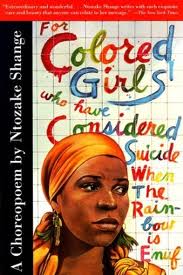
Somebody took all their stuff: The New and Old Colored Girls

Somebody took all their stuff: The New and Old Colored Girls

Somebody took all their stuff
By Peter Howell
Movie Critic
“Being coloured is a metaphysical dilemma,” a character says in For Colored Girls, and the thought follows that maybe Tyler Perry got this difficult stage-to-screen adaptation half right.

The writer/director behind the exceedingly broad comedy of the Madea franchise approaches the hit 1970s Ntozake Shange play with a pragmatism that succeeds in form but not in function.

A playwright himself, Perry has solved the metaphysical dilemma of what to do with a unique performance piece, originally titled For Colored Girls Who Have Considered Suicide When the Rainbow Is Enuf, that debuted in 1974 in a California coffee house.

The play was 20 narrative poems (a collective “choreopoem”) declaimed by seven actresses, each of them assigned a rainbow colour (it was the Seventies, after all). Observations and agitations were made about abortion, infidelity, promiscuity, date rape and self identity.

This wouldn’t work in a movie — not a mainstream one, at any rate — so admirer Perry sensibly provides the structure of a Harlem tenement house, which is presided over by watchful new character Gilda (Phylicia Rashad, superb).

Flowing into and around this building are those seven rainbow characters, played by a strong cast: Thandie Newton (Tangie/Orange); Janet Jackson (Jo/Red); Whoopi Goldberg (Alice/White); Anika Noni Rose (Yasmine/Yellow); Loretta Devine (Juanita/Green); Kimberly Elise (Crystal/Brown) and Kerry Washington (Kelly/Blue).

Perry adds a few more characters, notably male ones, and he handles the play’s poetry like the slams of the 1990s, allowing figures to simply throw down rhymes as the mood strikes and the narrative allows.

So far, so smart, and we can forgive the outdated “coloured” reference on the grounds of historical accuracy.

But Perry’s house comes tumbling down when the winds of misguided political correctness blow through. His vision of black women — and remember that he plays one in his Madea role — is almost entirely negative. As Marshall McLuhan might have observed, Perry gets the medium right, but not the message.
To be black and female in For Colored Girls is to be a victim of unending misery, and the cause of that misery is invariably black males.

One unhappy lady is promiscuous because her daddy abused her, and her lovers aren’t much better. Another is threatened by her psychotic ex-soldier boyfriend, and so are her children. An unwanted pregnancy (and botched abortion) threatens the life of one woman; another’s cheating husband results in a terrifying doctor’s report. And so it goes
In his obviously sincere desire to identify with and support black women, Perry neglects the equally urgent need to celebrate them and their achievements. A hokey “Kumbaya”-style gathering on a rooftop doesn’t cut it.

Is it really necessary to depict black men in such uniformly awful terms? In Perry’s skewed view, they’re all cheaters, rapists, murderers and general losers, and even the dead don’t escape his wrath. One woman blames her lousy mothering skills on the lack of a proper inheritance from her late grandfather. The one remotely decent guy in the film is insinuated to be lacking in something because he can’t get his woman pregnant.
Shange’s play was never this downbeat. By the time Devine’s social worker character Juanita wails the famous line “Somebody took all my stuff,” you begin to think the same about what Perry did to Shange.

Toronto Star 1996-2010 Terms & Conditions Privacy Policy

Can I Get a Witness?: Who’s Really Getting Screwed in the Black Church

Tuesday, September 28, 2010

Can I Get a Witness?: Who’s Really Getting Screwed in the Black Church

by David Ikard

Nation of Cowards

Several years back a close black clergy friend of mine was having marital problems.

 He discovered that his wife was having an affair and was struggling to reconcile the relationship.

In need of spiritual counsel, he sought out the advice of several of his clergy colleagues. To a man, he was advised to seek out the “sexual comfort” of his flock. Take the edge off, so to speak, and even the score with his wife.

Once the deed was done, the thinking went, he would be of a mind to return to his wife and reconcile the marriage. Though my clergy friend was acutely aware of the abuses of patriarchal leadership in the black church, even he was taken aback by the perverse level of male entitlement and sexual exploitation.
Read More