An FBI Agent Went Undercover to Study White Supremacists. He’s Now Speaking Out About Racist Police. – Mother Jones

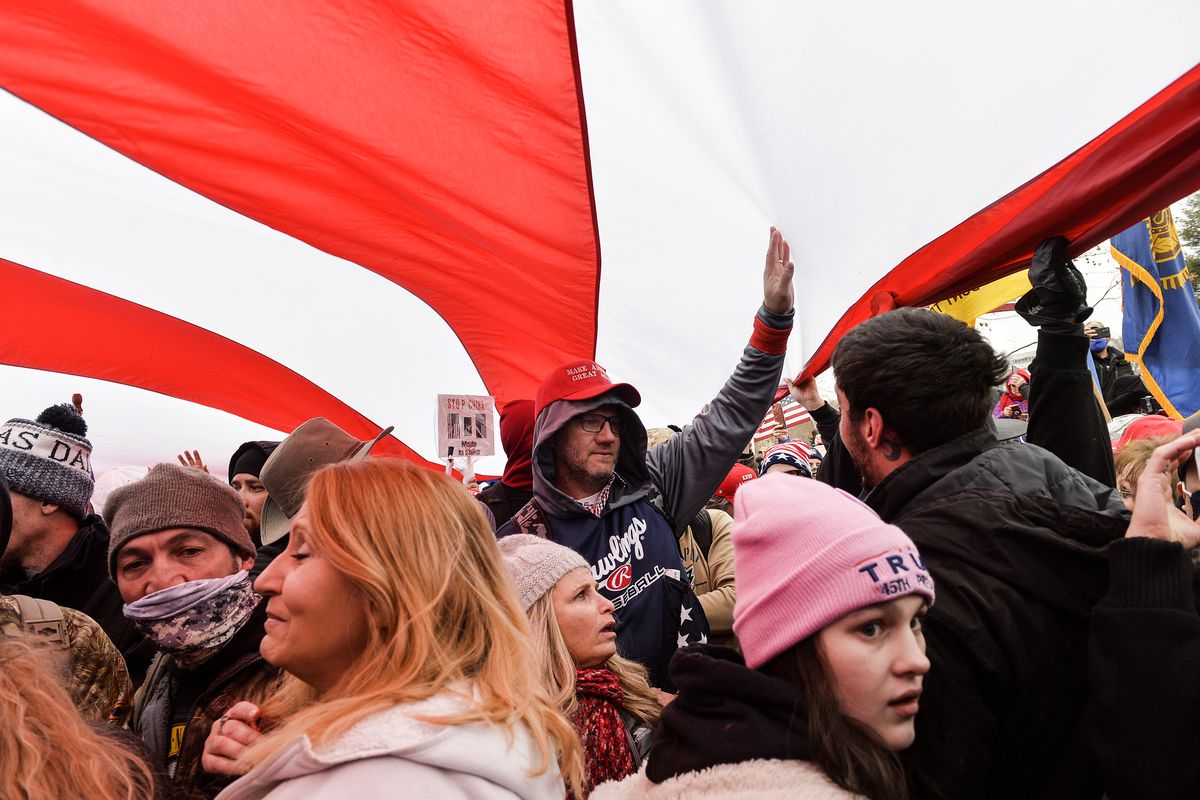
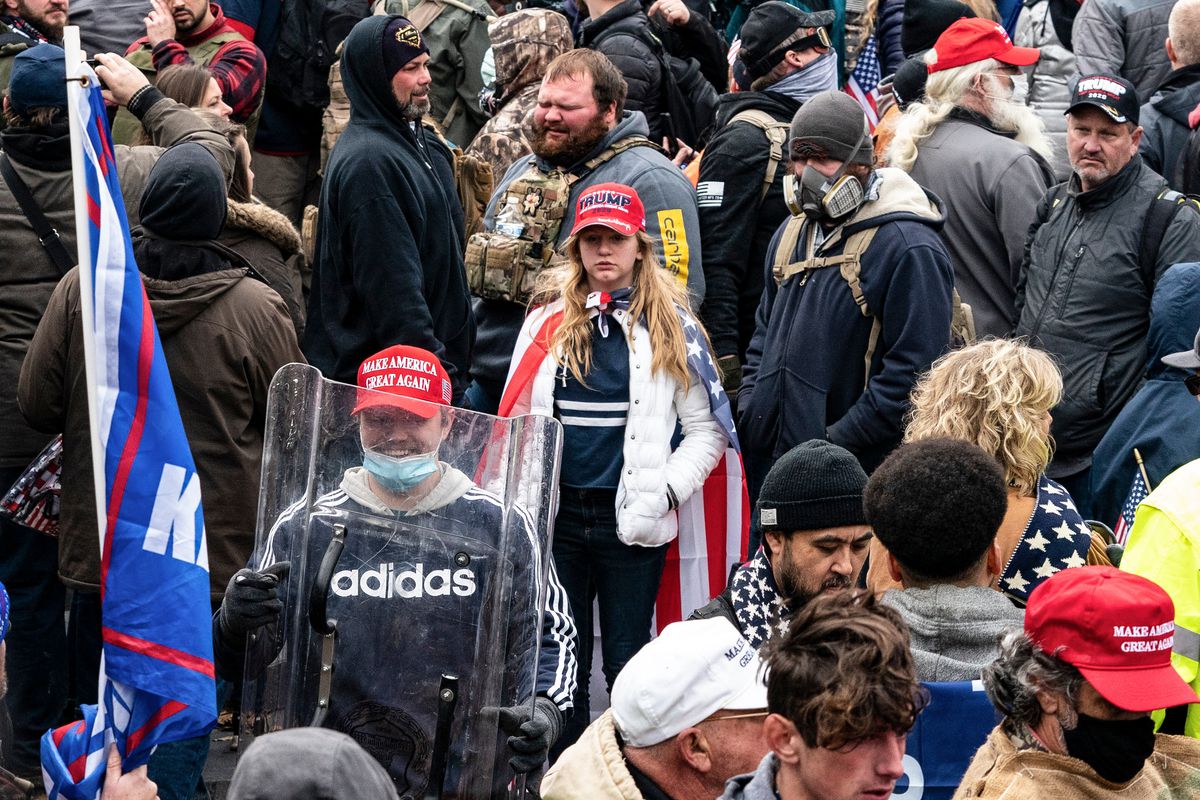
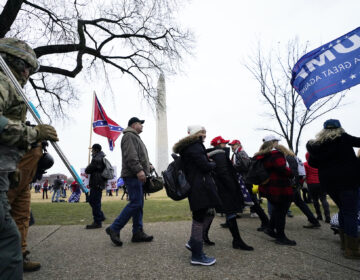
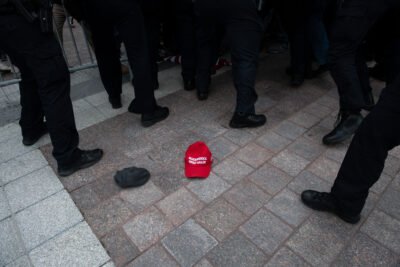
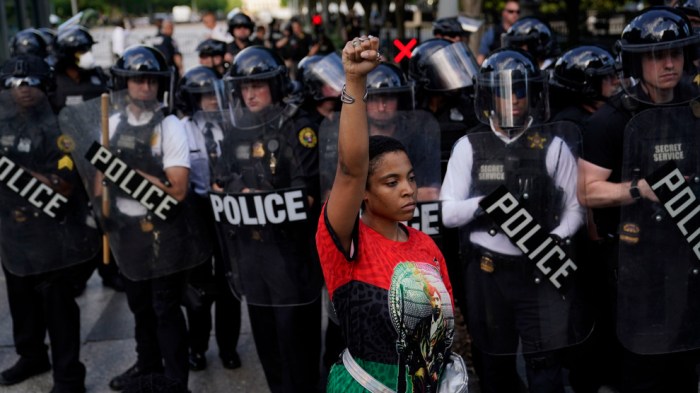
One Capitol Police officer was caught taking a selfie with a member of the white supremacist mob that overtook the US Capitol last week. A second officer has been suspended for wearing a “Make America Great Again” hat and directing insurrectionists around the building rather than handcuffing them. The storming of the Capitol has revived concerns about the ties between police and white supremacists, in part because officers arrested far more Black Lives Matter protesters this summer than they did Trump supporters who broke into the legislative building with weapons, at least one Confederate flag, and bundles of zip ties.

It wasn’t just on-duty cops who raised eyebrows: Off-duty law enforcement officers were allegedly part of the mob itself, with some flashing their badges and identification cards as they rushed through the doors, according to an on-duty DC Metro Police officer who saw them. “If these people can storm the Capitol building with no regard to punishment, you have to wonder how much they abuse their powers when they put on their uniforms,” the officer wrote later on Facebook, according to Politico.

Police departments around the country are now investigating officers who are suspected of attending the rally in DC, or were caught posting racist messages on social media. Days after the attack, New York Rep. Jamaal Bowman introduced a bill that would require a commission to examine whether Capitol Police officers have white supremacist ties.

For some experts, these investigations are far too little, too late: Police departments and federal agencies have long understood that certain cops are connected to racist groups, and have largely looked the other way. “We’ve known for decades that there are racial disparities in every step of the criminal justice process, from who gets stopped to who gets arrested to who police use force against to how they get charged,” says Michael German, a former FBI agent who now studies white supremacist infiltration of police departments as a fellow at the liberal Brennan Center for Justice, a think tank. “It’s treated as implicit bias or structural bias without an acknowledgment that there’s a lot of explicit bias driving these disparities.”

As an FBI agent in the 1990s, German went undercover with white supremacist and militia groups to thwart their bomb plots. At the time, the Justice Department warned him to be careful about sharing details of his investigations with cops, because some of them had ties to white supremacist groups themselves. Even so, in the decades since then, he says the FBI has not prioritized investigating those police officers and getting them off the streets, allowing them to continue their jobs. I caught up with German this week to ask how law enforcement agencies have fallen short in identifying and firing racist officers, and what they should be doing now, in the wake of the Capitol siege, to root them out.

Do we know roughly how many cops have ties to white supremacists? 

Unfortunately we don’t have a sense of the scope of the problem because no entity has made it their mission to identify the scope. But the FBI regularly warns its agents who are investigating white supremacists and far-right militants that the subjects of those investigations will often have active links to law enforcement, and that they need to alter their methodology to protect the integrity of their investigations. Those were warnings I received in the 1990s when I worked these cases, and they appear in published leaked FBI materials, including the 2015 counterterrorism policy guide.

When you say FBI agents alter their methodologies, do you mean they’re not supposed to collaborate as much with police while investigating white supremacists? 

Exactly. The counterterrorism policy guide recommends that the FBI put the subjects of these investigations on a watch list with what’s called the silent-hit function; if a police officer pulls over the subject of your investigation, a silent-hit function would not tell the officer that he’s interacting with someone who’s the subject of a terrorism investigation.

If the FBI knows this is a problem of such significance that it has to alter its methodologies of investigating cases, I would argue it also has to have a strategy to protect the public from these white supremacists and far-right militants who carry a badge. The fact that they don’t even document who these police officers are shows an inexcusable lack of attention to their mission to enforce the civil rights laws of this country as well as the counterterrorism laws.

In 2006, the FBI warned that for decades, white supremacist groups had been attempting to “recruit” police officers. Can you talk about the history of this?

It’s important to understand that the United States was founded as a white supremacist nation, so our laws enforced white supremacy, so those who were sworn to enforce the law were enforcing white supremacy. After slavery ended, you had Jim Crow. After the civil rights era, you still had sundown towns, where the police enforced unwritten rules about who could stay in town past dark. To imagine there was somehow a miraculous event that cured the police of that problem is foolish.

The most egregious are examples where police officers were actually members of white supremacist groups and would go to public events representing themselves as police officers. And their membership was known to law enforcement for years and unaddressed, and it was only when the public learned about it that the police department took action.

We do so little examination of police violence in this country, but we know it disproportionately targets people who are Black or brown. How much of that is driven from actual white supremacist ideology rather than isolated incidents that happen on the job is something the Justice Department has a responsibility to investigate.

What kind of recruitment techniques do white supremacist groups use with police?

Having spent time as an FBI undercover agent, I think the term [“recruit”] doesn’t accurately describe what’s happening. It’s not so much that this group will put a pamphlet together and make a recruiting pitch and approach officers. In many cases, these are people who grew up affiliating with white supremacists. One guy went to work as a prison guard, one guy went to work in factories, and the other guy went to work as a police officer. And they are just carrying on attitudes and associating with the same people they associated with when they weren’t a police officer.

Are there any police departments that have tried themselves to root out racist cops, and any that did a good job?

The departments tend to be reactive to public outrage. Part of the problem is that most law enforcement agencies don’t have written policies specifically addressing the issue. So when the public identifies somebody who’s operating in league with a white supremacist group or far-right militant group, they end up disciplining them under broad prohibitions against engaging in public conduct detrimental to the public interest, or similarly worded policies.

Sometimes this doesn’t stand up to the due process scrutiny that’s designed to protect innocent officers from being treating unfairly. So they end up getting their jobs back after they’re fired.

What I argue is that even where the conduct is not sufficient to terminate that officer, the police department still has an obligation to mitigate the threat they pose to the community. There are plenty of jobs in police departments that don’t regularly interact with the public. Or perhaps some extra level of supervision of that officer would be warranted.

What’s the main legal barrier to firing them? Police union contracts?

Right. Or just the lack of policy, or disparate treatment, where other officers known to engage in racist behavior weren’t fired in the past, so it’s unfair to fire this officer. Often, if the police department knew about your involvement with this white supremacist group for five years but is now trying to fire you, you can argue: “I’m not being fired because of the conduct, because the department knew about the conduct; I’m being fired because the public demanded it, and that’s not appropriate.” That’s the problem with the way we have just turned a blind eye to this problem for so many decades.

Is there anything else that government can do to address this problem?

What we need is to empower prosecutors and defense attorneys. When these [white supremacist] officers are identified by the agency or by the public, that information should be provided to prosecutors and they [the officer] should be put on no-call lists or Brady lists. Today these no-call lists are lists of officers who are known to have previously engaged in some kind of dishonest conduct that a defense attorney could use to impeach their testimony. My argument is that racist behavior is one of those categories that should be available to the defense attorney. [This can] force those agents off the street.

In an ideal world, what do you think the Justice Department or FBI’s role would be in rooting out white supremacist police officers?

What I would recommend is for the Justice Department to implement a national strategy to identify these officers, document the scope of the threat, and design programs to mitigate it. It’s a matter of priorities. If the FBI heard through the grapevine that a police officer was affiliating himself with Al Qaeda or ISIS, we can be confident the FBI would react quickly. They should act just as quickly when the police officer is associated with white supremacist and far-right militant groups.

Some people have expressed the idea that we need to create a list of designated domestic terrorist groups, but that’s a silly approach because these groups change their names regularly. In other words, writing a list of groups that are banned is not going to help. Because officers can look at the list and say, “Okay, I won’t join this group, but I’ll join this other group. Or I’ll be part of a group that previously called itself the KKK but now calls itself something else.” But it’s the same people engaged in the same racist conduct. It takes an understanding of how these groups actually organize before you can write a policy.

The officers and agents within these federal, state, and local law enforcement departments know who the racists are among them. What we need to do is make sure officers who see racist misconduct or far-right militancy within law enforcement are protected when they report it. We need to strengthen whistleblower protection laws.

You wrote in a recent report about a man in Anniston, Alabama, who applied to be a police officer, and listed on his application that he was part of the League of the South, a white supremacist secessionist group. He was hired anyway. Are cops’ racist ties often that obvious? 

Yes, often it is that obvious. So it’s not that they can’t be seen, it’s that nobody is looking for them.

Update (January 15): The Capitol Police officer who wore a MAGA hat claims he put on the cap as part of a plan to save some of his colleagues who were in danger, according to a new Wall Street Journal report.

Source: An FBI Agent Went Undercover to Study White Supremacists. He’s Now Speaking Out About Racist Police. – Mother Jones

The 10 Best Political Books of 2020 by Black Women – The Atlantic

Last year, Black women called upon themselves, made themselves heard, and shared their political talents and minds.

Source: The 10 Best Political Books of 2020 by Black Women – The Atlantic

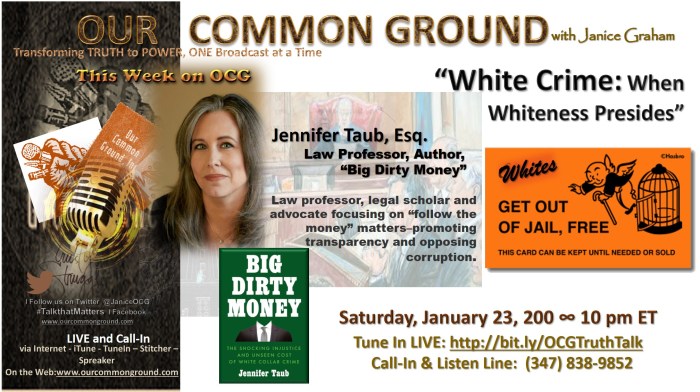
“White Collar Crime: How Whiteness Presides” ∴ Jennifer Taub, Esq. ∴ Author, “Big Dirty Money” ∴ January 23, 2021 ∴ 10 pm EST

““White Crime: When Whiteness Presides”

LIVE and Call-In

Saturday, January 16, 2021 ∞ 10 pm EST ∞ LIVE

Tune In LIVE Here: http://bit.ly/OCGTruthTalk

We all witnessed how whiteness protects white criminals at the nation’s Capitol Building and in DC. Law enforcement and the judiciary operate from principles that are formed from the public perspective of who should be arrested, charged, and prosecuted. For this reason, 100s of criminals were able to break the law and breach the building, and will not face the consequences. We all know what Black people would have faced under the same circumstances. Whiteness is a protection.

   – Janice

In a controversial 1975 article, titled “White Racism, Black Crime, and American Justice,” criminologist Robert Staples argued that discrimination pervades the justice system. He said the legal system was made by white men to protect white interests and keep Blacks down. (At the time this was received as “outlandish and untrue”). Staples charged that the system was characterized by second-rate legal help for Black defendants, biased jurors, and judges who discriminate in sentencing. No matter, study after study demonstrates how extreme racial disparities address for Blacks in the judicial system, no matter the income strata or available resources.

Unwarranted disparity is defined as different treatment of individual offenders who are similar in relevant ways, or similar treatment of individual offenders who differ in characteristics that are relevant to the purposes of charging and sentencing. Whiteness is honored, it is protected and it blinds much of the judicial process. We can no longer deny, racial disparities exist because the system protects whiteness for the most part. It is clear that in sentencing especially, “departure” from the guidelines is reserved for mostly whites, and rarely extended to Blacks. Fair sentencing is individualized sentencing and it is mostly decided by people who value whiteness, having a value system of what crimes are punishable with distinct stereotyping of criminals.

Our guest, Professor Jennifer Taub, in her book, “Big Dirty Money” suggests we first attempt to measure white-collar crime as a whole. Then we need to measure the harm to victims in terms that go beyond the economic costs. She points out that “The wealthy have the resources either to exert political influence or become lawmakers themselves”. But Taub explicitly and persuasively places the breakdown of enforcement and accountability in the context of money and class.

What happens when a group of wealthy bankers fraudulently bring foreclosures on an entire class of people, as they did after the crash of 2008? Unlike a loss of, say, $210, the loss of a person’s home affects their life and well-being in ways that cannot be assigned a dollar amount. Thousands of people have spent the years since the recession uprooted from their communities. Taub posits that “the elite class had the power to define what was criminal.”

What happens when the President of the United States pardons criminals who have violated security, foreign interference, sedition, and treason laws? Trump is a stark illustration of why so few wealthy malefactors are held accountable. Like other members of the .01 percent, he can act with seeming impunity, able to buy or influence his way out of trouble. He empathizes with rich people who run afoul of the law. He minimizes their guilt, suggesting white-collar crimes aren’t really crimes, especially when the accused are white men, as the vast majority of all rich white-collar criminals are. Yet Trump is a symptom, not the cause. What happens when white politicians create laws to intentionally suppress and violate voters? How can we measure the social and political costs of mass dispossession because the defendant and violator are protected by a cloud of whiteness?

We will talk with Professor Taub who clearly articulates in her book, the cause and effect of white-collar crime “blinded by the whiteness” that plagues the judicial system. Leaving white-crime bosses to their devices operated by their money and “white card”.   

ABOUT Jennifer Taub, Esq.

Her newest book is, Big Dirty Money: The Shocking Injustice and Unseen Cost of White Collar Crime (Viking). Taub was a co-founder and organizer of the April 15, 2017 Tax March where more than 120,000 people gathered in cities nationwide to demand President Donald Trump release his tax returns. She is a professor of law at the Western New England University School of Law where she teaches Civil Procedure, White Collar Crime, and other business and commercial law courses, and was the Bruce W. Nichols Visiting Professor of Law at Harvard Law School during the fall 2019 semester. She formerly was a professor at Vermont Law School.

An authority on the 2008 mortgage meltdown and related financial crisis, Taub is also an emerging expert in white collar crime. In addition to Big Dirty Money, she is co-author with the late Kathleen Brickey of Corporate and White Collar Crime: Cases and Materials, 6th edition (Wolters Kluwer 2017). Relatedly, she has appeared on cable news programs including MSNBC’s Morning Joe and CNN Newsroom to discuss the Special Counsel investigation into links between Russia and the Trump presidential campaign.

In the area of banking and financial market regulation, Taub’s book Other People’s Houses: How Decades of Bailouts, Captive Regulators, and Toxic Bankers Made Home Mortgages a Thrilling Business was published in May 2014 by Yale University Press. Recognized as accessible and informative, OPH was honored by the Massachusetts Center for the Book as one of the 2015 finalists in the nonfiction category. Other People’s Houses was favorably mentioned by Nobel Laureate, Robert Shiller in his 2015 edition of Irrational Exuberance. Taub testified as an expert before the United States Senate Banking Committee and a United States House Financial Services Subcommittee. She also co-organized a conference and co-lead a panel discussion at the Financial Stability Law Workshop at the U.S. Treasury Department, hosted by the Office of Financial Research.

In addition to Other People’s Houses, Taub has written extensively on the financial crisis. Her publications include “The Sophisticated Investor and the Global Financial Crisis” in the peer-reviewed Corporate Governance Failures (UPenn Press, 2011) and a case study on AIG in Robert A. G. Monks and Nell Minow’s fifth edition of Corporate Governance (Wiley, 2011). In response to Roberta Romano, she presented and wrote “Regulating in the Light: Harnessing Political Entrepreneurs’ Energy for Post-Crisis Sunlight Hearings” (St. Thomas L. Rev. 2015). Additional works include the chapter “Delay, Dilutions, and Delusions: Implementing the Dodd-Frank Act” in Restoring Shared Prosperity (2013) and “What We Don’t Talk About When We Talk About Banking,” in the Handbook on the Political Economy of the Financial Crisis (Oxford, 2012). She wrote entries on “Shadow Banking” and “Financial Deregulation” for the Oxford Encyclopedia of American Business, Labor and Economic History (Oxford, 2013) and the chapter “Great Expectations for the Office of Financial Research,” in Will it Work? How Will We Know? The Future of Financial Reform (2010). In addition, she has published Reforming the Banks for Good in Dissent (2014). Her article, “The Subprime Specter Returns: High Finance and the Growth of High-Risk Consumer Debt,” was published in the New Labor Forum (2015). And, she recently wrote a book chapter on “New Hopes and Hazards for Social Investment Crowdfunding” in Law and Policy for a New Economy (Edward Elgar, 2017).

Taub’s corporate governance work often focuses on the role of institutional investors, including mutual funds. Her article “Able but Not Willing: The Failure of Mutual Fund Advisers to Advocate for Shareholders’ Rights,” published in the Journal of Corporation Law (2009) was presented at a conference jointly sponsored by the Millstein Center for Corporate Governance and the Oxford Said Business School. Her article “Managers in the Middle: Seeing and Sanctioning Corporate Political Spending after Citizens United” was presented at the Brennan Center for Justice at NYU and later published in the NYU Journal of Legislation and Public Policy (2012). Taub’s article, “Is Hobby Lobby a Tool for Limiting Corporate Constitutional Rights,” was presented at Harvard Law School and later published in a symposium issue of Constitutional Commentary in 2015 on Money, Politics, Corporations, and the Constitution (2015).

Taub has also ventured into the area of legal education and pedagogy. This includes her article “Unpopular Contracts and Why They Matter: Burying Langdell and Enlivening Students,” published in the Washington Law Review (2013). She is a co-author with Martha McCluskey and Frank Pasquale of “Law and Economics: Contemporary Approaches,” published in Yale Law & Policy Review (2016). With McCluskey and Pasquale, Taub is a co-founder of APPEAL (the Association for the Promotion of Political Economy and the Law), a research network linking economists, legal scholars, and policy makers concerned with inequality and instability who view markets and the government as mutually constituted. She has also developed a model syllabus for a course on Financial Stability.

In 2017, Taub received the Vermont Law School, Women’s Law Association Phenomenal Woman Award in the faculty category. She also served as chair of the Section on Financial Institutions and Consumer Financial Services for the 2017 AALS annual meeting. Prior to joining academia, Taub was an associate general counsel with Fidelity Investments. She received her BA degree, cum laude, from Yale University, with distinction in the English major, and her JD, cum laude, from Harvard Law School where she was the Recent Developments Editor at the Harvard Women’s Law Journal. She was a visiting professor at the University of Illinois College of Law for a short course in 2015 and a visiting fellow at the Yale School of Management during the 2016 spring semester. She was a visiting professor at the University of Connecticut School of Law during the 2019 spring semester.

Taub has written pieces for a variety of platforms including The Washington Post, CNN opinion page, Slate, the New York Times Dealbook, Dame Magazine, The Baseline Scenario, Race to the Bottom, Pareto Commons, The Conglomerate, and Concurring Opinions.

“I’ll Be Listening for You”

Janice

Join us LIVE: http://bit.ly/OCGTruthTalk

Call & Listen Line: (347) 838-9852

What Parler Saw During the Attack on the Capitol | ProPublica

Attack on the Capitol

This story contains videos that viewers may find disturbing.
ProPublica is a nonprofit newsroom that investigates abuses of power. Sign up to receive our biggest stories as soon as they’re published.

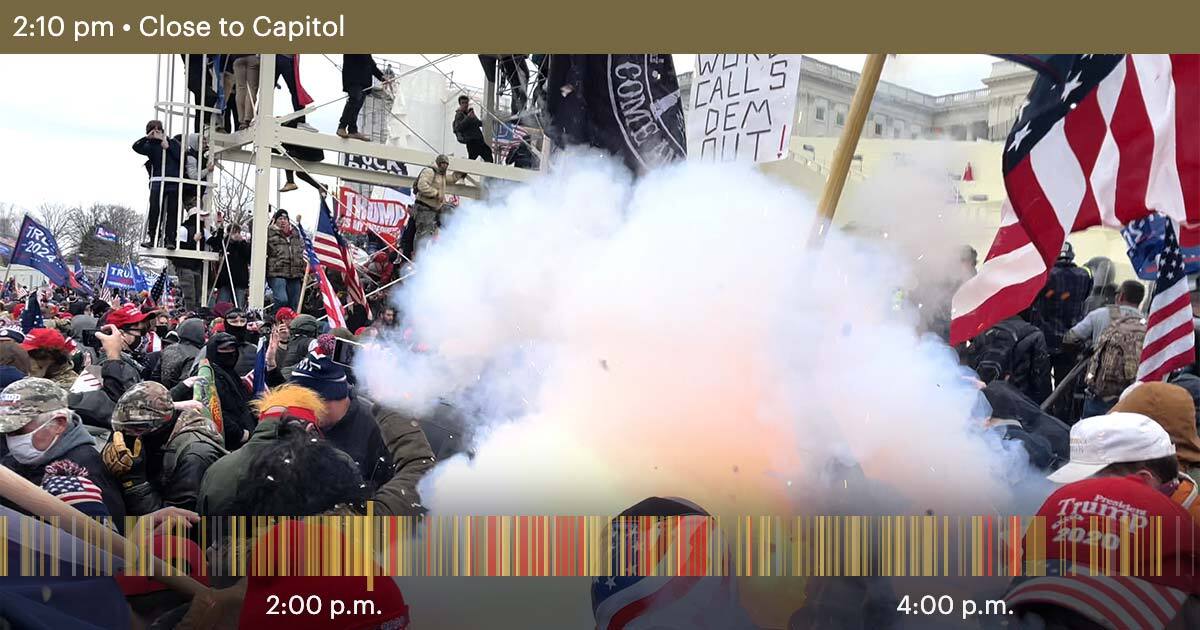
As supporters of President Donald Trump took part in a violent riot at the Capitol, users of the social media service Parler posted videos of themselves and others joining the fray. ProPublica reviewed thousands of videos uploaded publicly to the service that were archived by a programmer before Parler was taken offline by its web host. Below is a collection of more than 500 videos that ProPublica determined were taken during the events of Jan. 6 and were relevant and newsworthy. Taken together, they provide one of the most comprehensive records of a dark event in American history through the eyes of those who took part. Read more: Why We Published Hundreds of Videos Taken by Parler Users of the Capitol Riots | Inside the Capitol Riot: What the Parler Videos Reveal

Videos are ordered by the time they were taken. Scroll down to start watching or click on the timeline to jump to any point in the day.

Source: What Parler Saw During the Attack on the Capitol | ProPublica

White women’s role in white supremacy, explained – Vox

It’s tempting to think of the storming of the US Capitol on Wednesday as toxic masculinity run amok: a mob of mostly white men, carrying guns and wearing animal skins, trying to overthrow democracy on behalf of a president who once bragged about his ability to grab women “by the pussy.”

It’s even more tempting to embrace this narrative when, in a bizarre statement, that president’s campaign press secretary describes him as “the most masculine person, I think, to ever hold the White House.”

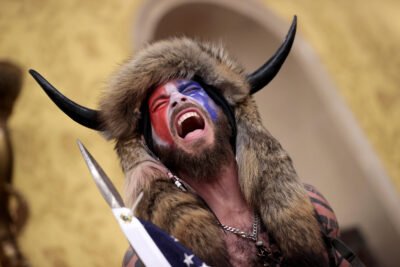
But focusing too much on masculinity obscures a crucial truth: Many women were either present at the riot or cheering on the insurrectionists from back home. There was Ashli Babbitt, the 35-year-old Air Force veteran and apparent devotee of QAnon ideology who was killed during the riot. There was the woman photographed with “zip-tie guy” Eric Munchel, now believed to be his mother. There was Martha Chansley, the mother of the widely photographed “QAnon shaman” who wore a horned hat and carried a spear to Congress. She wasn’t present at the riot but later defended her son in an interview, calling him “a great patriot, a veteran, a person who loves this country.”

And, of course, there were the women lawmakers who boosted conspiracy theories and false claims about the election being stolen, including Georgia Rep. Marjorie Taylor Greene, a QAnon adherent who railed against Democrats and Black Lives Matter protesters in a speech on the House floor this week while wearing a mask reading “censored.” Colorado Rep. Lauren Boebert, meanwhile, described January 6 as “1776” before the riot began, live-tweeted from the House during the attack (including a mention that House Speaker Nancy Pelosi had been removed from the chambers), and this week, refused to allow police to search her bag after it set off metal detectors outside Congress. During her campaign, Boebert promised to bring her gun with her to the House.

Many women were either present at the riot or cheering on the insurrectionists from back home.
 Joseph Prezioso/AFP via Getty Images
If we ignore the importance of women in the Capitol riot, we can’t understand white supremacy in America.
 Alex Edelman/AFP via Getty Images

White women have been part of white supremacy in America since the very beginning, experts point out, dating back to their role in slavery. “They were at the table when the system was designed,” Stephanie Jones-Rogers, a history professor at UC Berkeley and author of the book They Were Her Property: White Women as Slave Owners in the American South, told Vox. “They were co-architects of the system.”

That remained true after the Civil War, through the birth and evolution of the Ku Klux Klan, and during the civil rights movement when white women were some of the most vocal opponents of school integration. And it remains true today, when women hold a key role in spreading QAnon ideology and sustaining white nationalist groups and movements. “Like other parts of our economy and society, these movements would collapse without their labor,” Seyward Darby, author of Sisters in Hate: American Women on the Front Lines of White Nationalism, told Vox.

And if we ignore the importance of women in the Capitol riot and the groups that backed and enabled it, we can’t understand white supremacy in America — let alone dismantle it. Trying to fight racism in America without looking at white women, Jones-Rogers said, is like “addressing only the right side of the body when the left side is still sick.”

White women have been part of white supremacy from the beginning

White women’s investment in white supremacy is older than the United States itself and goes back to their role in the economy of slavery. Though white women have been seen by some historians as passive bystanders to the brutalities of slavery, they were in fact active participants, as Jones-Rogers explains in They Were Her Property. Before the Civil War, white women had little economic or political power, with one big exception: They could buy and sell enslaved people. And they did so, using enslaved people as a way of building up wealth that would not simply be transferred to a husband in marriage.

Slavery gave white women “freedom, autonomy, and agency that they could not exercise in their lives without it, so they deeply invested in it,” Jones-Rogers said.

And after the Civil War, white women didn’t simply give up on white supremacy. Instead, as Jones-Rogers puts it, they doubled down.

For many, that meant becoming active participants in the KKK, which at one point had 1.5 million female members. Some women took leadership roles, like Elizabeth Tyler, who helped revive the Klan in the late 1910s and became its “most important propagandist,” according to Darby.

Women became especially important in the Klan once they gained the right to vote. After that, white men began to see their wives, daughters, sisters, and other women in their lives “as potential allies in the effort to politicize white supremacy,” Jones-Rogers said. “They began to see them as a voting bloc.”

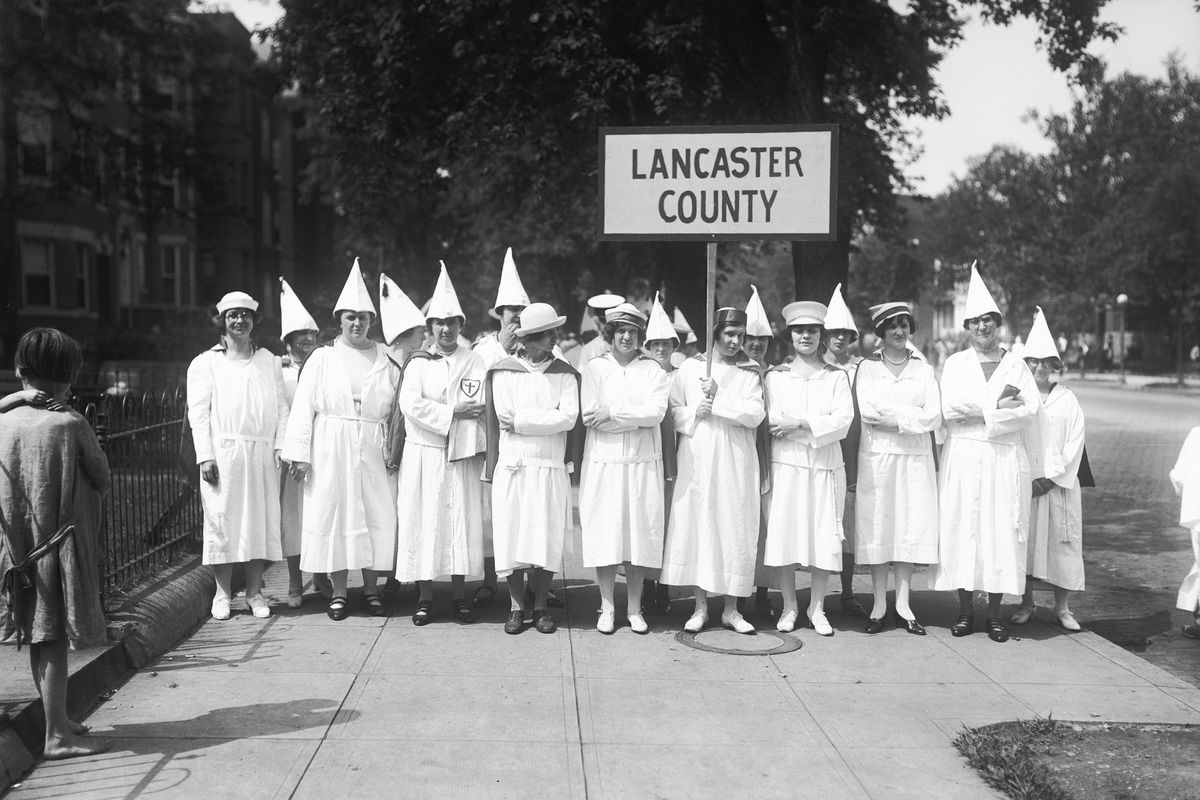
Women members of the Ku Klux Klan from Lancaster County, Pennsylvania, arrive in Washington, DC, for a KKK parade, circa 1920.
 Bettmann Archive via Getty Images
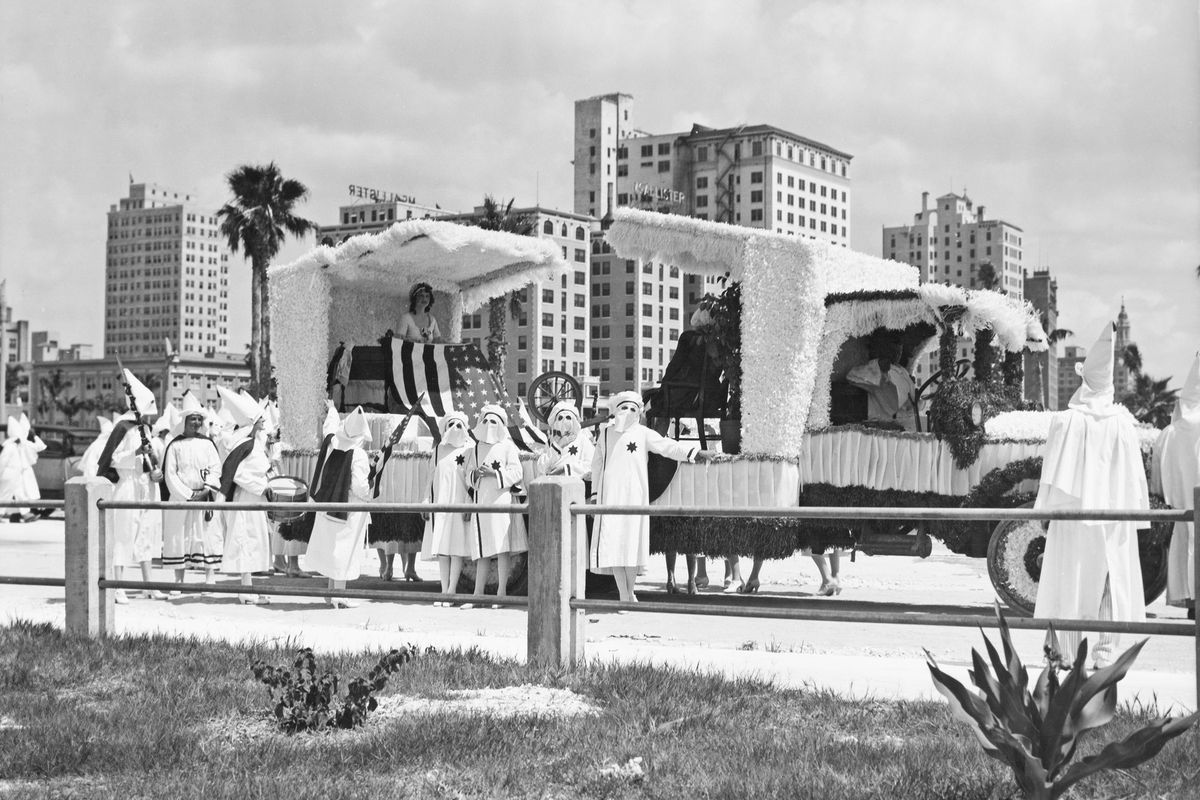
A group of Ku Klux Klan women next to a parade float in Miami, circa 1940.
 Frederic Lewis/Archive Photos/Getty Images

And it wasn’t just because of organizations like the Klan that white women invested in institutional racism. They also played a core role in lynching by making false allegations of sexual harassment or assault, which were used as a pretext to murder Black men. And they were key players in the fight against the integration of schools, with white women using their role as mothers to legitimize their victimization of Black children, Jones-Rogers said.

Indeed, throughout the 20th century, though white women could no longer profit from slavery, they were still deriving real benefits from white supremacy — namely, a sense of social and political power in a world still dominated by white men. “Through lynching, your words have the power of life and death over an African-descended man,” Jones-Rogers explained. “Your vote can secure a place in the state, in the government, for white supremacy.”

In essence, through white supremacy, white women came to “understand themselves as individuals who wield a certain kind of power that men have to respect,” Jones-Rogers said.

Understanding white women’s role is key to fighting racism today

And that dynamic has continued into the 21st century. The landscape of white supremacy has changed, with the Klan no longer a major player (though it still exists). Today, white nationalism is less about specific groups and more about “an ideology that people subscribe to from the comfort of their own desks,” Darby said.

Because of that, it’s hard to measure exactly how many women are involved in white nationalism. It’s easier to measure attitudes. Overall, about 20 percent of white Americans of all genders “feel a sense of discontent” over the status of white people in society, Darby writes in Sisters in Hate, drawing on the work of political scientist Ashley Jardina. And white women are actually more likely than white men to hold “exclusionary views about what it means to be American, preferring boundaries around the nation’s identity that maintain it in their image.”

And while they may not always be in front at rallies or riots, women remain important “recruiters and propagandists” for white nationalism, Darby said. Erica Alduino, for example, had a key role in organizing the infamous “Unite the Right” rally in Charlottesville, Virginia, in 2017. She was the one directing traffic on messaging apps and answering mundane but important questions like whether there would be shuttle buses to the rally. She didn’t speak at the event, “but that’s not the point,” Darby said. “Whether women are seen or not seen, they are such important actors in this space.”

Women have also been central to organizing pro-Trump events that spread the false claim that the election was stolen. The group Women for America First organized a “Stop the Steal” rally of thousands in November and also received a permit for a rally at the Capitol on January 6, according to the Washington Post.

Meanwhile, women have taken an even more visible role with the rise of QAnon. An ideology that began with conspiracy theories about Trump battling a “cabal” of liberals involved in child sex trafficking, QAnon has grown to include a wider array of theories and misinformation. Last year, QAnon adherents began amplifying the hashtag #SaveTheChildren, which became a vehicle for false claims about the prevalence of child sex trafficking as well as a gateway for more extreme QAnon ideas. And many of the people posting with #SaveTheChildren — including celebrities and prominent influencers — were women.

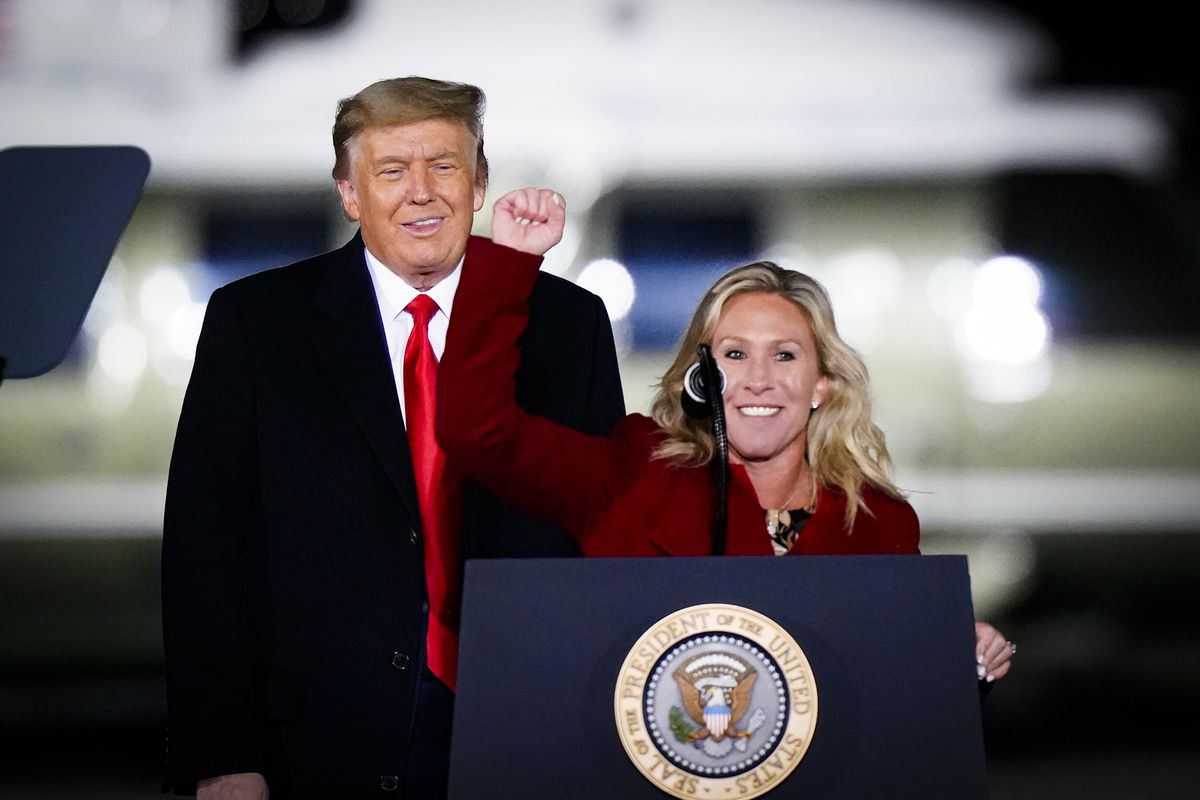
Rep. Marjorie Taylor Greene (R-GA) campaigns for Sens. Kelly Loeffler and David Perdue alongside President Trump on January 4.
 Brynn Anderson/AP

In general, QAnon has been a way to co-opt messages long targeted at women — messages about the importance of natural living or even healthy food, for example — and turn them into an indoctrination in white nationalism and xenophobia. QAnon plays into “this idea that you can cleanse yourself and your life and your family’s life of pollutants,” Darby said. Messages about avoiding genetically modified foods, for example, can slide into messages about keeping non-white children out of schools.

In the last few months, QAnon has played a key role in boosting conspiracy theories about Covid-19 restrictions and masking, and backing attempts to overturn the election. And some of the most visible proponents of QAnon have been women. Greene, for example, has been called the first QAnon member of Congress and has tweeted support for the idea of the “deep state,” a core QAnon tenet.

Meanwhile, Ashli Babbitt, the woman who was killed by police at the Capitol riot, had been posting QAnon-related content on social media for nearly a year prior to the insurrection, according to the Guardian. The day before the riot, she tweeted a defiant message full of QAnon slogans: “Nothing will stop us….they can try and try and try but the storm is here and it is descending upon DC in less than 24 hours….dark to light!”

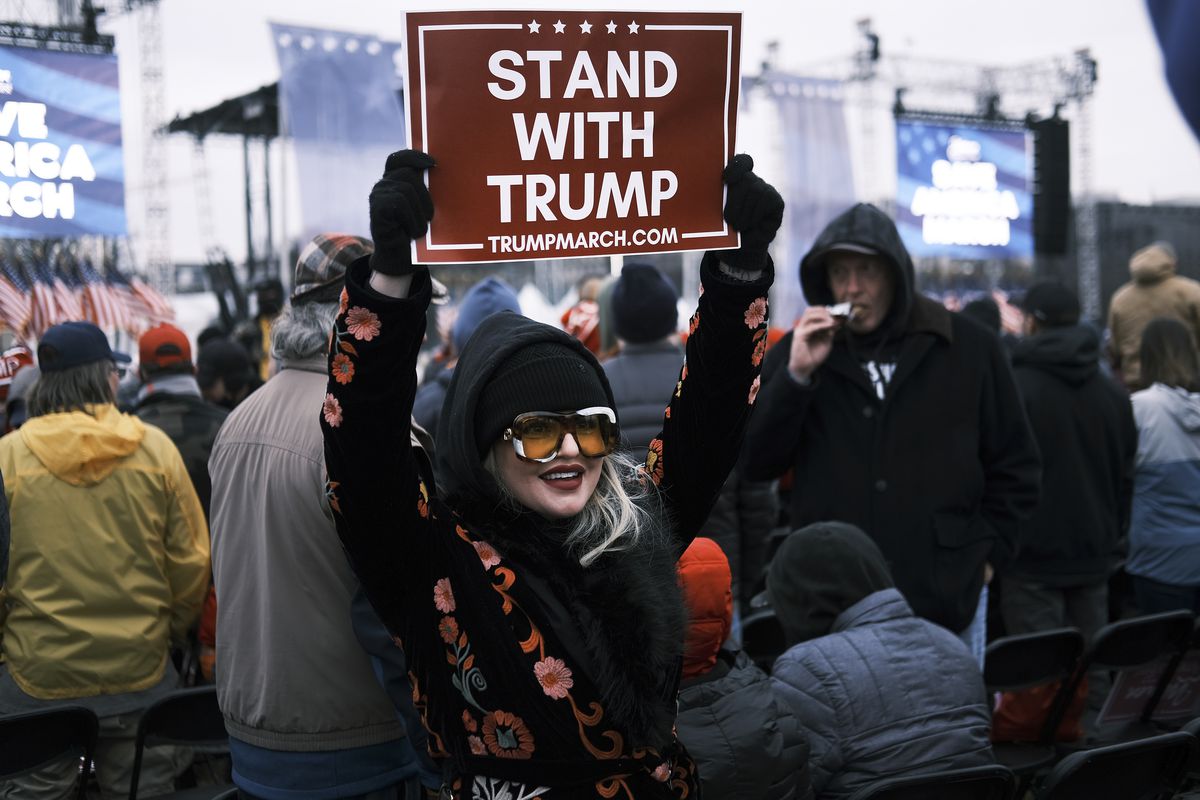
Trump supporters arrive for the “Stop the Steal” rally on January 6.
 Spencer Platt/Getty Images
Women have been central to organizing pro-Trump events that spread the false claim that the election was stolen. 
Spencer Platt/Getty Images

Despite the participation of Babbitt and others, there’s been a tendency to view the riot as largely male-dominated — and, indeed, to erase the presence of women in white supremacy throughout history. “There has been a tendency, from the colonial period to the present, to frame and to position white women as perpetual victims, in spite of the evidence to the contrary,” Jones-Rogers said.

But ignoring the fact that women have long been perpetrators of white supremacy — up to and including violence — will hamper any effort to truly fight it. “When we discount these women and the often violent and brutal roles that these women play,” Jones-Rogers said, “we neglect and we negate the impact that their activities have on their victims.”

If, by contrast, we as a society can reckon with the way that white women have been not just beneficiaries but designers of the system of white supremacy, she said, we will be better able “to dismantle the system and to address the ways in which the system has really pervaded all of our lives.”

Source: White women’s role in white supremacy, explained – Vox

The GOP Must Choose Between Conspiracy and Reality – The Atlantic

The GOP Must Choose Between Conspiracy and Reality

QAnon Is Destroying the GOP From Within

Until last week, too many in the Republican Party thought they could preach the Constitution and wink at QAnon. They can’t.

“The violence that Americans witnessed—and that might recur in the coming days—is not a protest gone awry or the work of “a few bad apples.” It is the blossoming of a rotten seed that took root in the Republican Party some time ago and has been nourished by treachery, poor political judgment, and cowardice. When Trump leaves office, my party faces a choice: We can dedicate ourselves to defending the Constitution and perpetuating our best American institutions and traditions, or we can be a party of conspiracy theories, cable-news fantasies, and the ruin that comes with them. We can be the party of Eisenhower, or the party of the conspiracist Alex Jones. We can applaud Officer Goodman or side with the mob he outwitted. We cannot do both.

If and when the House sends its article of impeachment against Trump to the Senate, I will be a juror in his trial, and thus what I can say in advance is limited. But no matter what happens in that trial, the Republican Party faces a separate reckoning. Until last week, many party leaders and consultants thought they could preach the Constitution while winking at QAnon. They can’t. The GOP must reject conspiracy theories or be consumed by them. Now is the time to decide what this party is about.”

Source: The GOP Must Choose Between Conspiracy and Reality – The Atlantic

Martin Luther King Jr: New documentary on FBI surveillance – BBC News

Martin Luther King Jr: New documentary on FBI surveillanceMartin Luther King Jr: New documentary on FBI surveillance

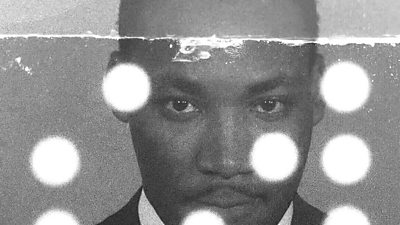
CloseShortly after Dr. Martin Luther King Jr led the march on Washington in 1963, FBI agents were ordered to start following the famed civil rights leader.The extent of the surveillance shocked documentary maker Sam Pollard so much he decided to start digging. He managed to uncover FBI documents, sourced secret White House phone calls, and found long-forgotten footage of King at the peak of his career. With interviews from King’s contemporaries Clarence Jones and Andrew Young and former FBI agents, MLK/FBI paints a picture which, as Pollard tells the BBC’s Alex Stanger, mirrors today’s reality.

Watch preview here:  https://www.bbc.com/news/av-embeds/55620286/vpid/p093xfl2“>

Source: Martin Luther King Jr: New documentary on FBI surveillance – BBC News

We Are Not Slaves — An Author’s Response – AAIHS

During a symposium on We Are Not SlavesErnest McMillen, a co-founder of SNCC, Dallas, and an activist for the incarcerated, observed that, “The prison system is a microcosm, a concentration, of what is actually in the whole of society. This idea of going from the universal to the particular, and back to the particular and to the universal, is very important for people to see,” McMillen continued, “because the very forces [of oppression] that are at work concentrated in the prison system, are the same as those at work in our everyday society—from economic exploitation, to racism, to sexism, to untold injustices that we see every day. They are perfected first in the prison system.” This incredibly thoughtful observation is precisely why I wrote We Are Not Slaves.

*This post is part of our online roundtable on Robert T. Chase’s We Are Not Slaves. On Friday, January 15, at 12noon EST, Chase will be in conversation with Talitha LeFlouria about this book. The event is free and open to all. Click here to register for the event. During a symposium on We Are


“Hicks’ poignant conclusion reminds us that the ravages of COVID-19 leave today’s incarcerated peoples especially vulnerable. In a recent discussion with Kinetik Justice, the co-founder of the Free Alabama Movement, he told me that he had been placed in permanent solitary because of his organizing, but was recently relocated. In his words, “it’s obvious that several people in this neighborhood have been exposed to the virus and it’s very probable that the Administration knew that prior to moving me. Could it be coincidence? Lol. Well, it could be.” 2 This twenty-first century punitive cell displacement near a bio-virus harkens back to the disciplinary strategy I uncovered of purposeful cell displacement to generate racial and sexual violence. The disciplinary tools may change, but the strategies remain similar. Hughett’s final point is where I also concluded We Are Not Slaves, ending carceral violence “will require abolishing the prison.” That political project requires resistance against both the prison particular and the universal carceral apparatus and with a broad coalition of people inside and outside of prison.”

Source: We Are Not Slaves — An Author’s Response – AAIHS

“No One Took Us Seriously”: Black Cops Warned About Racist Capitol Police Officers for Years

“No One Took Us Seriously”: Black Cops Warned About Racist Capitol Police Officers for Years

Allegations of racism against the Capitol Police are nothing new: Over 250 Black cops have sued the department since 2001. Some of those former officers now say it’s no surprise white nationalists were able to storm the building.

Creative Commons

U.S. Capitol Police officers scuffle with insurrectionists after they breached security fencing on Jan. 6. (Graeme Sloan/Bloomberg via Getty Images)

ProPublica is a nonprofit newsroom that investigates abuses of power. Sign up to receive our biggest stories as soon as they’re published.

When Kim Dine took over as the new chief of the U.S. Capitol Police in 2012, he knew he had a serious problem.

Since 2001, hundreds of Black officers had sued the department for racial discrimination. They alleged that white officers called Black colleagues slurs like the N-word and that one officer found a hangman’s noose on his locker. White officers were called “huk lovers” or “FOGs” — short for “friends of gangsters” — if they were friendly with their Black colleagues. Black officers faced “unprovoked traffic stops” from fellow Capitol Police officers. One Black officer claimed he heard a colleague say, “Obama monkey, go back to Africa.”

In case after case, agency lawyers denied wrongdoing. But in an interview, Dine said it was clear he had to address the department’s charged racial climate. He said he promoted a Black officer to assistant chief, a first for the agency, and tried to increase diversity by changing the force’s hiring practices. He also said he hired a Black woman to lead a diversity office and created a new disciplinary body within the department, promoting a Black woman to lead it.

“There is a problem with racism in this country, in pretty much every establishment that exists,” said Dine, who left the agency in 2016. “You can always do more in retrospect.”

Whether the Capitol Police managed to root out racist officers will be one of many issues raised as Congress investigates the agency’s failure to prevent a mob of Trump supporters from attacking the Capitol while lawmakers inside voted to formalize the electoral victory of President-elect Joe Biden.

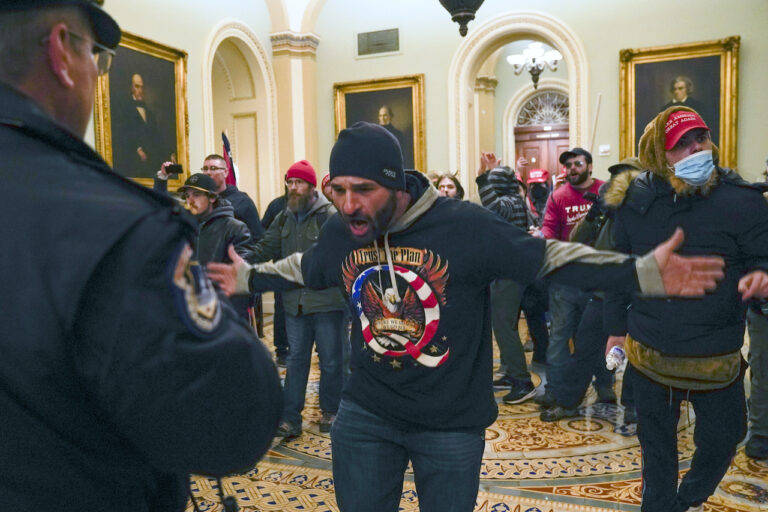
Already, officials have suspended several police officers for possible complicity with insurrectionists, one of whom was pictured waving a Confederate battle flag as he occupied the building. One cop was captured on tape seeming to take selfies with protesters, while another allegedly wore a red “Make America Great Again” hat as he directed protesters around the Capitol building. While many officers were filmed fighting off rioters, at least 12 others are under investigation for possibly assisting them.

Two current Black Capitol Police officers told BuzzFeed News that they were angered by leadership failures that they said put them at risk as racist members of the mob stormed the building. The Capitol Police force is only 29% Black in a city that’s 46% Black. By contrast, as of 2018, 52% of Washington Metropolitan police officers were Black. The Capitol Police are comparable to the Metropolitan force in spending, employing more than 2,300 people and boasting an annual budget of about a half-billion dollars.

The Capitol Police did not immediately respond to questions for this story.

Sharon Blackmon-Malloy, a former Capitol Police officer who was the lead plaintiff in the 2001 discrimination lawsuit filed against the department, said she was not surprised that pro-Trump rioters burst into the Capitol last week.

In her 25 years with the Capitol Police, Blackmon-Malloy spent decades trying to raise the alarm about what she saw as endemic racism within the force, even organizing demonstrations where Black officers would return to the Capitol off-duty, protesting outside the building they usually protect.

The 2001 case, which started with more than 250 plaintiffs, remains pending. As recently as 2016, a Black female officer filed a racial discrimination complaint against the department.

“Nothing ever really was resolved. Congress turned a blind eye to racism on the Hill,” Blackmon-Malloy, who retired as a lieutenant in 2007, told ProPublica. She is now vice president of the U.S. Capitol Black Police Association, which held 16 demonstrations protesting alleged discrimination between 2013 and 2018. “We got Jan. 6 because no one took us seriously.”

Retired Lt. Frank Adams sued the department in 2001 and again in 2012 for racial discrimination. A Black, 20-year veteran of the force, Adams supervised mostly white officers in the patrol division. He told ProPublica he endured or witnessed racism and sexism constantly. He said that before he joined the division, there was a policy he referred to as “meet and greet,” where officers were directed to stop any Black person on the Hill. He also said that in another unit, he once found a cartoon on his desk of a Black man ascending to heaven only to be greeted by a Ku Klux Klan wizard. When he complained to his superior officers, he said he was denied promotions and training opportunities, and suffered other forms of retaliation.

In an interview, he drew a direct line between racism in the Capitol Police and the events that unfolded last week. He blamed Congress for not listening to Black members of the force years ago.

“They only become involved in oversight when it’s in the news cycle,” said Adams, who retired in 2011. “They ignored the racism happening in the department. They ignored the hate.”

The department’s record in other areas of policing have drawn criticism as well.

In 2015, a man landed a gyrocopter on the Capitol lawn — top officials didn’t know the airborne activist was coming until minutes before he touched down. In 2013, when a lone gunman opened fire at the nearby Navy Yard, killing 12 people, the Capitol Police were criticized for standing on the sidelines. The force’s leadership board later determined its actions were justified.

Last month, days after a bloody clash on Dec. 12 between militant Trump supporters and counterprotesters, Melissa Byrne and Chibundu Nnake were entering the Capitol when they saw a strangely dressed man just outside the building, carrying a spear.

He was a figure they would come to recognize — Jacob Chansley, the QAnon follower in a Viking outfit who was photographed last week shouting from the dais of the Senate chamber.

They alerted the Capitol Police at the time, as the spear seemed to violate the complex’s weapons ban, but officers dismissed their concern, they said.

One officer told them that Chansley had been stopped earlier in the day, but that police “higher ups” had decided not to do anything about him.

We don’t “perceive it as a weapon,” Nnake recalled the officer saying of the spear.

Chansley told the Globe and Mail’s Adrian Morrow that Capitol Police had allowed him in the building on Jan. 6, which would normally include passing through a metal detector, although he was later charged with entering a restricted building without lawful authority, violent entry and disorderly conduct on Capitol grounds. As of Tuesday, he had not yet entered a plea.

QAnon follower Jacob Chansley screams “Freedom” inside the Senate chamber after the Capitol was breached by a mob on Jan. 6. (Win McNamee/Getty Images)

For Byrne and Nnake, their interactions with the “QAnon Shaman” on Dec. 14 highlighted what they perceive as double standards in how the Capitol Police interact with the public.

Like many people who regularly encounter the force, Nnake and Byrne said they were accustomed to Capitol officers enforcing rules aggressively — later that day, Nnake was told that he would be tackled if he tried to advance beyond a certain point. “As a Black man, when I worked on the Hill, if I forgot a badge, I couldn’t get access anywhere,” he told ProPublica.

Congress, which controls the agency and its budget, has a mixed record of oversight. For the most part, Congress has been deferential toward the force, paying attention to its workings only after serious security failures, and even then, failing to meaningfully hold its leaders accountable.

Rep. Eleanor Holmes Norton, a Democrat from D.C. who is a nonvoting member of Congress, told ProPublica she believes a national commission should be formed to investigate what occurred at the Capitol on Jan. 6, similar to what followed 9/11.

“Congress deserves some of the blame,” she told ProPublica. “We have complete control over the Capitol Police. … Long-term concerns with security have been raised, and they’ve not been dealt with in the past.”

The force has also suffered a spate of recent, internal scandals that may prove pertinent as Congress conducts its investigation.

Capitol Police officers accidently left several guns in bathrooms throughout the building in 2015 and 2019; in one instance, the loaded firearm was discovered by a small child.

The agency has been criticized for a lack of transparency for years. Capitol Police communications and documents are not subject to the Freedom of Information Act and, unlike many local law enforcement agencies, it has no external watchdog specifically assigned to investigate and respond to community complaints. The force has not formally addressed the public since the riot last week.

“All law enforcement is opaque,” said Jonathan M. Smith, executive director of the Washington Lawyers’ Committee for Civil Rights and Urban Affairs. “At least most local police departments are subject to some kind of civilian oversight, but federal police agencies are left to operate in the shadows.”

The agency’s past troubles have rarely resulted in reform, critics said.

After the April 2015 gyrocopter incident, Congress held a hearing to examine how 61-year-old postal worker and activist Doug Hughes managed to land his aircraft after he livestreamed his flight. Dozens of reporters and news cameras assembled in front of the Capitol to watch the stunt, which was designed to draw attention to the influence of money in politics. Capitol Police did not learn of the incoming flight until a reporter reached out to them for comment, minutes before Hughes landed.

Dine defended the force’s response to the incident, pointing out that Hughes was promptly arrested and no one was hurt.

Former Rep. Jason Chaffetz, a Republican from Utah, then the chairman of the Committee on Oversight and Government Reform, harshly criticized the department and other federal agencies for what he perceived as an intelligence failure.

“The Capitol Police is terrible and pathetic when it comes to threat assessment,” Chaffetz told ProPublica in an interview. “They have a couple people dedicated to it, but they’re overwhelmed. Which drives me nuts. … It’s not been a priority for leadership, on both sides of the aisle.” He said he is not aware of any serious changes to the force’s intelligence gathering following the debacle.

Norton, who also pressed Dine at the hearing, told ProPublica the intelligence lapses surrounding the gyrocopter landing should be considered a “forerunner” to last week’s riot.

“For weeks, these people had been talking about coming to the Capitol to do as much harm as they can,” Norton said. “Everyone knew it. Except the Capitol Police.” Reports show the force had no contingency plan to deal with an escalation of violence and mayhem at last week’s rally, even though the FBI and the New York Police Department had warned them it could happen.

Law enforcement experts said that the agency is in a difficult position. While it has sole responsibility for protecting the Capitol, it must work with other nearby federal law enforcement agencies, Washington’s Metropolitan Police and the National Guard in case of emergencies.

In an interview, Nick Zotos, a former D.C. National Guard commander who now works for the Department of Homeland Security, said that the roughly two dozen agencies responsible for public safety in Washington can cause territorial disputes, finger-pointing and poor communication.

“This is not a D.C. thing, necessarily, although it’s probably the worst in D.C.,” Zotos said. “Police departments just don’t play with each other nicely.”

Blackmon-Malloy told ProPublica that divisions within the Capitol Police could be just as dangerous, not only for Congress but for Black officers themselves. “Now you got to go to work on the 20th,” she told ProPublica, alluding to the inauguration. “And stand next to someone who you don’t even know if they have your back.”

Dara LindDavid McSwane and Kirsten Berg contributed reporting.

Josh was a Senior Reporting Fellow at ProPublica.

Source: “No One Took Us Seriously”: Black Cops Warned About Racist Capitol Police Officers for Years