
:format(webp)/cdn.vox-cdn.com/uploads/chorus_image/image/63372972/Omar_Ocasio_Tlaib.0.jpg)
A man threatened to “put a bullet” in Rep. Ilhan Omar. It’s another example of how society wants to silence women of color.
Source: Ilhan Omar, AOC, Rashida Tlaib, and the silencing of women of color in Congress – Vox
A man threatened to “put a bullet” in Rep. Ilhan Omar. It’s another example of how society wants to silence women of color.
Source: Ilhan Omar, AOC, Rashida Tlaib, and the silencing of women of color in Congress – Vox

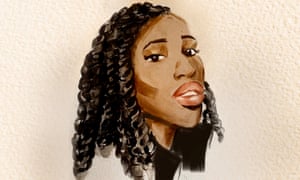
Black women in America marry less than others – and the numbers are even lower for darker skinned black women. Is colorism – favoring lighter skin – to blame? Dream McClinton puts herself on the line to report
Source: Why dark-skinned black girls like me aren’t getting married | Life and style | The Guardian


This searchable database includes selected 369 legal documents on reparations.
Documents were gathered through an electronic database search based on the following search parameters: Within the title either (reparation* or slavery or enslaved or slave*) and the following within the body of the article (reparation* in the same sentence with either “black american” or “African american” or enslaved or slavery or slave* or “jim crow” or negro! or colored).
The documents were not reviewed and may only be tangentially related to reparations for Descendants of Africans Enslaved in the United States. Furthermore, it is possible that an inappropriate article is included in the database. If you think an article is racist, sexist, homophobic, Islamophobic or otherwise inappropriate, please email with the (1) the name of the database and (2) the complete name of the article.
The documents are in the following categories:
| Type | Total |
| Administrative Decisions & Guidance | 12 |
| Briefs | 7 |
| Cases | 7 |
| Expert Materials | 1 |
| Law Review Articles and Other Secondary Sources | 309 |
| Legislation (Proposed & Enacted) | 9 |
| Statutes & Court Rules | 4 |
| Trial Court Documents | 20 |
| 369 |
This database has two visible pages – list of all records (initially) or records that meet the condition (on search), and a detailed view of the selected record. When you click on any record in the list, a detailed report will be returned for the selected record. Each record includes, at a minimum, title, citation.
Source: Reparations and Legal Scholarship (Searchable Database) – Race, Racism and the Law

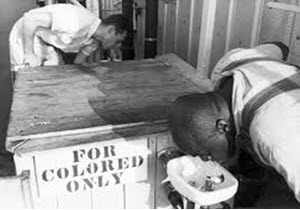
This searchable database includes over 1400 records on legal documents on Enslaved Africans and Descendants. The time period covered is 1865 through 1963.
| Dates | Total |
| 1865 to 1899 | 1011 |
| 1900 to 1949 | 403 |
| 1950 to 1964 | 55 |
Documents were gathered through an electronic database search using the following search terms: ((African or black or negro or colored) in the same sentence with (slave or slavery or enslaved or descendant)
Most Relevant Documents had ((slave or slavery or enslaved or descendant) ) in the title. If you search for the term “Most Relevant” you will get these documents.
The documents were not reviewed and may only be tangentially related to the topic. Furthermore, it is possible that an inappropriate article is included in the database. If you think an article is racist, sexist, homophobic, Islamophobic or otherwise inappropriate, please email with the (1) the name of the database and (2) the complete name of the article.
This database has two visible pages – list of all records (initially) or records that meet the condition (upon search), and a detailed view of the selected record. When you click on any record in the list, a detailed report will be returned for the selected record. Each record includes, at a minimum, title, citation. Some records include summaries.
Source: Enslaved Africans and Descendants 1865 to 1963 (Searchable Database) – Race, Racism and the Law

 In 1916, the National Association for the Advancement of Colored People (NAACP) mounted the largest campaign in history against lynching and racist mob violence. Focused on the protection of black lives from state-sanctioned violence, the NAACP organized mass demonstrations, advocated for an anti-lynching bill in Congress, and won a landmark criminal procedure decision in front of the Supreme Court. One hundred years later, racial violence has reemerged on the national political scene as the defining civil rights issue in contemporary U.S. politics. Chanting “Black Lives Matter,” activists have taken to the streets in big cities like New York City and small towns such as Ferguson to bring attention to the disposability of black lives at the hands of law enforcement. Numerous scholars have rushed to explain the persistence of racist violence against blacks and have linked it to such factors as discriminatory policing, unresponsive federal institutions, political policies that criminalize poverty, and persisting housing segregation. This top-down analysis is important in shining a light on oppressive institutions but it is only one part of the story. The other is how activists have strategized internally and externally with funders over the meaning of civil rights. Thus, another way of looking at the present situation is: Why does the protection of black bodies from private and state-sanctioned violence remain an unmet challenge for civil rights groups committed to racial equality? A major but under recognized reason, I propose in this article, is directly connected to movement capture–the process by which private funders use their influence in an effort to shape the agenda of vulnerable civil rights organizations.The puzzle is perplexing because throughout the twentieth century, the NAACP has been at the center of the U.S. civil rights movement and racial violence used to be at the center of the NAACP. During the first quarter of the twentieth century, the NAACP firmly established itself as the preeminent civil rights organization focused on the protection of black lives from racial violence. At the time, lynching and mob violence were at the top of the NAACP’s issue agenda since racial violence was believed to be the greatest obstacle that African Americans in the North and South faced to gaining equality in America.

 OCG
OCG 