
Obama campaign: ‘Severe consequences’ if Romney committed felony with Bain lies | The Raw Story.
Monthly Archives: July 2012

Freeh report: Penn State officials showed ‘total disregard’ for Sandusky victims | The Raw Story

The Black Press Is Dead. Get Over It | Black Agenda Report
FULL OPINION PIECE
The Black Press Is Dead. Get Over It | Black Agenda Report.

by BAR managing editor Bruce A. Dixon
When will the black press get as excited enough over mass incarceration, the epidemic of solitary confinement, the plague of urban school closings and privatizations, over gentrification and joblessness as they are about reality TV and what Michelle is wearing? Are you holding your breath? It might be time to let it go….
The Black Press Is Dead. Get Over It
by BAR managing editor Bruce A. Dixon
When you think of the black press, what persons and institutions come to mind? Frederick Douglass? Ida B. Wells? The old Chicago Daily Defender and Pittsburg Courier? Today’s NNPA and the National Association of Black Journalists? Tavis Smiley on PBS, brought to you by Wal-Mart and Bank of America? CNN’s Roland Martin?
“Much of black media really is awful,” observed former Capitol Hill staffer Yvette Carnell of BreakingBrown.com, on Facebook only yesterday “so let’s put them on blast, shall we…”, and linked to a page of representative snippets.
If anything, Ms. Carnell is too kind. Arguably, the black press has been dead a long, long time now. Most black reporters work for white-oriented, corporate-owned outlets. What used to be “the black conversation” is now locked down and mediated by Sony, CBS-Viacom, Clear Channel, and the like. Broadcasters, even black ones, no longer, or in some cases never have regarded Black America as a polity, with its own traditions, values and aspirations.
Share this:

Can Black People Be Saved? | breakingbrown.com
breakingbrown.comCan Black People Be Saved? | breakingbrown.com.
21st Century Dinosaurs: Can Black People Be Saved?
One of my favorite bloggers, Black Yoda, says no:
It hurt don’t it? Anyway, read the whole thing. It’s good for you.
Share this:

breakingbrown.combreakingbrown.com
breakingbrown.combreakingbrown.com.
Share this:

NewBlackMan (in Exile): Grassroots Effort Launches to Reform NYC Jails, Combat Culture of Brutality at Department of Correction
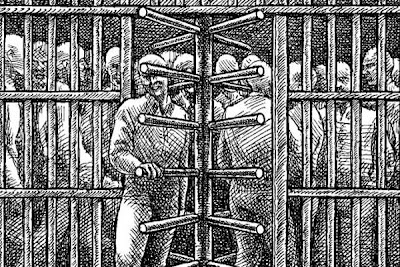
Grassroots Effort Launches to Reform NYC Jails, Combat Culture of Brutality at Department of Correction
NYC Has One of the Highest Rates of Solitary Confinement in U.S.
By 2013, NYC Department of Correction (DOC) Will Have Increased Solitary Confinement Cells by 69%
Lawsuits against Correction Officers Cost City Millions, Yet Funding for Officer Training Down 40%; Top DOC Officials Have History of Brutality
New York, NY – A grassroots effort to reform New York City jails launched with a protest outside a meeting of the Board of Correction, where NYC Department of Correction (DOC) Commissioner Dora Schriro was present. The protest marked the first public action of the New York City Jails Action Coalition, a collection of activists working to improve conditions, stop the use of solitary confinement, and increase transparency and accountability at the DOC. As the Commissioner and Board Members entered the building, activists held signs calling out the DOC’s most brutal officers.
Amidst a national conversation on ending the abusive practice of solitary confinement, the NYC Department of Correction is partway through its plan to increase solitary confinement capacity by 69% by the end of Fiscal Year 2013. New York City jails have one of the highest rates of solitary confinement in the U.S.— by FY13, NYC’s rate will be up to five times the national average, with 9-10% of the jail population in solitary confinement at any one time.
Share this:

HIV and Disclosure: A Doctor’s Moral Dilemma | ENDGAME: AIDS in Black America | FRONTLINE | PBS
Dr. Lisa Fitzpatrick is a CDC-trained epidemiologist and practicing infectious diseases physician in Washington D.C. At the CDC, she led teams that produced landmark studies on HIV transmission among black college students, black women and in the Georgia prison system. From 2005 to 2007, she served as a U.S. diplomat, and was director of the CDC’s Global AIDS Program in the Caribbean, responsible for implementing the President’s Emergency Plan for AIDS Relief (PEPFAR). Fitzpatrick is an associate professor of medicine at Howard University and the director of infectious diseases services at United Medical Center.
via HIV and Disclosure: A Doctor’s Moral Dilemma | ENDGAME: AIDS in Black America | FRONTLINE | PBS.
HIV and Disclosure: A Doctor’s Moral Dilemma
July 10, 2012, 8:37 pm ET
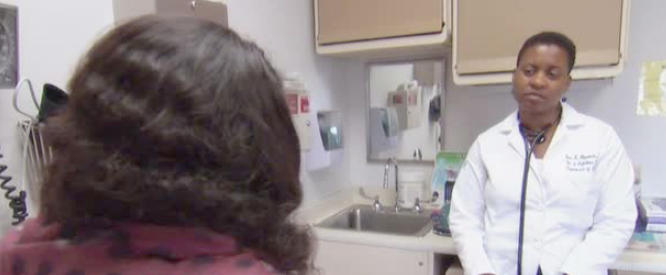
Dr. Lisa Fitzpatrick is a CDC-trained epidemiologist and practicing infectious diseases physician in Washington D.C. At the CDC, she led teams that produced landmark studies on HIV transmission among black college students, black women and in the Georgia prison system. From 2005 to 2007, she served as a U.S. diplomat, and was director of the CDC’s Global AIDS Program in the Caribbean, responsible for implementing the President’s Emergency Plan for AIDS Relief (PEPFAR). Fitzpatrick is an associate professor of medicine at Howard University and the director of infectious diseases services at United Medical Center.
Recently I had an unusually distressing day at my clinic. I work in an impoverished neighborhood with some of the city’s most indigent patients. Each one faces a social challenge — unemployment, chronic hunger with no access to food, lack of transportation, homelessness. But the challenge I faced with my new patient made these issues seem like a walk in the park.
The patient was a newly diagnosed woman with a single-digit CD4 count, which means her immune system had been destroyed by HIV. In the previous months she had been evaluated by four internists, none of whom thought to test her for HIV. This information bothered me, but wasn’t the source of my distress. Experiencing no physical relief from these providers, she had decided to “lay down and die.”
However, upon what she describes as “fierce” insistence by her partner of 10 years, she agreed to go to a hospital ER, and after a rapid test, learned she was HIV positive.
As she sat in front of me and told me her story, her partner, who had accompanied her — the one she credits with saving her life — sat quietly in the corner. This partner was the source of my distress. She told me he was also HIV positive. I turned my attention to him and asked if he was in care. He said no and indicated he wanted to establish care with us. Then I asked if he had previously been on medication. Angst and frustration grew inside me as I listened to his answer.
He gazed at the medication chart and pointed out his previous regimen. The cocktail contained indinavir. Based on this information I knew immediately that he had been withholding his secret from her for over a decade. I couldn’t remember the last time I prescribed indinavir. An awkward moment passed as I reflected on their scenario.
The silence is perpetuating disease.
His secret led to her infection. I then wondered if this was the reason he “fiercely” insisted she seek help despite her resolve to lay down and die.
For the remainder of the visit I maintained objectivity externally, but inside I was wrestling with endless questions and my own moral dilemma. As a physician, I am not allowed to reveal any medical information about my patients or their circumstances without their written permission. The confidentiality between a patient and provider is sacred. Therefore, it is not my duty or my right to disclose or report such blatant injustice. But now this constraint feels inappropriate and morally irresponsible.
Unfortunately this is not an isolated case. A personal urgency is building for me to seek answers, incite a conversation or influence our murky policies that provide no guidance about or latitude for wandering outside the lines of confidentiality even if for the health benefit of another. The urgency is building because I have witnessed countless scenarios many of which are variations on this theme.
A few months ago, a patient arrived at her visit urgently wanting to know her viral load — which would tell her the amount of HIV floating in her bloodstream. She had a new boyfriend and had decided if the amount of virus in her blood remained low enough and was controlled by her HIV medication she would not have to disclose her HIV status. She has since decided to wait until they are married to disclose her status to him.
I encouraged her to tell him by asking how she would feel if she were in his place. She then asked if she could bring him for a visit; they could both be tested and she could feign shock, awe and distress when I revealed her diagnosis. It is a clever response that painfully demonstrates why support must accompany disclosure. She did not feel strong enough to divulge her secret on her own and thought she could draw strength from my presence as I diffused what might become a tense and awkward situation However, as I played the scenario out with her, she realized this would create additional ethical dilemmas and a series of untruths and dishonesty from which neither of us could recover.
These issues around disclosure, personal responsibility and the need for clarity around my role as a health care provider give me heartburn. Am I complicit in these behaviors? Why doesn’t the law speak clearly and guide me about how to address these issues? Whose responsibility is it to inform unknowing, uninfected partners when their infected partner refuses to disclose? What should be the ramifications for failure to disclose? What should our response be? What should the community expectations be? How do we balance personal responsibility while minimizing HIV-associated stigma and shame?
As a public health practitioner whose goals in life include fostering community wellness and halting the spread of disease, these questions around the failure to disclose HIV status and our response to it have become the moral dilemma of my career. Most of my patients are so comfortable with me they know they can tell me anything without shame, embarrassment or fear of judgment. The trust between us is sacred and this deepens my conflict all the more.
But the secrecy is not OK. The silence is perpetuating disease. If we expect to end the epidemic, we cannot continue to ignore these questions, which are blatantly staring us in the face. They are pervasive and until we develop the moral courage to craft a balanced response and discuss these issues aloud and in the open, any notions of ending the epidemic is merely lip service and a pipe dream.
Share this:

Reverend Irene Monroe » Blog Archive » A Sister Outsider in “Pariah”
Reverend Irene Monroe » Blog Archive » A Sister Outsider in “Pariah”.
Seldom do I see my image anywhere, and certainly not portrayed in non-stereotypical and non-heterosexist ways on the silver screen. As a matter of fact, if you Google “black lesbians” or “black lesbians in film,” you’ll get a plethora of porn sites to visit.
But writer-director Dee Rees’ semi-autobiographical coming-of-age drama “Pariah” gives me a glimpse of my younger self growing up in Brooklyn.
“Pariah” is about Alike (pronounced “ah-lee-kay”), a virginal, 17-year-old, African-American, lesbian high-school student living in the Fort Greene section of Brooklyn. She doesn’t know how to come out to her parents, is eager to have her first sexual experience, and isn’t sure of the type of butch lesbian she wants to be: a “soft stud,” one of the “aggressive lesbians” (a subculture of young, butch lesbians who adopt a gangster hip-hop persona to complete for femme women), or something totally different.
“Alike knows that she loves women; that’s not the question. The question is ‘how to be,’” Rees told NPR. “And so, in my own struggle, a large part of my question was how to be in the world.”
One of the ways of defining how to be in the world, especially for high schoolers, is through clothes. But with a mother, Audrey (Kim Wayans), who demonstrates zero tolerance for her daughter’s non-gender-conforming ways, especially exhibited by Alike’s taste for non-frilly-femme attire, we see Alike forced to be a gender chameleon, changing into her butch togs going to school and out of them going home.
“Pariah” wouldn’t be an authentic black coming-out tale if religious homophobia didn’t show its countenance on someone. And Audrey is that person.
In hopes that her shy tomboyish daughter might blossom into a more socially friendly and feminine girl, Audrey convinces a churchgoer that their daughters, who are in the same class, should walk to school together for safety reasons. And not surprising to those of us of the black church, Alike’s first sexual experience is with one of the churchgoer’s daughters.
To find antecedents or reflections of yourself, especially in American films, is difficult, which is why Pariah’s title and theme of portraying black lesbian life, albeit marginalized in both African-American church and white LGBTQ communities, in a positive and realistic light is thoroughly refreshing.
Occasionally, however, we will see present-day portrayals of black lesbians on major television channels and in major movie house across the country, but not by out black lesbians.
For example, in the 2009 film “Precious,” Paula Patton plays Ms. Blu Rain, a lesbian teacher who helps Precious (Gabourey Sidibe) embrace her life’s worth and her sexuality. Patton inspires Precious to learn to read, and to write, giving her a daily writing assignment that eventually leads to Precious coming into her own. And with Patton understanding both the New York welfare system and the New York public school system, she is portrayed in the film as both an intellectual and an activist who’s not going to let Precious fail or fall under her watch.
Another example: in 1996, we had Queen Latifah’s spot-on portrayal of a butch lesbian in the movie “Set It Off,” which of course set off a conflagration of queries about her real-life sexual orientation. Last summer Latifah’s character on the show “Single Ladies,” which she executive produces, was accidentally outed, and this worked out in a positive way for the character. Viewers and the blogosphere began to speculate that Latifah was channeling her personal life through her small-screen character.
But films written and directed by women of color that reach the major silver screen are rare, and those by LBTQ women of color are even rarer. The last time I saw a film written and directed by an LBTQ woman of color that reached the level of mass distribution and international acclaim that Pariah has achieved was 16 years ago. In 1996 Cheryl Dunye wrote, directed, and starred in her first film, “The Watermelon Woman,” which was also the first African-American lesbian feature film.
Dunye’s “mockumentary” is a scathing critique of the racist cinematic representation of black women. The protagonist of the film, played by Dunye, makes a film about an obscure black actress from the 1930s known for playing the stereotypical “mammy” roles to which black actresses were relegated during that era. In this faux-cinéma-vérité account of a black lesbian filmmaker uncovering the hidden histories of black women, straight and LBTQ, controversial cultural critic Camille Paglia makes a cameo appearance, informing Dunye that the “mammy” archetype once represented a black goddess figure.
And unbeknownst to the general public, 20 feature films have been directed by black lesbians since Dunye’s “The Watermelon Woman.” Dunye’s mockumentary came out during the height of black queer cinema, from 1991 to 1996, dubbed the “Golden Age,” when black lesbians’ films were predominately documentaries seen by small audiences, unfortunately.
“That was the period of time when we had the most women producing the widest variety of work,” African-American lesbian filmmaker Yvonne Welbon, founder and director of Sisters in Cinema, told The Root reporter Salamishah Tillet. “Approximately 50 percent of all work produced was made during that five-year time period. Very little work is being produced today by out black lesbian media makers. So maybe Dee Rees is part of the trend of the mainstreaming of niche content that we see happening across all media platforms.”
It’s my hope that “Pariah” will be part of the trend of the mainstreaming of niche content. Black lesbian cinematic representation is long overdue. your own site.


 OCG
OCG 