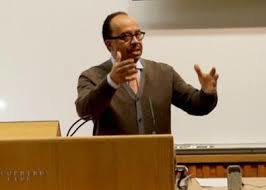
Dr. Anthony Monteiro and the Assault on the Black Radical Tradition
OUR COMMON GROUND Omnibus‘s insight:
"Although the struggle led by Monteiro was ultimately successful, this victory left a bullseye on his back, and it seems that Dean Soufas used the issue of his contract termination as her vengeance. "
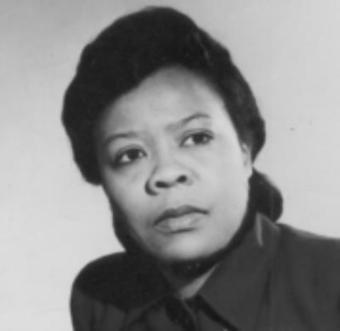
Dr. Shirley Jackson is an American physicist. She received her Ph.D. from the Massachusetts Institute of Technology in 1973, becoming the first African-American woman to earn a doctorate at MIT in nuclear physics. Currently, Jackson is the 18th president of Rensselaer Polytechnic Institute in Troy, N.Y. In addition to her academic achievements, she also has an impressive list of inventions to her credit. […]
Mychal Denzel Smith on February 28, 2014 – 11:18 AM ET
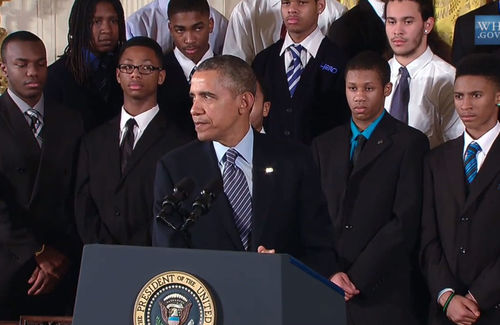
“While President Obama no doubt cares deeply about America’s inequality, his approach to solving it is flawed.”
OUR COMMON GROUND Omnibus‘s insight:
"Black and Latino boys are disproportionately targeted by police actions like stop-and-frisk. One in every fifteen black men and one in every thirty-six Hispanic men are incarcerated, as compared to one in every 106 white men."
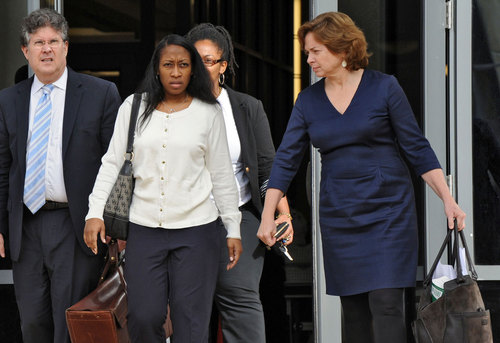
The new sentence is three times as long as the one she received in 2012.
OUR COMMON GROUND Omnibus‘s insight:
“Remember that when Marissa Alexander fired her warning shot to save her own life, she caused no injuries. Now she’s facing the very real possibility of spending the rest of her life in prison for that act of self-defense,” said advocate Sumayya Fire in the statement. “That should send a chill down the back of every person in this country who believes that women who are attacked have the right to defend themselves.”
Lupita Nyong’o >>Essence Magazine Black Women In Hollywood Breakthrough Performance Award
Lupita Nyong’o won the Essence Magazine Black Women In Hollywood Breakthrough Performance Award. In a beautiful speech at the ceremony, she said: “What is fundamentally beautiful is compassion for yourself and for those around you. That kind of beauty enflames the heart and enchants the soul…” At 30 years old, Nyong’o credits other #Black / #African women, including her mother and Oprah Winfrey , for inspiring her to believe that anything is possible., and thanks them for breaking barriers in their lives and empowering the next generation to do the same.
Chipeta (1843 – 1924) Indian Rights Advocate and Diplomat Chipeta was a wise and contrary advisor to her husband, a Ute Indian leader. Born into the Kiowa Apache tribe in the 1840s, Chipeta was raised by the Uncompahgre Ute tribe in what is now western Colorado. In her teens she wedded Ouray, who became a powerful Ute chief during the often violent and brutal times of western settlement. Chipeta was a peacemaker who did not consider all settlers to be the enemy, often giving food to starving white families. Chipeta lived 45 years on a reservation in Utah, lauded as a wise elder and advisor to other Indian chiefs and an honored guest in the homes of settler families.
Anna Julia Haywood Cooper (1858 – 1964) African American Educator and Author
Anna J. Cooper was an author, educator, speaker, and among the leading intellectuals of her time. Born into enslavement, she wrote “A Voice from the South,” widely considered one of the first articulations of Black feminism. Throughout her long life, Anna worked for the betterment of African American women’s lives, which she saw as the foundation for a more just society for everyone. Cooper worked at Washington D.C.’s M Street — now Dunham High School for nearly 40 years, focusing the all black high school on preparing students for higher education, successfully sending many students to prestigious universities.
Agatha Tiegel Hanson (1873 – 1959) Educator, Author, and Advocate for Deaf Community
Agatha Tiegel Hanson was a teacher, poet, and advocate for the deaf community. Unable to hear and blind in one eye from a childhood illness, she never allowed her disabilities to hold her back. She came of age at a time when most deaf people were denied access to education, and deaf women especially had few educational options. She was admitted to Gallaudet University, which is still the only college in America dedicated to the education of deaf and hard of hearing students. Graduating first in her class, her valedictorian speech argued for the recognition of the intellect of women, a cause she advocated throughout her life.
Katharine Ryan Gibbs (1863 – 1934) Women’s Employment Pioneer Katharine RyanGibbsfounded Katharine Gibbs School in 1911 to provide women with high-level secretarial training and the opportunity to earn their own incomes. Gibbs was a mother and housewife for much of her life, until she was widowed at 48 and left with no means to support herself or her two sons. Teaming up with her sister, Mary Ryan, they purchased a failing Providence, Rhode Island secretarial school in 1911. Her school quickly expanded, opening branches near many ivy-league universities. At a time when educated women were generally expected to become teachers or nurses, Katharine Gibbs School offered women an exceptional secretarial education and new opportunities, which made skilled office work a realistic career for women.
Frances Oldham Kelsey (1914 – Present) Pharmacologist and Public Health Activist
Frances Oldham Kelsey as the Food and Drug Administration’s (FDA) pharmacologist refused to approve thalidomide, a drug that was later proved to cause severe birth defects. Kelsey required scientific rigor for all her clinical trials as well as ongoing oversight of drug testing at the FDA. In addition, her research led Congress to pass the 1938 Food, Drug, and Cosmetic Act greatly strengthening drug regulations by the FDA. Dr. Kelsey continued her work at the FDA until her retirement in 2005 at age 91. In 2010 the FDA established the Frances Kelsey Award, an annual award given to a staff member for their commitment to scientific rigor
Roxcy O’Neal Bolton (1926 – Present) 20th Century Women’s Rights Pioneer
Roxcy O’Neal Boltonis a lifelong advocate for women’s rights. She is the founder of Florida’s first battered women’s shelter and the nation’s first hospital-based Rape Treatment Center. Her extensive work also includes convincing National Airlines to offer maternity leave to (instead of firing) pregnant flight attendants; lobbying for passage of the Equal Rights Amendment (ERA); and persuading the National Oceanic and Atmospheric Administration to name hurricanes after both women and men. Bolton led the effort to create the Women’s Park in Miami, which opened in 1992 as the first outdoor space in the nation– honoring past and present women leaders.
Arden Eversmeyer (1931 – Present) The Old Lesbian Oral Herstory Project Founder
Arden Eversmeyer founded the Old Lesbian Oral Herstory Project (1999), to ensure that the stories of lesbians born in the first part of the 20th century, who were labeled “mentally ill”, fired from their jobs, rejected by their families, and even raped and murdered with impunity, are recorded in history. Project volunteers have documented over 320 diverse life stories recording the sacrifices and obstacles faced by lesbians of that era. The collection is now archived, and continues to grow, as part of the prestigious Sophia Smith Collection at Smith College. Today Eversmeyer is proud to live in a time when she can be her true self with acquaintances, friends, family, medical professionals, and everyone
Carmen Delgado Votaw (1935 – Present) International Women’s Rights Activist
Carmen Delgado Votaw is a leading advocate for women’s rights both nationally and internationally. She served on the International Women’s Year Commission, collaborated with all United Nations Conferences on Women, and significantly influenced the advancement of women in Latin America. Born and raised in Puerto Rico and inspired to fight for social justice by Martin Luther King Jr. and the 1963 March on Washington, she has worked for over 50 years for the betterment of women, children, Latinos, and other minorities throughout the world. In 1996, she wrote “Puerto Rican Women,” a bilingual women’s history book. She received the Veteran Feminists of America Medal of Honor in 1999.
Ann Lewis (1937- Present) Women’s Rights Organizer and Women’s History Advocate
Ann Lewis is a leaderof progressive political reform focusing on the importance of personal engagement, social justice and women’s rights. She served as a White House Communications Director, is a national commentator on public policy, and champions the recognition of women’s history. Ann Frank Lewis grew up in a Jewish family who witnessed the Holocaust and its aftermath. Growing up with the name Ann Frank, she says “my parents, who talked often about current events, taught me how fortunate we were to live in a democracy, where we could choose our leaders. I would never take our political rights for granted.”
Jaida Im (1961- Present) Advocate for Survivors of Human Trafficking Jaida Im founded Freedom House, the first residential shelter for adult female survivors of human trafficking, in Northern California in 2010. Im left her 20-year career as a health care professional to found the non-profit organization. Under her direction, the program offers holistic case management, counseling, educational resources, and job training for victims of abduction and enslavement. In fall 2013, Freedom House opened The Nest to serve girls ages 12-17. This new shelter provides a space to help girls to recapture their interrupted youth in a loving family setting.
Tammy Duckworth (1968 – Present) Member of Congress and Iraq War Veteran Tammy Duckworth, U.S. Representative from Illinois, is an Iraq War veteran and former Assistant Secretary of Veterans Affairs. In 2014, she became the first disabled woman elected to serve in the House of Representatives. Duckworth has a strong record advocating and implementing improvements to veteran’s services. In 2004, she was deployed to Iraq as a Blackhawk helicopter pilot. She was one of the first Army women to fly combat missions during Operation Iraqi Freedom until her helicopter was hit by an RPG on November 12 2004. She lost her legs and partial use of her right arm in the explosion and was subsequently awarded a Purple Heart for her combat injuries.
Lisa Taylor (1974 – Present) Civil Rights Attorney Lisa Taylor is a leading civil rights trial attorney who has worked for over twelve years to ensure that civil rights laws are enforced around the country. While working with the Department of Justice, Taylor focuses primarily on educational and disability law and shows an unwavering commitment to ending discrimination and promoting equality and justice. Lisa was in Naval ROTC as a student and served as an officer aboard the USS Tarawa, where she developed the ship’s first program to address sexual harassment. Taylor became a lawyer out of a strong desire to serve those who could not serve themselves.
2014 National Women’s History Month Nominees
The women who were nominated to be 2014 National Women’s History Month Honorees represent the wide-range of women’s accomplishments and achievements. Each is a woman of courage commitment and character. Included in this year’s nominees are educators, institution builders, business, labor, political and community leaders, relief workers and CEOs. Many were pioneers in a variety of fields and all earned placement in numerous categories and endeavors.
Making Women’s Lives Visible
Anne Montague (1939 – Present)
Director of non-profit Thanks! Plain and Simple, which creates projects focused on finding and honoring Rosie the Riveters
Edna Buckman Kearns (1882 – 1934)
Imaginative suffragist who drove a horse-drawn wagon called the “Spirit of 1776” through Manhattan’s city traffic in 1913 to promote Votes for Women
Lynn Marie Madison Jackson ( 1952 – Present)
Dred Scott Heritage Foundation Founder developed St. Louis school penny drives for a statue honoring the historic anti-slavery litigants Dred and Harriet Scott.
Builders of Communities and Institutions
Kikako Nakauchi(1931 – Present) Role model for young students emphasizing the importance of giving back to their own communities
Victoria Wilder Crews (1946 – Present) Life-long anti-drug and alcohol advocate who founded City of Refuge Point of Impact (CORPOI)
Maria “Cuca” Robledo Montecel, Ph.D. (1953 – Present)
A strong and determined advocate for quality educational opportunities for all children and their families.
Frankie Sue Del Papa (1949 – Present) Champion for women’s rightswho also advocates for domestic violence prevention and consumer fraud protection and supports the arts, education, and the environment
Educators/Visionaries
Ann Marie Delgado, M.Ed., J.D. (1972 – Present) Influential educator and role model at Buhach Colony High School in Atwater, CA, who developed a women’s studies curriculum for high school students
Grace E. Harris (1933 – Present)
Visionary leader of the Grace E. Harris Leadership Institute at Virginia Commonwealth University promoting the development of current and emerging leaders. .
Nathalie C. Lilavois, Ed.D. (1965 – Present) Educator whohelped lay the foundation for rebranding the Malik Melodies Sisterhood, Inc, dedicated to fostering cultural enrichment and civic and social responsibility.
Ri’Cha ri Sancho(1975 – Present)
Educator, performer, and mentor who advocates for African, Native American, and Latina cultural awareness
Linda Pollack Shevitz (1943 – Present)
Maryland education leader who co-founded the National Association of Multicultural Educators and the Maryland Women’s Heritage Center
Virginia Estelle Randolph (1874 – 1958) Educator and industrial teacher who championed upgrading vocational training in African American schools throughout the country
Mothers and Mentors
Triana LaDane Kuniken (1982 – Present) Dedicated community and church member, mother, and mentor who works to guide the values of children
Minnie Evelyn Greensmith O’Donnell(1922 – Present)
Drove an ambulance during the blitzkrieg in London, married a USAF American, then travelled the world with her family for 27 years
Emma Gomez (1934 – Present) Respected teacher and mother who works to improve the quality of life of families and working people
Katarina Ferencovic Horvat Mrezar (1894 – 1988) Mother, landlord, saloon proprietor, and first woman licensed as a barber in Indiana
Volunteers/ Aid Workers/Diplomats
Anna Arredondo Chapman (1946 – Present)
Highest rated Hispanic civilian woman before retiring in 2004 after working for over 32 years from Laughlin Air Force Base in Texas
Eleanor I. Robbins (1942 – Present) Leads efforts to mentor Native American children to become scientists and to save our environment
Myrtle Gansu (1872 – 1958)
Became the longest serving elected official in Long Beach, California (from 1919 to 1951)
Katy Todd (1987 – Present)
Peace Corps volunteer who taught women in the Togo how to run a community savings program
Women Pioneers / Trail Blazers
Anna R. Samick (1937-2003)
First woman to serve as a business and education representative in the Aerospace Workers Union (IAMAW)
Dorothy Arzner (1897 – 1979) Directed the first “talkie” for Paramount, developed the first boom microphone, was the first woman in the DGA (Director’s Guild of America)
Elizabeth Anderson Hishon (1944 – 1999) Trail-blazing attorney whose Supreme Court case forced legal firms to include women as partners
Hedwig Eva Maria Kiesler [Hedy Lamarr] (1913 – 2000) Movie star and inventor who developed a key technique necessary for wireless communication
Mary Whitfield Ramerman (1955 – Present) Developed better health care in Haiti, converted to Catholicism and became a self-ordained priest and established her own parish Spiritus Christi Church in Rochester, NY
Maud Powell(1867 – 1920)
Pioneered the violin recital in North America, gave the American premiere of major concertos by Tchaikovsky
Small Business Owners/ CEO/Founders Andrea McDowell John Baptiste (1972 – Present) CEO of Axum Management Capabilities, whose character and leadership is demonstrated in her successful company and in her innovative fundraising efforts for her community.
Nicole Levine (1967 – Present)
A single mother who used the most basic grass-roots efforts to become the undisputed gold standard for cleaning and extermination business in the NY Metro Area.
Deborah Brenner(1966 – Present) Organized Women of the Vine to bring sustainable grape growers and winemakers into a marketing collaboration under one brand
Government Workers
Donna Zickefoose (1965 – Present)
Ascended through the ranks of law enforcement, during times when females remained a minority in the field, to become Warden of the largest federal prison in the United States
Janet E. Petro (1959 – Present)
Deputy Director at NASA’s John F. Kennedy Space Center (KSC) Florida helped the Center begin to transition to the nation’s premier multiuser spaceport.
Frankie Sue Del Papa (1949 – Present)
Political role model who is the longest serving public servant in Nevada
Houra Rais (1962 – Present)
Senior engineer at the Naval Surface Warfare Center, Dahlgren Division works to solve some of the most difficult technical challenges facing today’s war fighters
Kimberly Stomach (1968 – Present)
At the Naval Undersea Warfare Center Division in Keyport manages an annual maintenance budget of over 4 million dollars.
Women Religious
Verna Fowler
Founding President of the College of the Menominee Nation in Wisconsin
Mother Frances Warde (1810-1884) Founded the Sisters of Mercy in America to improve the lives of the poor, uneducated, and others marginalized by society
Angela Duke Hicks
Served as a missionary in India and Belize, then worked with women and children in Africa suffering from AIDS
Marilyn Lacey (1948- Present) FoundedMercy Beyond Borders in 2008 to work with displaced women and children overseas in ways that help them move up from extreme poverty
How Oscar-nominated films misrepresent African-American history
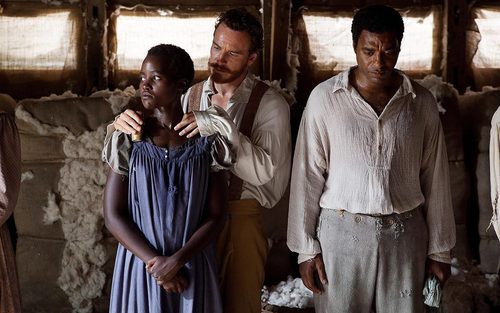
A scene from “12 Years a Slave.” From left: Lupita Nyongo, Michael Fassbender and Chiwetel Ejiofor.
Fox Searchlight/Everett Collection
The Academy Awards have made progress in terms of racial representation. This year a film about slavery is the clear front-runner in many of the major categories, and if “12 Years a Slave” or “Gravity” wins best picture, it would be the first time a movie by a nonwhite director takes the prize. It’s also possible that Lee Daniels (“The Butler”) could join Steve McQueen (“12 Years”) and Alfonso Cuaron (“Gravity”) to make best director a majority-minority category for the first time ever.
It’s certainly a relief to see Oscar-nominated films about black experience actually written and directed by black people (unlike, for example, recent Oscar darlings “Django Unchained,” “The Help,” and “The Blind Side”). But it’s the movie’s producers — who have more power over a film’s content than most recognize — who will actually walk up to accept the best picture statuette. Unsurprisingly, most of them are still white.
That might be one reason why the representations of black experience that the Academy deems best-picture-worthy remain fundamentally unchallenged. Out of the 120 films that received a best picture nomination in the last 20 years, only 17 featured nonwhite protagonists or major characters. In all but four of those films these characters were either extremely poor or criminals. Out of the four remaining, one featured a slave (“Django,” 2012), another an entertainer (“Ray,” 2004), another an athlete (“Jerry Maguire,” 1996). Needless to say, the white characters in these and the other 103 films nominated for best picture held a much wider variety of occupational and socioeconomic positions.
When “The Butler” is nominated this year — as it will surely be when nominations are announced on Thursday — it will buck this trend by featuring a black domestic servant who happens to be middle class [editor’s note: the film was not nominated for best picture]. The biopic traces the civil rights movement through the eyes of one of the White House’s black butlers. In its version of 20th-century black struggle, the civil rights bill came about because the movement appealed to the goodness of JFK’s heart (rather than forcing his hand with its power), the Black Panthers were overaggressive youth who got what they deserved, and Obama’s election is the apotheosis of everything the movement was fighting for. “The Butler” won’t win, but it would have had a much better chance last year, when historical-revisionist ideology celebrating the executive branch (“Argo,” “Zero Dark Thirty,” “Lincoln”) was all the rage.
Based on a true story
A much better film, “12 Years a Slave” focuses on the visceral horrors of American slavery. Produced by Brad Pitt, Dede Gardner and John Ridley, among others, ittells the story of Solomon Northup, a free black man who was kidnapped and sold in the decades before the Civil War. Based on Northup’s memoir of the same title, it’s a well-crafted and emotionally powerful film, and for many has provided a devastating condemnation of slavery.
And yet it has major shortcomings. The film portrays the North in 1841 as a racism-free place where black and white live in harmony. White characters get much more dialogue and characterization than black ones: We learn more about the life story of Armsby, a white laborer who appears for two scenes, than we ever do about Patsey, one of the film’s slave protagonists. The slaves are often singing but rarely speak to one another: They remain mostly-silent extras whose graphically suffering bodies make us feel bad about slavery. Though there is a plethora of white stars, the three famous black actors outside of Chiwetel Ejiofor as the lead character get token roles, appearing only once or twice. What happens when we recognize the white characters and actors, while the black people remain largely anonymous? Who does this suggest the film is for?
In the predictable ending, the good white people outmaneuver the evil white people and return Northup to safety. The obvious defense of this dramatic device — “but that’s what really happened!” — shows exactly how “based on a true story” shuts down critical thought. The point is not to question its factual accuracy: The film by all accounts keeps quite close to Northup’s memoir (although some scholars debate the memoir’s veracity). But that objection ignores the fact that the filmmakers chose to tell this particular story and to tell it in this particular way.
Executive producer and screenwriter Ridley’s 2006 article “The Manifesto of Ascendancy for the Modern American Nigger,” in which he glorifies Colin Powell, Condoleezza Rice and Ayn Rand and calls on wealthy black people to separate themselves from “niggers” — i.e., poor black folks who victimize themselves — exemplifies this position on race and storytelling. Ridley writes, “If we as a race could win the centuries-long war against institutionalized racism, why is it that so many of us cannot secure the advantage after decades of freedom?” Of course, the idea that institutionalized racism disappeared with Jim Crow is absurd. But Ridley’s answers to this loaded question imply that now that racism is over, then black folks have no one to blame but themselves and should drop their anger and just forgive white people, for their own good.
A historical aberration
Modern filmmakers who want to accurately convey the evils of slavery could do so through the stories of Toussaint Louverture or Nat Turner, Harriet Tubman or Frederick Douglass — or any of the other thousands of slaves who didn’t look to white saviors to escape their bondage. But you’d never know from watching Hollywood movies that a single slave ever freed herself. “Django Unchained,”“Glory,” “Lincoln” — these films all feature the benevolent intervention of white protagonists. Even Steven Spielberg’s “Amistad,” about a slave uprising, is as much about the white lawyers arguing the slaves’ case.
A particular narrative about slavery is told over and over: The institution was a historical aberration perpetrated by evil white people, but luckily there were good white people who listened to the black people, and they helped free the slaves, and now it’s all over. A similarly simplistic narrative emerges out of Hollywood’s revision of the civil rights movement: In “The Butler,”the cause was noble, but some black people took it too far and it was ultimately victorious because white presidents listened to the brave moderate blacks and beat the evil white racists. Now racism is over, because, you know, Obama.
Thanks to the Oscars, hundreds of thousands more will see the versions of black history told by “The Butler” and “12 Years a Slave”: A best picture nomination is a huge boon for ticket sales, adding millions to a film’s box office, rental take, and audience. The Academy that chooses who gets that cash is 77 percent male, 94 percent white and 86 percent over the age of 50. As such, if a movie wants that precious Oscar bump, it would do well to reproduce the worldview of the rich old white men who run the industry. And that’s precisely why “Fruitvale Station,”the movie about the 2009 killing of Oscar Grant, a young black man whose murder by police in Oakland sparked riots, is unlikely to receive a nomination.
The real problem for ‘Fruitvale Station’ is that it’s a film about racism without a happy ending
“Fruitvale Station”won the 2013 Sundance Grand Jury award, the same award that “Beasts of the Southern Wild,” another film about black experience in America, won in 2012. Notorious Oscar campaigner the Weinstein Co. distributed “Fruitvale Station,”and it opened in more than 1,000 theaters. It was met with universal critical acclaim and made $16 million at the box office, more than presumptive nominees “Nebraska”or “August: Osage County.” The point being, this is no tiny indie or critical cause celebre: “Fruitvale Station” has a solid resume for a best picture nominee. It’s even based on a true story! Commentators have claimed it’s not “stylistically innovative” enough, but it’s stylistically consistent with the washed-out steadycam of guaranteed nominee “Captain Phillips,” and a markedly better movie to boot. “Fruitvale Station” develops real emotional stakes (unlike “The Wolf of Wall Street”), refuses to stereotype its black characters (unlike “The Butler”) and doesn’t rely on precious twee misogyny to make you care about its protagonist (unlike “Her”).
But the Oscars have never been about celebrating the year’s best movie (“Crash,”anyone?). The real problem for “Fruitvale Station”is that it’s a film about racism without a happy ending. It’s about a tragedy that cannot be redeemed. Not that it’s even a particularly radical film — it just can’t pretend that time has solved the problems it portrays, as “12 Years a Slave”does, and can’t give the contradictions of history a tidy conclusion, as “The Butler” does with Obama’s election. Instead, it connects into a current struggle, evoking the trauma and horror that racist violence and overpolicing produce in minority communities across the country.
The point is not to berate the Oscars for not nominating “Fruitvale Station,” but rather to see how the Oscars, and the film-critical apparatus surrounding them, dictate what constitutes a “serious” depiction of race. No one really believes the Oscars are a meritocracy, but the awards still end up giving certain movies massive new audiences, deciding which films critics will write about and people will talk about.
If, come March 2, when the envelopes are opened, “12 Years a Slave” gets snubbed — beaten by, say, “American Hustle” — expect a lot of people to start talking about the racism of the Oscars. They’ll be right to. But if “12 Years a Slave” wins, let’s not be too hasty in celebrating the Academy’s rich white men for an anti-racist victory.
How Oscar-nominated films misrepresent African-American history
OUR COMMON GROUND Omnibus‘s insight:
"A historical aberration
Modern filmmakers who want to accurately convey the evils of slavery could do so through the stories of Toussaint Louverture or Nat Turner, Harriet Tubman or Frederick Douglass — or any of the other thousands of slaves who didn’t look to white saviors to escape their bondage."
I am a black student at Mount Holyoke College, the first of the seven sister schools, which was started because no other American colleges accepted women. Mount Holyoke women are taught to be bold,…
OUR COMMON GROUND Omnibus‘s insight:
"I am a black student at Mount Holyoke College, the first of the seven sister schools, which was started because no other American colleges accepted women. Mount Holyoke women are taught to be bold, to never fear change, and to speak up against injustice… unless you’re a student of colour. 177 years later white male privilege still reigns supreme here. And it is actively reinforced by campus police.
I spent the early hours of Saturday morning at the South Hadley Police Department having been arrested at Mount Holyoke for “breach of peace.” This is how the story begins."