Nelson Mandela State Funeral Update: Statement By Minister Chabane – Nelson Mandela Foundation

See on Scoop.itOUR COMMON GROUND News Board •● ☥●• The Third Eye Parenthesis

Fellow South Africans,

Ladies and gentlemen of the media,

Welcome to this latest update on the preparations for the State Funeral for our beloved President.

OUR COMMON GROUND Omnibus‘s insight:

 LYING IN STATE: WEDNESDAY TO FRIDAY, DECEMBER 11 TO 13, 2013

STATE FUNERAL, QUNU

See on www.nelsonmandela.org

State Funeral for our Beloved President Nelson Mandela

Nelson Mandela State Funeral Update: Statement By Minister Chabane On Behalf Of The Inter-Ministerial Committee For The State Funeral

8 December 2013

nelson-tribute-bg
 

Fellow South Africans,

Ladies and gentlemen of the media,

Welcome to this latest update on the preparations for the State Funeral for our beloved President.

We are pleased to have with us:

  • The Minister of International Relations and Cooperation, Ms Maite Nkoana-Mashabane;
  • The Minister of Transport, Ms Dipuo Peters;
  • The Executive Mayor of the City of Joburg, Mr Parks Tau,
  • and representatives of the City of Tshwane.

These leaders are here to provide closer details of some of the logistics in and around the two cities, as well as South Africa’s hosting of the large number of international dignitaries who have begun to arrive.

We will in this briefing provide more information on some of the arrangements on which we reported yesterday.

But we do again want to start by thanking people around the country and the world for their warm and generous responses in the wake of the passing of our beloved President Nelson Rolihlahla Mandela.

These demonstrations of love and affection will go a long way to entrenching our memories of Madiba and in shaping the way we live and work with one another as human beings in this country and beyond.

What we have seen over the past few days reflects the true spirit of South Africa as a place where people of all backgrounds are working together to create a non-racial, non-sexist, prosperous society. These efforts are creating the hope that we will achieve even greater things than we have during the first 20 Years of Freedom.

I now want to turn to the update on the programme over the next few hours and days.

1. DAY OF PRAYER AND REFLECTION: TODAY, SUNDAY, DECEMBER 8 2013

Government has been heartened by the positive response of various communities of faith and other civil society formations to President Jacob Zuma’s call for today to be observed as a day of prayer and reflection.

We are aware that a large number of events are being held in South Africa and abroad today, giving people an opportunity to come together in fellowship and reflection.

We hope these events will bring comfort and healing to congregants and participants, and that it will inspire all of humanity to ensure that Madiba’s values live on in our hearts and in our actions.

As these events take place, government agencies will be hard at work making preparations for the rest of the week’s official programme.

2. INTERNATIONAL ARRIVALS

From today we will see the arrival of a large contingent of Heads of State and Government and a broad range of eminent persons, including royalty.

The fact that international leaders are making their way to South Africa at such short notice, reflects the special place President Mandela holds in the hearts of people around the globe.

We are touched by the fact that many countries have declared periods of mourning, ordered that flags be flown at half-mast and draped or lit landmarks in the colours of the South African flag. We truly appreciate these gestures.

We appreciate the willingness showed by a broad range of eminent persons to come to South Africa to join us personally at this time of mourning, reflection and celebration of Nelson Mandela’s life and legacy.

To date, 13 African states have confirmed attendance, in addition to 15 from outside the continent.

International and regional organisations from the United Nations and European Commission to the African Union, for example, have also confirmed attendance.

Eleven (11) Eminent Persons will also be in South Africa during this period.
From the United States, President and Mrs Obama will be accompanied by three former Presidents – Carter, Bush (George W), Clinton and their spouses, and 26 Congressmen.

The Brazilian President, Ms Dilma Rousseff, will be accompanied by four former Heads of State: Presidents Sarney, Melo, Cardoso and Lula da Silva.

We expect more confirmations, and we wish to reiterate that our international guests are most welcome as they join us at this difficult time.

3. OFFICIAL MEMORIAL SERVICE: FNB STADIUM, JOHANNESBURG

The Official Memorial Service at FNB Stadium, Johannesburg, on Tuesday, December 10. The event will begin formally at 11am. Gates will open at 6am.

This is an international event that will be attended by members of the public alongside national and international leaders.

The President of the Republic of South Africa will address the official memorial service.

The programme will also include tributes by Heads of State from the various regions of the globe, the continent and representatives of international and regional organisations. Eminent persons will also address the gathering.

As we invite people to participate in this event, we must make the additional point that the body of President Mandela will not be in position at the Official Memorial Service. President Mandela will lie in state at the Union Buildings only from Wednesday, December 11 to 13 December 2013.

Our advice is that people outside Gauteng come together in their own provinces to ensure that this is a truly nationwide event, and that people take advantage of the fact that all key events are being broadcast live.

Provincial and local authorities have been requested to arrange transport for mourners from various parts of the country to FNB Stadium and the overflow venues at Ellis Park Stadium, Orlando Stadium and Dobsonville Stadium.

Big screens will be installed at the overflow venues to allow members of the public to follow proceedings at FNB Stadium in the company of compatriots.

While these venues offer extensive seating, people must accept that at some stage this capacity will be filled and police and other authorities will turn people away.

We call on people to cooperate and demonstrate patience and dignity if they were to be turned away.

Government is doing all it can to allow as many people as possible to be part of these official events, but there are limits to how many people we can reasonably accommodate.

Members of the public who want to attend the National Memorial Service at FNB or other stadiums must plan their trips carefully, leave early and use public transport. No cars will be allowed in the vicinity of FNB Stadium.

ROAD CLOSURES, PUBLIC TRANSPORT AND PARK AND RIDE

  • There will be road closures around FNB Stadium and no cars will be allowed at the stadium. Some of the road closures have already been listed on various government websites, including http://www.mandela.gov.za.
  • There will also be road closures on Tuesday morning around Orlando, Ellis Park and Dobsonville stadiums.
  • Mourners to FNB Stadium can travel by Metrorail from all major stations in Gauteng.
  • They will also be able to travel by Gautrain to Park Station and transfer to Metrorail to FNB Stadium.
  • People will also be able to walk from the surrounding areas to the stadium, and
  • A special Rea Vaya service will also be in operation.
  • The City of Joburg has a number of Park and Ride sites for FNB Stadium, Ellis Park and Orlando Stadium. Members of the public must watch the media, visit websites and follow broadcast media for details.

The City of Joburg has also established Mourning Sites at various locations but the City will provide more details in its own briefing here shortly.

4. PUBLIC VIEWING AREAS FOR REGIONAL MEMORIAL EVENTS AROUND THE COUNTRY

We must emphasise that also on Tuesday, provincial authorities will be hosting various events around the country where people are invited to come together to view the national event at FNB Stadium on big screens.

These public viewing areas, which are normally activated during national events such as the State of the Nation Address, will be similar to the “fan parks” that were in place during the 2010 FIFA World Cup.

Around 90 big screens will be set up by Government Communications (GCIS) and partners in all provinces.

We expect this number will increase as provincial plans are consolidated later this afternoon.

Some of the big screens will be live from Tuesday 10 December to Monday 16 December, which is Day of Reconciliation.

On the Day of Reconciliation, we will unveil a statue of President Mandela at the Union Buildings and observe the 100th anniversary of the Union Buildings as the seat of government.

Throughout this period, people will also be able to express their emotions and reflections in books of condolence that have been posted at various government offices around the country and our diplomatic missions abroad.

Details of the sites where books of condolence have been opened have been posted on the government memorial website, http://www.mandela.gov.za.

Details of the public viewing areas for Tuesday’s provincial events will be posted on government websites and social media later today, Sunday.

5. LYING IN STATE: WEDNESDAY TO FRIDAY, DECEMBER 11 TO 13, 2013

The procession will leave 1 Military Hospital at 7am daily and President Mandela’s body will be on view from 8am.

On Wednesday December 11, the Mandela family and VVIPs will view the body from 10am.

Members of the public will file past the body from 12h00 to 17h30.

On Thursday and Friday December 12 and 13, the public will have access to casket from 8am to 5.30pm.

We also appeal to people to work with the various agencies of government who will manage this route so that this daily event will be dignified and secure.

Two sites in Pretoria will be used as points from which mourners will be shuttled to the Union Buildings and back. No other access will be possible. Mourners are also advised that cellphones will need to be off and out of sight as mourners file past the body.

Government reiterates its appeal for members of the public to line the memorial route each morning to form a public guard of honour. The public guard of honour will not apply in the evening.

STATE FUNERAL, QUNU

More information will be released in the coming days about arrangements for the laying to rest of President Mandela at Qunu in the Eastern Cape.

However, it is worth noting that South African Airways will operate a special air transport service to ferry mourners who will attend the funeral of world icon and former president Nelson Mandela in the Eastern Cape.

This special service – for which travellers will pay – will cater for mourners who will attend the funeral and the service will also be available on the return leg of their travel.

The special service does not replace and will not disrupt SAA’s existing daily operations to the Eastern Cape – except that airspace will be restricted around Mthatha.

Information about the readiness of the Airports Company of South Africa to manage passengers and aircraft during this period has been compiled into a factsheet. This factsheet is available on the official government memorial website, http://www.mandela.gov.za.


 

Phantom Negro Weapons

. . . and yet, we are still not free.

abagond's avatarAbagond

Phantom Negro Weapons are those weapons which White Americans report black people having but which are never found for some strange reason. Even trained police officers report them. They are greatly feared by the white community, probably due to their magical properties:

Properties:

  • Cloaking – they disappear just before a police search but magically reappear afterwards. This makes blacks particularly dangerous.
  • Shapeshifting – these weapons can change form into something else, like a mobile phone or a wallet (pictured).
  • Non-photographic – they do not appear on film or video when they assume a deadly form. Black people cannot see them in that form either – just white people.
  • Lethal only to blacks – who possess them or stand near them (see below for examples). They are incapable of wounding white flesh.

Related phenomena: phantom black assailants.

Examples:

  • 1999: Amadou Diallo – shot 41 times, hit 19 times, died. His gun…

View original post 365 more words

My Black President. Easy like sunshine/Own it like Summer

Easy like sunshine/Own it like Summer

(STAY LOW/ KEEP FIRING)

December 6, 2013
I hold you like I held Malcolm before he went away. Before Robben and Mecca laid claim to brilliant, roaring bonfires and hushed them to quiet embers. I remember you as the man who said “it is an ideal for which I am prepared to die”, as the man who led Umkhonto weSizwe (mama le papa), as the man who said we must arm ourselves to take back our land and dignity, as the Black Pimpernel, the boxer, the lawyer, the one who survived on Madikizela’s devotion – when you were all fight and fire and flame – this is how I love you.Lala kahle, qhawe elihle Rolihlahla Mandela.

Because of you, Luthuli, Tambo, Hani, Sisulu, Biko, Mahlangu, Mashinini, Kathrada, Sobukwe and countless, countless others we are able to rightly walk free in this land of our ancestors.

I didn’t think I would cry because the deification of your memory had fatigued me. But this morning, a little past midnight, I slowly collapsed into myself as I looked around me: I thought of my address, my parents’ tax brackets, my education, my flight to Cape Town in a few hours, my ability to choose the direction of my life and all the opportunities I have. Without you, without your brave peers, without my parents who fought too, without our people, without the tears and without the lifetimes and lifetimes of blood – I would surely be cleaning the house of some white family or teaching a Bantu Education syllabus to brown-skinned babies who would be forced to internalise the message that they were born to be servants. Without all of you, we would be born and die in the chains of servitude to evil, despicable people; prisoners in the only place we’ve ever known as home.

I cried when I thought of how you wore that Boks jersey and walked onto the rugby pitch in 1995. I cried when I thought of all the shuffling and shmiling you had to do to set them at ease after all they did was murder us, steal from us, rape us and plunder our resources for 300 years. I cried because you had to dance. I cried because you had to be the Magic Negro. I cried because CNN called FW de Klerk first this morning as if he hadn’t upheld the very system which equated us to animals. I cried because you did so much and yet for the majority, South Africa is still what it is. I cried because I have an amazingly privileged life. I cried because I so badly believed in a rainbow that does not exist. I cried because I choose to believe that being president was hard and you tried your best to make the best decisions. I cried because I don’t know how to process a world where you, as a man and an ideal, have to be spoken of in memoriam…

It’s all so overwhelmingly complex. I should be in Houghton giving flowers to your memory and singing struggle songs with my kin but I’m writing this from a pretty hotel room in Cape Town, overlooking Table Mountain. This city makes me feel like I am the only one in mourning, there are hardly any brown people here. As we drove in this morning, Brenda Fassie’s tribute to you played and all the heaviness rose and fell and settled once more as I turned to my left and saw the terribly named Castle of Good Hope. History hurts.

Everything hurts but you lived and you loved and you tried.

Thank you for your life. Thank you for your spirit. Thank you for showing what it means to truly serve the people. Siyabonga, Dalibhunga. Rest In Power, eternally.

My Black President.
Easy like sunshine/Own it like Summer

For inquiries & general sweetness:
– @kingxnova
– novathevogue(at)gmail(dot)com
 “I belong deeply to myself.” – Warsan Shire(And I’m a lot a bit of a bada$$)

For inquiries & general sweetness:
– @kingxnova
– novathevogue(at)gmail(dot)com

I write for http://rookiemag.com

© Lebohang Masango

Hip Hop History: The Behind the Scenes Story of Sugar Hill Gang – Hip-Hop and Politics

See on Scoop.itOUR COMMON GROUND Informed Truth and Resistance

You see, we got clumped together with [Hank’s failure to write his own lyrics]. At first, people were trying to say that none of us wrote our stuff; we were called inauthentic.

OUR COMMON GROUND Omnibus‘s insight:

"Wonder Mike: I listen to some, as long as they don’’t glorify killing other brothers. I’m 48 years old. I grew up and they were shooting water cannons on our people and sicking dogs on them, beating women down and setting kids on fire. I can’t really listen to violence and black-on-black crime s**t."

See on hiphopandpolitics.com

I hold you like I held Malcolm before he went…

See on Scoop.itOUR COMMON GROUND Informed Truth and Resistance

I hold you like I held Malcolm before he went away. Before Robben and Mecca laid claim to brilliant, roaring bonfires and hushed them to quiet embers. I remember you as the man who said “it is an…

OUR COMMON GROUND Omnibus‘s insight:

Lala kahle, qhawe elihle Rolihlahla Mandela.

See on kingxnova.tumblr.com

Nelson Mandela dies; former President of South Africa was 95

Nelson Mandela dies; former president of South Africa was 95


By  and Lynne Duke, Published: December 5 

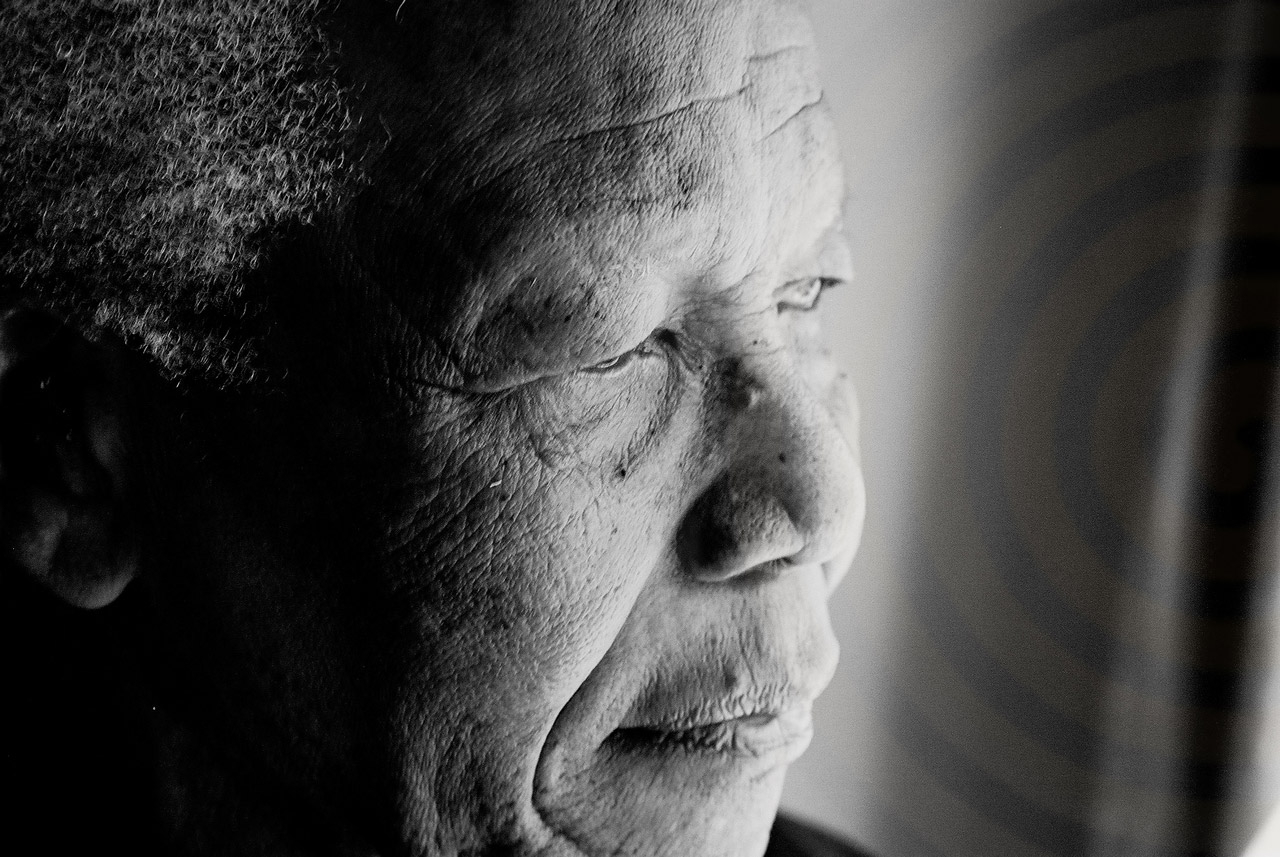
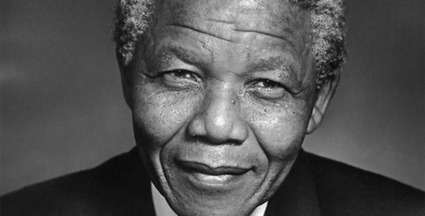
Nelson Mandela, the former political prisoner who became the first president of a post-apartheid South Africa and whose heroic life and towering moral stature made him one of history’s most influential statesmen, died Thursday, the government announced. He was 95.

The death was announced in a televised address by South African President Jacob Zuma, who noted, “We’ve lost our greatest son.” No cause was provided.

Timeline: The life of Nelson Mandela

Nelson Mandela, also known as Madiba, led the struggle to replace South Africa’s apartheid regime with a multi-racial democracy. See key moments in his life.

Mandela’s 1964 Rivonia Trial speech

Listen to an excerpt of Mandela’s famous speech.

Video

The Washington Post’s Sudarsan Raghavan talks about the life and legacy of Nelson Mandela.

The Washington Post’s Sudarsan Raghavan talks about the life and legacy of Nelson Mandela.

To a country torn apart by racial divisions, Mr. Mandela became its most potent symbol of national unity, using the power of forgiveness and reconciliation to heal deep-rooted wounds and usher in an era of peace after decades of conflict between blacks and whites. To a continent rife with leaders who cling to power for life, Mr. Mandela became a role model for democracy, stepping down from the presidency after one term and holding out the promise of a new Africa.

And to a world roiled by war, poverty and oppression, Mr. Mandela became its conscience, fighting to overcome some of its most vexing problems. He was a Nobel Peace Prize laureate who spent 27 years in prison as part of his lifelong struggle against racial oppression.

Throughout this moral and political fight, Mr. Mandela evoked a steely resolve, discipline and quiet dignity, coupled with a trademark big, charismatic smile. He ultimately carried them into office as South Africa’s first black president.

His victory capped decades of epic struggle by the African National Congress and other liberation groups against South Africa’s brutal white rulers, first under British colonialism and then under a white-run system called “apartheid,” or racial separation.

On the day of his inauguration — May 10, 1994 — Mr. Mandela stood at the podium near South Africa’s last apartheid-era president, F.W. de Klerk. A year earlier, they had shared the Nobel Prize for what the Nobel committee called “their work for the peaceful termination of the apartheid regime, and for laying the foundations for a new, democratic South Africa.”

“We have, at last, achieved our political emancipation,” Mr. Mandela, then 75, declared. “Never, never and never again shall it be that this beautiful land will again experience the oppression of one by another. . . the sun shall never set on so glorious a human achievement.”

Only a few years before, the 20th century’s most celebrated political prisoner had been dubbed a terrorist by the conservative governments in the United States and Britain under Ronald Reagan and Margaret Thatcher, respectively.

In the decades after Mr. Mandela’s release from prison in 1990, many South Africans of all races referred to him reverentially as Madiba, his Xhosa clan name. Countless others called him Tata, which means father in the Xhosa language.

For all his achievements, Mr. Mandela will also be remembered as slow to react to the HIV/AIDS epidemic that began sweeping South Africa on his watch. It was not until 1998, four years into his presidency, that he directly addressed the South African public about the disease. Later, he would acknowledge that he had not initially recognized the severity of the epidemic.

After he left office in 1999, Mr. Mandela devoted substantial energy and resources, both personally and through his Nelson Mandela Foundation, to raising awareness of the epidemic. In 2002, he publicly criticized his successor, Thabo Mbeki, for delays in implementing a plan to fight HIV/AIDS.

In 2005, the epidemic hit home. A somber Mr. Mandela announced the death of his son, Makatho Mandela, 54, who had AIDS.

Timeline: The life of Nelson Mandela

Nelson Mandela, also known as Madiba, led the struggle to replace South Africa’s apartheid regime with a multi-racial democracy. See key moments in his life.

Mandela’s 1964 Rivonia Trial speech

Video

The Washington Post’s Sudarsan Raghavan talks about the life and legacy of Nelson Mandela.

Mr. Mandela’s years as president also were characterized by the public and political drama of his estrangement from his wife, Winnie. Separated in 1992, the pair divorced in 1996 after legal proceedings in which the usually private Mr. Mandela described himself in open court as “the loneliest man.”

At the same time, he had to address the insecurities and animosities of the white minority that had lost political power but still controlled South Africa’s economy, military and bureaucracy.

The Afrikaners, descendants of 17th-century Dutch and French settlers, were especially traumatized by the transition to black rule, and their control of the military posed a potential threat to the young democracy in the early years of Mr. Mandela’s presidency.

Although institutional policies were put in place to deal with white fears — such as a sunset clause allowing white civil servants and soldiers to stay in their jobs as long as they wanted — Mr. Mandela also used his powers of persuasion to disarm opponents, defuse threats and charm detractors.

Dismantling apartheid

Under Mr. Mandela’s leadership, South Africa slowly began expunging racism from its legal canon, governmental institutions and school textbooks. A Constitutional Court was inaugurated in 1995 as the highest court in the land. Among its early rulings was the abolition of the death penalty.

In 1996, Parliament approved a new national constitution, including a bill of rights guaranteeing protections that most South Africans had never imagined. For instance, South Africa was the first nation in the world to enshrine the protection of the rights of gay people in its constitution.

That same year, Mr. Mandela launched the country’s Africa’s Truth and Reconciliation Commission, led by Anglican Archbishop Emeritus Desmond Tutu. Rather than Nuremberg-style trials, Mr. Mandela’s government fostered truth-telling and amnesty. On one hand, that meant killers who confessed would not be prosecuted. But it helped ensure that the seeds of more racial hatred would not be planted.

Mr. Mandela sought to bridge the lingering divides between blacks and whites in other ways, too. When South Africa hosted the 1995 Rugby World Cup, he encouraged blacks to support the Springboks, the widely hated national rugby team that was seen by many blacks as a totem of white rule.

When the Springboks won a riveting final over New Zealand, Mr. Mandela wore a Springbok shirt and presented the trophy to team captain Francois Pienaar. The gesture was widely viewed as a major step toward racial reconciliation.

For all his strengths and bottomless energy, Mr. Mandela faced a seemingly impossible task as president: In a nation where millions of people lived in shacks, where nonwhites had been purposefully impoverished and undereducated, he had to meet the expectations and hopes of the teeming masses who had propelled him to high office.

Continued 

7 Black Female Thought Leaders History Books Ignore – Page 7 of 7 – Atlanta Black Star

See on Scoop.itOUR COMMON GROUND Informed Truth and Resistance

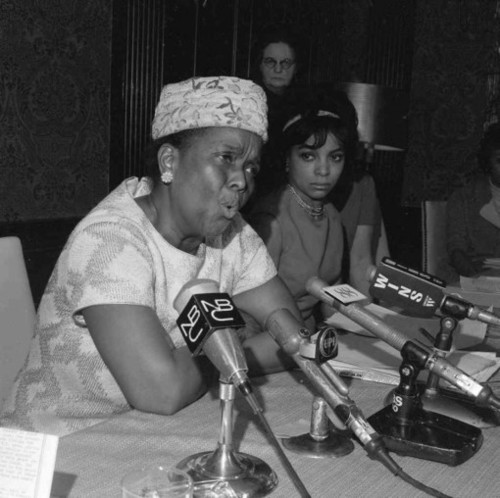
Picture is of Ella Baker, Black Warrior of the Civil Rights Era


“Maria Stewart (1803-1879) One of the pioneering Black women to plead the case of the African-American community and denounce both racism and sexism has greatly been ignored by history. Maria W.

OUR COMMON GROUND Omnibus‘s insight:

Supprt the Black Press, a shining beacon in our information stream, The Atlanta Blackstar.  OUR COMMON GROUND salutes your work in our struggle.


Amy Jacques Garvey, Angela Davis, Bell Hooks, Ella Baker, Maria Stewart, Nikki Giovanni, Patricia Hill Collins

See on atlantablackstar.com

A New Case for African American Reparations: A Simple Three-Part Plan

See on Scoop.itOUR COMMON GROUND Informed Truth and Resistance

 A New Case for African American Reparations: A Simple Three-Part Plan   Professor Darron T. Smith, Ph.D

OUR COMMON GROUND Omnibus‘s insight:

Like white Americans, black Americans want the necessary resources to allow their children good health and achievement in life. Superior education, access to decent employment and quality health care are key among other requisites identified by a variety of sociological, epidemiological, public health, educational and social science research as important factors that influence the overall health and well-being of a society, its communities and its individuals. It is time for the nation to take responsibility for the current state of affairs for scores of black Americans living on the fringes of obsolescence. A simple three-part plan calling for group recompense will address the central racial disparities that remain trenchant within the black community and American life. With this, the US will finally offer a tangible solution to challenge the systemic conditions of deprivation known all too well by the black community.

See on ourcommongroundtalk.wordpress.com